Skip to content
Take the buyer who burned $50,000 on a custom rubber ducks order because the pre-production sample didn’t match the mass production run. The color shifted two shades, the material felt different, and the logo blurred. That gap between sample approval and bulk output is where most quality problems hide—and it’s the difference between a successful promotion and a write-off.
After auditing supplier factories across a dozen countries, I’ve learned one hard rule: the sample is a promise, not a guarantee. The real test is whether the supplier maintains consistent quality tolerance across thousands of units. For brand marketing managers, agency procurement leads, and event planners ordering custom rubber ducks, that consistency directly impacts brand perception and campaign ROI. This guide covers the cost tiers, MOQ thresholds, and sample protocols that seasoned buyers use to avoid expensive mismatches. We’ll get into mold fees, FOB pricing, and the specific questions you need to ask before approving any sample.
What Makes a Custom Rubber Duck Different from Stock?
Stock ducks limit you to their shape.
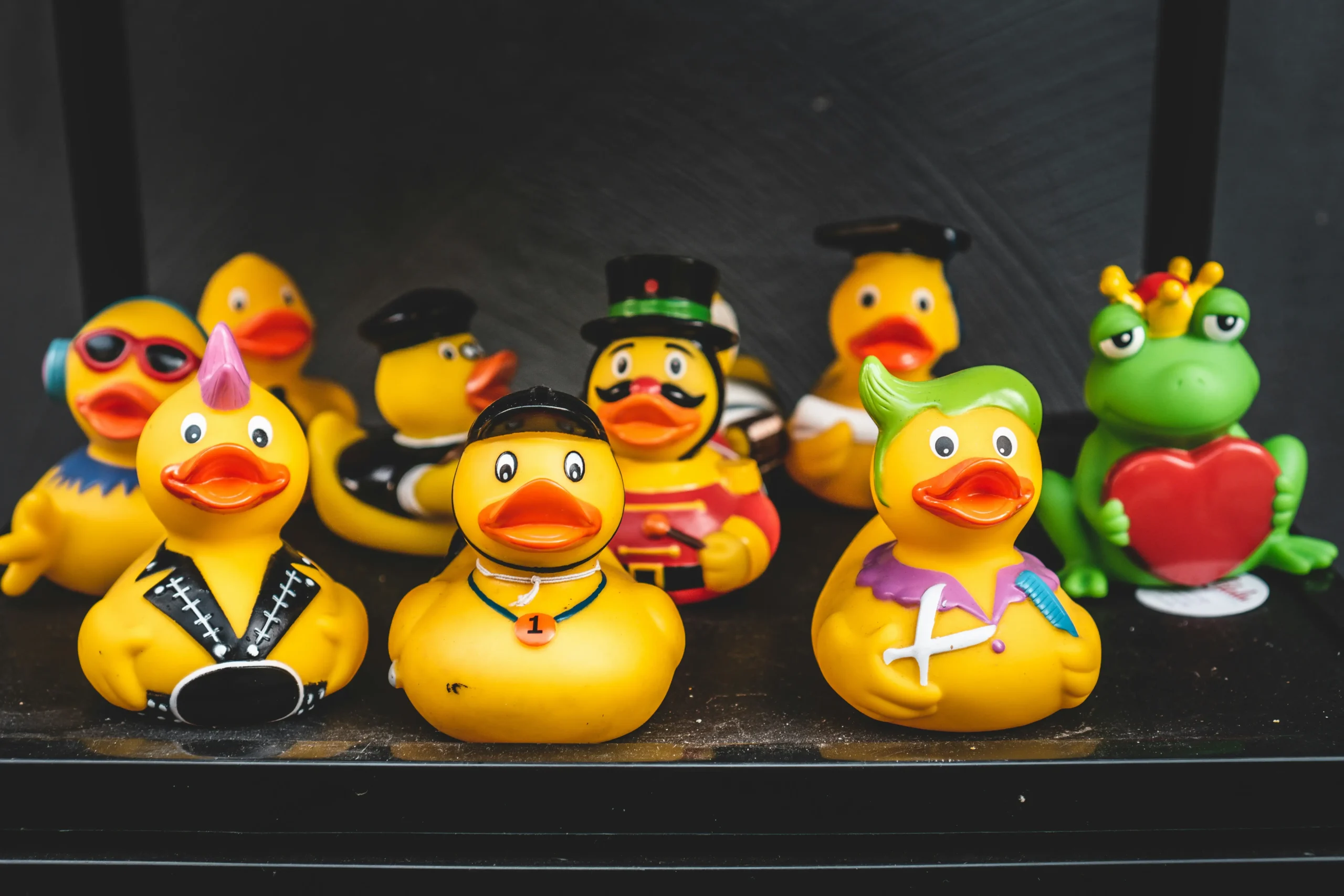
The core difference is mold ownership. A stock duck uses an existing mold — typically the classic yellow shape you see everywhere. The supplier owns that mold; you just pick a color and add a print. A custom duck requires a dedicated mold built to your exact design. That means you control the silhouette, the dimensions, even the texture. Most suppliers, including those on Alibaba, only offer stock shapes with pad printing. They rarely push custom molds because it requires upfront engineering time and tooling investment.
This maps directly to OEM vs ODM. In the rubber duck world, ODM (Original Design Manufacturing) means you select an existing duck shape from the supplier’s catalog and ask for logo printing or color changes. You do not own the mold. OEM (Original Equipment Manufacturing) means you provide a 3D file or technical drawing, and the factory creates a new mold unique to your brand. You own that mold. That distinction matters for reorders — with OEM you lock in exact consistency across batches; with ODM you’re stuck with whatever shape the supplier offers.
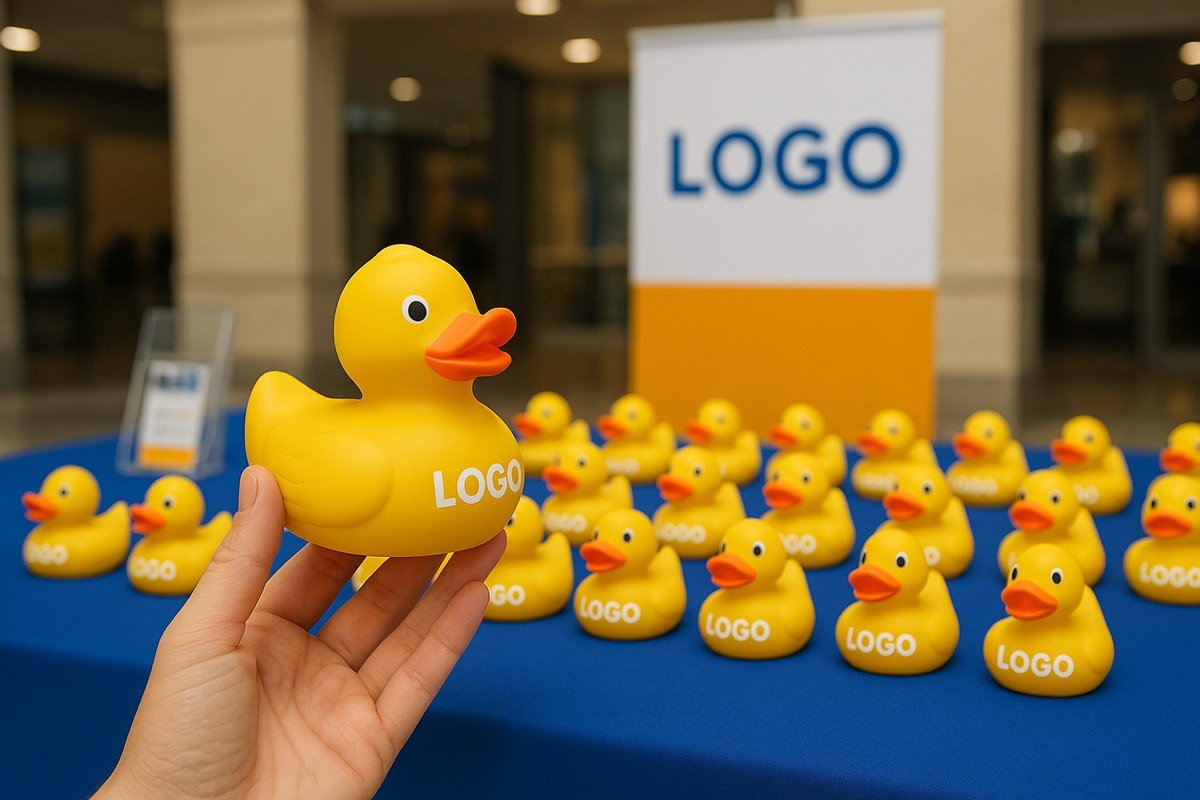
- Logo printing on stock (ODM): You pick a duck from the supplier’s lineup — maybe the standard 2-inch duck or a larger 5-inch version. Your logo is pad-printed or heat-transferred onto the side. MOQ drops to around 500 units. Lead time is shorter (10–14 days for bulk) because no mold needs cutting. Risk: your duck looks like everyone else’s duck with a different logo.
- Custom mascot shape (OEM): You need a duck shaped like your brand mascot — say a bulldog head on a duck body or a duck wearing a chef hat. The factory machines a new aluminum mold from your 3D file. Mold fee ranges $300–$600; MOQ lifts to 1000 units; sample production takes 7–10 days, bulk another 20–25 days. Benefit: 100% unique visual that people photograph and share. Risk: higher upfront cost and longer timeline.
Experienced buyers go the OEM route when the giveaway is a core part of a campaign visual — like a brand mascot at a trade show. They go ODM when speed and low per-unit cost outweigh the need for uniqueness. There is no wrong choice, but you need to know which one the supplier actually supports. Many claim “custom” but only deliver the ODM version. Clarify in the first email: are you cutting a new mold or printing on an existing shape?
Real Cost Breakdown of Custom Rubber Ducks in 2026
Mold fees are a one-time investment.
The mold fee is your first and largest upfront cost. For a simple 2D logo duck, expect $200–$300. A complex 3D shape matching your brand mascot runs $600–$800. This is a one-time charge — you own the mold, and reorders only pay for production.
Per-unit pricing scales hard with volume. At 1,000 units, you’re looking at $0.50–$2.00 per duck depending on size and color count. At 5,000 units, the unit price drops roughly 30%. At 10,000+, it can fall below $0.40 for a standard shape with one-color printing. Always ask for tiered quotes before committing.
- Poly bag bulk: Cheapest option, adds ~$0.02/unit. Good for trade shows — ducks stay clean, but no shelf appeal.
- Header card: Adds ~$0.15–$0.30/unit. Ideal for retail or event giveaways where branding and barcodes are needed.
- Retail box: Adds $0.50–$1.00/unit. Necessary for e‑commerce or premium campaigns. Protects the duck and elevates perceived value.
Shipping is where hidden costs bite. FOB (Free On Board) pricing means you pay from the factory to your door — ocean freight, customs, and last-mile delivery. For a 1,000‑duck order from China to the US, expect $400–$700 in sea freight (25–35 days) or $1,500+ for air (5–10 days). DDP (Delivered Duty Paid) bundles everything into one per‑unit cost — simpler, but you pay a premium for the convenience. Always compare FOB vs DDP in your total landed cost calculation.
Here’s the reorder advantage: once the mold is paid, your next order of the same duck only covers material, labor, and packaging. That 30% drop you saw at 5,000 units? It becomes the base price for all subsequent runs. A savvy buyer amortizes the mold across the first order and reaps lower per‑unit costs on every reorder — sometimes 40–50% less than the initial unit price.
| Order Quantity | Unit Price (FOB) | Mold Fee (one-time) | Estimated Total (FOB) |
|---|---|---|---|
| 500 (Printed on Stock) | $0.60 – $1.50 | $0 (screen setup $50–$100) | $350 – $850 |
| 1,000 (Custom Shape) | $0.50 – $2.00 | $200 – $800 | $700 – $2,800 |
| 5,000 (Custom Shape) | $0.35 – $1.40 | $200 – $800 | $1,950 – $7,800 |
| 10,000 (Custom Shape) | $0.28 – $1.00 | $200 – $800 | $3,000 – $10,800 |
Materials, Safety, and Compliance Risks
Over 70% of buyers now require phthalate-free certification for child-related giveaways.
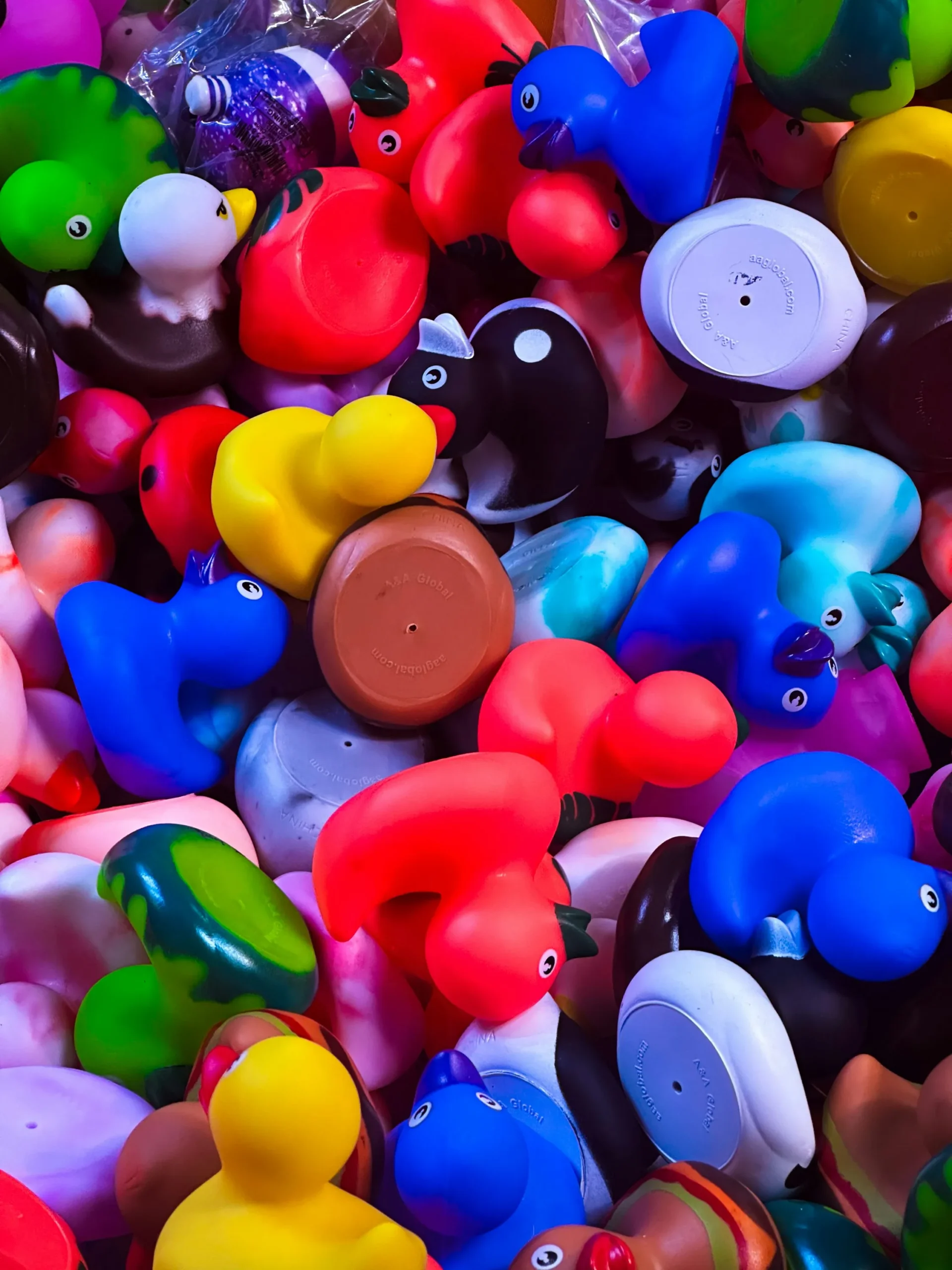
The spec sheet says “high-quality PVC.” The container arrives smelling of chemical softeners and fails a basic squeeze test. That gap is the single biggest risk in sourcing custom rubber ducks for branding. There are three common materials: PVC, vinyl, and natural rubber. PVC is the industry standard — cheap, easy to mold, and takes bright colors well. Vinyl is more durable and slightly softer. Natural rubber has a distinct feel but is rarely used for promotional ducks because it degrades faster under UV. The problem? Most Asian suppliers use standard PVC compounded with phthalates to achieve softness. That compound is banned in children’s products under CPSIA (US) and REACH (EU). If your campaign targets families, trade shows with kids present, or any retail environment in California (Prop 65), skip the generic material sheet.
- Phthalate-free PVC: Replaces DEHP/DBP/DINP with non-toxic plasticizers. Adds roughly 8–12% to material cost per unit. Insist on this upfront — most factories batch it only if the contract specifies it.
- EN71 & ASTM F963: EN71 (European Toy Safety Directive) and ASTM F963 (US Consumer Safety Specification) cover mechanical, flammability, and chemical migration tests. A duck passing EN71 Part 3 ensures heavy metals and phthalates stay below legal limits.
- CPSIA tracking label: If your ducks enter US retail, they legally require a tracking label (manufacturer, date, batch). Many Alibaba suppliers skip this. You can request a hangtag with the data.
Demand two documents before approving a pre-production sample: an MSDS (Material Safety Data Sheet) listing all chemical components, and a third-party test report from a lab like SGS, Bureau Veritas, or Intertek. Do not accept a factory’s in-house test. Ask specifically for EN71 Part 3 and ASTM F963-23 phthalate scan. If the supplier hesitates or sends a generic PDF, that’s a red flag. I’ve seen a shipment of 10,000 custom logo rubber ducks get flagged by US Customs because the seller couldn’t produce a valid test report. The buyer paid $3,200 in storage fees while waiting for a retest.
| Material | Certifications | Risks | Red Flags | Best Practice |
|---|---|---|---|---|
| PVC (Soft, Low Cost) | EN71, ASTM F963, CPSIA | Phthalate contamination; missing MSDS | No test reports; vague material claims | Request third-party phthalate-free test; specify EN71/ASTM upfront |
| Vinyl (Durable, Mid-Range) | EN71, ASTM F963, CPSIA | Inconsistent UV stability; limited recycle content | No BSCI audit; no pre-shipment inspection | Ask for UV resistance data; require pre-shipment QC report |
| Rubber (Flexible, Premium) | EN71, ASTM F963, CPSIA, FDA-grade options | Natural latex allergies; higher mold cost ($600–$800) | No allergy disclaimer; high defect rate above 2% | Verify latex-free if needed; negotiate mold amortization for reorders |
Customization Options: Molds, Colors, and Logo Methods
Most suppliers only offer stock shapes with pad printing.
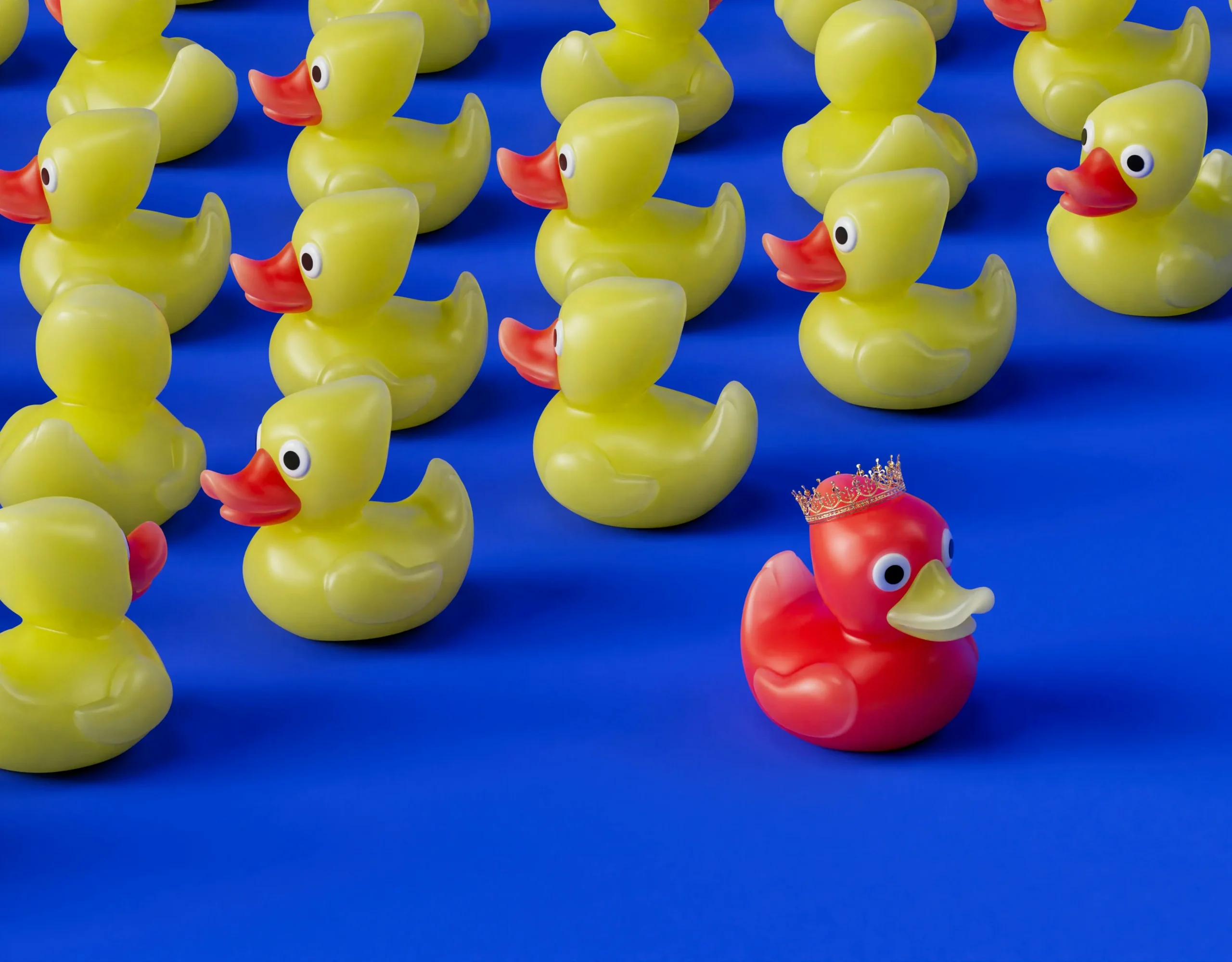
Customization splits into two distinct paths: a new mold for custom shapes, or printing onto an existing stock duck. The mold path gives you total control over form—your brand mascot, a product shape, a character. Mold fees run $200 for a simple standalone duck up to $800 for a complex 3D design with undercuts or fine surface detail. Lead time: 7–10 days for a sample, then 20–25 days for bulk production. MOQ for a full custom shape is 1,000 units, but that mold is yours to reuse; reorders skip the mold fee, dropping unit cost by roughly 30% at 5,000 pieces.
The print path is faster and cheaper upfront. You take an existing duck mold (standard duck, “silly” duck, seasonal shapes) and apply your logo via pad printing or heat transfer. Pad printing works best for simple, single-color logos placed on the duck’s belly or back. Heat transfer handles full-color gradients and more intricate art, but adds $0.10–$0.20 per duck for the transfer film. MOQ for printed ducks can go as low as 500 units. Both methods accept Pantone color matching—but ask the supplier if they batch-test color against the standard. I’ve seen campaigns where color drifted between production runs because the factory didn’t check. Insist on a signed sample approval (the same physical sample from pre-production) as your baseline.
- Custom shape (new mold): Full control over geometry; mold fee $200–$800; MOQ 1,000; sample 7–10 days; bulk 20–25 days. Reorders drop per-unit cost 30%+.
- Custom print on stock duck: Lower upfront cost (no mold fee); MOQ 500; faster lead (3–5 days sample). Pad printing limited to 1–2 colors; heat transfer handles 4-color process but adds $0.10–$0.20/unit.
- Pantone matching: Both paths support Pantone matching, but always request a pre-production sample with the actual color. Reject screens. Standard tolerance in B2B contracts is ΔE ≤ 2.

Lead Times, Sampling, and MOQ Strategy
Skip sample approval, and your $50K order might not match the prototype.
Sample production for a custom-molded rubber duck takes 7–10 days. That’s the window to validate shape, color (Pantone matching), and surface finish before committing to 20–25 days of bulk manufacturing. Experienced buyers treat sample approval as the single most critical checkpoint — not a formality.
For printed ducks using existing stock molds, sample lead time drops to 5–7 days, and bulk runs typically finish in 12–15 days. The MOQ for printed designs is also lower: 300–500 units versus 1,000 for full custom shapes. But here’s the catch — most suppliers won’t tell you that stock mold options are limited to generic shapes. If you need a brand mascot or specific silhouette, you’re in the custom-mold lane regardless of print.
- Lead time trap: A supplier quoting 15-day delivery for a custom shape likely means they’ll use an existing mold and pad print your logo. Verify if the shape is truly custom or just a stock duck with your artwork.
- Event planner buffer: Add 7–10 days to the quoted bulk production time. Ocean freight (DDP) from China to US takes 25–35 days; even air freight needs 5–10 days. A one-week factory delay plus two-week customs hold can kill a campaign. Always request a pre-shipment inspection to catch defects before cargo leaves.
- Quality tolerance: Standard defect rate threshold is <2%. Any supplier promising zero defects is either lying or hasn’t run a real production line. Insist on a sample approval report that includes color deviation (ΔE < 2.0) and float test results.

How to Pick a Reliable Custom Rubber Duck Supplier
A supplier without a pre-shipment inspection clause is a liability, not a partner.
I’ve walked through factories where the sample looked perfect and the production run looked like a different product. The gap between pre-production sample and mass production is where most buyers lose money. A 2% defect rate might sound acceptable, but on a 10,000-unit order, that’s 200 ducks that fail — either asymmetrical, off-color, or they sink in a water bath.
- Red Flag #1: No QC documents. If they can’t show you a quality control checklist, an inspection report template, or a defect log from previous orders, they don’t have a system. Alibaba suppliers often skip this — you’ll get a shipping container full of rejects.
- Red Flag #2: Vague lead times. ‘About 20 days’ is not a commitment. A reliable supplier gives you a production schedule: sample in 7–10 days, bulk in 20–25 days, with buffer for shipping. No buffer means they’ve never dealt with port delays.
- Red Flag #3: No client portfolio. If they claim to serve global brands but can’t show you past orders, ask for order numbers or shipment records. I’ve seen factories reuse the same three photos for years.
- Checklist – Request 3 samples: Never approve production based on one sample. Ask for three from the same mold. Compare them side by side: asymmetry (wings, beak, base), color deviation against Pantone reference, and a float test (weight check — if they don’t float upright, they fail). One in three samples having defects means your production run will have 30%+ defects.
- Checklist – Material safety data: Request MSDS and third-party test reports for phthalates, lead, and BPA. 70% of promotional merchandise buyers now prioritize phthalate-free materials for any giveaway that might reach children (2026 promo study). EN71 or ASTM F963 certification is your only proof.
Green flags are harder to fake. BSCI certification means the factory has passed a social compliance audit — not just product quality but labor conditions and safety. A factory audit report from a third party (like SGS or Bureau Veritas) tells you the equipment, the environment, and the capacity are real. Lzengo holds both ISO and BSCI certifications, and we welcome on-site audits.
Lzengo’s track record is built on consistency: 500,000+ ducks delivered monthly to global brands, with a defect rate under 2% and on-time delivery above 98%. We don’t hide behind stock photos — we show the actual production lines, the mold shop, and the QC lab. Every bulk order goes through a 4-point inspection: material test, dimensional check, float test, and packaging integrity. That’s how you avoid the scenario where a $50K order arrives with orange ducks instead of red.
Packaging and Logistics for Promotional Ducks
Your packaging choice directly impacts both brand perception and freight costs.
Bulk poly bags are the default for cost-sensitive orders. You get 500–1,000 loose ducks per carton, no individual wrapping. It’s the cheapest option — typically adds $0.02–$0.05 per unit — but it offers zero retail appeal. For trade shows or internal giveaways where the duck is handed out directly, this works fine. For any channel where the duck needs to sit on a shelf or be mailed, skip it.
Individual poly bags with hang tags are the standard for event giveaways and e-commerce. Each duck is bagged with a printed card that carries your logo, SKU, or safety info. Expect $0.12–$0.20 per unit for bag + tag. The cost is modest, but the brand lift is real. For Jeep ducking or promotional kits, this is the minimum viable packaging. Any less and your brand looks cheap.
Retail-ready boxes add $0.30–$0.60 per unit and require more carton space. They suit high-end campaigns — hotel amenities, retail POS, subscription gifts. The trade-off: shipping volume increases by 30–50% compared to poly bags, which pushes freight costs up. Calculate landed cost before committing. A $0.40 box may double your DDP cost if you’re shipping from China to the US.
- Carton dimensions (standard): A 40×30×30 cm carton holds ~500 ducks in bulk poly bags. For individual bagged ducks, capacity drops to ~400. Miscalculate and your freight class jumps — adding $200–$400 per container on DDP shipments.
- E-commerce lightweight rule: For direct-to-consumer, keep single-unit packaging under 50 g. Exceed that and shipping costs eat margin. Use a poly mailer (10–15 g) instead of a box (60–100 g). At 10,000 units, that difference saves $1,500–$3,000 in last-mile delivery.
One insider warning: get the packaging sample approved at the same time as the duck. I’ve seen buyers focus only on the product, then receive 10,000 units packed in flimsy poly bags that tear in transit. The result: a 3% defect rate due to scuffed ducks. That’s 300 pieces you paid for but can’t hand out. Specify poly bag thickness (minimum 50 microns for air freight, 80 microns for sea) and request a package drop test before bulk production.
Conclusion
Sample approval and material compliance are the make-or-break steps. Most buyers know that. The final 10%—the detail that separates professionals from amateurs—is the pre-shipment inspection. If your supplier doesn’t offer it or pushes back, that’s a red flag.
Before you authorize a bulk run, confirm the supplier’s PSI protocol. A transparent factory will have a defined quality tolerance and will let you—or a third party—inspect before shipment. That small step saves you from a container of 50,000 rejects.
Frequently Asked Questions
What is the minimum order quantity for custom rubber ducks?
The minimum order quantity is typically 1,000 units for fully custom molds, though some suppliers offer 500-unit minimums for stock shapes with print. Your final MOQ depends on whether you need a new. Confirm MOQ with your supplier based on customization level.
How long does it take to produce custom rubber ducks?
Production typically takes 2 to 4 weeks after sample approval, including mold creation and manufacturing. Some suppliers offer a 7-day sample lead time and can expedite bulk orders for an additional fee. Request a production schedule before placing your order.
Can I get a custom-shaped rubber duck that matches my brand mascot?
Yes, you can order a fully custom-shaped duck by paying a one-time mold fee, typically $200–$800. The supplier will work from your 3D design or mascot file to produce a unique mold. Provide a detailed design file for an accurate mold quote.
Are custom rubber ducks safe for children?
Yes, when you specify phthalate-free materials and request EN71 or ASTM certification, custom rubber ducks are safe for children. Over 70% of buyers now require such certification for child-related giveaways, so confirm. Request a safety certificate and material data sheet before production.
What is the unit price for 10,000 custom rubber ducks?
For 10,000 units, the unit price typically ranges from $0.50 to $1.50, depending on mold amortization, material grade, and packaging. The price per unit drops roughly 30% from the. Request a full quote including mold fee and shipping to compare landed costs.