Skip to content
That 2mm logo shift on the pre-production sample looked minor on the desk, but when the $50,000 order of promotional rubber ducks landed with a color mismatch that cheapened the entire brand look, the marketing manager learned a hard lesson about quality tolerance. I’ve seen this happen more times than I care to count — a buyer approves a sample under office lighting, then the mass production run comes back with a Pantone off by two shades and the pad printing already flaking. The cost of FOB pricing suddenly looks irrelevant when the entire campaign’s visual consistency is shot. Sample approval isn’t just a checkbox; it’s the single point of failure that separates a memorable giveaway from a costly lesson.
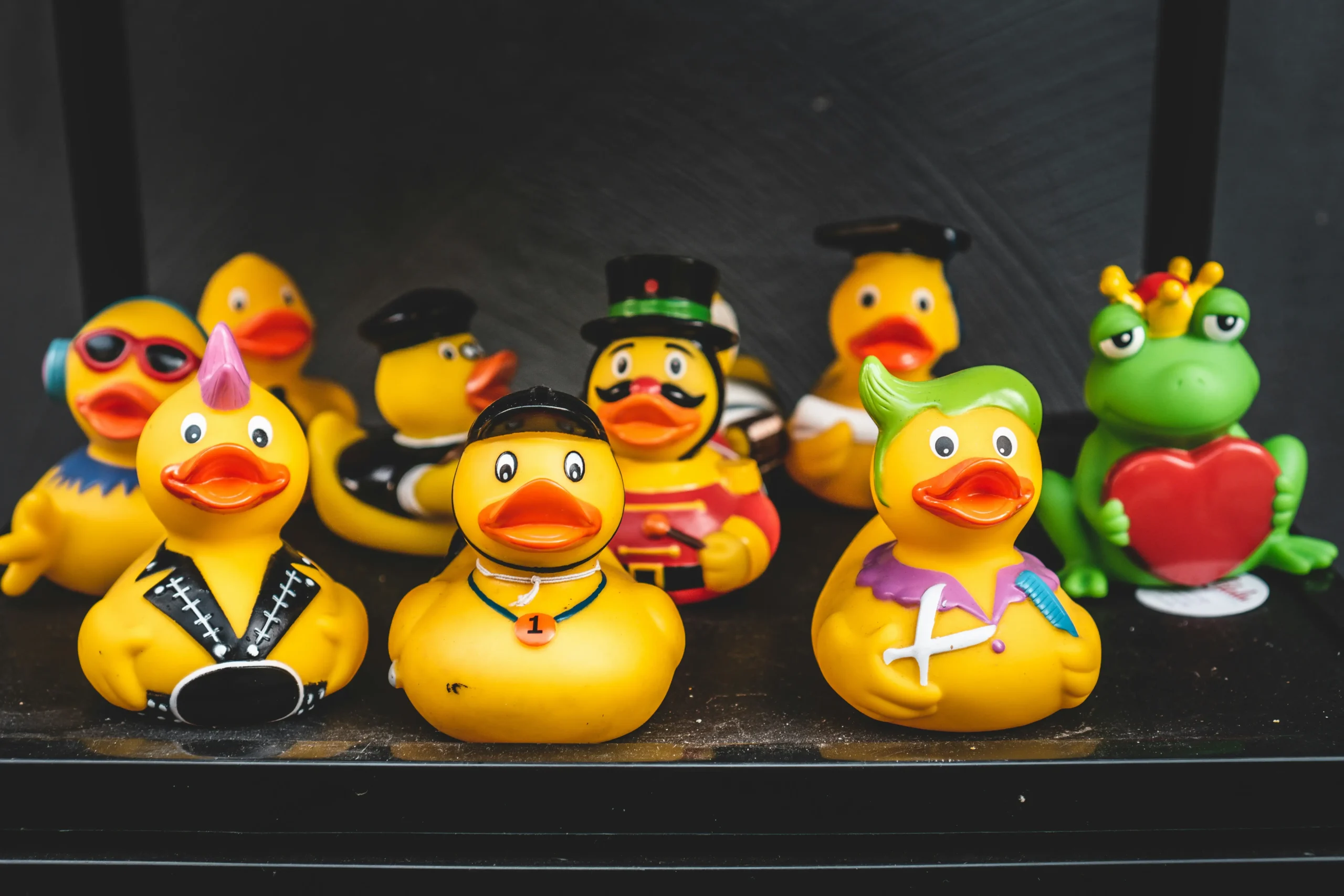
But here’s the real opportunity most brand managers miss. The same rubber duck that caused that headache can become your strongest brand artifact — if you stop treating it as a commodity and start embedding your story into its form. A custom-molded duck with integrated details (think a hard hat for a construction brand or a specific product silhouette) doesn’t just avoid the quality pitfalls of pad printing; it creates a permanent, premium object that people keep on their desks and post on Instagram. That’s the difference between a $0.90 stock duck that ends up in a drawer and a $1.50 custom duck that generates over five times the user-generated content. Every brand that’s built a successful ‘find the duck’ campaign or leveraged the Jeep Ducking phenomenon has anchored on that simple truth: the shape tells the story better than the logo ever could.
Why Most Promotional Giveaways Fail Your Brand Story
85% of consumers remember the giver, but only if the item isn’t forgettable.
The majority of promotional giveaways die two deaths: first in a drawer, then in a landfill. For a brand marketing manager, that’s not just wasted budget—it’s active brand dilution. When a generic logo-splashed duck lands on a desk, it says nothing about who you are. It whispers “cheap” instead of “crafted.” The risk isn’t that the item gets tossed—it’s that the brand memory attached to it becomes negative or, worse, nonexistent.
Consider the giveaway lifecycle: A stock duck with a pad-printed logo arrives at a trade show. Within hours, the ink begins to crack on the curved surface. Within a week, the logo is illegible. The recipient’s last visual of your brand is a chipped, peeling artifact. That’s not brand storytelling—that’s brand erosion. Research shows that 85% of consumers remember the business that gave them a promotional item, but that memory depends on quality. A fast-deteriorating duck creates a fast-fading positive association.
Measuring failure is straightforward when you track engagement. A generic giveaway generates zero user-generated content (UGC) and zero social mentions. Compare that to campaigns where the duck’s design is embedded in the brand’s narrative—like a construction company using a hard-hat-shaped duck. Those items don’t just sit on shelves; they get photographed, shared, and searched for. Campaigns incorporating a unique physical item see a 40% higher engagement rate on social media than digital-only campaigns. If your giveaway isn’t sparking that kind of response, it’s not working—it’s just spending.
- Brand Dilution: A generic duck with a logo print conveys no story, cheapens perception, and fails to differentiate your brand from competitors.
- Giveaway Lifecycle: Pad-printed logos on curved duck surfaces degrade within days; the item ends up in waste, not in a memory moment.
- Zero UGC: Stock giveaways generate no social shares or search interest, while custom-molded ducks produce 5x more UGC and measurable engagement.
The industry’s fixation on logo slaps is a trap. The real campaign lift comes from treating the duck as a brand artifact—a physical extension of your message. The Jeep Ducking phenomenon proves that a well-designed duck can become a cultural token. Brands that engineer their own “find the duck” campaigns at events transform a passive handout into an active experience. Without that intentional design, you’re not telling your story—you’re just littering with your logo.
Beyond Logo Slaps: Customization vs. Campaign ROI
The gap between a logo slapped on a stock duck and a custom-molded brand artifact is the difference between a disposable handout.
Most buyers default to the cheapest path: pick a stock duck mold, add a pad-printed logo, call it a day. That works if your goal is to check a box on the promotional spend ledger. But if you’re measured on campaign ROI—social shares, brand recall, UGC volume—the customization level you choose determines whether that duck ends up on a desk or in a landfill. There are three tiers, and the cost gap between them is smaller than the performance gap.
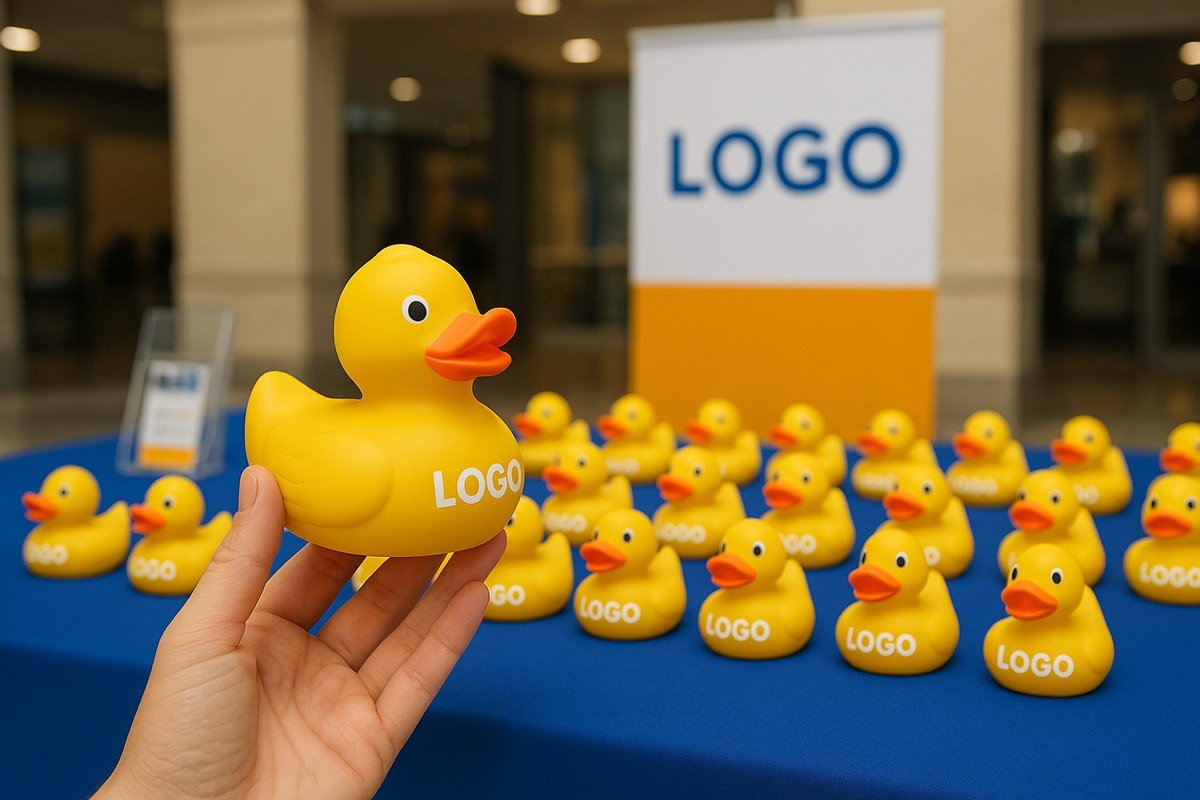
- Level 1: Pad printing on stock ducks: You select an existing mold (standard duck shape). A silicone pad transfers ink onto the curved vinyl surface. Unit cost is low—around $0.90 for 1,000 units—but the logo distorts on the 3D curve, and pad ink wears off after repeated handling or contact with water. For a brand that prides itself on precision, this cheapens perception. The duck remains generic; your logo is just a temporary decal.
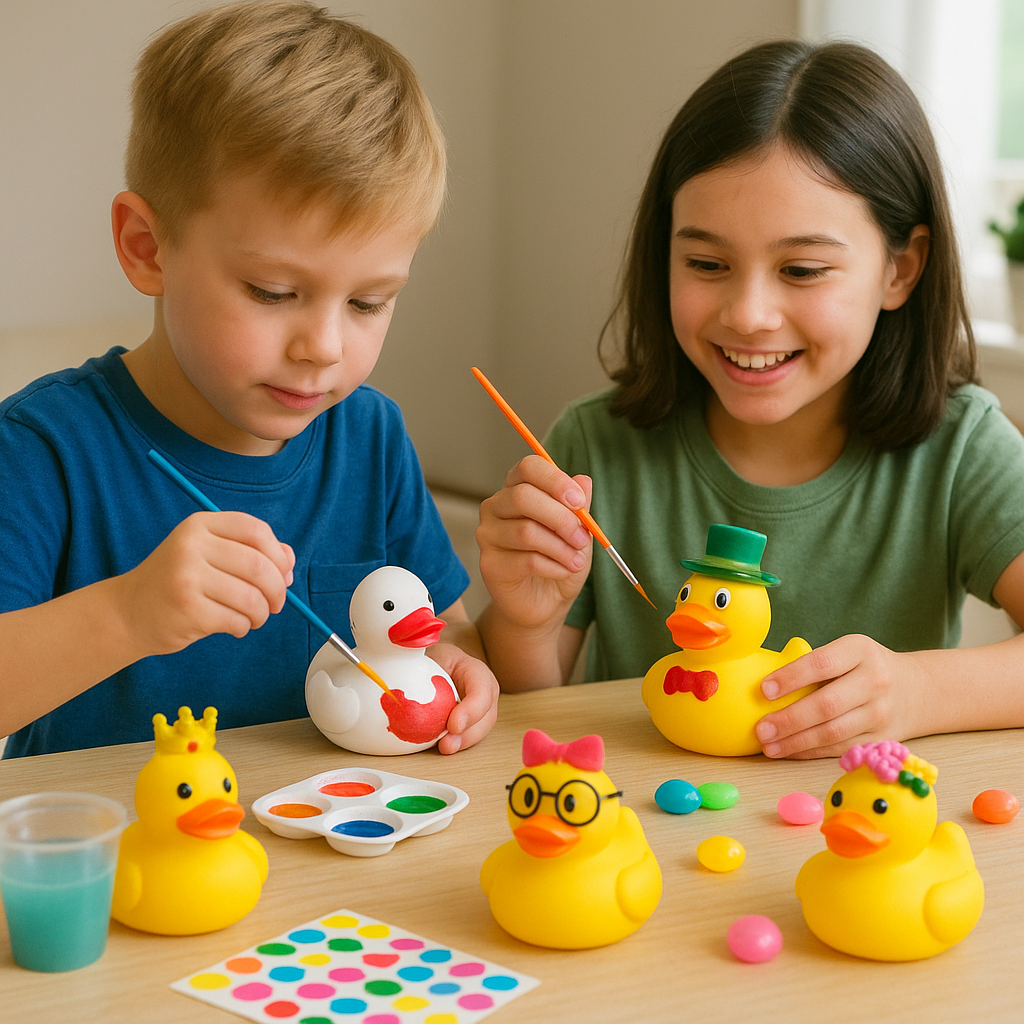
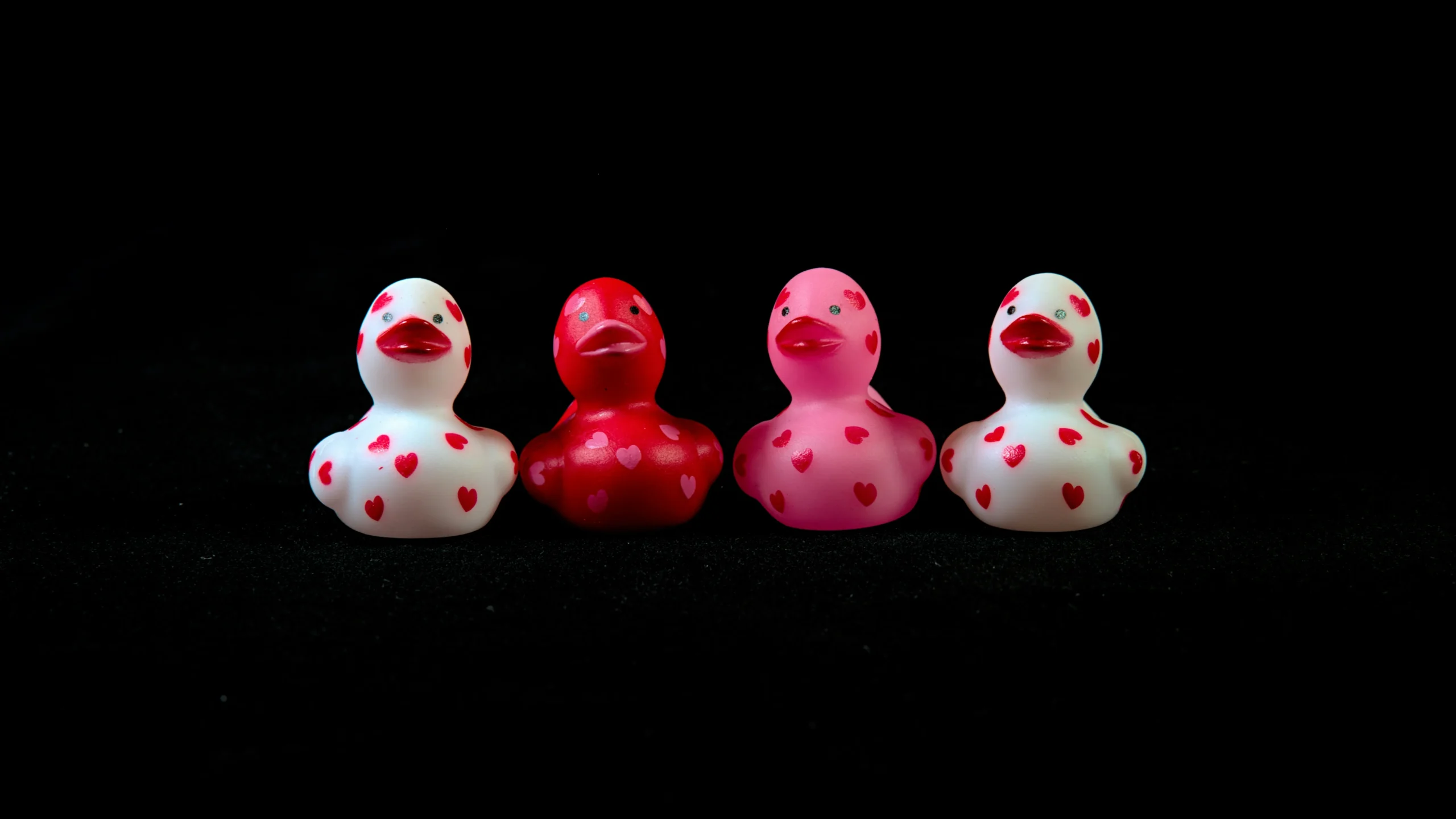
- Level 2: Custom colors and accessories: You select a stock mold but specify your brand’s Pantone colors for the entire duck body (not just a printed logo). Add accessories like glasses, hats, or floating keychains. Cost per unit rises to roughly $1.20–$1.35, depending on accessories. The brand association improves because the duck itself is on-brand in color, but the shape still says ‘generic duck.’ This works well for color-driven campaigns (e.g., a brand that owns a signature shade like Tiffany blue or Coca‑Cola red).
- Level 3: Fully custom molds and integrated details: You create a new steel mold that turns your brand story into physical form: a hard-hat duck for a construction company, a camera duck for a media brand, a boot-shaped duck for an outdoor gear launch. Mold cost runs $1,500–$3,000, and per‑unit price lands around $1.50 at 1,000 MOQ. But every detail—from the embossed logo to the textured surface—is permanent. That duct never loses its branding. Plus, campaigns with unique physical items generate 40% higher social engagement than digital-only campaigns. A custom duck earns 5x more UGC and shares than a stock duck with a logo.
Run the math yourself. Order 2,000 stock printed ducks at $0.90 each = $1,800 plus setup. Order 2,000 fully custom ducks at $1.50 each = $3,000 plus $2,000 mold amortization = $5,000 total. The gap is $3,200. Now factor in that 85% of consumers remember the business that gave them a promotional item, and over half use it at least once a week. If your custom duck sits on a desk for two years, the cost per impression plummets. The stock duck with fading ink? Tossed after the first event. The choice isn’t cost—it’s brand safety and campaign longevity.
Framework: Matching Duck Design to Campaign Goals
Match your duck’s design to your campaign’s objective, not just your logo.
A generic duck with a logo plastered on its chest doesn’t support a product launch or drive social shares. The design itself must encode the campaign’s purpose. Here’s how to align form with four common goals, based on what actually works in the field.
For a product launch, think artifact, not giveaway. When a tech brand launches a new smart speaker, a duck shaped like the gadget itself — with the same button layout or color accent — becomes a collector’s item. Recipients post unboxing photos, tag the brand, and the duck serves as a tactile reminder of the release. A custom mold here (costing $1,500–$3,000) pays for itself in earned media. Compare that to a stock duck with a pad-printed logo that flakes off after a month. The shaped duck stays on desks for years.
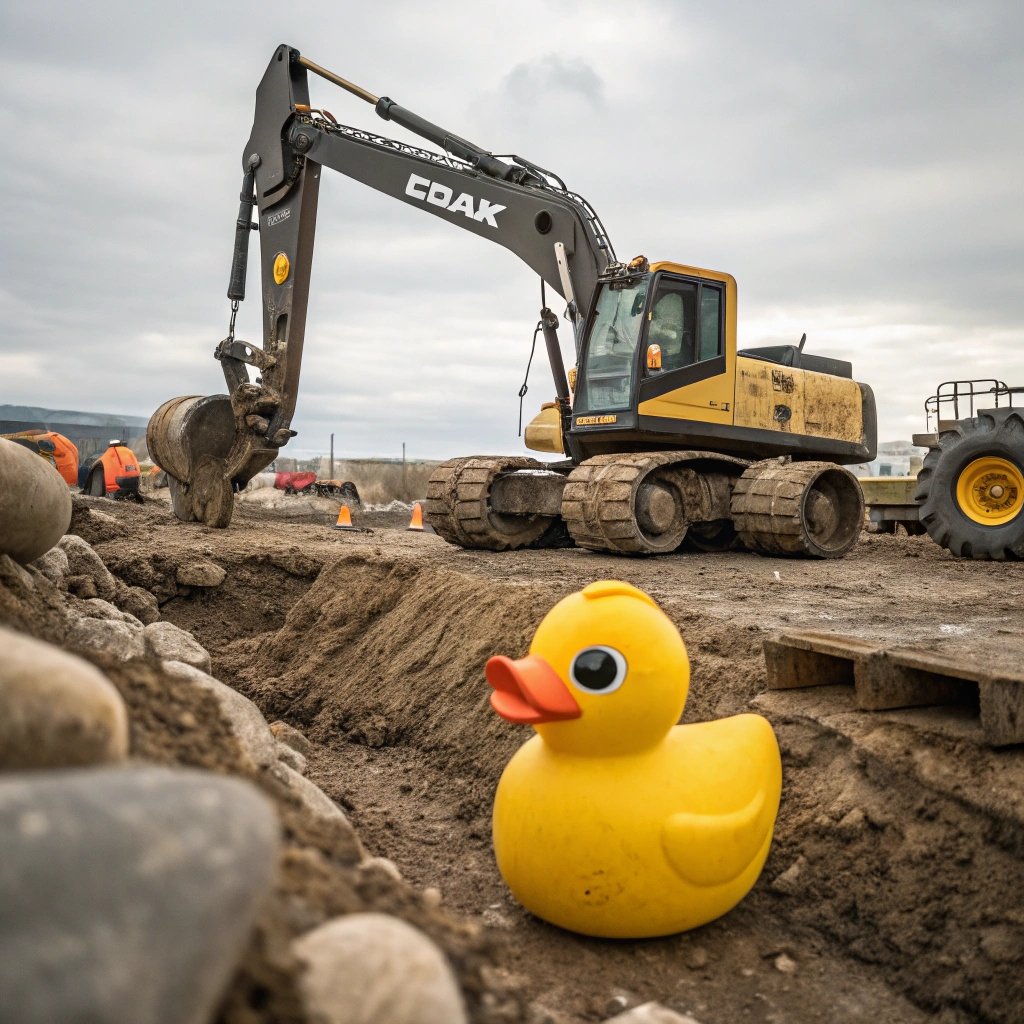
At trade shows, foot traffic is the metric. Handing out 1,000 generic ducks gets you a pile of forgotten plastic. Instead, design a mascot duck that embodies your booth theme — for a construction brand, a hard‑hat duck; for a pet‑food company, a duck wearing a dog collar. Make it oversized or limited edition. Attendees queue for photos, the duck appears on Instagram Stories tagged with your handle, and your booth becomes a destination rather than an aisle. This is the difference between a giveaway and a brand experience.
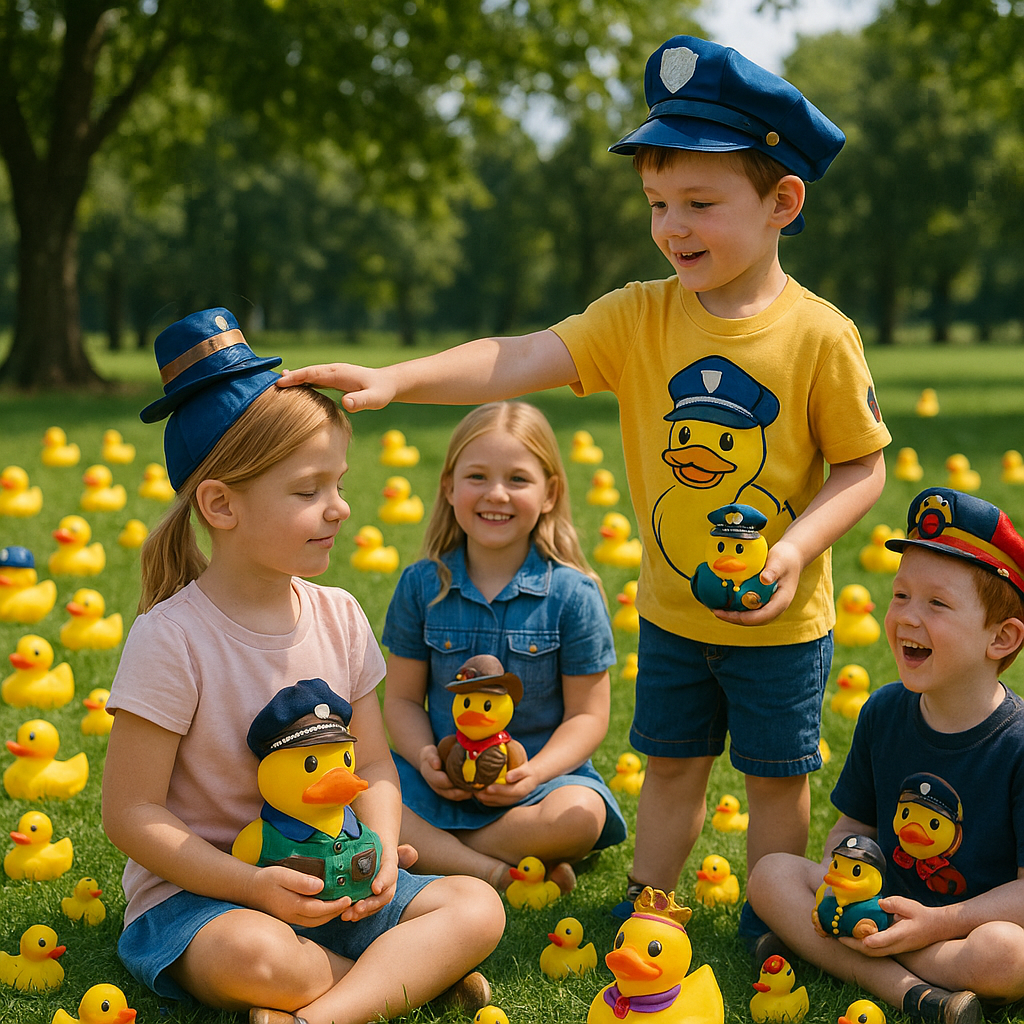
Internal team building is an overlooked opportunity. Create ducks that correspond to employee roles: a “problem‑solver duck” for engineers, a “client‑hero duck” for account managers. Distribute them as recognition tokens during all‑hands meetings. Employees keep them on desks, reinforcing internal brand culture, and posts of “my work duck” organically boost employer brand. No celebrity endorsement needed — just a design that reflects your own people.
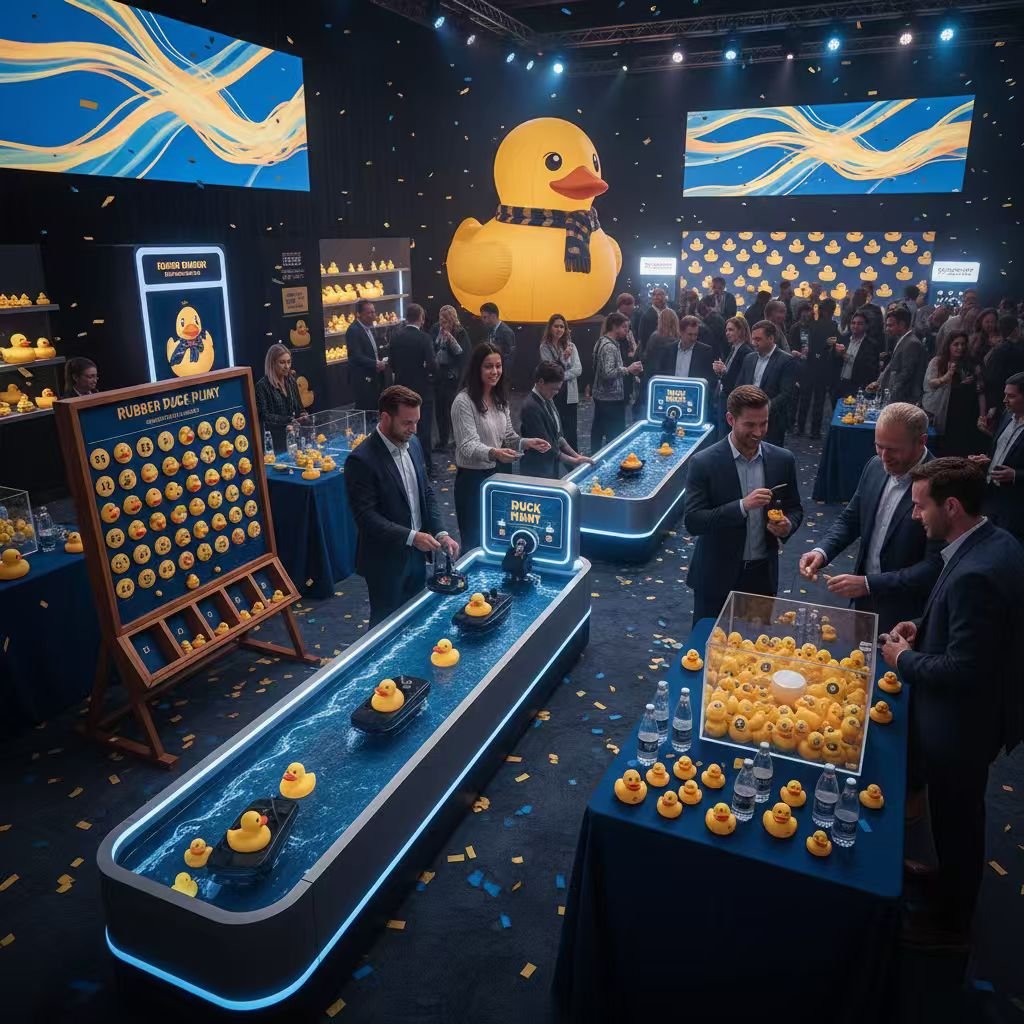
For social media UGC, engineer a hunt. The Jeep Ducking phenomenon — where Jeep owners leave rubber ducks on each other’s vehicles — proves people love finding unexpected ducks. Brands can create a “Find the Duck” contest at an event or across city landmarks. Each duck carries a unique code that unlocks a discount or entry into a prize draw. The physical duck becomes a treasure, driving photos, check‑ins, and shares. Campaigns that incorporate a unique physical item see 40% higher social engagement than digital‑only stunts. That’s the math that justifies the custom mold.
Launching Your Duck Campaign: A 4-Step Checklist
Skip sample approval and your $50K campaign might sink on launch day.
A campaign starts with a creative brief that goes deeper than ‘Make a duck with our logo on it.’ The brief must define the brand story the duck will tell. For a construction brand, that means a hard hat duck. For a hotel chain, a bellhop uniform. The spec sheet should include target size (standard is 65 mm, but we can adjust), material (phthalate-free PVC only), and the exact audience you want to reach. Connecting your brand message to giveaways starts with answering: What will the recipient feel when they hold this? If the answer is ‘nothing special’, you’ve already lost the ROI battle.
- Story Anchor: Define the duck’s role in your campaign: mascot, symbol, or collectible. A vague brief leads to a generic result.
- Spec Sheet Must-Haves: Size, material type (phthalate-free PVC), safety compliance (EN71/ASTM F963-17), and desired finish (matte vs glossy).
- Sample Must-Checks: Weight balance, seam smoothness, color accuracy against Pantone chip, logo permanence (scratch test).
- Compliance Documents: Request phthalate test report and safety certificate before approving the sample.
Once the brief is locked, the design phase kicks off with a 3D digital proof. This is your chance to approve posture, proportions, and color before any steel is cut. Pantone matching is non-negotiable — screen colors lie, so ask for a physical swatch comparison. The proof also determines whether pad printing or a custom mold is the right path. Pad printing on a curved duck body distorts fine logos and wears off; a custom mold embeds the details permanently. That mold investment of $1,500–$3,000 amortizes fast on orders above 5,000 units and yields a premium artifact that generates over 5x more social shares than a printed stock duck.
Step three is where campaigns fail silently: skipping the physical sample. A digital proof looks perfect, but the actual duck might have a rough seam line, uneven color saturation, or a buoyancy issue — some ducks tilt or sink. Always request a pre-production sample before mass production. Budget 4–6 weeks for sample creation and approval. Use this sample for internal sign-off and ideally test it with a small focus group. This is also the moment to confirm compliance: EN71 for Europe, ASTM F963-17 for the US. If those certs aren’t included, your ducks won’t clear customs.
After sample sign-off, production runs 8–12 weeks for a fully custom shape, plus ocean freight. The MOQ for custom molds is 1,000 units, but ordering 5,000+ drops per-unit cost from roughly $1.50 toward $1.10, making the custom option more economical than stock ducks with a logo. Coordinate delivery with your campaign calendar — get ducks in hand at least two weeks before launch. Plan packaging early: branded polybags, hang tags, or display boxes. This is also where you design your engagement mechanic. A ‘find the golden duck’ scavenger hunt at a trade show transforms a passive giveaway into an active, UGC-generating experience that drives booth traffic and social mentions.
Conclusion
The difference between a $0.90 stock duck and a $1.50 custom mold isn’t just unit cost—it’s the difference between a giveaway that disappears and a brand artifact that keeps your story alive for weeks. Skip the custom mold, and you forfeit the 5x social media shares and user-generated content that make a campaign measurable. You also risk spending $50K on an order that blends into every other booth at the trade show, with no lasting impression to show for it.
Don’t let your next campaign become a missed opportunity. The brands that win at brand storytelling with promotional products invest in the design upfront. Start by reviewing our custom rubber duck campaign examples to see how you can turn a giveaway into a brand artifact that drives real results.
Frequently Asked Questions
What’s the real difference between a custom shape and a stock duck with a logo?
A custom shape integrates your brand into the duck’s physical form, making it a premium artifact that lasts, while a stock duck with a logo uses pad printing that wears off quickly. The custom shape. Choose custom shape for long-term brand impact.
How long does it take to create a fully custom rubber duck from scratch?
Expect 15–25 working days for production after design approval, plus 7–10 days for sample creation and approval. Total lead time including shipping typically runs 30–45 days. Plan at least 6 weeks for your campaign timeline.
Are there sustainable or eco-friendly materials for promotional ducks?
Yes, some suppliers offer phthalate-free vinyl or similar eco-friendly options, but standard PVC remains the most common for bulk orders. Always request certifications like EN71 or ASTM to verify any sustainability or safety. Ask your supplier for phthalate-free options and compliance docs.
How do I ensure the colors of the duck match my brand’s Pantone shades?
Provide your Pantone codes up front and request a pre-production sample for color approval before full production. Reliable suppliers will match colors to within a visual tolerance using custom-molded vinyl. Always sign off on a physical sample before mass production.
What’s a realistic budget for a campaign with 2,000 custom ducks?
For 2,000 custom-molded ducks, expect total costs between $4,000 and $7,000 including mold amortization, production, and basic packaging. Stock ducks with a simple logo print could be half that, but lack the. Request a detailed quote based on your specific design complexity.