Skip to content
Esports is a giveaways industry dressed as a sport: tournaments give away merch to audiences, teams drop prizes to chat, and sponsors buy engagement through prizes that match the community’s identity. Rubber ducks fit the format better than most merchandise — cheap per unit, absurd enough to be memorable, and customizable to team colors and logos. This guide covers how esports teams and tournament organizers run duck giveaways: the formats that work, the production specs, and the economics that keep the program running.

Where Ducks Fit in the Esports Giveaway Mix
Esports giveaways run on three stages: the live stream (chat commands, viewer drops), the tournament floor (physical prizes at booths and finals), and the social feed (post-match giveaways on team accounts). Rubber ducks work on all three, which is rare for a merch item. On stream, a duck drop is a chat-command giveaway with instant visual payoff — a wall of ducks behind the streamer reads as an event, not an ad. On the tournament floor, a booth stocked with team-colored ducks is the cheapest high-retention giveaway: attendees take a duck, post it, and the team’s logo travels. On social, the duck’s absurdity drives the share loop that conventional merch lacks. The common thread: ducks are a low-cost, high-memory prize that keeps working after the event. For the product side, the gaming rubber ducks range is built around exactly these formats.
Format 1: Stream Drops With Chat Commands
The stream-drop format is a command-triggered giveaway: viewers type a command (e.g., !duck) in chat, the bot collects entries, and a winner is drawn at intervals. The production specs that matter: a stock of 50–200 ducks per stream for weekly drops (a 3-month program at one drop per stream-week needs roughly 300–600 ducks), delivery logistics to winners in multiple countries (custom ducks ship in compact cartons; international shipping per unit is the cost line to watch), and the announcement moment — the winner unboxing or receiving the duck should generate a clip, because clips are the content that markets the next drop. Teams running weekly duck drops report that the giveaway itself becomes a recurring segment the audience waits for, which is the real asset — the duck is the recurring character, not a one-off prize. The custom rubber ducks page covers the logo and color customization that makes the drop on-brand.

Format 2: Tournament Floor and Booth Giveaways
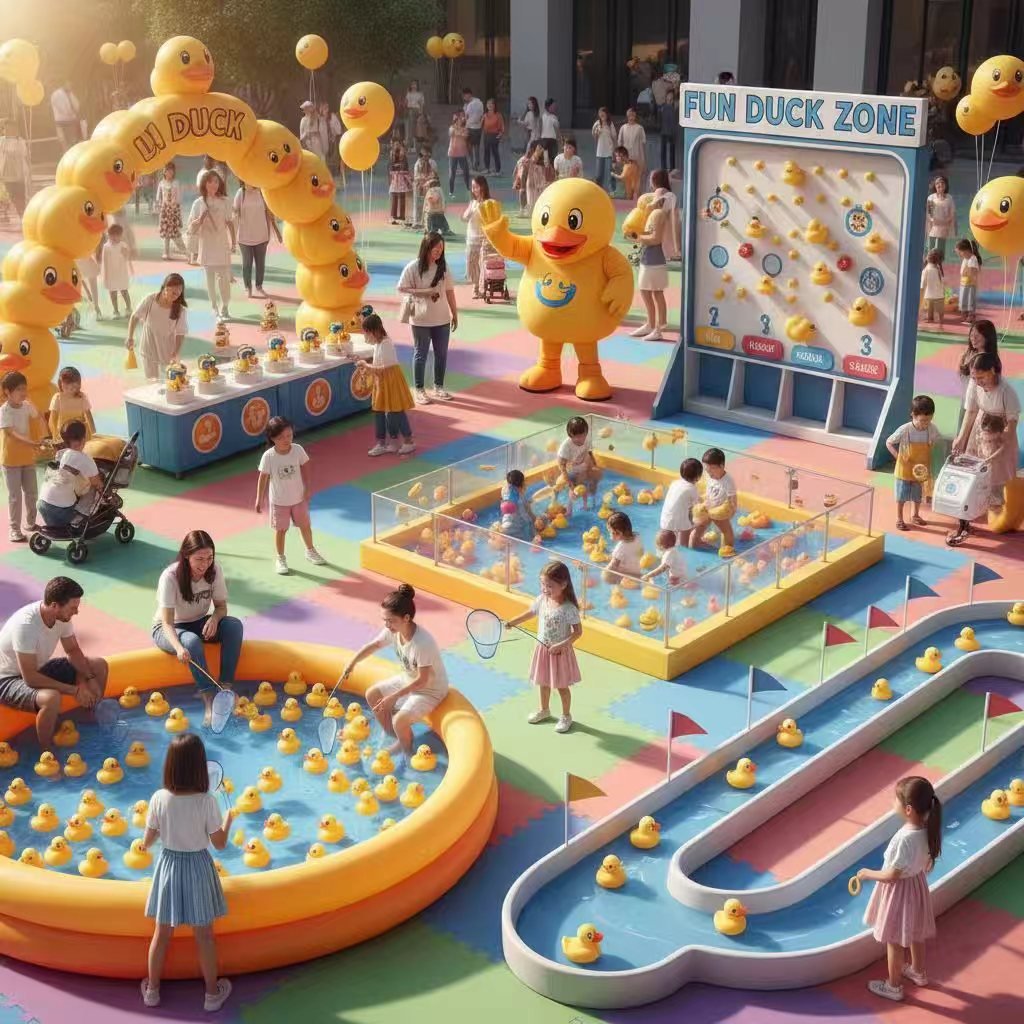
Tournament giveaways are a volume game: the booth that runs out of prizes by day two has failed regardless of the product. Ducks solve the volume problem — a 5,000-duck batch is a manageable carton load and a realistic budget line — and the floor format is simple: take a duck, scan a QR, enter the bigger prize draw. The upgrade path that pays: team-colored ducks (a 2–3 colorway program) versus generic ducks. Attendees keep team-colored ducks, post them, and the retention effect compounds across the event weekend. The practical specs: ducks with a squeaker or without (tournament halls are loud; silent ducks are the safer choice for floor giveaways), matte vs gloss finish (gloss photographs better under arena lighting), and the packaging decision (a branded polybag costs cents and protects the print during a day in a backpack). For the volumes involved, bulk duck ordering is the entry point, with the sports team duck range covering the colorway production.
Format 3: Social Feed Drops Around Match Days
Match-day giveaways on team social accounts ride the attention spike: post-match, the audience is engaged, and a 24-hour duck drop with a match-themed mechanic (predict the score, tag a fellow fan) converts that spike. The production spec is the same as any flash giveaway — published terms, no-purchase entry, fast fulfillment — with the esports twist that the prize should match the match: a duck in the opponent’s colors for the losing team’s fans, a special-edition duck for milestone matches (100th match, first win of the season). The economics: 100–300 ducks per match-day drop at $0.50–$1.50 each landed is a small line item against a match-day marketing budget, and the engagement return — posts, shares, clips — typically outperforms paid posts on the same spend. Teams running the three formats together build a duck ecosystem: stream drops weekly, floor drops at events, social drops on match days. The giveaway compliance basics apply across all three, and the giveaway strategy guide covers the rules framework in more depth; for tournament-floor programs that hand ducks to all ages, the ASTM F963 toy safety specification is the reference to check when the crowd includes children.
The Economics: What a Duck Program Costs
Run the annual numbers for a mid-tier team: 40 stream drops × 100 ducks, 2 tournament floors × 5,000 ducks, 24 match-day drops × 200 ducks — roughly 20,000 ducks a year at $0.40–$1.00 each landed (the band tightens with volume and print complexity), plus freight and admin. That is a five-figure program at the high end, against sponsorship budgets that are typically six figures — the duck program is the highest-retention line item per dollar in the merch mix. The cost levers: print complexity (one-color pad print at $0.40 vs multi-color UV at $1.00), packaging, and international fulfillment. MOQ 1,000 with 12-hour mockups and 7-day sampling at LZENGO keeps the program agile — a special-edition match duck can go from idea to sample in a week. For the production timeline side, the product development page covers the mold and sampling steps for custom shapes.
FAQ
Why do esports teams give away rubber ducks?
Ducks are cheap per unit, customizable to team identity, and memorable enough to generate clips and shares — the engagement return per dollar outperforms most merch giveaways.
How many ducks does a stream drop need?
50-200 per stream for weekly drops; a 3-month weekly program needs roughly 300-600 ducks, with international shipping the cost line to watch.
What duck specs suit tournament floors?
Silent ducks (no squeaker), gloss finish for arena lighting, team colorways, and branded polybag packaging to protect the print through a day in a backpack.
How much does an esports duck program cost?
Roughly 20,000 ducks a year at $0.40-$1.00 each landed for a mid-tier team across all three formats – a five-figure line against six-figure sponsorship budgets.
Run the three formats as one program — stream, floor, social — and the duck becomes the team’s recurring giveaway character. Start with the stream format, measure the clips, then scale to the floor. Related reading: giveaway ROI guide and the sports team ducks range.