Skip to content

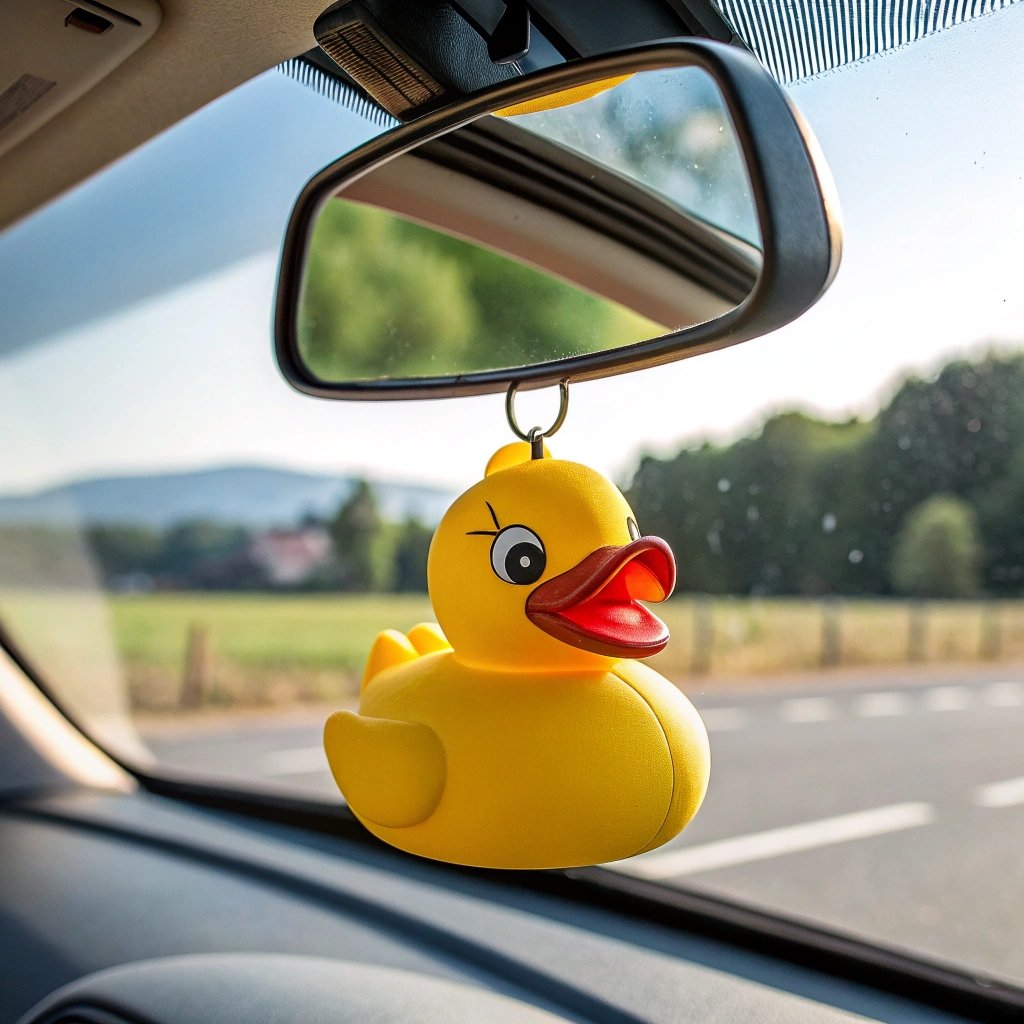
A flocked duck looks like a different product from the standard glossy vinyl one, even when both came out of the same mould. The velvet surface hides mould seams and sink marks, reads as a premium or gift-market item, and photographs far better than gloss in a busy product shot. It also changes how colour behaves, how the duck wears and how it should be packed.
This guide covers what flocking is, where it helps and where it fails, and the specification lines that keep a flocked run consistent between orders.

How Flocking Is Applied to a Duck
Flocking is an electrostatic process. The duck body is coated with adhesive, then short fibres are sprayed through an electric field that stands them on end and drives them into the adhesive. The result is a dense, upright pile: the velvet look. The part is then cured so the adhesive sets and the fibres stay put.
The quality of the finish comes down to fibre length, fibre density and adhesive control. Short, dense fibres give a plush hand and better coverage; long fibres look shaggy and shed. Adhesive that is applied unevenly shows as bald patches at the tight curves around a duck’s beak and tail, which are exactly the areas a buyer inspects first.
Flocking is usually applied to selective areas rather than the whole duck. A flocked head over a moulded-in-colour body, or a flocked belly under a glossy head, are common combinations, and they give the design a two-material feel without the cost of a second mould. Tooling for a flocked duck is the same as the standard mould: the finish is added after molding, not built into it.

What Flocking Does to Colour
Flock fibres do not carry the deep saturation of vinyl. The same red reads softer and slightly greyer once it is flocked, because the fibres scatter light rather than reflecting it from a smooth surface. Buyers who approve a colour on a glossy swatch and then see the flocked version often think the colour drifted; it did not, the finish changed how the eye reads it.
The colour match is also harder to control run to run. Fibre lots vary slightly, adhesive can darken a shade, and the pile direction affects how light hits the surface. The practical control is to approve colour on a flocked sample, keep the approved fibre lot reference, and accept that exact Pantone reproduction is not achievable in flocked finishes the way it is on a bare body.
Where brand colour is critical, the workable designs keep flocking to one area, print or pad-print the logo on the bare body, and use the flocked zone as texture rather than as the colour carrier. The printing methods that hold up on vinyl are covered in our notes on UV printing versus pad printing for ducks, and the base material behaviour is set out in what rubber ducks are made of.

Durability: What the Flock Survives
Flock is a surface layer and it abrades. A flocked duck handled by adults as a desk or dashboard piece will hold its surface for years; the same duck in a bath, a pool or a child’s pocket will wear at the contact points and eventually go bald at the high spots. The honest positioning for flocked ducks is promotional and collectible use rather than water play.
Washing accelerates wear. Where a flocked duck will be cleaned, the instruction should be a damp cloth rather than immersion, and no brushing: stiff brushing pulls fibres out of the adhesive. Where the duck will live outdoors, from UV exposure to rain, flocking is generally the wrong finish, and a UV-stabilised bare body serves better.
Durability is testable, and the tests are standard. Abrasion and adhesion methods catalogued in the ASTM standards library can be applied to a flocked sample so that two fibre or adhesive options are compared on evidence rather than on the first impression. For most promotional runs, a simple rub test plus a sample kept for reference is proportionate.
Packing Flocked Ducks
A flocked surface attracts dust and shows handling. Ducks should be packed once, in the packing that the customer will receive, rather than handled twice through an intermediate bulk stage. Where bulk packing is unavoidable, individual polybags protect the surface from scuffing and dust during transit, and they also stop two flocked surfaces from rubbing against each other in the carton.
Compression is the second packing risk. Flock does not spring back the way smooth vinyl does, and a tightly packed carton can leave a flattened patch on a shoulder or head that never fully recovers. Carton pack quantities should be set one or two ducks lower than the equivalent glossy SKU, and the pack pattern should avoid weight resting on flocked faces.
The same logic applies to gift packaging. Flocked ducks suit open trays and window boxes where the surface is visible and untouched, which pairs naturally with the retail and gift box formats described in our retail packaging notes for rubber ducks. For campaigns that ship direct to end users, a flocked duck in a printed box is one of the few promo products that arrives looking like a gift rather than a sample.
Specifying a Flocked Run
The specification should name the flocked areas, the fibre colour reference approved on a flocked sample, the fibre length and density band, and the adhesive type. It should also name the care instruction and the packing method, because those two lines decide whether the surface arrives intact.
Run-to-run consistency depends on the fibre lot. Keep a sealed reference duck from the approved run, stored away from dust and light, and compare each new run against it by eye and by hand. Where the programme runs seasonally, ask the factory to reserve the fibre lot at order, not at production, because flock fibre shades drift between lots and a mid-season change is visible on a shelf.
Flocking is one of the finishing routes our custom duck programme runs alongside pad printing, moulded-in colour and multi-material builds. The pre-production sample for a flocked order should always be a flocked duck from the same line, and the custom rubber duck programme produces exactly that: a sample in the final finish, not an approximation of it.
FAQ
Is a flocked duck waterproof?
The flock itself is not designed for immersion. It suits desk, shelf and gift use; keep flocked ducks out of baths and pools.
Why does the colour look different when flocked?
Fibres scatter light instead of reflecting it, so the same colour reads softer and slightly greyer. Approve colour on a flocked sample.
How durable is the finish?
It wears at contact points under handling. For long life, specify a tested fibre and adhesive and keep a sealed reference duck.
Can I print on a flocked area?
Print is normally applied to the bare body. Flocked surfaces do not take a clean pad print, so designs print and flock separate zones.
How should flocked ducks be packed?
Packed once in final packing where possible, with polybags for bulk and lower carton counts to avoid compression marks.
Video: How Electrostatic Flocking Works
If a premium surface is what the campaign needs, flocking is worth sampling against a printed gloss duck in the same artwork. The custom rubber duck team can produce both versions as production-finish samples so the choice is made in the hand.
Related reading: Vinyl or Silicone Rubber Ducks: Material Behaviour and Cost