A pre-show plan for the distributor who will be asked for ducks and wants the answers ready.
I plan a trade show backwards from the follow-up, not forwards from the booth. My method is to decide before the floor which clients belong to which duck path, which questions I will ask every supplier, and which file I will keep afterwards, because the value of a show is not the conversation, it is what the conversation turns into two weeks later when the samples are on a desk.
In short: Settle two duck paths, six questions and one tooling file before the show. A distributor who walks in knowing which clients need a stock duck and which need a custom shape spends the floor comparing suppliers instead of learning the category.
The show decides less than the plan around it
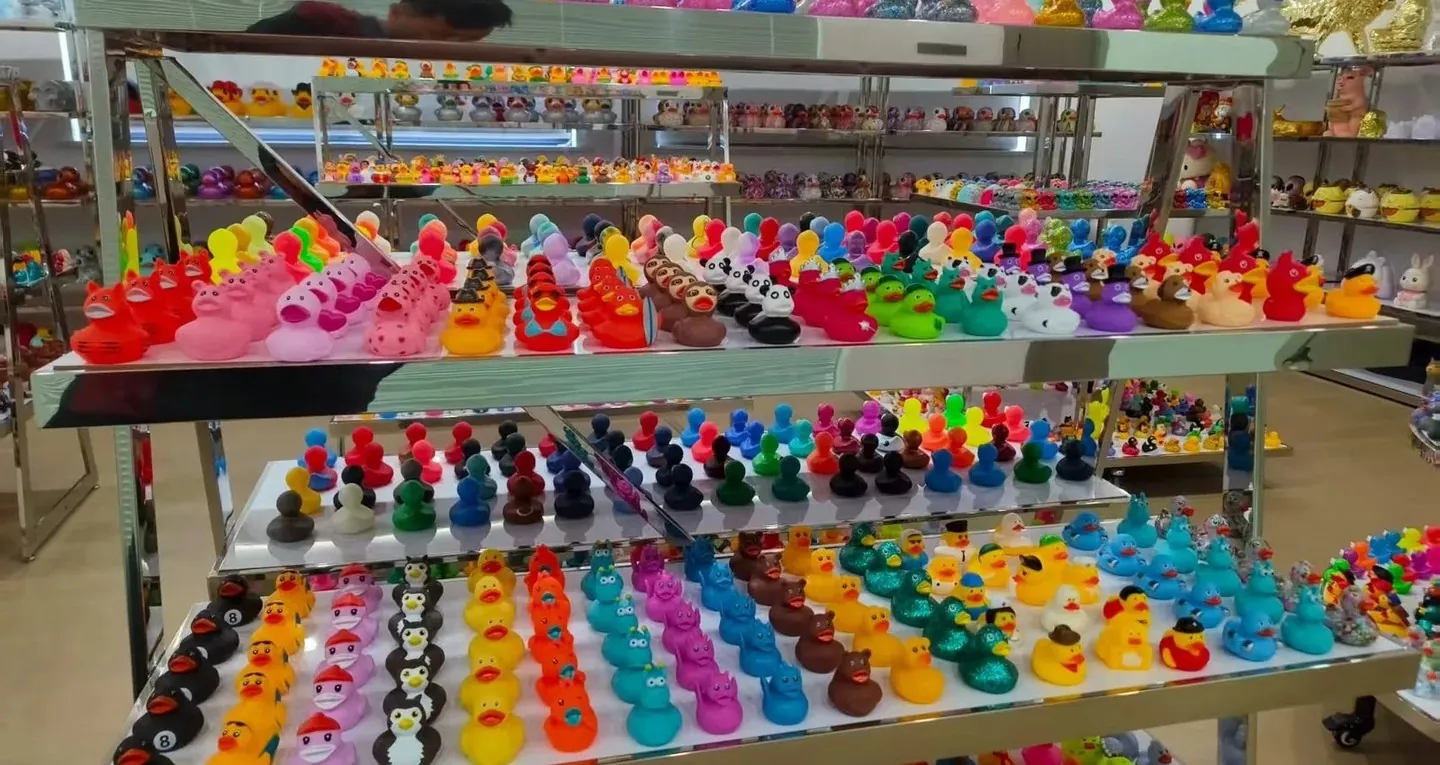
A show is a compression of a year of sourcing into two days, and it rewards the visitor who arrives with a structure. The exhibitors will all say they can make a custom duck; the useful question is what each one means by custom, and that question can only be answered quickly if the distributor already knows which answer their clients need.
The plan around the show has three parts: a client map, a question list and a file. The client map decides who you are buying for. The question list decides what you are comparing. The file decides what you can prove afterwards. None of the three is about the booth, and all three are what makes the booth worth the trip.
Map your clients to two duck paths before you walk the floor
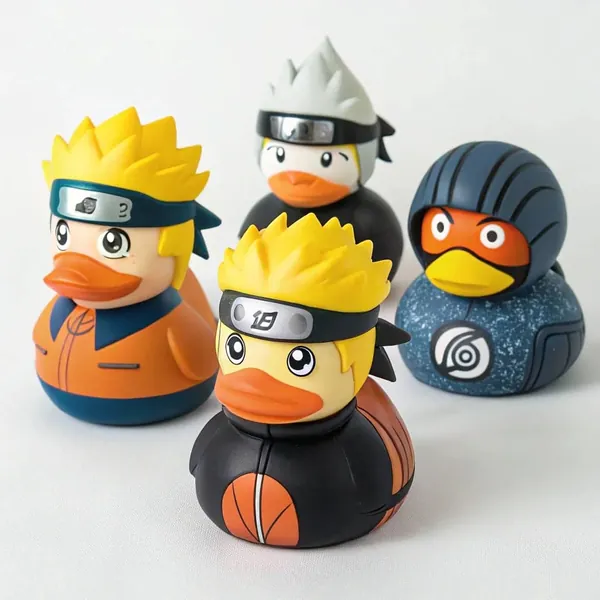
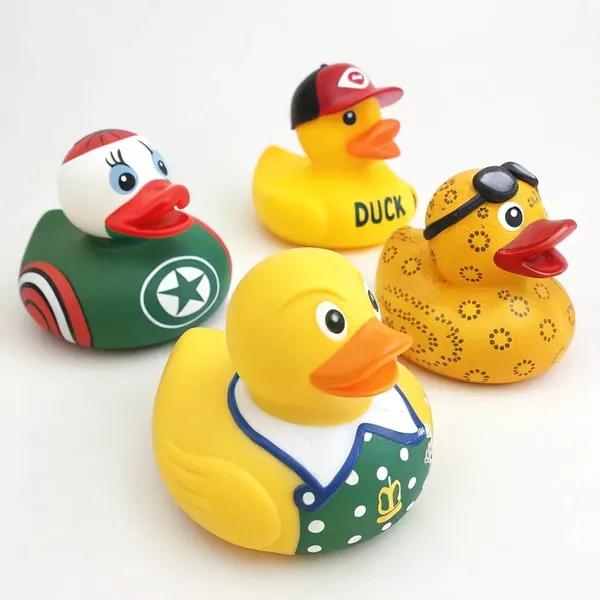
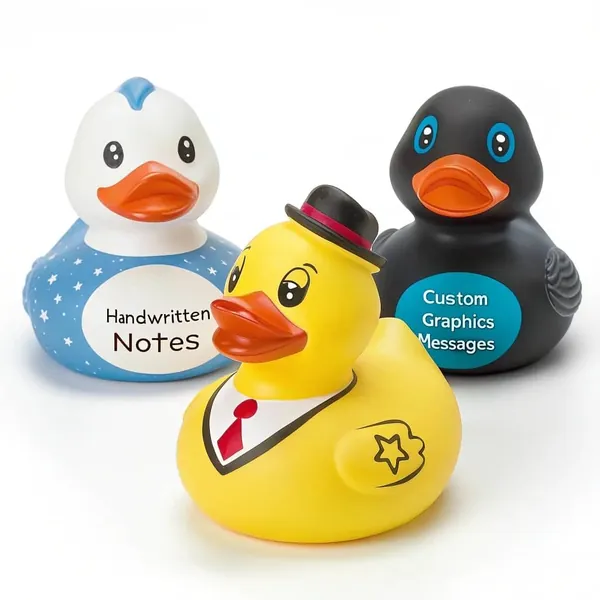
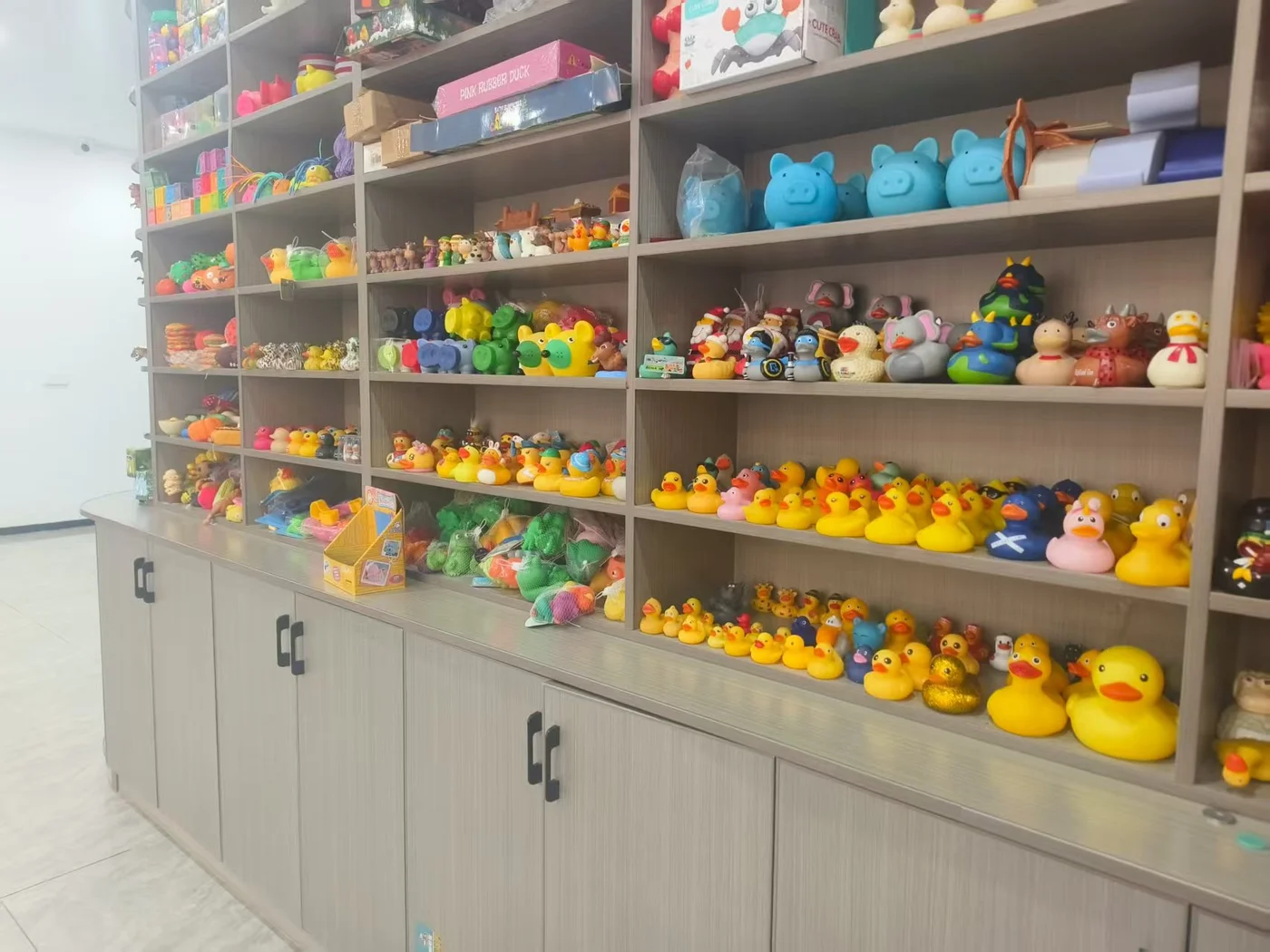
There are two duck paths, and the difference is where the variety lives. The stock path uses a body that already exists and spends the variety on colour and print, which makes it the natural fit for a promotional programme with a date and a budget. The custom path cuts a new sculpt, which makes it the fit for a mascot, a brand character or a product that has to be recognisable from across a room.
| Path | What the client buys | What it needs from the supplier | What it changes in the plan |
|---|---|---|---|
| Stock body | A known shape in their colour and print | Colour reference and artwork file | A sample round and a colour check |
| Custom sculpt | A shape that exists only for them | A drawing, a tool and a tool owner | A tooling decision and a longer sample round |
| Mixed | Several styles in one order | Counts per style and marks per style | A count sheet and a carton mark |
Sorting the client list before the show turns a vague walk into a shopping list. A distributor who knows that eight of their ten clients sit on the stock path can spend the floor on colour discipline and print quality, and save the tooling questions for the two clients who actually need them.

The questions that separate a factory from a reseller
The fastest way to sort a booth is to ask questions that a reseller cannot answer without a phone call. Ask what the body is made of and where the tool sits. Ask who cuts the tool and how long the tool lasts. Ask what happens to the tool after the order, and who holds it for the reorder. A factory answers these directly; a reseller answers them later.
The second group of questions is about the file. Ask which report covers the duck, which laboratory issued it and whose name is on the certificate. Ask what the factory does when a carton fails at final inspection. The answers separate a supplier that has run a claim from one that has only promised quality, and the difference will matter in month nine, not in the meeting.
Tooling ownership is the question most distributors skip
A custom sculpt is a tool, and a tool is an asset. The distributor should know who owns it, where it is stored, and what happens to it if the client leaves or the supplier changes. A tool that lives only at one factory, with no written owner, is not an asset to the client; it is a dependency that shows up at the worst possible moment, when a second source is needed and the shape cannot be moved.
The stock mold and custom tooling decision is worth settling before the show floor rather than after, because it changes what the distributor asks for. A stock body needs an artwork file and a colour reference. A custom tool needs a drawing, a tool owner and a written storage arrangement, and those three documents are the whole difference.
What the sample round has to prove
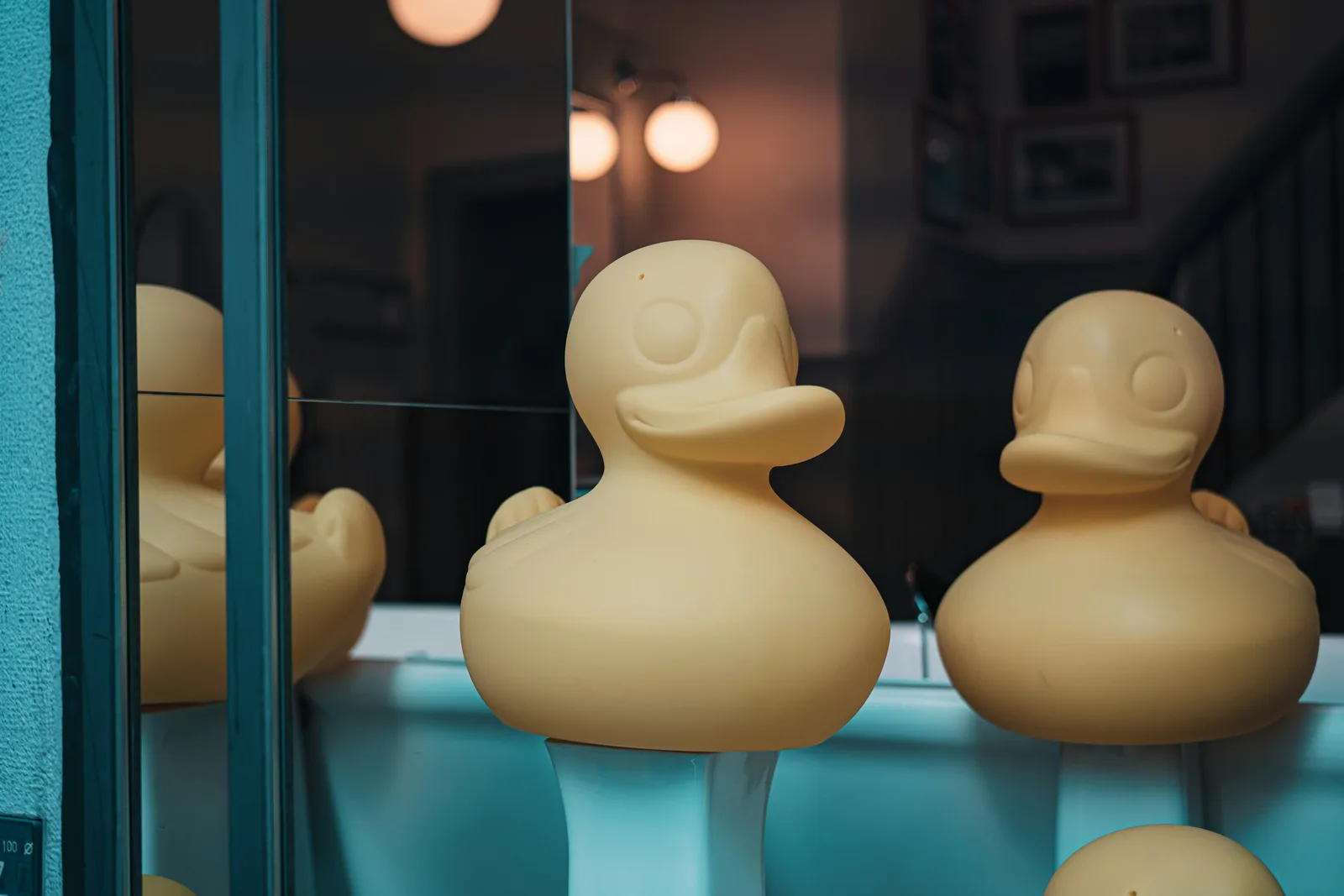
A sample is not a souvenir of the show. It is the first physical evidence that the supplier understood the brief, and the distributor should decide in advance what will be checked on it: colour against the reference, print position against the artwork, body length against the drawing, and the seam under a thumb.
The sample round also decides the file. If the duck is sold as a children's toy in the United States, the sample and the report travel together, because the standard is mandatory and the certificate is issued against it. The CPSC toy safety guidance confirms that section 106 of the CPSIA made ASTM F963 a mandatory consumer product safety standard for children's toys, and that the certificate has to name the applicable sections. A sample with no report behind it is a nice object, not a deliverable.

The follow-up sequence in the two weeks after the show
The two weeks after a show are when the notes decide whether the trip pays. The sequence that works is short: sort the cards into the two paths, send one message per supplier that references the specific conversation, ask for the two documents that were missing, and put a date on the sample.
The discipline is to send fewer, better messages. A generic note to forty booths produces forty generic replies, and the distributor learns nothing. A note that says which path the client is on and which document is still missing produces either a document or an honest answer, and both are useful.
Three line items make the show-year plan real
A show-year plan survives on paper when it has three lines: the tooling budget, the sample round and the file. The tooling line says which clients need a sculpt and who owns it, and it pairs with the request you send rather than replacing it. The sample round says which brands get a physical proof and what will be checked. The file says which report covers which programme and who holds the certificate. The packaging clause belongs in the same line, because the bag a duck ships in is part of the toy file rather than an afterthought: the CPSC toy standard guidance records that certain plastic film, including packaging, must average more than 0.00150 in. in thickness or be perforated so that one percent of the surface is removed.
Those three lines are also the three questions a client will ask in the spring. A distributor who can answer them in a single page has a plan; a distributor who has to call four suppliers to answer them has a hobby.
The compliance file a distributor has to carry
The file is not the factory's private paperwork; it is the distributor's evidence. It should hold the report for each product, the scope it covers, the certificate that names the importer, and the record of which programme used which document. When a client asks for proof, the answer should come from a folder and not from an email search.
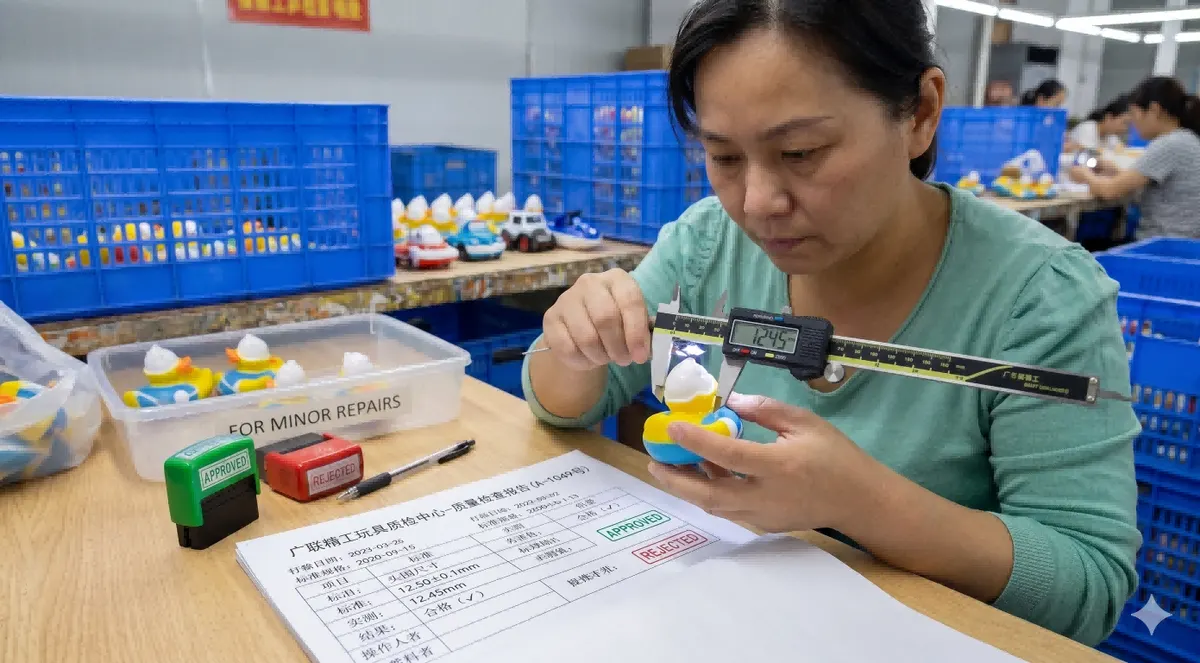
That file also changes what the distributor asks at the booth. A question about the report is a question about the standard, and a supplier who cannot name the standard behind the report has not been through the exercise. For a duck sold into the children's market, the certificate is the product of that exercise, and it is the one document a distributor should never be asked to improvise.
Before the show, four questions are worth writing on the back of the badge:
- Which clients need a stock body, and which ones need a sculpt?
- For every sculpt, who owns the tool and where is it stored?
- Which report will be requested from every supplier, and by when?
- Which two documents will decide whether a sample is approved? The safety testing page covers the reports themselves, while the brand guide covers the design side a client will ask about in the same meeting.
Frequently Asked Questions
What should a distributor decide before the show?
Two things: which clients belong to the stock path and which need a custom sculpt, and which documents will be requested from every supplier. Both answers fit on one page and both make the floor time more useful.
When is a custom sculpt worth it for one campaign?
When the shape itself carries the message, and when the client expects a second run of the same character. For a one-off giveaway with a date, a stock body with a strong print usually does the job with less risk.
What happens to the tool after the first order?
That is a contract question, not a manufacturing one. It should be agreed in writing before the tool is cut: who paid for it, where it is stored, who may use it and what happens if the relationship ends.
How do I compare two duck suppliers after the show?
Compare the documents and the samples, not the brochures. A supplier whose sample matches the artwork and whose report names the standard is ahead of one whose only answer is enthusiasm, and the difference shows up fastest on a giveaway programme with a date attached.
Final Note
I would judge a show by the two weeks that follow it, because that is when the notes become documents. A distributor who arrives with a client map, six questions and an empty file has a plan that can be filled in; a distributor who arrives with a bag and a badge has a day out. The booth is the easy part. The file is the part that makes the next show less demanding. Keep the cards, keep the samples and keep the notes with the documents they produced, because the second show is judged against the first and the comparison is only possible if the first one left a record. A distributor who can hand a client a folder in the spring has already won the argument that a show was worth attending.
Key takeaways
- The show decides less than the plan around it: A show is a compression of a year of sourcing into two days, and it rewards the visitor who arrives with a structure.
- Map your clients to two duck paths before you walk the floor: There are two duck paths, and the difference is where the variety lives.
- The questions that separate a factory from a reseller: The fastest way to sort a booth is to ask questions that a reseller cannot answer without a phone call.
- Tooling ownership is the question most distributors skip: A custom sculpt is a tool, and a tool is an asset.
- What the sample round has to prove: A sample is not a souvenir of the show.
- The follow-up sequence in the two weeks after the show: The two weeks after a show are when the notes decide whether the trip pays.
- Three line items make the show-year plan real: A show-year plan survives on paper when it has three lines: the tooling budget, the sample round and the file.
- The compliance file a distributor has to carry: The file is not the factory's private paperwork; it is the distributor's evidence.