What a booth giveaway has to survive after the badge is scanned.
A trade show giveaway is judged on the walk back to the car. The bag is heavy, the visitor has collected too much, and the objects that survive the walk are the ones that were worth carrying. A duck usually survives because it is light and because it is not another pen.
In short: A rubber duck beats typical booth swag because it passes three tests in sequence: it is worth picking up at the counter, it survives the walk back and it stays visible on a desk afterwards. The booth, the size, the card and the count decide those three, and all four are settled before the show.
The booth problem is memory, not money
A booth has one advantage over a website: the visitor is standing in front of a person. It also has one disadvantage: the visitor will meet forty other booths before the day ends, and the memory of each one fades in proportion to how much was collected.
The giveaway is not a purchase; it is a memory cue. Its job is to be the object that brings the conversation back when the badge scan is opened a week later. A heavy bag of generic items does not do that, because the visitor cannot remember which item came from which booth.
That reframes the decision. The question is not how much to spend per visitor; it is which object has the best chance of being seen again. A duck is small, visible and unusual enough to be remembered, and it does not need a screen to work.
Why the usual swag loses
The standard booth items are chosen for the logo area rather than for the second life. A pen is used and lost, a tote is used for the show and then stored, a sticker is applied once. None of them is bad; each is just easy to replace.
| Item | What it does at the booth | What it does after the show |
|---|---|---|
| Pen | Easy to take, easy to lose | Disappears into a drawer |
| Tote | Carries the rest of the haul | Stored with the other tradeshow bags |
| Sticker | Quick to apply | Peels or stays on a laptop corner |
| Duck | Visible on the counter | Sits on a desk and is moved |
The duck wins on the "moved" column. An object that is handled repeatedly is an object that is seen repeatedly, and the mark on it does the reminding without any further effort from the exhibitor.

The duck passes the desk test
A desk is the final destination for most booth giveaways, and it is a crowded place. The objects that stay are the ones that are small enough to sit beside a monitor, visually distinct and not obviously promotional.
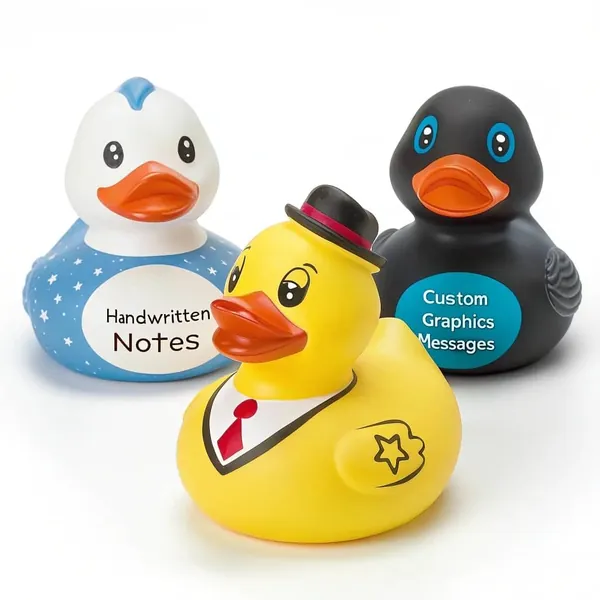
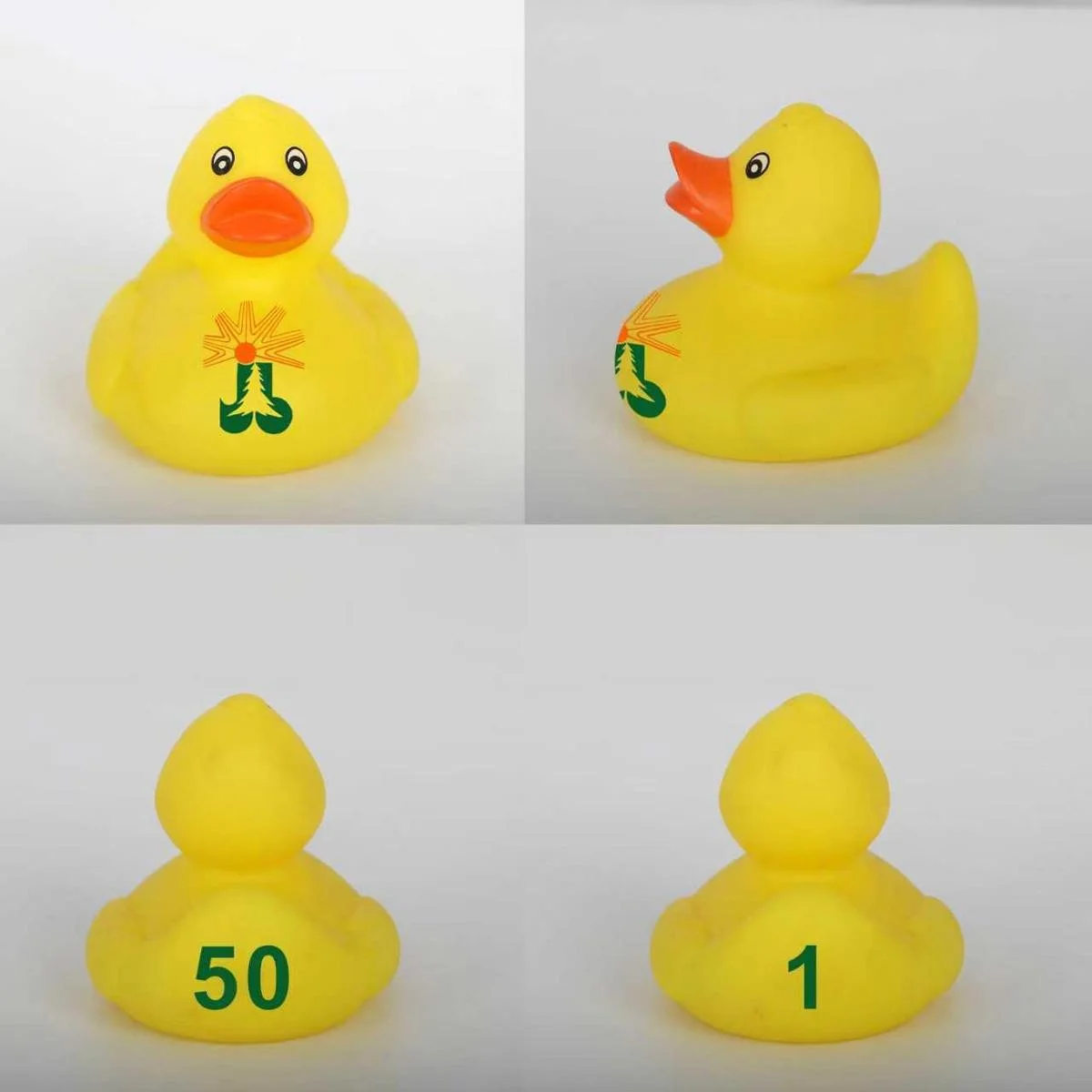
A duck has two of the three by design. The third is a design decision: a duck with one clear mark and one idea is kept, while a duck covered in type and urls is a leaflet with a beak. The mark should be readable from a seated position, which usually means the chest or the side, not the top of the head, and the placement guide sets out what each surface holds.
The card does the rest. A single sentence that explains what the duck is for turns it from a novelty into an object with a reason. Without the card, the duck is memorable but mute.

The trip home is the real test
The walk back, the flight and the hotel room are where many giveaways fail. A bag that tears, a box that crushes or an item that leaks makes the visitor put it down before it ever reaches the office.
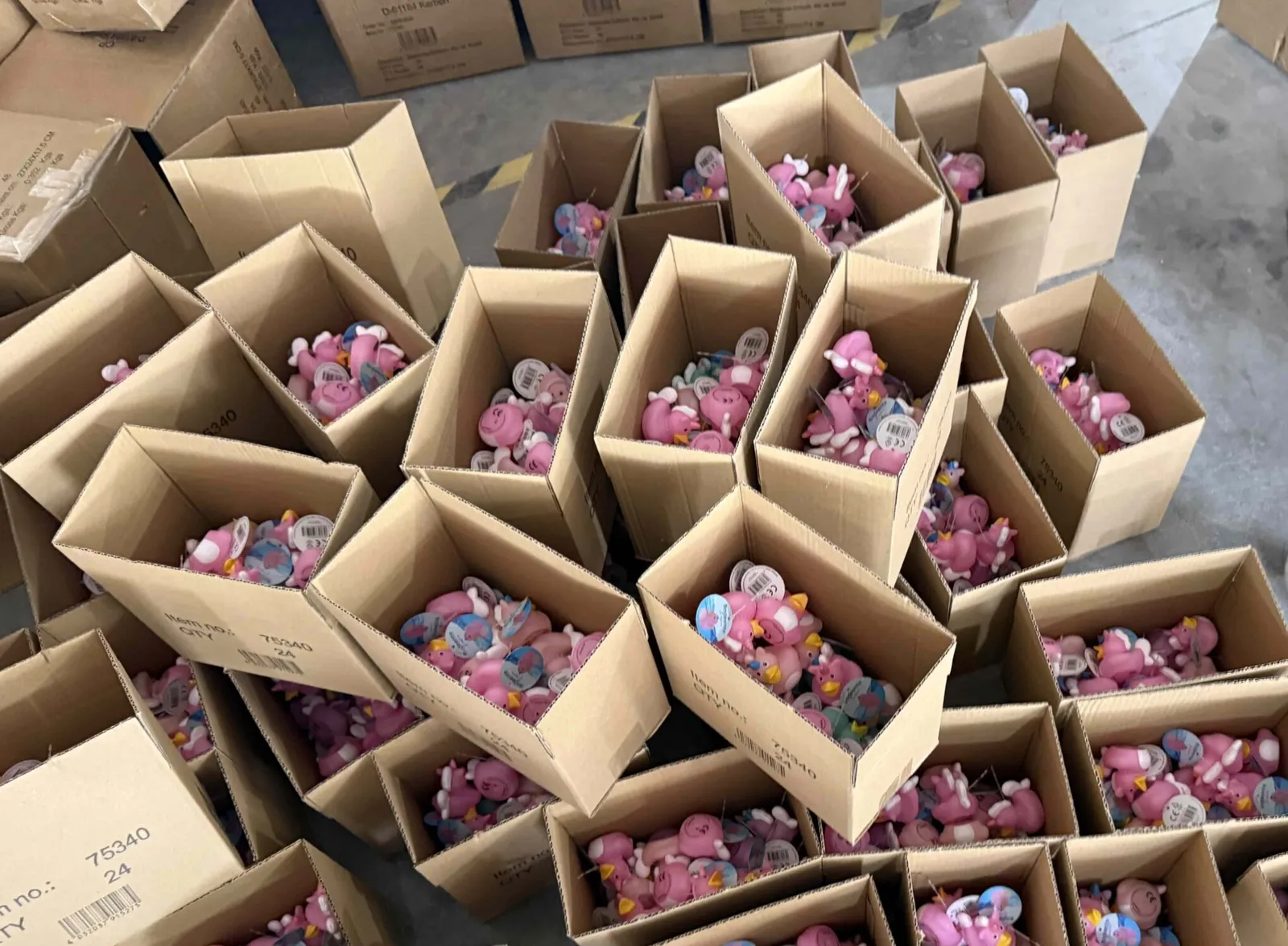
A duck travels well because it is light and hard to break. The packaging is the variable: a polybag protects it but reads as a giveaway, a small box reads as a gift and takes more room, and a loose duck in a carton is quick to pack but has to be handed over by hand.
The show decides the format. A busy booth with a long queue needs a pack that can be handed over in two seconds. A quieter booth with a meeting-led pitch can afford a box and a card. The packaging notes cover the formats that survive a trip.
Pick the duck for the booth, not the catalogue
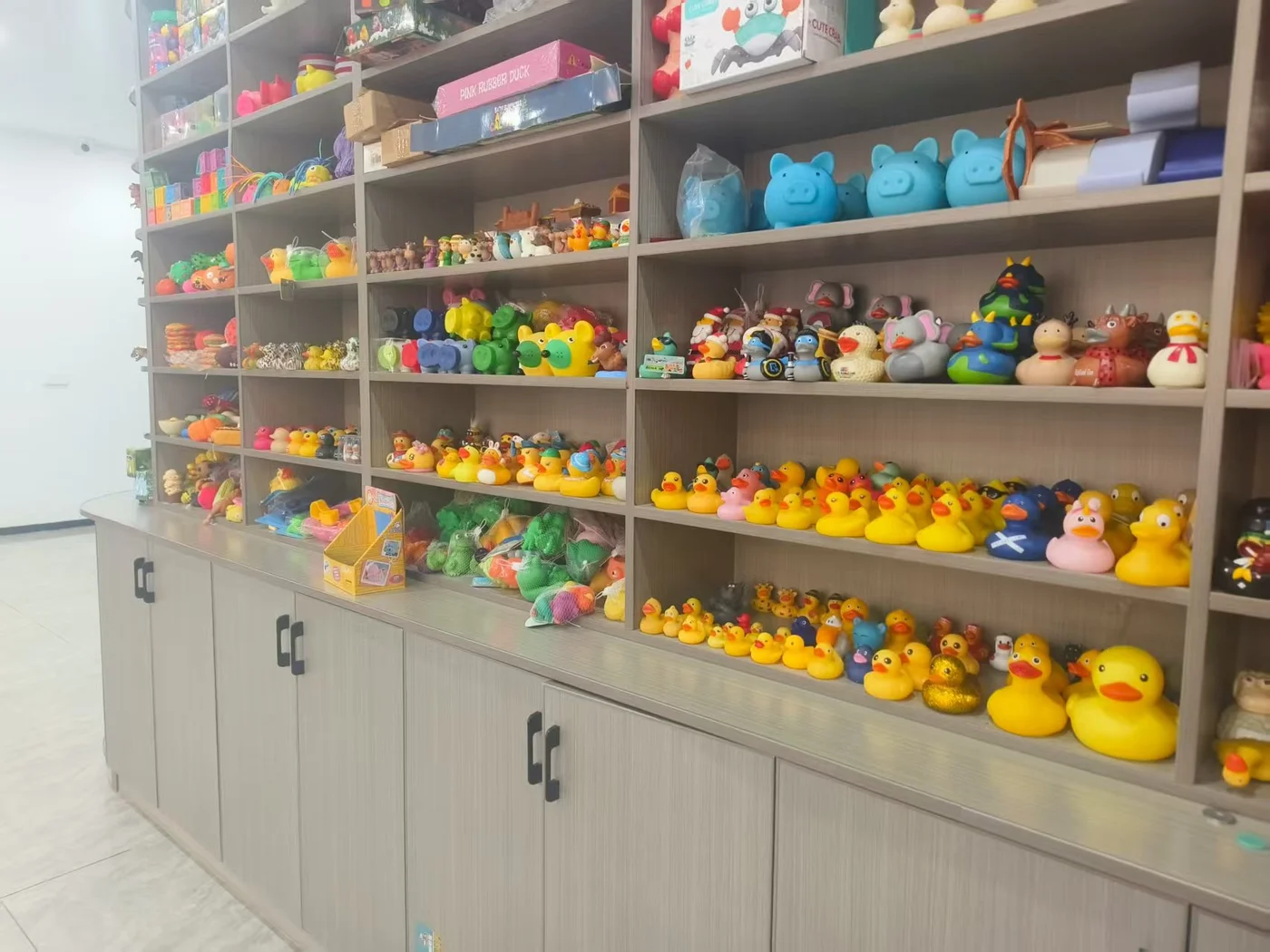
The catalogue lists sizes and shapes, and the booth decides which of them work in the hand. A large duck is visible from the aisle but awkward to carry; a mini is easy to pocket but easy to overlook. The right size is the one the visitor can hold in one hand while holding a bag in the other.
The booth's audience matters too, and the PPAI plan sets out how distributors map clients to two duck paths. The short version: a giveaway and a table piece are different orders. The giveaway is handed over in volume; the table piece is a display object that starts conversations.
The size notes show how the bands change the pack and the count. A size change is not a cosmetic decision at a show, because it changes the number of cartons the booth has to store behind the counter.
Who is holding it
The visitor who takes the duck is not always the person who keeps it. It may go to a colleague, a child or a client, and that second hand changes the compliance question.
If the duck can reach a child, it is a children's product for that leg of its life. The CPSC toy safety guidance explains that a product can become a children's toy through how it is designed, manufactured or marketed, and the tracking-label guidance describes the permanent marks that make the location, date and batch ascertainable. A promotional duck sold into the United States with a family audience should carry the label from the start.
The other hand is the colleague at the office. That is the desk test again, and the duck that survives it is the one that was designed for a desk rather than for a bag.
Make the duck a reason to stop
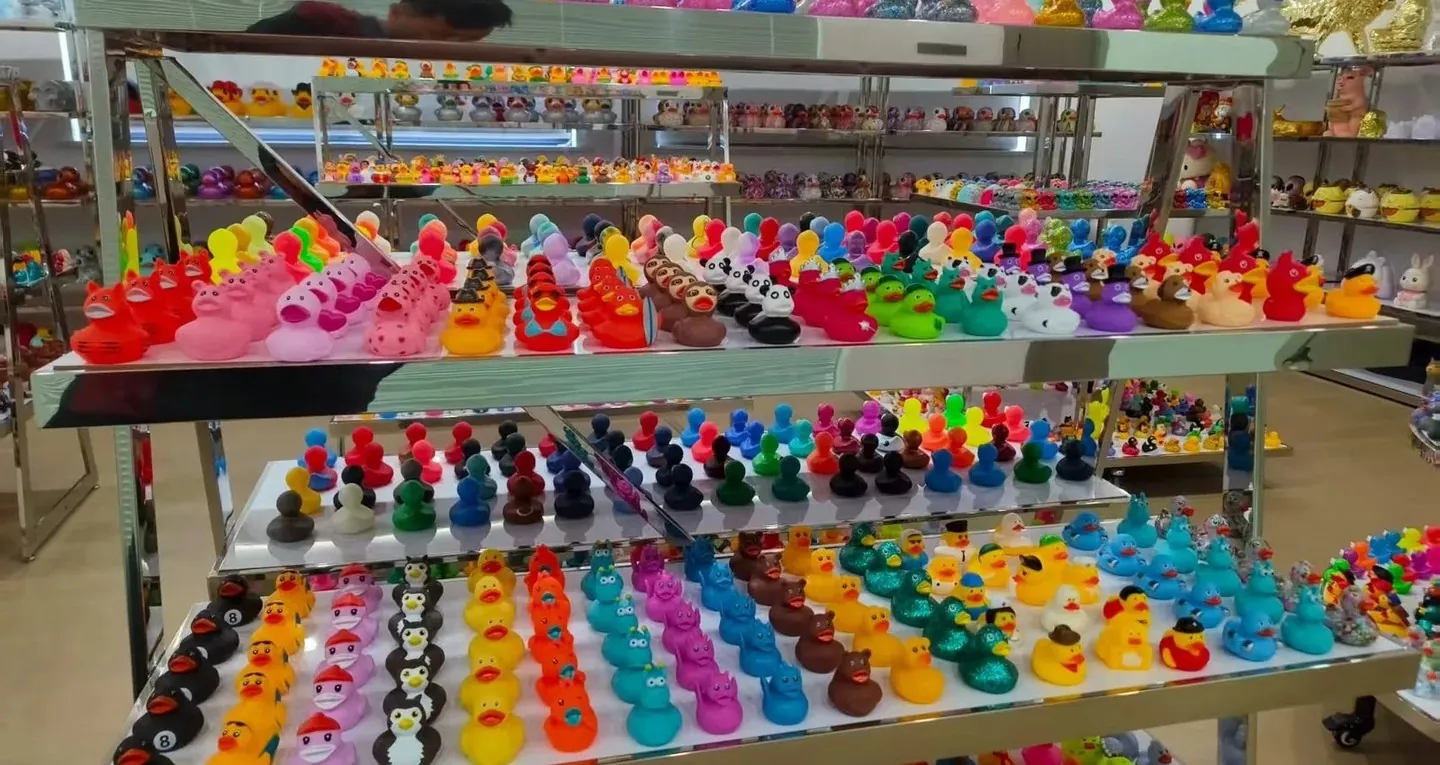
A duck on a counter is a small event. People pick it up, turn it over and ask what it is, and that moment is the only opening the booth gets. A single duck is a giveaway; a small series is a reason to stop and look.
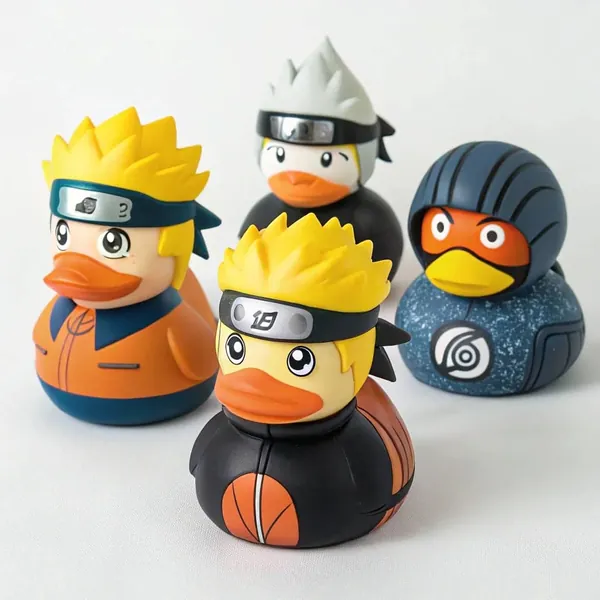
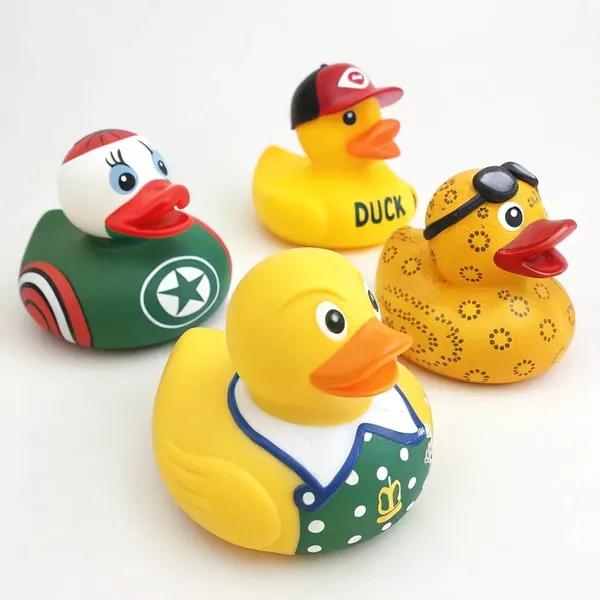
The series can be four or five characters, or one body with a dated mark. The date is the simplest way to make the booth duck a collectible, because it marks the show and cannot be bought anywhere else. The accessories notes show how much character can be added without a new body.
The card is the second half of the stop. It should give the visitor a reason to keep the duck and a reason to look up the booth later. A card with one sentence and one destination does more than a card with a full product list.
What to settle before the show
Four things have to be fixed before the cartons leave: the count, the pack, the card and the label. Each one is small, and each one can stop the booth on the first morning.
| Line | What it fixes | Who signs |
|---|---|---|
| Count | How many ducks per visitor and per day | Booth lead |
| Pack | Bag, box or loose, and how it is handed over | Booth lead |
| Card | The one sentence and the one destination | Marketing |
| Label | The marks required for the audience | Compliance |
| Storage | Where the cartons live behind the counter | Operations |
The count is the line most often guessed. The booth lead knows the daily traffic, the team knows the take rate from last year, and the packer knows how many cartons fit in the storage space. Those three numbers produce a count that survives the first day.
Five questions for the booth team
The booth lead can answer all five before the cartons are loaded, and the answers belong on the show sheet.
- Who is the visitor likely to hand the duck to, and does that person need a label?
- Which size fits the hand and the storage space behind the counter?
- Is the duck a single giveaway or a small series worth stopping for?
- What does the card say, and what does it ask the visitor to do?
- Who counts the cartons on the first morning, and what is the top-up plan?
Frequently Asked Questions
Why are rubber ducks better than pens at a trade show?
A pen is used and lost; a duck is handled, displayed and moved. The duck stays visible on a desk, so the booth is remembered without any further contact. The advantage is not the object itself but the number of times it is seen again.
What should a trade show duck look like?
One clear mark, one idea and a size that fits the hand. A seasonal or show date can make it a collectible. Avoid covering the body in type: the duck is read at arm's length, and small text turns into pattern.
How many ducks does a booth need?
Start from daily traffic, the take rate from the previous show and the storage behind the counter. Add a margin for the busiest day. The count is a booth decision, not a catalogue decision, and it should be written before the cartons are packed.
Do giveaway ducks need toy testing?
If the duck can reach a child, treat it as a children's product and carry the file that matches the market. A promotional item is not exempt because it was free. Decide the audience before the artwork, not after the cartons arrive.
Final Note
A trade show giveaway is a memory device with a small budget. The duck works because it survives the walk, sits on a desk and carries one mark further than a pen ever could. The booth, the size, the card and the count are what let it do that.
The show file is small: a count, a pack, a card and a label, each with a name beside it. One duck that is kept beats a bag of items that are stored. The show is measured in follow-ups, and the object that stays visible is the one that produces them.
Key takeaways
- The booth problem is memory, not money: A booth has one advantage over a website: the visitor is standing in front of a person.
- Why the usual swag loses: The standard booth items are chosen for the logo area rather than for the second life.
- The duck passes the desk test: A desk is the final destination for most booth giveaways, and it is a crowded place.
- The trip home is the real test: The walk back, the flight and the hotel room are where many giveaways fail.
- Pick the duck for the booth, not the catalogue: The catalogue lists sizes and shapes, and the booth decides which of them work in the hand.
- Who is holding it: The visitor who takes the duck is not always the person who keeps it.
- Make the duck a reason to stop: A duck on a counter is a small event.
- What to settle before the show: Four things have to be fixed before the cartons leave: the count, the pack, the card and the label.
- Five questions for the booth team: The booth lead can answer all five before the cartons are loaded, and the answers belong on the show sheet.