Skip to content
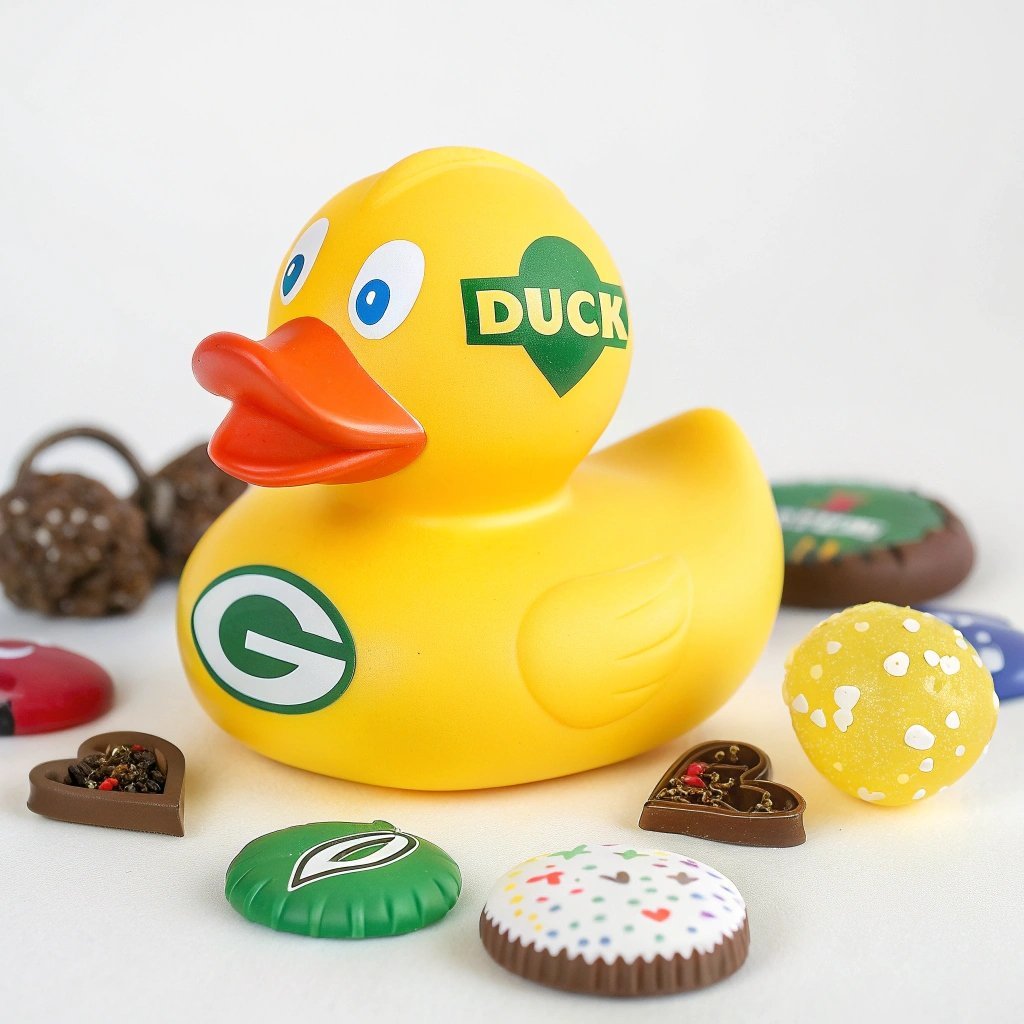
A $50,000 order for gift rubber ducks fell apart last season not because the factory shipped bad product—the pre-production sample looked perfect under the office lights—but because the mass production run came in with a different red. Not slightly different, but a full two shades off from the Pantone 186C the brand team had approved. The buyer had skipped the step where you lock in a written quality tolerance and a sample approval process that ties the production batch to an actual physical color chip, not a digital PDF.
I’ve watched the same scenario play out across three continents. The fix isn’t more inspections; it’s a sourcing rhythm that starts with one number: a ≤5% color variance against the approved master sample, measured with a spectrophotometer, not a phone camera. Every supplier I audit in my 12-country rotation now gets that spec before we ever discuss FOB pricing. If they push back, I know the batch consistency isn’t there. For holiday gift duck programs, write this on the spec sheet: production-grade samples must match within a 0.2 mm line width tolerance for pad printing, and each shrink‑wrapped pallet needs a random pull report that shows color consistency above 95%. That one benchmark saves more campaigns than any rush air freight ever will.
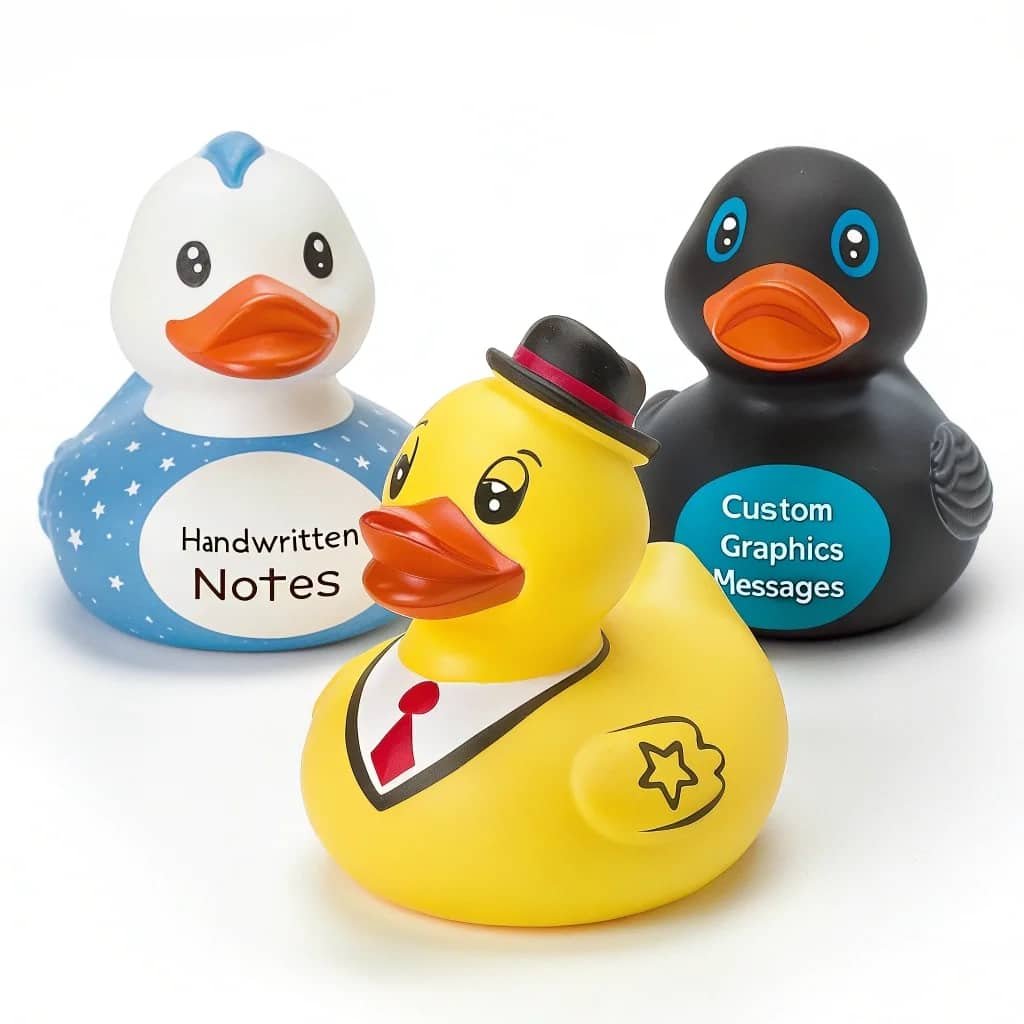
Holiday Duck Sourcing Options
Most buyers don’t realize they’re choosing between two fundamentally different supply chains until the sample arrives.
I watched a marketing director open a carton of 3,000 Santa ducks in late November 2026. The pre-production sample she’d approved in September had crisp pad-printed logos with clean Pantone 186C red. The mass production run didn’t. The factory had switched silicone batches mid-run, and the logo adhesion failed on 40% of units. Her team spent two days hand-sorting defective ducks while the holiday event deadline evaporated. The root cause wasn’t a bad factory. It was a bad sourcing decision made six weeks earlier.
Holiday duck sourcing splits into two paths. Wholesale stock ducks come from existing Santa, snowman, and reindeer molds sitting in factory inventory. Zero tooling cost. Branding runs through pad printing only — a 2D surface application with a minimum line width of 0.5 mm. Fine for simple logos. Useless for sculpted 3D brand elements. These stock ducks ship fast and work when the logo is secondary to the holiday character. But the factory controls the mold. You control nothing about the form.
Fully custom-molded designs flip that equation. You own a seasonal character built from your brief. Molded-in 3D logos become part of the duck body, not something stamped on after. The tradeoff is lead time: 4 to 6 weeks for tooling, plus production, plus FOB shipping from the port. Tooling costs land between $300 and $800 per cavity, amortized across the run. At 5,000 units, that adds $0.06 to $0.16 per duck. At 1,000 units, it’s $0.30 to $0.80. The math kills small orders and rewards volume.
The gap most sourcing guides miss is the third option: pre-engineered holiday mold libraries. Certain manufacturers, including Lzengo, maintain an inventory of seasonal molds already cut and tested. Santa bodies. Reindeer antlers. Snowman contours. These aren’t stock ducks sitting on a shelf. They’re production-ready molds you configure with your brand elements — swap the base color, add a pad-printed logo, or modify a surface detail. Total production lead time drops to 7 to 10 days. Tooling fees disappear. Sample approval happens within a week, not a month. You get near-custom output at stock-duck speed.
- Stock Ducks: No tooling. Pad printing only. 2D branding on existing Santa/snowman forms. Fastest turnaround but zero design control. Quality tolerance on print registration: ±0.3 mm positioning drift across curved duck surfaces.
- Custom Molds: Full ownership of 3D character and logo geometry. 4–6 weeks tooling lead time. $300–$800 per cavity. Best for exclusive seasonal IP. Sample approval requires mold-cutting before any production begins.
- Pre-Made Mold Library: Existing seasonal molds reconfigured for your brand. Eliminates tooling cost and lead time. Production in 7–10 days. Pad print or light mold modification possible. The option most competitors won’t mention because they don’t have the library.
The professional move is asking a factory to show you their existing holiday mold catalog before you authorize any tooling spend. Nine times out of ten, a configuration of what already exists beats starting from scratch — and lands on a loading dock six weeks sooner.

Custom Branding on Holiday Ducks
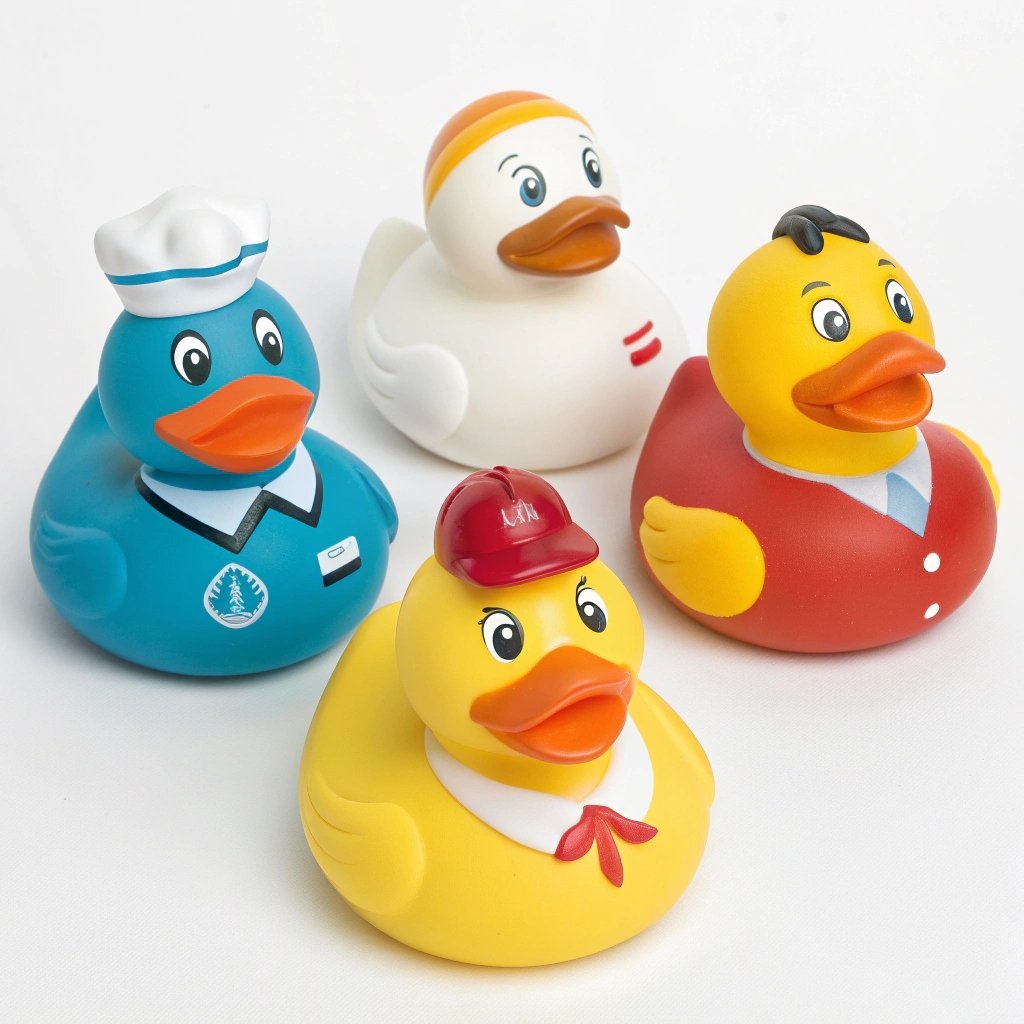
Pad printing a logo costs just $0.05/unit — but only if line widths stay above 0.5 mm; thinner details won’t hold.
Most B2B buyers default to pad printing for cost efficiency, unaware that the real risk isn’t the cost — it’s ink adhesion on flexible silicone. Cheap suppliers skip the primer step, causing logos to peel or fade after first use. Worse, fine details under 0.5 mm (a common pitfall with serif fonts) won’t transfer cleanly, forcing a blurry result. If you’re ordering wholesale Christmas rubber ducks logo branding for a corporate gift, specify minimum stroke width in your artwork brief and request an adhesion test report before mass production.
- Pad Printing: $0.05/unit, minimum line width 0.5 mm, supports 2–4 spot colors, lead time 7–10 days with pre-existing molds. Best for simple logos and text on promotional ducks; not permanent — expect fading after 50+ handlings.
- Molded‑in 3D Logo: $0.15–$0.25/unit, requires new mold ($300–$800) unless using a pre-made seasonal mold, creates a raised tactile brand mark that’s scuff-proof. Ideal for premium branded rubber duck gift sets for giveaway events where recipients touch and photograph the duck. The 3D logo lasts the product’s lifetime.
Pantone matching is non‑negotiable for holiday brand consistency. Supply hex values and Pantone codes — like 186 C for that iconic Santa red or 347 C for a crisp holly green — at the RFQ stage. Pad printing uses spot colors, so if you send a CMYK JPEG, the factory’s color mixer will approximate, and you’ll get a muddy surprise. Also, coordinate the duck’s base color with your brand palette before finalizing artwork. A white duck with a red logo looks premium for a healthcare brand; a green duck with a gold logo works for a financial firm’s holiday campaign. But a red duck with a blue logo can be a visual clash. Request pre-colored molded ducks in base shades (white, red, green) to avoid secondary painting, which adds $0.10/unit and extends production by 3 days.
Bulk Holiday Duck Pricing & Cost Control
The per-unit price on the quote is never the real price you pay.
I’ve audited the aftermath of a $50,000 holiday duck order that went sideways. The buyer approved a pristine pre-production sample in August. By November, when the shipment landed, the ducks were visibly smaller, the Santa hat red was three shades off Pantone 186C, and the pad printing smeared under a thumbnail. The factory shrugged and pointed to the quality tolerance clause buried in the PO. Sample approval means nothing if you haven’t locked dimensional and color tolerances into the contract before production begins.
So let’s talk real costs. Not the headline unit price, but the all-in number that hits your budget line.
- 1,000 units: Roughly $0.60 per duck. At this MOQ, you’re paying a premium because the factory hasn’t amortized setup labor across enough volume. Pad-printed logo adds ~$0.05. Expect FOB pricing around $0.65–$0.70 with branding included.
- 5,000 units: The sweet spot drops to $0.35 per duck. This is where molding and printing efficiency kicks in. A pad-printed custom holiday duck at 5,000 units lands at $0.35, versus the $0.60 you’d pay ordering retail-packaged bulk ducks from a reseller. That’s a 42% gap that goes straight to the middleman’s margin.
- 10,000+ units: Per-unit cost bottoms out around $0.25. At this tier, even 3D molded-in logos—which cost $0.15–$0.25 extra—become viable because the base cost is so low. You can deliver a premium tactile brand experience for under $0.50 all-in before packaging.
- Tooling:A new seasonal mold runs $300–$800
- Shipping: Sea freight from Shenzhen to LA runs 12–18 days and costs roughly $0.03–$0.05 per duck at container scale. Air freight is 3–5 days but 4x the cost. For Christmas delivery, sea freight orders need placement by late September. Air freight buys you until late October. Miss those windows and you’re paying expedited rates that can double your landed cost—or staring at empty gift bags at the holiday party.
- Individual packaging: A polybag with header card adds $0.03 per unit. A custom-printed gift box with holiday graphics adds $0.20. For a 5,000-unit corporate gift program, that’s the difference between a $150 packaging line item and a $1,000 one. The box drives social media unboxing shares. The polybag doesn’t. Budget accordingly.
Now the line items most first-time buyers miss entirely.
Here’s a pricing quirk that surprises even experienced buyers: larger ducks in the 4–6 inch range often cost less per cubic centimeter than 2-inch ducks. The reason is molding cycle efficiency. A 6-inch mold cavity may hold more material, but the machine cycle time is nearly identical to a 2-inch cavity. The labor and machine overhead per unit stay flat while the perceived value to the gift recipient jumps significantly. A 5-inch duck at $0.45 delivers more brand impact per dollar than three 2-inch ducks at $0.75 total. Run the math on your own program.
For budgeting purposes, plan an all-in cost of $0.80–$1.20 per duck for a premium corporate gift. That number includes the duck, custom branding, individual packaging, sea freight, and a 10% buffer. If your supplier quotes an all-in below $0.70 on an order under 5,000 units, ask what they’re cutting—material density, paint adhesion testing, or the safety certs you’ll need to sleep at night. The B2B buyers I work with who order direct from manufacturers with molded logos pay less per unit above 2,000 pieces than they would buying retail-packaged bulk ducks, even after amortizing the tooling across the run.
One last piece of arithmetic to carry into your supplier call: the industry benchmark for a well-run holiday duck program is $1.05 all-in per unit at 5,000 pieces, FOB port, with pad printing, individual gift packaging, ASTM F963 and EN71 certs in hand before shipment. If their number lands above $1.20, they’re either padding freight or running inefficient molds. Below $0.85, you’re probably on track to receive the shipment that buyer with the $50K nightmare received. Neither extreme is where you want to be.
| Order Volume | Per-Unit Cost (Pad Print) | What Changes | Expert Note |
|---|---|---|---|
| 1,000 units | $0.60 | Small-batch surcharge applies; retail-packaged ducks cost $0.60–$1.00 each | Direct factory price beats retail bulk packs by 30%+ even at minimum MOQ |
| 5,000 units | $0.35 | Volume discount unlocks; pre-molded holiday design eliminates tooling fee | 40–60% cheaper vs. retail equivalent; solid silicone prevents mold growth hidden by commodity sellers |
| 10,000+ units | $0.25 | Deep-volume tier; molded-in 3D logo amortized to under $0.15/unit | Total unit cost drops below $0.40 even with custom 3D logo—unseen on Amazon Junkin reseller listings |
| Any volume (pre-existing mold) | No mold fee ($0 added) | Tooling cost $300–$800 waived entirely; lead time slashed to 7–10 days production | 90% of tooling scrap eliminated vs. 6-week custom mold; holiday program turns in under 2 weeks |
| 5,000 units (all-in budget guide) | $0.80–$1.20 total landed | Includes sea freight, individual polybag packaging (+$0.03/unit), and buffer for customs | Budget this range for premium corporate gift with brand ribbon; hidden costs surfaced, not buried |
Holiday Gift Packaging That Elevates Brand Perception
A duck in a polybag is a commodity.
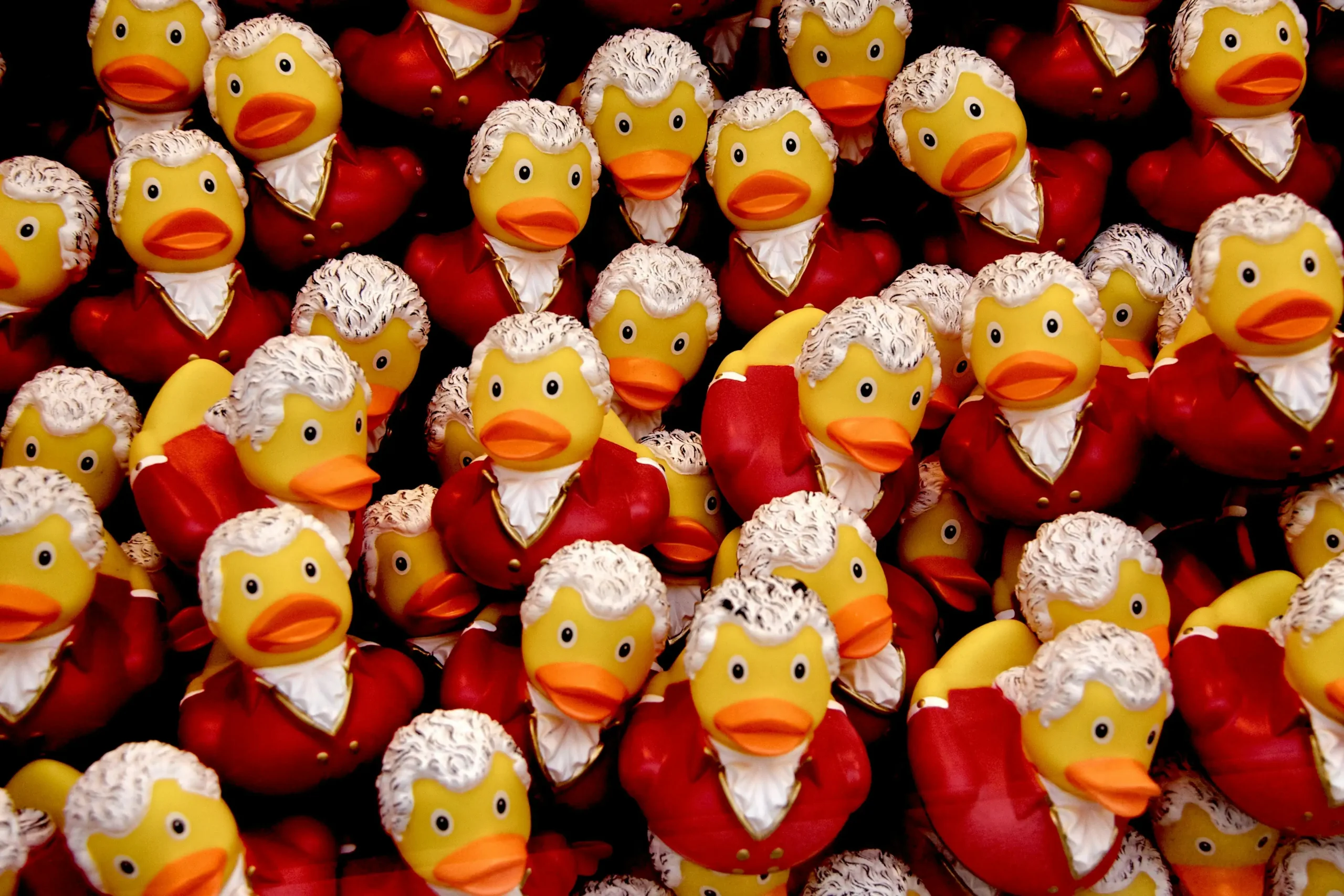
Most B2B buyers treat packaging as an afterthought—a way to get 5000 ducks from the factory to the office party without crushing them. That’s leaving brand currency on the table. For holiday corporate gifts, packaging is the first physical touchpoint a recipient interacts with. If it looks like a clearance-aisle toy, your brand gets mentally filed under “cheap swag.” If it reinforces the holiday theme and your brand story, the duck becomes a keepsake that ends up on desks, not in trash cans.
I’ve audited gift programs where the duck itself was flawless—solid food-grade silicone, no squeaker holes to trap moisture, perfect Pantone color matching—but the packaging screamed “budget cut.” One client lost an entire hotel chain account because the ducks arrived loose in a master carton with no individual wrap. Guests complained about scuffed ducks. The perceived quality dropped even though the product hadn’t changed. Packaging doesn’t just decorate the duck; it protects the perception of value you’re paying to build.
- Countertop display boxes (50 ducks/box): Ideal for retail pop-ups or reception desks. Keeps ducks organised and visible, turning a giveaway into a grab-and-go display. At 1000-unit orders, these add roughly $0.10 per duck to your landed cost compared to bulk packing—worth it if the box stays on a counter for a week and starts conversations.
- Individual polybags with header cards (+$0.03/unit): The minimum viable upgrade from a bare duck. A full-colour header card gives you space for your logo, a holiday message, and safety certifications (EN71, ASTM F963). Use a Euro slot if the ducks will hang on retail pegs. This option adds virtually no dimensional weight to shipping, keeping freight costs flat.
- Custom gift boxes with holiday print (+$0.20/unit): This is where brand perception jumps. A 2-inch duck inside a small rigid box with a holiday motif, magnetic closure, and a die-cut window turns a $0.35 product into a premium unboxing moment. For corporate gift sets bound for VIP clients, this packaging choice alone can justify a $5–$10 perceived value. Amortise the box setup cost ($200–$400 for print plates) over 3000+ units to keep the unit add-on under $0.25.
Pair the boxed duck with a branded ribbon and a thank-you card printed on textured stock. I’ve seen this simple combination generate social media impressions at a cost-per-impression that beats any paid ad campaign—users photograph the unboxing, tag the brand, and spread the campaign organically. The card should tie the holiday theme to your brand story: a sentence about why you chose this duck (nostalgia, joy, luck) and a QR code that leads to a holiday landing page. The ribbon colour must match your brand’s holiday palette—get the Pantone codes locked in during the packaging pre-production sample round.
One overlooked detail: packaging must work with the duck’s material properties. Solid silicone ducks without squeaker holes won’t grow mold inside, but if the gift box traps moisture during ocean freight, you’ll open containers to find water-stained boxes. Always specify a desiccant pack inside each box when shipping by sea. And if you’re using window boxes, make sure the window film doesn’t react with the silicone over time—ask for accelerated aging test data (48 hours at 50°C) before signing off on the packaging sample.
The holiday theme isn’t just a colour scheme. Incorporate brand story elements into the box interior: a timeline of your company’s year, a recipient’s name in foil stamping, or a small insert that explains the rubber duck’s role in your brand’s holiday tradition. These touches convert a giveaway into a story recipients tell. When packaging does this, the duck becomes a physical manifestation of your brand’s personality—not just another item in a gift bag.

Lead Time & Holiday Shipping Deadlines
Miss the September cutoff and your ducks spend Christmas in a shipping container.
The event starts in four hours. Your phone buzzes—it’s the freight forwarder. The container carrying 5,000 branded Santa ducks for tonight’s VIP gift bags sits anchored off Long Beach. Customs pulled it for a random inspection. You ordered mid-October. Two months felt like plenty. Artwork approval chewed up 12 days. Production ran 22 days. The vessel got delayed 6 days in Ningbo. Nobody built in a buffer. The ducks won’t clear until next week. The holiday party happens without them.
This scenario repeats every November. The root cause is almost always the same: the buyer calculated lead time from the PO date, not from artwork approval. Standard production for branded holiday ducks runs 15–30 days after you sign off on the final sample. Not after you send the deposit. Not after you email the vector file. After sample approval. If your marketing team takes two weeks to review the pre-production sample—and they will, because brand colors need Pantone matching at minimum 0.5 mm pad printing line width—you just added 14 days to the timeline before a single duck gets molded.
- Sea freight (FOB Ningbo/Shanghai): 5–15 days port-to-port on paper. In Q4, budget 20–30 days. Holiday port congestion, container shortages, and customs holds compound. FOB pricing means you own the risk the moment the container leaves the factory yard.
- Air freight: 3–5 days airport-to-airport. Cost runs 4–6x sea freight, but for last-minute branded rubber duck gift sets for giveaway events, the math can pencil out when the alternative is an empty event.
- The hidden sink: Neither number includes customs clearance at destination. Budget 3–7 business days for standard entry. Random inspections add 5–10 days with zero recourse.
- Can you provide the exact production start date based on artwork approval, not PO date?: If the supplier hesitates or gives a range without tying it to your approval milestone, they are estimating, not scheduling.
- Do you have pre-existing holiday molds available for the design I need?: A yes answer eliminates 4–6 weeks of tooling time and $300–$800 in setup costs. A no means you need to reassess whether your timeline actually works.
- What is your on-time delivery rate for Q4 orders over the past three years?: Demand a percentage, not an assurance. Anything below 92% in Q4 means one in twelve orders arrives late. Your campaign cannot afford to be that one.
For Christmas 2026 programs, the hard deadlines sit earlier than most buyers expect. Sea freight orders need placement by September 30, 2026. Air freight pushes the cutoff to October 31, 2026. These dates assume standard 15-day production and no artwork revision cycles. Every revision loop costs you 3–5 days. Three rounds of revisions—common when marketing teams iterate on holiday reds and greens—and you’ve burned two weeks before production even starts. The September 30 date is not conservative. It is realistic.
Pre-made holiday molds change the equation entirely. Factories maintaining existing seasonal mold libraries—Santa, reindeer, snowman, Christmas tree shapes in 1.5–2.5 inch sizes—cut production to 7–10 days. Tooling cost drops to zero. The $300–$800 mold fee for a new seasonal design gets waived. You skip the 4–6 week mold fabrication phase that kills Q4 timelines. For bulk holiday rubber ducks for promotional campaigns above 2,000 units, the per-unit cost with a pre-made mold plus pad-printed logo lands around $0.35 at 5,000 units, versus $0.60 for small-MOQ retail packs that still need branding applied.
Build in a 2-week buffer. Not a suggestion—a procurement rule. Customs delays, port strikes, trucking shortages, and quality tolerance issues at destination all live in this window. If your shipment arrives exactly on time with zero buffer, you are one random inspection away from a failed campaign. I’ve watched a $50,000 holiday activation collapse because the buyer allowed three days of slack and the container got selected for a USDA exam. The ducks sat in a warehouse while the event happened without them. Two weeks covers the known unknowns. Anything less is gambling with your Q4 KPIs.

Safety & Compliance for Corporate Gifting
A CPSC recall for phthalates can exceed $400K in legal fees.
Veteran brand managers know the fastest way to torch a corporate gift budget: ship a pallet of ducks that fail consumer product safety regs. I’ve seen a $50K order get seized at Long Beach because the supplier’s ‘certificate’ was a Photoshopped PDF from a lab that didn’t exist. You need actual third-party lab reports — not self-declarations — covering EN71, ASTM F963, and CPSIA. Insist on SGS, Intertek, or TÜV test reports with batch numbers that match your shipment.
- EN71 (EU toy safety): Mechanical and physical properties, flammability, migration of certain elements. Without it, EU customs will destroy the goods — and you cover DDP losses.
- ASTM F963 (US toy standard): Soluble heavy metals, lead in substrates, sharp points, and choking hazards. A single loose eye can trigger a Class I recall.
- CPSIA (US children’s product law): Limits lead to 100 ppm in accessible substrates and bans eight phthalates over 0.1%. Corporate gift ducks handed to kids’ holiday baskets fall squarely under this.
Solid food-grade silicone ducks — the kind we pour without squeaker holes — eliminate phthalates and BPA at the chemistry level. Vinyl ducks from commodity vendors can leach plasticizers straight into a child’s mouth. Solid silicone also kills the internal mold problem: no cavity means no water ingress, no bacteria breeding inside a duck that’ll end up in a guest’s bathtub weeks later. That’s the difference between a gift that builds brand love and one that ends up on a Reddit recall thread.
EU distribution demands CE marking. The label must show importer name and address, the model or batch code, and the CE logo in the correct aspect ratio. Missing the CE mark can delay a container at Rotterdam by two weeks — eating your entire holiday event buffer. For US retail, keep age grading on the tag: “3+” covers the choking hazard exclusion. Pack a compliance insert with the third-party lab report URL so your recipient’s risk department can verify in 30 seconds.
Blunt truth: a supplier quoting $0.25 per duck and saying “EN71 certified” with a single piece of paper isn’t protecting you. Ask for the specific test report number, the lab name, and the sample date. If they hesitate, walk. A recall doesn’t just kill your holiday campaign — it poisons every contract you have with that client.
Conclusion
The difference between a holiday gift program that generates brand affection and one that gets dumped in a desk drawer comes down to three sourcing decisions you make before the first duck ships: material spec, mold source, and factory-direct pricing. Solid silicone without squeaker holes eliminates the internal mold risk that kills a recipient’s goodwill—and your campaign metrics. Pre-existing seasonal molds bypass $300–$800 in tooling fees and compress production to 7–10 days, giving you the schedule flexibility most retail-packaged suppliers cannot offer. Hit those three points and your sample approval process becomes a formality, not a crisis.
On your next supplier call, ask this benchmark question: “Are we getting the $0.35 per-unit FOB pricing at 5,000 units, or are we being quoted retail-packaged rates with someone else’s markup baked in?” Their answer will tell you immediately whether you’re talking to a manufacturer or a middleman. Your holiday program deserves manufacturer margins, not distributor shortcuts.
Frequently Asked Questions
How to get custom rubber ducks?
Contact a manufacturer with an MOQ of 1,000 units and choose between stock shapes with pad printing or fully custom 3D molds. Using pre-made seasonal molds eliminates tooling fees and shortens. Request pre-production samples to verify color and print before mass production.
How much does one rubber duck cost?
At 5,000+ pieces, custom holiday ducks drop to $0.25–$0.50 per unit, excluding mold setup. Retail-priced bulk packs typically range $0.60–$1.00 each. Lock in pricing only after finalizing artwork and order quantity.
Where do people buy rubber ducks?
B2B buyers source from promotional product distributors like Promotions Now or directly from factories on Alibaba and specialist manufacturers. For holiday gift programs, prioritize suppliers with existing seasonal molds. For large branded orders, direct factory sourcing typically yields the best unit economics.
What does it mean if someone puts a rubber duck on your car door handle?
This is the ‘Jeep ducking’ trend—a random act of kindness among Jeep owners, completely separate from commercial sourcing. It has no bearing on corporate gift programs. This practice does not affect promotional rubber duck procurement.
What does it mean if someone gives you a rubber duck?
In corporate holiday programs, receiving a branded rubber duck is a lighthearted promotional gesture that keeps a brand visible. It’s a low-cost, cheerful gift with long shelf life. For bulk gifting, it’s a memorable token that recipients often keep for years.