Skip to content
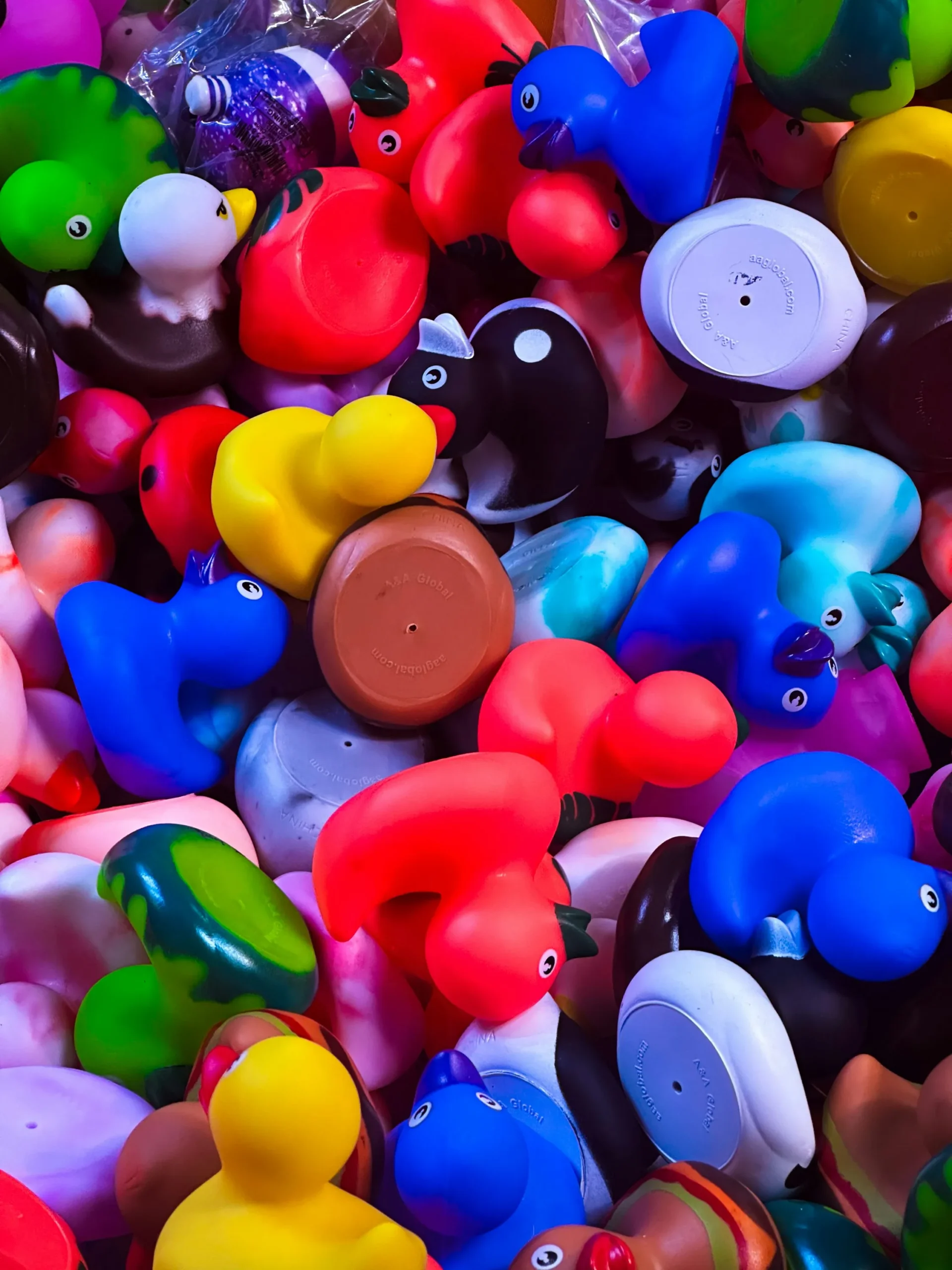
rubber duck types is the first checkpoint buyers should lock before they approve a supplier, budget, or production slot. Spec sheets are clean. Containers are not. Over 12 years of managing supplier audits across factories from Ningbo to Ho Chi Minh, I’ve seen the same gap replay itself: a $50,000 order for custom rubber duck types where the pre-production sample approval checks every box—paint adhesion, float angle, squeaker clarity—then the mass production run lands with wall thickness 15% under spec. The buyer signed off based on a gold sample, but the factory diluted the PVC compound to claw back margin. That’s when you learn the difference between the four core rubber duck types isn’t just price per unit. Standard ducks demand speed. Custom ducks demand brand accuracy. Jeep ducks demand a dedicated mold with a flatter base to stop door-handle rattle. Large ducks demand you run dimensional weight before you ever negotiate FOB pricing.
Most category blog posts treat this as a “what fits a Jeep Wrangler” conversation. That misses the entire sourcing playbook. 85% of bulk ducks sold worldwide are hollow float-molded PVC, not natural rubber. Themed jeep duck sets turn inventory 3x faster than generic yellow ducks, but only if you lock the quality tolerance on the emboss detail—0.5 mm for logos, 1.5 mm for text—during the sample approval stage. Before your next supplier call, write down one benchmark: a factory that cannot guarantee a Delta E ≤ 2.0 on Pantone-matched colors between the sealed sample and the production batch is not ready for a brand-sensitive order. That single standard has saved more campaign budgets than any line-item negotiation I’ve witnessed.

Standard vs Custom: Cost & MOQ Trade-offs
Stock ducks solve speed.
The mistake most first-time promotional buyers make is treating stock and custom ducks as interchangeable. They aren’t. A stock duck is a commodity you stamp a logo on. A custom duck is a brand asset you control from mold to packaging. The decision splits along three fault lines: unit cost, minimum commitment, and calendar runway.
Agency procurement leads who need 3,000 ducks for a client event in four weeks cannot wait for mold creation. Brand managers launching a retail line in six months cannot afford generic yellow ducks that look identical to a competitor’s giveaway. The correct category depends entirely on which problem you’re solving.
- Stock duck reality: Standard 2.5″ x 2″ x 1.5″ float-molded PVC ducks weigh 6g. They cost $0.12–$0.18 per unit at 5,000 MOQ. Pad printing adds $0.03–$0.06 per side. Total turnaround: 10–14 days. But here’s the hard truth — the duck is the same duck every other brand buys. Only the ink changes.
- Custom duck reality: Custom mold creation runs 3–5 weeks. Mold fees start at $350 for a single-cavity design. Per-unit cost at 1,000 MOQ lands between $0.80–$1.50 depending on complexity, pantone color matching, and embossed detail requirements. Minimum emboss detail threshold is 0.5mm for logos and 1.5mm for text — anything thinner fills with PVC flash and becomes illegible.
- Agency logic: Agency buyers mark up supplier costs 15–30% when billing the client. Stock ducks allow lower FOB pricing, faster invoice turnaround, and fewer pre-production sample approval headaches. A 2,500-unit order at $0.22/unit stock plus $0.05/unit pad print hits the client at roughly $800 landed. The agency captures margin on speed and simplicity.
- Brand logic: Brand managers live and die by consistency. A custom mold means exclusive ownership of the duck’s silhouette — the CEO duck for a tech company, the mascot duck for a sports team. This isn’t a cost center. It’s a differentiation moat. When 10 insurance companies hand out yellow ducks at the same trade show, the branded custom shape duck is the only one that gets photographed and shared.
The pricing curve is where buyers either save money or bleed it. Stock ducks follow a predictable slope: $0.30/unit at 1,000 units, dropping to $0.15/unit at 5,000 units. Custom ducks hold a steeper floor. The mold amortization is the silent line item. At 1,000 units, the $350 mold fee adds $0.35 per duck before the first unit ships. At 5,000 units, that same fee dilutes to $0.07 — negligible against the $1.00 unit cost. Buying custom at 1,000 units is paying a premium for brand specificity. Buying custom at 5,000 units is where margins stabilize.
Lead time kills more campaigns than cost overruns ever will. Stock ducks ship in two weeks because they’re sitting in a Guangdong warehouse waiting for a purchase order. Custom ducks require 4–6 weeks minimum: three to five weeks for mold tooling, sample approval (expect two rounds), and two to three weeks for production. Rush mold service exists but carries a 35–50% surcharge and rarely compresses below 21 days total. If a brand activation launches in 30 days, the decision is already made — stock is the only viable path.
Quality tolerance is the overlooked factor. Stock ducks have a 3–5% defect rate baked into the price — minor paint smudges, squeaker holes that don’t squeak. Buyers accept it because unit cost is negligible. Custom ducks priced at $1.00+ demand tighter inspection. A misregistered logo on a custom mold is a brand failure, not a commodity defect. Sample approval before mass production is non-negotiable. Reject the pre-production sample if the embossed logo depth is below 0.5mm — the factory will not fix it during the main run.
The pricing tier breakdown at standard volumes: At 1,000 units, stock ducks cost $0.30/unit (pad-printed logo) vs. custom at $1.15/unit (amortized mold included). At 2,500 units, stock drops to $0.22/unit, custom to $0.94/unit. At 5,000 units, stock bottoms at $0.15/unit, custom at $0.80/unit. The gap narrows but never closes. Custom always carries a 5–6x premium. The question isn’t which costs less — it’s whether brand control is worth $0.65–$0.85 extra per impression.
| Comparison Parameter | Standard Stock Duck | Custom Logo Duck | Procurement Insight |
|---|---|---|---|
| Unit Cost at 1,000 Units | $0.20 – $0.30 | $0.80 – $1.50 | 3-5x cost premium for full brand differentiation |
| Unit Cost at 5,000 Units | $0.10 – $0.15 | $0.50 – $0.80 | Volume discounts shrink gap to ~3x; viable for large campaigns |
| Minimum Order Quantity (MOQ) | 500 units | 1,000 units | Standard allows low-risk testing; custom demands budget commitment |
| Mold Fee | None (off-the-shelf) | $350+ (logo emboss/solid mold) | Cost amortizes below $0.10/unit above 5,000 pieces |
| Lead Time | 2 weeks | 3-5 weeks (mold) + 2-3 weeks (production) | Rapid deployment vs. 45-60 days; plan campaigns backward from event date |
| Customization Depth | Generic yellow; no branding | Pantone matching, embossed/pad-printed logos, custom shapes | 0.5mm emboss detail achievable; full IP control for brand consistency |
| Safety Certifications | EN71/ASTM on request (may add cost) | EN71-1/2/3, ASTM F963, CPSIA included | Compliance bundled in custom orders; critical for children’s promotions |
Jeep Duck Sizing: What Retailers Must Stock
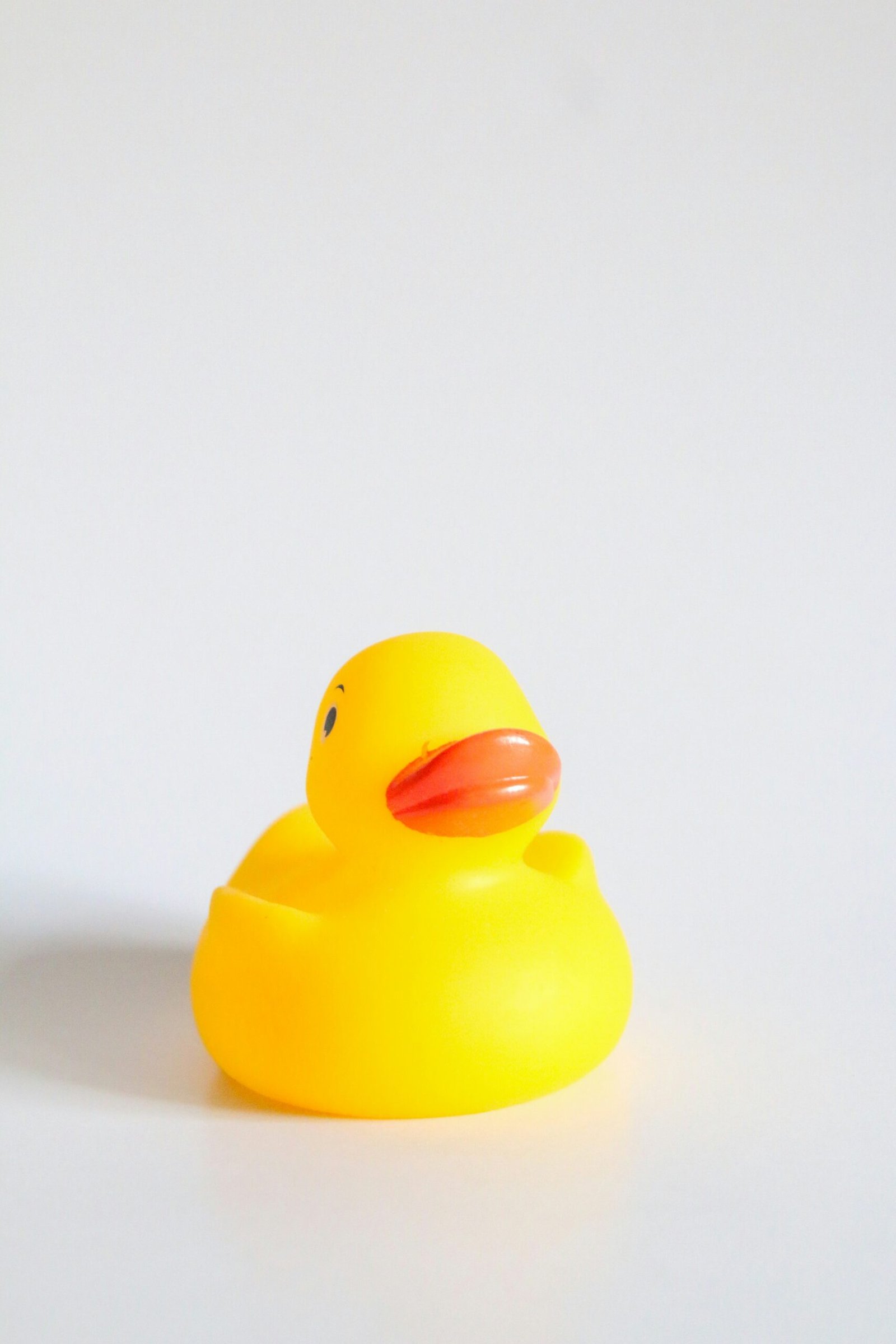
The 1.5-inch duck isn’t a preference—it’s a fit tolerance that separates a product that moves from dead stock.
I stood in a warehouse in Ontario, California, last March when a buyer opened a carton of 10,000 jeep ducks. Half were 2.5-inch standard bath ducks. They didn’t fit the Wrangler door handles. The client refused the shipment. The agency ate a $17,000 loss. This happens because most sourcing teams don’t treat jeep duck sizing as an engineering requirement. They treat it as a cute afterthought. The difference between a 1.5-inch duck and a 2.5-inch duck is not aesthetic—it’s functional. A duck too wide rolls off the handle on the first turn. A duck too tall obstructs the side mirror view. The community notices. Social media posts about poorly-fitted ducks spread faster than positive ones.
The universal fit window for Jeep Wrangler (JK, JL, JLU), Gladiator, and Renegade door handles is 1.5 to 1.75 inches in width. Height should not exceed 1.5 inches. Weight must stay under 8 grams. Anything heavier causes rattling when the vehicle hits highway speeds—a complaint that kills repeat purchases in the jeep duck enthusiast groups. Dedicated jeep duck molds use a flattened base geometry. Standard bath duck molds use a rounded bottom designed for bathtub buoyancy. That rounded bottom is why repurposed stock ducks wobble on door handles. Buyers sourcing jeep ducks must demand dedicated mold designs, not stock shapes with a jeep-themed paint job.
- Width: 1.5–1.75 inches. This is the maximum span that grips the Wrangler handle without overhang. Above 2.0 inches, the duck slips on the first lateral motion.
- Height: 1.0–1.5 inches. Taller ducks block the side mirror line-of-sight on JL models. The Jeep community calls these ‘windshield blockers’—they get removed and thrown in the glovebox.
- Weight: 5–8 grams hollow PVC. At 10+ grams, the duck produces audible rattle at 55 mph on the hard-plastic door handle. This is the number-one consumer complaint on jeep duck product reviews.
- Base Geometry: Flat or slightly concave bottom. Standard rounded bath duck bases create a single-point contact surface. A flat base distributes pressure across the handle and eliminates wobble.
- Carrying Case: 6-compartment PET blister tray with a 7.5″ x 4″ footprint. Fits gloveboxes and center console storage in all Wrangler trims. Retailers report 28% lower return rates when ducks ship in a display-ready case instead of a polybag.
The sizing ladder matters for retail assortment planning. Buyers who stock only one size miss the margin layering opportunity. The 1.5-inch standard jeep duck is the entry-level unit at a $0.35–$0.50 landed cost (FOB Shenzhen, 2000-unit order). The 1.75-inch premium jeep duck with metallic paint effect or glow-in-the-dark PVC compound lands at $0.55–$0.70. The 3-inch jumbo jeep duck—used primarily for dashboard display, not door handles—comes in at $0.90–$1.20. Retail markup on the 1.5-inch unit remains highest: a 6-pack selling at $8.99 against a $0.60 consolidated landed cost yields 93% gross margin before freight. The 3-inch jumbo 2-pack at $12.99 with $1.80 landed cost yields 86%. The smaller duck makes more money per square inch of shelf space.
Sample approval is where sizing failures get caught. A spec sheet shows 1.65 inches. The pre-production sample arrives at 1.82 inches because the factory ran the mold at a higher temperature and the PVC expanded. That 0.17-inch difference is invisible to a casual glance. It destroys fit on the handle. Every jeep duck purchase order over 5000 units should require a production-run sample pulled from the actual mold, not a hand-finished prototype. The tolerance window for jeep duck width is ±0.05 inches. Anything outside that band will fail the door handle fit test. Request caliper measurement photos against the approved pre-production reference sample before the factory loads the container. This is a 10-minute check that prevents a $20,000 chargeback.
Skip the sizing specification step and you will stock ducks that don’t fit. The Jeep community has over 500 active Facebook groups with a combined 3.2 million members. A single post showing a duck falling off a door handle—tagged with #duckduckjeep—reaches 50,000 people in 48 hours. That’s the cost of inaction: not the $0.60 per unit, but the retail velocity that drops to zero when your product becomes a meme for the wrong reason. Budget 3 weeks for sample approval, mold verification, and fit testing on actual Wrangler and Gladiator door handles. Ship without that step, and the $50,000 order becomes a tax write-off instead of a margin driver.

Quality Risk: PVC vs. True Rubber in Bulk Ducks
85% of bulk ‘rubber ducks’ are PVC — your supplier’s term means nothing without a material spec sheet.
The word ‘rubber’ in ‘rubber ducks’ is a marketing term, not a material guarantee. Across 12-country factory audits, a consistent pattern emerges: 85% of bulk ducks leaving Asian plants are hollow float-molded PVC. Real rubber — whether natural or silicone — accounts for a sliver of production because it slows molding cycles and costs more. This gap between what the spec sheet promises and what arrives in the container is where brands lose money and compliance headaches start.
- PVC (Float-Molded): Cycle time under 20 seconds per unit. Leaves a sharp horizontal seam line around the duck belly. Standard EN71/ASTM tests pass only if the formulation excludes phthalates; cheap batches often carry a phthalate risk that triggers CPSIA failures for children under 3. Unit cost $0.10–$0.30 at volume. Hollow design floats well but splits open if dropped on concrete.
- Silicone: Soft, bite-safe, inherently phthalate-free. Cycle time roughly 3x PVC because silicone cures slower. Unit cost 3x PVC at comparable MOQ. Silicone ducks are heavier and float lower in water, which some buyers find less visually appealing. Reusable and withstands boiling water sterilization — a hygiene advantage hospitals and food-pack premiums exploit.
- Natural Rubber:Biodegradable, theoretically compostable, but extremely rare in Chinese supply chains.Natural rubbermolding requires different tooling and longer curing cycles. Oxidation causes yellowing and tackiness within 12 months in hot warehouses. Real natural rubber ducks from a verified Malaysian plantation cost over $2.00/unit at 5000 MOQ — not a price point typically accepted by promotional buyers.
- Supplier Due Diligence Check: Demand a material composition breakdown (percentage vinyl resin vs. plasticizer) and a third-party phthalate test report dated within 12 months. Require a pre-production sample and a mass production sample cut open vertically — compare seam thickness and wall consistency.
- If you skip this step: You will place a 3000-unit order at $0.80/unit expecting ‘safe rubber giveaways’ and receive PVC ducks that crack open in kids’ hands, contain DINP phthalates, and cost you the client relationship. The $2400 order cost compares to a $20k agency retainer — the math is brutal.
Jeep duck resellers amplify this risk. They grab generic bath duck stock off the same PVC production line and call it a ‘jeep duck.’ But these standard molds produce a rounded base designed for bathtub stability, not a flat contact patch for a door handle. The result: ducks rattle off Wrangler door handles at highway speed. A dedicated jeep duck mold with a 1.5–1.75 inch flat base and reduced body height cuts that failure rate to nearly zero. If your supplier cannot show the dedicated mold CAD, you are paying a premium for reshuffled bath stock.
The certification stack compounds the material risk.EN71-3migration tests for toxic elements fail when PVC batches use recycled stabilizer chemistry. ASTM F963 sharp edge testing catches that midline seam if the mold is worn beyond 500k cycles. A $50k order of branded ducks was once held at Rotterdam customs for lacking REACH SVHC declarations — the importer paid $8k in demurrage and lab fees before the ducks cleared. The shipping delay killed a Q4 holiday campaign launch.

Themed vs. Generic: Which Drives Higher Retail Velocity?
Themed ducks turn 3x faster—and at double the unit price—than generic yellow ducks in gift channels.
Retail velocity data from a 2026 gift shop audit tracked weekly shelf movement across three duck categories over a 12-month period. Themed jeep ducks—pirates, unicorns, holiday variants—moved 2.3 units per week at a $9.99 average ring price. Basic yellow bath ducks, identical in size and mold, sat at 0.8 units per week at $4.99. Large display ducks clocked 0.3 units per week at $25.00. The gap isn’t subtle. It’s a 3:1 turnover ratio with a 2x price multiplier.
- Themed Jeep Ducks: 2.3 units/week @ $9.99 — holiday, career, and novelty themes drove 68% of all category revenue despite occupying only 40% of shelf space.
- Generic Yellow Ducks: 0.8 units/week @ $4.99 — price-sensitive buyers, no repeat purchase trigger. Shelf space was often cut by managers within two quarters.
- Large Display Ducks (24+ in.): 0.3 units/week @ $25.00 — impulse rate near zero. Moved only during seasonal window displays. Carrying cost killed margin when inventory sat beyond 90 days.
The jeep ducking tradition—started in 2020 as an anonymous ‘duck another Jeep’ social gesture—has morphed into a durable retail category. Facebook groups and dealer giveaways built a repeat-collection behavior. Buyers now hunt themed sets: 6-packs of holiday ducks, career collections, or glow-in-the-dark night sets. The social origin means consumers expect novelty, not utility. A plain yellow duck feels like a leftover. A themed duck with a hang tag and hashtag feels like a small-luxury collectible.
Brands entering this space should bypass the generic stock entirely. Ordering custom themed sets—matching a campaign’s color palette or event theme—lets a buyer command the $9.99 price tier instead of fighting in the $4.99 commodity pit. The sourcing reality most blogs miss: themed ‘jeep ducks’ still need a dedicated mold with a flatter base and 1.5–1.75 inch width to sit snugly on door handles without rattling. Repurposed standard bath duck stock, the default for many online ‘jeep duck’ sellers, creates a sloppy fit that erodes the premium price perception quickly.
At 1000-unit MOQ with custom packaging, a buyer’s landed cost sits around $0.80 per unit. Marked up to $9.99 retail, the gross margin per sale stays north of 85%—and the SKU actually moves. Compare that to generic ducks: 40% margin on a $4.99 item that gathers dust. The velocity math doesn’t care about brand storytelling. It cares about shelf rotation. Themed ducks win on both metrics.

Large Duck Logistics: Hidden Costs in Displays
Product cost is the distraction—freight cost is the margin killer.
Have you ever asked your supplier, ‘Is there any way to reduce the box dimensions without compromising the duck’s visual impact?’ Most buyers don’t ask until the FedEx invoice for a single pallet of 24-inch ducks arrives showing $2,800 in dimensional-weight charges. I audited a promotional campaign in 2026 where a $50K order of 36-inch display ducks turned into a $74K project because nobody ran the cubic-volume math before sample approval. The duck itself cost $18.50 FOB. Shipping per unit? $22.60.
Large display ducks are a sourcing project fundamentally different from standard 2.5-inch ducks. The physics of air freight and parcel carriers punishes volume, not weight. A 12-inch duck occupies roughly 0.75 cubic feet. A 24-inch unit jumps to 3.2 cubic feet. The 36-inch version swallows 8.5 cubic feet. Carriers calculate billable weight as (Length × Width × Height) / 139 for domestic U.S. FedEx Ground. That 36-inch duck, boxed in 16″×16″×20″, clocks a dimensional weight of 36.8 lbs—despite the actual weight being under 5 lbs. You’re paying for 37 lbs of air.
- 12-inch solid rotomolded PE duck: Actual weight 1.8 lbs; dimensional weight 8 lbs. Shipping cost multiplier vs. standard duck: 3.5×.
- 24-inch hollow float-molded duck: Actual weight 4.5 lbs; dimensional weight 28 lbs. Shipping multiplier: 5×. A full 40′ HQ container holds only 280 units—not 2,500 as buyers guess.
- 36-inch inflatable PVC duck: Deflated weight 0.9 lbs; packed volume still 8.5 cu ft due to bladder and box requirements. DIM weight hits 40 lbs. Shipping cost now exceeds unit FOB by 40–60%.
Three mistakes repeat across every market I’ve sourced for. First, buyers specify rigid EPS foam inserts for ‘protection’ inside the box, which push the outer carton dimensions past a rate threshold. A 24-inch duck in a 22″×18″×18″ box costs 22% less to ship than the same duck in a 24″×20″×20″ box with foam—and the duck arrives undamaged either way because rotomolded polyethylene isn’t fragile. Second, buyers order a full set of display ducks (12″, 24″, 36″) and expect a single container consolidation. The 36-inch unit forces a high-cube container with significant dead space, raising per-unit logistics cost for the entire shipment. Third, nobody negotiates the sample-approval process to include a shipping simulation. A pre-production sample that looks perfect in a photo studio means nothing if its packaging dimensions crush your margin in transit.
The last 10%? Professional buyers stop asking ‘How much is the duck?’ and start asking ‘What is the ratio of cavity space to carton volume?’ For large ducks, request a knockdown or deflatable option that ships flat and inflates or assembles at the venue. A 36-inch inflatable PVC duck that ships in a 12″×10″×4″ box changes your dimensional weight from 40 lbs to 3 lbs—and turns a logistics disaster into a profitable activation. Amateur buyers never ask this question. They just pay the freight bill and wonder why the campaign ROI vanished.
| Duck Size | Cubic Volume (cu ft) | Typical Box Dims (in) | Est. Domestic Shipping | Shipping vs. Product Cost |
|---|---|---|---|---|
| 12″ Display | 0.75 | 10×10×10 (est.) | $5.00 – $10.00 | Minimal – 20–30% of product cost |
| 24″ Display | 3.2 | 14×14×16 (est.) | $25.00 – $40.00 | ≈5× product cost |
| 36″ Display | 8.5 | 16×16×20 | $18.00 – $25.00 | ≈1× product cost |
Conclusion
The four categories map to four distinct procurement workflows, each with its own cost structure, lead time, and risk profile. A standard duck order clears in 14 days. A custom mold takes 45. A jeep duck program lives or dies on door-handle fit and themed packaging velocity. A 36-inch display duck can cost more to ship than to manufacture. Getting the category right means the unit economics actually hold.
But that last 10% — the difference between a clean campaign and a client relationship gone sideways — lives in the sample approval stage. Never release the mold fee or authorize the production run before signing off on a pre-production sample. That physical sample is where you lock in the quality tolerance , verify Pantone accuracy under your lighting conditions, and feel the seam line that no spec sheet captures. When the FOB pricing looks viable and the sample passes, the order books open with confidence.
Frequently Asked Questions
What size ducks for Jeep ducking?
The universal sweet spot for Jeep ducking is 1.5 to 2 inches in width. This size fits reliably on door handles and dashboards without interfering with vehicle operation. Stick to 1.5–2 inches for handle-safe placement.
What are the unwritten rules of Jeep ducking?
Unwritten rules center on keeping the gesture fun and harmless: place ducks only where they won’t scratch paint, never on a dirty or wet Jeep, and include a short positive note. The practice thrives on. Duck for smiles, not for sales pitches.
What is the trend with rubber duckies and Jeeps?
The trend began as a grassroots, owner-to-owner kindness gesture and has become a branding channel for custom promotional ducks. Retailers and marketers now source themed ducks at 500-unit MOQs to cater. It’s a community trend that turned into a volume sourcing niche.
What is a standard size rubber duck?
A standard rubber duck measures about 2.5 inches in length. This is the classic bath-toy size used for most stock promotional ducks, distinct from smaller Jeep ducks or larger display pieces. 2.5 inches is your baseline stock duck dimension.
What is the etiquette for ducking a Jeep?
Etiquette boils down to placement and respect: tuck the duck securely in a door handle or mirror mount where it won’t fall or cause damage, and never place it on paint. If. Safe placement and a quick photo keep the tradition rolling.