Skip to content
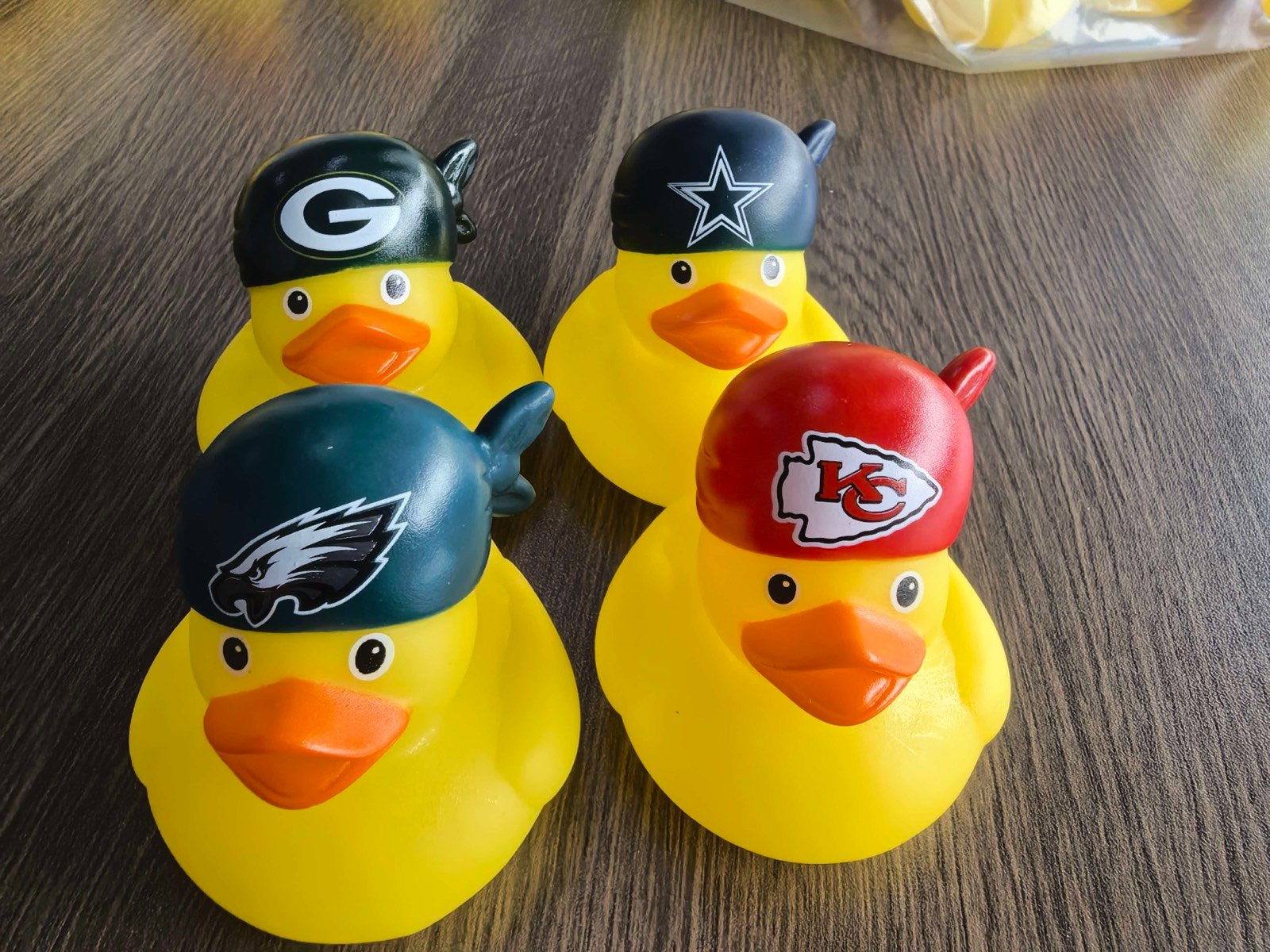
Why does your pre-production sample for gift rubber ducks look flawless, but the full production run arrives with logos peeling and colors that miss the Pantone match by three shades? I watched a buyer eat a $50,000 order on a subscription box program because the sample approval process skipped one critical check: the difference between a hand-painted prototype and the actual pad-printed mass production. The supplier hit their FOB pricing target, but the quality tolerance shifted just enough to turn a branded unboxing moment into a return trigger.
This gap is more common than most procurement teams realize. When you are sourcing cheap custom rubber ducks for brand promotions or bulk rubber ducks for corporate gifts, the factory’s incentive is to make the sample look perfect — slower molding, individual inspection, extra care. Then the line speeds up for the full 1,000‑unit run, and the quality tolerance expands. The logo that survived a fingernail scrape on the sample flakes off after two weeks in a subscriber’s bathroom. For agency procurement leads hitting an MOQ of 1,000 and a per‑unit cost under $2.00, that failure shows up as a compliance issue and a client relationship problem.
The fix is not to demand more samples. It is to understand where the quality risk lives — in the method of decoration, the material specs, and the supplier’s incentive structure. This analysis walks through the three yes/no questions that separate a supplier who delivers consistent gift rubber ducks from one who delivers a sample you cannot scale.
Why Bulk Gift Rubber Ducks Work
A branded gift can increase recipient affinity by 60% — but only if the quality matches the logo.
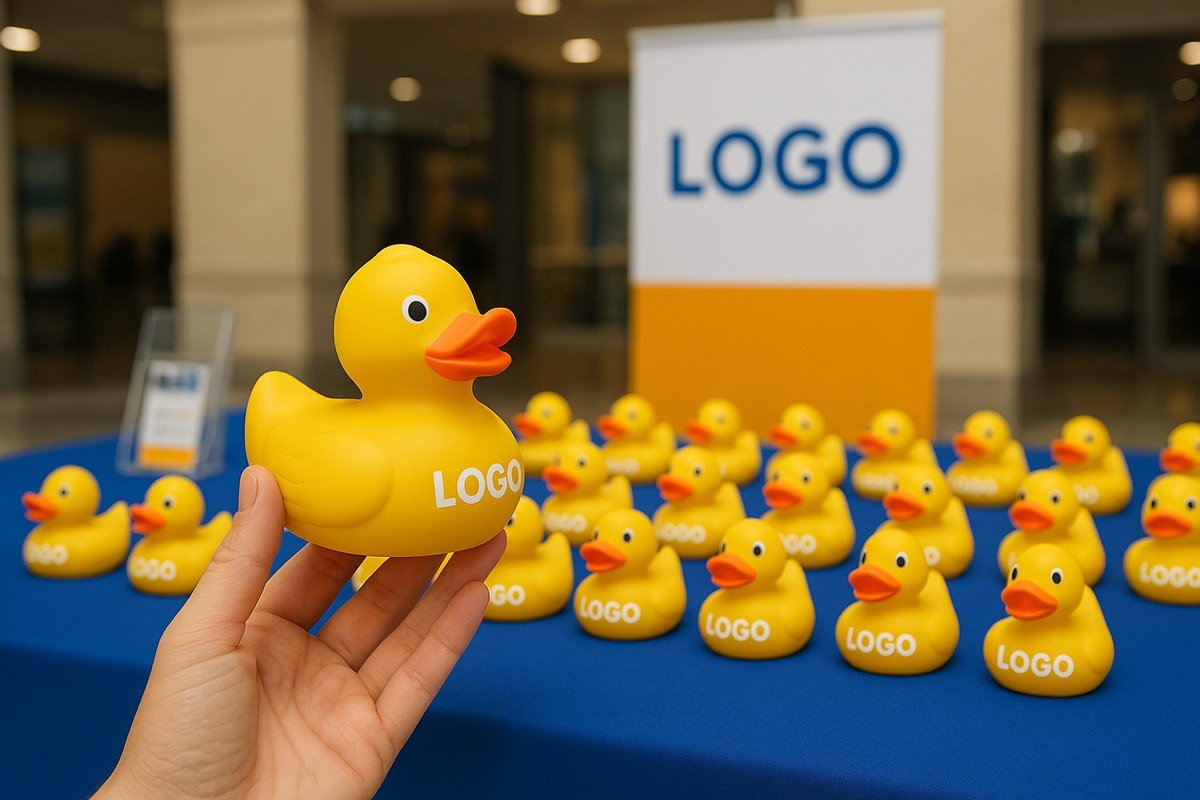
I’ve seen too many marketing directors spend $50,000 on custom promo items that end up in the trash because the execution didn’t match the promise. Rubber ducks work because they’re universally recognized (no instruction manual needed), low enough in cost to distribute at scale, and naturally evoke a social-media-worthy reaction. The Advertising Specialty Institute’s data backs that up: recipients keep branded merch that’s useful, fun, or surprising — and a custom rubber duck checks all three boxes.
Why recipients actually keep these
Subscription box play: repeat engagement, low per-unit cost
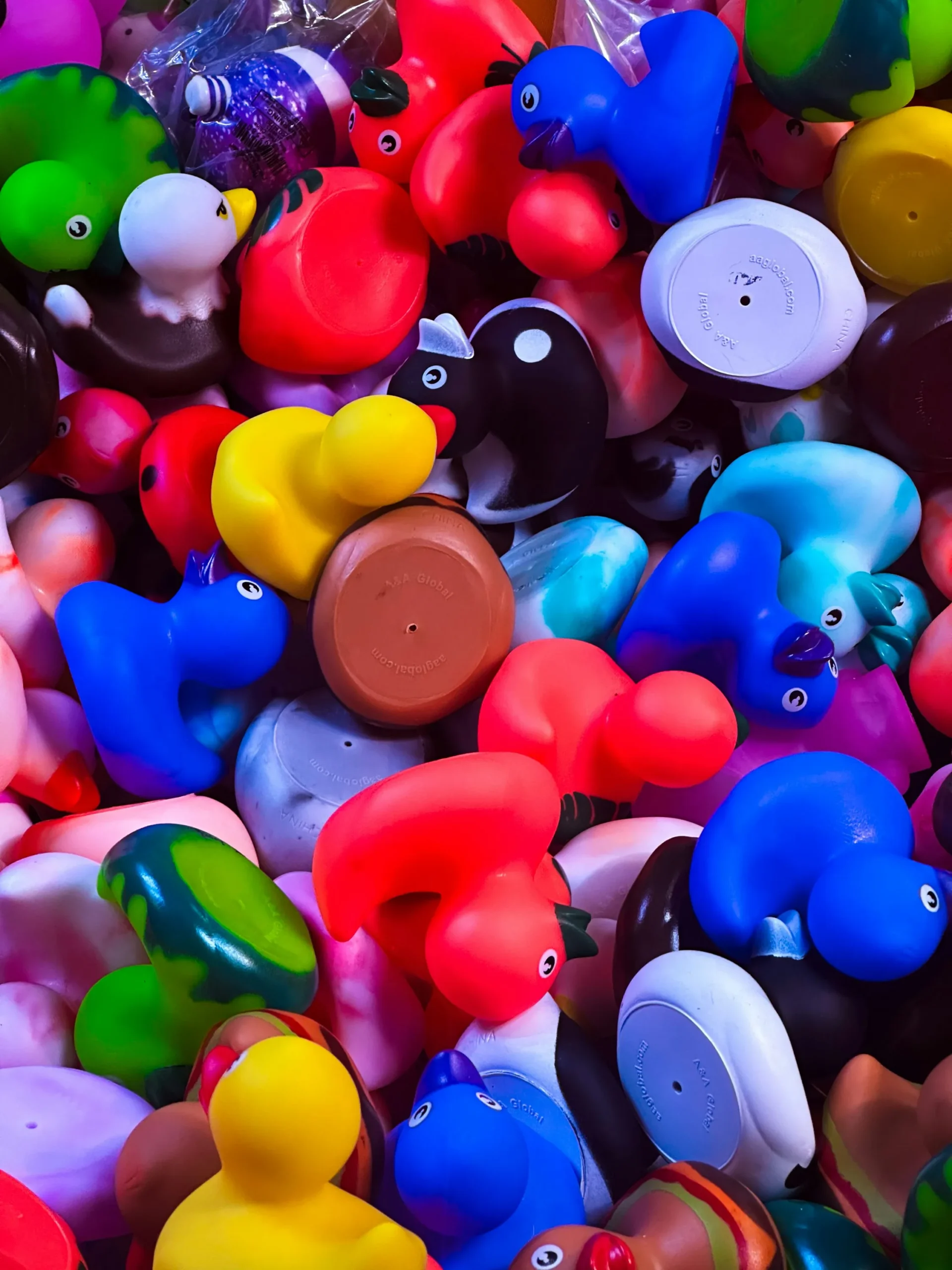
For e‑commerce DTC brands running subscription boxes, a themed duck every month is a cheap retention hook. At a per‑unit cost below $2.00 (and as low as $1.20 at MOQ 1,000), you’re spending less than a coffee to give customers a reason to open the box and post about it. Compare that to the cost of acquiring a new subscriber — the duck pays for itself if it extends retention by even one month. The key is variety: different colors, outfits, or themes keep the unboxing novel. That’s where custom rubber ducks for subscription boxes become a predictable line item with measurable ROI.
The quality gap that kills the gift effect
Here’s the reality most vendors won’t tell you: knock‑off 3D‑printed ducks (from suppliers like Duck of the Month or Cruising Quackers) arrive with visible layer lines, brittle seams, and zero waterproofing. Hand one of those to a client or put it in a subscription box and you’ve actually hurt brand perception. Lzengo’s injection‑molded PVC ducks are indistinguishable from retail bath toys — no layer lines, no peeling logos, and backed with CPSIA and REACH certificates. For personalized rubber ducks for employee appreciation or high‑stakes client gifts, that marginal quality difference is the difference between a keeper and a throwaway.
MOQ, Pricing & Sampling Process
MOQ starts at 1,000 units; pricing drops at 5,000 and 10,000 units.
Our MOQ of 1,000 units per design matches your campaign budget from day one. Per-unit cost runs $1.20–$2.50 depending on volume and whether you choose pad printing ($0.05 extra per duck) or in-mold decoration ($0.30 extra). Compared to competitors like 4AllPromos, which often demand 2,500+ units and charge non-refundable mold fees from $300, our structure lets agency buyers start smaller and scale up without penalty.
Sample Process & Fees
Samples take 10–15 business days from artwork approval. The sample fee is $50–$100, fully refundable once you place the final order. This keeps your upfront risk low — a critical factor when you need to present a physical duck to your client before committing to a full run. We accept Pantone codes, vector files, or even a photo of your existing logo.
Most suppliers either skip the sample step or charge a non-refundable fee that eats into your margin. We treat it as a project‑confidence gate: you approve the feel, color match, and logo placement before we start tooling the production mold.
Production Lead Time & Hidden Costs
After sample sign‑off, production runs 25–30 business days. That’s the realistic timeline for injection‑molded PVC — not the optimistic 10‑day rush some drop‑shippers promise. The only additional one‑time cost is the mold fee for in‑mold decoration: $200–$400. At 5,000 units that fee adds less than $0.08 per duck, a trivial investment to eliminate peeling forever.
We openly quote these numbers on every RFQ because hidden mold costs are the top fear for agencies sourcing custom promotional gifts. No surprises on the final invoice.
- MOQ: 1,000 units per design; volume breaks at 5,000 and 10,000.
- Sample Fee: $50–$100, refundable on final order. Turnaround 10–15 business days.
- Production Lead Time: 25–30 business days after sample approval.
- Mold Fee (In-Mold): $200–$400 one-time; per-unit cost under $0.08 at 5,000+ units.
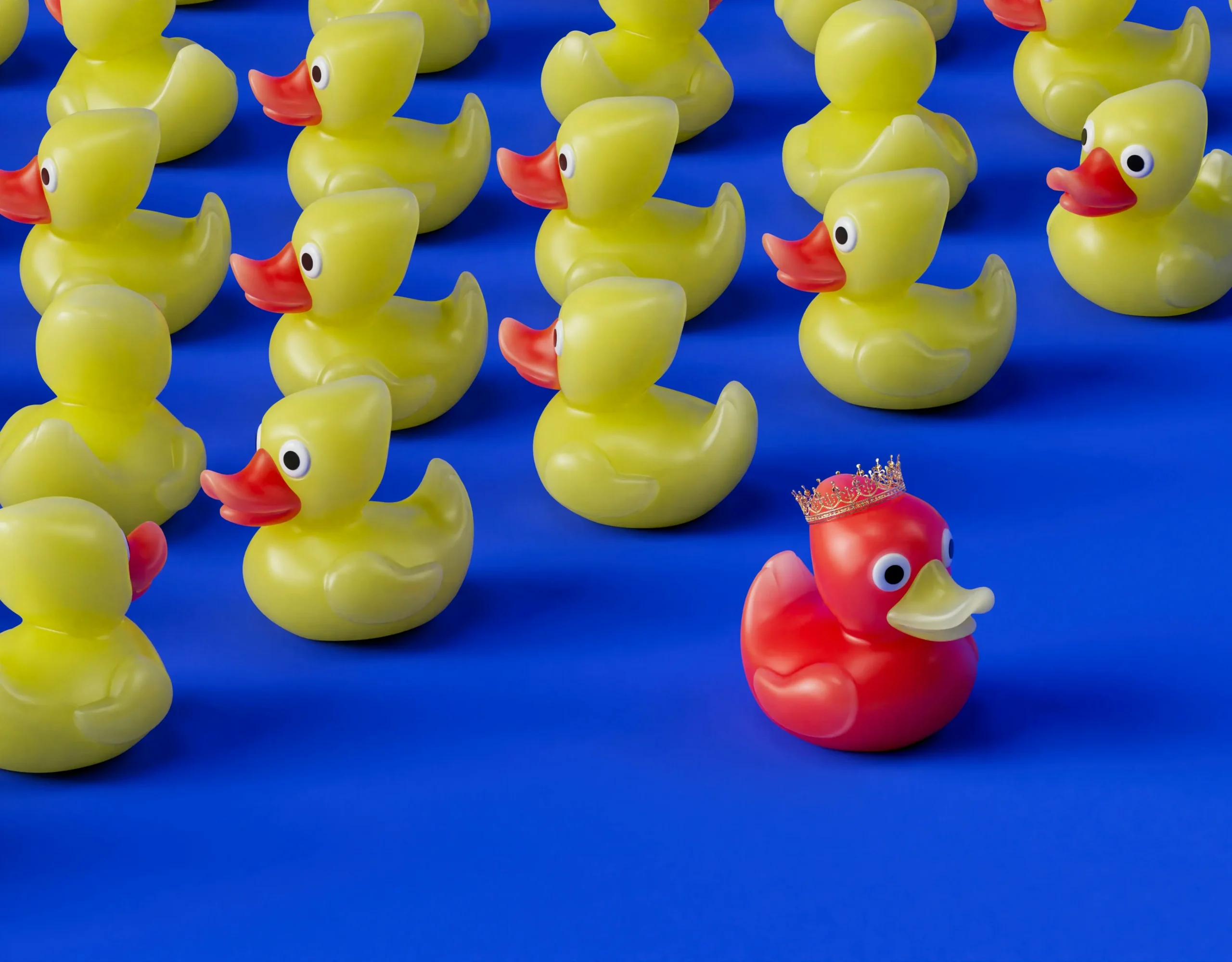
Customization: Printing vs. In-Mold Decor
In-mold wins for gift programs.
Every generic guide tells you to ‘just print your logo on the duck.’ That advice gets buyers burned on $50K orders when the pre-production sample looks perfect, but mass production runs show color shift, misregistration, or — worst case — the logo peeling off after the third squeeze. The real decision isn’t print vs. no print. It’s pad printing vs. in-mold decoration, and the choice determines whether your gift recipient sees a pristine brand mark or a faded, cracked mess six months later.
Pad Printing: Low Entry Cost, Real Trade-Offs
Pad printing works by transferring ink from a silicone pad onto the duck’s surface. It’s the cheapest route — roughly $0.05 per duck — and works well on flat or slightly curved areas like the front of the chest or the back. But it has hard limits. You’re restricted to 1–4 spot colors, and the ink sits on top of the vinyl rather than bonding into it. On a rubber duck that gets handled, squeezed, or washed, that ink wears off. For a one-time trade show giveaway tossed in a swag bag, pad printing makes sense. For a gift expected to live on someone’s desk or in a child’s bath, it’s a liability.
In-Mold Decoration: Higher Front-End Cost, Zero Peel Risk
In-mold decoration bakes the logo into the vinyl during the injection cycle. A pre-printed film is placed inside the mold before the PVC is injected. When the duck solidifies, the logo is part of the product — same material, same durability, no surface layer to peel or scratch off. You get unlimited colors, full PMS matching, and the ability to wrap logos around complex 3D shapes like the duck’s wing or head.
Initial mold fee runs $200–$400, a one-time cost. At 5,000 units, that’s $0.04–$0.08 per duck — about the same as loose change in a parking meter. The per-duck production premium over pad printing is roughly $0.30. Compare that to the cost of a failed promotion where recipients see a faded logo on a gift that’s supposed to represent your brand. The math flips fast.
When to Choose Each Method
- Choose pad printing when: You need 1,000–2,000 ducks for a short campaign (under 3 months), the logo is simple text or a 1-color mark on a flat surface, and the duck won’t be washed or handled repeatedly. Total cost stays near $1.20/unit, making it viable for tight promotional budgets.
- Choose in-mold decoration when: The duck goes into a subscription box, a retail display, or a corporate gift pack where brand presentation matters for months or years. The recipient will squeeze it, display it, maybe bathe with it. The upfront mold fee of $200–$400 gets amortized over your run, and at 5,000+ units it drops below $0.08 per duck. Combined with the per-unit cost, an in-mold duck runs roughly $1.50–$2.50 vs. $1.20 for pad printed. That $0.30–$1.30 premium buys permanence.
One more thing most suppliers won’t tell you: in-mold decoration requires a longer sampling cycle because the mold needs to be cut and the film positioned correctly. Our standard sample turnaround is 10–15 business days, but for in-mold we advise an extra 5 days for first-article approval. If your campaign deadline is rigid, pad printing gets you samples faster. If brand longevity is the goal, in-mold is worth the extra wait.

Safety & Compliance for Gift Rubber Ducks
No certificate means no entry.
A $50K order sat in customs for six weeks because the supplier’s compliance paperwork was a self-signed PDF. The brand missed its product launch. The agency ate the penalty. That’s the real cost of skipping verification.
The Three Standards That Matter
- CPSIA (USA): Requires lead content below 100 ppm and a third-party Children’s Product Certificate. Every duck intended for gift-giving — even if not labeled as a toy — falls under this rule if it could end up in a child’s hands.
- REACH (EU): Restricts over 200 substances including phthalates and BPA. European buyers will reject containers that lack a REACH declaration from an accredited lab. No exception for promotional items.
- GB 6675 (China): Mandatory toy safety standard for all children’s products sold in China. Covers mechanical, flammability, and chemical hazards. Many global campaigns now require compliance even if the duck isn’t sold there — brands want one spec worldwide.
- Material safety: Food-grade PVC confirmed phthalate-free and BPA-free via GC-MS analysis. The lab checks for 19 phthalates against the REACH limit of 0.1% by mass per substance.
- Heavy metals: Lead, cadmium, mercury, and chromium tested per ASTM F963 and EN 71-3. All results are under the detection limit — not just under the legal cap.
- Physical hazards: Small parts test, sharp edges check, and choke hazard evaluation. Even for ducks that are ‘promotional only’, we run the full battery of mechanical safety tests.
Most suppliers hand over a generic certificate that says ‘compliant’ without naming the lab or the standard version. That paper won’t hold up when a client’s legal team asks for the actual test report. We include the full third-party report with every bulk order — phthalate-free PVC, BPA-free, lead and heavy metals below the strictest thresholds.
What the Certificate Covers
Make compliance a line item in your contract, not an afterthought. Agree upfront that the supplier must deliver the lab report before shipment. If they push back, you know exactly why they are pushing back.
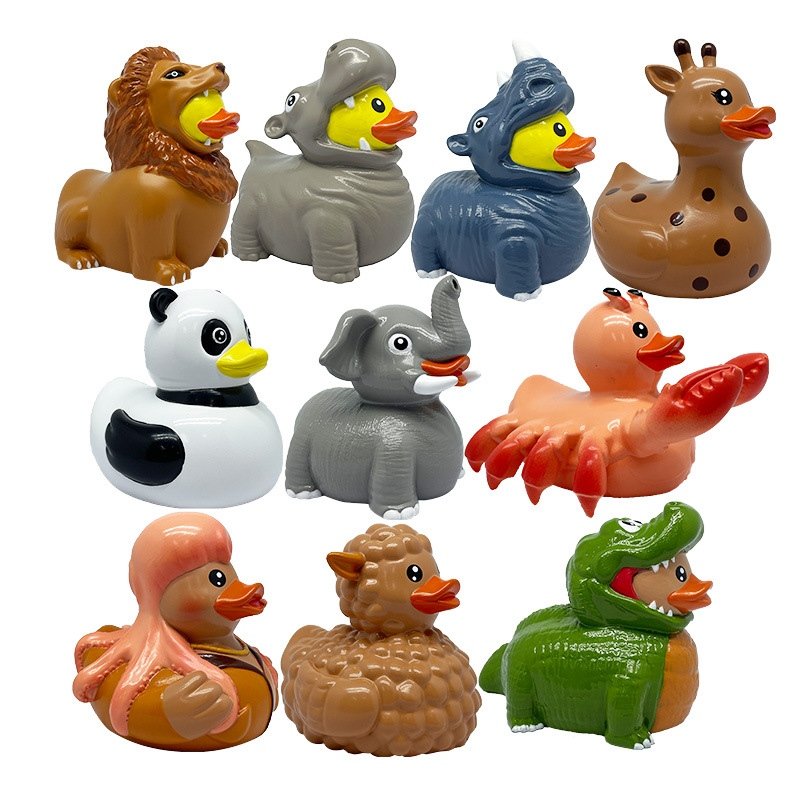
Packaging Ideas for Gift Ducks
我审核过从上海到圣保罗的供应商包装线。鸭子在预算中占据主导地位,但包装决定了它是被放在桌子上还是扔进垃圾桶。对于机构采购人员来说,包装选择直接影响到货时的新品完好率和客户感知。.
方案A:标准塑料袋配吊牌 (~$0.10/个)
- 用例: 大型促销活动、贸易展览赠品、员工活动。.
- 优点: 单位成本最低。易于批量包装和运输。吊牌提供品牌标识空间。.
- 缺点: 感觉得像是一份礼物,而不是一件商品。吊牌可能脱落。运输保护最小。.
- 用例: 企业客户礼物、精品零售合作、高档订阅盒。.
- 优点: 将感知价值提升3倍。将鸭子牢固地固定在适当位置。允许背面印刷关键卖点,如安全合规性(CPSIA、REACH、ASTM F963)。.
- 缺点: 单位成本更高。需要更多存储空间。对于临时活动来说可能过度包装。.
- 用例: 月度订阅盒、限量版合作、影响者礼物。.
- 优点: 创造值得分享的开箱体验。可以包含隔层以放置品牌资料或惊喜物品。Lzengo的注塑鸭表面光滑,适合精致的内衬,而竞争对手的3D打印鸭层纹粗糙,会破坏展示架的美感。.
- 缺点: 最高的单位成本和设置时间。需要折叠/组装,增加了制造步骤。.
方案B:定制印刷吸塑卡 ($0.25-$0.50/个)
方案C:品牌纸板展示盒 ($0.50-$0.80+/个)
选择很简单。对于覆盖范围(触及100万人),购买塑料袋。对于影响力(让10个人记住你的品牌),购买吸塑卡或展示盒。机构采购人员应该根据活动目标分配包装预算,而不是将其视为事后的想法。.
Conclusion
A $50K order that went sideways because the mass production run didn’t match the pre‑production sample is a lesson most of us learn once. The fix is simple: lock down your sample approval process, demand third‑party compliance reports, and choose a supplier whose quality tolerance matches your end‑use — whether that’s a subscription box or an executive gift.
- MOQ of 1,000 units keeps per‑unit cost under $2.00 with pad printing.
- In‑mold decoration eliminates logo peeling for less than $0.08 per duck at 5,000+ units.
- CPSIA and REACH compliance certificates should be included with every bulk order.
Before you commit to a supplier, ask for their standard sample turnaround and mold fee breakdown. Compare the terms here: Lzengo offers a straightforward MOQ of 1,000, a per‑unit range of $1.20–$2.50, and sample approval in 10–15 business days. Browse the product page to see how injection‑molded PVC and in‑mold decoration hold up against your quality benchmarks.
Frequently Asked Questions
How to source cheap rubber ducks for subscription boxes and gift programs?
Source directly from a factory using injection molding to keep per-unit costs low at scale. For simple logos, pad printing is cheapest but wears off over time. Request a quote with your exact quantity and design complexity.
What is the minimum order for custom rubber ducks?
Our minimum order for custom rubber ducks starts at 1,000 units. Pricing drops at 5,000 and 10,000 units. Confirm your volume to get the best per-unit price.
Can I match Pantone colors on custom gift ducks?
Yes, Pantone colors can be matched using in-mold decoration for accurate, lasting color. Pad printing also matches Pantone but is less durable for repeated handling. Specify Pantone codes when requesting a quote.
How long does it take to produce custom rubber ducks for gifts?
Sample production takes 10–15 business days after artwork approval, then full production takes 25–30 days after sample sign-off. Total lead time is roughly 5–6 weeks for a standard order. Plan your timeline with these milestones in mind.
Are custom rubber ducks safe for children?
Yes, our ducks are made from food-grade, phthalate-free PVC using the same process as baby bath toys. They meet EN71 and ASTM safety standards. Request our safety certification documents with your order.