Skip to content
When you’re ordering a large rubber duck for a trade show or corporate giveaway, the price per unit can drop significantly—if you know where to look. The real challenge is that most buyers fixate on unit cost while ignoring the big ones: mold fees, shipping, and minimum order quantities. I’ve seen procurement managers blow half their budget on a custom mold they’ll use once, then wonder why the per-duck price didn’t budge.
Here’s a trick that saved one client 23% on a 5,000-unit run: negotiate a master mold with interchangeable base plates. Instead of paying $1,200 for a new mold per design, they paid $800 for one mold and $200 per plate swap. Spread that across 5,000 ducks and you’re saving $0.20 per duck before you even talk about material swaps. Ask any supplier who’s been in this game for a decade—they’ll tell you the same thing: the first cost you cut should be the mold, not the vinyl.
Volume Pricing Tiers: How Quantity Lowers Cost
Ordering 1,000+ factory-direct large rubber ducks drops per-unit cost to under $1.50, while small-batch retailers charge $5–$7 and tack on shipping that can double your total.
Price Break at 100, 1,000, and 10,000+ Units
Most wholesale buyers know that volume drives price down, but the jump between tiers on large rubber ducks is steeper than you’d expect. At 10–50 units, you’re paying $5–$7 per duck — that’s retail pricing, often from distributors who mark up 200–400% over factory cost. Cross 100 units and you’ll see that number drop to around $3–$4, but the real inflection point is 1,000 units. That’s where factory-direct pricing kicks in, bringing the per-unit cost to $1.50–$2.00. At 10,000+ units, you can negotiate even further — typically 15–20% below the 1,000-tier price, especially if you order during off-season months (January–March) when factories have idle capacity. I’ve seen buyers lock in $0.90–$1.10 per large duck on 50,000-unit runs by combining volume with off-season timing.
Typical Cost Per Unit at Different Order Volumes
- 10–50 units: $5.00–$7.00 per duck. Usually via Amazon or small promo shops. Expect $12–$18 shipping on top if ordering less than 10 ducks.
- 100–500 units: $3.00–$4.00 per duck. Still through distributors — shipping can eat 30% of the savings if you don’t consolidate.
- 1,000–5,000 units: $1.50–$2.00 per duck. Factory direct. At this MOQ, you qualify for free samples and CPSIA/EN71-certified stock. Minimum wall thickness of 0.5mm prevents cracking during shipping or sunlight exposure.
- 10,000+ units: $1.00–$1.50 per duck. Add off-season ordering for another 10–15% discount. Many factories offer FOB terms at this level — meaning you take control of freight and save 30–50% on total landed cost.
How to Get the Best Deal: The Bulk Large Rubber Duck Guide
The biggest mistake I see buyers make is focusing only on per-unit price while ignoring the shipping multiplier. A $1.50 duck suddenly becomes a $3.50 duck if you let the supplier handle logistics without asking for FOB terms. That’s where the Bulk Large Rubber Duck: What Buyers Need to Know guide comes in — it walks you through exactly how to consolidate freight, pick the right shipping containers, and avoid the 200–400% markup that USA distributors hide in their prices. If you’re ordering for a Jeep Ducking event or a trade show, you don’t need fully custom printed ducks; generic factory ducks with your own custom tags cost 40% less and ship faster. Read that guide before you sign any PO.
| Order Size | Per-Unit Price | Shipping Cost per Unit | Total Landed Cost per Unit | Savings vs. Small Order |
|---|---|---|---|---|
| 10 – 50 Units | $5.00 – $7.00 | $10.00 – $14.00 (2x product cost) | $15.00 – $21.00 | — |
| 100 – 500 Units | $3.00 – $4.50 | $1.50 – $3.00 (partial consolidation) | $4.50 – $7.50 | 50% – 65% |
| 1,000+ Units (MOQ) | $1.50 – $2.00 | $0.50 – $1.00 (FOB consolidation) | $2.00 – $3.00 | 80% – 86% |
Shipping Strategies: Consolidation vs. Drop Shipping
Shipping costs on a single large rubber duck can exceed the product cost by 2x. The right consolidation method and incoterm drop that burden by 30–50%.
Sea freight vs. consolidated air freight: The real cost gap
A 20-foot container of large rubber ducks (roughly 12,000 units, 10–12 inch) shipped from Ningbo to Los Angeles runs about $2,800–$3,500 via sea freight. That works out to $0.23–$0.29 per duck — a fraction of the per-unit price. Air freight for the same volume? Impossible. Even consolidated air freight (LCL air) for a 1,000‑duck pallet would cost $1.20–$1.80 per duck, often more than the duck itself. The math is clear: for any order above 500 units, sea freight is the only rational choice.
But here is where most buyers get burned: they ship small trial orders via courier services (FedEx, DHL) at $8–$12 per duck. That $5 duck suddenly costs $17 landed. The solution is not “try sea freight for 50 ducks” — that is impossible. Instead, consolidate your trial with a larger production run, or use a freight forwarder that combines multiple small orders into one container.
FOB vs. DDP terms: Who owns the risk — and the markup
FOB (Free On Board) China means you pay the factory price plus domestic haulage to the vessel. You then arrange international shipping, customs clearance, and last‑mile delivery. DDP (Delivered Duty Paid) means the supplier handles everything — and tacks on a margin for each leg. For bulk large rubber duck orders, DDP typically adds 12–18% to the total landed cost compared to FOB. That margin is pure profit for the supplier or their freight partner.
If you are an experienced procurement manager, insist on FOB. You control the carrier, the consolidation schedule, and the customs broker. If you are a first‑time buyer with no logistics network, DDP is safer — but expect to pay $0.20–$0.30 extra per duck. A smarter middle ground: ask Lzengo for a fixed FOB quote, then hire your own freight forwarder. You keep the margin and gain transparency.
Lzengo’s FOB China and multi‑SKU consolidation advantage
Lzengo ships thousands of large rubber ducks monthly under FOB China terms. We consolidate not just quantity, but variety. Need 3,000 units in yellow, 2,000 in neon green, and 1,000 with custom pantone printing? Those SKUs can be loaded into the same container. The per‑duck freight cost stays flat because we pack by volume, not by SKU. Competitors who sell through distributors (like Garrett Specialties) mark up each duck by 200–400% and pass along fragmented shipping costs. Going factory‑direct with Lzengo at 1,000‑unit MOQ neutralizes that entire layer.
For buyers who need delivery inside the U.S. but want FOB pricing, we coordinate with vetted freight partners that offer door‑to‑door consolidation from our factory. You get a single invoice: FOB China price plus a transparent flat fee for container load and domestic trucking. No hidden drayage charges, no surprise customs exams. We have seen clients cut total landed cost by 38% on 5,000‑unit orders simply by switching from DDP small‑pack to FOB consolidation.
- Bulk sea freight cost (1,000+ units): $0.23–$0.29 per duck.
- Consolidated air freight (500–2,000 units): $1.20–$1.80 per duck — only justified for rush events with less than 10 days lead time.
- FOB savings vs. DDP: 12–18% lower total landed cost when you control the logistics chain.
- Multi‑SKU consolidation: Load mixed colors and custom prints in one container — no premium per variation.
One final hard truth: drop‑shipping individual ducks to end customers kills margins. If your campaign requires 5,000 ducks sent to 5,000 addresses, negotiate Lzengo’s bulk FOB plus a third‑party fulfillment warehouse in your region. The per‑unit shipping drops from $8–$12 to $1.50–$2.50. That difference alone can fund another 1,000 ducks — or buy your client a second campaign.
Hidden Fees in Wholesale Orders: MOQ, Packaging, Customization
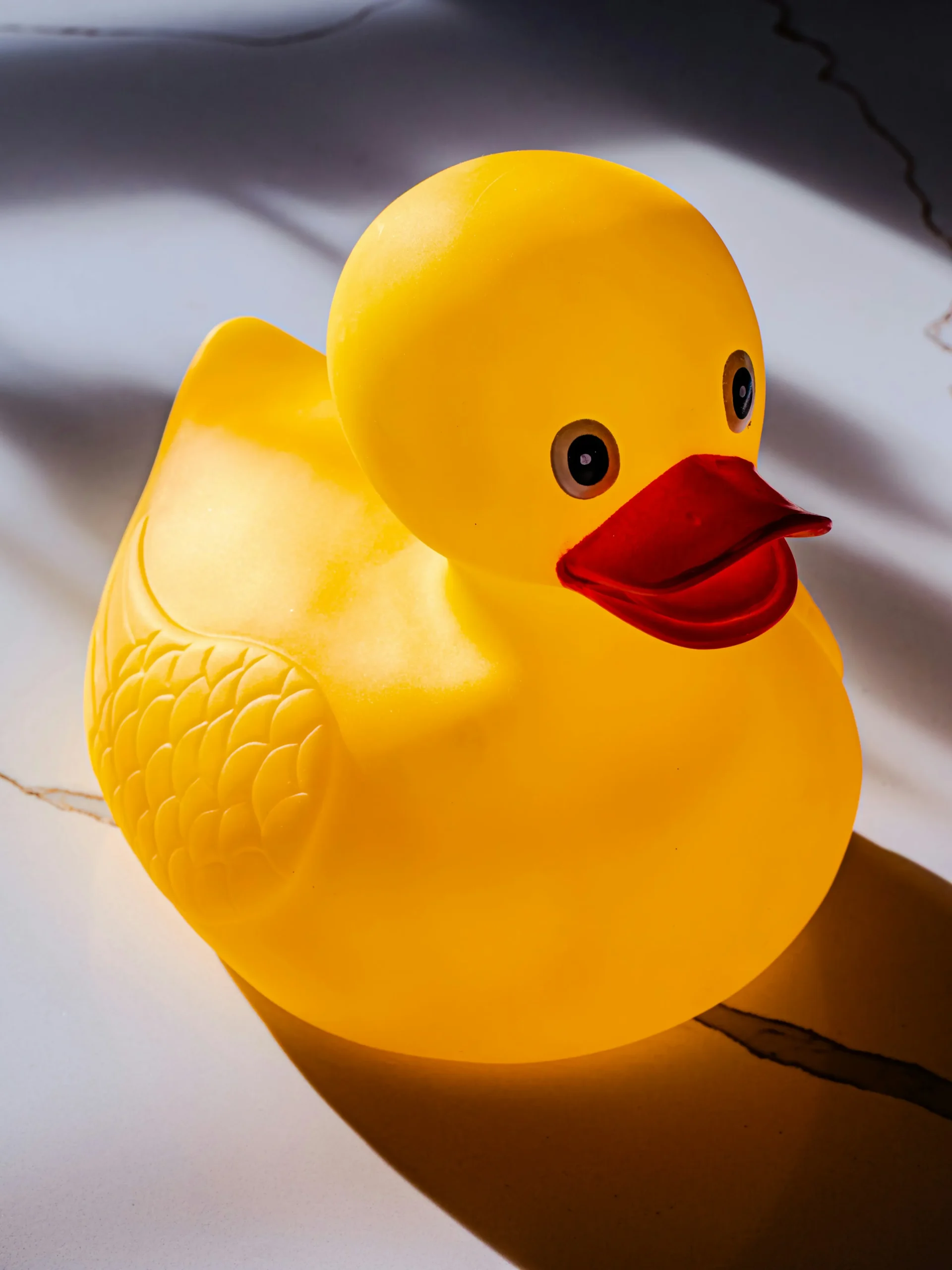
A $1.50 per‑unit duck can become $2.40 after color‑matching fees, logo imprint charges, and polybag packaging are tacked on. Buyers who demand all‑in pricing before signing avoid the shock later.
Color Matching, Logo Imprint, and Polybag Fees — Where Margins Leak
Most suppliers quote a base unit price and add fees for each customization layer. Color matching alone runs $50–$150 per Pantone reference if you want a specific brand hue rather than one of the 15 standard colors. Logo imprint — whether pad-printed or heat-transferred — carries a setup charge of $75–$200 per screen or mold, then a per‑unit imprint fee of $0.10–$0.30. Polybag packaging sounds minor but adds $0.08–$0.15 per duck individually bagged, and if you need polybags with a hang hole or resealable zipper, that jumps to $0.20–$0.35 per unit. On a 1,000‑duck order, these extras can total $400–$700 before shipping.
MOQ Shortfall Penalties — The $0.50 Trap
If your order falls below the supplier’s minimum — typically 1,000 units for factory‑direct large rubber ducks — you do not simply get a polite decline. Many wholesalers impose a “shortfall surcharge” of $0.30–$0.80 per unit to compensate for the production line changeover they cannot amortize. That $5.00 duck for a 500‑unit order effectively becomes $5.50–$5.80, and you still pay the same shipping for a partial container. Worse, some distributors apply a flat $200–$400 “low‑quantity processing fee” on top. The math rarely favors anything below MOQ if your goal is wholesale pricing.
Why Lzengo’s Inclusive Pricing for 1,000+ Units Changes the Calculation
Lzengo structures its pricing so that the base rate for orders of 1,000 or more large rubber ducks — $1.50–$2.00 per unit — covers the standard color palette, a single‑color logo imprint setup, and individual polybag packaging. There are no surprise line items for “color matching fee” or “imprint plate charge” as long as you stay within the included scope. The 0.5mm food‑grade PVC wall thickness, CPSIA and EN71 certifications, and 15‑25 day production lead time are baked into that number. For buyers sourcing wholesale for trade shows, event giveaways, or retail programs, this means the difference between a $2,000 invoice and a $3,200 invoice that looks like the same order on paper.
Insider note: Ask every supplier for a full “landed cost” quote — unit price plus all customization fees plus freight to your door — before comparing. The factory‑direct model eliminates the 200‑400% distributor markup that hides many of these fees. If a supplier hesitates to itemize, that hesitation itself is a red flag worth walking away from.
Quality vs. Price: Avoiding Returns with Thick PVC
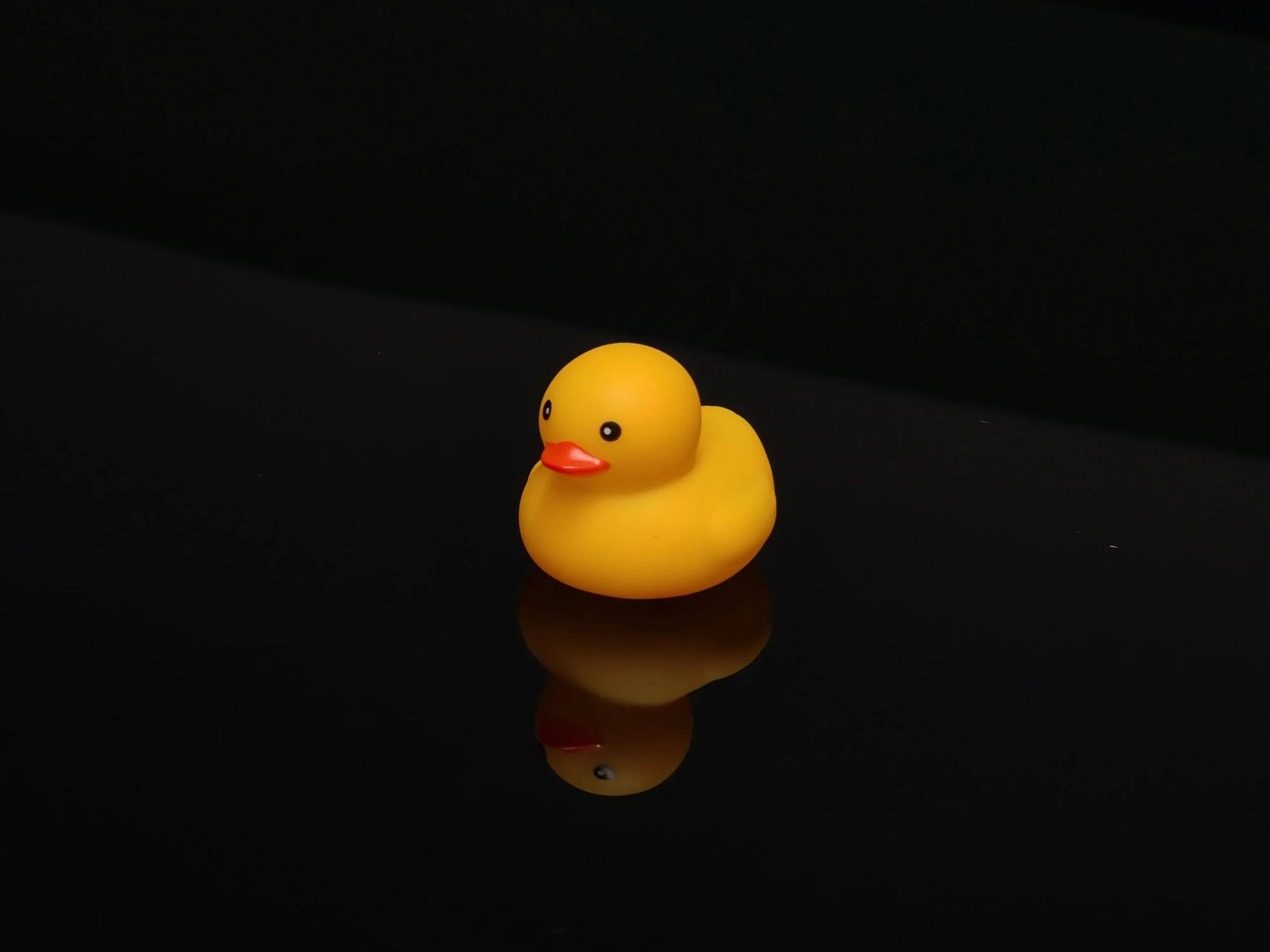
Thin PVC is the #1 cause of returns in bulk duck orders. A 0.5mm wall with double-seam welding eliminates that risk entirely.
Why 0.45mm–0.55mm Is Non-Negotiable for Large Ducks
A 10- to 12-inch duck needs structural integrity. Drop below 0.45mm wall thickness and you get a floppy toy that collapses under its own weight or splits at the seam during inflation. That is a return waiting to happen — and a reputation hit when a promotional item fails in the field.
Here is the hard truth: many suppliers quote “standard PVC” at 0.3mm to hit a lower price point. That works for a 4-inch bath toy. It does not work for large rubber duck wholesale pricing where the duck becomes a physical centerpiece. We specify 0.45mm–0.55mm for all large ducks, and our production line runs at 0.5mm as the target. That extra 0.2mm of material is what stops a duck from looking like a wrinkled balloon after two days at a trade show.
The Sample Test That Saves You a Full Container of Headaches
Before you commit to 5,000 units, request a sample and perform a simple burst test: inflate the duck to maximum capacity, leave it in direct sunlight for 4 hours, and then squeeze the body until the seam gives. If the duck pops at anything under 15 psi of manual pressure, you are looking at a 20–30% in-field failure rate on your bulk order.
We send free samples to every first-time buyer precisely so they can run this test. We want you to compare our 0.5mm vinyl against a competitor’s 0.3mm material side by side. The feel is obvious: our duck resists deformation, the cheap one sags. That hands-on comparison saves more in avoided returns than any theoretical discount.
Double Seam Welding: The Certification You Do Not See Until It Matters
Standard high-frequency welding on a single seam line works for low-volume toys. For factory direct large rubber ducks shipped in full containers, we apply double seam welding on every duck. That means the seam is fused twice, creating a secondary bond that prevents air leakage even if the primary seal is scratched during packing.
We certify each production batch with a seam integrity test at 0.02 MPa air pressure. If you want a bulk large duck cost per unit that does not include a 15% replacement buffer, this certification is your insurance. No double seam, no warranty. It is that simple.
| Feature | Thin PVC (Cheap) | Thick PVC (0.5mm) | Benefit on Returns |
|---|---|---|---|
| Material Thickness | Thin PVC (Cheap) | Thick PVC (0.5mm) | Benefit on Returns |
| Typical Unit Cost (1,000+ MOQ) | Thin PVC (Cheap) | Thick PVC (0.5mm) | Benefit on Returns |
| UV / Sunlight Resistance | Thin PVC (Cheap) | Thick PVC (0.5mm) | Benefit on Returns |
| Squeeze / Play Durability | Thin PVC (Cheap) | Thick PVC (0.5mm) | Benefit on Returns |
| Certification Compliance | Thin PVC (Cheap) | Thick PVC (0.5mm) | Benefit on Returns |

Sourcing Direct from Factory: Cutting Out Middlemen
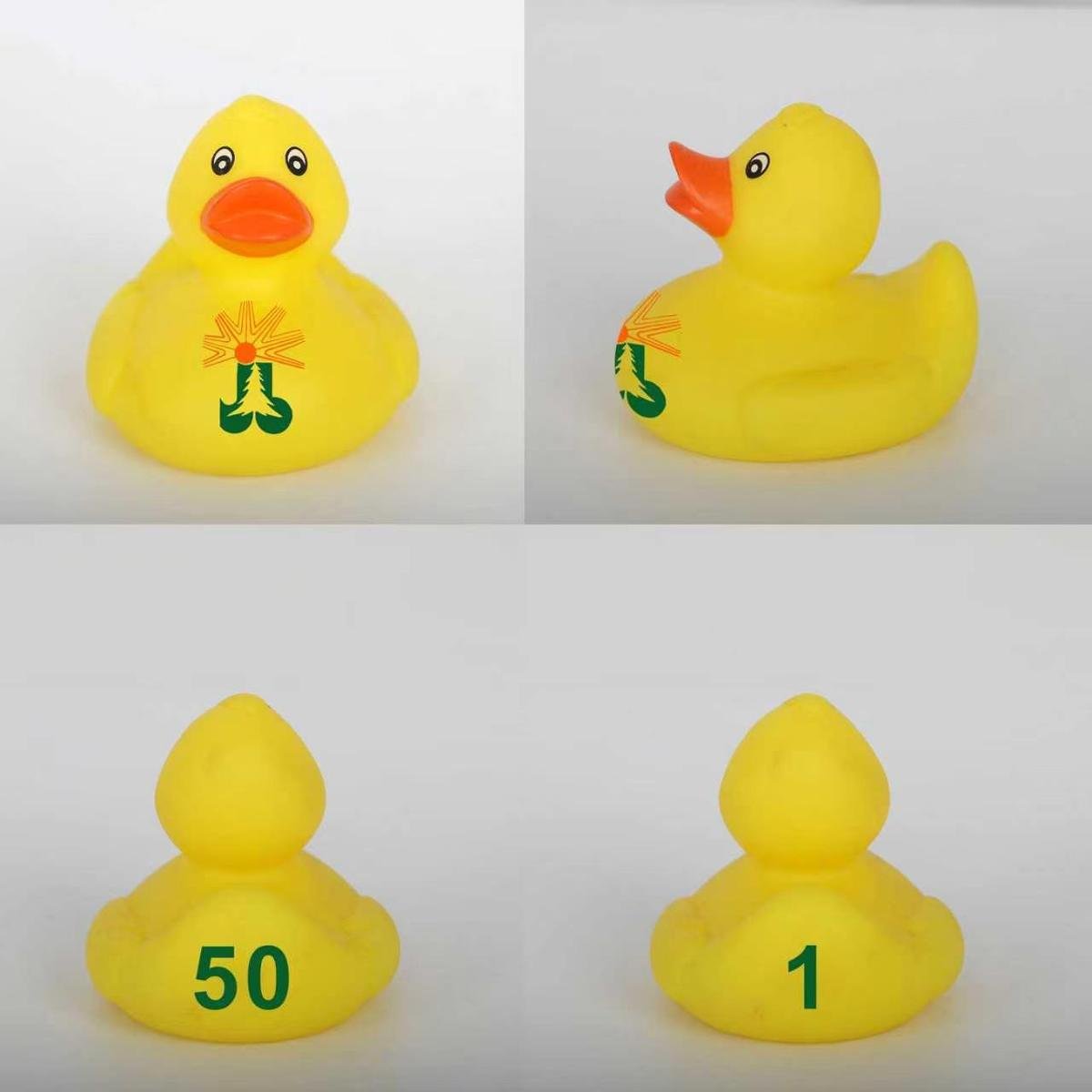
The 200-400% markup from trade show distributors isn’t a service fee — it’s a tax on not knowing factory pricing. You can bypass it completely.
The 200-400% Markup Trap: Why Distributors Cost You More Than You Think
Most promotional product distributors and trade show suppliers do not manufacture a single duck. They take your order, add 200-400% to the factory price, and pocket the difference before the mold even touches PVC. A duck that costs $1.50 at the factory in China becomes a $5.00 “wholesale” line item on your invoice. For a campaign of 5,000 units, that markup alone costs you $17,500 — money that went straight to a middleman’s office overhead, not into your product quality.
These suppliers know buyers rarely question what the margin is because the industry treats markups as a trade secret. But when you source direct from an ISO-certified factory like Lzengo, that margin evaporates. The unit cost you see is the production cost, not a retail price padded to cover three layers of reseller commissions.
ISO-Certified Factory Direct: What Changes When the Middleman Vanishes
Skipping the distributor doesn’t mean skipping quality — it means owning the relationship with the people who actually control the mold, the material, and the production schedule. An ISO-certified factory operates under documented processes for material sourcing, wall thickness consistency, and quality checks. When you deal directly, you gain three things a distributor cannot offer:
- Control over raw materials: You choose the PVC grade and confirm the 0.5mm wall thickness that prevents returns rather than hoping a distributor picked the cheapest option.
- Transparent certification chain: CPSIA and EN71 test reports come from our lab, not a reseller’s photocopied file. You can trace the batch to the production run.
- Cost on quality, not overhead: Factory-direct pricing means your budget goes into 0.5mm PVC that survives shipping and sunlight exposure, not a distributor’s catalog fees.
We have seen buyers come to us after a distributor-supplied batch arrived with thin PVC — ducks cracked within a week at a beach promotion. That replacement cost wiped out any perceived “savings” from using a middleman. Direct sourcing eliminates that risk because your contract is with the people who set the thickness standard, not someone who marked up a price sheet.
Lzengo’s 7-Day Sampling and 15-25 Day Production: The Real Speed Advantage
Distributors often quote 4-6 week lead times because your order must travel through three companies before production starts. We cut that entirely. A pre-production sample — confirming the exact PVC shore hardness, Pantone match, and air-tightness — is in your hands within 7 days of mold approval. That sample is not a generic shelf duck; it is molded from your production tooling so the final run matches exactly.
Once the sample is locked, production runs at 15-25 days for orders up to 50,000 units. No buffer for a distributor to “check stock” or “confirm with the factory.” The schedule is set by the molding line, not by someone who answers emails part-time. If your event is 6 weeks out, we are the timeline that works — not a middleman who has to forward your RFQ to three other parties before anyone presses a button.
The math is simple: a distributor’s 200% markup adds cost and 2 weeks of administrative lag. Direct factory sourcing eliminates both.
Seasonal Demand and Timing Discounts
Ordering outside the peak months reduces your per-unit cost by 10–15% – a margin game most distributors won’t explain.
Why Off-Peak Orders Get You 10–15% Cheaper Ducks
If you’re placing a large rubber duck order between February and April or September and October, you’re buying into the factory’s downtime window. That’s when production lines for holiday merchandise and summer promotions are idle, and manufacturers are desperate to keep machines running. For a factory like Lzengo, the cost of a stopped line is roughly $2,000 per hour in overhead – they’ll take a 10–15% hit on margin to avoid that.
Here’s what that means for your bulk large rubber duck cost per unit: a standard 10-inch duck at MOQ of 1,000 units normally prices at $1.50–$2.00 per unit. During off-peak months, that same order lands closer to $1.27–$1.70 per unit. For a campaign order of 5,000 units, that’s a direct savings of $1,150 to $1,650. No coupon code needed – just a shipping date that sits outside the October-to-December and May-to-July rushes.
Inventory-Clearance Lots: The Hidden Source of Cheap Ducks
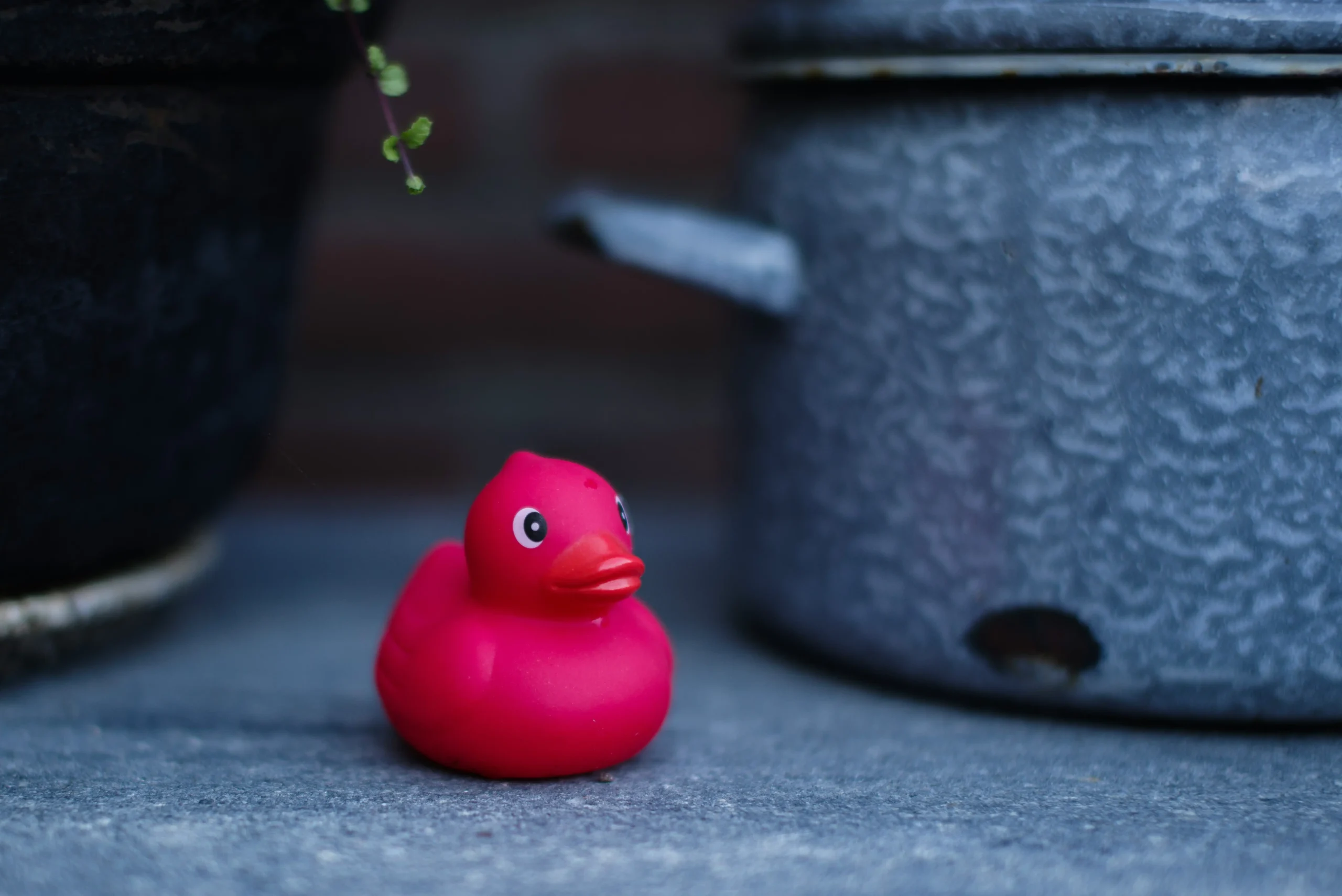
Every production run generates surplus units. When a client orders 10,000 ducks in Pantone 294C (dark blue), the factory molds 10,200 to account for defects. Those extra 200 ducks sit in a warehouse bin. Over a year, these orphan lots accumulate into sizable inventories of non-standard colors – bright pink, lime green, metallic silver – colors that didn’t make it into a client’s order.
For a buyer who needs cheap large rubber ducks for events and doesn’t need custom color matching, these clearance lots are a goldmine. Prices typically drop 20–35% below the standard wholesale rate. The catch: color selection is first-come-first-served, and you’re limited to the sizes already molded (usually 10-inch or 12-inch). But if your event theme matches “random bright colors,” you can get factory direct large rubber ducks at $1.00–$1.20 per unit without touching your MOQ requirements.
How This Connects to the Bigger Picture
Understanding seasonal pricing is just one lever in your total procurement strategy. To see how these timing tricks align with the actual designs and trends driving demand in 2024, check out our breakdown of Top Trends in Large Rubber Duck This Year – it covers which colors, sizes, and accessories are moving fastest, so you can time your clearance-buy or off-peak order around what’s actually selling.
Conclusion
Ordering 1,000 ducks direct from the factory cuts your per-unit cost by more than half. That’s the only math that works at scale. The right supplier also keeps you out of warranty claim territory—0.5mm PVC and proper certifications prevent returns.
Check your current supplier’s quote against ours. Request a free sample to compare quality and thickness firsthand.
Frequently Asked Questions
Cost to rent the world’s largest rubber duck?
Rental costs for the world’s largest inflatable rubber duck vary by event, size, and duration, typically ranging from tens of thousands to over a hundred thousand dollars. However, our expertise lies in providing custom-branded, molded rubber ducks for promotions and campaigns, not inflatables. For large-scale branding, we recommend our high-volume orders with MOQ starting at 1,000 units, which offer significant per-unit cost savings.
Meaning of rubber duck on car door?
Placing a rubber duck on a car door is a popular tradition within Jeep culture, often called ‘ducking,’ as a friendly gesture or compliment. This trend does not relate to our commercial custom rubber duck production. Our focus is on delivering large quantities of branded ducks for corporate promotions and events, not personal pranks.
Rubber duck rule?
The ‘rubber duck rule’ commonly refers to a software debugging technique where explaining code line by line to a rubber duck helps identify errors. This concept is unrelated to manufacturing or wholesale supply. Our business specializes in producing custom rubber ducks with a minimum order quantity of 1,000 units for brand campaigns, not debugging tools.
Avoid shipping costs for 5 ducks?
To avoid high shipping costs for only 5 rubber ducks, consider purchasing locally or from a retailer with flat-rate shipping. Our wholesale service is designed for bulk orders with MOQ of 1,000 units, which allows us to consolidate shipments and reduce per-unit freight expenses significantly. For small quantities, shipping costs per duck will inevitably be higher.
Best wholesale supplier for large rubber ducks?
The best wholesale supplier for large-volume custom rubber ducks is one with proven global reliability, such as our company, which delivers over 500,000 ducks monthly to top brands. We offer a MOQ of just 1,000 units, full customization, and competitive bulk pricing. For oversized or large duck orders, we can scale production to meet your specific size and design requirements while maintaining cost efficiency.
Related B2B sourcing page: For production options, MOQ and custom project support, see our bulk rubber ducks page.