Skip to content

rubber ducks brand campaigns is the first checkpoint buyers should lock before they approve a supplier, budget, or production slot. Why does the pre-production sample never look like the mass production run? That’s the question a brand manager asked me after a $50,000 order went sideways. The sample approval showed perfect Pantone matching. The bulk shipment? A muddy approximation that wrecked the campaign’s visual consistency. The standard supplier answer—‘production tolerances vary’—isn’t wrong, but it hides the real issue. Most buyers skip the critical step of establishing a clear quality tolerance during sample approval, especially when negotiating FOB pricing. I’ve seen this across twelve countries: if you don’t define what ‘acceptable’ looks like before the mold is cut, you’re gambling on the supplier’s interpretation.
The cost of inaction here is direct and measurable. That $50,000 order? The brand had to write it off and reorder at a 40% premium for a four-week rush. Plus the missed campaign window—three trade shows and a social media push that never launched. If you skip the sample-to-production alignment, you’re not just risking the order value; you’re betting the campaign’s ROI. A proper pre-production sample with agreed color tolerance and third-party photo documentation adds maybe a week to lead time. Skipping it can cost you six figures and a quarter’s marketing calendar.
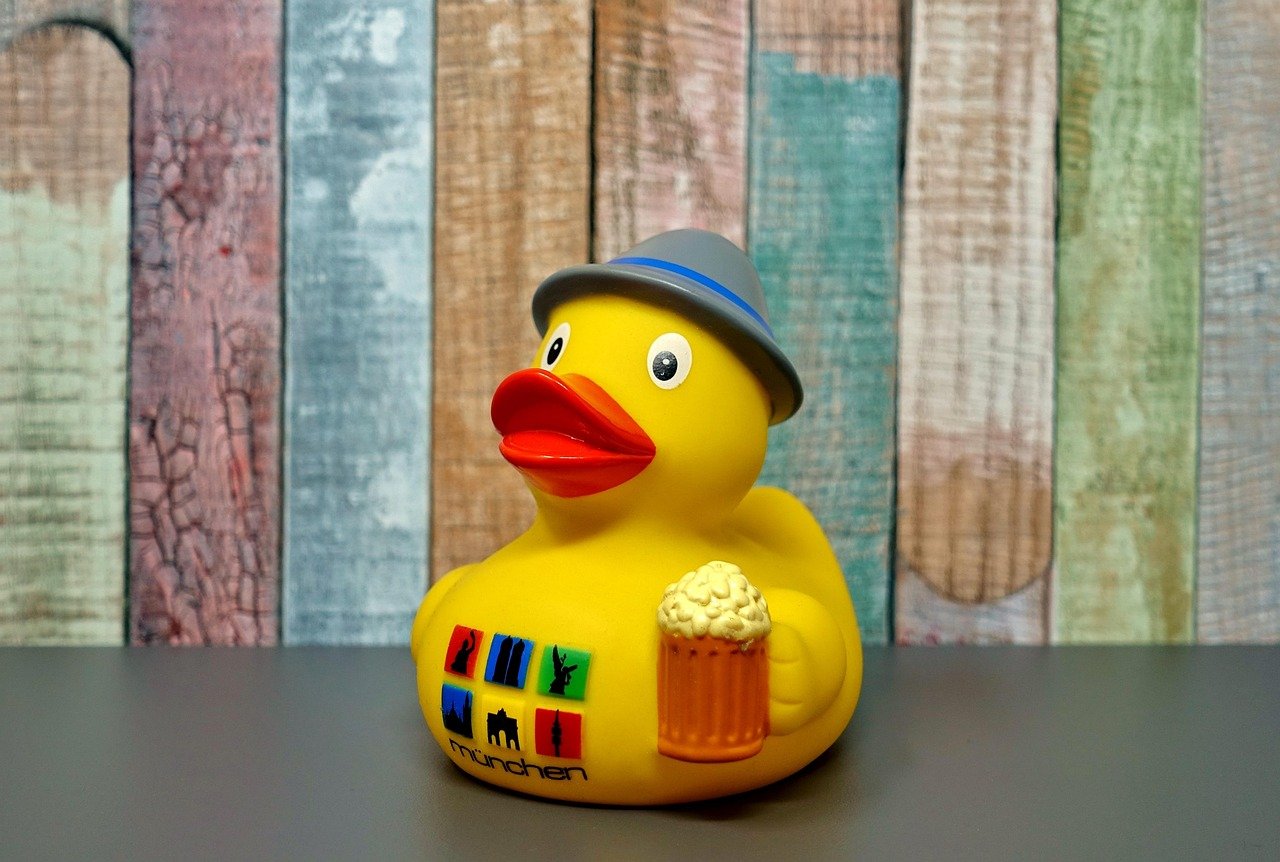
Why Rubber Ducks Work as Promotional Giveaways
The pens end up in drawers.
You’re a brand manager planning a campaign for Q3. The last giveaway — a branded USB drive — sat untouched in the swag bag. This time you need something people actually keep, photograph, and remember. That’s where the rubber duck comes in. It’s not a novelty; it’s a retention tool. I’ve audited factories in four countries where promotional items are made, and here’s what the data tells me: rubber ducks consistently outperform standard giveaways in dwell time on desks and posts on Instagram.
First, the cost math works. At 1,000 units, a custom rubber duck runs roughly $0.75 per unit including mold amortization — cheaper than a decent pen or a branded power bank, and far more memorable. Scale to 10,000 units and your unit cost drops to ~$0.45. For a campaign targeting 50,000 attendees at a trade show, that’s a total outlay of ~$22,500 for an item that won’t end up in the trash by lunchtime. Compare that to a branded T-shirt at $5–8 per unit: you can give a duck to every attendee and still stay under budget.
- Universal appeal: Ducks cross culture, age, and gender lines. I’ve seen them work in marketing collateral for a fintech app launch in Berlin, a construction conference in Dubai, and a children’s hospital fundraiser in Melbourne. Stress balls and keychains don’t travel that well.
Then there’s the ‘rubber duck debugging’ effect — a term from software engineering where explaining a problem to a rubber duck helps you solve it. That pop-culture relevance means people share photos of their desk duck with the hashtag #rubberduckdebugging. It’s earned media you didn’t pay for. One client ran an event giveaway plus a social media contest around the duck; they saw 3x higher engagement compared to their previous single-channel pen giveaway.
The real B2B advantage few talk about: a rubber duck is collectible. If you run a multi-year campaign with different seasonal designs, you create a repeat purchase cycle. Attendees start asking, ‘Where’s this year’s duck?’ — that’s brand stickiness you can’t get from a stress ball. And unlike foam fingers or koozies, a duck sits on a shelf or desk, reminding the customer of your brand daily, not just at the event.
But here’s the hard truth: not all rubber ducks are equal. Cheap PVC from an uncertified supplier can contain phthalates, posing a PR risk if a child puts it in their mouth. Insist on EN71 or ASTM F963 certification, and budget an extra $0.05–$0.10 per unit for phthalate-free material. That’s a small premium to avoid a liability headline.

Top Campaign Use Cases for Custom Rubber Ducks
60% of branded duck campaigns are for events — multi-channel use yields 3x higher engagement.
Five proven campaign types dominate B2B rubber duck orders: product launch giveaways, event souvenirs, social media contests, employee morale swag, and retail collectibles. Each demands a different customization level and cost structure. Here’s what I’ve seen work — and the mistakes that kill ROI.
Product launch giveaways: Tie the duck’s design directly to a product feature. A tech company launching a waterproof speaker ordered 3,000 ducks with a miniature speaker mold and printed their logo. At $0.75 per unit (mold included over 1,000 units), cost per impression was under $0.03. The key: keep the shape simple enough to read at scale. Fine text or tiny logos vanish in the molding process — ask for a pre-production sample with your exact Pantone match before approving mass production.
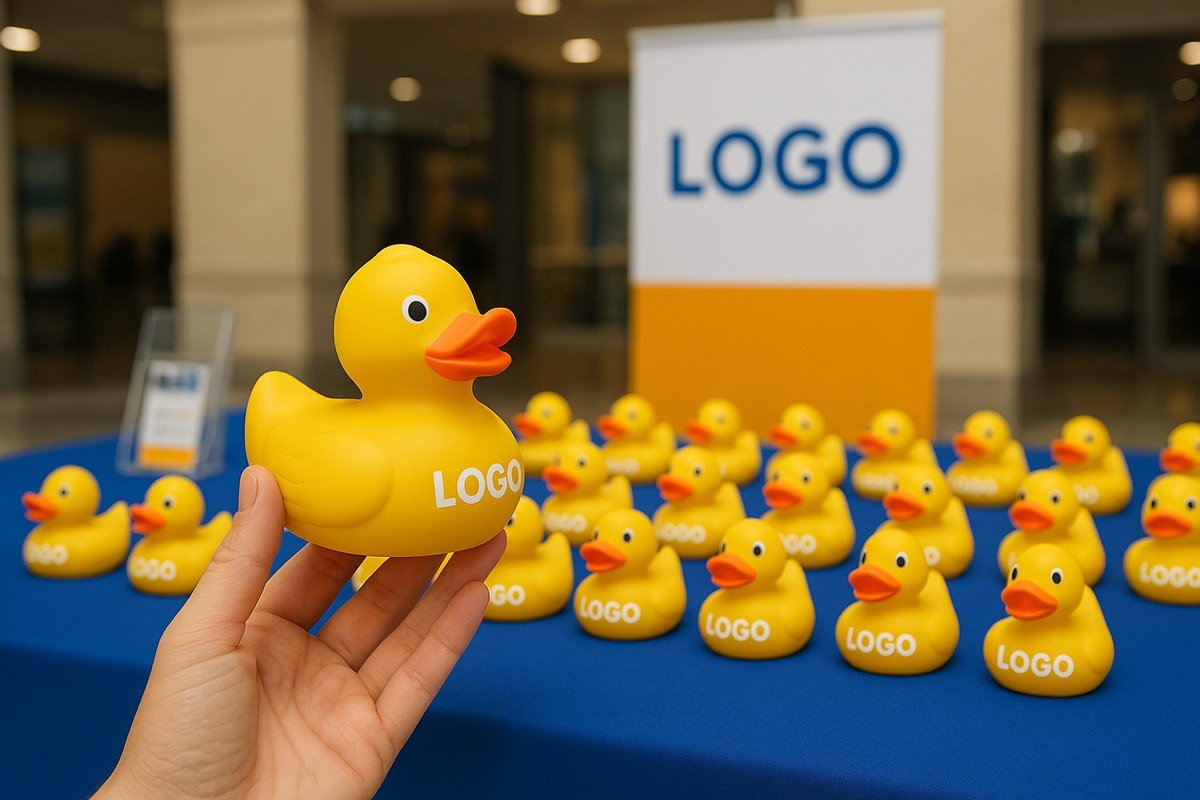
Event souvenirs (trade shows, races, festivals): Themed ducks work better than generic ones. A 5K race organizer ordered 10,000 ducks shaped like running shoes with event logo on the side. Mold fee was $400, per-unit cost dropped to $0.45 at that volume. Warning: If you’re sourcing for an event outside your home country, clarify FOB vs DDP pricing upfront — a container stuck at customs kills a launch deadline.
Social media engagement: Brands that combine physical giveaways with a hashtag contest see 3x higher engagement than single-use giveaways. Example: A beverage brand shipped 500 custom ducks to influencers, each with a unique code linked to a prize draw. Average cost: $0.60 per duck (including hang tag). The content generated 2,000+ Instagram posts. Requirement: ensure ducks are photogenic — avoid glossy finishes that reflect light poorly.
Employee gifts and corporate swag: Custom ducks land on desks, not in drawers. A logistics firm ordered 2,000 ducks in company colors with embossed logo for annual team kits. At 1,000 units, including Pantone-matched PVC, total cost was $1,500. Compare that to a hoodie or backpack — same budget, but ducks get shared on social media. Insider note: ask about phthalate-free PVC. It adds $0.05–$0.10 per unit and saves you from a PR disaster if a child chews on it.
Retail merchandise: If you plan to sell ducks as collectibles, packaging matters more than the duck itself. Blister card or custom box adds $0.20–$0.30 per unit, but lifts perceived value from ‘freebie’ to ‘retail product’. A craft brewery sold 500 limited-edition ducks in a gift box for $12 each — production cost was $2.15 per unit. They sold out in three weeks. Key: request sample approval of the packaging before bulk order. A misaligned blister card kills shelf appeal.

Cost Breakdown: What to Budget for a Rubber Duck Campaign
Most buyers overlook the mold fee.
I’ve watched first-time buyers get blindsided by the gap between a quoted unit price and the total invoice. They budget $0.50 per duck and forget the mold fee, packaging, and shipping charges. A $50K order can get derailed by a $60 Pantone matching fee you didn’t ask about. Here’s the real breakdown.
- Mold Fee (One-Time): $200 to $600 per custom shape. Required for any design that deviates from a stock duck. This cost is charged once, then spread across your first production run. At 1,000 units, it adds $0.20 to $0.60 per duck. Ask if the supplier offers mold credits on reorders.
- Per-Unit Cost: $0.40 to $1.50 depending on quantity, material, and complexity. At 1,000 units, average is $0.75 including mold amortization. At 5,000 units, it drops to roughly $0.55. At 10,000 units, you’re looking at $0.45 per unit. Complex shapes or premium materials like TPR push the high end.
- Packaging: $0.05 to $0.30 per piece. Bulk polybags with a hang tag cost the least. Individual boxes or blister cards can raise perceived value but add 20–40% to your per-unit spend. For giveaways, polybags are fine. For retail or client gifts, upgrade.
- Shipping (FOB vs DDP): FOB pricing means you pay for freight and customs from the factory. DDP includes everything to your door. DDP can add 15–25% to your total but eliminates surprise port fees, brokerage, and delays. For campaigns under 5,000 units, DDP often makes sense to avoid logistics headaches.
- Hidden Costs: Artwork setup: $50–$150. Pantone color matching: $30–$60 per color. Rush fees: 20–30% premium on the total. Sample charges: $20–$80 (usually credited on bulk orders). Always request a comprehensive RFQ that lists every line item before signing. The supplier who hides these is cutting corners somewhere.
| Order_Size | Unit_Cost_With_Mold | Mold_Fee | Phthalate_Free_Add | Packaging_Add |
|---|---|---|---|---|
| 1,000 units | $0.75 | $200–$600 | $0.05–$0.10/unit | $0.05–$0.30/unit |
| 5,000 units | $0.55–$0.65 (estimated 30–50% drop) | $200–$600 | $0.05–$0.10/unit | $0.05–$0.30/unit |
| 10,000 units | $0.45 | $200–$600 | $0.05–$0.10/unit | $0.05–$0.30/unit |

How to Choose the Right Rubber Duck Supplier
The spec sheet isn’t the product – the pre-production sample is.
I once watched a buyer lose a $50,000 order because the pre-production sample matched the Pantone perfectly but the mass production run came in three shades off. The supplier had skipped QC on the masterbatch. That gap between what the spec sheet promises and what lands in your container is where most campaigns die. Here’s how to close it.
- MOQ Flexibility: Most factories demand 3,000+ for custom shapes. We hold MOQ at 1,000 for custom, 500 for stock designs. If a supplier can’t match that, they’re either tooling-constrained or padding margins. Ask upfront: is the MOQ per SKU or per order?
- Sample Turnaround: Industry standard for a first sample is 15–20 days. We target 7–10 days from mold approval. If a supplier quotes 3 weeks without a push, they lack dedicated sampling capacity. Always request a pre-production sample (not just a stock sample) – that’s where color and tolerance align.
- Communication Responsiveness: A supplier that takes 48 hours to reply during quoting will take 72 hours when your container is stuck at customs. Time zones matter. I benchmark reply time to RFQ: under 12 hours is healthy. Also check if they offer a dedicated account manager or only a generic sales email.
- Certifications: Don’t just ask for a PDF. Require certificates for EN71 (Europe), ASTM F963 (USA), BSCI (social compliance), and REACH (chemicals). Insist on phthalate-free and BPA-free statements. If they dodge this, they’re likely using recycled PVC with unknown plasticizers – a PR disaster waiting to happen.
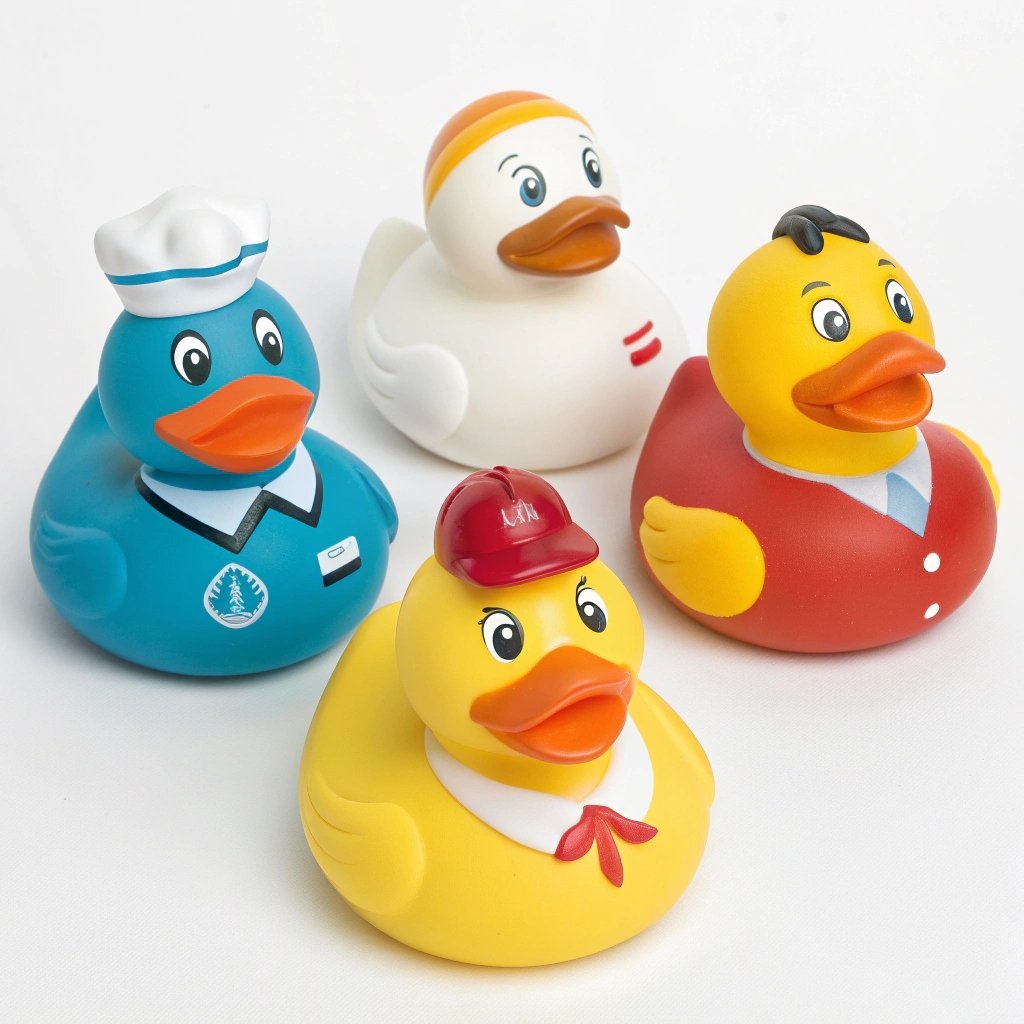
- Custom Shape Capability: Not all factories handle complex geometries. Ask for 3D renderings or previous mold photos. Our average mold fee is $200–$600, and we can do full-color printing, Pantone matching, embossed logos, and custom shapes. If a supplier says ‘we only do stock molds’, walk away – you’re not getting brand differentiation.
- Factory Evidence: If they can’t provide real factory photos, a video of the production line, or a third-party audit report, treat it as a red flag. I’ve seen Alibaba listings with fake warehouse shots. Request a batch-specific quality report for a past order. A serious supplier keeps those on file.
- Standardized RFQ Comparison: Send the same RFQ to at least three suppliers. Compare not just price but: mold fee, per-unit cost at 1,000/5,000/10,000 units, packaging options (bulk polybag vs. box), FOB shipping port, lead time, and sample cost. A supplier quoting 30% below the others is cutting on quality tolerance – always request caliper verification photos on wall thickness.
One more insider test: ask about quality tolerance on weight and size. Most suppliers allow ±5% on weight. We hold ±3%. If they can’t give you a number, they don’t have QC. That’s the difference between a campaign that builds trust and one that generates returns.
Common Mistakes to Avoid in Rubber Duck Campaigns
A pre-production sample catches 80% of color mismatches—skip it and you’re gambling the entire batch.
I’ve watched brand managers approve a $50K order based on a photo from a supplier’s WhatsApp. The container arrives, and the duck’s logo is a different shade of blue. That’s not a supplier error—that’s a planning failure. Here are the five mistakes I see every quarter from buyers who don’t ask the right questions upfront.
- Mistake 1: Not checking material safety: Cheap PVC can contain phthalates, which are regulated in the EU (REACH) and US (CPSIA). If your ducks will be handed to children under 12, you need EN71 or ASTM F963 certification. Phthalate-free PVC adds $0.05–$0.10 per duck—roughly 10% of the unit cost—but removes a PR liability. Always request a third-party test report, not just a supplier’s self-declaration.
- Mistake 2: Overcomplicating the design: Rubber duck molds are made from steel or aluminum. Fine text, thin lines, and tiny gradients get lost in the injection process. Anything under 0.5mm stroke width won’t reproduce clearly. Stick to solid shapes, high-contrast logos, and a maximum of two colors for the cheapest mold ($200–$600). Save the intricate artwork for packaging, not the duck’s body.
- Mistake 3: Forgetting packaging: Suppliers default to bulk polybags—fine for raw shipping, wrong for retail or event giveaways. If your duck is a trade show hand-out, a polybag with a hang tag works. If it’s a gift box for employees, budget $0.15–$0.30 extra per unit for box or blister packaging. Specify packaging requirements in your RFQ, or you’ll get a pallet of loose ducks and scramble for solutions.
- Mistake 4: Ignoring lead times: Custom rubber ducks take 4–6 weeks from mold approval, with sample turnaround at 7–10 days. Rush orders add 20–30% surcharge and still require minimum 3 weeks. If your campaign launches on a fixed date (trade show, product drop), add two weeks buffer. Buyers who push lead times to the edge often end up paying air freight or missing the event entirely.
- Mistake 5: Not requesting pre-production samples: Color mismatch is the #1 complaint in custom duck orders. A low-resolution mockup on a screen looks different from the actual injection-molded duck under warehouse lighting. Always request a physical pre-production sample (PP sample) before mass production. Pay the $20–$50 sample fee—it’s cheaper than reprinting 5,000 ducks. Compare the sample against your Pantone chip under natural daylight, not a phone screen.
Here’s a benchmark to use on your next supplier call: if they cannot provide phthalate-free material certification and a physical pre-production sample within 10 days of mold approval, that factory is not ready for a B2B campaign. Stick with suppliers who stock standard molds and have a documented sample approval workflow. That one step separates a successful promotion from a lot of ducks no one wants.
Conclusion
Custom rubber ducks deliver strong brand recall at a cost that scales well — the industry benchmark for a custom design at 1,000 units lands around $0.75 per duck including mold amortization. Insisting on phthalate-free materials and third-party safety certifications (EN71 or ASTM F963) keeps quality tolerance tight and avoids PR risk. With multi-channel campaigns showing three times the engagement of single-use giveaways, the business case is straightforward.
Frequently Asked Questions
What is the minimum order quantity for custom rubber ducks?
Our minimum order quantity for custom rubber ducks is 1,000 units. Lower quantities may work for stock designs but not for fully custom molds and colors. Plan for at least 1,000 for a true custom duck.
How long does it take to produce custom rubber ducks?
Standard production takes 4 to 6 weeks after sample approval. Rush orders can cut that to 2–3 weeks if factory capacity allows. Confirm lead time after sample approval.
Are rubber ducks safe for children? What certifications matter?
Yes, we use phthalate-free, BPA-free PVC and test to ASTM F963 and EN71 standards. These certifications ensure compliance for children’s products and retail sale. Always request current certs with your order.
Can I get a sample before placing a bulk order?
Yes, we provide pre-production samples within 7 business days after design approval. This lets you verify color, print, and feel before committing to bulk. Order the sample first to avoid surprises.
What is the best way to package branded rubber ducks for events?
Individual polybags with a branded header card keep ducks clean and show your logo clearly during distribution. For premium giveaways, a custom gift box adds perceived value. Choose polybag header cards for cost, custom boxes for impact.