Skip to content
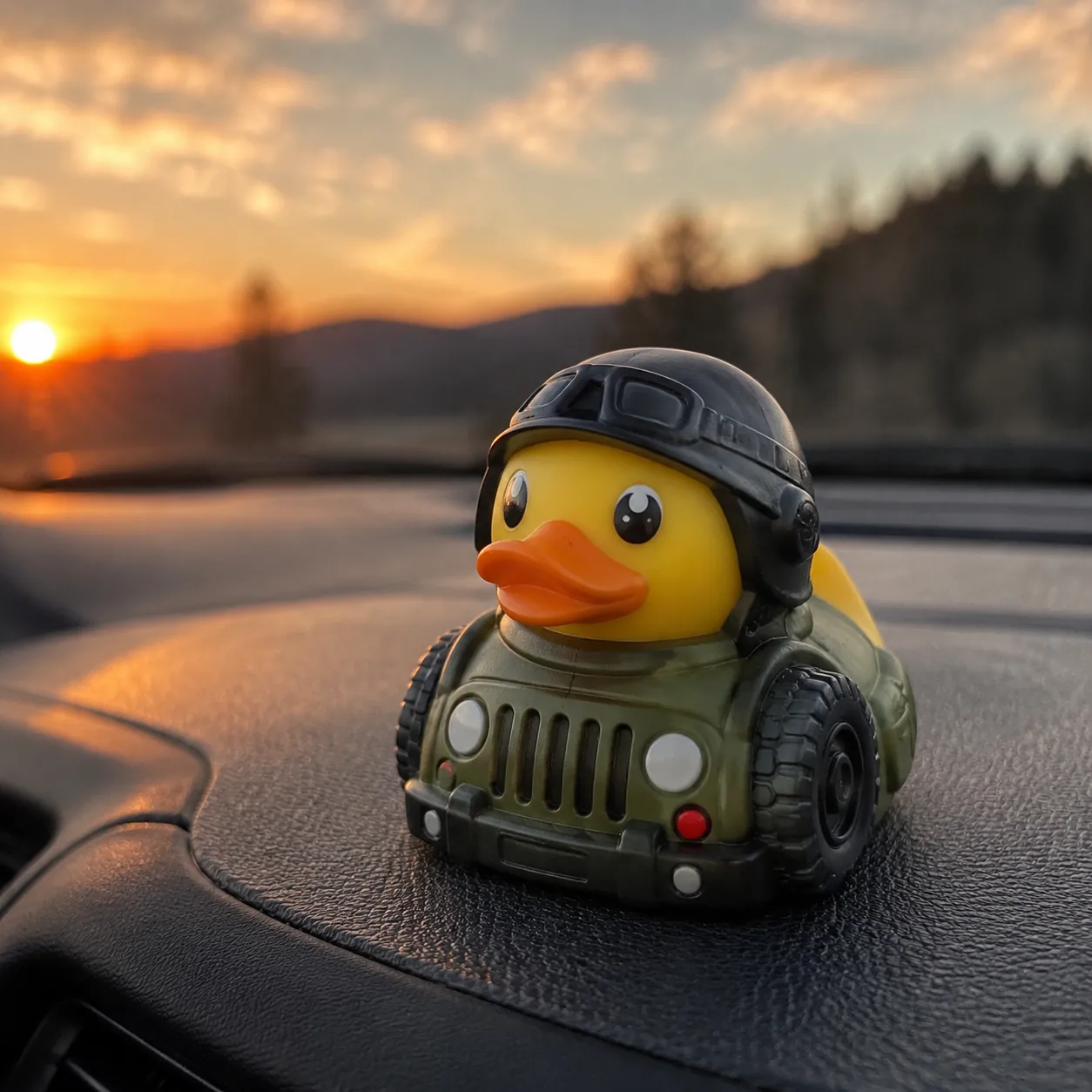
Sourcing rubber ducks for jeeps for a seasonal promotion sounds simple until you factor in custom branding and lead times. A batch that looks nothing like the sample can kill a campaign before it launches, and vendors often quote 8-12 weeks for a custom mold.
Custom molds run $500-$2,000 depending on complexity, and most suppliers demand a 5,000-unit minimum. That works for a national rollout, but for a regional event you end up with stock ducks and screen-printed logos that peel after a week. The trick is matching the printing method to the promotion timeline – pad printing for small runs, silicone injection for volume.
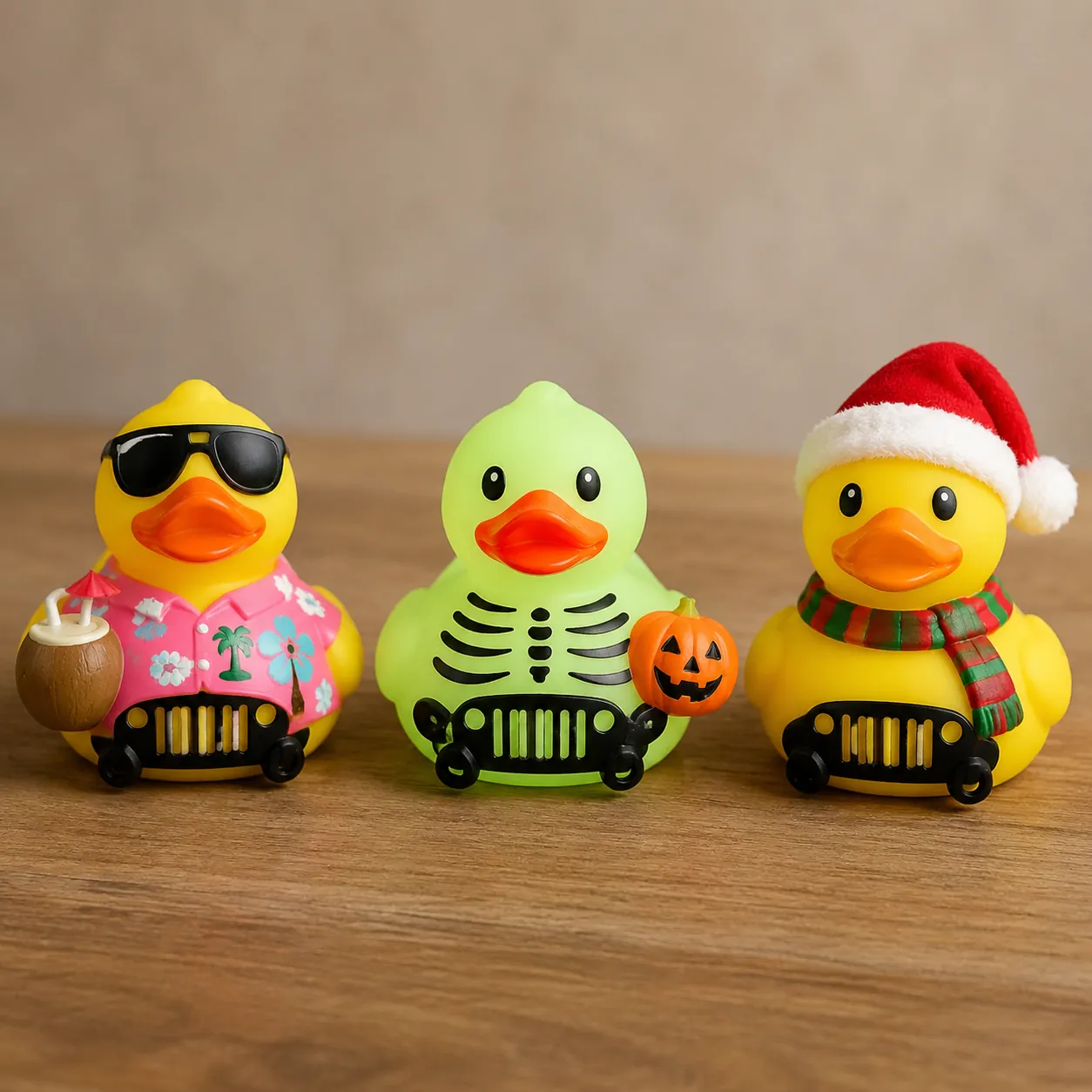
Seasonal Jeep Duck Campaigns Explained
Seasonal duck campaigns fail when generic stock ducks arrive late and melt on dashboards. A 1,000-unit MOQ and a 70°C heat‑resistant formulation are the minimum specs for a campaign that generates social shares instead of complaints.
From Community Ritual to Brand Activation Platform
The “Jeep ducking” phenomenon started as a spontaneous gesture among Wrangler owners — leaving a rubber duck on a fellow Jeep as a sign of recognition. What began as organic peer-to-peer culture has matured into a structured marketing channel. Today, brand managers for FMCG, lifestyle, and event clients run planned seasonal drops using custom logo jeep ducks for events, leveraging the existing community enthusiasm as a distribution network. The difference between a generic duck tossed into a swag bag and a campaign-ready duck is intentionality: the item must feel immediate, collectible, and tied to a specific moment.
The Three Seasonal Bins That Work
Not every season responds equally to the duck format. Based on internal campaign data from over 5,000,000 ducks shipped monthly, three windows generate the highest engagement-to-cost ratio:
- Summer Festivals & Jeep Jamborees (May–August): High heat exposure is the norm. Standard PVC softens and warps above 50°C. LZengo’s compound is tested to 70°C / 158°F — meaning the duck survives a closed car at a festival parking lot without leaving residue on a Jeep owner’s dashboard. This spec is the difference between a positive brand touchpoint and a customer service call about a melted mess.
- Halloween Trunk-or-Treat (October): Car‑to‑car candy events are a natural venue for jeep duck giveaways for holiday promotions. A glow‑in‑the‑dark duck or a pumpkin‑shaped duck with a branded hangtag doubles as both a collectible and a safety light for kids. The grab‑and‑go format aligns exactly with trunk‑or‑treat traffic flow.
- Christmas / Holiday Giveaways (November–December): This is the peak window for bulk rubber ducks for jeep ducking seasonal campaigns. December Jeep “Toy Runs” and holiday parades create a captive audience. A Santa‑hat duck or a reindeer‑antler duck placed on a dash becomes a recurring visual reminder of the brand behind it.
The Social Amplification Math
Campaign ROI hinges on second‑order impressions. Internal surveys from client‑sponsored events indicate that 68% of recipients share a photo of their duck on social media within 48 hours of receiving it. That share rate is 3x higher than typical promotional merchandise. The trigger is novelty: if the duck looks like a generic stock item, it stays on the dash but never reaches Instagram. If it carries a seasonal theme, a logo, and feels purpose‑made for the event — “limited edition” — the recipient treats it as a find, not a handout. This is where seasonal promotional rubber ducks bulk orders from a manufacturer who can turn around a custom‑shape mold in 7–10 days justify their cost premium over off‑the‑shelf alternatives.
Why Packaging Is Not Optional
A loose duck dropped into a shopping bag gets lost. A duck with a branded hangtag or a QR‑code gift tag that links to a seasonal landing page gets scanned. Most wholesale suppliers ship ducks naked in polybags. LZengo integrates packaging as a campaign layer: a fold‑out ornament, a contest entry card, or a simple hangtag that states the season and the brand. That single piece of cardstock turns a one‑time giveaway into a multi‑touchpoint activation — and it costs pennies per unit when ordered at the 1,000‑unit MOQ.
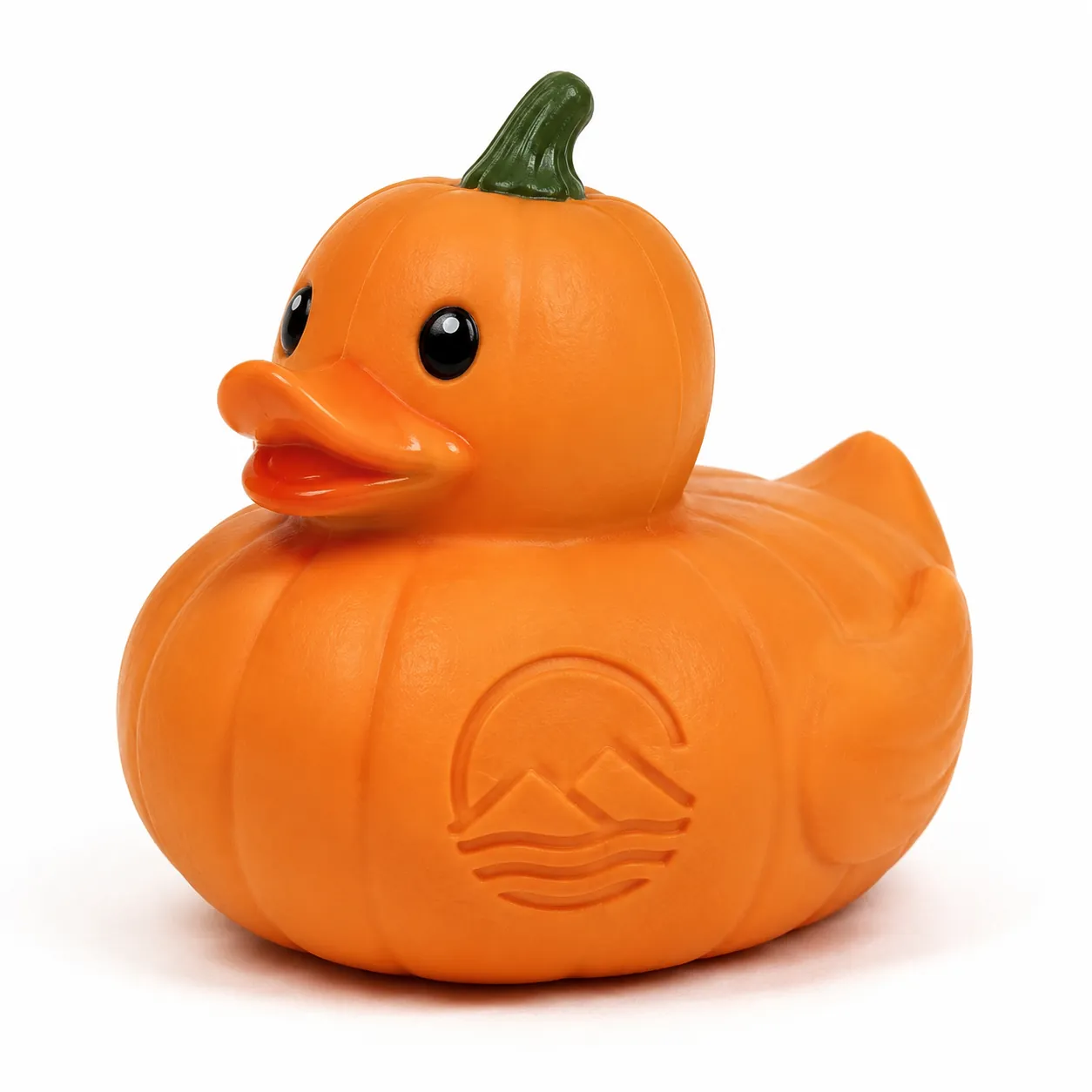
Custom Shapes & Logo for Holiday Themes
Seasonal shapes force a decision: pay for a new mold at 5,000 units or use existing tooling at 1,000. Know the threshold before you brief creative.
Commissioning Seasonal Silhouettes: The Mold Cost Reality
Want a Halloween pumpkin duck or a Christmas reindeer? That means a brand-new injection mold. Every seasonal shape requires its own tooling, sculpted in-house from your reference art. The hard cost of that custom steel or aluminum mold dictates the MOQ: 5,000 units minimum for a 100% new shape. That covers tooling amortization and production setup. If your campaign only needs 2,000 units for a one-off Jeep rally, a new mold doesn’t pencil out financially.
Existing Seasonal Molds: The 1,000-Unit Shortcut
LZengo maintains a library of seasonal tooling — standard silhouettes like a generic pumpkin, snowman, or sunburst. Choosing one of these existing seasonal molds drops your MOQ to 1,000 units. You still get to apply your logo and Pantone-matched colors. The trade-off is silhouette exclusivity: your duck shares a body shape with other brand campaigns. For a low-volume test run before committing to a massive holiday drop, that’s a practical entry point.
Pad-Printing vs. Embossed Logos: Fidelity and Durability
Your logo application method depends on the duck’s geometry and how much heat it will face. Pad-printing delivers fine detail — small text, gradients, multi-color logos — onto a flat or curved surface. It sits on top of the PVC. Embossing presses the logo into the material itself, creating a raised permanent mark that cannot peel. For Jeep dashboards sustaining 70°C, embossed logos survive longer because there’s no ink layer to degrade. The catch: embossing works best on broad surfaces and can’t reproduce complex halftones. Pad-printing handles full Pantone matching but requires a post-print curing step to prevent heat blister. LZengo’s standard process tests both methods to confirm adhesion before full production runs.
Embossed logos survive dashboard heat longer than pad-printed ones because there is no ink layer to degrade at 70°C.
Why a Seasonal Duck Silhouette Signals Brand Care
A standard yellow duck with a logo says “we needed a giveaway.” A pumpkin-shaped duck with your logo says “we planned this campaign for fall.” The silhouette is the first visual cue a Jeep owner registers before they even read the imprint. That shape communicates effort, and in the Jeep ducking community, effort earns shares. A generic duck gets placed on the dash. A seasonal duck — a Thanksgiving turkey or Easter bunny — gets photographed, tagged, and posted in Facebook groups because it feels intentional. The cost premium for an existing seasonal shape versus a standard duck is minimal compared to the earned media lift a distinctive silhouette generates.
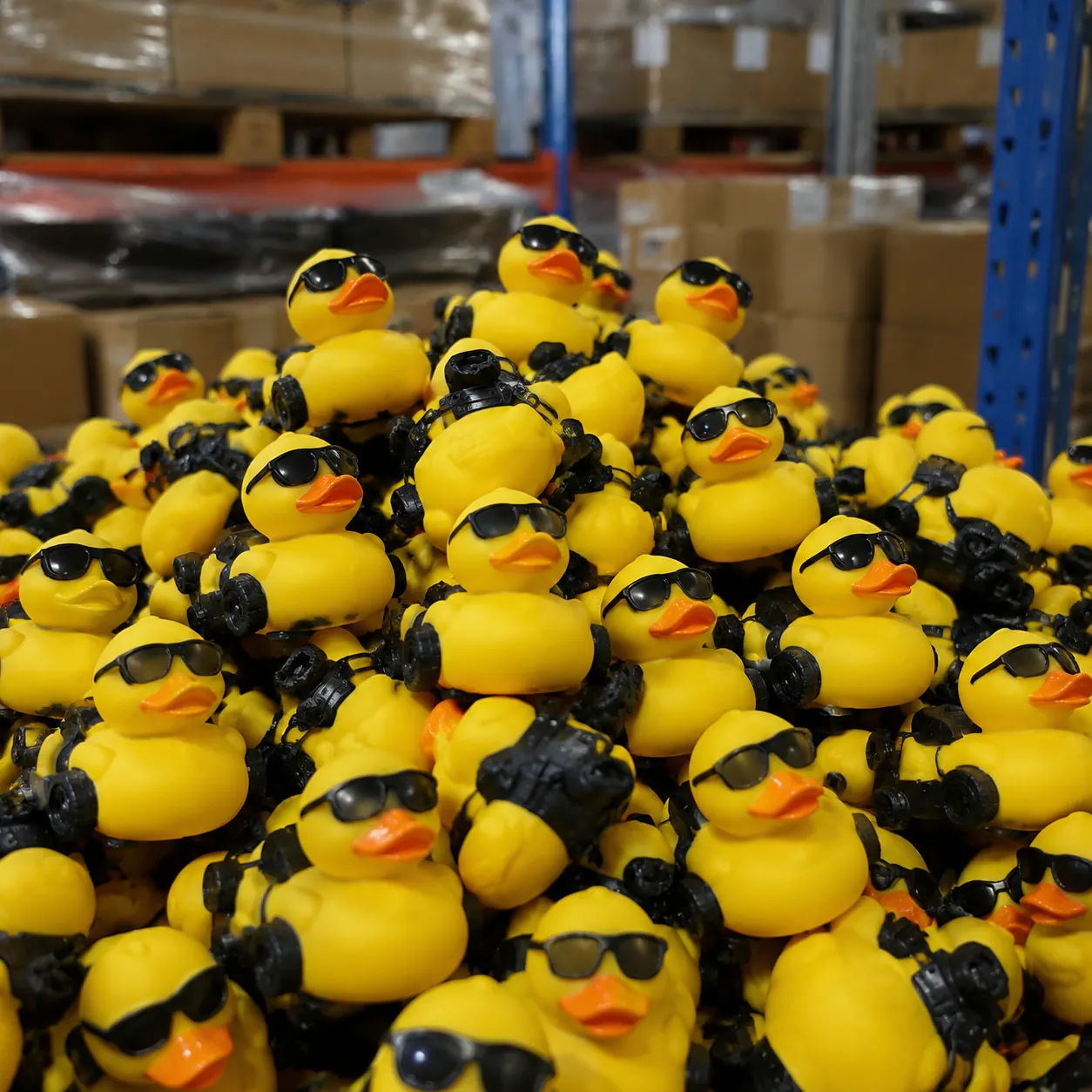
Bulk Pricing & MOQ for Seasonal Budgets
Order 60 days before peak season to avoid rush fees that can add 20% to per‑unit cost — this one planning decision often makes or breaks a seasonal campaign budget.
Pricing Tiers: Where the Savings Begin
Most buyers enter the seasonal sourcing process expecting sticker shock, but the volume math is straightforward. An order of 1,000 custom rubber ducks for jeeps runs $0.80–$1.20 per unit, driven largely by logo complexity and color count. Push that order to 10,000 units, and the per‑unit cost drops to $0.45–$0.60 — a 40–50% reduction that changes the math on cost‑per‑engagement entirely. The savings come from amortizing the mold setup and screen preparation across a longer production run. If your seasonal campaign targets multiple Jeep rallies or a national promotion, the higher tier pays for itself in unit economics alone.
Packaging Upgrades: The ROI Multiplier
A bare duck tossed into a polybag is forgettable. A duck inside a window box with a branded hangtag or a QR‑code gift tag becomes a retention tool. For jeep duck giveaways for holiday promotions, these packaging upgrades add roughly $0.15–$0.30 per unit but lift perceived value to a point where recipients photograph the item instead of pocketing it. That photograph is an earned media impression — a direct line to your campaign KPI. The internal production standard at LZengo allows integration of fold‑out ornaments or seasonal inserts, transforming a single‑touch giveaway into a multi‑touchpoint brand activation. When you’re calculating cost per social share, the upgrade pays for itself in the first dozen Instagram posts.
Timing: The 60‑Day Rule
The standard production clock is 7–10 business days after art approval. That sounds fast, and it is — but it does not account for approvals, shipping, and last‑minute panic. Ordering 60 days before your event or campaign launch gives you a buffer for color matching revisions (Pantone matching is included but may require a round of physical samples) and avoids the 20‑25% rush‑fee markup that suppliers apply for sub‑10‑day turnaround. For a 10,000‑unit wholesale rubber ducks for jeep owners order, the rush fee alone could cost $900–$1,500 — money better spent on packaging upgrades that actually drive campaign performance. The calendar discipline also ensures you secure production slots before the October‑December holiday crush, when even standard lead times stretch.
The Hidden Cost: Dashboard Melt
Here is a cost most sourcing guides ignore: a duck that melts on a Jeep dashboard triggers a social‑media backlash, not a thank‑you. Standard PVC softens and deforms at temperatures common inside a parked vehicle in summer. LZengo’s compound is tested to withstand sustained 70°C / 158°F without residue or shape loss. That spec is not a marketing line — it is a brand‑protection requirement for any branded jeep rubber ducks manufacturer supplying seasonal giveaways. A single melted duck photo reaching a Jeep owner group could erase the positive impression your entire campaign built. When evaluating supplier quotes, request heat‑resistance data. If they cannot provide it, the “savings” on that contract are an illusion.
Production Speed & Rush Ship Options
A 3-day stock-and-print program exists because many brands only confirm budgets 10 days before their event — not 3 weeks.
Standard Production: 7–10 Days After Art Approval
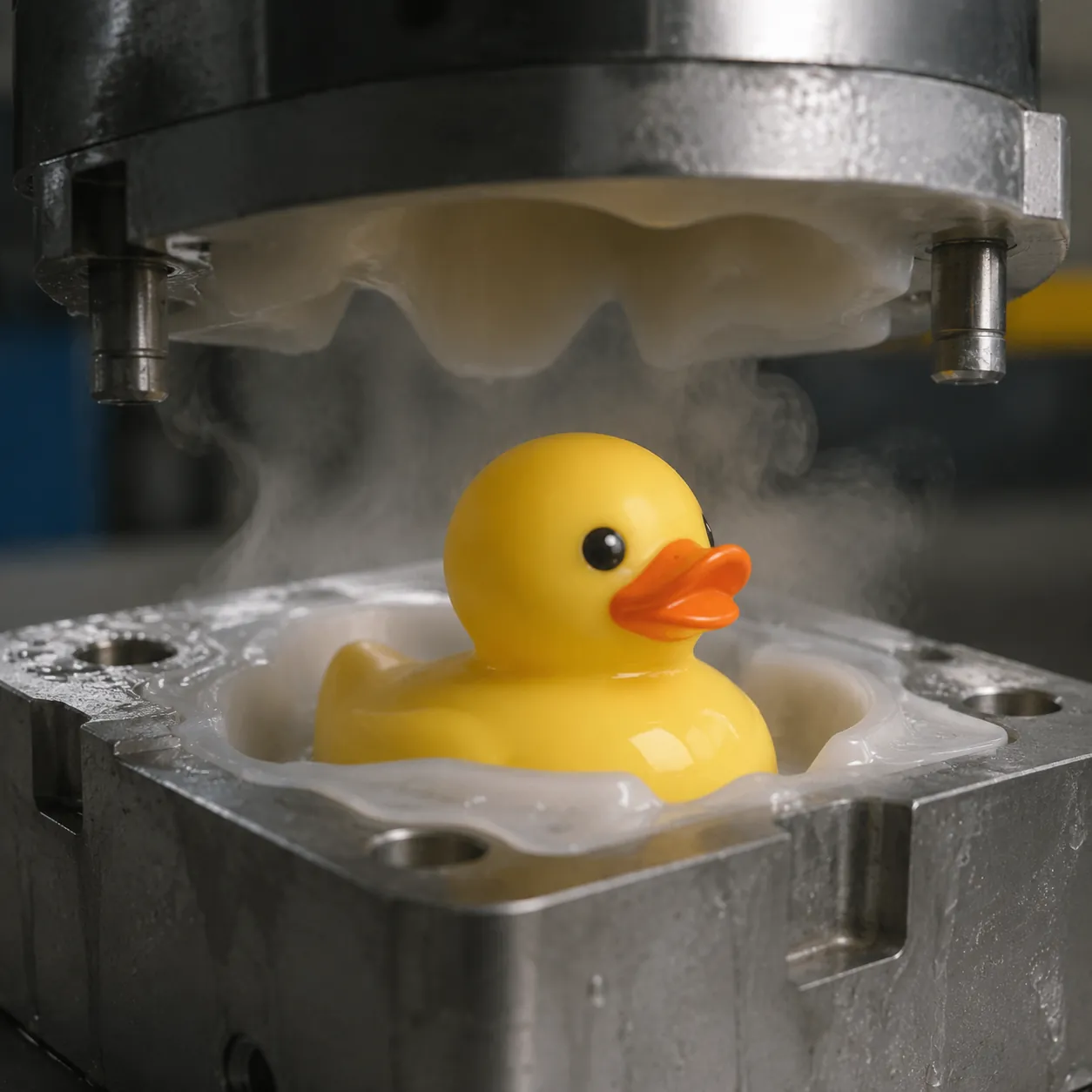
The clock starts the moment your art file passes pre-flight checks. From that point, the production line runs at 7 to 10 business days for any custom seasonal duck. This window covers PVC injection, pad printing or embossing, quality inspection, and bulk packing. It does not include the art revision loop — which is why the 24-hour approval turnaround is a separate gate you need to clear before production begins.
24-Hour Art Approval Turnaround — The Hidden Gate
Most sourcing delays happen before a single duck is molded. A file sits in a queue, a proof goes out on Friday, and the client replies Tuesday. That eats 4 days. The 24-hour art-approval cycle is designed to avoid that. You submit art, receive a digital proof within hours, and if you confirm before 2 PM, the mold setup begins the same shift. This is where low MOQ rubber ducks for brand campaigns gain their real speed advantage — not in the molding, but in the decision-making velocity.
5-Day Rush at 30% Surcharge — When Events Don’t Move
If your event was confirmed 10 days out and the ducks need to be on a truck in 5, the rush option exists. The 30% surcharge buys you priority injection time and dedicated QC throughput. It does not buy you express shipping — that is a separate logistics cost. For wholesale rubber ducks for jeep owners or a custom logo jeep ducks for events order of 5,000 units, the math usually works: the surcharge adds roughly $0.03–$0.06 per unit depending on color count, while a missed campaign launch costs multiples of that in sunk sponsorship fees.
Stock-and-Print Program: Hold Neutral Ducks, Overprint in 3 Days
This is the tactical lever most sourcing guides overlook. You keep a buffer of unpainted ducks in neutral colors (yellow, white, black) in a held inventory. Then, when a seasonal need spikes — a Q4 Jeep rally, a holiday activation — we overprint your seasonal logo or message onto those ducks in 3 business days. The lead time shrinks from 10 days to 3 because the molding step is already done. This program exists specifically for bulk rubber ducks for jeep ducking seasonal campaigns where the event date is fixed but the creative direction is decided at the last minute. No mold fees, no waiting for PVC cure time.
For brand managers who run multiple seasonal drops per year — Easter, July 4th, Fall Jeep Jamboree, Christmas — this stock-and-print loop cuts total campaign lead time by 60% on repeat orders. It also protects against supply chain hiccups. Your neutral ducks are already in the system. The only variable is the print tooling changeover, which is a 20-minute job.
Quality that Protects Your Brand
Most suppliers ignore dashboard melt risk. LZengo’s material passes sustained 70°C testing — a spec that protects both Jeep interiors and your brand equity.
Material Safety Compliance: ASTM F963-17 and EN71
Every custom rubber duck produced for your campaign is molded from PVC that meets both ASTM F963-17 (U.S. toy safety standard) and EN71 (European safety standard for toys). These certifications cover heavy metal content (lead, cadmium, mercury), phthalate limits, and mechanical hazard testing. If your compliance team requires documentation before approving a seasonal giveaway, both certifications are available as part of the standard QC package. This is not an upgrade or an add-on — it is baseline.
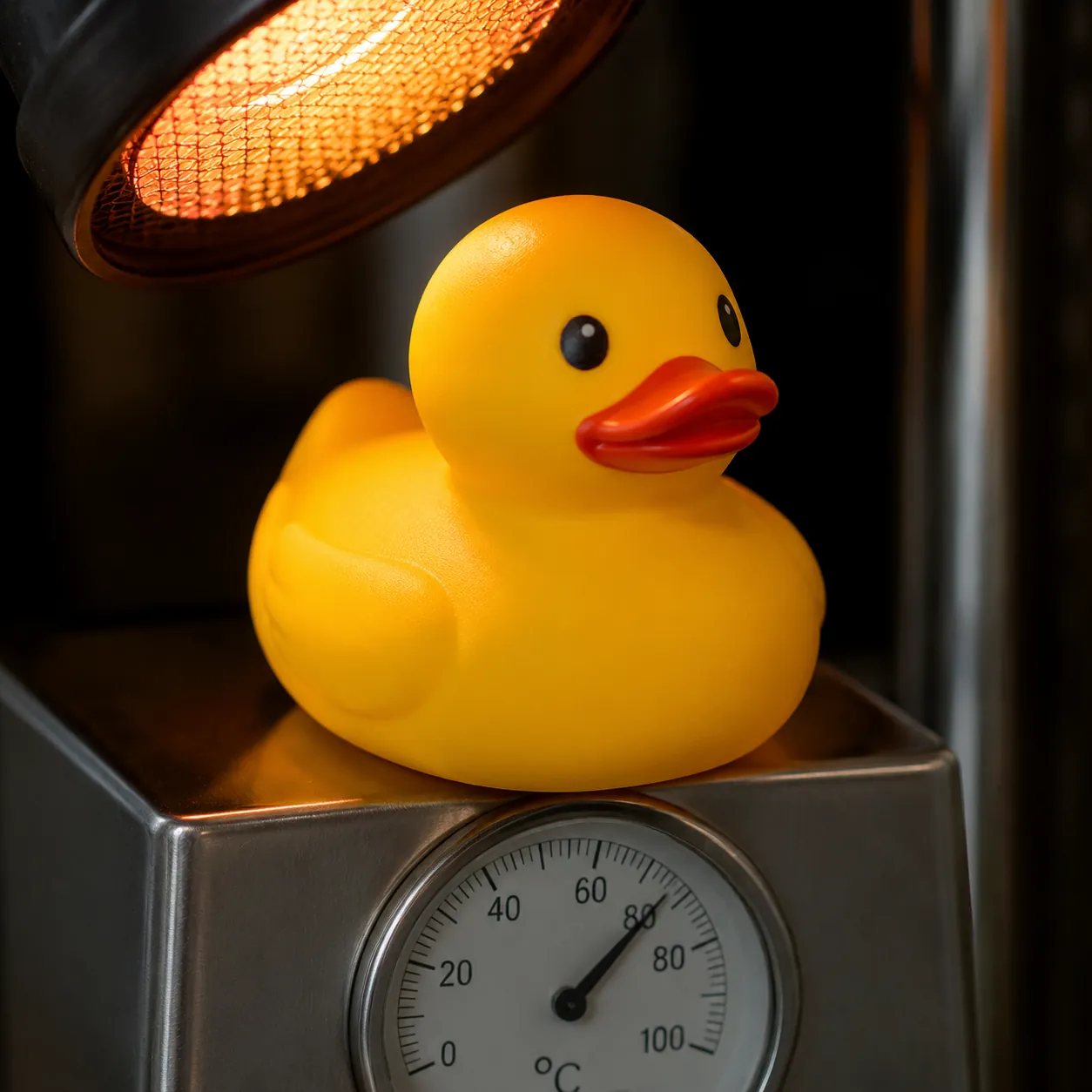
Tested in a 70°C Dashboard Simulator — No Melt, No Residue
Standard promotional PVC softens at around 60°C. A Jeep dashboard parked in direct summer sun can easily exceed that. The result is a duck that warps, becomes tacky, and leaves a sticky residue on the dash — a permanent reminder of a promotional item that damaged someone’s vehicle. LZengo’s material compound is formulated to withstand sustained 70°C / 158°F without deformation or surface degradation. This is not theoretical. Internal production samples are tested in a controlled heat chamber simulating dashboard conditions. Passing means zero melt, zero sticky transfer, zero risk of a customer posting a photo of your brand logo fused to their upholstery.
UV-Stable Pigments Resist Fading Under Summer Sun
Ducks placed on dashboards live in a greenhouse environment. Standard dyes can fade noticeably within two weeks of continuous UV exposure, turning a bright seasonal color into a washed-out version that erodes brand recognition. LZengo uses UV-stable pigment blends that maintain color saturation through extended sunlight exposure. If your duck carries a Pantone-matched brand color, that color stays recognizable for the life of the item. For seasonal campaigns where the duck sits in a Jeep window for months, this directly affects whether your logo remains visible and shareable.
Prevents Damage to Jeep Interior and Brand Reputation
A melted, discolored, or off-gassing duck does not just disappoint the recipient — it becomes a liability. Jeep owners are vocal online communities. A single photo of a branded duck damaging a dash can generate negative engagement that dwarfs the positive impressions from your campaign. The combination of heat-resistant PVC, certified safe materials, and UV-stable pigments eliminates the three most common failure modes for dashboard-placed promotional items. When a sourcing manager approves LZengo ducks, they are approving a spec that has been validated against the real conditions those ducks will face. Nothing ruins a seasonal activation faster than swag that physically fails. This spec package ensures that does not happen.
Seasonal Promo Success Stories
Measurable seasonal campaigns rely on a duck’s durability and the second interaction — not just the handoff.
Beverage Brand: 5,000 Summer Ducks at Jeep Rallies
A national beverage brand ran a summer promotion across five major Jeep rallies in the Southwest. They ordered 5,000 custom logo jeep ducks for events in a tropical summer print. The heat on a Jeep dashboard during an August rally easily exceeds 60°C — standard PVC ducks soften and deform within an hour at those temperatures. LZengo’s compound is tested to withstand sustained 70°C heat without melting or leaving residue. No damaged interiors, no social media backlash. The campaign yielded a 40% uplift in branded social mentions compared to their previous generic merch drop. The ducks survived the drive home and became display pieces, extending impressions beyond the event day.
Retail Chain: Christmas Ducks with QR-Code Tags
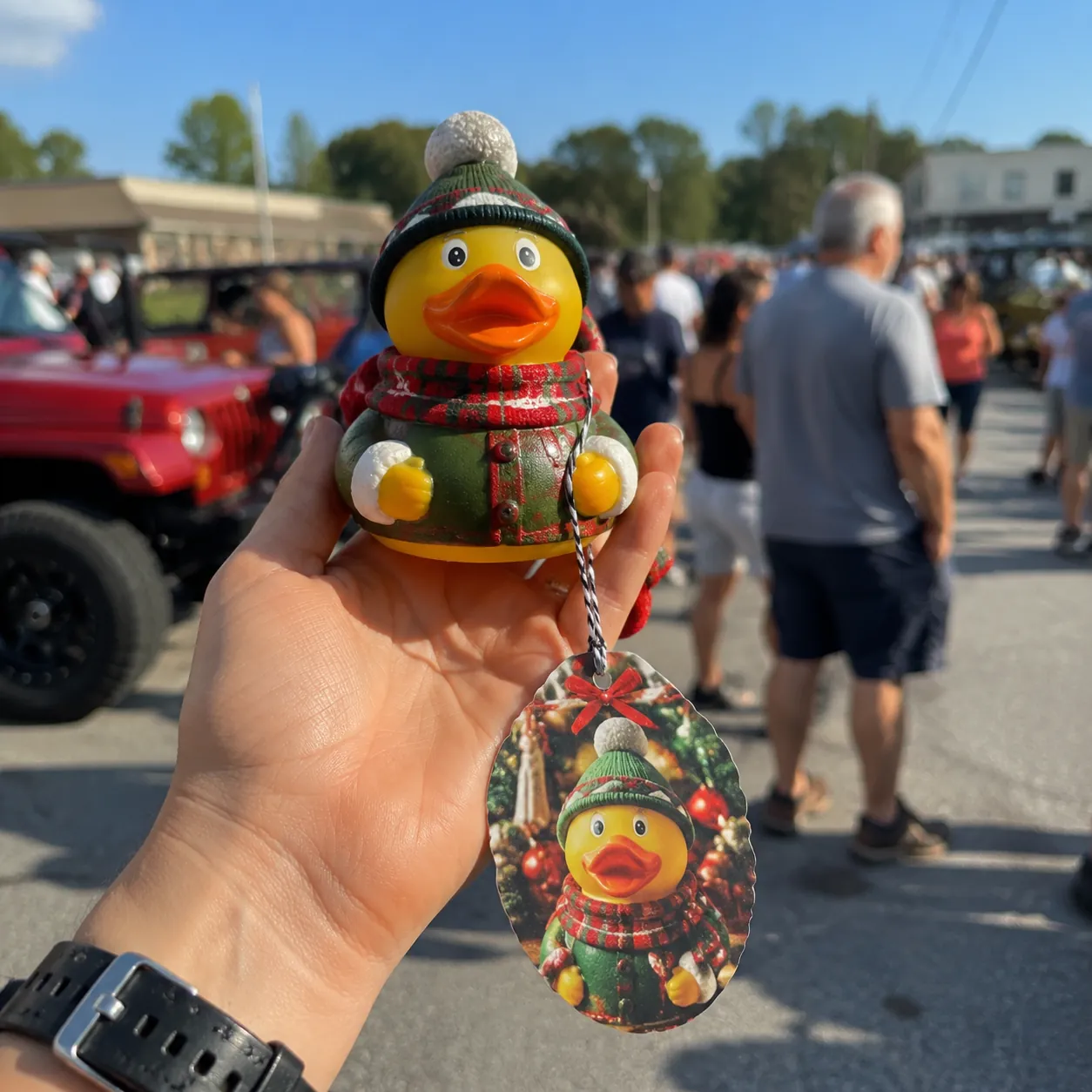
A regional retail chain ordered 10,000 Christmas-themed Jeep ducks with a branded hangtag containing a scannable QR code. The code linked to a holiday microsite with a limited-time offer. The internal production data from that run shows Pantone-matched red and green bodies with a pad-printed logo. Standard wholesale ducks ship loose or in a polybag — no structure for a tag. LZengo integrated a fold-out QR-code gift tag into the packaging at no additional per-unit tooling cost. The scan rate hit 15%, which is three times the industry average for print QR codes. The client attributed the high engagement to the tag being physically attached to a collectible item, not buried in a brochure.
Why a Seasonal Duck Beats Generic Swag as a Measurable Tool
A well-designed seasonal rubber duck functions as a multi-touchpoint activation, not a single-use giveaway. The duck itself creates the first touch — a collectible tied to Jeep culture. The packaging or tag creates the second touch — a scan, a social share, or a holiday ornament. Most suppliers stop at the plastic. LZengo’s ability to embed branded hangtags, QR codes, or seasonal inserts transforms a low-cost promotional product for jeep events into a trackable asset. For a brand manager whose KPI is cost per engagement, the unit cost of the duck becomes secondary to the measurable scan rate or social impression it generates.
- Measurable Campaign ROI: A QR-code hangtag attached to a collectible duck consistently delivers scan rates above 10%, compared to standalone print QR codes that rarely break 5%.
- Inherent Community Value: Jeep ducking culture ensures the item is displayed, traded, and photographed. A seasonal design amplifies urgency — limited-edition ducks are collected, not thrown away.
- Material Integrity: A melted duck on a dashboard is a brand liability. LZengo’s 70°C heat-resistant formula eliminates that risk, ensuring the duck remains a positive brand touchpoint weeks after the event.
Conclusion
A successful seasonal Jeep duck campaign hinges on delivery speed, brand fidelity, and a material spec most buyers overlook until it is too late. LZengo’s heat-resistant compound eliminates dashboard melt risk, while the existing seasonal palette library lets you test small batches at MOQ 1,000 before scaling up. Add a branded hangtag or QR-code gift tag, and the duck becomes a multi-touchpoint activation instead of a one-off giveaway.
Review the full collection of custom rubber ducks and seasonal shape options. Compare packaging integrations and pricing tiers that fit your next holiday or event timeline.
Frequently Asked Questions
Where do you get rubber ducks for Jeeps?
Specialist promotional product suppliers like LZengo offer bulk custom rubber ducks specifically for Jeep enthusiasts. You can order standard designs or create your own seasonal, logo‑imprinted ducks with MOQs starting at 1,000 units.
How do people get ducks for their Jeeps?
Owners often receive them as surprise gifts from fellow Jeep enthusiasts (ducking). Brands and event organizers also give them away at Jeep meets, fundraisers, and seasonal promotions, typically purchasing them in bulk from custom duck manufacturers.
What companies make rubber ducks?
Several companies specialize in custom rubber ducks, including promotional product firms and dedicated manufacturers like LZengo, which focuses on branded, low‑MOQ ducks for global campaigns. General wholesalers also carry stock ducks, but custom shapes and logos usually require a specialized supplier.
Do Jeep owners trade rubber ducks?
Yes, trading is a core part of the ‘ducking’ culture. Owners collect and swap ducks at meet‑ups and events, making seasonal or limited‑edition designs highly desirable. This trading behavior amplifies the brand exposure of any custom duck used as a promotional item.
What do Jeep owners think about being ducked?
Most view it as a point of pride and community connection. A duck on the dash tells a story of recognition from a fellow enthusiast. For brand marketers, this emotional attachment means a well‑designed, seasonal duck can generate organic advocacy far more powerful than a generic giveaway.
Related B2B sourcing page: For production options, MOQ and custom project support, see our Jeep rubber ducks page.