Skip to content
Why a Rubber Duck Referral Campaign Outperforms Every Other Loyalty Channel
Most B2B referral programs live and die inside a spreadsheet. A discount code gets buried in an inbox. A gift card forgets itself in a wallet drawer. But hand someone a custom rubber duck stamped with your logo and a friend’s name, and that object sits on a desk for months, working every single day. This is the mechanics behind a rubber duck referral campaign — and it is the reason smart marketing teams are moving budget away from digital-only incentives.
In this guide you will see exactly how to structure a referral program around custom ducks: the incentive tiers, the fulfillment workflow, the tracking methods, and the real cost math that makes this one of the lowest cost-per-impression moves in promotional marketing.
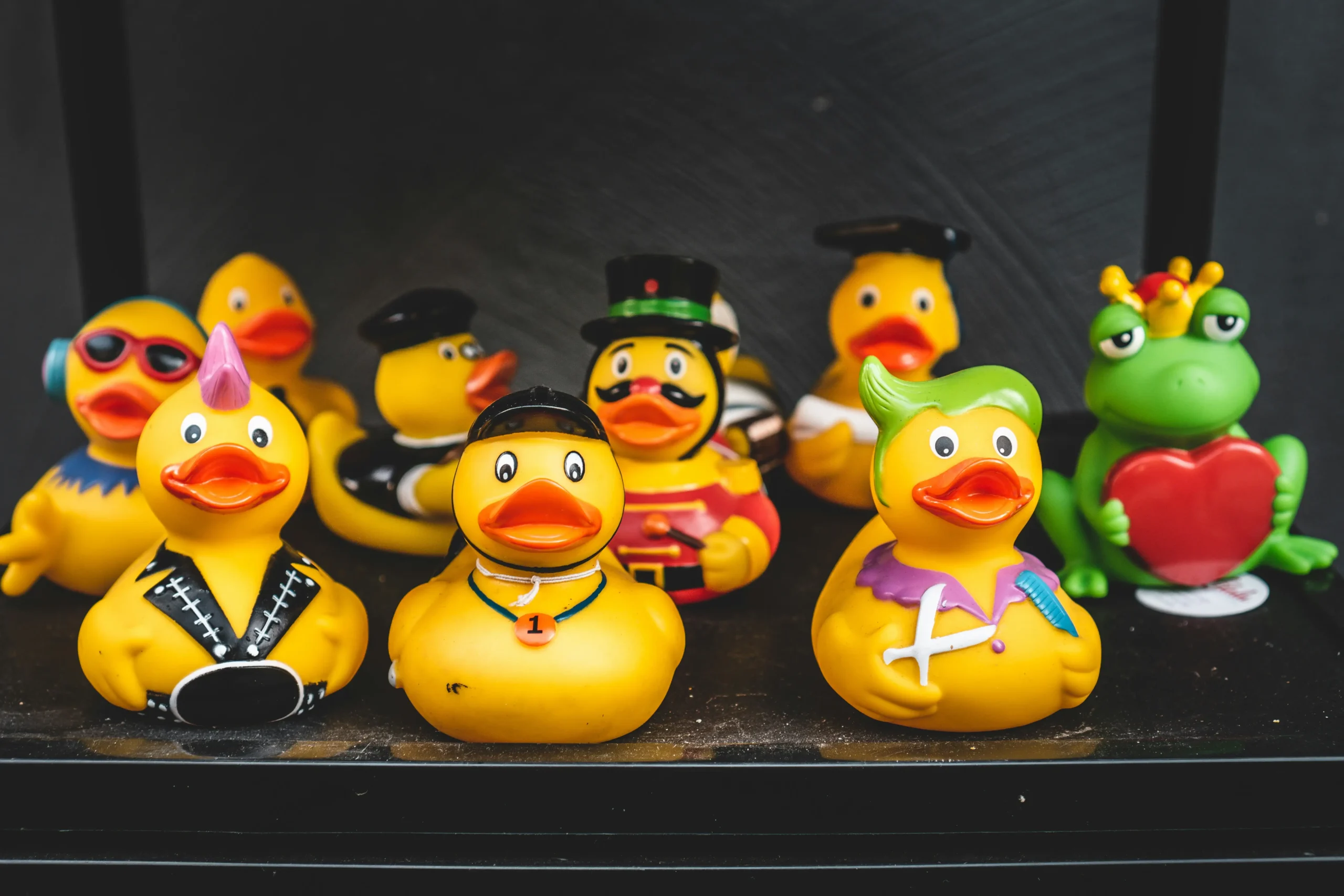
The Psychology Behind Physical Referral Incentives
Digital referral rewards have a shelf life measured in seconds. The moment the confirmation email arrives, the dopamine fades. Physical objects trigger a completely different response. Behavioral researchers call it the “endowment effect” — once someone holds a tangible item, they assign it higher subjective value than its market price.
A custom rubber duck costs between $0.50 and $3.00 per unit at volume. Yet the recipient perceives it as a thoughtful, personalized gift. That gap between actual cost and perceived value is where referral campaigns generate their highest returns. The duck becomes a conversation starter, a desk ornament, and a permanent brand impression — all at once.
Companies running rubber duck giveaway campaigns consistently report that physical items outlast digital rewards by a factor of weeks or months. The duck stays visible. The brand stays top-of-mind. And the referred prospect notices.
Structuring Your Rubber Duck Referral Incentive: Three Tiers That Work
The most effective referral programs use tiered rewards. Here is a structure that has proven effective across B2B and B2C campaigns alike:
Tier 1 — The Starter Duck (1 referral): The referrer receives a single custom duck featuring their company logo alongside yours. This is the “thank you” tier. Low cost, high sentiment. The duck goes on a desk or shelf and starts working immediately.
Tier 2 — The Team Set (3-5 referrals): The referrer earns a boxed set of 5 ducks in different designs — perhaps one for each department in their office. This tier creates social distribution. The referrer becomes your brand ambassador, handing ducks to colleagues who may never have heard of you.
Tier 3 — The Trophy Duck (10+ referrals): A premium, oversized, or limited-edition duck. Some companies add a engraved base with the referrer’s name and a “Top Referrer” designation. This tier costs more but generates fierce competition among your referral base.
How the Fulfillment Workflow Actually Runs
Here is the step-by-step process from referral signup to duck delivery:
- Step 1: Existing customer receives a unique referral link or code. This can be embedded in email signatures, order confirmations, or a dedicated referral landing page.
- Step 2: When a prospect signs up through that link, your CRM logs the referral and notifies the referrer of their progress toward the next tier.
- Step 3: Once a tier threshold is hit, you submit the duck order. With a factory like LZENGO, turnaround is 12 hours for mockup approval and 7 days for sample production. Bulk orders ship within 30-35 days.
- Step 4: Ducks arrive at your office or directly at the referrer’s address. Include a card that reads “Thanks for referring [Prospect Name] — here’s your reward duck.”
- Step 5: Track secondary conversions. Did the referred prospect also become a customer? If so, they enter the referral loop themselves.
Cost Analysis: What a Rubber Duck Referral Campaign Actually Costs
Let us run the numbers on a 500-referral campaign:
- 500 Tier 1 ducks at $1.20 each = $600
- 80 Tier 2 sets (5 ducks each) at $5.00 per set = $400
- 15 Tier 3 trophy ducks at $8.00 each = $120
- Shipping and packaging = approximately $200
- Total campaign cost: approximately $1,320
Compare this to a digital referral program offering $25 gift cards per referral. At 500 referrals, that is $12,500 — before accounting for the fact that gift cards get forgotten within days. The rubber duck campaign delivers continuous brand exposure for roughly 10% of the cost.
For teams already exploring customer appreciation swag programs, adding a referral layer is operationally simple. You are already ordering ducks. The marginal cost of extending that order to cover referral rewards is minimal.

Tracking and Attribution: Proving the Campaign Works
The biggest objection to physical referral incentives is measurability. Here is how to close that gap:
Unique referral codes: Each referrer gets a code (e.g., DUCK-JOHN-42). When a prospect mentions that code at signup, your CRM attributes the referral automatically.
Duck serial numbers: For premium tiers, print a small serial number or QR code on the duck’s base. Scanning the code leads to a landing page that tracks engagement. You can measure how many referred prospects actually interact with the duck’s digital component.
Control groups: Run the referral campaign in one region or segment while keeping a comparable group on a standard digital incentive. The difference in referral volume and conversion rate tells you the duck’s incremental impact.
According to the promotional products industry data for 2026, physical swag items generate 75% more brand recall than digital-only rewards — a finding consistent with the research published by the Promotional Products Association International (PPAI), the industry’s trade body. When that swag is tied to a referral action, the recall compounds — both the referrer and the referred prospect carry the brand forward.
Common Mistakes That Kill Referral Duck Campaigns
Mistake 1: Making the duck too generic. A plain yellow duck with a tiny logo does not excite anyone. Invest in custom shapes, Pantone-matched colors, or accessories that make the duck distinctly yours. The design revision process takes only 2-3 rounds before you have something worth rewarding.
Mistake 2: Delaying fulfillment. If a referrer hits Tier 2 and waits six weeks for their reward, the emotional connection breaks. Keep safety stock of your most popular duck designs so you can ship within days, not months.
Mistake 3: Ignoring the unboxing experience. The moment the referrer opens the package is the peak emotional moment. Use branded packaging, include a handwritten note, and make the presentation feel like a gift — not a bulk shipment.
Mistake 4: No follow-up loop. After the duck arrives, send a quick email: “How is your reward duck doing? Share a photo and get a bonus.” This re-engages the referrer and generates user-generated content you can repurpose.
Scaling the Program: From 100 Referrals to 10,000
At small scale (under 500 ducks per quarter), you can manage fulfillment manually. A spreadsheet, a phone call to the factory, and a shipping label printer are all you need.
Beyond 500 ducks per quarter, automate the workflow. Connect your CRM to your fulfillment system via webhook. When a referral tier is hit, the system automatically generates a production order, assigns a tracking number, and emails the referrer with an estimated delivery date.
At enterprise scale (5,000+ ducks per quarter), negotiate standing production slots with your manufacturer. LZENGO’s monthly capacity of over 5 million units means your referral duck line can run alongside regular production without lead-time conflicts. You lock in pricing and reserve capacity; ducks ship on a rolling schedule tied to your referral velocity.
Getting Started: Your First Rubber Duck Referral Campaign in 30 Days
Here is a practical 30-day launch plan:
- Days 1-5: Finalize your duck design. Browse the wholesale product categories to pick a base duck body, then request mockups from your manufacturer. Choose 2-3 colorways that match your brand.
- Days 6-10: Set up the referral tracking infrastructure. Most CRM platforms (HubSpot, Salesforce, Pipedrive) support custom referral codes natively.
- Days 11-15: Approve the duck sample. Place the initial order — start with 200 Tier 1 ducks, 50 Tier 2 sets, and 10 Tier 3 trophy ducks.
- Days 16-20: Soft-launch the program with your top 20 customers. Personal outreach, not a mass email. Explain the tiers, hand them their first duck, and set expectations.
- Days 21-30: Open the program wider. Monitor referral velocity, adjust tier thresholds if needed, and prepare the second production batch based on early data.
A rubber duck referral campaign is not a gimmick. It is a structured, measurable, cost-efficient growth engine that turns your happiest customers into your most effective sales channel. The duck is just the vehicle. The real asset is the relationship it represents — and the next customer it brings through the door.
The same tier logic powers ongoing loyalty programs, where members earn rubber duck rewards at each loyalty tier instead of one-time referral bonuses.
Frequently Asked Questions
How many referrals does it take to justify a rubber duck campaign?
As few as 20 active referrers can generate measurable pipeline. At a 15% referral-to-customer conversion rate, 20 referrers producing 2 referrals each yields 6 new customers — typically enough to cover the full campaign cost and then some.
Can we put the referrer’s name on the duck?
Yes. Pad printing and UV printing both support personalized text. For Tier 3 trophy ducks, laser engraving on the base is the premium option. Discuss personalization options during the mockup stage with your manufacturer.
What is the typical cost per duck for a referral program?
At the 1,000-unit MOQ, expect $0.80 to $2.50 per duck depending on complexity, color count, and packaging. Premium trophy ducks with custom molds run $5.00 to $12.00 each. Volume discounts apply above 5,000 units.
How do we track which duck goes to which referrer?
Use a combination of unique referral codes in your CRM and optional QR codes printed on the duck base. The code tracks the referral in your system; the QR code lets the recipient scan for a branded landing page, creating a second touchpoint.