Skip to content
Within that spending picture, loyalty programs are one of the fastest-growing uses for custom ducks, covered in the loyalty program rubber duck rewards breakdown.
The generational pull behind that spend is covered in the rubber duck nostalgia marketing piece.
The promotional products industry is not a niche market. It is a $27.7 billion sector in the United States alone, encompassing everything from branded pens and tote bags to custom-manufactured novelty items. Every year, companies across every sector allocate significant portions of their marketing budgets to physical merchandise that carries their brand into homes, offices, trade show floors, and event venues. The question for buyers evaluating custom rubber ducks is not whether the promotional products industry matters. It is where rubber ducks sit within that industry, and whether the investment in a custom-molded, logo-branded duck delivers a better return than the conventional swag alternatives.
This article examines the current state of the promotional products industry rubber ducks occupy, the spending trends that are reshaping how companies approach branded merchandise, and the specific reasons rubber ducks have emerged as a viable alternative to the tired promotional product categories that dominated previous decades.
The $27.7 Billion Industry and Its Conventional Defaults
The promotional products industry, as tracked by PPAI (Promotional Products Association International) and ASI (Advertising Specialty Institute), encompasses the full supply chain of branded merchandise: suppliers who manufacture products, distributors who sell them to end buyers, and decorators who apply logos and artwork. The industry’s revenue figure reflects the total value of promotional merchandise purchased by businesses, nonprofits, government agencies, and educational institutions in the United States.
Within this massive market, a small number of product categories dominate. Writing instruments (pens, pencils, markers), apparel (t-shirts, polo shirts, hats), drinkware (mugs, tumblers, water bottles), and bags (totes, backpacks, cooler bags) collectively account for the majority of industry revenue. These categories are popular because they are practical, widely available, and easy to decorate. They are also deeply commoditized. A branded pen from one supplier is functionally identical to a branded pen from another, which means competition is based almost entirely on price.
This commoditization is precisely what creates the opportunity for rubber ducks. When every competitor at a trade show is handing out the same pen, the company that hands out a custom rubber duck is the one that gets remembered. The data supports this: according to Vistaprint’s promotional products survey, 84% of consumers rate promotional products as effective advertising, and 72% said receiving a promotional product positively changed how they view a brand. But these effectiveness numbers assume the recipient actually notices and keeps the item. A pen that goes straight into a drawer does not generate the same return as an item that earns a place on a desk.
Why Swag Spend Is Shifting Toward Novelty and Differentiation
The traditional promotional product categories are not disappearing, but the thinking behind swag spend is evolving. Marketing teams are under increasing pressure to justify every dollar of their budgets with measurable outcomes, and the “give everyone a pen” approach no longer satisfies that requirement. The shift is toward items that create an emotional response, generate conversation, and produce a memorable brand association.
This shift is visible in the rising popularity of novelty promotional products: custom-shaped stress balls, branded fidget toys, miniature figurines, and yes, custom rubber ducks. These items share three characteristics that conventional merchandise lacks. First, they are unexpected. The recipient did not anticipate receiving a rubber duck, and that surprise element creates a stronger memory imprint. Second, they are displayable. Unlike a pen or a tote bag that gets used up or worn out, a rubber duck is a decorative object that sits in a visible location. Third, they are customizable to a degree that creates genuine brand alignment. A rubber duck can be dressed as a construction worker for a building company, wearing a lab coat for a pharmaceutical company, or holding a tiny laptop for a tech startup.
The promotional rubber ducks guide covers the full range of customization options available, from custom molds that create unique duck shapes to pad-printed logos that apply existing brand artwork to standard duck forms.
Where Rubber Ducks Sit in the Promotional Product Price Hierarchy
Understanding where rubber ducks fit in the promotional products industry requires understanding the cost structure. At the low end, branded pens cost $0.15 to $0.50 per unit at volumes of 5,000 or more. Branded mugs range from $2.00 to $5.00. Branded apparel (t-shirts, polos) runs $5.00 to $15.00 per unit. Branded tech accessories (phone stands, cable organizers, wireless chargers) range from $3.00 to $12.00.
Custom rubber ducks occupy a distinctive position in this hierarchy. At 500 units, a custom rubber duck with a custom mold costs $0.80 to $1.50 per unit. At 1,000 to 5,000 units, pricing drops to $0.40 to $0.80. At 10,000 units and above, the per-unit cost is $0.25 to $0.45. This places rubber ducks in the same price range as mid-tier promotional products (better than pens, significantly cheaper than apparel or tech accessories) but with a perceived value that exceeds their cost. A custom rubber duck looks and feels like a premium item because it is custom-manufactured, even though its per-unit cost is comparable to a decorated mug.
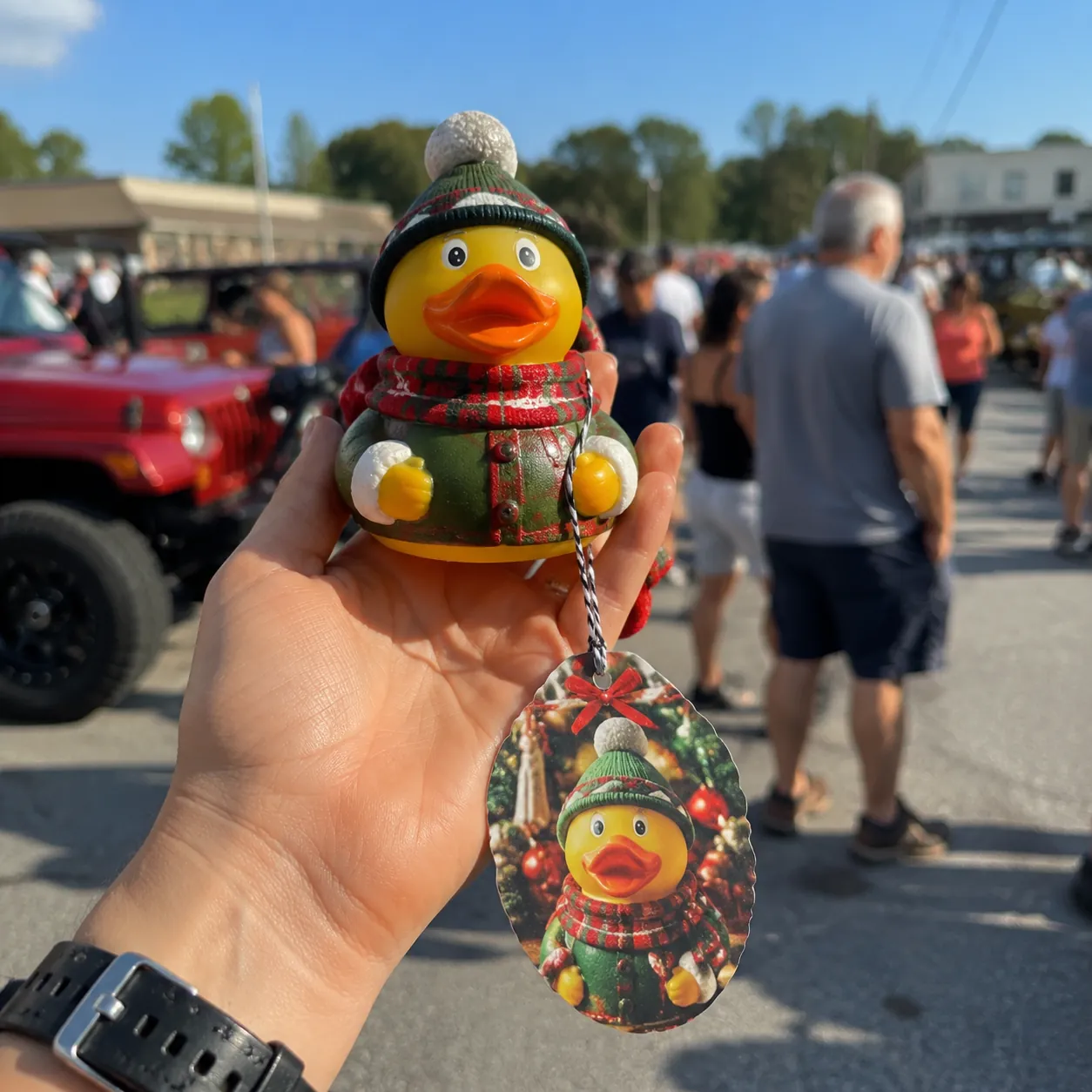
The cost efficiency becomes even more pronounced when you calculate cost per impression. A pen may be used for three months before it is discarded. A custom rubber duck sits on a desk for one to three years, generating daily brand impressions for every person who sees it. Over a two-year display period, the cost per impression of a $0.50 rubber duck viewed by 20 people per day is approximately $0.0005 per impression. No other promotional product category comes close to that efficiency.
The Use Cases Driving Rubber Duck Adoption in Corporate Swag Programs
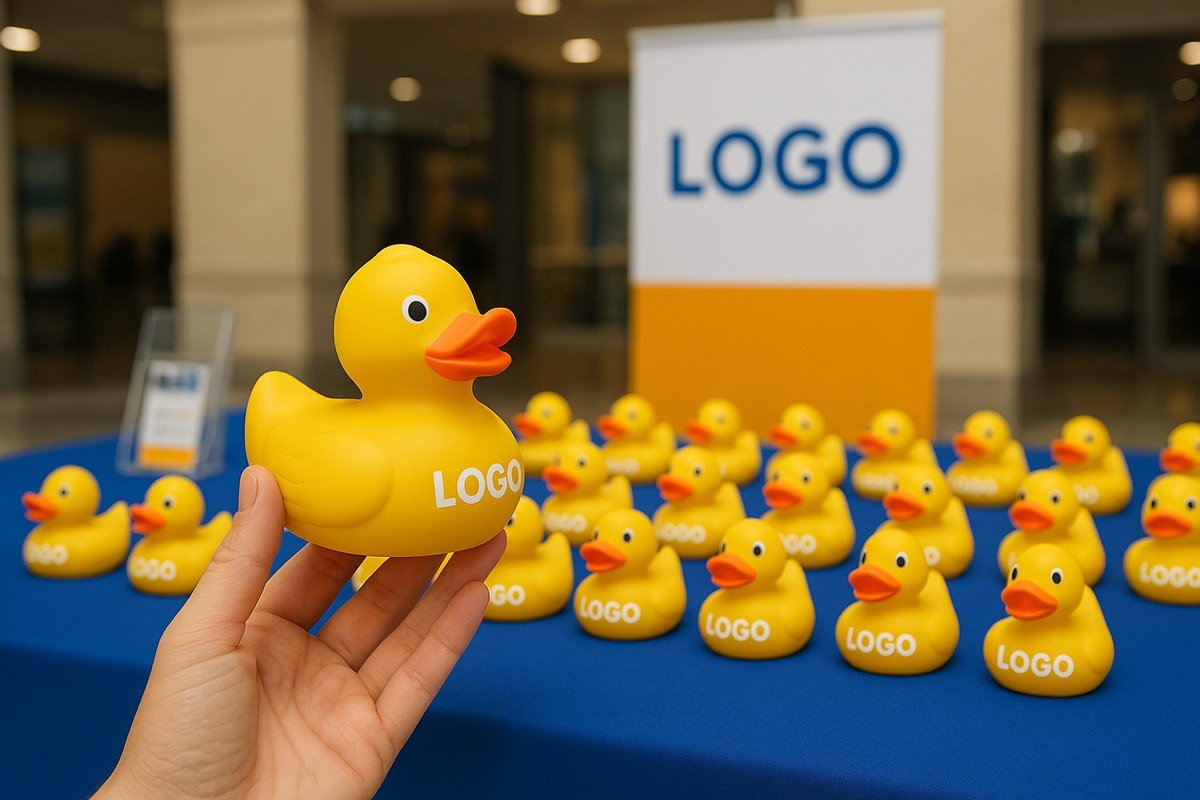
Several specific use cases have driven the adoption of custom rubber ducks in corporate promotional programs. Trade shows remain the largest single channel. A booth that distributes 500 custom rubber ducks creates a memorable experience that differentiates the brand from neighboring booths handing out identical promotional products. The trade show rubber duck guide details how exhibitors structure their duck distribution for maximum booth traffic and brand recall.
Employee onboarding is a second major channel. Companies that include a custom rubber duck in new hire welcome kits create an immediate positive association with the employer brand. The duck becomes a desk companion that reinforces the employee’s connection to the company throughout their tenure. This use case has grown significantly as remote and hybrid work arrangements have made it harder to create physical touchpoints between employers and their workforce.
Customer appreciation and client gifting is a third channel. A custom rubber duck sent to a client at the end of a project, during the holiday season, or as a thank-you for a contract renewal is unexpected, memorable, and inexpensive relative to the relationship value it reinforces. Unlike a bottle of wine or a gift basket, a custom rubber duck does not create compliance issues for recipients in regulated industries.
Brand launch campaigns and PR events represent a fourth channel. When a company is introducing a new brand identity, launching a new product line, or celebrating a milestone, a custom rubber duck designed to reflect the occasion serves as both a keepsake and a conversation piece. The rubber duck giveaway ROI analysis provides data on how these campaigns compare to alternative promotional strategies in terms of cost per brand impression.
Emerging Trends Shaping the Promotional Products Landscape in 2026
Several industry trends are creating favorable conditions for rubber duck adoption in promotional programs. The first is the sustainability movement. Buyers are increasingly asking about the environmental impact of promotional products, and rubber ducks made from TPR or silicone materials offer a more sustainable alternative to cheap plastic merchandise. The eco-friendly rubber ducks guide covers material options that meet sustainability requirements without sacrificing quality.
The second trend is the demand for customization depth. Marketing teams are no longer satisfied with simply printing a logo on a generic item. They want promotional products that are conceptually connected to their brand narrative. A custom rubber duck that is shaped, colored, and accessorized to reflect a company’s industry or values achieves a level of brand integration that a logo-printed pen cannot match.
The third trend is the shift toward emotional marketing. Research in consumer psychology consistently shows that emotional responses drive purchasing decisions more than rational evaluation. Promotional products that trigger a positive emotional response (surprise, delight, humor) create stronger brand associations than products that are merely functional. A rubber duck, by its nature, is whimsical and disarming. It triggers a smile in a way that a branded mouse pad does not.
How to Position Rubber Ducks in Your Promotional Products Budget
For procurement professionals and marketing managers building their 2026 promotional products budget, the question is how to position rubber ducks within the overall allocation. The answer depends on the promotional objective.
If the objective is maximum reach at minimum cost (for example, distributing 10,000 items at a large trade show), rubber ducks compete directly with pens, stickers, and tote bags. At 10,000 units, a custom rubber duck costs $0.25 to $0.45 per unit, which is more than a sticker but less than a quality pen. The differentiator is memorability: recipients are more likely to keep and display a rubber duck than a sticker, and more likely to remember the brand associated with a rubber duck than the brand on a generic pen.
If the objective is premium client gifting (for example, sending 200 high-quality ducks to top accounts), rubber ducks compete with branded drinkware, tech accessories, and gift boxes. At 200 units with a custom mold, the per-unit cost is $1.00 to $1.50, which is significantly less than a branded tumbler or tech gadget. The differentiator is uniqueness: clients receive branded drinkware and tech accessories regularly. They do not receive custom rubber ducks.
If the objective is internal culture building (for example, creating ducks for every employee as part of a company values initiative), the budget conversation shifts to emotional impact per dollar. A $0.50 rubber duck given to each of 500 employees costs $250 total and creates a shared cultural artifact that reinforces team identity. The equivalent spend on pizza at a team lunch is consumed and forgotten within hours.
Industry spend trends play out at the item level: the swag bag trends 2026 guide shows what event attendees actually keep.
Looking Ahead: Rubber Ducks and the Future of Promotional Merchandise
The promotional products industry will continue to evolve as marketing budgets face greater scrutiny and the demand for measurable ROI intensifies. The items that thrive in this environment are those that deliver the highest cost per impression, the strongest emotional connection, and the deepest brand integration. Custom rubber ducks check all three boxes.
The rubber duck trends forecast examines where the category is headed next, including the integration of QR codes and NFC chips into duck designs for digital engagement, the growth of sustainable material options, and the increasing use of rubber ducks in healthcare and education settings as morale-boosting branded items. As the promotional products industry continues to shift away from commodity items toward differentiated, emotionally resonant merchandise, rubber ducks are positioned to capture a growing share of swag spend across every sector.