Skip to content
The Data Behind Why Rubber Ducks Survive the Swag Bag Purge
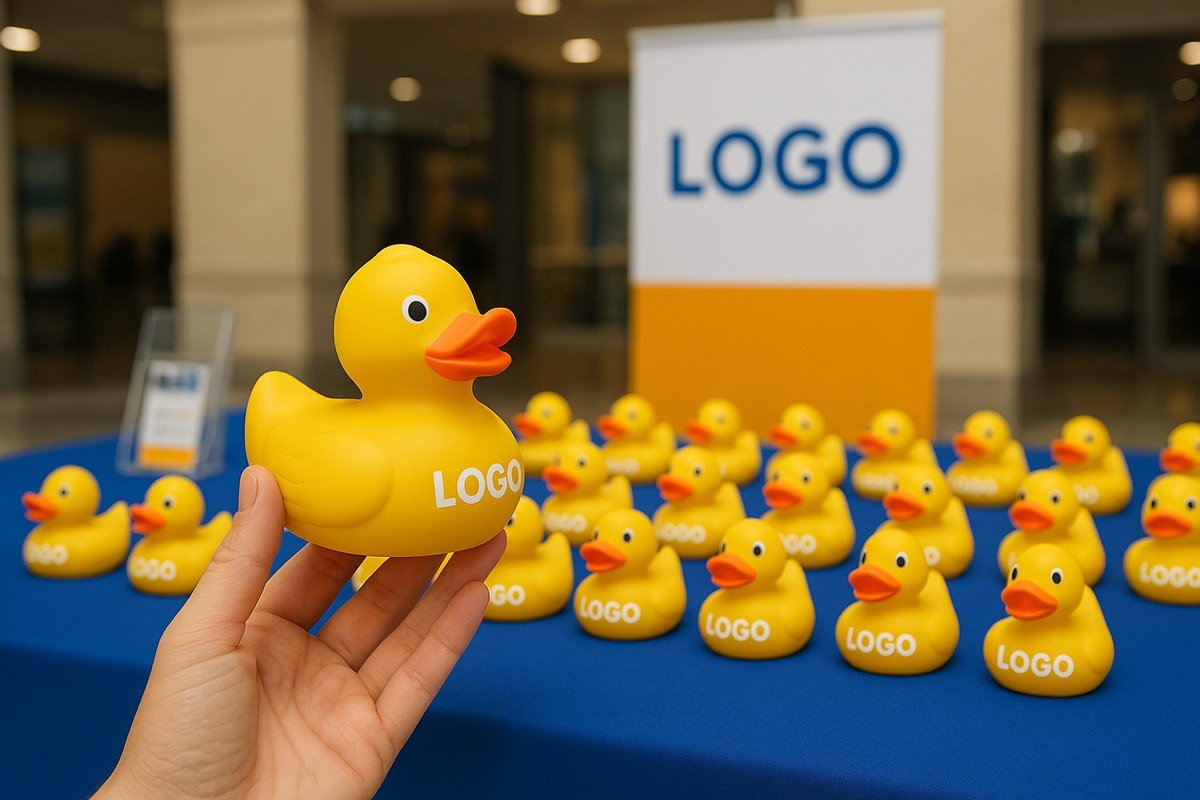
Every year, companies spend billions on promotional products. Trade show floors hand out tote bags stuffed with pens, stickers, stress balls, USB drives, and phone stands. Within 72 hours, most of those items end up in a hotel trash can or the back of a desk drawer. The best promotional giveaway is the one that does not get thrown away — and rubber ducks have a survival rate that conventional swag cannot match.
This article examines why custom ducks outlast, outperform, and out-remember every other item in the typical promotional giveaway lineup. The reasoning is rooted in psychology, design, and the economics of attention.
The Swag Graveyard: What Actually Gets Thrown Away
Industry surveys consistently show that promotional product discard rates follow a predictable pattern. Cheap ballpoint pens last 2-4 weeks before they skip, dry out, or get lost. Stickers get applied once and fade within months. Stress balls lose their shape after 50-100 squeezes. USB drives become obsolete as cloud storage replaces physical media.
Rubber ducks break this pattern for three structural reasons:
They are not useful, and that is the point. A pen has a job. When the pen fails, it has no reason to exist. A rubber duck has no functional obligation. It sits on a desk because it is charming, not because it serves a purpose. Objects that exist for emotional rather than functional reasons do not get discarded when they “stop working” — because they never had a job to begin with.
They are durable by design. PVC and vinyl rubber ducks do not degrade, break, or lose shape under normal desk or shelf conditions. A well-made duck lasts 5-10 years indoors. Compare this to a stress ball that flattens within weeks or a pen that runs out of ink within a month.
They are conversation starters. Every time someone walks past a desk with a custom duck on it, they ask: “Where did you get that?” The duck generates organic impressions that a pen in a drawer never could.
Ducks vs Pens: The Retention Numbers
Here is how rubber ducks compare to pens across the metrics that matter for promotional ROI:
- Average desk lifespan: Pens = 3-6 weeks. Rubber ducks = 6-24 months.
- Visibility to third parties: A pen in a drawer is seen by zero people. A duck on a desk is seen by every visitor, every meeting attendee, every delivery person.
- Emotional association: Pens are commodities. Ducks are conversation pieces. The promotional industry’s own research shows that items perceived as “fun” or “unique” generate 60% higher brand recall than commodity items.
- Cost per impression: A $1.50 custom duck displayed for 12 months and seen by an average of 5 people per day generates 1,825 impressions. Cost per impression: $0.0008. A $0.50 pen used for 3 weeks generates roughly 105 impressions. Cost per impression: $0.0048 — six times higher.
For teams analyzing rubber duck giveaway ROI, the cost-per-impression math is the most compelling argument. The duck costs more upfront but delivers dramatically more value per dollar over its lifetime.
Ducks vs Stickers: Why Adhesive Promotions Fail
Stickers are the cheapest promotional item by unit cost. They are also the least effective at generating sustained brand exposure. Here is why:
Stickers require a surface. The recipient must choose where to put the sticker, and most people have very few surfaces where they will accept a third-party brand logo. Laptop lids, water bottles, and car bumpers are prime real estate — and they are already covered. The sticker competes with existing decals, personal expression, and the recipient’s aesthetic preferences.
A rubber duck requires no surface commitment. It stands on its own. It can be moved from desk to shelf to car dashboard without leaving residue or making a permanent decision. This portability means the duck gets repositioned into high-visibility spots naturally, while stickers get hidden under laptop screens or peel off water bottles after a few dishwasher cycles.
Ducks vs Stress Balls: The Durability Gap
Stress balls were the darling of trade show giveaways in the 2000s. They have since fallen out of favor for a simple reason: they break. Polyurethane foam stress balls compress, crack, and crumble after 50-100 squeezes. Once the shape is gone, the item is trash — and it takes your brand with it.
A rubber duck made from quality PVC does not compress, crack, or crumble. It can be squeezed (if designed with a soft body), dropped, sat on, and thrown across a room without permanent damage. The material composition of rubber ducks — rigid or semi-flexible PVC — gives them a structural longevity that foam products cannot match.
There is also a perception shift. Stress balls feel corporate and dated. Custom ducks feel fresh, playful, and unexpected. In today’s swag bag trends, where attendees actively photograph and share unique items on social media, a custom duck has viral potential that a stress ball lost a decade ago.
The Psychology of Keeping: Why Ducks Earn Their Place
Behavioral economics offers a framework for understanding why ducks survive the swag purge. The “endowment effect” causes people to overvalue objects they feel personal ownership of. A custom duck that matches the recipient’s interests — a Jeep duck for a Jeep owner, a school mascot duck for a teacher, a profession-themed duck for a nurse — triggers this effect powerfully.
The “mere exposure effect” compounds the value. Every time the recipient sees the duck on their desk, their attitude toward it becomes slightly more positive. After weeks of daily exposure, the duck becomes a familiar, comforting presence — and the brand it carries benefits from that positive association.
Pens, stickers, and stress balls do not trigger these psychological mechanisms because they are either too common (pens), too passive (stickers), or too ephemeral (stress balls). The duck’s combination of novelty, durability, and personalization creates a retention profile that no other promotional item at the same price point can match.
Real-World Scenarios Where Ducks Outperform Every Alternative
Trade show booths: Visitors collect dozens of items. The pen goes in the bag. The bag goes in the hotel room. The pen gets left behind. The duck goes on the convention center desk and gets photographed by passing attendees.
Customer appreciation mailers: A thank-you package with a branded duck creates an unboxing moment. A thank-you card with a discount code gets recycled with the junk mail.
Employee onboarding: New hires receive a welcome kit with a company duck. It sits on their desk from day one. Three years later, it is still there — a silent piece of company culture that a branded notebook cannot replicate.
Community events: The Jeep Ducking phenomenon proves that a rubber duck placed on someone’s car generates more social engagement than any flyer, sticker, or bumper tag ever could.
Choosing the Right Duck for Your Giveaway Campaign
Not every duck is equally effective as a promotional item. Here is what separates a high-retention giveaway duck from one that ends up in the trash:
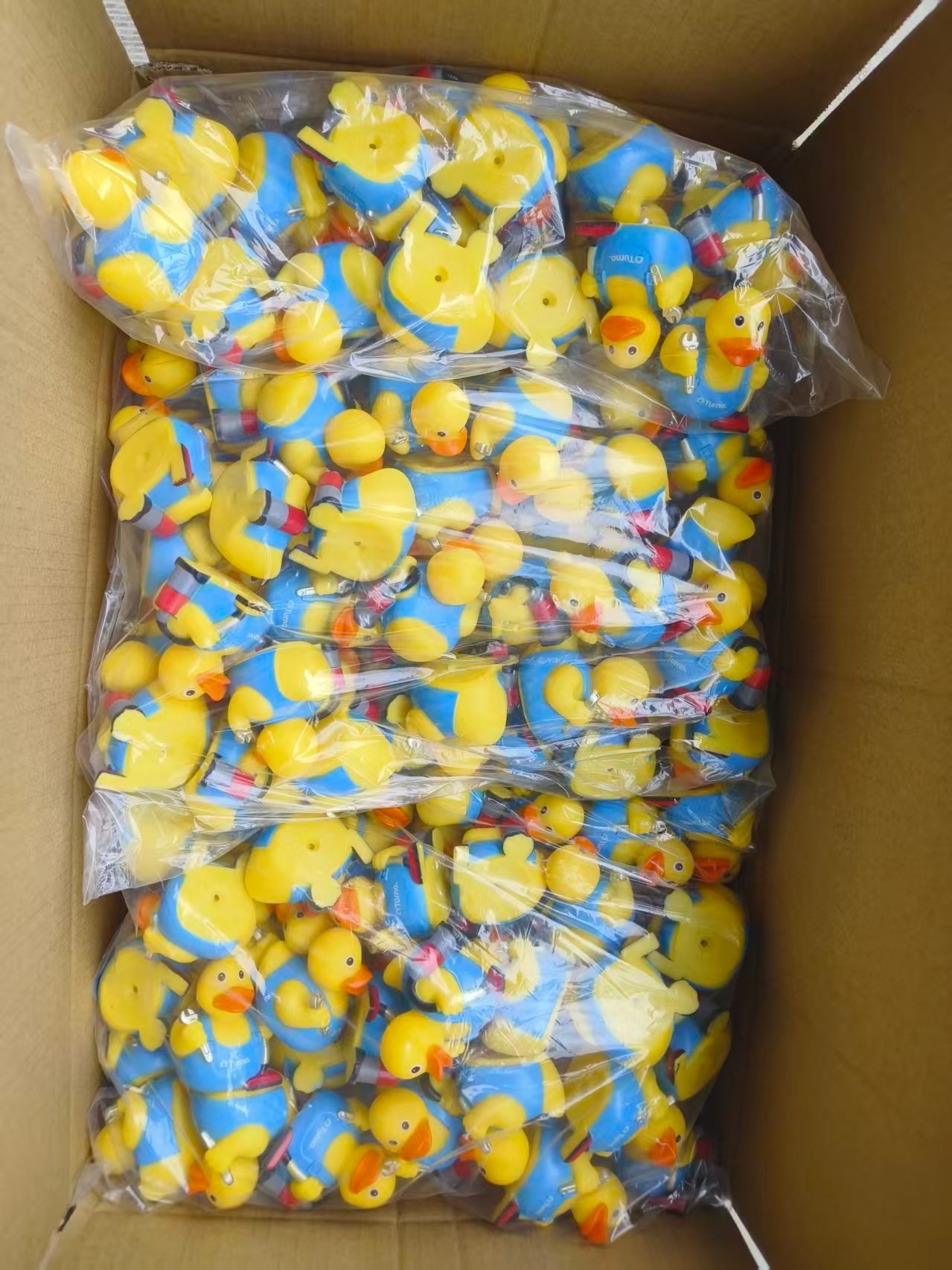
- Customization: A generic yellow duck with a tiny logo is forgettable. A duck with Pantone-matched brand colors, a custom hat, or a unique accessory is a keepsake. Invest in custom design that makes the duck distinctly yours.
- Quality: Thin-walled, lightweight ducks feel cheap. A duck with substantial weight (80-120g) and clean printing communicates that your brand cares about quality.
- Relevance: Match the duck to the audience. A corporate conference gets a profession-themed duck. A car show gets a Jeep duck. A school event gets a mascot duck. Browse the product categories to match duck types to your audience. Relevance drives retention.
- Packaging: A duck in a branded box or poly bag with a header card feels like a gift. A duck tossed loose into a swag bag feels like an afterthought.
The Bottom Line: Best Promotional Giveaway Is the One That Stays
The promotional products industry spends billions annually on items that get discarded within weeks. Rubber ducks are not the cheapest option per unit. They are the cheapest option per impression, per week of brand exposure, and per moment of positive emotional association. When the goal is to be kept — not just handed out — the duck wins.
Nostalgia is one reason ducks get kept, and the rubber duck nostalgia marketing guide explains the generational mechanics behind it.
Frequently Asked Questions
Why do rubber ducks make better promotional items than pens?
Rubber ducks last 6-24 months on desks versus 3-6 weeks for pens. They generate approximately 1,825 impressions over 12 months compared to roughly 105 for a pen. The cost per impression is six times lower for ducks despite higher upfront unit cost.
How much do custom promotional rubber ducks cost?
At the standard 1,000-unit MOQ, custom promotional ducks cost $0.80 to $3.00 per unit depending on complexity, color count, and packaging. This positions them competitively with mid-range promotional items while delivering significantly longer brand exposure.
Are rubber ducks effective for trade show giveaways?
Yes. Trade show attendees collect dozens of items but keep very few. Custom ducks have a retention rate far exceeding pens, stickers, and stress balls because they are conversation pieces that do not degrade, do not require a surface to adhere to, and trigger emotional attachment through novelty.
What makes a promotional duck get kept rather than thrown away?
Four factors: customization (Pantone-matched brand colors), quality (substantial weight and clean printing), relevance (design matched to the audience), and packaging (branded box or header card that raises the item from loose swag to gift).
Related reading: Social Media Duck Drops: How Brands Run Flash Giveaways.
For organizer teams buying at event scale, the tier, MOQ, and packing decisions are covered in our conference-scale duck buying guide.
For the specs, branding and MOQ behind an Airbnb welcome gift duck, see our Airbnb welcome gift duck guide.
For the sizes, budgets and anchor risk behind a giant duck booking, see our giant rubber duck installation.