A ward order is settled by intended use before it is settled by design, because the answer changes the body, the certificate file and the cleaning method at once. A duck that goes home in a child's bag at the end of a stay is a different product from a duck that stays in the playroom and is wiped down between children. The certificate file follows from that distinction rather than from the catalogue.
A ward gift has to behave like a traceable product, and the intended use is settled before the design.
In short: a children's ward needs a duck that is small enough to be safe for the age it reaches, sealed if it will be cleaned, and backed by a test report that names the product rather than the factory. Ask whether the duck is single patient use or a reusable item, and put that answer in the brief before anything else.
Why a children's ward buys a duck differently
A duck bought for a ward is two things at once. It is a comfort item handed to a frightened child, and it is a product that a hospital has to account for, store, clean or dispose of, and occasionally trace back to a supplier. That second half is what separates a ward order from a promotional order, where the duck is a giveaway and the worst outcome is a colour that fades.
The buying process reflects it. Ward orders usually pass through someone in procurement, someone in infection control and someone in the play team, and each of them asks a different question. Procurement wants the paperwork and the delivery in one piece. Infection control wants to know how the item is cleaned and whether it can be. The play team wants a duck that a child will actually pick up.
A supplier who answers only the third question will lose the other two. The useful habit is to write down the intended use, the age range and the cleaning method at the enquiry stage, then let the product follow those three statements.
The certificate file a ward should ask for
The file starts with the toy rules, not with the supplier's brochure. In the European Union only toys bearing CE marking may be placed on the market, and the manufacturer has to carry out a safety assessment across chemical, physical, mechanical, flammability and hygiene hazards, hold technical documentation and draw up the EC Declaration of Conformity. The importer keeps a copy and puts its own name and address on the product (European Commission).
For a ward, the useful twist is the word hygiene in that list. A hospital is not asking a new question so much as asking the existing one more strictly. The test report should name the product and the material, the declaration should be the one that belongs to that product, and the label should carry the age grading and the warnings that go with it.
A file built from the factory's best selling model, with a different duck in the box, is the most common failure I see. The safety testing route for rubber ducks explains what belongs in the report, and the label guide covers what has to be printed on the product itself.
Materials and the cleaning question
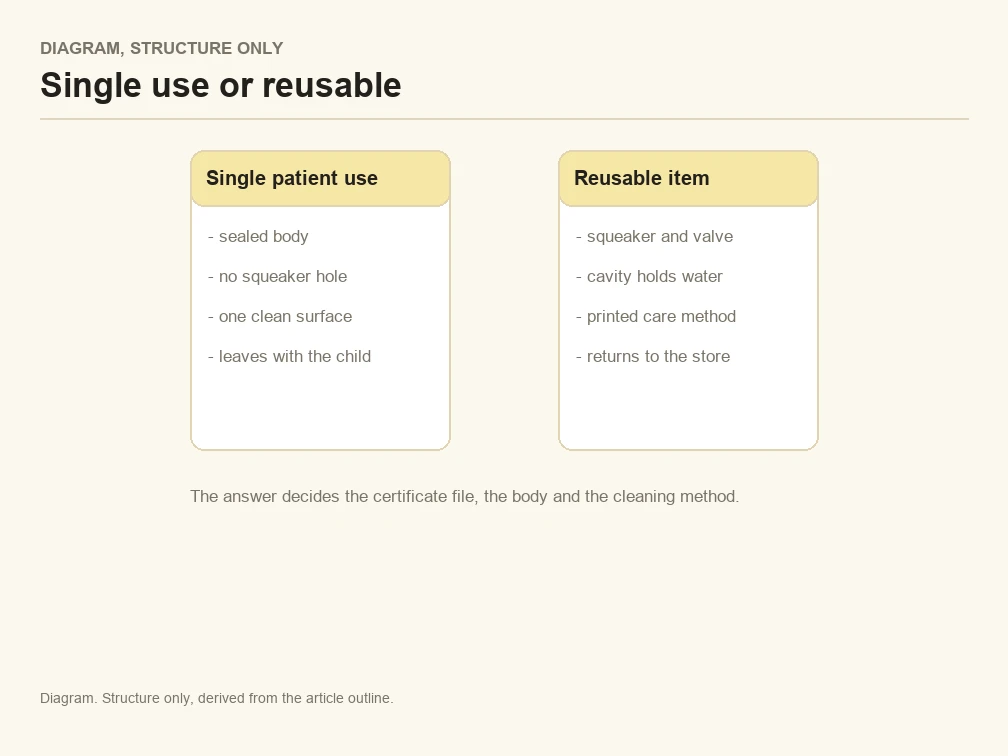
Here is where a ward order splits in two, and the split is worth drawing before the design starts. A single patient use duck goes home with the child and does not need to survive cleaning. A reusable duck stays on the ward, is wiped or washed between children, and has to be built for that.
The physical problem is the squeaker. A duck with a squeaker has a hole, a valve and a cavity, and a cavity that takes water in is hard to dry out. That is not a defect in the duck, it is a consequence of how the toy works, and it is the reason infection control teams ask the cleaning question early. A sealed body removes the cavity and the hole, and it also removes the squeak, which is a trade a ward has to make on purpose.
| Intended use | Body | Cleaning on the ward | What the file must carry |
|---|---|---|---|
| Single patient use | Sealed, no squeaker, one smooth surface | None, the duck leaves with the child | Product test report, age grading, warnings on the label |
| Reusable item | Sealed or valved, print that survives a wipe | Surface clean as the ward's own policy requires | Product test report, care method, label that matches both |
So ask which of the two you are buying, in writing, and let the supplier build to the answer. The cleaning guidance for bulk ducks covers what a washable duck can take, and if the ducks arrive with a smell, the airing note explains why that is a storage question rather than a material failure.
The design rules that matter on a ward
A ward duck is handled by children of different ages, often younger than the person who ordered it expects. That makes size and detachable parts the first design decision rather than the last. Under the small parts rule, a toy or article intended for children under three must not be small enough to fit entirely inside the test cylinder, and any part that comes off in the use and abuse tests is judged the same way (16 CFR 1501.4).
In practice that means a mini duck may be perfectly safe for a school age campaign and wrong for a toddler ward, and a cap, a bow tie or a printed tag that is added on can change the answer after the body has been approved. The age grading guide walks through how the age mark is decided, and it is worth reading before the artwork rather than after.
Print and colour come second. On a ward duck a small logo is usually enough, and a large printed panel is more surface to check and more to fade under cleaning. Keep the print area modest and the shape simple, and the product is easier to defend on every axis a hospital cares about.
What a ward actually orders
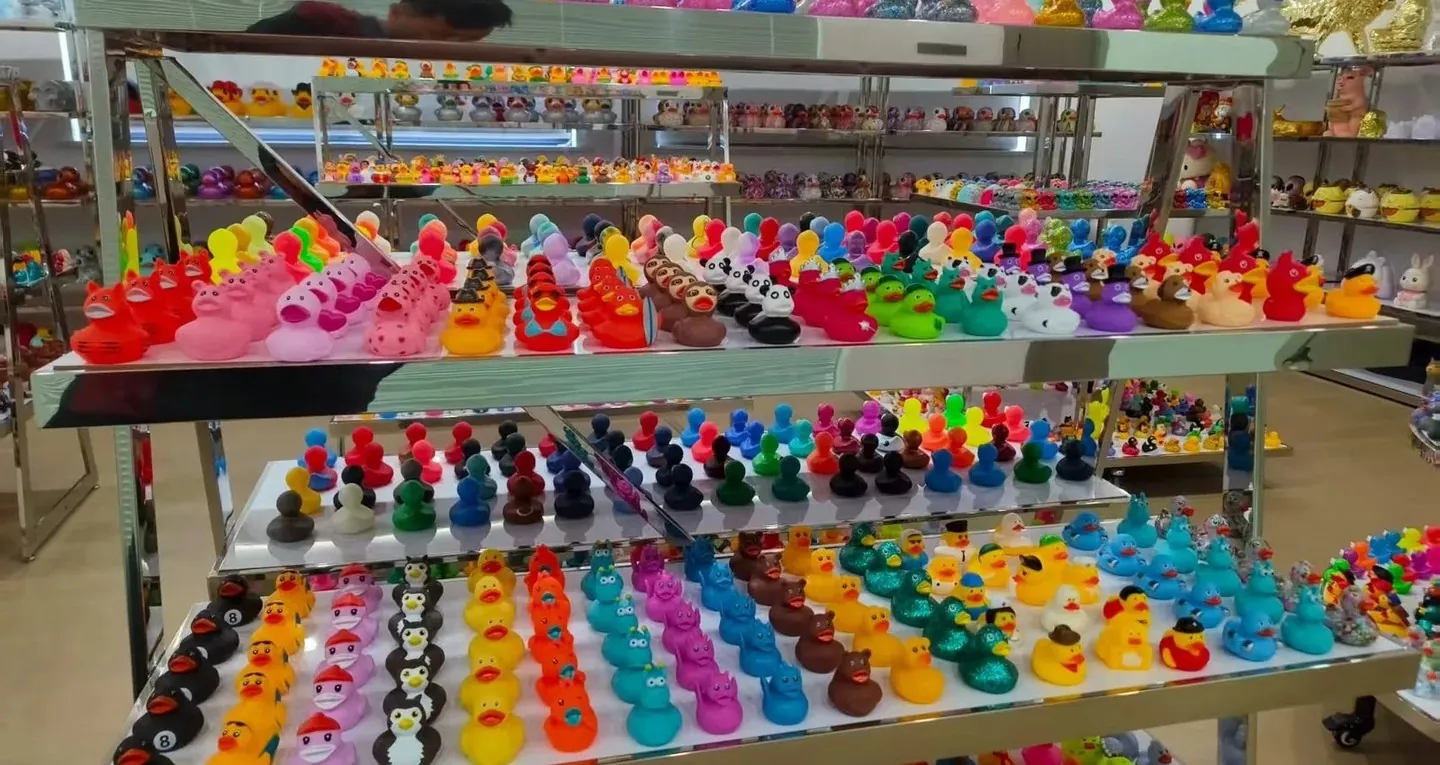
Ward orders are small and repetitive rather than large and seasonal. A play team may need a steady trickle for new admissions, a fundraising office may need a batch for an event, and a children's charity may order for several hospitals at once. That pattern changes the packing: individual sealed bags matter more than a display carton, and a carton label that names the ward or the department saves an argument at the goods in desk.
Mixed designs inside one delivery are common, because different wards want different characters. The practical approach is to treat each design as its own line in the file, with its own label and its own test reference, rather than one line called "assorted". A carton that says assorted is a carton that cannot be traced back to a single report.
How to brief a ward order
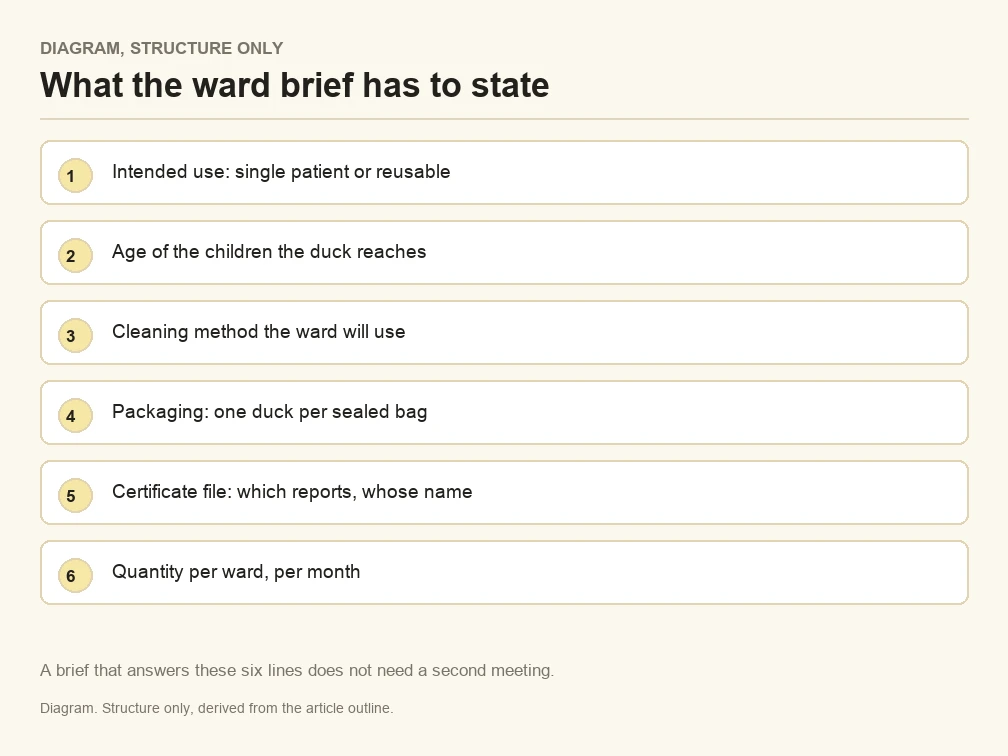
The brief that works is short, and it is mostly statements rather than requests. Six lines cover almost every ward order:
- Is the duck single patient use or a reusable item the ward will clean?
- Which ages will actually handle it, and does the design pass the small parts rule for the youngest?
- Which cleaning method will the ward use, and does the body and the print survive it?
- Does the test report name this product and this material, and whose name is on the declaration?
- Does the packaging suit a ward store room, with one duck per sealed bag and a carton label that names the department?
A brief that answers those five leaves very little to interpret, which is the point. The supplier can then answer with a product, a label and a file, and the ward can accept all three without a second meeting.
Final Note
The ward duck is a small object with a large amount of process behind it, and most of that process is decided by two sentences that buyers tend to leave out: what the duck is for, and who cleans it. Once those are written down, the certificate file, the body and the packing all follow, and the conversation with infection control becomes a check rather than a negotiation.
A plainer duck that passes every question is better for a ward than a charming one that fails the second. The charm is in the child's hands for a day. The file is what the hospital keeps.
Frequently Asked Questions
What certificates should a hospital ask for before buying rubber ducks?
The toy safety file that belongs to the product: a test report naming the duck and the material, the EC Declaration of Conformity where the EU rules apply, and the label that carries the age grading. Ask for the report that matches the duck in the box, not the factory's best seller.
Can a rubber duck be sanitised between patients?
A duck with a squeaker has a cavity and a hole, and water that goes in is hard to dry out, so a ward usually treats it as single patient use. A sealed body can be wiped as a surface, which is why the intended use question comes before the design.
Is a sealed duck better than a squeaky duck for a ward?
Better for cleaning, worse for comfort if the ward expects a squeak. The sealed body removes the cavity and the hole, and it also removes the sound. The right answer depends on whether the duck goes home with the child or stays in the playroom.
How many ducks does a children's ward need?
It depends on the ward, and the pattern is usually a steady trickle rather than one large batch. Ask the play team for a monthly figure and let the packing follow it, with one duck per sealed bag and a carton label that names the department.
Key takeaways
- Why a children's ward buys a duck differently: comfort item and traceable product at the same time.
- The certificate file a ward should ask for: the report has to name the duck, not the factory.
- Materials and the cleaning question: the squeaker cavity is the reason infection control asks early.
- The design rules that matter on a ward: size and detachable parts decide the age mark.
- How to brief a ward order: five statements replace a second meeting.