A bulk duck order comes back from an event as three kinds of stock, and only one of them can be washed at once. The drying step, not the soap, decides whether the carton survives storage.
Written from LZENGO's packing and care notes, plus public mould and toy safety guidance.
In short: Wash only what is visibly soiled, rinse in clean water rather than a bucket that has already been used, and dry every duck completely before it goes back into a carton. Mould is a moisture problem more than a dirt problem, so drying and storage carry more weight than the detergent.
A bulk order comes back as three groups
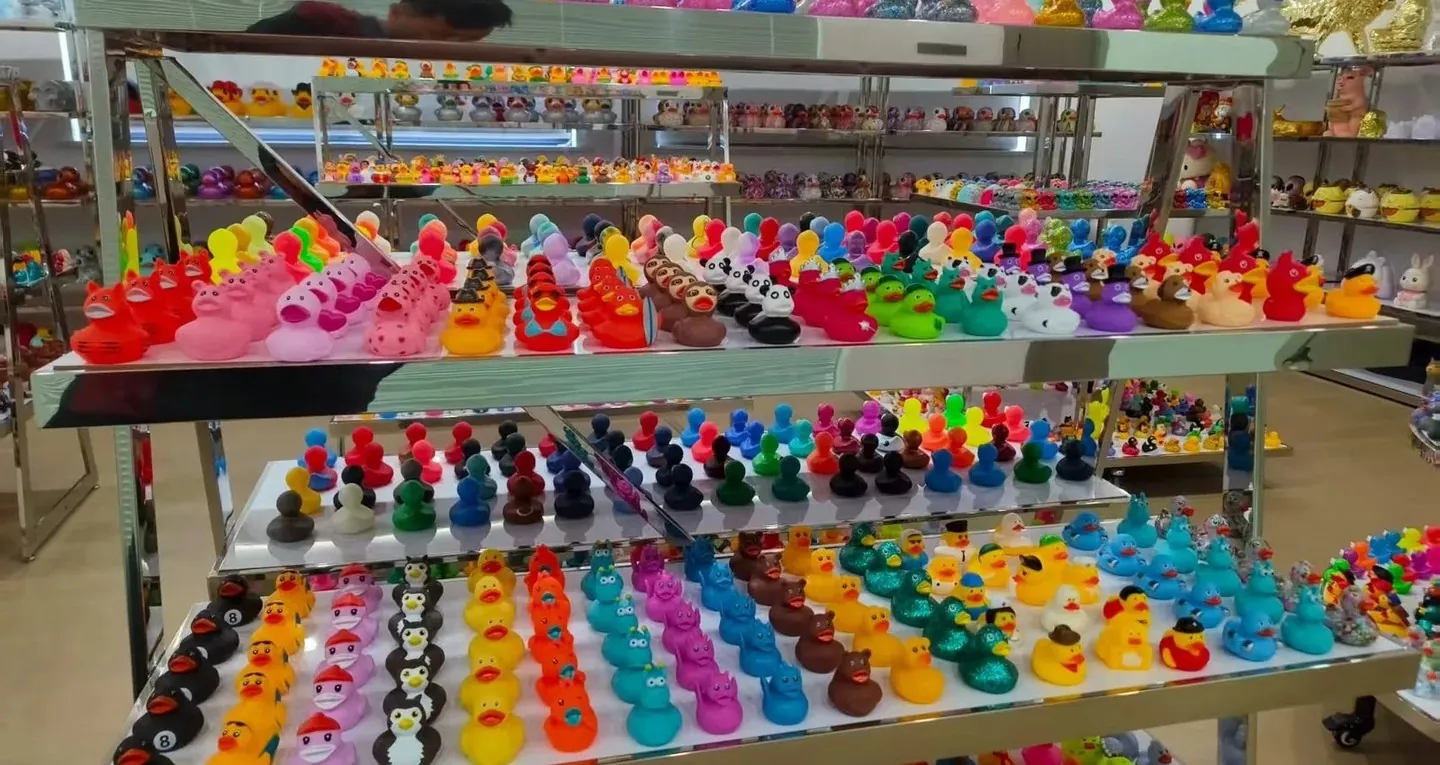
A pallet that comes back from an event is never one problem. It splits into three groups, and separating them is the first job, before anyone reaches for a cloth. Sealed cartons that never left the pallet are group one: the ducks are still in their polybags and the only soil is on the outside of the box. Group two is handled stock, meaning display ducks, demo pieces and anything that has been out of its bag and touched. Group three is the wet group: ducks that have been in a pool, a dunk tank, a water race or a basin.
The groups are not equally urgent. Group one can go back on a rack untouched. Group two needs a wipe and a short air dry. Group three needs a full drain and a long dry, and it is the only group that can quietly ruin a carton from the inside. Sorting is also how the same review that the factory runs before an order ships, the one covered in final inspection, gets applied to stock you already own.
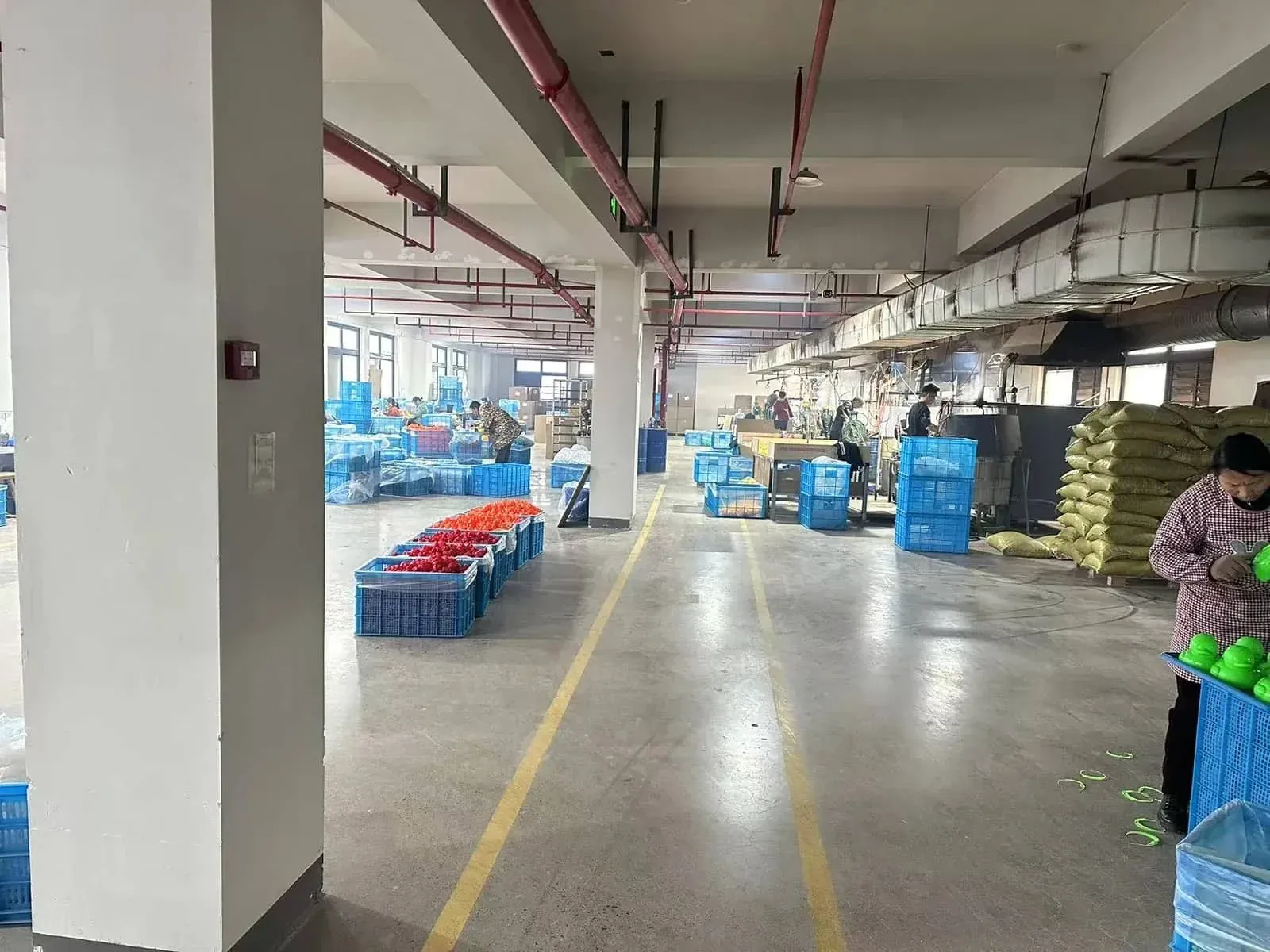
What needs cleaning, and what does not
The most common mistake in a bulk care loop is washing everything because washing feels like work. Water is the input that mould needs, so every duck you wet is a duck you now have to dry. The table below is the split we use when we talk a buyer through a returned pallet, and it is deliberately conservative about water.
| Condition | What you actually see | What it needs | What to skip |
|---|---|---|---|
| Sealed carton, never opened | Clean polybags, dust or tape marks on the box | Wipe the carton, leave the ducks bagged | Opening the bags at all |
| Handled display stock | Fingerprints, shelf dust, a dull surface | Damp cloth with mild detergent, then air dry | Soaking or a full rinse |
| Pool, dunk tank or water race | Water inside the cavity, fogged bag | Drain, rinse in clean water, long dry | Putting it back in a bag wet |
| Rain damaged carton | Soft board, a damp smell, stained corners | Inspect the ducks, replace the carton | Reusing the softened box |
For a single duck that has been in bath water, the household routine in this cleaning guide is the right scale. A bulk order is a different problem, because the volume makes drying the bottleneck rather than the cleaning.

The wash itself is the easy part
Warm water and a mild detergent is the whole recipe, and the Environmental Protection Agency's own clean up guidance for hard surfaces is just as plain about it: scrub with detergent and water, then dry completely. Nothing stronger belongs on a duck. Solvents and aggressive cleaners attack the printed finish long before they improve the result, and a duck that has lost its surface print is no longer the product you sold.
The part that is worth managing is the water itself. A single bucket used for two hundred ducks becomes a suspension of dust and body oils after the first batch, so the wash water needs changing on a count, not on a feeling. Two basins work well: one for the detergent wash, one for a clean rinse, with the rinse refreshed far more often than the wash. Handled stock rarely needs the basin at all. A cloth, a wipe down and a place to air is enough, and it keeps most of the order out of the drying queue entirely.

Drying is the step that decides the next season
A hollow duck holds water in the cavity, and the bag you put it in holds the moisture against the surface. That is the whole mechanism behind a mouldy carton. Shake each duck out, squeeze the body gently to move water off the walls of the cavity, and stand it with the opening facing down so gravity does the rest. A rack with airflow on both sides finishes the job in a fraction of the time that a towel does, because a towel moves water around the surface rather than off it.
The test before bagging is simple and does not need a meter. A dry duck feels light for its size, sounds hollow when shaken, and does not fog the inside of a polybag in the first minutes after sealing. If any of those three fail, the duck goes back on the rack. The same logic applies to storage afterwards, which is why the shelf life question in these storage notes is really a moisture question with a shelf attached.
Scrub mold off hard surfaces with detergent and water, and dry completely.
The US Environmental Protection Agency, in Mold Cleanup in Your Home, says that when absorbent or porous material becomes mouldy it may have to be thrown away, because growth can fill the crevices of the material and become difficult to remove.
Where washing the whole order is the wrong move
There is a point where a wash cannot rescue the material and only adds water. The EPA guidance makes the same distinction for absorbent material, and a carton is exactly that: once the board at the corners has gone soft, a wipe cannot restore it and a wash makes it worse. The ducks inside may be fine. The box is not, and a weak carton is what lets a pallet collapse in a stack or let damp air in during the next season.
Four questions decide whether the whole pallet needs the full loop, or only part of it:
- Does a duck still smell of chlorine after two clean rinses?
- Is the board soft at the corners of the carton?
- Are the polybags fogged on the inside, not the outside?
- Has the printed label lifted at an edge?
Any yes puts that carton into the full drain and dry loop. All four no, on a sealed carton that was never opened, and the right decision is to leave it alone.
Repacking is a quality step, not housekeeping
Repacking gets treated as the unskilled end of a care loop. It is not, because it is the moment the product either returns to its shipped condition or stops being the same product. The CPSC toy safety guidance carries the requirement for a toy to be clean and free from infestation as a material quality point rather than a cosmetic one, which is the same standard a returned order should meet before it is closed up again.
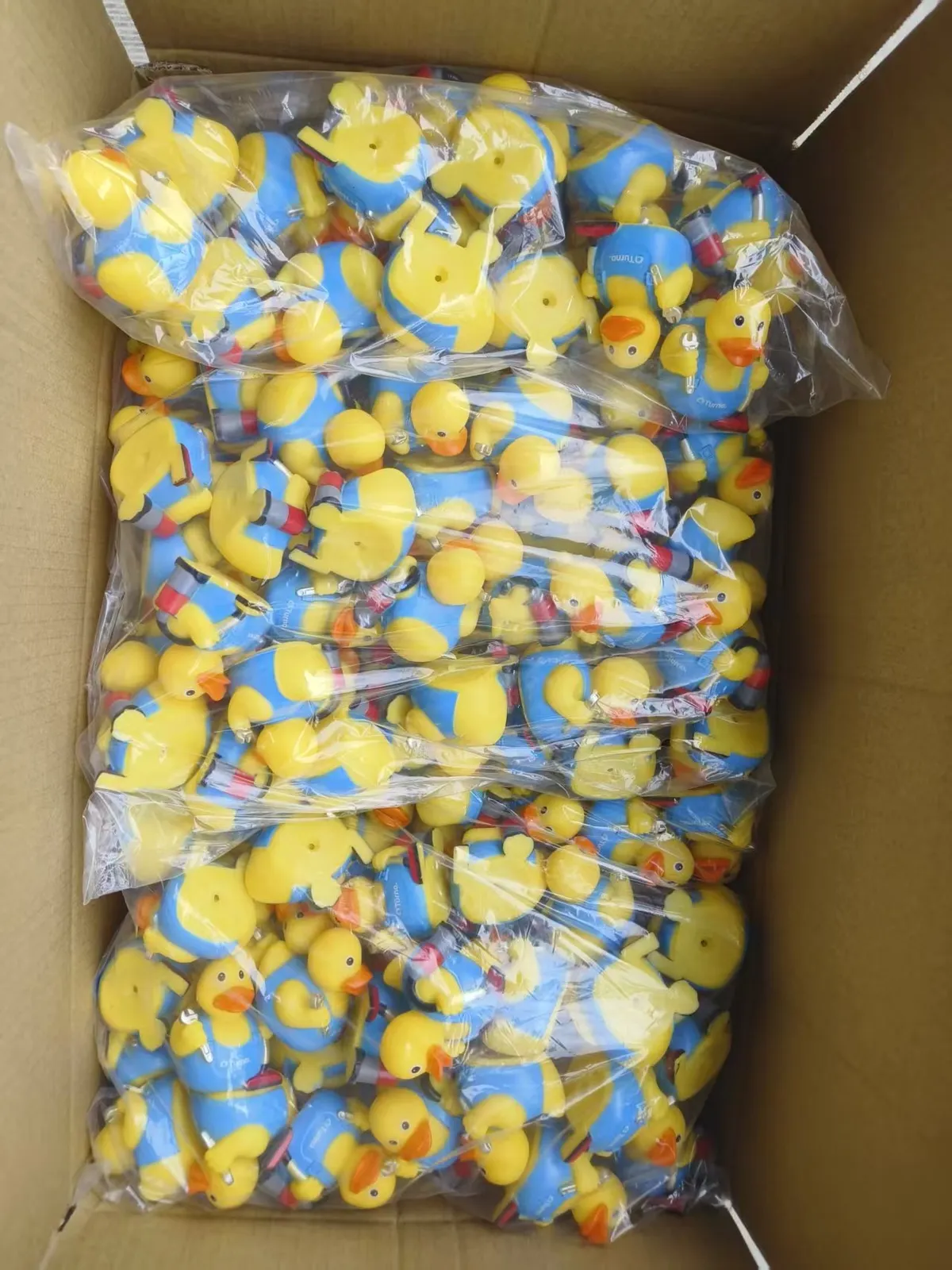
Work in the same order as the original pack: duck into the bag, bag into the inner box, inner box into the carton, with the count written on the outside in one place. Keep the bag opening up as you seal so trapped air can leave, and do not overfill, because a carton that bulges puts pressure on the print of the duck at the bottom of the stack. The packaging line detail in these pack specification notes is more useful here than any general advice about boxes.
Storing it dry is a specification too
Storage is where a good wash loop is quietly undone. Cartons want a pallet under them, a gap from the wall, and air moving over the stack rather than sealed around it. Sheets of plastic laid over the top of a pallet to keep dust off also keep the moisture in, and that trade is a bad one for a product that spent the last week being dried on purpose. Concrete floors wick moisture straight into the bottom layer of board.
Temperature swings work the same way. A container or a store room that warms through the day and cools at night cycles the humidity inside the carton, and the duck at the bottom is the one that pays for it. If the stock will sit for months, keep the pallet off the floor, keep the stack away from the wall, and treat any carton whose board has started to bow as a candidate for unpacking rather than as a storage unit.
The record that shortens the next loop
A finished loop is worth four lines in a log: which event the stock came from, how many units went into each group, what the drying took, and which cartons were replaced. That is enough to make the next loop faster and, more usefully, to show a buyer or a warehouse team what the stock actually takes out of them in handling rather than in cash.
The record also protects the product. If a batch keeps coming back in the wet group, it is a signal about how the ducks were displayed at the event, not about the ducks. If a batch keeps coming back with lifted labels, the label side of the product is the thing to review with the factory, and the reference point is the label guide rather than a guess.

Frequently Asked Questions
Can a bulk order go through a dishwasher?
No. A dishwasher combines heat, a long soak and a drying cycle that pushes water into the cavity, and none of those three steps can be inspected one duck at a time. It also puts every duck in the load through the same cycle whether it needed water or not. A basin, a cloth and a rack are slower per duck and far more predictable per pallet.
How do you stop mould in stored ducks?
Keep water out of the carton. Dry each duck completely before bagging, bag only ducks that pass the fog test, and store cartons on a pallet with air moving around them. A desiccant sachet helps in a container crossing several climates, but it does not replace drying and it will not fix a duck that was bagged wet.
How often should a multi-use order be cleaned?
Clean on use, not on a calendar. Display stock that is handled at every event needs a wipe before each event and a proper dry after, while a sealed carton that has never been opened needs nothing at all. The one fixed habit worth keeping is a full inspection of the bottom layer of every pallet before a season starts.
Does washing shorten the life of the print?
A gentle wash with mild detergent does not, but abrasion does. A cloth rubbed hard over a dry printed surface, or ducks rattling against each other in a basin, wear the finish faster than water ever will. Wash in small batches, do not scrub the print, and dry by air rather than by towel.
Final Note
The order of the loop matters more than any single step in it. Sort first, wet only what needs wetting, dry until the fog test passes, repack in the same order the factory packs, and store on a pallet with air around it. Do those five things in that sequence and a returned bulk order comes back into service as the product it was, not as a handling problem that has to be written off. The loop also leaves something behind that a single wash never does: a record of which carton failed, at which stage, and why, which is the raw material for the next conversation with the factory.
Key takeaways
- A bulk order comes back as three groups: sort sealed, handled and wet stock before any cleaning starts.
- Drying is the step that decides the next season: the cavity holds water, and the bag holds it against the surface.
- Where washing the whole order is the wrong move: soft carton board is replaced, not washed.
- Repacking is a quality step, not housekeeping: the order is only back in service once it is packed to the shipped standard.