Two inspection passes belong in a duck order before the first duck comes off the line, because a defect found at the end is already a rework decision. The inline pass catches a defect while the line still runs and a fix costs minutes; the final pass verifies the packed lot against the agreed AQL. Inline is a control, final is a gate, and a single combined pass does neither job cleanly.
In short: inline inspection corrects the process while the line runs, and final inspection gates the lot against an AQL before it ships. Both passes, written into the QC plan, are the baseline for a duck order.
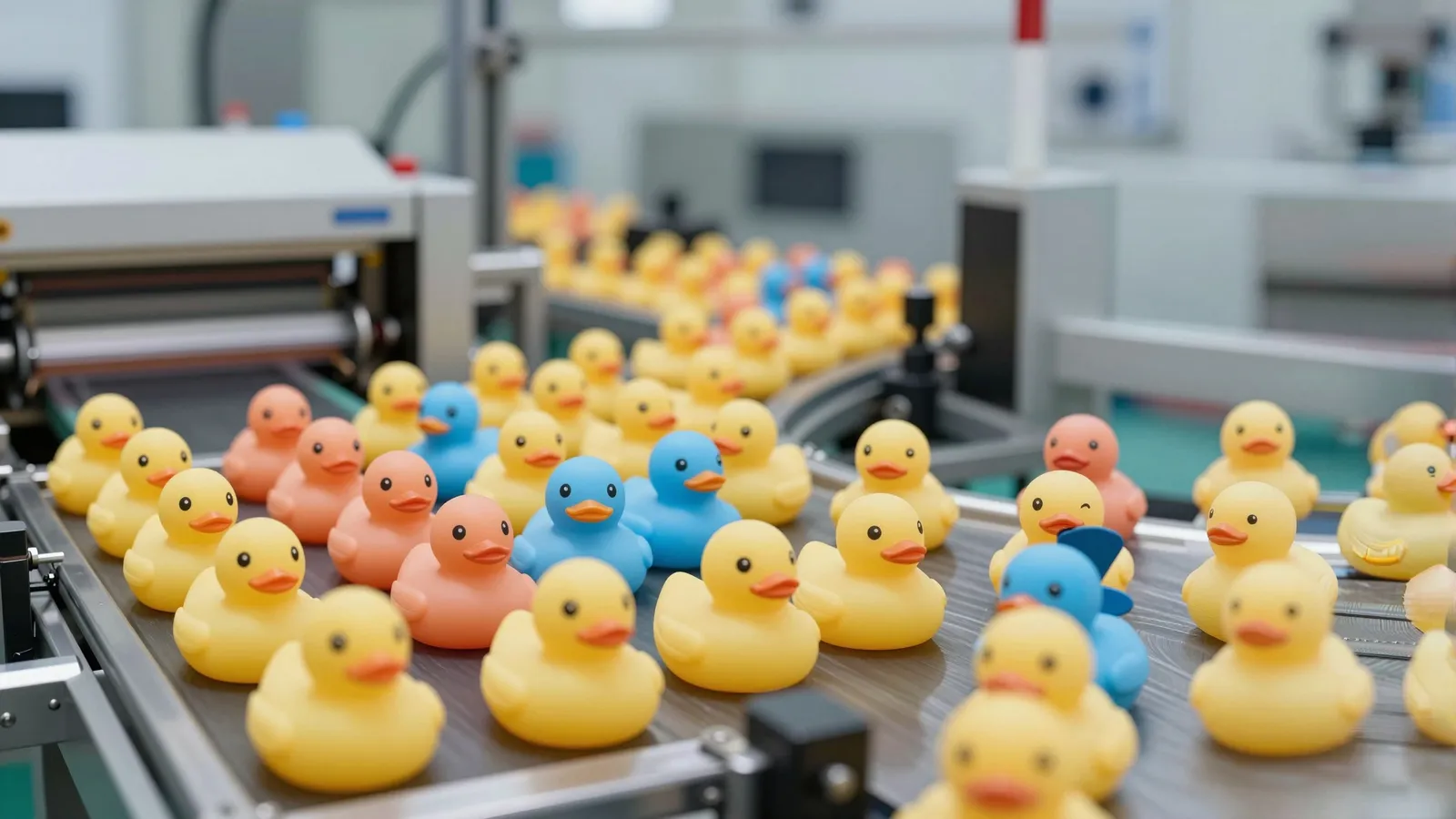
What does inline inspection catch?
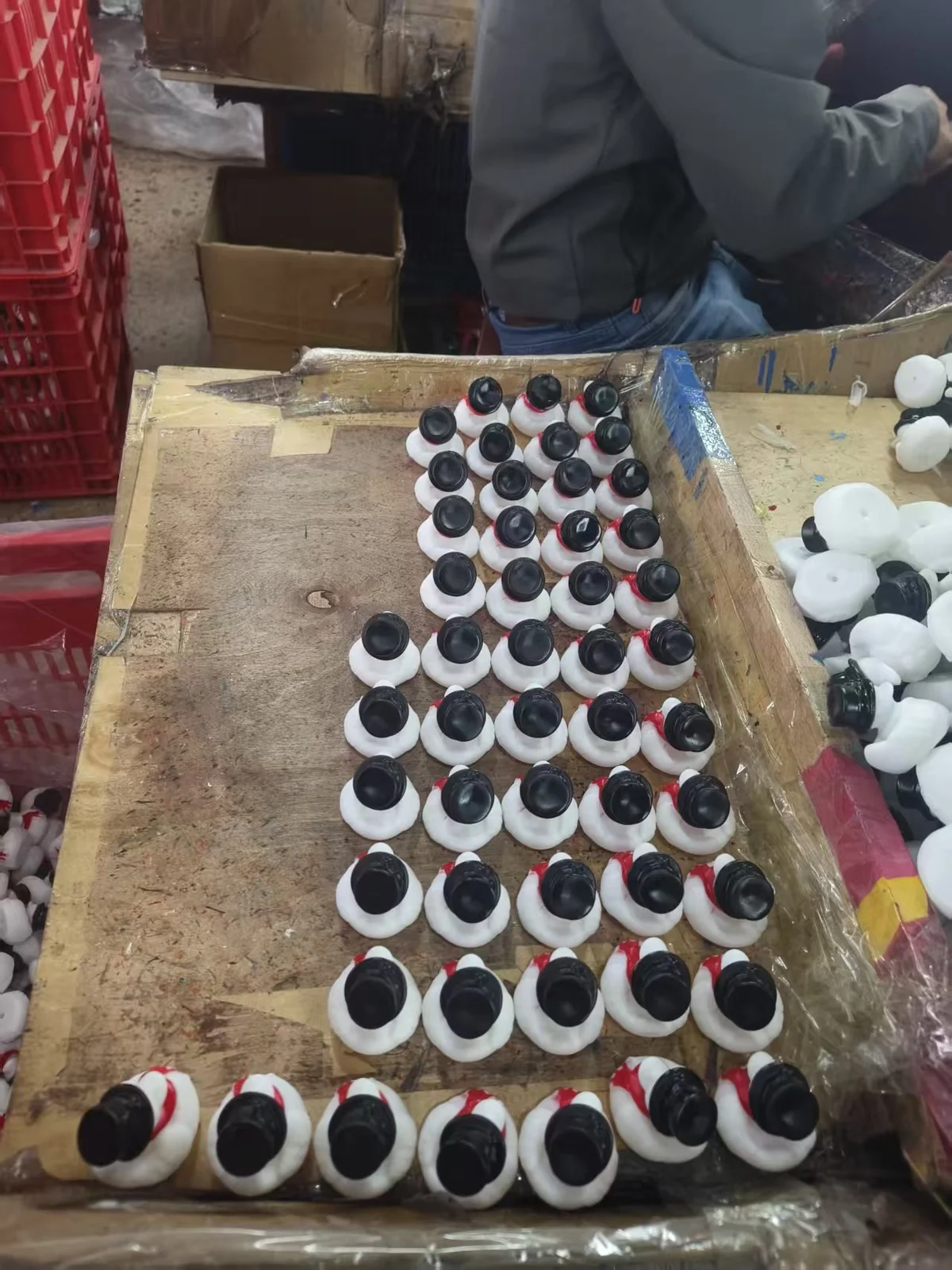
The print position, the seam and the colour as the line runs. A defect found inline is a process correction; a defect found at the end is a rework or a rejection.
The earlier the catch, the easier the fix.
What does final inspection verify?
The finished lot against the spec: the quantity, the packing, the print and the function. It uses an AQL sample — a defined number of units checked against a defect limit.
Every order passes four checkpoints: incoming material, first article, in-line inspection and final sampling. The defects screened for are sharp flash, air leaks, paint rub-off, deformation, colour mismatch, ink speckles, scratches, print misregistration and trims that come off; colour is judged against the approved sample. Above a 5% defective rate the batch goes back for sorting and replacement.
We do not run an AQL plan on rubber ducks; sampling is judged on leaks, colour rub-off and deformation instead. In practice 10 to 20 pieces are pulled from a bag and more than 10% of a carton, which on a 1,000-piece carton means 100 to 200 pieces or more, and the sampling record can travel with your order.
Final is the gate the lot must pass to ship.
Why do you need both?
Because they catch different failures. Inline catches a trend before it becomes the whole lot; final catches the lot that slipped through.
A final inspection alone finds the problem when it is too late for an easy fix.
What should the plan include?
- The checks: colour, print, seam, squeeze, float, packing.
- The AQL level and the sample size.
- Who inspects and where.
- What happens on a fail: rework, reject or a second sample.
A plan agreed before production is a shorter conversation than a claim after it.
Final Note
Inline is the pass that saves the run, and final is the pass that protects the shipment; an order with only one of them is guessing which failure it will get. I would write the checks, the AQL and the fail action into the plan before production starts. A plan agreed early is a shorter conversation than a claim later.
What should a buyer decide about inspection?
- Which defects are inline checks, and which wait for final?
- What AQL level and sample size apply?
- Who inspects, and where?
- What is the fail action: rework, reject or resample?
- Which report comes with the shipment?
Frequently Asked Questions
What is the difference between inline and final inspection?
Inline checks the product at the line and corrects the process; final checks the finished lot against an AQL before shipment. Inline is a control, final is a gate. Keep it early, check the line, book the pass, keep the report, plan the lot and check the line.
Do I need both for a duck order?
Yes. Inline catches a trend before it becomes the lot; final catches what slipped through. A final alone finds the problem when a fix is expensive. Keep the gate, check the sample, book the pass and ask for the report.
What is AQL in a duck inspection?
An acceptance quality limit: a sample size and a defect limit that the lot must meet. Agree the level, the sample and the checks before production. Check the sample, book the pass, keep the report, plan the lot and check the line.
Ready to plan the inspection?
Send the spec and the lot. We reply with the inline, the final and the report.
Figures are LZENGO QC data for 2026 and move with product, quantity and inspection.