Skip to content
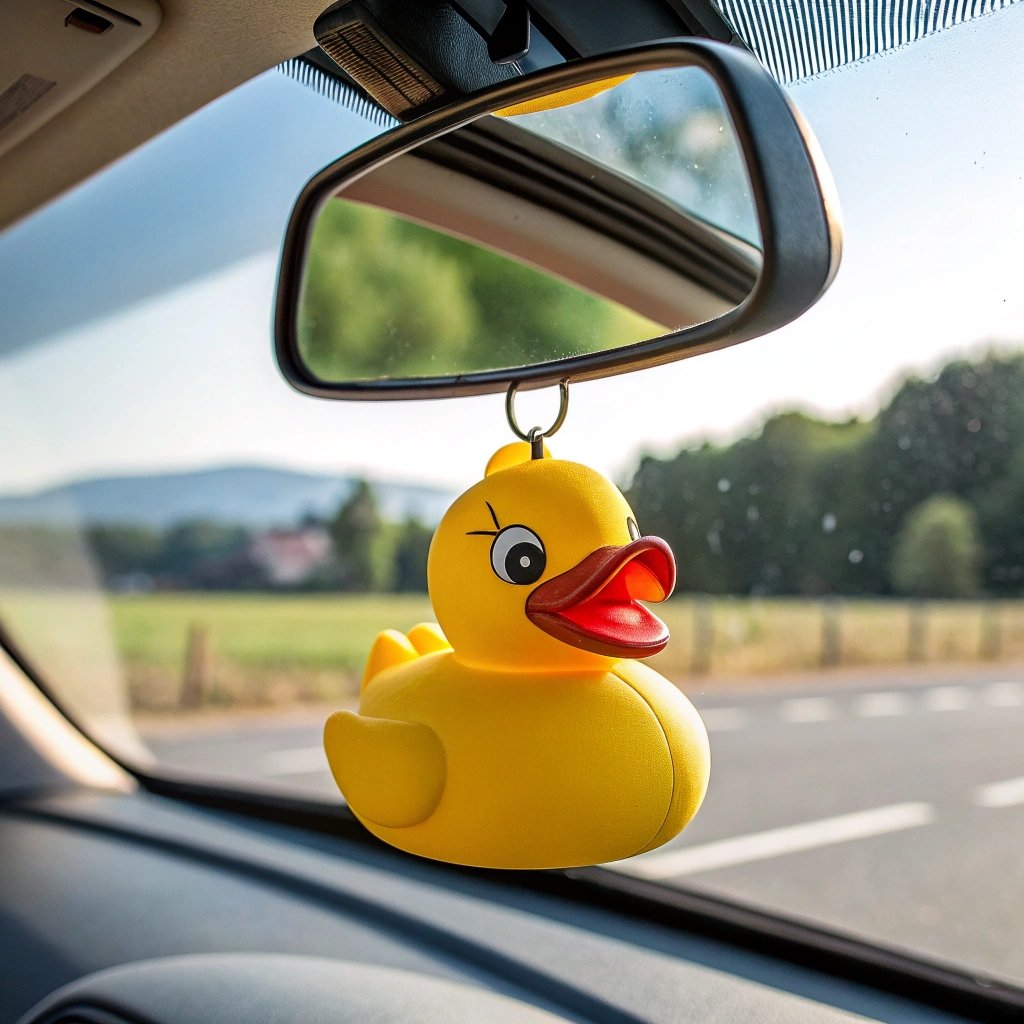
A duck left on a Jeep dashboard lives one of the hardest lives in the promotional-toy world: glass-magnified summer sun, dashboard surface temperatures that exceed ambient air by 20 to 30 degrees C, and daily thermal cycling from a parked rig to a moving one. Colors fade, vinyl stiffens, and the club duck that looked brilliant at the spring rally reads washed-out by August. Dash fade is not a defect, it is physics, and it is specifiable around: pigment choice, vinyl formulation and finish all move the lifespan. This guide explains what causes the fade, which specs hold up on a dashboard, and how clubs and brands should word the expectation.
The material conversation starts with the same vinyl chemistry documented in our custom duck materials overview, and the dashboard duty is a cousin of the outdoor questions in our finish and decoration guide, where surface treatments change how light attacks a duck.
What actually fades on a dashboard duck
Three mechanisms run in parallel. UV radiation breaks down pigment molecules, and it does so at very different rates per color: reds and oranges fade first because their pigments absorb the most energy in the damaging band, yellows hold longest, which is convenient for the classic duck. The intensity behind the damage is the same UV the EPA’s UV Index scale rates for skin, and a dashboard multiplies the dose: summer dash surfaces reach 60 to 80 degrees C in hot climates, softening vinyl surface chemistry and speeding the UV reaction. Thermal cycling adds the mechanical part, expanding and contracting the vinyl daily until surface micro-texture dulls what remains of the color. The visible result follows a predictable sequence: gloss dulls first, then reds and detail colors drift, then the body yellow pales at the sun-facing side while the shaded side stays true, the asymmetric fade that tells you the duck spent its life facing the windshield.
Specs that hold up: pigment, vinyl and finish
Pigment choice is the biggest lever. Automotive-grade and UV-stabilized pigment masterbatches exist for vinyl, and while no pigment is immune, stabilized formulations measurably outlast commodity colorants under the same exposure; ask what pigment grade the quote assumes, and treat a supplier who cannot answer as a supplier who has not tested. Vinyl formulation comes second: a properly plasticized, UV-stabilized compound stays flexible longer, while under-plasticized vinyl chalks and stiffens in heat. Finish comes third: matte and textured finishes hide the gloss loss that reads as fade, which is why our matte-finish programs photograph consistent for longer on dashboards. Decorations follow their own rules; the surface-treatment mechanics in our glitter and metallic guide explain why foil-flake surfaces lose sparkle before the body color loses hue.
| Spec lever | Dashboard effect | What to ask for |
|---|---|---|
| Pigment grade | Reds and oranges hold tone longer | UV-stabilized masterbatch, stated in quote |
| Vinyl compound | Flexibility survives heat cycling | UV-stabilized, correctly plasticized vinyl |
| Finish | Matte hides gloss loss | Matte or textured for dash-duty ducks |
| Decoration | Printed details fade before body | Molded-in detail for long-life programs |
Positioning and rotation: free fixes that work
Two zero-cost habits double a dashboard duck’s good looks. Position: the windshield-adjacent spot is the damage seat, with glass magnifying and instrument-panel heat rising from below; the passenger-side rear corner of the dash sees materially less dose. Rotation: a duck turned monthly fades evenly instead of one-sided, and even fade reads as patina while one-sided fade reads as neglect. Clubs running duck drops should tell recipients the truth that preserves goodwill: a dashboard duck is a consumable display item with a season or two of brilliance, and a glovebox rotation keeps it fresh, while the windowsill and shelf ducks at home stay perfect indefinitely.
How brands should word the expectation
UV fade is where promotional products earn complaints they do not deserve, and the fix is wording. Marketing copy that promises lasting color on a dashboard is a promise physics will break; copy that says “dash-duty formulation with UV-stabilized colors” sets the expectation the formulation can meet. For club merchandise programs, the honest spec sheet lists which colorways carry stabilized pigment, because a run of red-accent ducks will always age faster than yellow-body ducks under identical sun. That asymmetry is not a quality problem, it is chemistry, and saying so converts a complaint channel into a reorder channel, the same expectation-setting discipline documented in our custom vs generic duck comparison.

Our duck lines in the Jeep duck range quote pigment grade and finish explicitly, with mockups in 12 hours and samples in 7 days, so a dash-duty program is specified for its dashboard life, not just its unboxing moment.
Video: production reference
The clip shows volume toy production. The pigment and vinyl choices made at this stage are what a dashboard tests for its whole display life.
Frequently asked questions
Which duck colors fade fastest on a dashboard?
Reds and oranges, whose pigments absorb the most energy in the damaging band. Yellows hold longest, which is why classic yellow ducks age best. UV-stabilized pigments slow the process across every color.
Does dash fade mean a defect?
No. Glass-magnified sun and dashboard heat of 60-80 degrees C fade all vinyl eventually. Fade asymmetry toward the windshield side is normal physics, not a quality fault.
What spec should a dash-duty duck carry?
UV-stabilized pigment masterbatch, a correctly plasticized UV-stabilized vinyl compound, and a matte or textured finish that hides gloss loss, with molded-in detail over printed detail for long-life programs.
How should clubs explain fade to duck recipients?
Simply: a dashboard duck is a consumable display item with a season or two of brilliance. Rotating it to a shaded spot or the glovebox keeps it fresh, and window-side or shelf display keeps it perfect.