Skip to content
A duck’s eyes are its personality, and they are also the part of the toy most scrutinized by safety standards. Two ducks can share an identical body and feel like different products because of the face: one alive, one blank. Behind the aesthetics sit real engineering choices, how eyes are attached, what they are made of, and how they behave when a child twists, bites and soaks the toy, that determine both the look and the compliance file. This guide compares the three eye and facial-detail construction methods, explains the pull-force and small-parts logic testers apply, and tells buyers what to demand at sampling.
Three Ways Eyes and Facial Details Are Made
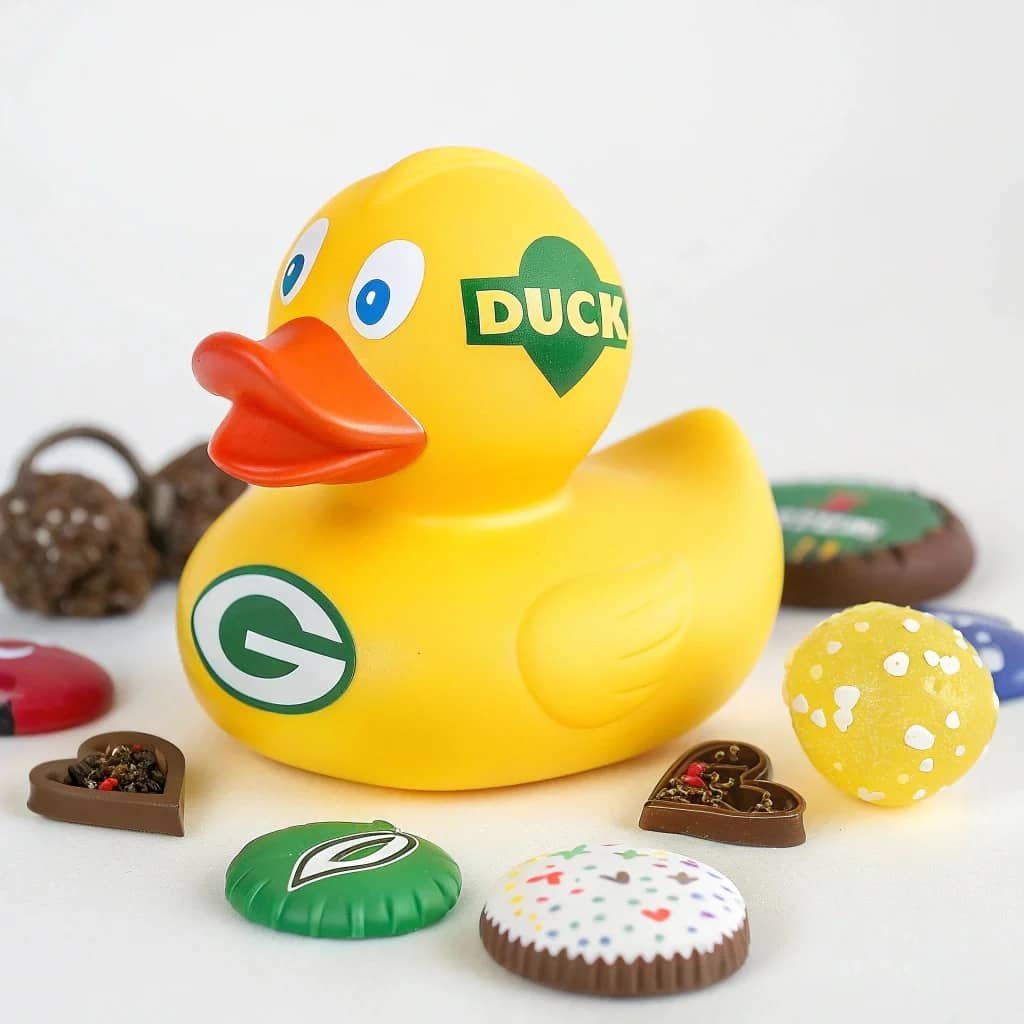
Molded-in eyes are part of the duck’s own body: a second material injected into the eye cavity during molding, or a recessed shape formed in the tool, so nothing can detach because there is nothing separate to detach. Bonded eyes, the classic moving “safety eye,” are a plastic dome with an anchor post fixed through the shell from inside, or glued domes on simpler builds. Printed eyes are applied to the surface like any pad-printed detail. Each sits at a different point on the trade-off curve: molded-in wins on safety and durability but caps detail to what the tool can hold; bonded domes give glossy depth and, with anchor posts, pass testing reliably while glue-only versions are where failures live; printing gives the finest graphics with zero detachable parts but can wear under heavy abrasion and biting.
How Testers Judge a Face
Toy safety standards treat facial elements as small parts with a simple question: can it come off, and would it fit in the small-parts cylinder that approximates a child’s airway. Bonded eyes face defined pull-force tests, the eye is gripped and loaded with a hook gauge at a specified force, and it must stay anchored; seams near eyes get probed for hooks and sharp edges; and printed or painted facial detail falls under heavy-metal and chemical migration limits because mouths land there first. The standards behind these tests are the usual toy-family documents, EN 71 in Europe and ASTM F963, published by ASTM International in the US, which our duck durability and standards overview places in program context. Buyers do not need to run the labs themselves, but they do need to know which construction the factory quoted, because the constructions test differently.
Matching Construction to Audience
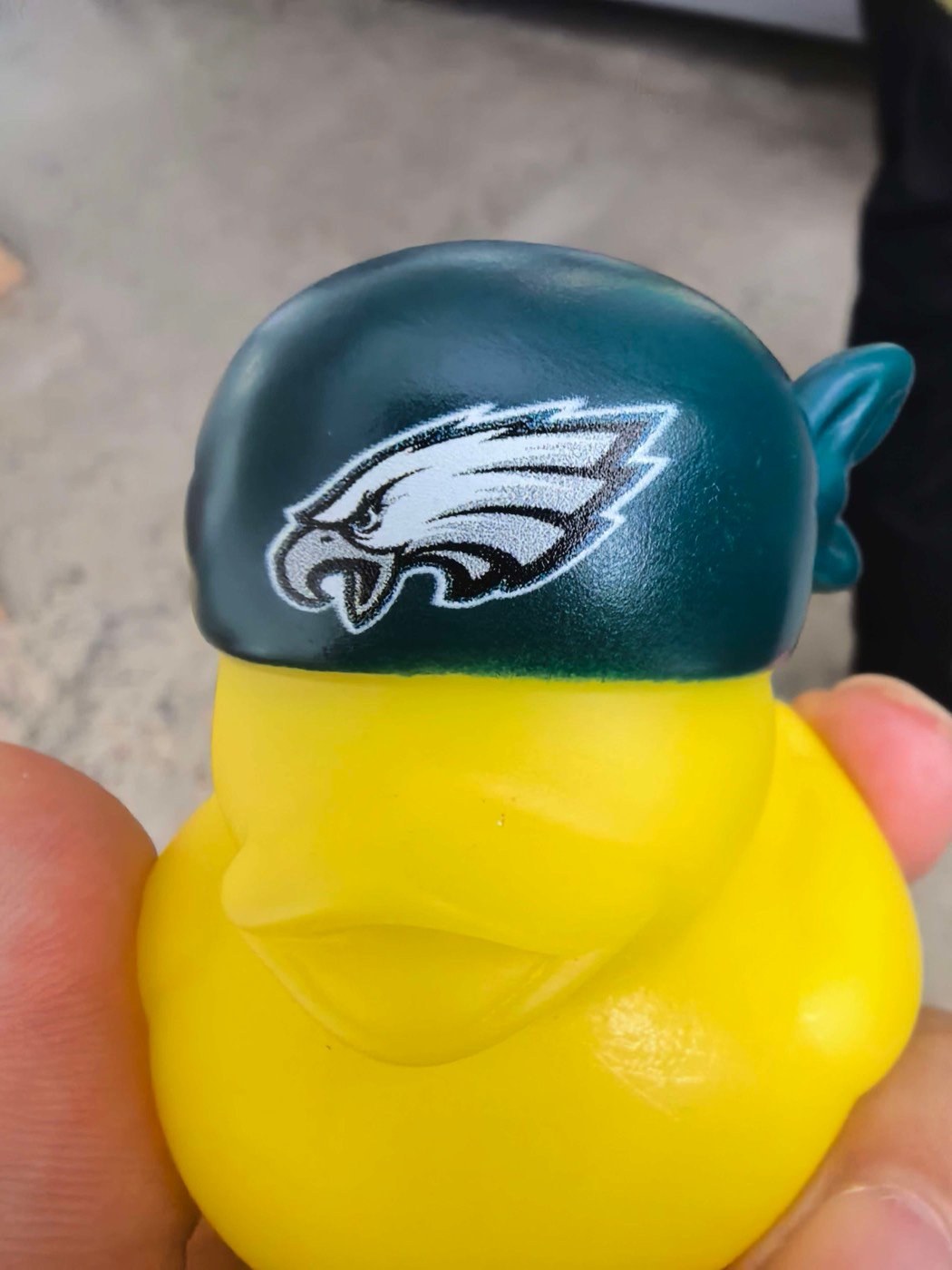
The right face depends on who holds the duck. Programs aimed at children under three, bath programs, pediatric clinics, early-learning giveaways, should default to molded-in or anchor-posted eyes with printed detail kept minimal and compliant, because the under-three regime has no tolerance for small-parts ambiguity. Corporate gifting, retail merch aimed at adults, and event collectibles can use bonded dome eyes and richer printed faces for depth, since the small-parts regime relaxes for products clearly intended for older users. Jeep ducking ducks live on dashboards and in giveaways to strangers, which makes the family-safe default wise anyway, a positioning we cover in the kid-safe ducking guide. When the same design serves mixed audiences, the safest and cheapest pattern is one mold, two decoration specs.
What to Demand at Sampling
Four asks at the sample stage close most facial-detail risks. Declare the construction: molded, anchor-posted, glued, or printed, in writing on the quote. Pull-test the sample yourself: grip each eye and facial element hard enough to deform the body and see what loosens, then require the factory’s own pull results on production-intent parts, not just on the sample. Check the seams around bonded elements for sharp posts or flash. And confirm the chemical file for printed faces, because paint chemistry is regulated where mouths go; the documentation set mirrors what we outline in the duck safety testing guide. Buyers who want face-depth upgrades can compare decoration routes, printed versus painted, through the custom duck development process, and for gift-grade finishes around the face, the material and finish options on the product development page list what each construction costs.
Video: Safety and Compliance Basics
FAQ
Are glued eyes safe on rubber ducks?
Glue-only eyes are the weak point of the three constructions and the first to fail pull testing. For any program where children may handle the duck, insist on molded-in eyes or anchor-posted domes, and ask for the factory’s pull results.
What pull force do safety eyes have to withstand?
Toy standards define hook-gauge pull tests at specified loads for eyes and attached components. The exact figure depends on the standard and age grade named in your specification, which is why the spec should name the standard, not just say tested safe.
Do printed faces wear off?
Quality-cured prints survive normal handling and washing, but heavy biting and abrasion can wear them. For under-three programs, printed faces are fine as decoration but should not be the only structure, since molded or posted eyes carry the safety role.
Can one duck design serve both kids and adults?
Yes: one body mold with two decoration specs, a compliant molded-eye version for child-facing programs and a glossier bonded-eye or printed version for adult merch. The mold is shared; the compliance file is not.