Skip to content

Trade show booths compete for two scarce resources: foot traffic during the show and memory after it. Most giveaways fail at both, pens vanish into the bottom of a badge bag, brochures go straight to the hotel bin, and stress balls join a desk graveyard with a dozen identical balls. A themed booth duck attacks both failures at once, because it is strange enough to start a conversation at the booth and charming enough to survive on a desk for months. This article explains how exhibitors build duck giveaways that pay for themselves, from the collectible mechanic to the badge-scan tie-in and the ordering math.
Why the Booth Duck Gets Scanned Twice
The collectible mechanic is the engine. When a booth gives one duck per scanned badge, visitors who want the duck engage with the scanner, and visitors who engaged tell colleagues to come find the duck, which is word-of-mouth traffic money cannot buy at a show. The second scan happens when attendees collect across days: multi-day expos reward repeat visits, and a different duck per day, day one in the logo shirt, day two in the conference hoodie, turns a giveaway into a mini collection hunt. Exhibition research supports the underlying principle that giveaways drive booth engagement when they are exclusive to the show; the Center for Exhibition Industry Research studies how attendee behavior responds to booth tactics, and exhibitors consistently report that scarce, themed items outdraw generic handouts. Concert promoters discovered the same effect earlier, as our piece on ducks as concert promotional items describes, and the trade show floor behaves like a concert crowd with badges.
Designing the Booth-Only Duck
Three design decisions separate a collectible from clutter. First, theme to the show or the city rather than the logo: an industry mascot, a local landmark duck, a duck wearing the conference’s own color scheme gives attendees a reason to want this specific duck. Second, keep branding on the base or prop rather than the whole body, so the duck reads as a keepsake first and an advertisement second, the same balance that makes branded ducks work in other channels. Third, plan the series: exhibitors who run a three-duck series across a show create completists, and completists visit every booth session, which compounds the badge-scan mechanic. Production supports these choices cheaply at scale, since outfit and print changes ride on the same body mold, and the extra development cost of a series is small relative to the booth budget it defends. Teams running series should also photograph each day duck and post the next morning, so the collection chase continues on the show app and social channels overnight.

The Ordering Math for a Show Run
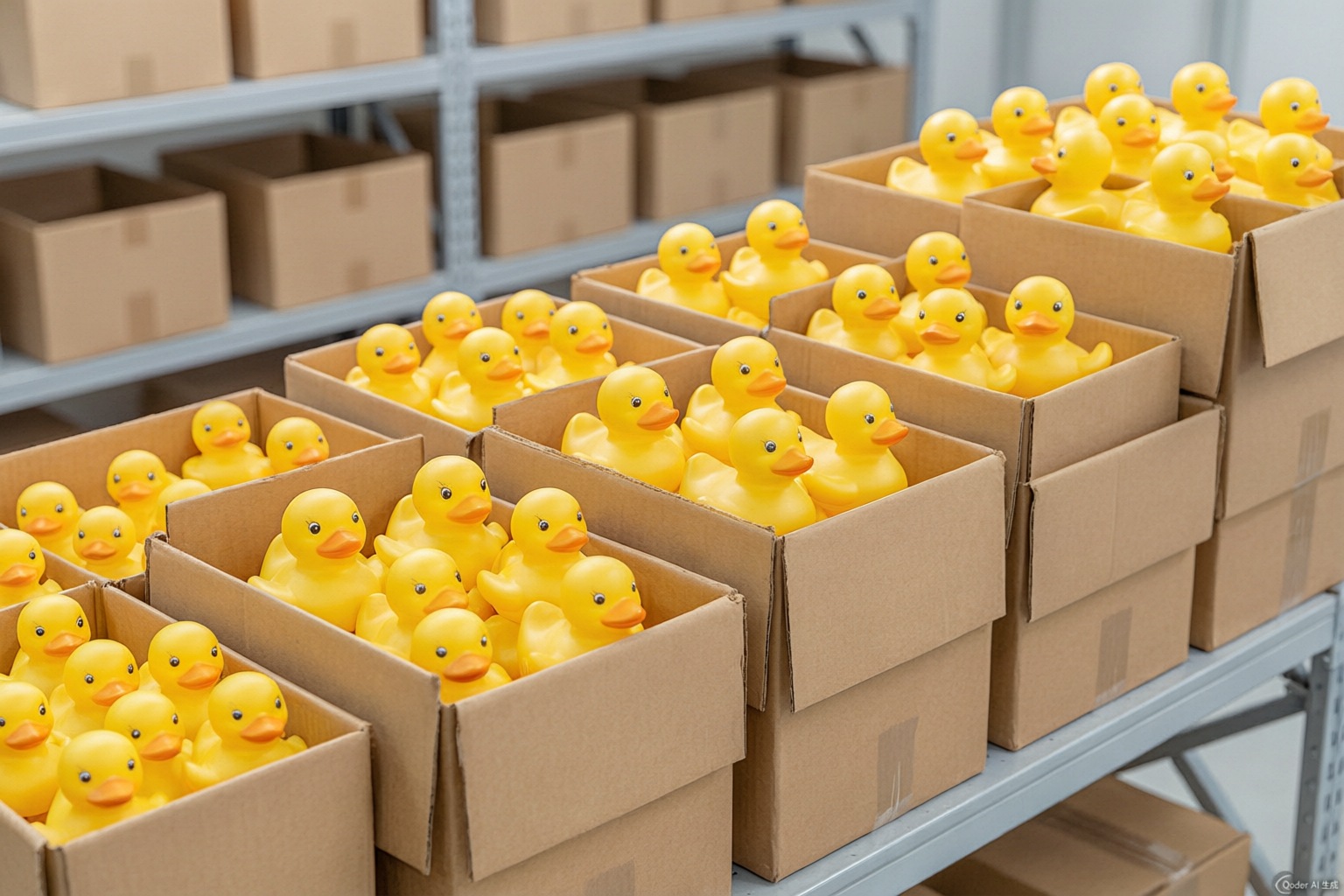
Trade show runs are volume plays with a service timeline built for expo deadlines. Custom designs carry a 1,000-piece minimum, which fits a serious booth program, and unit economics improve further on bulk orders of a single design. The service chain runs: mockup within 12 hours of artwork, samples in about 7 days, then production against the show calendar, with capacity above five million units monthly meaning an expo deadline is a scheduling question rather than a capacity risk. Shipping deserves a line in the plan, ducks for a domestic show can go straight to the venue or the office, while international exhibitors route through our global shipping service with customs paperwork handled at origin. Exhibitors should order against scanned-badge projections from prior shows plus a margin for the duck’s own viral effect, because running out on day two is the one failure mode worse than not exhibiting. A practical buffer holds back a tenth of the order at the office: the booth crew restocks between mornings, and the post-show mailer campaign uses the remainder on warm leads who visited but left empty-handed, extending the giveaway into the sales cycle where it actually converts.
Measuring What the Ducks Return
The booth duck is measurable. Compare scanned badges on duck days versus control days, count demo requests that mention the duck, and track LinkedIn posts from attendees displaying their collection, each post is earned media with the brand attached. Teams that tie the duck to a demo-booking mechanic, the duck is reserved for visitors who complete the demo, convert giveaway traffic into pipeline directly, and the cost per booked demo usually lands well below the show’s average cost per lead. That arithmetic, not the duck’s charm, is the argument that survives the CFO.
FAQ
How do booth ducks drive badge scans?
One duck per scanned badge, a different duck each show day, and word spreads on the floor. Attendees who want the collection return and bring colleagues.
What is the minimum order for a custom booth duck?
1,000 pieces per design, with better unit pricing on larger bulk runs of a single body and outfit.
How fast can ducks be produced before a show?
Mockups within 12 hours, samples in about 7 days, then production scheduled against the expo date from lines running millions of units monthly.
Should the duck carry the logo everywhere?
No. Branding on the base or prop keeps the duck a keepsake first; full-logo bodies read as advertising and get left behind.
How do we measure the duck’s return?
Compare scans on duck days, track demo requests mentioning the duck, and count attendee posts showing the collection as earned media.
Video: Trade Show Giveaway Strategy
Planning a booth collectible for the next expo? Get a mockup through the bulk rubber ducks program and keep the show date in control.