Skip to content
Every brand manager who orders custom ducks meets the same moment: the sample arrives next to the Pantone swatch, and the color is close but not quite the brand color. The gap is rarely carelessness. Matching a printed reference onto a molded PVC body crosses materials, processes and lighting, and each step bends the color a little. Understanding why the shift happens turns color from a frustration into a managed specification. This article explains how color travels from swatch book to duck, where the drift enters, and the approval process that gets the production batch to match the brand.
Why a Pantone Number Does Not Directly Translate
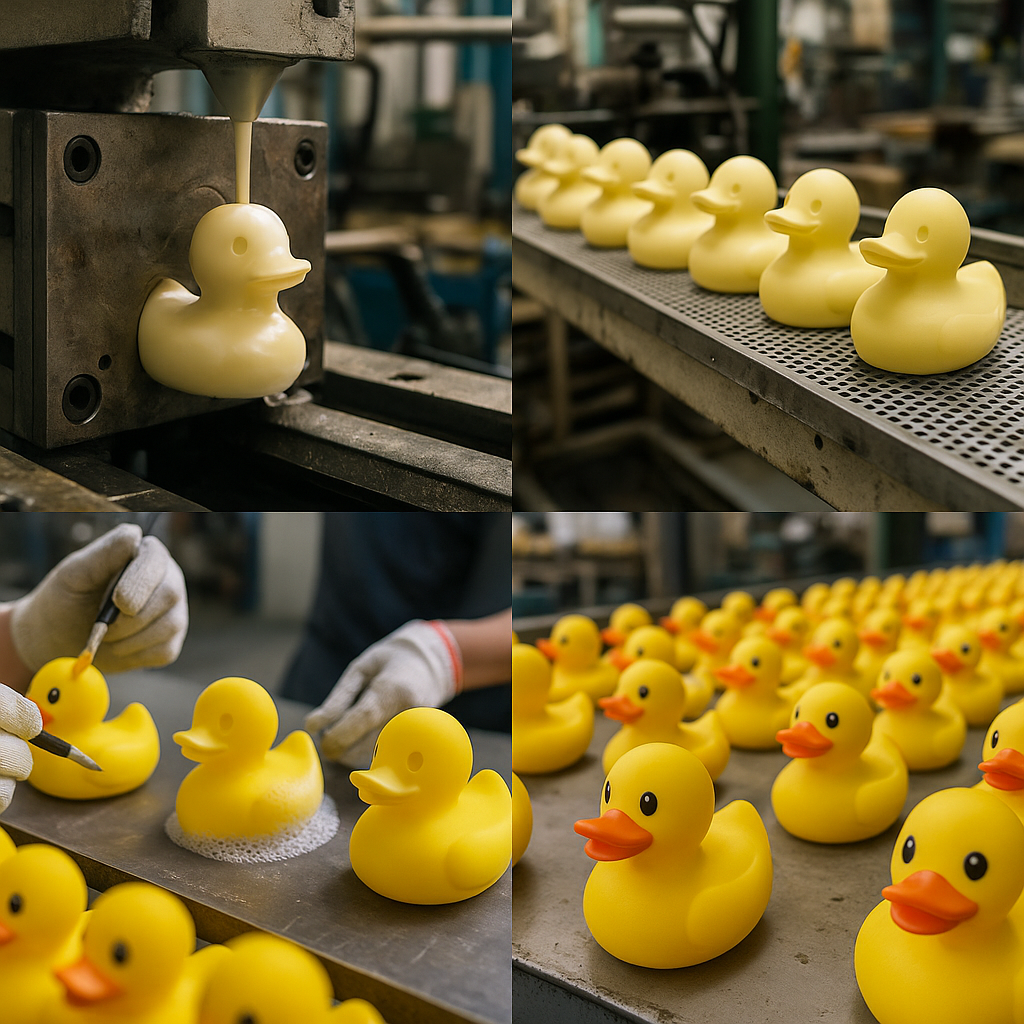
Pantone systems are built around ink on paper and textile standards, while a duck is pigmented PVC formed in a mold, and the two worlds do not share a direct dictionary. Three physical factors bend the color. Base material: PVC carries a natural tint and translucency, so the same pigment recipe reads differently on a duck than on paper. Surface geometry: a glossy curved body reflects light across angles, making the same color look lighter on a curved flank than on a flat swatch. And process: rotocast bodies, sprayed finishes and hand-painted details each deposit color differently, so a duck is often a sandwich of body tint plus surface coat, and every layer shifts the perceived result. Color professionals manage this with measured matching rather than visual guesswork; instrument-based matching against physical standards is standard practice in the color industry Pantone itself serves, as the Pantone color institute materials explain in their guidance on physical versus digital color.
The Master Sample Beats the Swatch Book
The fix for drift is to change what gets approved. Instead of approving against the paper swatch, factories produce a color master, a physical duck or body pellet colored to the target, signed off by the buyer, and kept as the production reference. Every batch is then compared against the master under defined lighting, and the master becomes the contract document that both sides trust. Our production process runs exactly this chain: the 12-hour mockup confirms the design, then color masters are produced and approved before the mold starts, and repeat orders are matched against the stored master rather than reinterpreted from a Pantone number. Buyers who keep their own half of the master pair protect themselves across years of reorders, and our quality assurance workflow for brand campaign ducks builds on the same master-sample discipline.
Where Drift Enters in Production
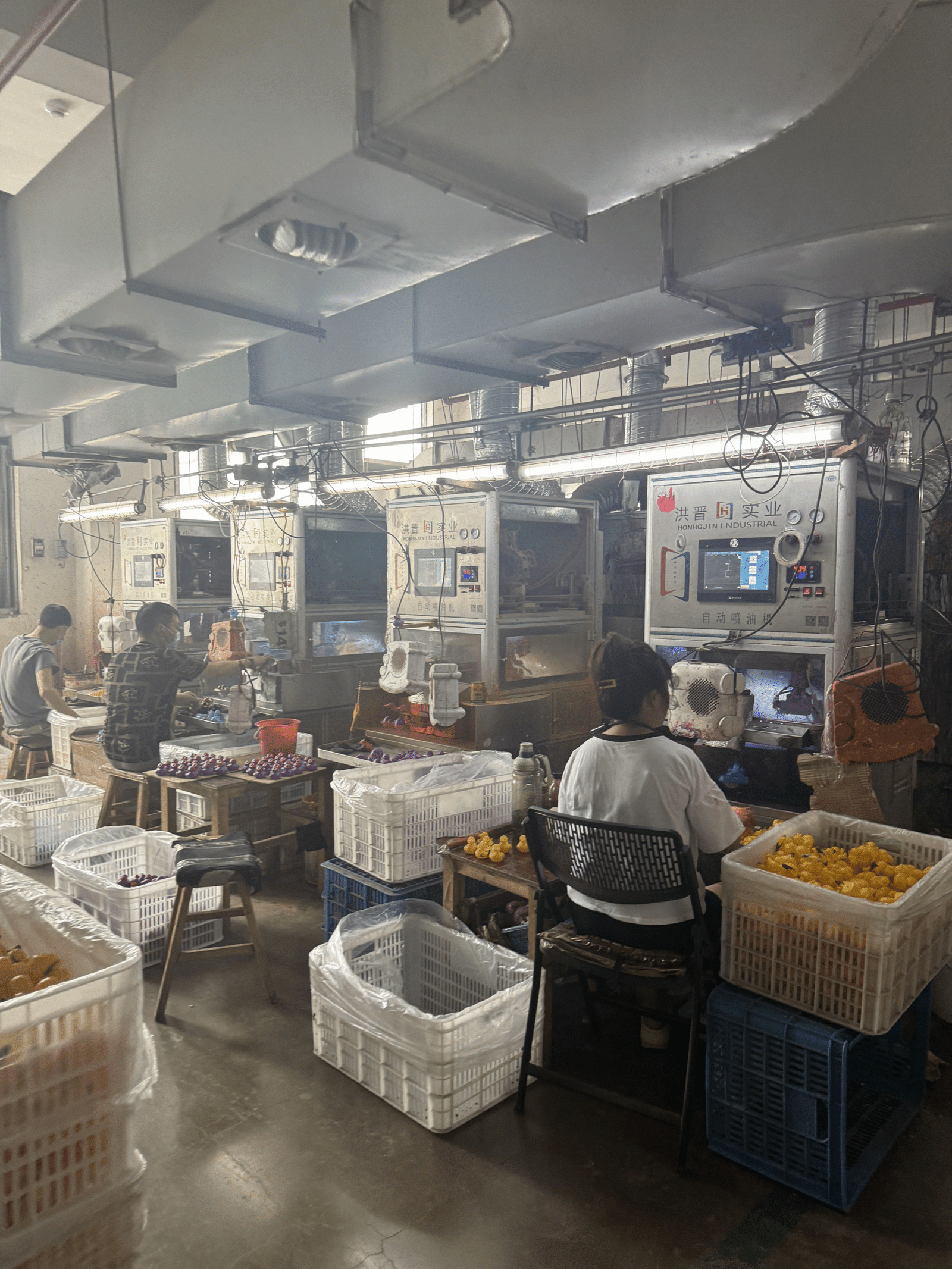
Even with a master, production color is a control problem. Pigment lots vary between suppliers, so the factory qualifications pigment against the master rather than trusting the bag label. Mixing ratios drift when operators work by feel, which is why weighing procedures exist at the color kitchen. Cure temperature shifts finished tone on some pigments, reds being famously sensitive. And metamerism, the effect where two colors match under one light and split under another, means a body matched in the workshop can look wrong under retail lighting, which is why final checks happen in a standard light booth rather than by a window. A factory that controls these four variables delivers the same color in month twelve as in week one, and our material guides on duck materials explain where base-material choice adds another variable to the equation.
The Approval Path That Ends Color Arguments
The working approval path has four steps, and each produces a document. Mockup: a digital rendering that confirms the design intent, delivered within 12 hours of artwork. Color master: physical samples colored to the target, approved with signature and date. Pre-production sample: a full duck in final materials and finish, checked in a light booth against the master. Batch audit: production runs checked against the master at agreed intervals, with retained samples per lot. Buyers who run this path end the classic color argument before it starts, because the question at delivery is never what the color should be, only whether the batch matches the signed master. That is the difference between buying a color and hoping for one. It also gives brand teams a paper trail worth having: the signed master, the batch audit records and the retained samples together prove the delivered color matches the approved color, which matters when a campaign spans factories, seasons or a refresh of the artwork halfway through the year.
FAQ
Why does my duck not match the Pantone swatch?
Pantone references are built for ink on paper; molded PVC adds base tint, curved-surface reflection and process layers that shift the same recipe. Physical masters close the gap.
What is a color master sample?
A physical duck or pellet colored to the target, approved in writing and kept by both sides as the production reference. Repeat orders match against it instead of reinterpreting a number.
Why does the color look different under store lighting?
Metamerism: two colors can match under one light and split under another. Final approval happens in a standard light booth, not by a window.
How are repeat orders kept the same color?
The factory re-quals pigments against the stored master per lot, weighs mixes rather than eyeballing them, and audits batches at intervals with retained samples.
How long does the color approval step take?
The digital mockup arrives within 12 hours of artwork; master samples follow before tooling, then pre-production samples complete the chain before bulk runs.
Video: Instrument Color Matching in Plastics
Getting brand colors right on a custom duck? Start through the product development service, where the mockup and color master chain is standard on every program.
Related reading: Masterbatch and UV Stabilisers in PVC Ducks: Colour That Survives
Related reading: Licensed Character Ducks: What Buyers Must Confirm Before Moulding