Skip to content
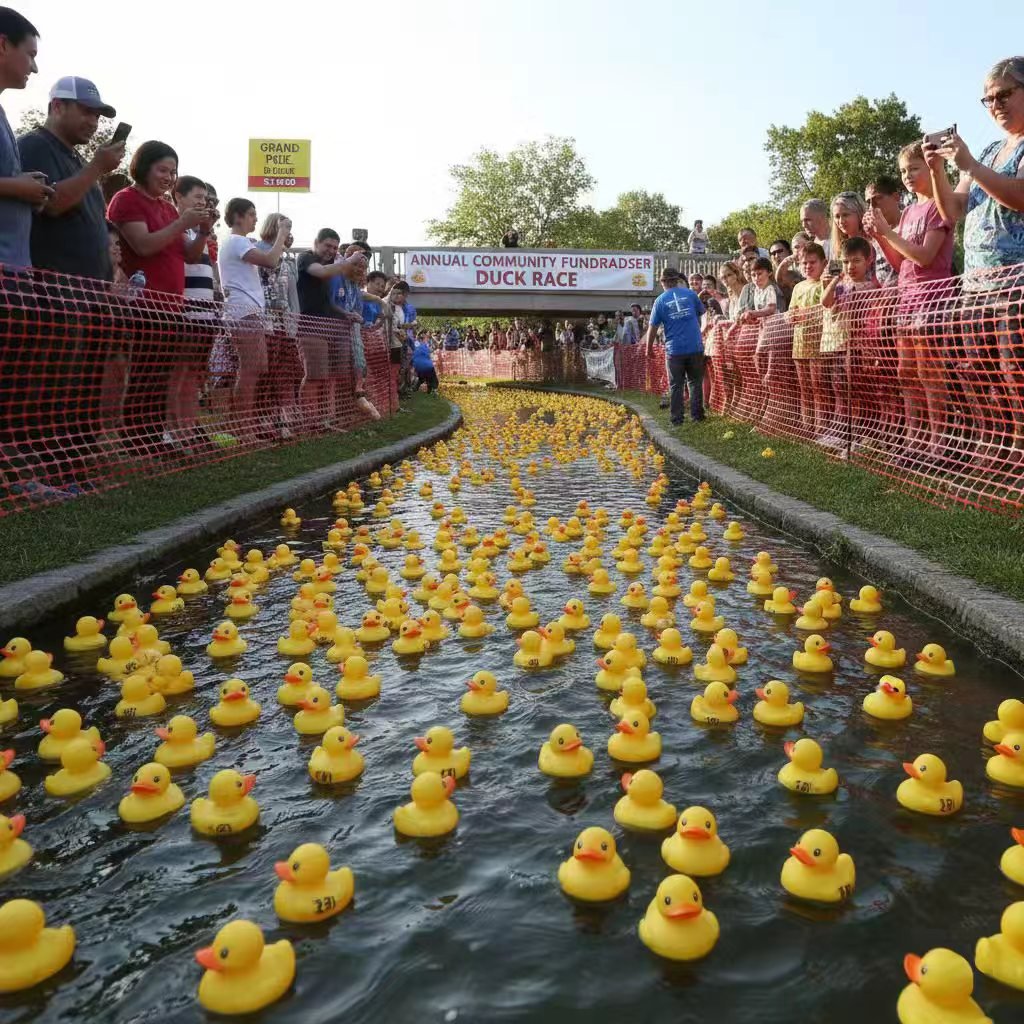
A rubber duck race is the rare fundraiser where the product is the event: thousands of numbered ducks hit the water, a crowd adopts them in advance, and the first few over the line win prizes. Clubs and nonprofits run them on riverfronts, canals and firehouse ponds every year, and the difference between a profit and a soggy headache is almost always arithmetic done early. This guide walks the numbers from duck count to bank deposit.
The Economics in One Page
The model is adoption sales: supporters buy numbered duck adoptions, typically ten to twenty dollars each, and only a fraction of ducks need to be sold for the event to clear its costs. The three cost blocks are ducks, waterway and permits, and prizes. Wholesale duck pricing moves with quantity, which is why established races standardize on recurring counts; a first-year race commonly starts around two thousand ducks and established events run far higher, like the thousands-per-race derbies charities publicize. The margin math that matters: adoption revenue minus duck cost, permits, insurance and prizes, with corporate sponsors covering the fixed blocks so adoption revenue stays profit. Our event giveaway planning shares the quantity-tier logic, and bulk tiering for volume orders is laid out in our wholesale pricing guide for buyers comparing tiers. Insurance brokers who cover festivals quote duck races routinely, and bundling the event onto an existing annual policy is usually cheaper than a standalone binder.
Ducks, Numbering and Sponsor Branding
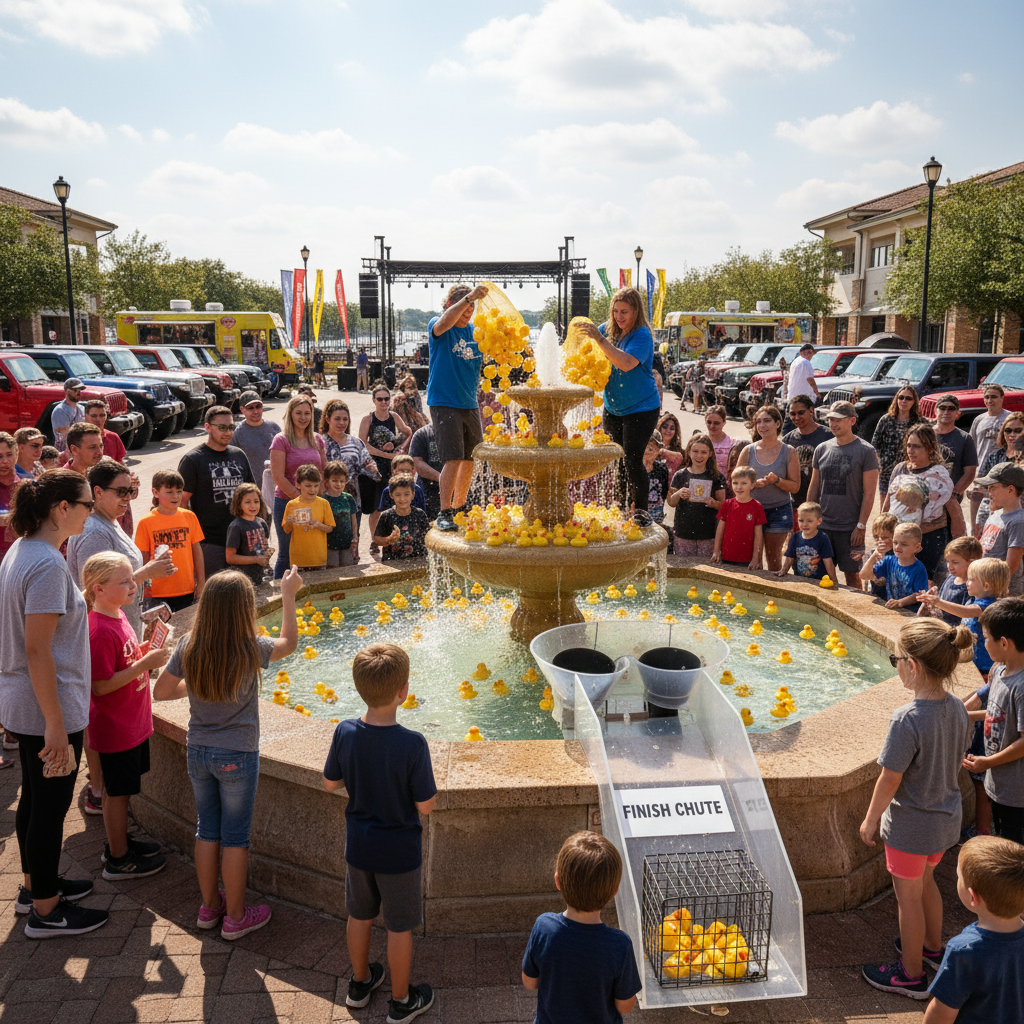
Race ducks are a specific product brief. They need to float upright, survive a waterway without shedding paint, and carry a number that matches your adoption ledger; permanent markings such as molded-in or engraved numbers outperform stickers at race scale. Sponsor logos turn the flock into a funding tool: presenting sponsors take a branded duck color or a printed side, and races commonly mix a plain field with branded lead ducks. Material matters for the waterway too, since compliant vinyl is the same conversation as any toy distributed to families, and public events put ducks into children’s hands afterward by design. Standards bodies such as ASTM International publish the toy safety framework that event ducks are judged against, which is the same compliance file our custom duck factory ships with campaign orders. Recovery is the last spec: races that plan netting at the finish line and bottom retrieval recover their flock; races that improvise donate ducks to the river. Numbering needs a plan as well: sequential ranges matched to the adoption ledger, with duplicate-number checks at packing, because a race that draws an unsold number hands out an awkward prize and a refund question.
Permits, Waterways and Insurance
The unglamorous half of duck racing decides whether the event happens. Moving water requires permission from whoever controls it, a parks department, a river authority or a drainage district, and permits ask for event dates, course maps, recovery plans and sometimes water quality assurances about what will be in the water. Insurance follows the venue’s requirements, typically general liability naming the authority as additional insured. Races with gambling-style mechanics hit another layer: several jurisdictions treat paid-adoption races as raffles or games of chance, which pulls in charity gaming registration, so the adoption paperwork should be drafted with that in mind. None of this is hard; all of it takes weeks, so the permit calendar belongs at the front of the project plan, not the week before. Experienced race organizers start paperwork two seasons ahead for big waterways.
Running the Race and the Books
Operationally the event compresses into a morning: pre-race duck loading with numbered assignments logged, the drop, the current doing its work, finish-line netting, and the prize drawing from the recorded finishers. Two habits separate professional races from chaotic ones. Reconcile adoptions to ducks the day before, because a number drawn that was never sold is an awkward prize announcement. And close the financial loop fast: sponsor invoices, duck costs against the tier you actually ordered, permit fees and prize costs into a single post-event report, because sponsors renew on transparency. Groups that race annually buy their ducks on a repeating schedule against the FTC business guidance on charity marketing claims, keeping adoption language accurate, and their reorder conversations with the factory become ten-minute confirmations at the same tier, same numbering, same lead time. Photograph the drop from the same bridge every year; the before-and-after of the same waterway is the social post sponsors renew on.
FAQ
How many ducks does a first race need?
Common first-year counts start around two thousand, sized so the adoption goal is reachable by the local community at ten to twenty dollars per adoption.
How are race ducks numbered?
With permanent marking such as molded-in or engraved numbers that match the adoption ledger; stickers do not survive the waterway.
Do duck races need permits?
Almost always: waterway permission from the controlling authority, general liability insurance, and in some jurisdictions charity gaming registration for paid adoptions.
What happens to the ducks after the race?
Planned events net the finish line and retrieve the flock for reuse or cleaning and distribution; recovery planning belongs in the permit application.
Video: More Than 4,000 Rubber Ducks Race in a Duck Derby Fundraiser
Planning a derby season? Our bulk rubber duck program quotes race-tier pricing with permanent numbering and compliant vinyl, sized to your adoption goal.