Skip to content
A custom duck program has two doors into the physical world: a 3D-printed prototype, which turns a drawing into a model in days without tooling, and a molded sample, which comes out of the actual production process weeks later. Buyers often treat them as interchangeable previews and then learn they answer different questions. The printed prototype answers “is this the shape we mean?”; the molded sample answers “is this the product the customer will hold?”. Programs that use each door for its own question move faster and spend less; programs that skip the molded sample and jump from print to production inherit every surprise the molding process was going to reveal.
What a 3D-Printed Prototype Is For
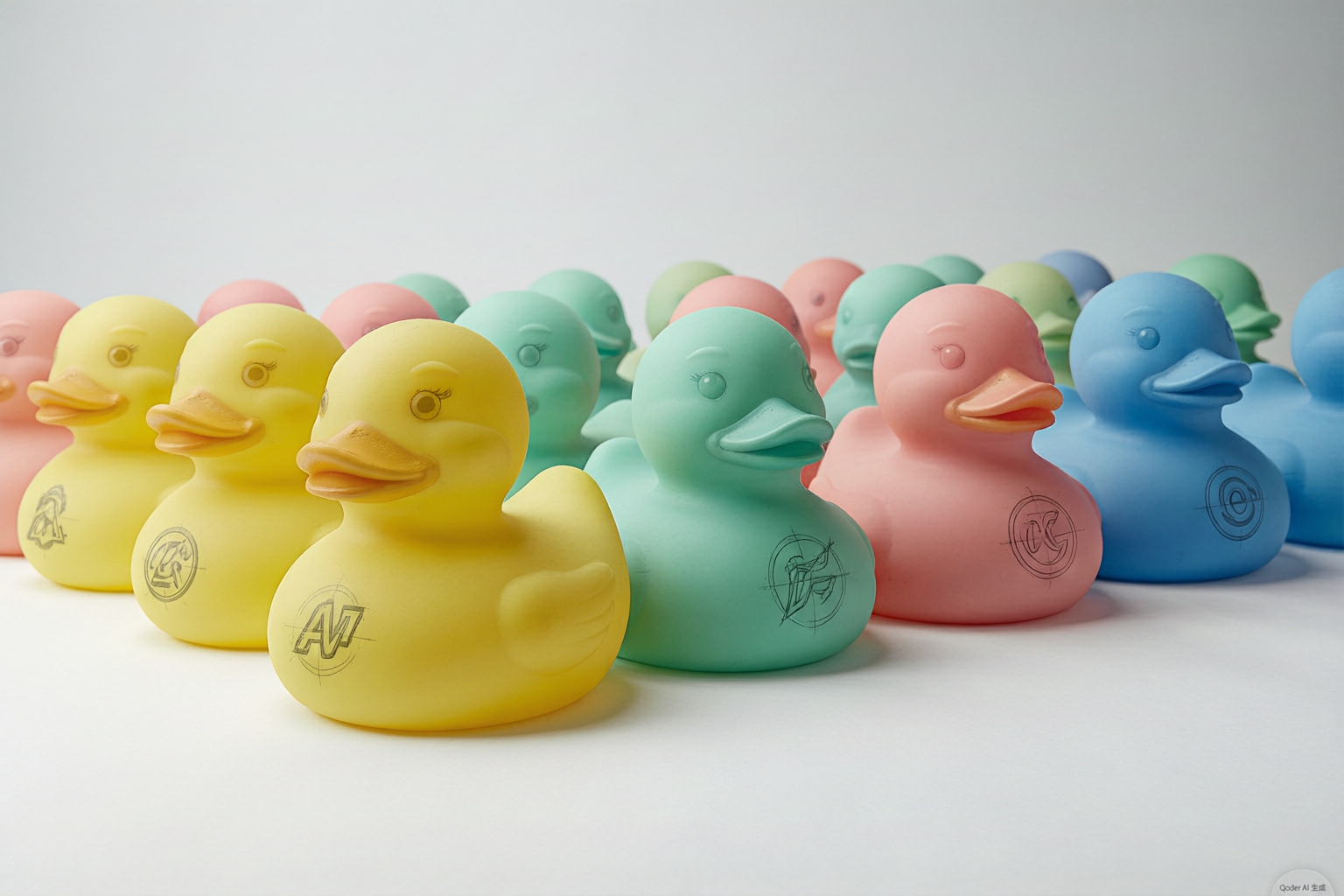
Printed prototypes shine in the design conversation. A sculpt rendered in resin or PLA in hand beats a rendering on screen for judging proportion, beak angle, hat size and mascot likeness, and revisions cost a reprint, not a tooling change. Our mockup-to-prototype flow runs at 12 hours for the mockup and days for the print, which means a brand committee can review three sculpt directions in the same week a traditional process would still be emailing drawings. The standard the additive industry itself uses for terminology and process control is maintained by ASTM Committee F42 on additive manufacturing, and the practical takeaway for buyers is simpler: ask what the prototype material is, because a brittle resin print will snap where the PVC duck would flex, and the print is a shape reference, not a durability test.
Printed prototypes also carry limits that matter at duck scale. Wall thickness, hollow interiors and the squeeze qualities of soft PVC do not translate; a print cannot tell you how the duck squeaks, squashes, floats or survives a toddler.
What the Molded Sample Proves
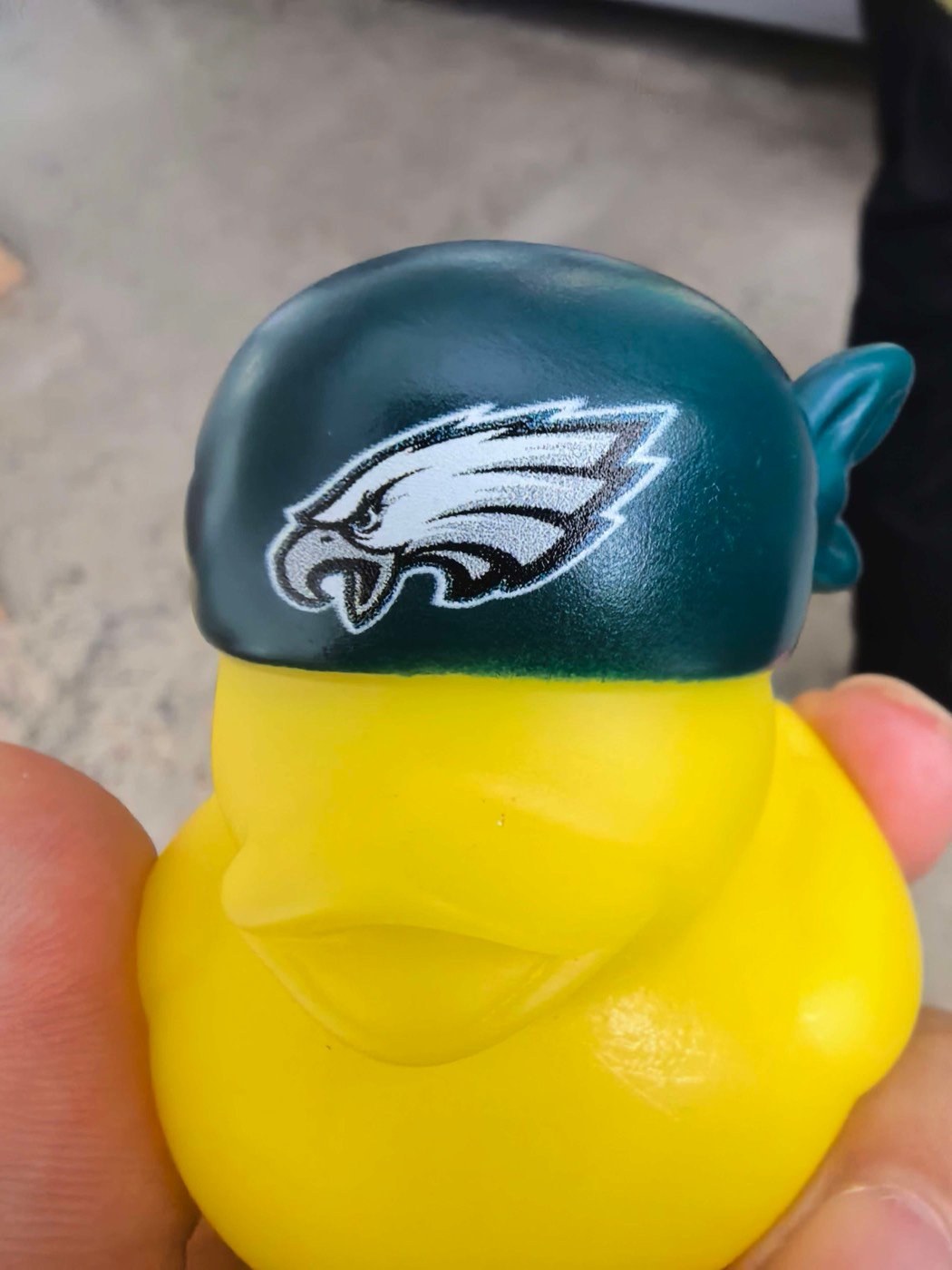
The molded sample is production’s dress rehearsal: the actual PVC compound, the actual tool, the actual printing or hand-paint process, the actual assembly of squeaker and washer. It answers the questions the print cannot: how seams and parting lines land on the design, how the printed logo survives the surface texture, what the color reads like in mass tone rather than a Pantone chip, how the duck balances in water, and whether the squeeze and sound feel right in hand. In our process the molded sample rides on pilot tooling or, for full custom sculpts, on the cut production tool before the run is scheduled, which is why it costs more and takes longer, roughly a week in the 3-to-5-day rapid lane or the standard 7-day sample cycle depending on tooling state, and why it is non-negotiable for branded programs.
The color lesson alone justifies it: Pantone matching on PVC is its own discipline, covered in our Pantone matching guide, because the same formula reads differently across glossy, matte and textured surfaces. The printed chip and the molded duck are different objects; approvals happen on the object.
The Sequencing That Works
The efficient program runs print, then mold, then run. Print prototypes settle the sculpt and the design committee; tooling cuts only after the sculpt is signed off; the molded sample validates production reality; the run starts against the approved golden sample. Every attempt to skip a stage moves its cost downstream: skipping the print means tooling changes for design issues, the most expensive kind; skipping the molded sample means finding seam or color issues in shipped goods after they ship, the most public kind. The one legitimate shortcut is a molded sample from existing tooling, when a brand adapts an existing duck body with printed or accessory customization, the tool already exists, so the molded sample arrives in the rapid lane and the printed prototype becomes optional.
Cost and Timeline, Side by Side
Printed prototypes run from days at low cost, no tooling involved, and revisions iterate at reprint speed. Molded samples carry tooling economics: adapting an existing body keeps sampling in the 3-to-5-day rapid window at sample cost, while a full custom sculpt adds tooling time of one to two weeks plus the tool fee, amortized into unit pricing at volume. On a 10,000-piece branded program, the tool fee usually lands at a few percentage points of order value, and the molded-sample stage that rides on it is the cheapest insurance in the program. The full sequence from mockup to shipment is mapped in our production run timeline, including the approval gates where buyer sign-off is required before money moves.
Frequently Asked Questions
Can I skip the 3D print and go straight to a molded sample?
Yes, when adapting an existing duck body with printed or accessory customization: the tool exists, so the molded sample arrives in the rapid lane. Full custom sculpts benefit from prints first, because tool changes for design issues are the expensive kind.
Why does the molded sample look different from the print?
Because it is the product: PVC compound, mold seams, surface texture and mass-tone color all differ from a resin print. Approvals should happen on the molded object, never on the print.
How long does each stage take?
Prints run in days from the 12-hour mockup; molded samples on existing tooling run 3 to 5 days, full custom sculpts add 1 to 2 weeks of tooling before the 7-day sample cycle.
Does the 3D print test durability?
No. Print materials are rigid resins; the duck’s flex, squeeze, squeak and float behavior only shows in molded PVC. Treat prints as shape references.
Start your custom duck with the right door: send artwork for a 12-hour mockup and a sampling plan that sequences print, mold and run, via the custom ducks page.
Related reading: Duck Mould Tooling: What a Cavity Costs and How a Tool Wears
Related reading: Multi-Colour Rubber Ducks: How Colour Is Split in the Mould