Skip to content
The rubber duck crossed from bath toy to pop culture object decades ago, and the crossing left a trail any merchandise buyer can learn from: a sculpture floating down a harbor drawing six-figure crowds, a Sesame Street tune that charted, film props that became collector grails, and a fandom that duck-bombs city fountains on organized days. Pop culture ducks sell because they carry a story, and branded merchandise lives or dies on story. This listicle tours the moments that made the duck an icon and extracts what each one teaches a buyer ordering custom ducks.
The Toy Hall of Fame Induction: Icons Are Recognized, Not Manufactured
In 2013 the rubber duck joined the National Toy Hall of Fame, the institution at The Strong museum that also honors the cardboard box and the teddy bear. The induction matters commercially because it formalized what buyers had observed for years: the duck is a recognized character with multi-generational recognition, which is the property that makes any licensed-style merchandise work. The buyer lesson: a duck program trades on recognition, so the design should exaggerate the signature features, the round body, the orange bill, the eye placement, rather than innovate them away. Recognition is the asset; novelty rides on top.
Florentijn Hofman’s Giant Duck: Scale Is a Campaign
Dutch artist Florentijn Hofman’s giant inflatable Rubber Duck, first floated in 2007 and since towed through harbors from Hong Kong to Pittsburgh, routinely draws crowds and media cycles wherever it berths. The merchandise effect at each stop was real: local retailers sold duck-themed goods to visitors who wanted a piece of the event. The buyer lesson is about scale as a story: within any duck program, one oversized hero item, a 30 or 60 centimeter display piece, changes how an entire tabletop of standard 10 centimeter ducks is perceived. Our giant, large and mini duck line exists because retailers kept finding that the big duck sells the small ones.
Film and Television: The Prop That Becomes a Character
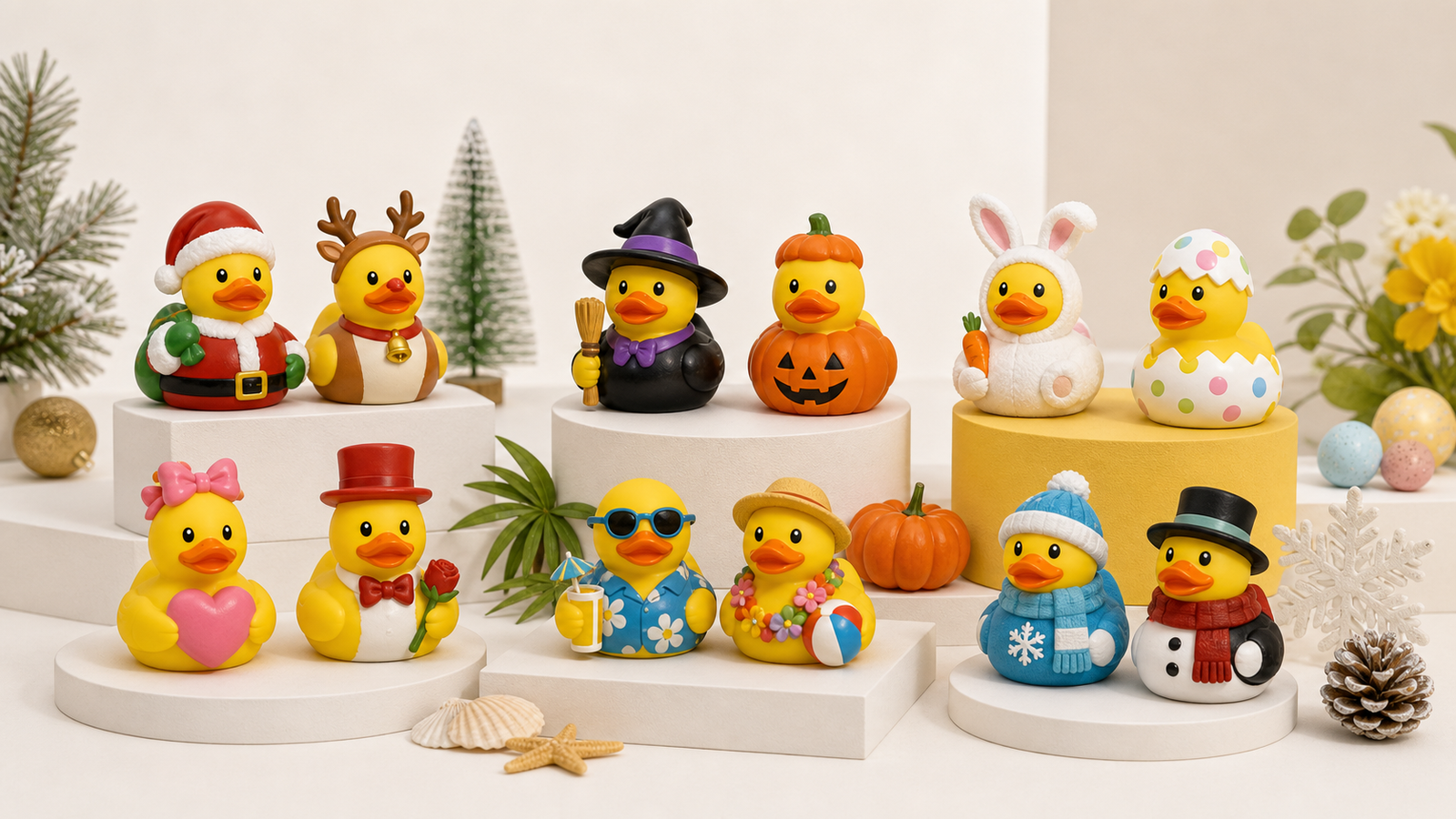
From Kubrick’s bathroom scenes to animated features, the rubber duck has played prop, sidekick and puncher of lines, and every appearance seeds collector demand for the specific look. The merchandise pattern to copy is the prop-to-product pipeline: designs tied to a recognizable moment sell as collectibles, blind-box style, while generic ducks from the same factory sell as toys. Buyers building collectible lines can study the mechanics in our blind-box duck guide: numbered series, chase variants and display packaging turn the same PVC into a different category with a different price ladder.
Duck-Dropping Festivals: Community Events Create Bulk Buyers
The duck race, thousands of numbered ducks bobbing down a river for charity, is a fixture of civic fundraising calendars across North America and beyond, and each race is a bulk order with a deadline. The pop-culture angle: the duck race borrows the icon’s recognition for a cause, and the numbered duck becomes a keepsake afterward. Event buyers work on hard dates, which our production calendar is built around, and the pattern generalizes: any community duck moment, a fountain full of ducks, a marathon mascot, a holiday market stall, starts as an order that needed to land on time more than it needed to be clever. Our duck race wholesale guide runs the numbers for the most common format.
Jeep Ducking: A Meme Becomes a Market
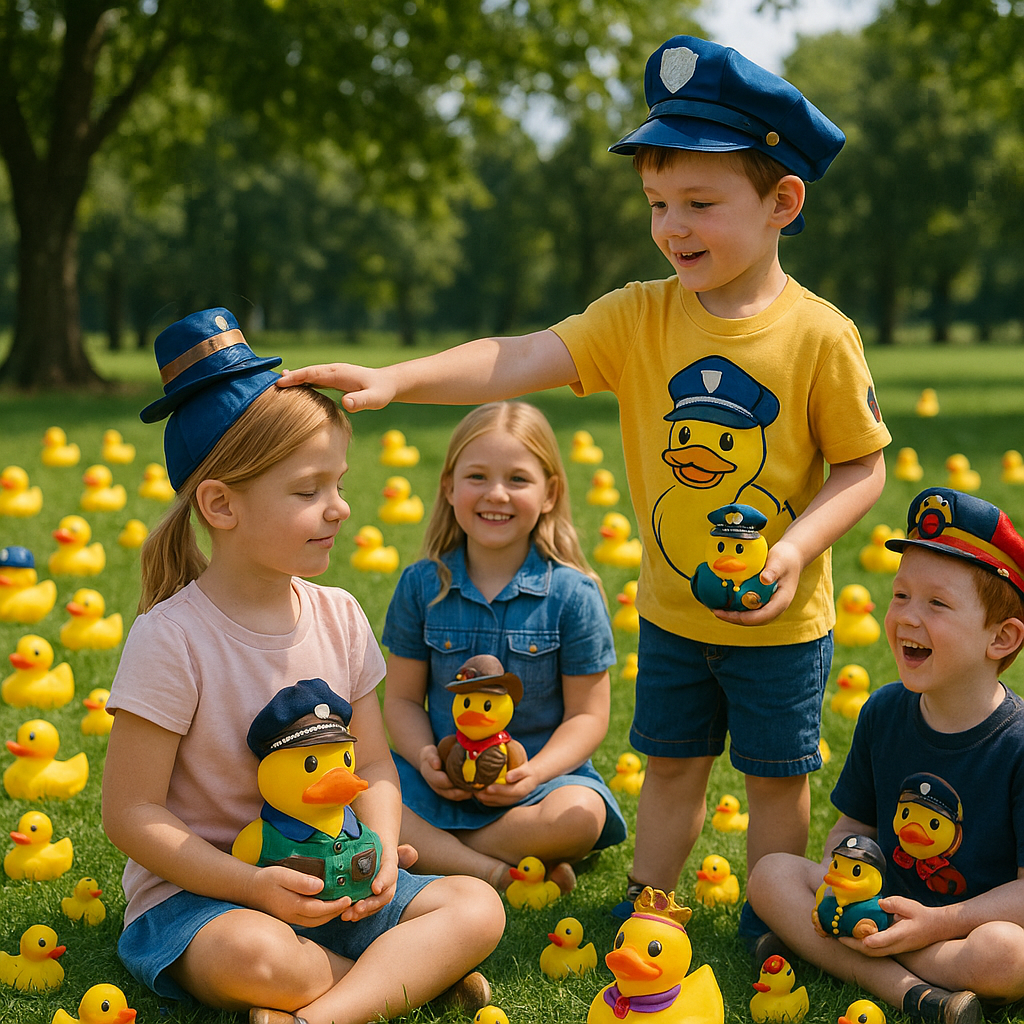
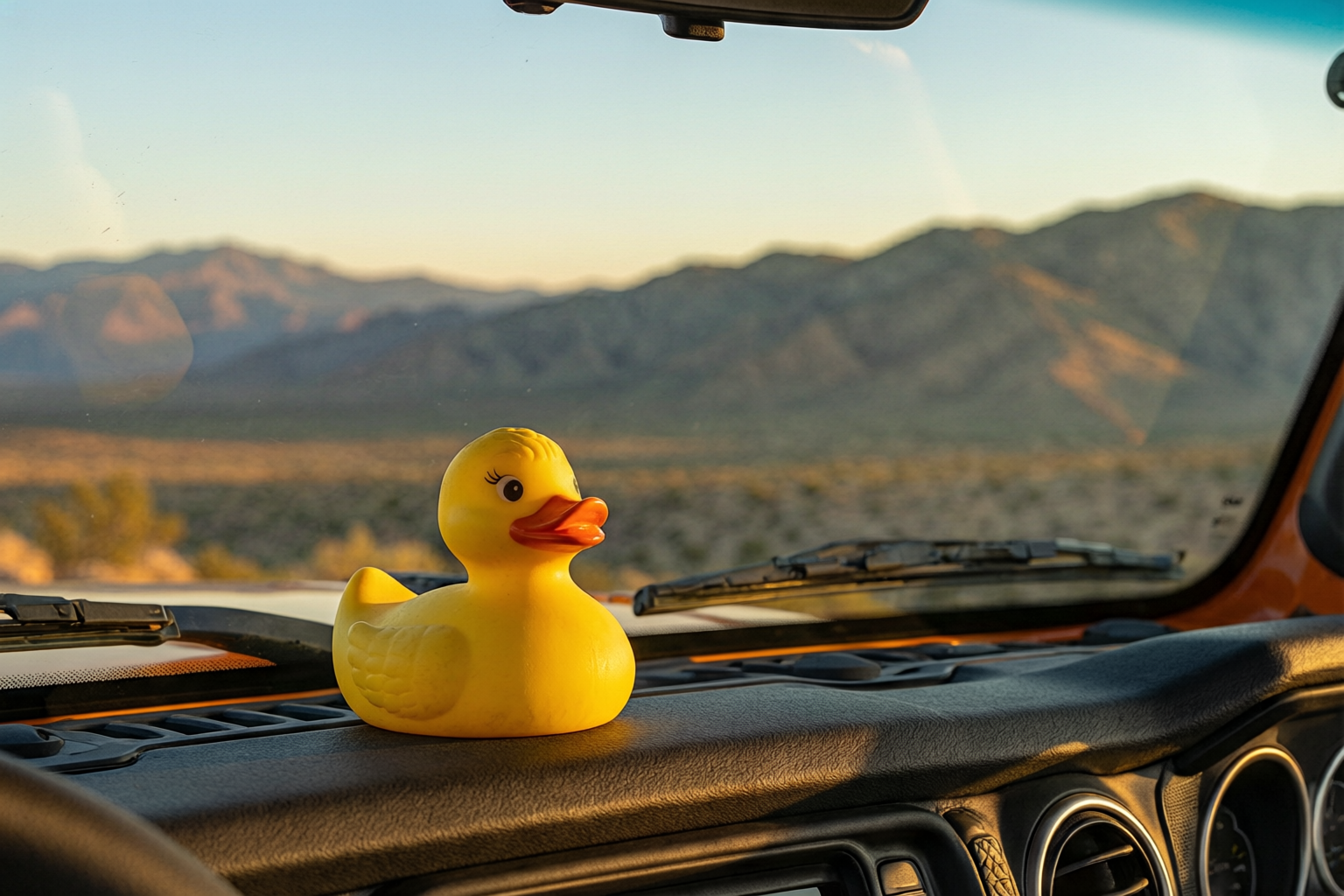
The newest chapter is the youngest: in 2020, Allison Parliament of Ontario, Canada, started leaving rubber ducks on Jeep vehicles to spread kindness during a hard year, tagged “Duck Duck Jeep”, and the gesture grew into an international community ritual with its own etiquette, displays and merchandise. The buyer lesson is speed-to-trend: the ducking wave created demand for themed ducks, tags and display accessories within months, and the suppliers who served it were the ones whose sampling lane, 3-to-5-day prototypes and 7-day samples, could ride a trend that moved faster than traditional product cycles. Trend windows are where MOQ 1,000 beats MOQ 10,000: small batches let retailers test the wave without drowning in it. Seasonal waves follow the same logic, which is why our holiday duck line is built around dated rotations rather than standing stock.
The Meta-Lesson for Buyers
Across all five moments the same mechanics repeat: recognition drives the buy, story drives the price, scale drives the display, and dates drive the orders. A custom duck program that plans for all four, a recognizable sculpt, a story tag on the hangcard, one hero piece on the shelf, and a production calendar with real buffers, converts a bath toy into merchandise with a margin. Send your theme and date to our desk and we will build the program around the moment you are riding.
Frequently Asked Questions
Why is the rubber duck in the Toy Hall of Fame?
Inducted in 2013 by the National Toy Hall of Fame at The Strong museum for its multi-generational recognition and open-ended play, the same properties that make it work as merchandise.
What is the duck race phenomenon?
Charity events where thousands of numbered ducks race down a waterway for adoptions; each event is a dated bulk order and a keepsake market.
What is Duck Duck Jeep?
A community gesture started in 2020 by Allison Parliament in Ontario: leaving a duck on a Jeep with a kind note, today an international ritual with themed merchandise.
How do retailers ride a duck trend without overstocking?
Small MOQs (1,000 pieces), rapid sampling to catch the window, and a hero display piece rather than deep volume.
Riding a duck moment of your own? Tell our desk the theme and the date, and we will return a sampling plan sized for the trend window.