Skip to content
Hotel gifts are unusual in promotional merchandise because the guest is already in the room, often with time to notice things. A small duck on a bath edge or beside a towel gets picked up, examined and frequently packed. It then travels home, sits on a shelf, and keeps a property’s name in view for years.
That combination of low unit cost and long retention is why resorts, spas and family hotels keep ordering ducks. The programmes that work are the ones that thought about construction, branding and replenishment before the first order.
What the Guest Actually Does With It
Guests behave in three ways with an in-room gift. They use it, they take it home, or they leave it. A duck at a bath edge is far more likely to be used than a duck in a drawer, so placement is part of the specification rather than an operational detail.
Retention is what makes the unit cost worthwhile. A duck that goes home carries the property name into a household, which is a form of advertising that a flyer never achieves. Guests also photograph these items, and a well-made duck appears in holiday photos long after the stay.
Children’s use matters for construction. A duck intended for a bath should float, drain and be sealed so it does not trap water inside. The custom duck options include sealed constructions designed for bath use, which behave differently from a display piece.
Branding That Suits a Guest Room
A hotel duck has to be quiet. Full-colour printed branding that works on a trade show give-away reads as advertising in a guest room, and the item is less likely to be kept. Subtlety performs better: a moulded base colour in the property palette, a small printed wordmark, or a simple motif such as a shell or a leaf.
Colour should be taken from the property’s palette rather than from a generic bright yellow. It is the cheapest form of consistency, and it means the duck matches the amenities, the signage and the photography without any extra cost per unit.
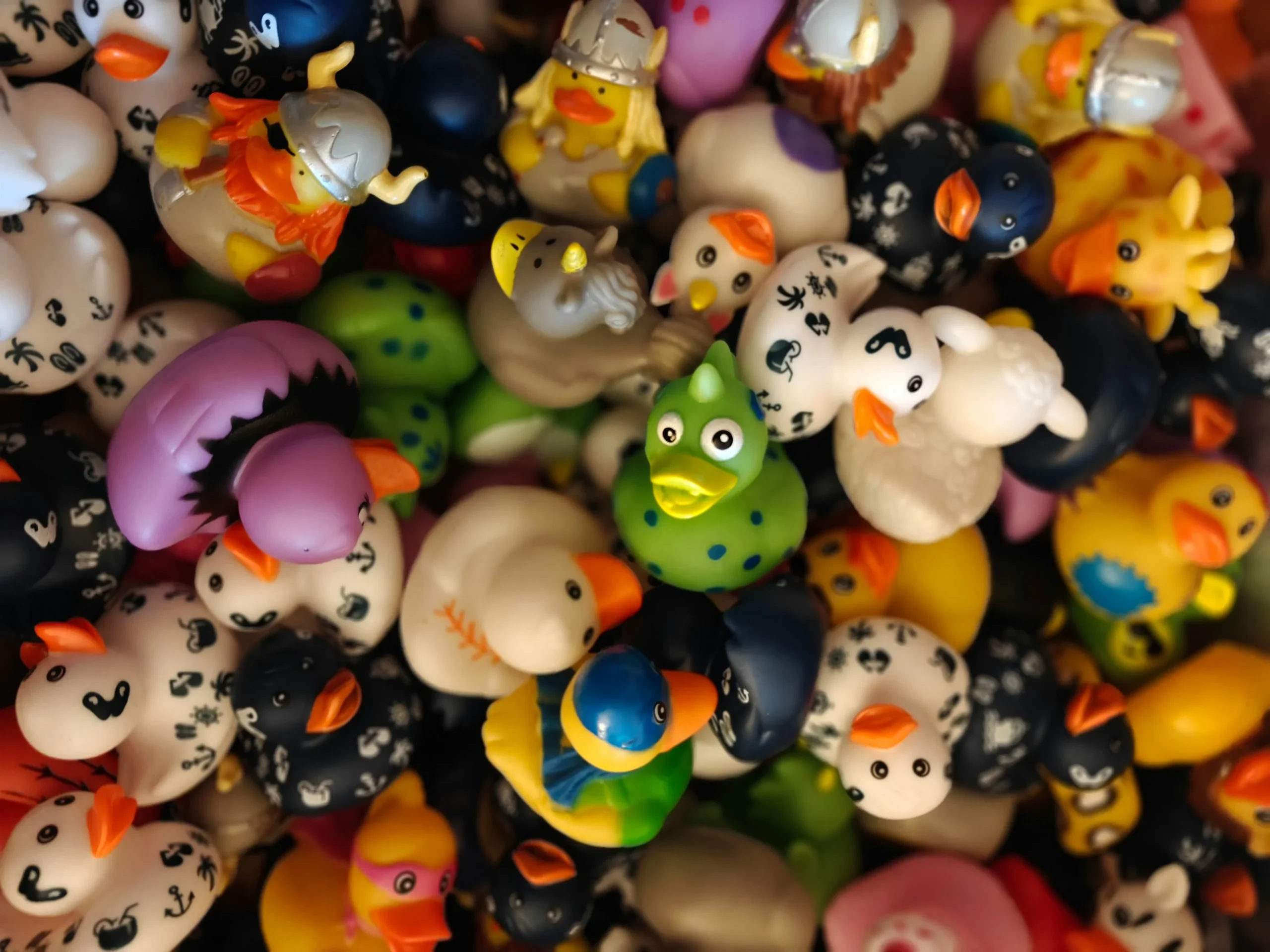
Where a property runs seasonal campaigns, the duck becomes a calendar item. A summer colourway, a festive variant, a spa-themed version: each is a repeat order with a small change, and the tooling already exists. Properties that plan a year of variants order more efficiently than those that commission one design at a time.

Replenishment Is the Real Cost Model
Amenity items are consumed. Some guests take them, some are damaged, some are removed when a room is serviced. The purchasing reality is therefore a small recurring order rather than a single purchase, and the cost model should be built on annual consumption per room rather than on the first order.
That changes the economics in a useful way. A slightly higher specification with a better construction repays over several years, because the duck is not being thrown away after one stay. It also supports a higher-value guest experience, which is the point of the programme in the first place.
Order frequency interacts with freight. Small repeat orders shipped alone carry higher freight per unit than consolidated shipments, so properties with several outlets often benefit from a single annual order split across deliveries. The trade-offs, including when air freight is justified for a short-notice seasonal variant, are set out in our freight notes for duck orders.
Gift, Amenity or Merchandise
The same duck can play three commercial roles, and deciding which one it is clarifies everything else. As a gift, it is free to the guest and its purpose is goodwill. As an amenity, it is part of the room’s expected provision. As merchandise, it is sold in the gift shop, which requires packaging, a price point and often a barcode.
Role determines packaging. A gift duck may ship with a small card explaining the property’s story, which is the same tag logic that applies in other campaigns. A merchandise duck needs a hang tag, a retail-ready finish and a consistent size within the range so it presents well on a rack alongside other souvenirs.
Occupational and career-themed ducks have become their own merchandise category in recent years, which shows how far a simple moulded object can stretch. The patterns behind that demand are described in our notes on career-themed merchandise, and hospitality programmes follow the same logic at a smaller scale.

A Programme Specification
Six decisions set up a hospitality duck programme. Size and construction suited to bath use. Colours drawn from the property palette. Branding kept quiet enough to be kept. Packaging or a card that explains the gift. Annual consumption estimate per room. And a variant plan for the year’s campaigns.
Sampling is worth doing properly even at low volumes. A single sample in the property’s colour, placed in an actual guest room, answers questions about size and readability that no catalogue photo can.
Finally, keep records. Knowing which variant ran in which season and how it was received turns the next order from a guess into a repeat or an improvement. Import documentation for repeat shipments follows the same conventions as any other consignment and the market frameworks summarised by US International Trade Administration country commercial guides remain the starting point for a first export. Our bulk duck team quotes hospitality programmes on an annual consumption basis rather than per order, which is how the cost model actually behaves.
FAQ
Why do hotels give away rubber ducks?
Because a small in-room gift is frequently taken home and retained, extending the property brand beyond the stay at a low unit cost.
What construction suits a bath duck?
A sealed hollow duck that floats and drains, rather than a solid or weighted display piece that behaves differently in water.
How much branding should appear?
Less than on a trade show giveaway. A quiet wordmark or motif in the property palette is more likely to be kept than full-colour advertising.
How should replenishment be planned?
On annual consumption per room, because amenity items are taken or replaced. A slightly better specification repays over several years.
Does a seasonal variant mean new tooling?
No. A colour change on an existing design is a repeat order. Only a new shape requires a new tool.
Video: Standard Guest Room Amenities in Luxury Hotels
If a property is planning a guest-room duck programme, send the room count and the palette. Our hospitality team will quote on annual consumption and propose a variant plan for the year.
Related reading: Employee Onboarding and Internal Campaign Duck Kits