Skip to content
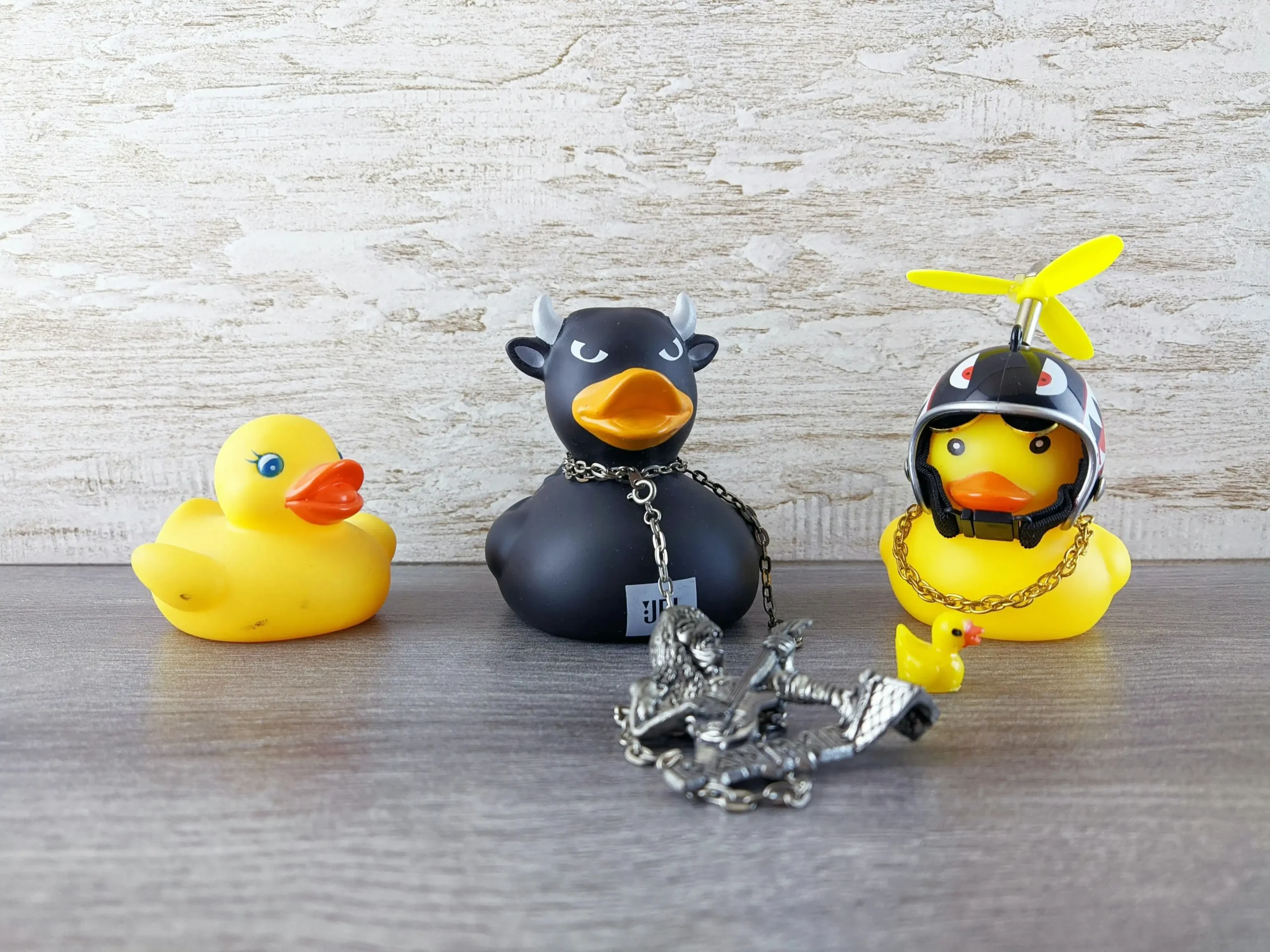
Most rubber ducks are vinyl: a PVC compound with plasticiser, pigment and stabiliser. It is the material that gives the classic duck its soft feel, its squeak and its price.
Silicone enters the conversation when a buyer wants something vinyl cannot do well, and it enters with a different cost structure and a different set of paperwork. Knowing which material a project actually needs prevents both overspending on silicone that is not required and discovering a vinyl limitation after a container has shipped.
What Vinyl Is and Why Ducks Are Made From It
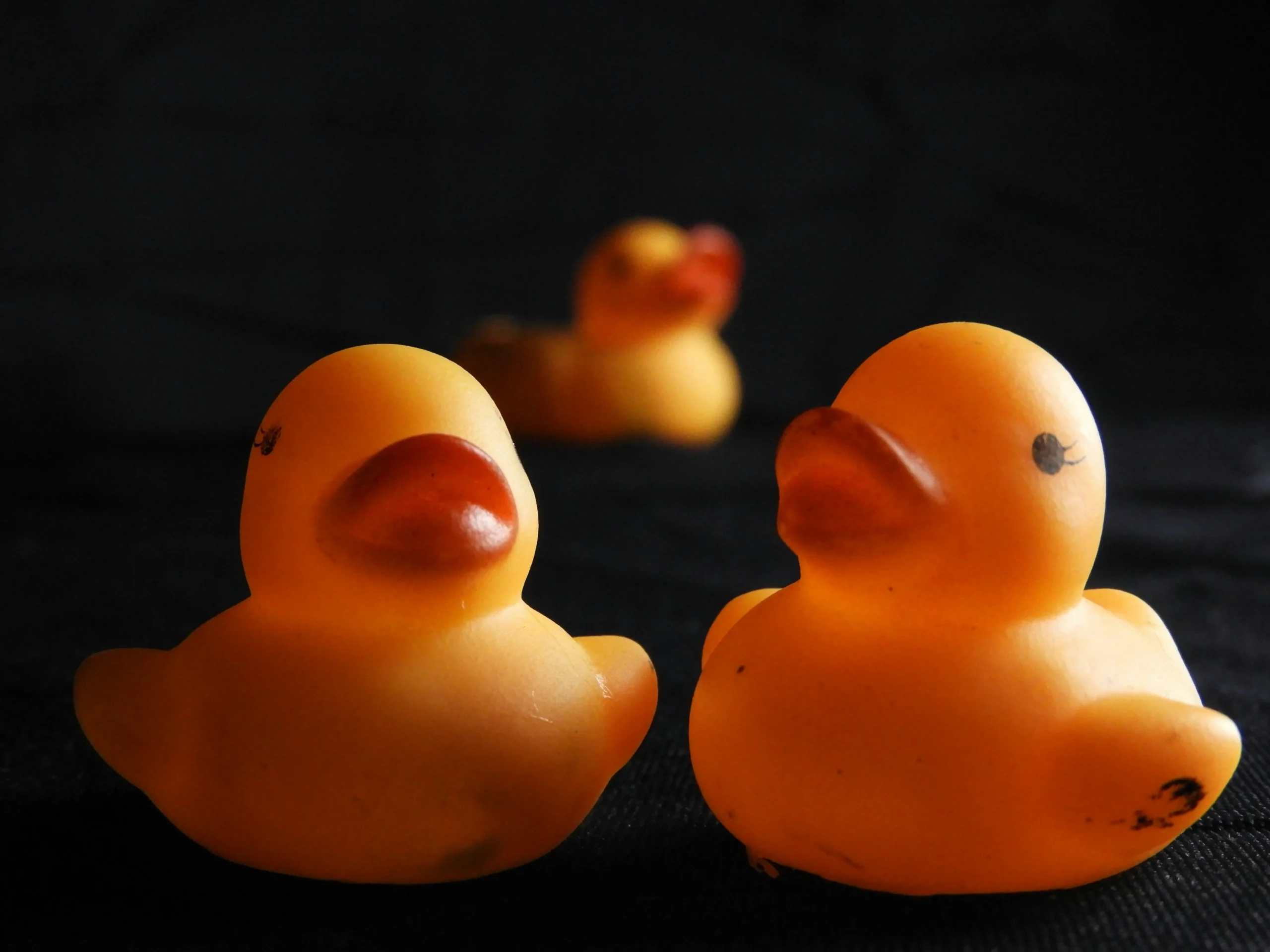
Vinyl ducks are produced from a PVC compound: PVC resin, plasticiser for softness, stabilisers for heat and light, and pigment for colour. Rotational moulding or injection moulding shapes the part, and the compound recipe decides how soft, how heavy and how opaque the result is.
The material is popular for three reasons. It is inexpensive at volume, it accepts fine mould detail such as eyes and feather texture, and its softness can be tuned across a wide range from firm to very soft.
Its limits are equally clear. Plasticised PVC softens when warm, so a vinyl duck left on a car dashboard can deform. Its surface can become tacky over time in some formulations, and its plasticiser content is the reason phthalate rules exist in the first place.
What Silicone Changes
Silicone ducks use a silicone polymer rather than plasticised PVC. There is no plasticiser to migrate, the material keeps its shape across a much wider temperature range, and it does not become tacky with age in the way some vinyl formulations do.
The feel is different in a way buyers notice immediately: silicone is often described as smoother and slightly more dense, and non-slip in water. For a premium duck sold on tactile quality, that difference is a selling point.
The cost is the reason silicone is not the default. Material cost is significantly higher, and moulding parameters differ from vinyl, so a factory tooled for PVC cannot simply switch material without process work. Bulk pricing for silicone ducks is a different conversation from vinyl, and our bulk duck programme quotes both routes so the difference is visible at the enquiry stage.
The Compliance Question
Where a duck is a children’s toy or a child care article, phthalate content is regulated in the United States under eCFR Title 16, including children’s product rules at 16 CFR Part 1307, which restricts specified phthalates at defined limits. A supplier has to know which phthalates are restricted and be able to document what the compound contains.
This is where vinyl needs paperwork that silicone largely avoids, since the exposure comes from the plasticiser rather than the polymer. Both materials can comply; the difference is the evidence route and the testing the factory has to commission.
Where a duck is not a children’s toy, the applicable rules differ, but the documentation question does not go away, because distributors and marketplaces ask for material declarations regardless of the product category. The colour and UV side of material selection is covered in our notes on masterbatch and UV stabilisers.
Water, Heat and Sunlight
Ducks live in water, and that makes three properties matter. Whether the material floats the duck upright, how quickly colour changes under UV, and what happens to the surface when it dries repeatedly.
Both materials float and both can be weighted, but vinyl is easier to tune because the compound’s density can be adjusted in the mix. Colour stability is more about the pigment system than the base polymer, so this is a specification decision in both cases.
Heat is where the materials separate most clearly. A vinyl duck in a hot car, a greenhouse or a shipping container in summer will soften earlier than a silicone one. For promotional ducks used as dashboard companions or garden ornaments, that difference decides which material to buy.
Finish Options on Each Material
Vinyl accepts moulded detail, pad printing, flocking and attached accessories easily. Flocking, the fuzzy finish some premium ducks use, works differently on each material and changes the care instructions a buyer should pass on, as described in our notes on flocked rubber ducks.
Silicone can also be printed and moulded, but the range of decorated finishes is narrower because the surface behaves differently with inks and adhesives. Where a design depends heavily on printing, vinyl usually gives more options.
The practical split is therefore: silicone for premium, heat-exposed or tactile-led products, and vinyl for detailed, printed or cost-led programmes. Many brands sell both, with the material used as the visible difference between standard and premium lines.
Specifying the Material
Four fields make a material specification usable: base material and grade, softness or hardness with tolerance, colour reference, and the compliance documents the order requires. Add any UV or heat requirement as a stated test rather than as a comment.
Ask for a material declaration with the sample, not with the shipment. It is the document that answers the marketplace, the distributor and the importer in a single file, and a factory that supplies ducks at volume should be able to produce it without a research project.
FAQ
Are rubber ducks made of silicone or vinyl?
Most are vinyl: a soft PVC compound with plasticiser. Silicone ducks exist as a premium option with better heat resistance and a different feel.
Is silicone safer than vinyl?
Silicone contains no plasticiser, so it avoids the phthalate exposure that vinyl compounds must manage. Both materials can be supplied compliant, with different documentation routes.
Why do vinyl ducks deform in the heat?
Plasticised PVC softens at lower temperatures than silicone, so a duck left in a hot car or container can lose its shape.
Which material takes printing better?
Vinyl generally offers more decoration options, including pad printing, flocking and accessories, because of how its surface accepts inks and adhesives.
What documents should accompany a duck order?
A material declaration and any test reports the destination market requires, supplied with the sample rather than with the shipment.
Video: Jute Bags Manufacturing: Complete Process
If you are weighing vinyl against silicone for a launch, send the use case and the destination market. The bulk duck team will come back with both routes priced and the documentation each one needs.