Before the Bathroom
Rubber toys appeared in the late 1800s, when vulcanized rubber made soft shapes possible. Early ducks were more toy than bath product. The shift to the bathroom came with the bathtub itself becoming common in ordinary homes in the early 1900s.
The Song That Made It Famous
Sesame Street gave the bath duck a song in 1970, and the toy stopped being only a toy. Generations of children met the duck on television before they met it in a bath. That is the moment the rubber duck became a piece of shared culture.
The Giant Duck
In the 2000s, a giant inflatable duck began appearing in harbors and rivers around the world. The scale changed how people saw the object: a bath toy became public art and a photo opportunity, and the large duck found a second life at events and festivals.
From Toy to Collection
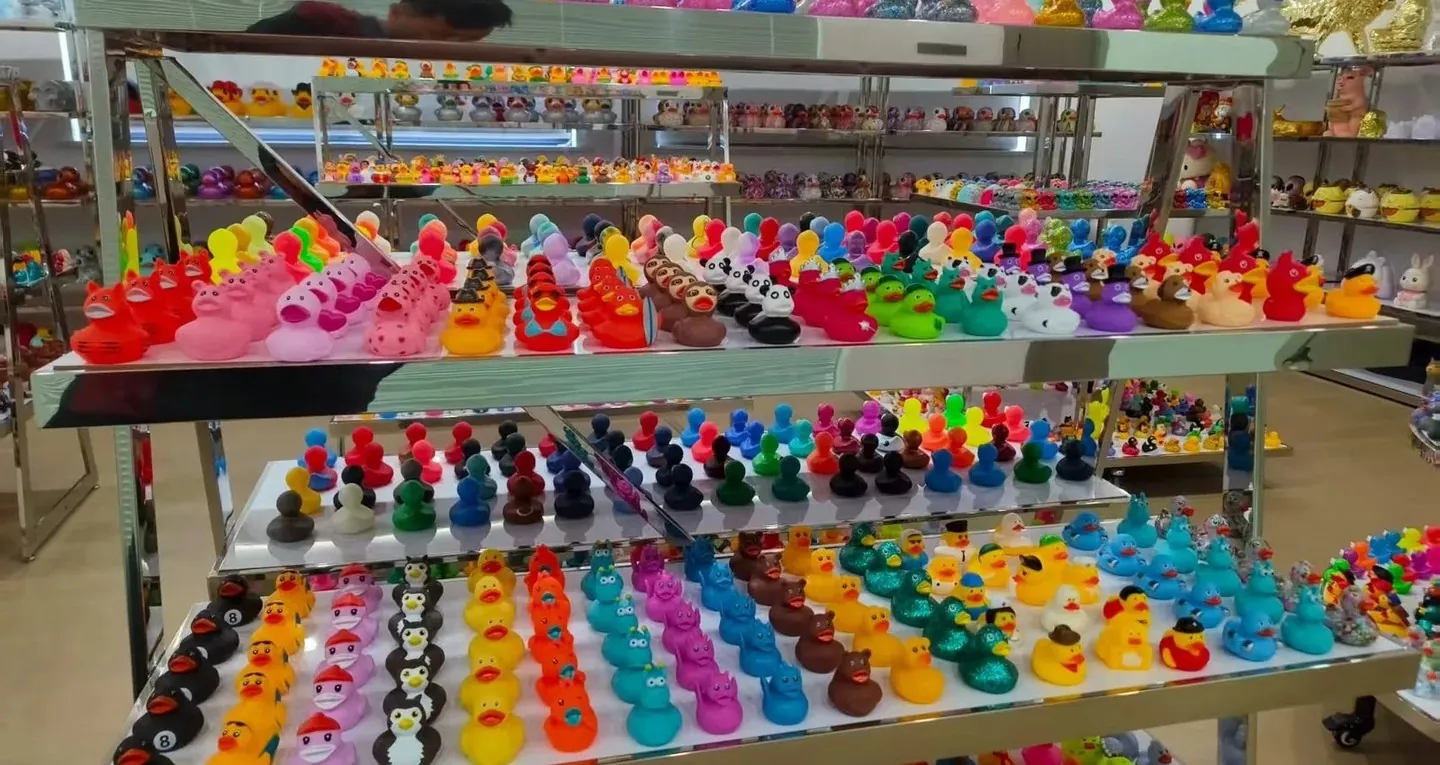
Once the shape was fixed, the variations multiplied: job ducks, holiday ducks, animal ducks, ducks in costumes. Collectors started chasing series, and shops started building shelves around them. A duck is now a small canvas, and the themes are how buyers tell them apart.
Why It Still Works
It is a simple shape that reads at any size, from a thumb-sized favor to a display piece. It is cheap enough to give away and sturdy enough to keep. And it fits almost any occasion with a costume and a color.