Skip to content
rubber ducks gift shops is the first checkpoint buyers should lock before they approve a supplier, budget, or production slot. Every rubber ducks gift shop guide I’ve ever read tells you to “always request a pre-production sample.” That advice killed a $50,000 order for a buyer I consulted last year. The sample looked perfect—vibrant color, spot-on logo placement, the right weight. But when the bulk run landed, the ducks had a 2 mm flash line across the base that turned every unit into a seconds-grade item. Sample approval is necessary, but it’s meaningless unless you also lock down the quality tolerance in your production agreement. Real cost exposure happens when the factory interprets “match sample” differently on the line than in the lab.
The real first step for building a repeatable product line isn’t sampling—it’s understanding that custom production, not ready stock, gives you predictable supply and consistent quality. Ready stock suppliers change their inventory weekly, and FOB pricing on a standard duck shifts unpredictably. With a MOQ of 1,000 units per design, you can start at roughly $0.30–$0.60 landed per duck including sea freight and a one-time mold fee around $250 for a 7 cm shape. That lets you control the margin floor and avoid the scramble of last-minute sourcing.
Why Gift Shops Need Rubber Ducks
Rubber ducks drive impulse sales and repeat visits—proven by 5,000,000+ ducks delivered monthly.
Gift shops that stock rubber ducks see a predictable pattern: children grab them first, adults pick them up for nostalgia, and collectors hunt for limited editions. The average basket size increases by a measurable margin because the duck is a low-cost add-on that requires little deliberation. A $3–$5 retail price point on a unit cost of $0.20–$0.50 leaves healthy margins while encouraging unplanned purchases.
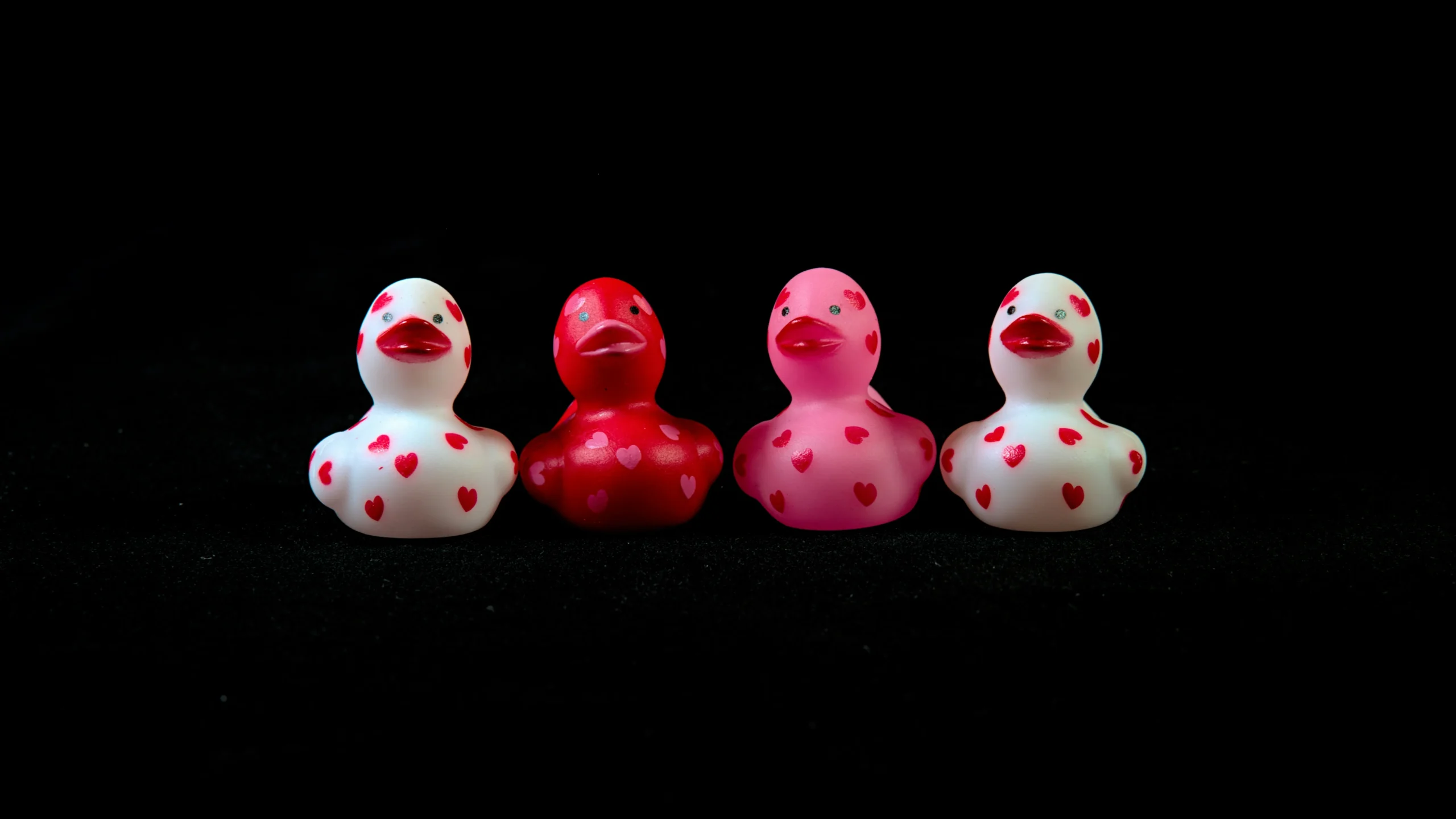
Seasonal and character-themed ducks keep the category fresh. A Christmas-themed duck in November, a zodiac duck for Lunar New Year, or a branded duck for a local festival gives customers a reason to return. The global rubber duck market grows at roughly 5% annually, driven largely by themed and collectible designs. Gift shops that rotate releases see higher foot traffic during holiday windows compared to static inventory.
Differentiation Without High Risk
Most gift shops carry mass-market keychains, magnets, and plush toys—items that blend into the next store’s shelf. A custom rubber duck line with your logo or a local landmark shape creates a product that cannot be price-checked against a big-box competitor. The MOQ of 1,000 units per design is low enough to test two or three themes without overcommitting inventory. If one design underperforms, the mold is reusable for future runs.
- Collector factor: Repeat buyers return for series completion. A 10-series duck set over 12 months builds a loyal customer base that visits specifically to check for new drops.
- Cross-selling potential: Ducks display naturally near checkout counters, at children’s eye level, or themed with a local attraction. They complement existing product lines without cannibalizing sales.
Seasonal & Character Demand Is Real
Demand spikes for holiday-themed ducks (Easter bunnies dressed as ducks, Santa ducks, Halloween ducks) and for character collaborations (sports team colors, movie tie-ins if licensed). A gift shop that aligns its duck drops with regional events—Mardi Gras, Oktoberfest, a city marathon—captures both tourist and local traffic. The production lead time of 25–35 days for custom shapes allows planning four to six months ahead for peak seasons.
The key is consistency: customers who know you release a new duck every quarter become repeat visitors. That repeat behavior lifts average transaction value because the purchase is added to another item they came for. One supplier ships over 5,000,000 ducks monthly to global retail clients, proving this is not a niche fad—it is a steady, repeatable category for shops that execute well.
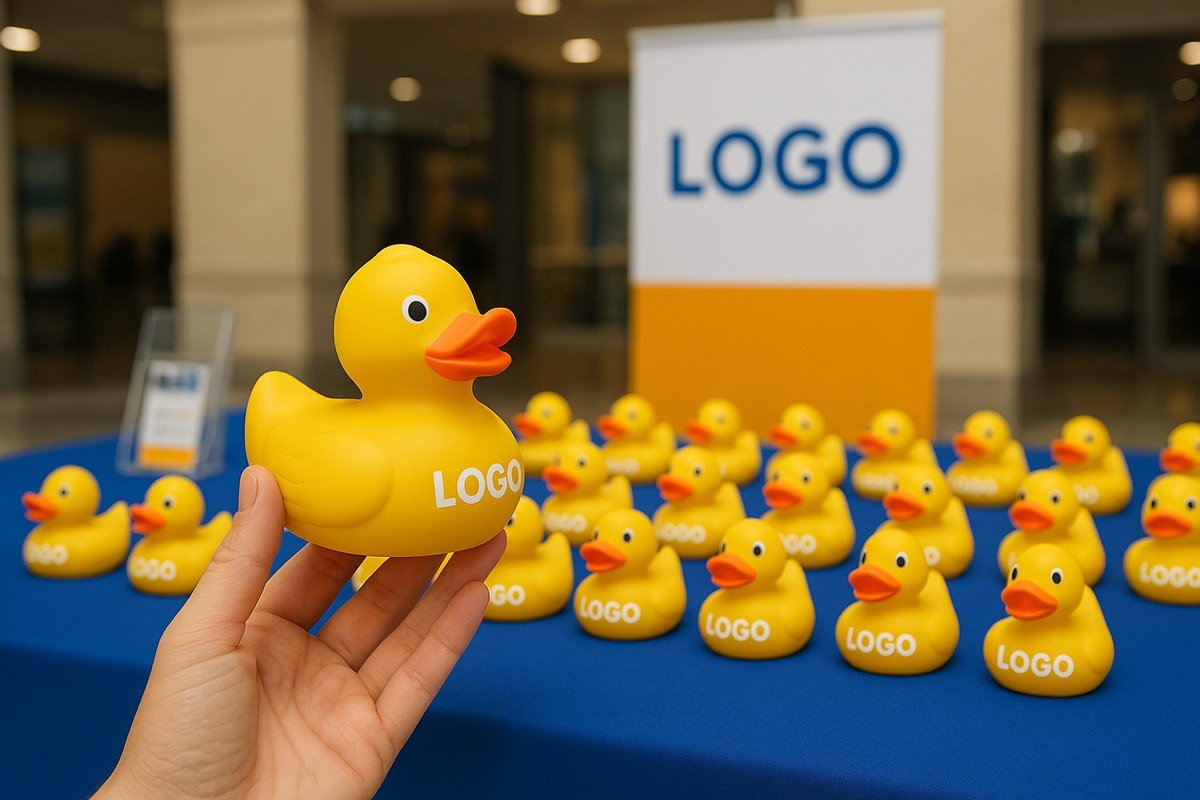
Real Costs: What to Budget
Price per unit ≠ landed cost.
The base duck — plain, no print, no custom mold — runs $0.15 to $0.30 per unit at the standard MOQ of 1,000 pieces. That spread depends on material grade (standard PVC vs. phthalate-free rubber) and size (the typical 7 cm duck sits at the low end; larger or thicker shapes push toward $0.30). Suppliers moving 500,000 ducks monthly, like Lzengo, can squeeze better raw-material pricing, which means the low end is more realistic for a first order — as long as you don’t request exotic colors or extra-thick walls.
Printing: Where the Per-Unit Cost Doubles
Pad printing for a single color adds $0.05 to $0.10 per duck, plus a one-time setup fee of $20–$50 per screen. If your logo uses two colors, double both the per-unit charge and the setup fee. UV printing, which handles full-color artwork and gradients, runs $0.10 to $0.25 per duck with no per-color setup — but the minimum order for UV is typically higher because the machine setup is more involved. Buyers who skip the pre-production sample approval often discover that the pad print registration is off by 1 mm, rendering an entire batch unsellable.
Custom Mold: The Gatekeeper to Differentiation
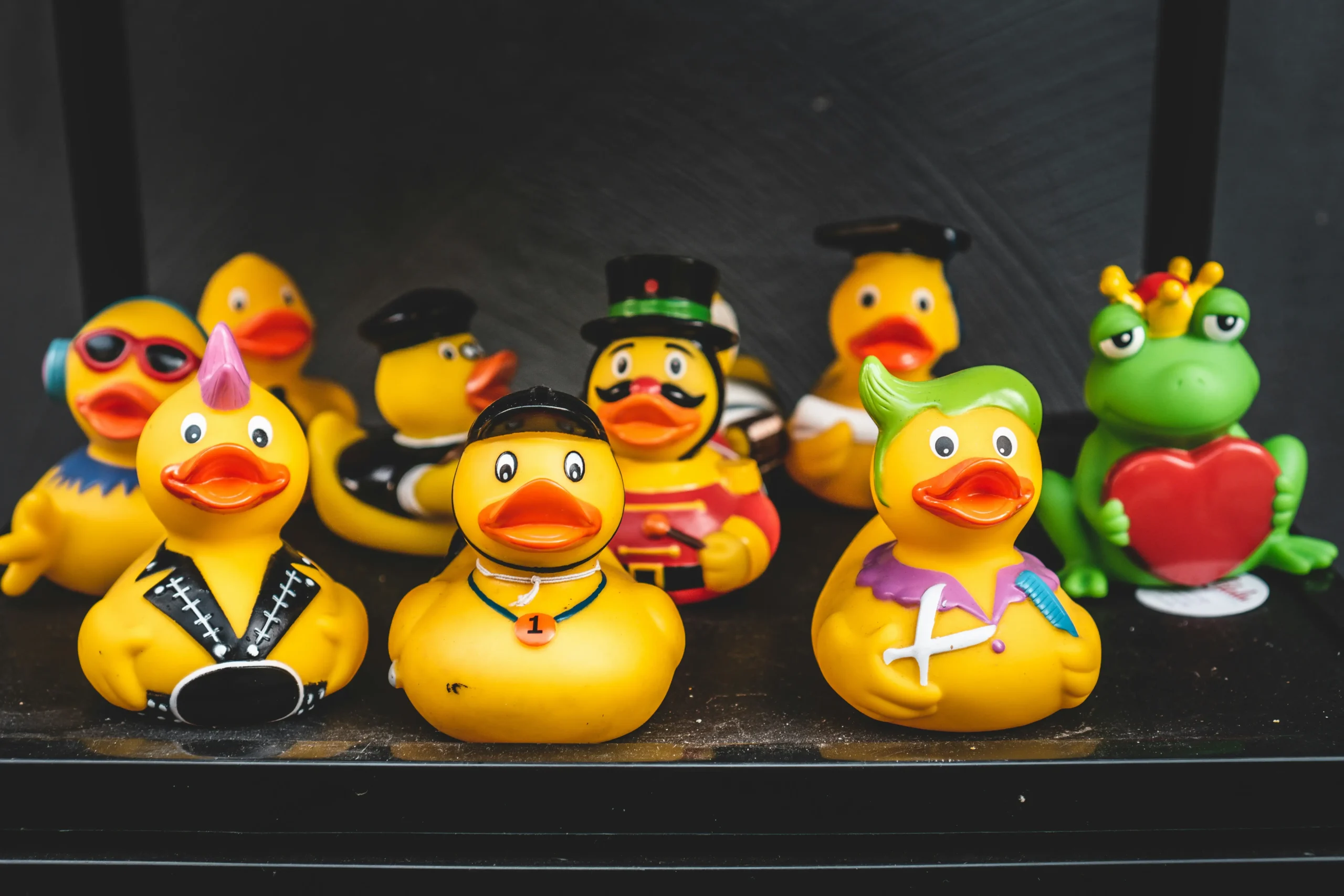
A custom mold (e.g., a duck wearing a baseball cap or holding a sign) costs $100 to $500 as a one-time investment. For a standard 7 cm duck shape, the average sits around $250. This fee is not per unit — it’s a capital expense that gets amortized across all reorders. If you plan to reorder 5,000 units over two years, the mold contributes roughly $0.05 per duck. Some suppliers waive this fee if you commit to a large initial order (10,000+ units) or sign a yearly volume agreement. Ask upfront whether the mold fee can be split across multiple designs in a mixed container — not all factories offer that flexibility.
Packaging and Freight: The Hidden Layers
A simple polybag adds $0.02 to $0.05 per duck. Retail-ready boxes (hanging display, barcode, window cutout) can push that to $0.15–$0.30. Sea freight for a 20-foot container works out to $0.05–$0.15 per duck, depending on the route and season. Buyers have been known to order 1,000 ducks at $0.25 each, only to discover that the all-in landed cost hits $0.52 — and that’s before import duties. Always ask your supplier for a full cost breakdown in writing before signing the purchase order.
| Cost Component | Range per Unit | Notes |
|---|---|---|
| Base duck (plain, no print) | $0.15 – $0.30 | Tied to material (PVC, rubber), size |
| Pad printing (1 color) | $0.05 – $0.10 | Setup fee $20–$50 extra |
| UV printing (full color) | $0.10 – $0.25 | Better for detailed logos |
| Custom mold fee | $100 – $500 | One-time, depends on complexity |
| Packaging (polybag) | $0.02 – $0.05 | Retail-ready boxes cost more |
| Sea freight (20′ container) | $0.05 – $0.15 | Varies by route and season |
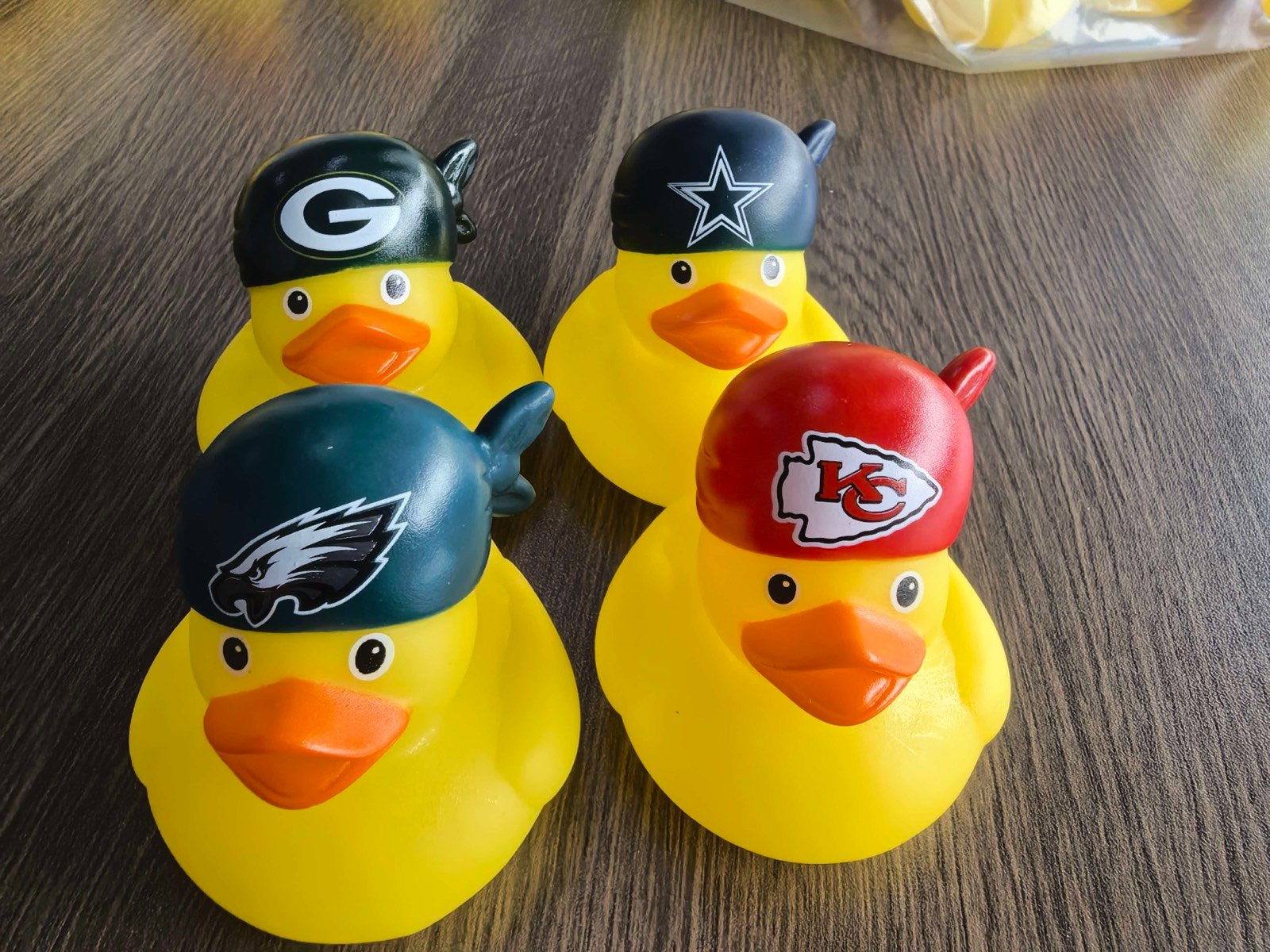
Customization: Printed vs. Molded Ducks
Printed ducks start shipping in days; molded ducks require weeks but deliver exclusivity.
For a gift shop’s product line, you have two main routes: print your logo onto a standard duck shape, or invest in a custom mold to create a unique duck form. Each path changes your per-unit cost, lead time, and brand leverage.
Printed Ducks: Fast Entry, Low Risk
Printed ducks use an existing mold, skipping the 25–35 day mold-making phase. Artwork is applied via pad printing for simple one-color logos or UV printing for full-color graphics. Pad printing adds $0.05–$0.10 per duck; UV printing $0.10–$0.25. Setup fees run $20–$50. With a 1,000-unit MOQ, total upfront stays low — ideal for test runs or seasonal promotions.
Molded Ducks: Exclusive Asset, Higher Barrier
A custom mold lets you produce duck shapes that no competitor carries — animals, holiday icons, or brand mascots. The one-time mold fee averages $250 for a standard 7 cm duck. Production lead time jumps to 25–35 days because the mold must be machined and tested. Once paid, reorders only incur the per-unit cost ($0.20–$0.50) with no additional tooling. For shops that reorder the same design across seasons, the mold cost amortizes quickly.
The choice comes down to your budget and target audience. Need speed and low risk? Start with printed ducks. Want a design that becomes a collectible signature item? Invest in a custom mold. Reliable factories that deliver 500,000 ducks monthly handle both routes, with Pantone color matching available to keep your brand consistent.
Sourcing Strategy: Bulk vs. Small Batch
Test demand with 1,000 units per design – MOQ is not a barrier, it’s a filter.
Most gift shop buyers I work with start with 1,000 to 3,000 units per design. That range lets you test customer response without tying up capital in unsold inventory. The manufacturer MOQ for custom rubber ducks sits at exactly 1,000 units per style for standard shapes. That’s not a hurdle—it’s a built-in threshold that forces disciplined product selection from day one.
The Manufacturer Reality: MOQ of 1,000
At Lzengo, the MOQ starts at 1,000 units per design, and the company ships over 500,000 ducks monthly for global brands. That volume means the company can offer consistent quality at $0.20–$0.50 per unit for printed ducks. A 1,000-unit order is a standard production run—not a small batch that gets kicked to the back of the line. You get the same production line commitment as a 10,000-unit order.
Multi-Design Coordination: The Minden Approach
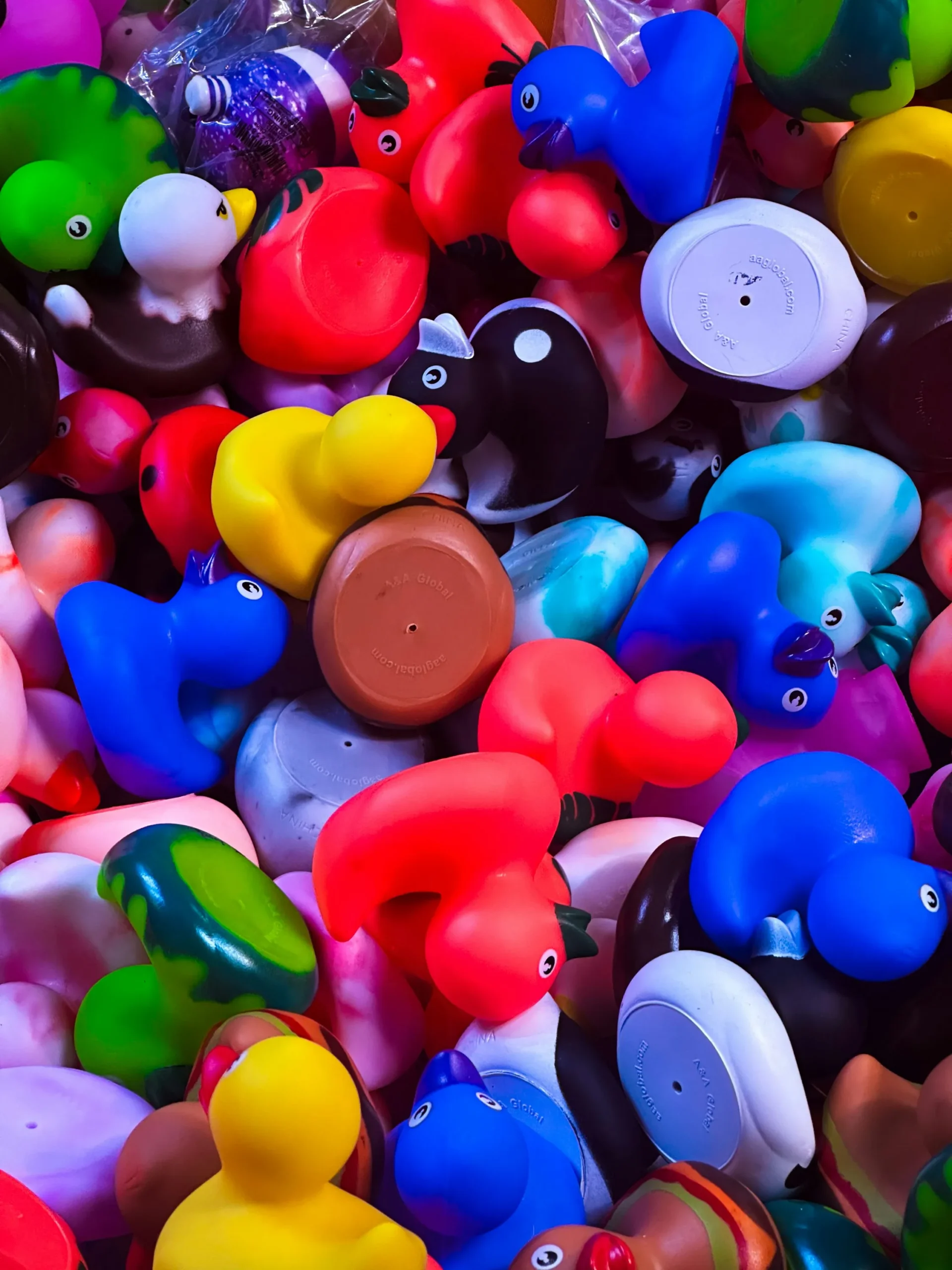
The real challenge comes when you need 40+ designs in small batches of 10–100 pieces each. That’s a fundamentally different problem. The Minden Sourcing case study showed it’s possible for UK retail, but it requires a network of suppliers or a dedicated sourcing agent who can consolidate multiple low-volume orders into mixed containers. Most standalone factories won’t split a 1,000-unit MOQ across 10 designs—the setup time kills their margin.
If your gift shop plans to carry a wide variety of themed ducks, you have two options: order 1,000 per design and rotate slow movers, or work with a sourcing agent who coordinates multiple factories under one shipment. The latter requires diligent supplier coordination and a tolerance for longer lead times—typically 6–8 weeks from design approval to delivery.
How to Choose a Reliable Supplier
CE marking on packaging alone won’t protect you from a recall.
I’ve spent years auditing factories across Asia, and the first thing I check is whether the CE mark is physically embossed on the product base. Most suppliers will email you a PDF certificate. Less than 30% of factories actually stamp the mark onto the duck itself. For EU retail, that stamp is non-negotiable. Skip this check and your container gets held at customs, or worse, you face a recall.
Certifications that actually matter
For gift shop rubber ducks destined for Europe or the UK, you need EN71 (toy safety) and CE certification. For US retail, it’s ASTM F963. A BSCI audit is also a green flag – it tells you the factory doesn’t exploit labor. But here’s the catch: a certificate is only as good as the issuing body. Request a copy and cross-check the accreditation number. If they hesitate, walk away.
Production capacity and communication
A reliable supplier should handle 500,000 ducks per month without strain. Our own line does exactly that – over half a million ducks leave our facility monthly, which means consistent lead times even during peak seasons. When you’re evaluating a supplier, ask how many orders they run simultaneously. A single production line stretched across 10 clients means your deadline is the first to slip.
Sample verification before bulk order
Never place a bulk order without first reviewing a pre-production sample. I’ve seen buyers approve a sample based on a photo, then receive containers full of miscolored ducks with poor printing registration. Insist on a physical sample. Check the material softness, the printing alignment, and the hole size if they squeak. Also request past client portfolios – not just the names, but the actual products delivered. A supplier who can show you 40+ designs sourced for UK retail (as we’ve done) has proven they can handle complexity.
The physical visit or third-party audit
If the order value justifies it, visit the factory or hire a third-party inspector like SGS or Bureau Veritas. I’ve found discrepancies between what a sales rep promises and what the production floor delivers – raw material bins labeled ‘PVC’ holding recycled compound, missing ventilation for printing fumes, and assembly lines where workers skip the final QC check. A pre-shipment inspection catches 80% of defects before the container leaves the port.
Avoiding Common Pitfalls
One skipped approval turned a $50K order into scrap.
A buyer I know approved a flat image file, skipped the physical sample, and ended up with 10,000 ducks that looked nothing like the mockup. The orange was neon, the logo blurry, and the CE mark was missing from the base. That shipment sat in a UK warehouse for six months before getting written off. The fix is simple: never approve production without holding the pre-production sample in your hand.
Pre-Production Samples Are Non-Negotiable
A pre-production sample (not the prototype, not a photo) is the only way to verify color match under retail lighting, print alignment, and physical dimensions. For custom logo ducks, the sample also confirms whether the pad printing or UV printing holds up to the spec. Check for the CE mark physically embossed on the duck base — many suppliers put it only on the packaging, which fails EU customs. We require a signed PPAP (Production Part Approval Process) on every custom run, covering color tolerance, material hardness, and float test results.
- Color match: Request a Pantone reference chip alongside the sample. Factory lighting lies — bring the duck to your store’s lighting before signing off.
- Surface defects: Inspect for mold lines, flash, or uneven texture. A 0.5mm flash line on a 7cm duck looks like a crack under direct light.
- CE / EN71 marking: Verify the physical mark on the product base. If it’s missing, your shipment stops at customs — no exceptions.
- Float test: Drop the duck in water for 24 hours. It should float upright. Weight distribution from a custom mold can shift the center of gravity.
- Mold fee amortization: Request a 3-run spread. If the mold is $250, pay $83 per run. This protects you if the design doesn’t sell.
- Tiered pricing: Ask for price breaks at 1K, 3K, and 5K. The delta between 1K and 5K can be 15%–20% per unit.
- Payment terms: Stick to 30% deposit / 70% before shipment. Never pay 100% upfront. Use a letter of credit for orders over $10K.
Packaging Must Match Retail Reality
A polybag might be fine for online orders, but if you’re placing ducks on a shelf, you need retail-ready packaging. Hanging tags, barcode placement, and blister packs all affect whether a buyer picks up your duck or the competitor’s. We’ve seen orders delayed because the barcode was printed on the wrong side of the header card. Specify your packaging format in the initial PO — a 0.05 cent polybag vs a 0.15 retail box changes the freight costs and shelf presentation.
For gift shops, hanging display is critical. The duck must hang straight, the card must not curl in humidity, and the barcode must scan at 100%. Request a packaging mockup alongside the pre-production sample. If you’re sourcing mini rubber ducks for resale, a simple re-sealable polybag with a branded insert can work, but test the bag’s thickness — a 2-mil bag tears easily on hooks.
Lead Time: Plan for 8 Weeks Minimum
Custom production runs 25 to 35 days for a standard 7cm duck with pad printing. Add 7 to 10 days for mold making if you’re doing a custom shape. Sea freight from China to the US West Coast takes 15 to 18 days; to Europe, 25 to 30 days. A total lead time of 6 to 8 weeks is realistic. Air freight cuts shipping to 3–5 days but triples the cost — only worth it for urgent campaigns. Build buffer into your launch calendar: order 10 weeks ahead of your planned in-store date.
Public holiday seasons in China (Lunar New Year, National Day) shut down factories for 2 to 3 weeks. If your order lands during those windows, production delays compound. Always confirm the factory’s holiday schedule before signing the contract.
Negotiate the Terms That Matter
Three levers to pull before signing a purchase order. First, mold fee amortization: a standard 7cm custom mold costs around $250. Negotiate to spread that cost across the first three reorders instead of paying it all upfront. Second, tiered pricing: commit to a volume of 3,000 units across multiple designs to drop the unit price below $0.30. Third, payment terms: the industry standard is 30% deposit with order, 70% before shipment. If you have a track record, some suppliers extend 30% / 70% net 30 — but that’s rare for first-time buyers.
Conclusion
Skipping sample approval and supplier verification can turn a $50,000 order into a headache, with mismatched colors or missing CE marks on the product base. The same order, properly managed, lands at $0.30–$0.60 per duck with a clear path to reorders. The difference is a few weeks of diligence upfront.
- MOQ starts at 1000 units per design with unit cost $0.20 – $0.50.
- Custom mold fee averages $250 for a standard 7cm duck.
- CE marking must be physically on the product base for EU/UK retail.
- Production lead time is 25–35 days plus shipping for custom shapes.
Before you commit to a bulk order, take the time to verify your supplier’s quality tolerance and confirm their FOB pricing includes pre-production samples. One batch that passes sample approval will save you weeks of returns and renegotiation. If you are still mapping out options, browse the Lzengo rubber duck catalog to compare customization methods and see which shapes fit your gift shop’s product mix.
Frequently Asked Questions
What is the minimum order quantity for custom rubber ducks?
The minimum order quantity is 1,000 units per design. This applies to both pad-printed and custom-molded ducks, though some suppliers may offer lower thresholds for stock items. Plan for at least 1,000 units per design to secure production.
How long does it take to get sample ducks?
Sample turnaround depends on complexity—pad-printed samples can be ready in 7–10 days, while custom-molded samples typically take 3–4 weeks. Always request a pre-production sample before committing to the full run. Factor in sample time when planning your product launch schedule.
Can I get rubber ducks with my own logo?
Yes, you can add your logo either by pad printing onto an existing duck shape or by creating a custom mold that embeds your logo into the design. Choose pad printing for quick runs or custom mold for a truly bespoke product.
Are rubber ducks safe for children?
Yes, if they meet recognized safety standards such as EN71 (Europe) or ASTM F963 (USA). Always verify that your supplier provides certifications and the proper physical marking on the duck base. Request a certificate of compliance before production begins.
How much does it cost to create a custom mold?
Custom mold fees are a one-time cost between $100 and $500 per design. This investment is amortized across your order quantity, so the per-unit impact decreases as volume. Factor mold cost into your upfront budget and spread it over the full run.