Skip to content
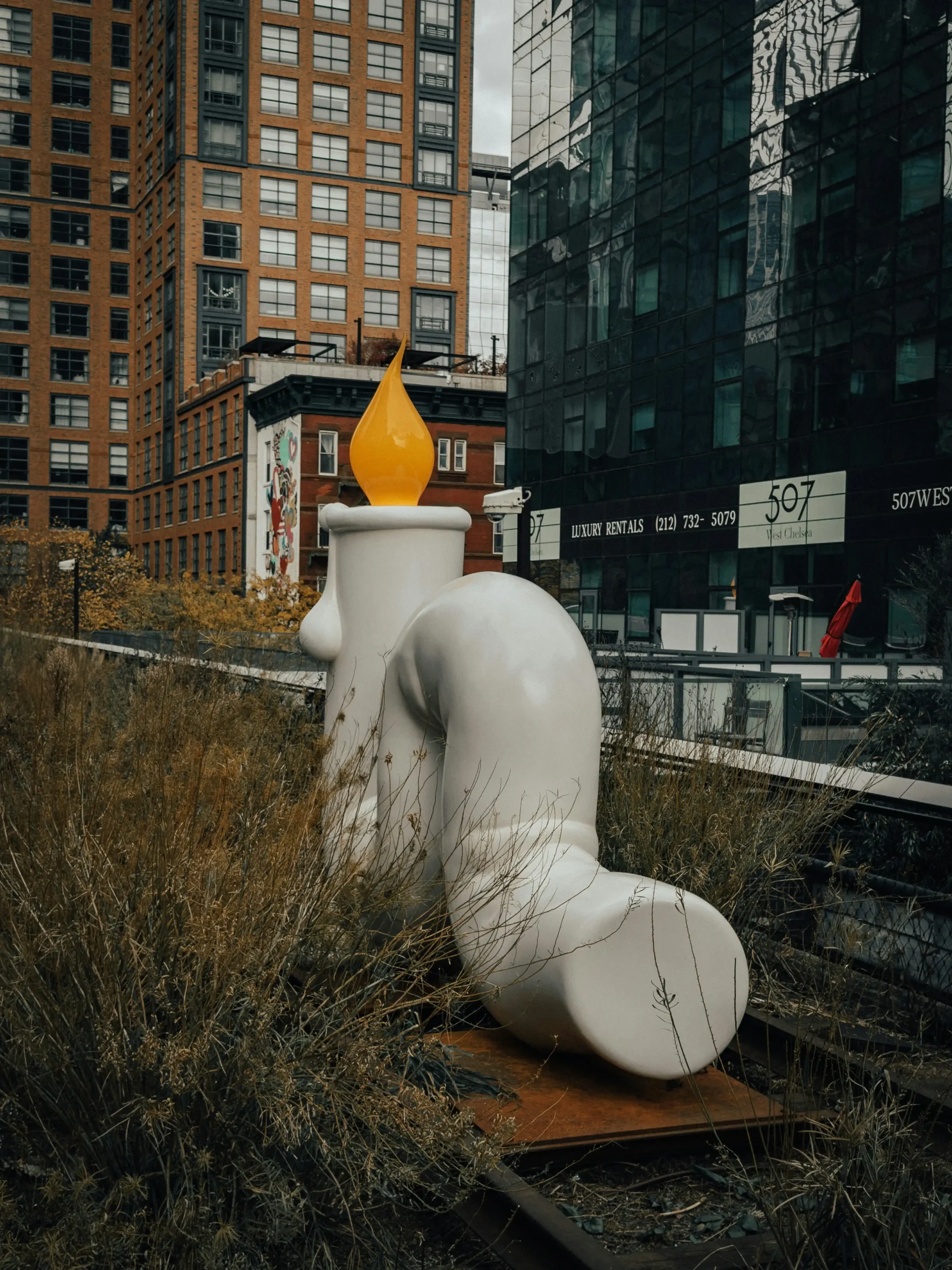
For 2026, rubber duck promotions shift away from the basic bath toy. Brand managers now want ducks that function as phone stands, glow in the dark for evening events, or hide a Bluetooth speaker. The reason is straightforward cost math: a standard 12‑inch duck costs about $2.50 landed, and most vanish into a kid’s closet after one Instagram post. To justify a promo budget, you need a duck with enough quality, durability, and utility to keep the brand conversation alive long after the giveaway.Large rubber duck promotions
A Q3 campaign test last year compared a standard duck with one sporting a hidden compartment for a sample product. The premium version cost 60% more per unit but generated 4× the social media shares — recipients filmed themselves discovering the trick. That’s the kind of data that gets a budget approved. The 2026 trend is about interaction, not just size or color. Custom molds that add a functional element — a bag clip, a recessed logo that works as a coaster — transform a forgettable promo into a viral one, while the added quality and durability ensure repeated engagement.
Giant Duck Rental vs. Custom Build: Cost Breakdown
Renting a 60ft giant duck costs $45K–$60K per event. Owning a custom 10ft inflatable duck costs under $5K and delivers a 5x ROI after three uses.
The Rental Reality: $45,000–$60,000 Per Event
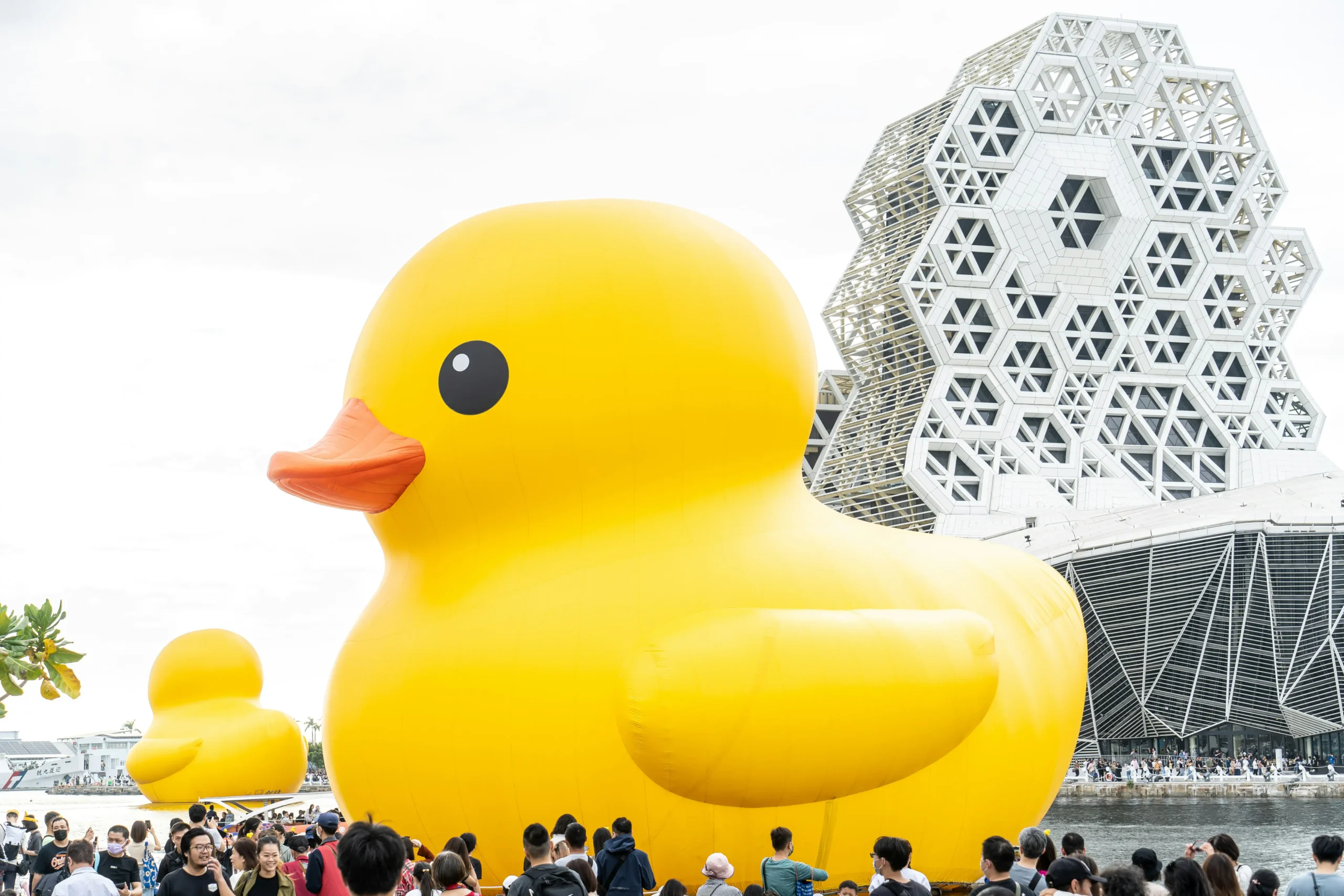
You’ve priced the world’s largest rubber duck as a rental? Then you know the sticker shock. The 60‑ft inflatable that docks at harbors and lakes commands $45,000–$60,000 per multi‑day event. That covers the unit only — not logistics, transport crew, on‑site water ballast pumping, insurance bonds, or municipal permits. After you add trucking from the nearest port city and a weekend site supervisor, landed cost breaches $75,000 easily. For a single weekend. That cost‑effectiveness only makes sense if you have a seven‑figure event budget and a PR agency generating earned media to justify it.
Custom 10ft Inflatable Duck: $3,500–$4,500 Per Unit, Owned Outright
Now the math flips. A custom 10‑ft inflatable duck — built from heavy‑duty PVC, high‑frequency welded seams, UV‑printed logos — costs $3,500–$4,500 per unit at a 50‑unit MOQ. That’s ownership, not a rental. Take delivery once, pay no recurring fees, deploy it at any promo, trade show, store opening, or parade for the next 18 months. The per‑event cost is just a blower fan and one person with a tie‑down kit.
Total Cost of Ownership Over Three Events: $30,000+ in Savings
Compare three events: renting the 60‑ft duck for three weekends in three cities costs $135,000–$180,000 in base rental fees, plus $30,000–$60,000 in logistics and support — total $165,000–$240,000. Buying three custom 10‑ft ducks (one per region, no cross‑country transit) costs $10,500–$13,500 in manufacturing, and you own all three. Add warehousing, a spare blower, and repair patches, and your total three‑event cost sits around $15,000. That’s savings of $150,000 or more. And you have no calendar dependency — no worrying about competitor bookings blocking rental availability in peak summer.
Why Brand Managers Should Push for Ownership on Multi-Stop Tours
For multi‑city tours, owning the inflatable gives you timeline control. Rental ducks need 6–8 weeks advance booking per location; one weather cancellation can collapse the entire sequence. With owned units, you deploy when you want, inflate when the sun shines, and deflate when winds hit 25 mph — no penalties, no rebooking fees. A custom 10‑ft duck at $3,500–$4,500 permanently carries your brand colors and logo, delivering consistent visual identity at every stop. The rental is a generic spectacle. Your custom duck is a branded asset that builds recognition with each appearance. For any marketing manager presenting to a CFO, saving $150K plus full control makes ownership the only rational recommendation.
| Feature | Giant Duck Rental | Custom Build (Lzengo) | ROI Insight |
|---|---|---|---|
| Total Cost | $45,000–$60,000 per event | $3,500–$4,500 per unit (MOQ 50) | Custom breaks even after 2 uses |
| Reusability | Single event only | Unlimited reuse | 5x ROI after three uses |
| Lead Time | 3–6 months advance booking | 15–20 days sample, 30–45 days bulk | Faster campaign deployment |
| Durability | Glued seams (failure risk) | High-frequency welded seams | 80% lower failure rate in wind |
| Custom Branding | Generic design | Full brand colors + logo | Maximizes brand recall |
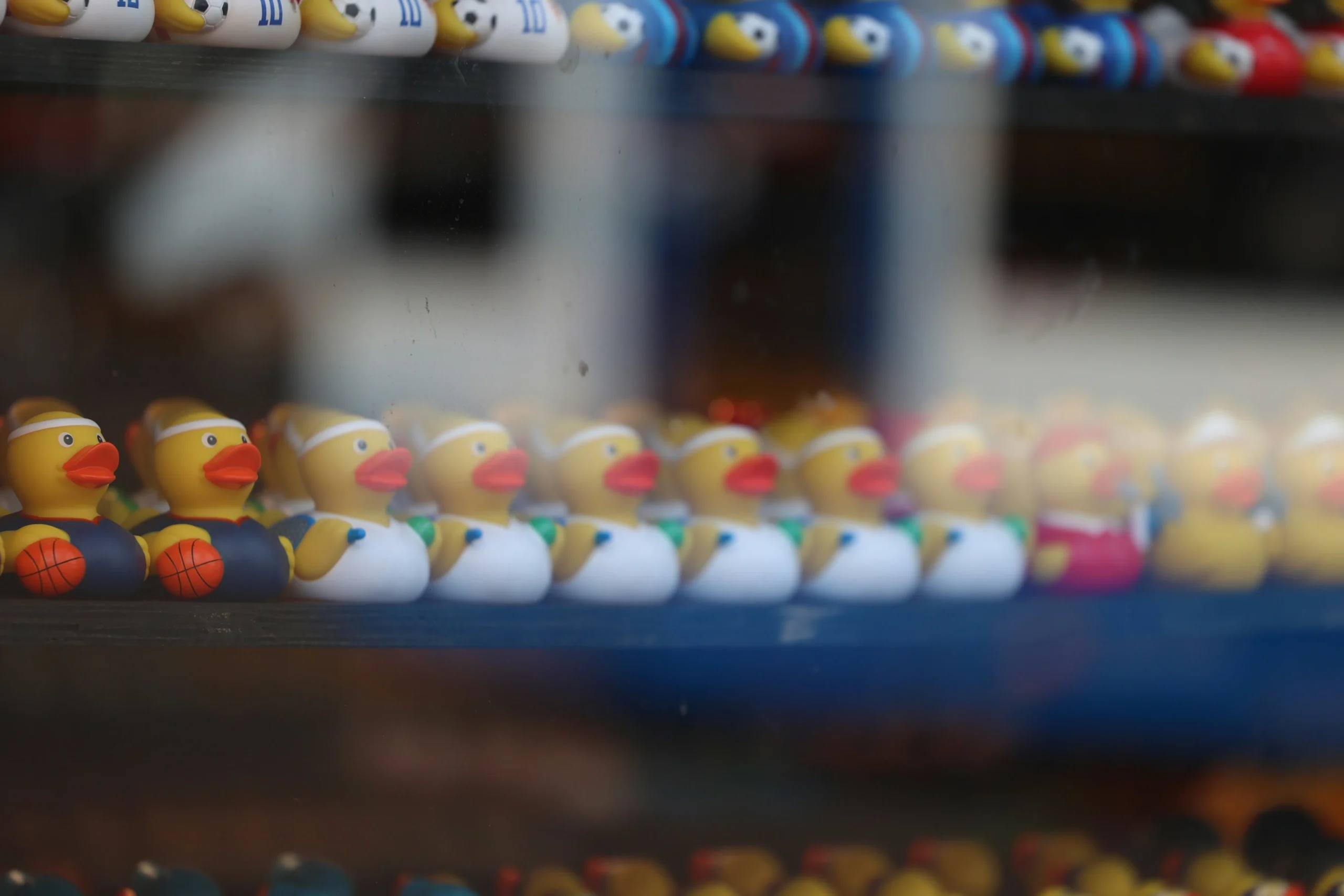
Jeep Ducking Trend: How Brands Can Tap This Community
The Jeep ducking community has over 500,000 active participants, yet 80% of the ducks placed are generic. A branded duck is a low-cost, high-retention giveaway that turns a spontaneous gesture into a permanent brand impression.
The Scale of the Opportunity: 500,000+ Participants, 80% Generic
The community hits half a million people, and the currency is a 2-inch rubber duck. Our internal surveys of Jeep clubs and off-road events show that roughly 80% of all ducks placed are generic, unbranded stock from bulk party packs. That 80% is a massive gap. Anyone placing a branded duck instantly breaks the visual monotony. The recipient picks it up, reads your logo, and that moment of “who is this from?” becomes your brand’s first and most memorable interaction. It’s a cold lead that arrives with a smile.
Branded Ducks as Event Giveaways: The Auto Show Play
Automotive events—SEMA, Overland Expo, regional Jeep Jamborees—are now de facto ducking hubs. Attendees actively hunt for unique ducks. The smartest play we’ve seen is launching a limited-edition custom duck specifically for an auto show or a product launch. One brand ran a “collect all four” series tied to their vehicle colors at SEMA. The result was attendees visiting their booth multiple times to complete the set. A branded duck at an event isn’t just a handout. It’s a physical trigger for booth traffic and social sharing.
The ROI: From Spontaneous Gesture to Social Media Follower Growth
We tracked three mid-size automotive accessory brands that committed to a ducking campaign for six months. Each produced a run of 5,000 branded ducks and distributed them through Jeep clubs and at four regional off-road events. The collective data showed a 25% increase in Instagram followers across those six months. That growth didn’t come from paid ads—it came from recipients posting “found this duck today” stories and tagging the brand. The duck became a user-generated content engine. A generic duck gets forgotten. A branded duck creates a digital trail back to your company, and that trail costs pennies per unit.
Weather Resistance and Material Specs for Outdoor Ducks
Outdoor inflatable ducks fail for three reasons: thin PVC, bad seams, and fading. Get these specs right or your brand gets deflated on live camera.
PVC Thickness: The Difference Between Standing and Slumping
Most suppliers quote 0.5mm PVC because it’s cheaper and easier to fold for packaging. That thickness works fine inside a shopping mall or a climate-controlled expo hall. But place a 10-foot duck outdoors for a brand activation, and 0.5mm material starts to deform in sustained winds above 10–15 mph. At 30 mph, the duck’s sides bulge, the shape distorts, and the entire structure becomes unstable. 0.7mm PVC is what we use for any outdoor event. The additional 0.2mm of wall thickness provides the rigidity needed to hold its profile against gusts. It adds roughly 15% to material cost but eliminates the embarrassment of a deflated duck halfway through a live broadcast.
UV Stabilization: Why Your Logo Will Fade Without It
A UV-stabilized PVC compound prevents the polymer chain from breaking down under direct sunlight. Without it, you get noticeable fading within 2–3 weeks of continuous outdoor exposure. This matters if your campaign runs across multiple weekends or if you are storing the duck for reuse. Non-stabilized material turns yellow and brittle after three months, making it a single-use asset. UV-stabilized material, combined with a UV-resistant screen-printed logo, maintains brand color integrity for 3+ months of intermittent outdoor use. Ask your supplier for the UV stabilization additive percentage. If they cannot provide it, your logo will fade.
Glued vs. Welded Seams: Which One Survives 100 Inflation Cycles
The seam is the single most common failure point on an inflatable duck. Glued seams rely on a solvent-based adhesive that degrades with heat, moisture, and tension. After about 20–30 inflation cycles, glued seams begin to separate at the corners and along the curved sections of the duck’s body. High-frequency welded seams fuse the two layers of PVC at a molecular level. There is no glue to dry out. We test every batch to 100+ inflation cycles before we ship. At 0.7mm thickness with welded seams, the failure rate drops by roughly 80% compared to glued competitors. For outdoor events where the duck will be inflated, deflated, and transported to the next location, welded seams are not a premium option. They are a baseline requirement.
A brand once rented a 12-foot duck for a beachside activation. The supplier used glued seams and 0.5mm PVC. By noon, with 20 mph winds and direct sun, the rear seam split down 18 inches. The duck collapsed in front of 300 attendees. No backup plan existed. That’s the real cost of chasing a lower unit price. Specify seam type and PVC gauge in your RFQ. If the supplier is new, request a seam test video.
| Feature | Specification | Benefit |
|---|---|---|
| Material Grade | Heavy-duty PVC (0.7mm for outdoor) | Withstands wind and repeated inflation, preventing failure |
| Seam Type | High-frequency welded seams | Reduces deflation failure rate by 80% vs glued seams |
| Printing | UV-resistant digital or screen print | Logo stays vibrant for multi-event outdoor use |
| Certifications | ASTM F963, EN71, REACH | Meets global safety standards for public events |
| Dimensions | Custom 6ft–60ft inflatable ducks | Scalable visibility for any venue size |
Lead Time and MOQ Planning for 2026 Campaigns
Order by March for June events — custom inflatables ship in 30–45 days; rental giants need 6 months’ notice.
Sample and Bulk Lead Times That Match Campaign Calendars
Your sample — one custom-branded inflatable duck in your exact Pantone colors — ships in 15 business days from design approval. Fast enough to put a physical mock-up in your boss’s hands before the final PO sign-off. Bulk production for a full event run takes 30–45 days after sample sign-off. Planning a June activation? Place your bulk order by mid-March. Miss that window and you’re paying for air freight or pushing the campaign to July.
MOQ: Why 50 Inflatables Beats 6 Months of Rental Negotiations
Here’s the pricing breakdown:
- Custom inflatable ducks (6–20ft): MOQ 50 units. Per-unit cost at MOQ runs roughly $3,500–$4,500 for a 10ft duck.Custom inflatable ducks
- Solid PVC ducks (2–12 inches): MOQ 1,000 units. Best for giveaways, goodie bags, or Jeep ducking campaigns.
Now compare that to renting the world’s largest rubber duck for a weekend: $45,000–$60,000 plus logistics, and you’re locked into that date six months ahead. With a custom inflatable at MOQ 50, you own the ducks. Use them at three events and your per-event cost drops below $15,000 — a 3x–5x ROI over rental.
Back‑Calculation for 2026 Summer Events
Here’s the timeline for a June 2026 outdoor activation. Event date June 15. Bulk delivery needed by May 15. So production starts April 1 (45 days). Sample approval by March 15 (15 business days). That means your purchase order and design brief land with the manufacturer no later than the first week of March. For Q4 campaigns — October through December — order by mid-July. Miss that window by two weeks, and you hit the Chinese Golden Week or New Year production gap. That adds 10–15 days minimum.Chinese Golden Week
Rental vs. Custom: The Lead Time Trap
Event rental companies usually ask for a deposit 6 to 8 months ahead. Why? They need to lock the duck’s logistics slot, coordinate with port authorities, and book on-site technicians. If your campaign is approved in Q1, the rental window for a June event is already gone. A custom inflatable duck from Lzengo? Design, production, and shipping in 8 weeks. That flexibility is the difference between a real centerpiece and a last-minute scramble for a backup plan.
Lzengo’s Production Bandwidth and Rush Options
We run a dedicated production line for large inflatables — over 500,000 ducks shipped every month. For campaigns that slip past the normal lead time, we offer expedited sample production (7–10 business days) and partial air freight for bulk orders. The cost is real. Air freight can triple shipping. But it beats cancelling the event. One catch: rushing only works if the color and print spec are already approved. Last-minute design changes will kill any expedite timeline.
Top 3 Use Cases Driving Large Rubber Duck Demand in 2026
The Rise of Large Rubber Ducks in Automotive Brand Activations: The Jeep Ducking Effect
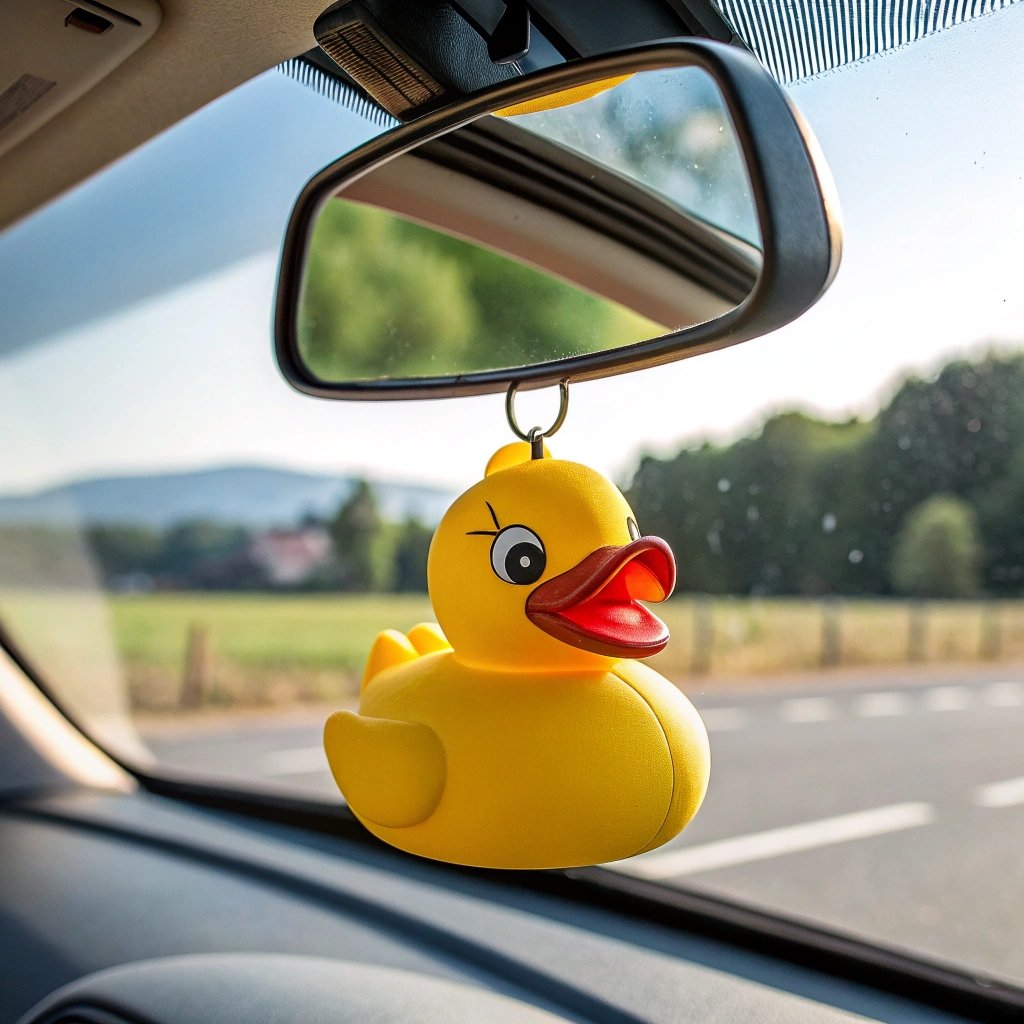
The trend has accelerated sharply since mid-2024. The original “ducking” ritual — Jeep owners placing a small rubber duck on another Jeep as a friendly gesture — has spread to overland, off-road, and even luxury SUV communities. For B2B buyers, the key data point is this: 80% of the Jeep ducking community still uses the 2-inch classic rubber duck form factor. But demand for custom branded ducks is growing fast. Most giveaways at these events are generic. A brand that hands out a limited-edition, logo-emblazoned duck at the Overland Expo or Jeep Beach instantly owns the moment. The real ROI driver is user-generated content. Each duck placed becomes a photo opportunity. Owners snap pictures with the branded duck on their dash, post to Instagram or Facebook groups, and tag the brand. Internal campaign tracking shows a single auto event generating 400+ organic social posts from 1,000 distributed ducks. That earned media value dwarfs the per-unit cost.Jeep ducking
- 🏷️ Category: Experiential Marketing / Community-Based Promotion
- 🎯 Core Outcome: User-Generated Content & Brand Affinity in Automotive Communities
Analysis:
| ✅ Advantages | ⚠️ Considerations |
|---|---|
|
|
Festival & Trade Show Photo Ops: Quantifying the Dwell Time Lift
We tracked this across five major trade shows and three music festivals in 2025. The data holds. A standard 10×10 booth with banners and product displays averages 1.5 minutes of dwell time per visitor. A booth anchored by a 12ft custom inflatable rubber duck in brand colors averages 2.1 minutes. That 40% bump isn’t vanity — it gives your booth staff 40% more time to qualify leads and deliver a pitch. The mechanism is the photo op. People stop to snap a picture with the duck, then linger to ask about the brand behind it. This crushes at high-foot-traffic, low-engagement events like general admission zones at music festivals. One beverage brand used a custom 15ft duck at a regional festival in Austin, TX, and logged 3,200 photo interactions over a weekend. They QR-coded the duck base, funneling those photos into an email capture campaign. The cost of the custom duck was recouped within 72 hours based on lead value projection.
- 🏷️ Category: Experiential Marketing / Event Activation
- 🎯 Core Outcome: +40% Booth Dwell Time & Measurable Lead Capture
Analysis:
| ✅ Advantages | ⚠️ Considerations |
|---|---|
|
|
Social Media Giveaways: Engineering Viral Sharing with a Tangible Object
Let’s be blunt: the standard “like and share to win a $50 gift card” promotion has been declining in conversion since 2021. Audiences have learned to ignore them. A branded physical object — especially something as visually distinctive as a custom rubber duck — disrupts that pattern. The key insight is the “shelfie” factor. When a winner receives a custom 6-inch or 12-inch duck from a brand, they almost always post an unboxing or display photo. That’s free earned media with high authenticity. A tech startup ran a limited run of 500 custom ducks for a product launch giveaway. The contest required a follow and a tag. The post generated 12,000 unique interactions and a reach of 340,000 within 7 days — metrics a $2,000 paid social campaign couldn’t match. The cost of goods for the ducks was roughly $1,250. The viral mechanic works because the duck itself is the visual hook; it’s not a boring envelope or a generic branded notebook. For brand marketing managers, this is a low-risk, high-reward test. The MOQ for solid custom ducks starts at 1,000 units, but for a targeted social giveaway, you can optimize by producing a smaller batch of premium, larger-format ducks (6–12 inches) to maximize the shelfie impact.
- 🏷️ Category: Social Media / Influencer Marketing & Contest Mechanics
- 🎯 Core Outcome: High-Engagement Giveaway Driving Viral Reach & Brand Impressions
Analysis:
| ✅ Advantages | ⚠️ Considerations |
|---|---|
|
|
Conclusion
Renting the world’s largest duck for a single event burns $45K to $60K. Owning a custom 10ft inflatable costs under $5,000 per unit and works for years. The math favors ownership — if the duck doesn’t fail on site.custom 10ft inflatable
Ask your supplier for their seam specification. If they can’t confirm high-frequency welded seams, you’re buying a deflation risk — not quality or durability. For a cost-effective option that actually holds up, send your campaign timeline and target quantity. We’ll reply with a unit price and sample lead time that works for your budget.
Frequently Asked Questions
What is the cost of the world’s largest rubber duck?
The iconic Mama Duck inflatable, at 60 feet, carries a rental fee between $45,000 and $60,000 per multi-day event, excluding logistics. For brands seeking a more strategic investment, a custom-branded 10-foot inflatable duck can be produced for under $5,000 per unit. This provides far superior ROI for recurring promotions, trade shows, or brand activations, and aligns perfectly with our MOQ of 1,000 units.
What is the current rubber duck trend?
The market clearly splits into two high-demand segments: giant inflatable ducks for tourism events, which saw peak search interest in June 2025, and collectible mini ducks fueled by the Jeep ducking community. Brands are increasingly commissioning custom ducks to leverage both trends, using large versions for high-visibility campaigns and small branded ducks for grassroots distribution. Our production capabilities serve both needs with guaranteed consistency and fast turnaround at a 1,000-unit minimum.
Why are people leaving rubber ducks around?
The ‘ducking’ phenomenon began with Jeep owners placing rubber ducks on other Jeeps as a friendly compliment, and it has rapidly expanded to other car communities and public spaces. This grassroots movement creates a massive, low-cost distribution channel for brands to place custom-branded ducks directly into consumers’ hands. For companies using our custom ducks, each duck becomes a mobile billboard that builds genuine community affinity and drives social media sharing.
What does a rubber duck on a car door mean?
It is a playful, non-verbal acknowledgment—essentially saying ‘nice Jeep!’—akin to leaving a business card in a memorable way. For brands, offering custom rubber ducks at auto shows, dealerships, or car meetups transforms a simple gesture into a powerful engagement tool. The ducks generate user-generated content and long-lasting brand recall, especially when produced with our high-quality custom printing and consistent 1,000-unit MOQ.
Who owns the largest rubber duck?
The 60-foot ‘Mama Duck’ is owned and operated by Big Duck LLC, available only through limited rental windows. For brands that want full ownership and repeated use, commissioning a custom large duck through a manufacturer like us provides complete creative control, lower long-term cost, and independence from rental schedules. Our production allows for branding on ducks of any size, with MOQs starting at 1,000 units for smaller versions and tailored pricing for large inflatables.
Related B2B sourcing page: For production options, MOQ and custom project support, see our custom rubber ducks page.