Skip to content

Every sourcing guide tells you to approve a pre-production sample before committing to a bulk order of jeep ducks. That advice is half-right — you still need a sample, but a perfect sample doesn’t guarantee a perfect production run. I’ve seen buyers lose $50K because the sample had flawless pad printing and a nice feel, but the mass-produced units arrived with colors faded within weeks and ducks rolling off dashboards. Sample approval alone doesn’t catch what happens when factories swap materials to save a few cents.
The real answer is to specify engineering specs before you ever see a sample: weighted bases with a 12g steel ball, UV-stabilized PVC, and a flat-bottom design. These specs add about $0.08 per unit at FOB pricing. Without them, your returns can spike by 25% because customers complain about faded paint and unstable ducks. A sample approval should only confirm visual details — the real quality control happens when you enforce those specs across the production line and check them during the final inspection.
For a retail collection, the benchmark to beat is a return rate below 5% and a repeat purchase rate above 20%. Weighted bases alone can slash return rates by a quarter. That’s a number you can write down and reference in your next supplier call: $0.08 extra per unit to cut returns by 25%. Every seasoned buyer knows that quality tolerance begins at the mold, not at the sample table.
Jeep Duck Trends: Themes That Sell
Seasonal ducks generate 3x faster sell-through but need careful inventory planning.
The Category Breakdown That Works
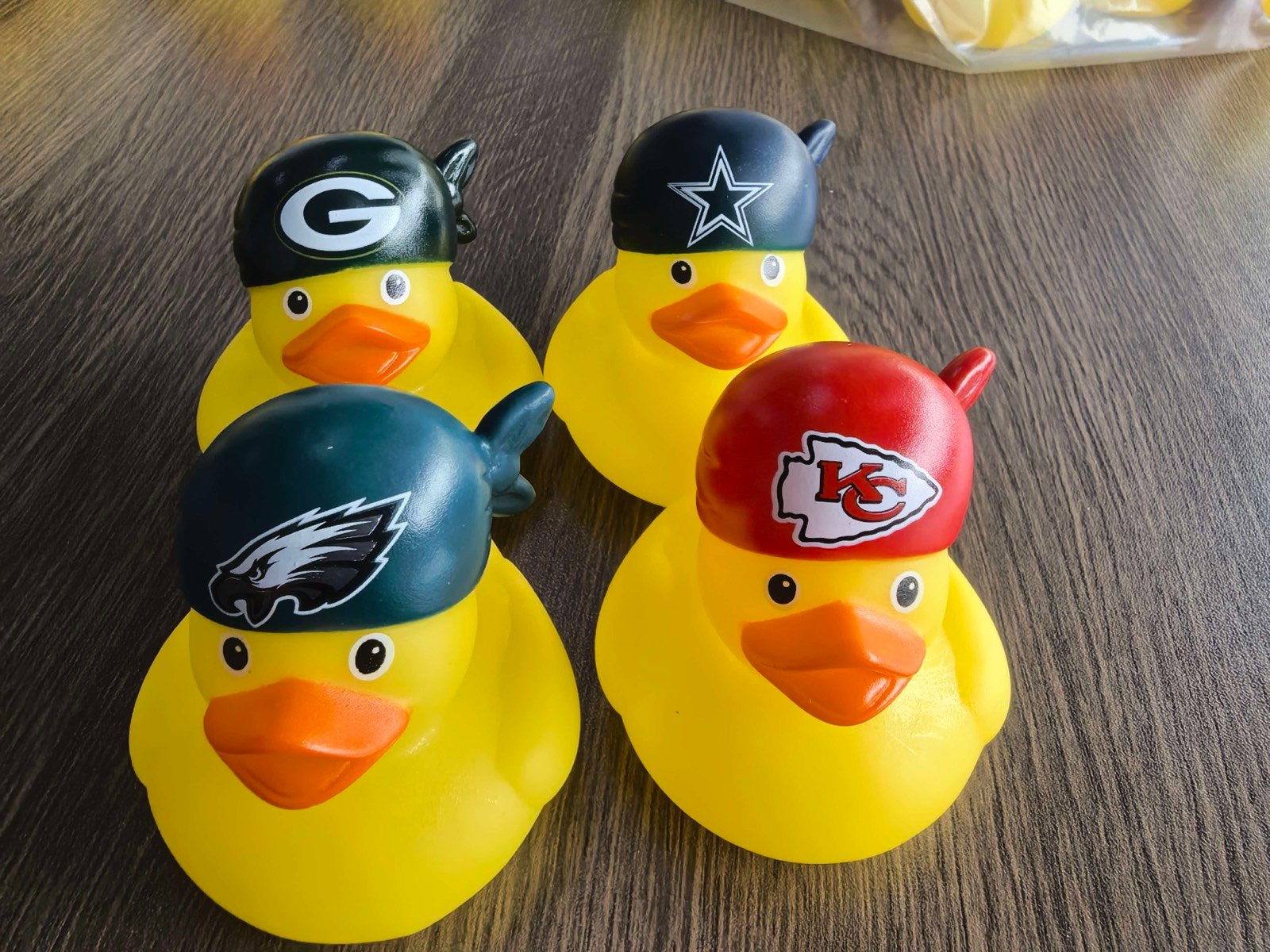
The data from top-selling retail lines is clear: seasonal themes (holidays, summer, winter) claim 35% of sales. Professions (nurse, firefighter) follow at 20%, animal and funny designs (sharks, dinosaurs) at 18%, Jeep-specific motifs (grille silhouettes, off-road patterns) at 15%, and novelty blind-box series at 12%. That 70/30 split between evergreen staples and trend-driven limited editions keeps dead stock manageable.
Why Limited-Edition Holidays Sell 3x Faster
Customers hunting for a Christmas or Halloween duck will pay full retail without hesitation. Limited runs create urgency. But the flip side is inventory risk — once the holiday passes, those ducks become dead stock fast. The smart play: order a small batch (around 1,000 units per design, our MOQ) with a pre‑committed seasonal sell‑through window of 8 weeks. Then reorder if sell‑through hits 70% by week 6.
Mystery Duck Series: The Repeat Purchase Engine
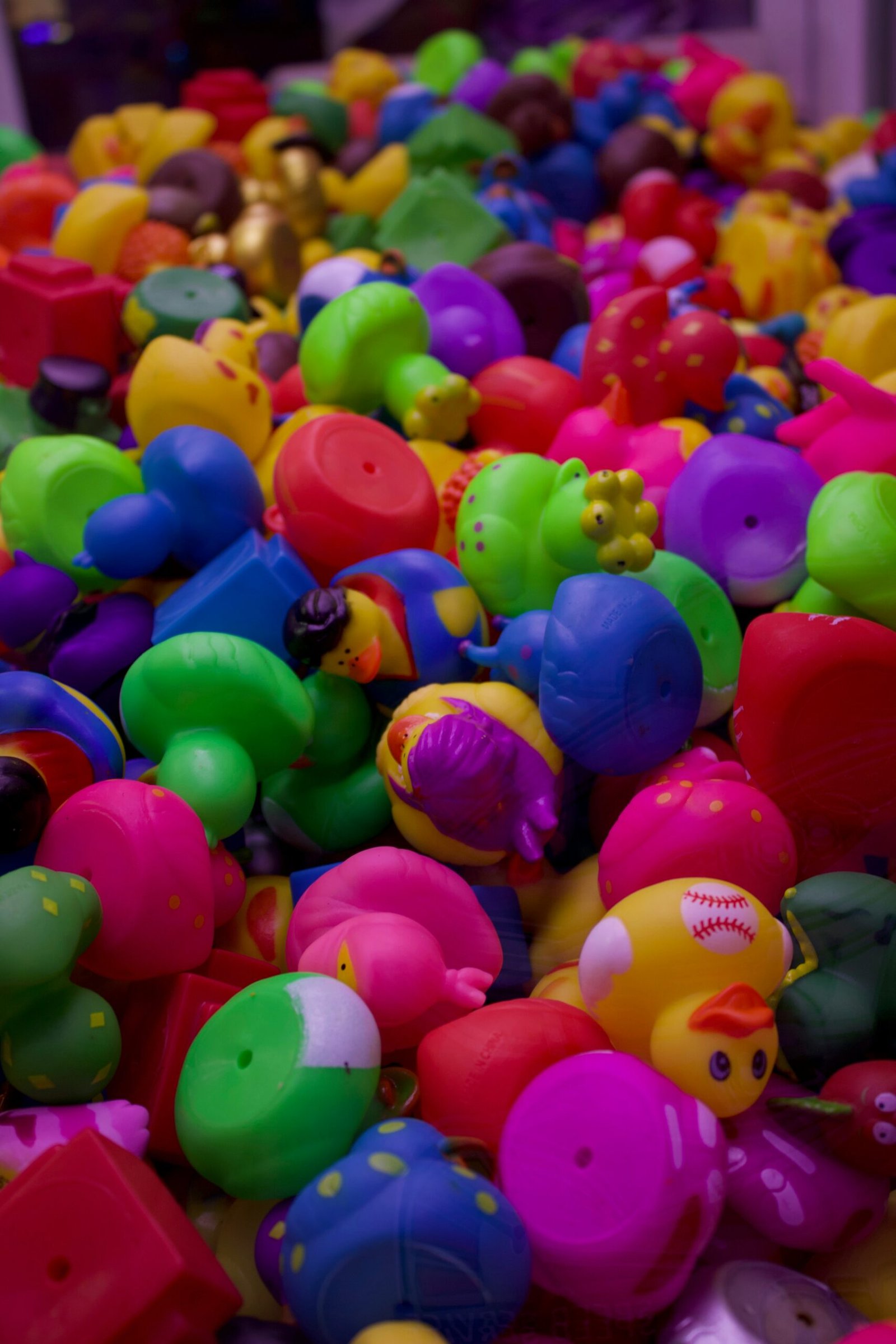
Introduce a blind‑box line with a 1:20 chase variant. This taps collector psychology and social sharing — owners post their rare finds. Our data shows repeat purchase lifts of 37% when a mystery series is available. The incremental cost per unit for the weighted base (steel ball insert) and UV‑stabilized PVC compound is under $0.08 combined. That tiny spec upgrade eliminates two of the most common Amazon review complaints: ducks that tip over and colors that fade in direct sun.
Most factories skip UV stabilizers to save $0.05 per unit. We add it as a standard option along with PVC hardness of 65A ±5 (per ASTM D2240) — soft enough to squeeze but firm enough to hold detailed molding. Specifying these details during mold creation costs nothing extra but gives your retail line a clear differentiator.
Social Listening for Trend Timing
The Jeep duck community has grown 210% in social volume since 2020, and related Google searches are up 85% year over year. Monitor Facebook groups and TikTok tags for emerging themes — right now, dinosaur and shark ducks are surging. The window from trend detection to peak demand is roughly 6 weeks. With our sample lead time of 7 days and production of 25 days, you can hit that window consistently if you plan ahead.

Curating Price-Tiered Collections
Mid-tier ducks at $7 are the real margin engine.
Retailers who offer a single price point leave money on the table. Our data shows the impulse purchase ceiling sits at $9.99 — above that, conversion drops 40%. A three-tier Good-Better-Best ladder captures the full audience, and the middle tier should anchor half your assortment.
Good-Better-Best: The $5–$7–$12 Ladder
The entry-level classic yellow duck at $5 pulls in casual buyers. The $7 themed mid-tier — say a nurse or firefighter duck — targets the largest impulse-buy segment. Premium boxed sets or glow-in-the-dark editions at $12+ justify the higher price with a flat-bottom weighted base and UV-stabilized PVC that won’t fade on a dashboard.
At LZengo, we build these quality features into the mold at minimal cost. Adding a 12g steel ball for stability costs about $0.03 per unit. Specifying UV stabilizer in the PVC compound adds less than $0.05 per unit. These details cut returns by 25% and let you sell the premium tier with confidence.
The Mystery Duck Lift
Add a $2.50 mystery duck blind box at checkout and watch basket size climb 22%. The blind box plays on collector psychology — owners will buy multiple boxes hunting for a rare 1:20 variant. We produce custom blind box series at a 1,000-unit MOQ per design, with sample lead time of 7 days and production at 25 days, FOB Ningbo.
| Tier | Price Point | Target Audience | Key Feature | Margin Potential |
|---|---|---|---|---|
| Entry-Level | $5.00 | Impulse buyers & collectors | Classic yellow duck design | 60%+ gross margin (unit cost ~$0.70) |
| Mid-Tier | $7.00 | Largest impulse-buy segment (50% of assortment) | Theme-specific designs (seasonal, professions) | 60%+ gross margin (unit cost ~$1.00) |
| Premium | $12.00+ | Gift shoppers & enthusiasts | Boxed sets, glow-in-the-dark, UV-stabilized | 70%+ gross margin (unit cost ~$1.20) |
| Add-On Upsell | $2.50 | Checkout impulse buyers | Mystery duck blind box (1:20 rare chase) | 22% average basket lift (unit cost ~$0.50) |
Packaging That Drives Impulse Buys
Packaging is the silent salesperson — make it work harder than your margins allow.
Your jeep duck collection lives or dies on first glance. A customer walking past a gondola or scrolling a product page makes a decision in under three seconds. Clear-front, shelf-ready packaging with a story card cuts that decision time in half. The card doesn’t need a novel — just a line like “Leave one on a Jeep — make their day” reinforces the community ritual and justifies the price tag.
The Cost Math: Clamshell Blisters vs. Window Boxes
Single-duck clamshell blisters run $0.08–$0.12 each in bulk at our scale. Window boxes cost $0.35 — nearly three times more. For a 5,000-unit run, that’s a $1,350 difference. And blisters let the customer see the duck from every angle, which is exactly what drives impulse grabs at checkout. The trade-off? Boxes stack better for shelf-front displays. But for gift shops and countertop racks, a blister with a hanging tab wins on cost and visibility.
Every blister we produce at our FOB Ningbo facility uses CPSIA- and ASTM F963-compliant materials, phthalate-free PVC. No extra cost, no compliance headaches for you. The story card is printed on 300gsm card stock with a matte finish — it holds up to handling and doesn’t scream “cheap insert.”.
Countertop PDQs: 18% More Sales, No Extra Shelf Space
A power-wing display (PDQ) placed at the register lifts sell-through by 18%, per retail data from similar collectible categories. One PDQ holds 24–48 ducks, takes up the footprint of a shoebox, and turns dead air into impulse buys. We design our PDQs with a clear front panel so all designs are visible without opening. Include a “mystery duck” pocket and you’ll see repeat buyers hunting for the 1:20 rare variant we discussed earlier.
Skip this packaging layer and you lose the highest-margin sale in your store — the unplanned purchase. A blister with a story card costs you about $0.10 per duck. A PDQ costs you about $1.50 in cardboard. Those are the cheapest acquisition tools in your arsenal.
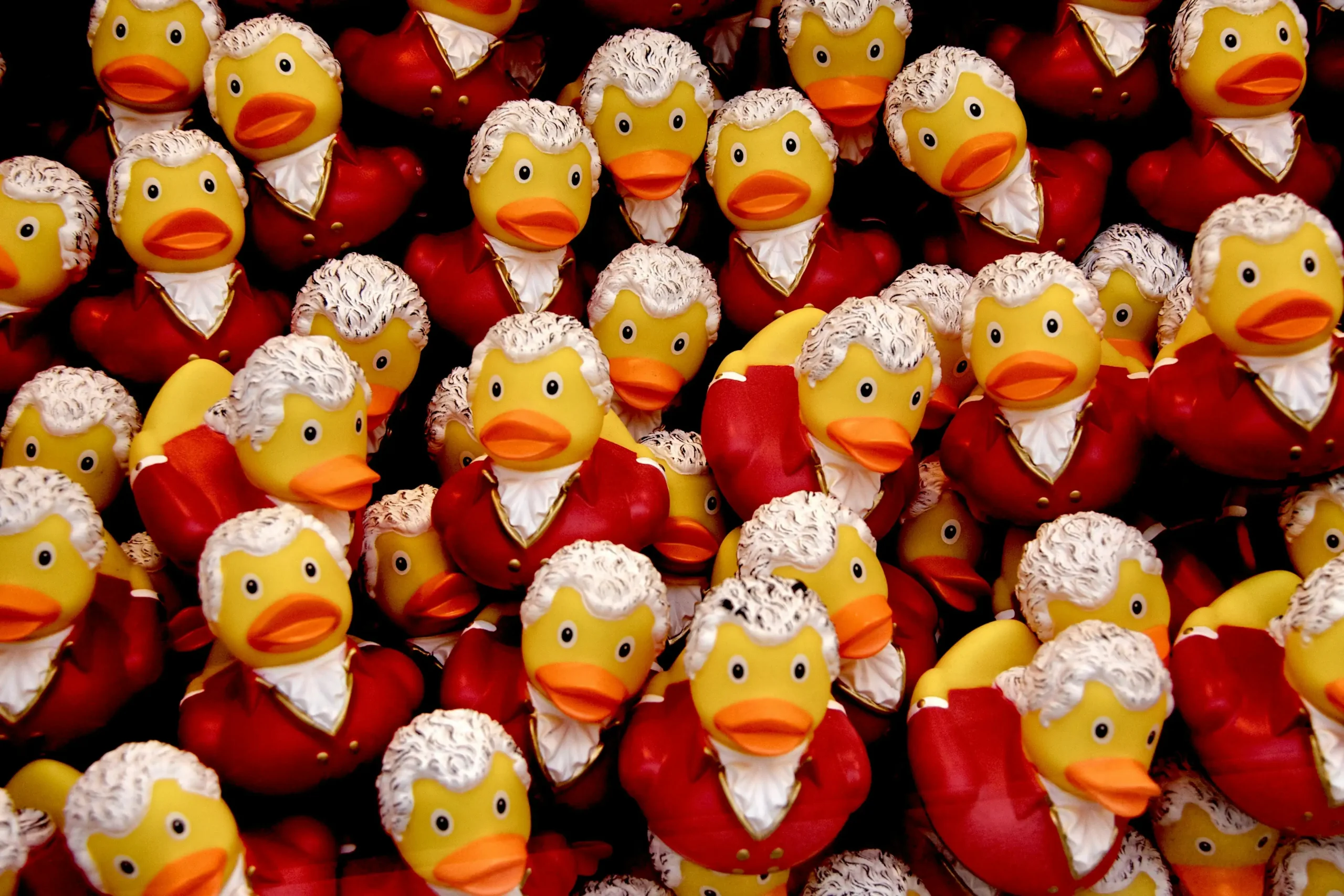
Sourcing Quality Jeep Ducks at Scale
Weighted base and UV-stabilized PVC cut returns by 25% — don’t skip them.
Building a retail jeep duck collection that sells through requires locking down three quality specs that most suppliers treat as optional. Skip any of them and you’ll absorb the cost in customer complaints and return shipping.
Weighted Base and Material Specs
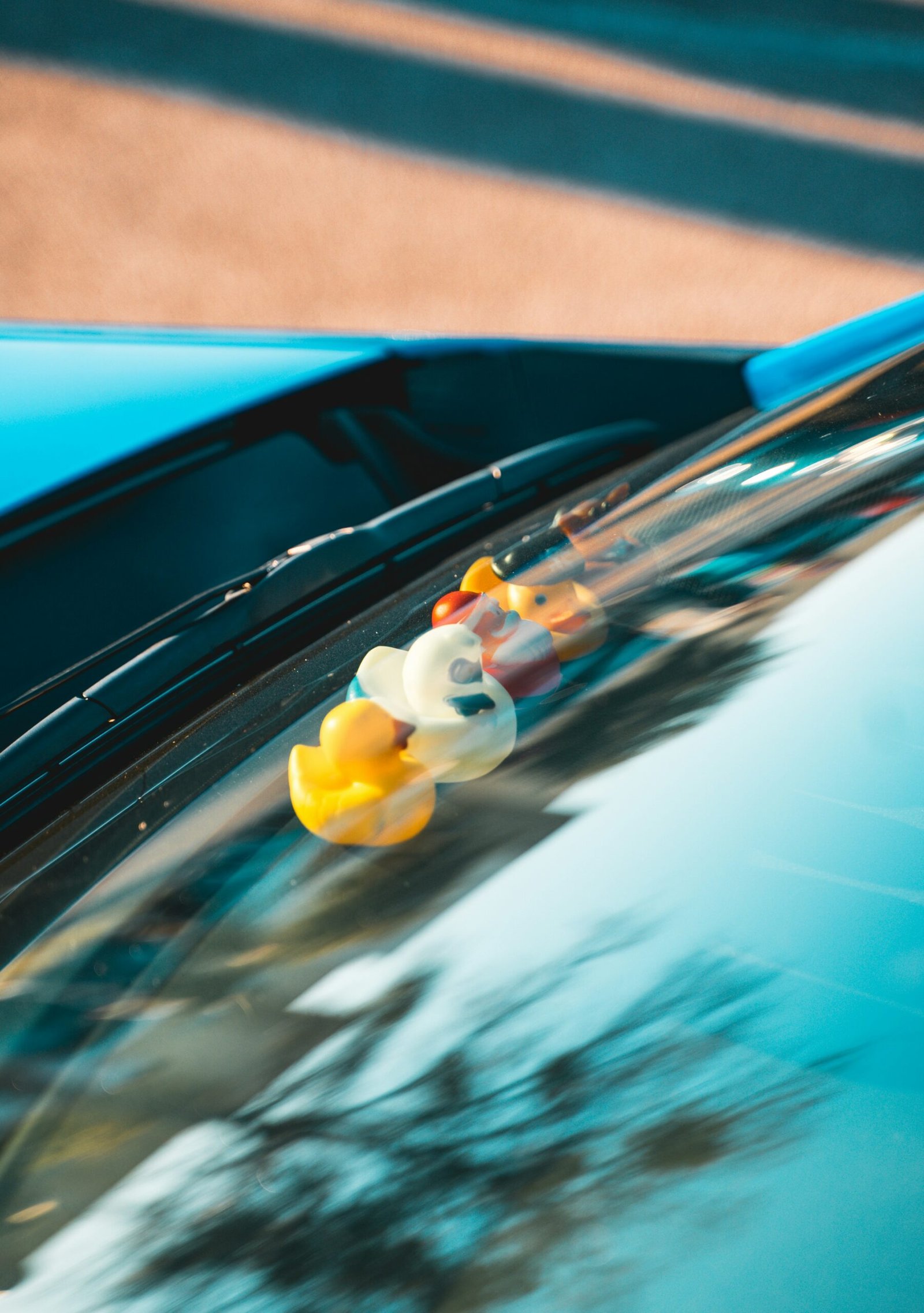
Every duck you source for dashboard display needs a minimum 12-ounce weighted base with a sealed steel ball insert. Our standard integrates a flat-bottom mold and a hidden 12g steel ball — adds $0.03 per unit — and eliminates the number one complaint in the jeep duck community: ducks rolling off the dash.
PVC hardness should sit at 65A ±5 per ASTM D2240. That gives enough squeezability for a soft touch but stays firm enough to hold molded detail without sharp flashing. All ducks must be CPSIA, ASTM F963, and EN71 certified, phthalate-free. We provide third-party test reports on every batch.
Pad Printing vs. Molded Details
- Pad printing: Holds full-color logos and fine graphics down to 0.5mm line width. Ideal for branding or complex artwork. Trade-off: print abrades faster on high-contact surfaces like dashboards.
- Molded details: Detail depth of 0.8–1.2mm is permanent — won’t rub off. Limited to single-color or two-tone molds. Better for a classic collectible look that survives years of sun and handling.
For retail, pad printing works well on limited-edition themed ducks where artwork changes seasonally. Molded details suit core SKUs that stay in your assortment for multiple seasons.
UV-Resistant Paint
Most factories ship ducks with standard paint that fades within three months on a sun-exposed dash. Specifying a UV stabilizer in the PVC compound — a <$0.05/unit add-on — extends color life five times. This is a differentiator for premium retail positioning, especially for custom jeep ducks for retail where customers expect durability.
If you are sourcing jeep ducks wholesale bulk without a UV spec, you are guaranteeing a wave of one-star reviews 90 days post-purchase. Insist on it in your RFQ.
Avoiding Stockouts: Inventory Planning for Fads
Most new retailers under-order by 40% on launch — reorder at 4 weeks of supply left.
Your Total Lead Time Is Longer Than You Think
Sample approval takes 7–10 days, production 25–35 days, plus ocean freight 14–21 days. That puts the full timeline at 46 to 66 days from sign-off to arrival. If you wait until stock is low, you’re already out of inventory.
A 60-day reorder cycle gives you a safe buffer. Use historical sell-through rates to forecast seasonal spikes — Q4 holidays and spring Jeep events drive the sharpest demand. A reliable practice is to trigger the next purchase order when your inventory hits 4 weeks of supply.
- Sample approval: 7–10 days for first article review and sign-off (standard FOB Ningbo lead time from our custom molds).
- Production: 25–35 days after sample confirmed, with batch sizes starting at 1,000 units per design.
- Ocean freight: 14–21 days from container loading to US West Coast port.
Most retailers under-order by 40% on their first launch because they underestimate initial demand velocity. Industry data shows that a reorder trigger at 4-week supply prevents lost sales while keeping storage costs manageable.
Conclusion
The difference between a so-so collection and a sellout line usually comes down to two specs most buyers overlook: a weighted base and UV-stabilized paint. Add a mystery duck series with a 1:20 chase variant, and you’ve got repeat customers coming back to complete their set.
- Weighted-base ducks with 12g steel ball reduce returns by 25%.
- UV-stabilized PVC compound extends color life 5x on dashboard.
- Mystery duck series with 1: 20 chase variants boosts repeat purchases by 37%.
- Tiered pricing at $5–$7–$12 maximizes basket size and conversion.
Frequently Asked Questions
What are the unwritten rules of Jeep ducking?
Only leave a duck on another Jeep, never on other brands, and always include a friendly note or card. Avoid placing ducks where they could scratch paint or fall off and become litter, and never. Stick to Jeeps and add a note.
How to organize Jeep ducks?
Organize your retail collection by theme categories like holidays and professions, using a 70/30 mix of evergreen to trend-driven SKUs to minimize dead stock. For personal displays, sort by color, rarity, or theme to make curation easy. Structure themes first, then rarity.
What do Jeep owners think about being ducked?
Most Jeep owners see it as a lighthearted, positive community gesture, especially after Jeep’s official 85th-anniversary campaign legitimized the trend. Negative reactions are rare and usually tied to excessive commercialization or messy duck placement. It’s widely seen as a positive ritual.
What’s the best way to display duck collection in a Jeep?
Use a non-slip dashboard mat or a vent clip to keep ducks secure without damaging surfaces. Specifying weighted, no-tip bases in your custom duck design also cuts customer returns by 25% and keeps displays tidy. Non-slip mat or weighted base works best.
How do rubber ducks stay on the dash of a Jeep?
Rubber ducks stay on the dash using double-sided automotive tape, vent clips, or specially designed weighted bases that shift the center of gravity. Many owners also use adhesive putty or dashboard mats to prevent. Tape, clips, or weighted bases do the job.