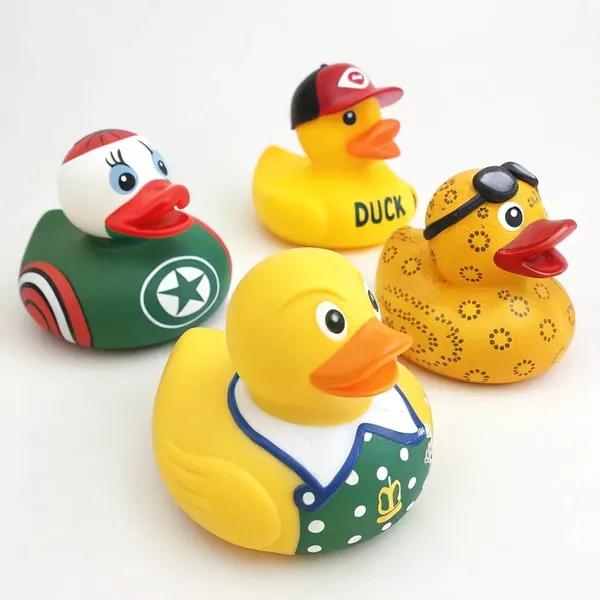
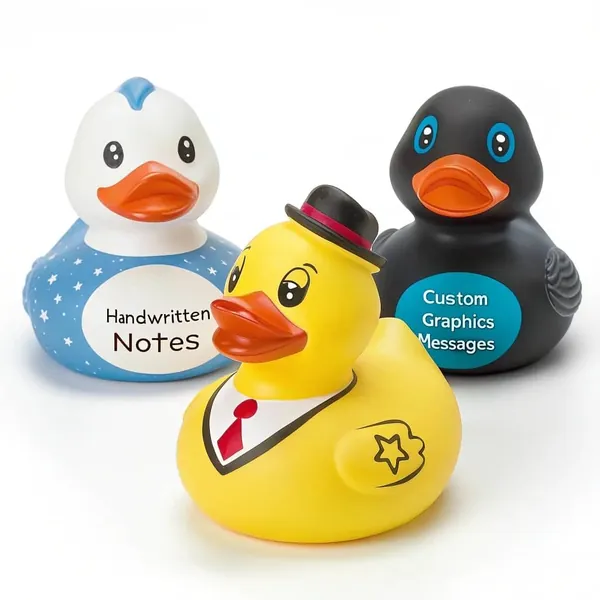
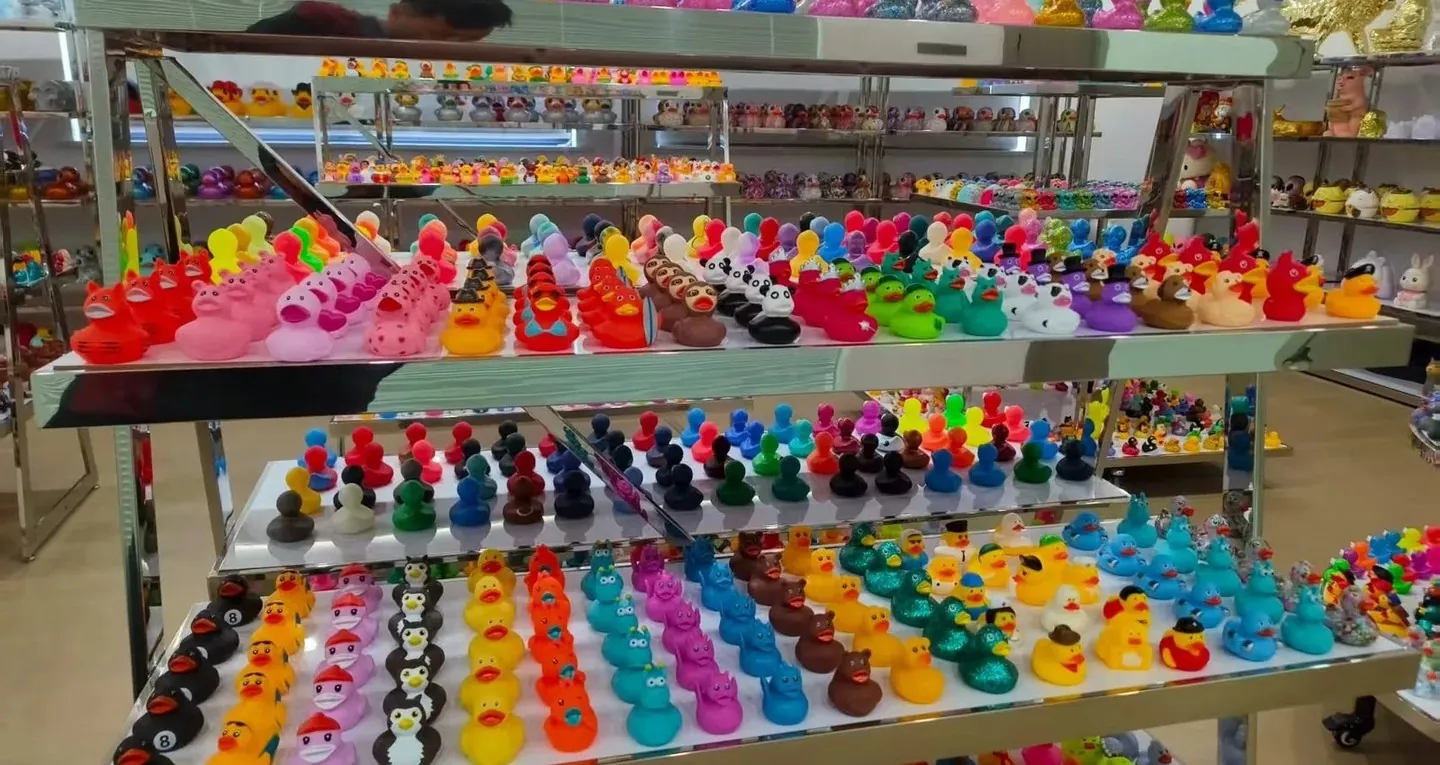
The float decides whether a duck does its job, and a duck that sits low or tips has already failed, whether it is a bath toy, a jeep duck or a giveaway. The float comes from one thing: air trapped inside a sealed hollow body. When a duck sinks or tips, the cause is almost always the seal, the weight distribution or the shape. LZENGO is a custom rubber duck factory in China; this is how float testing works and how a factory fixes a duck that fails it.
In short: a duck floats on sealed air, so a sinking duck is usually a seal, a weight or a shape problem. Test it three ways — float, squeeze under water, overnight soak — on the sample, before the run.
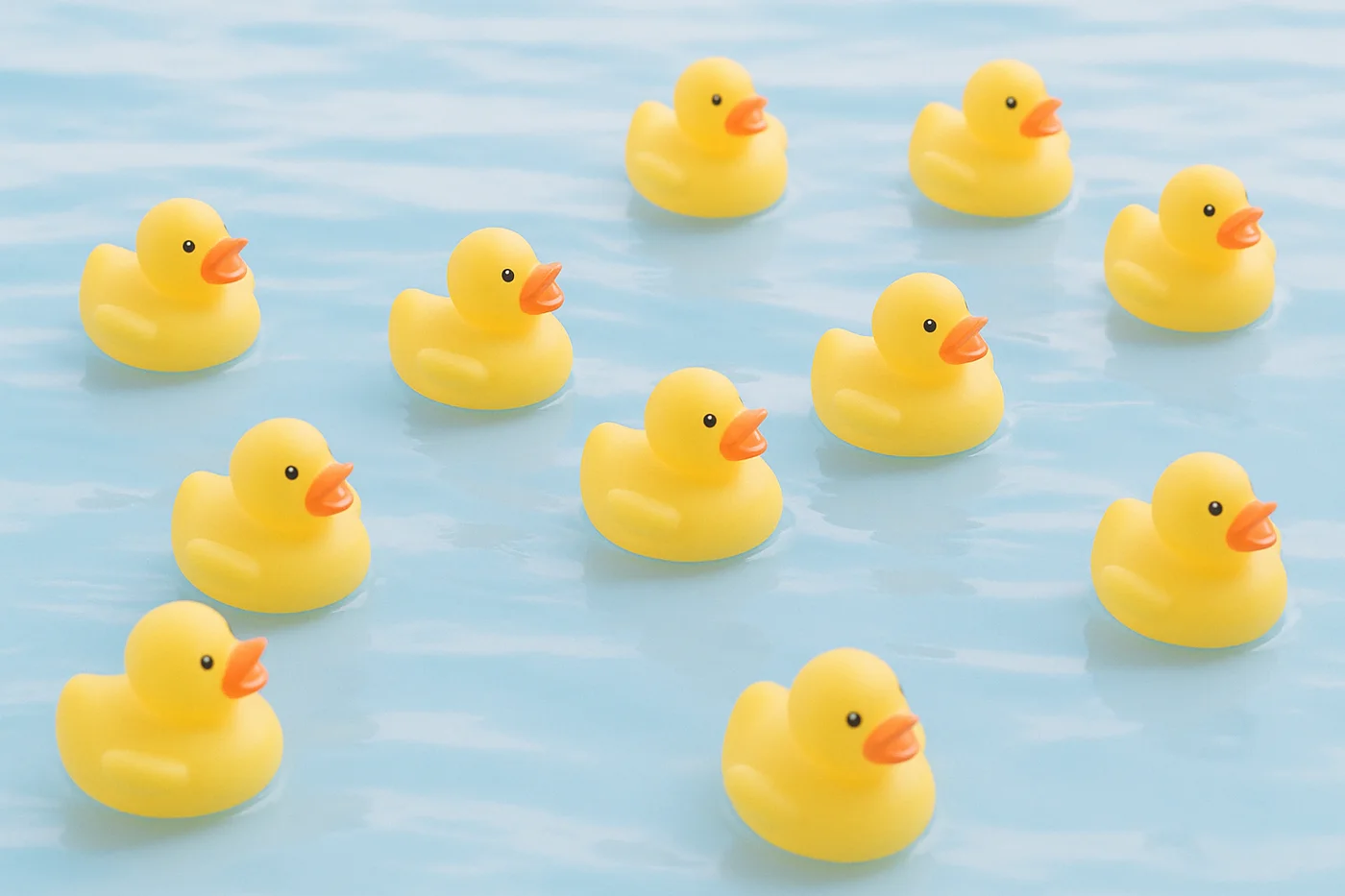
Why does a duck float?
The body is molded hollow and sealed, so the air inside makes the duck lighter than the water it displaces. That is the whole mechanism. If the seal is incomplete, water enters, the air is displaced, and the duck sits low or sinks.
The shape matters too. A duck with a narrow base tips easily, and a duck with a heavy accessory on one side leans. Buoyancy is not just "does it float"; it is "does it float upright".
What are the three common causes?
- A poor seal. A seam or fill hole that is not fully closed lets water in. This is the most common cause and the easiest to test: squeeze the duck under water and watch for bubbles.
- Too much weight. A thick wall, a heavy accessory or a dense compound can make the duck sit low or sink. The wall is a spec, not a guess.
- The wrong shape. A round bottom or a top-heavy outfit tips the duck. A flat or weighted base fixes it.

How should a duck be tested?
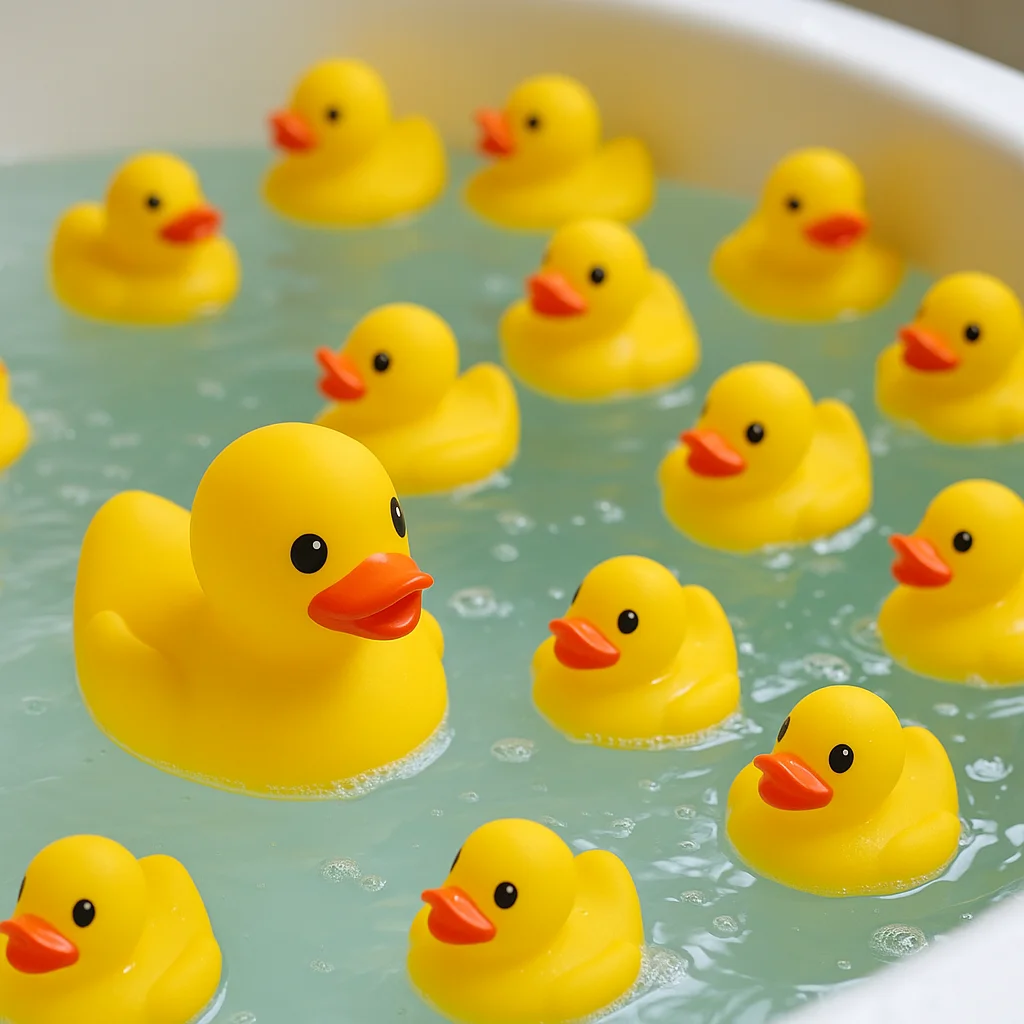
Three tests, in this order. Float it in a bucket and watch for a lean. Squeeze it under water and look for bubbles at the seam and the fill hole. Leave it in water for a day, then check whether it has taken water and sits lower.
Do this on a sample before the run, not on the shipment. A duck that fails the squeeze test will fail in a bath, and a batch that fails at the port is expensive to replace.
How does a factory fix a sinking duck?
First, find the cause: seal, weight or shape. A seal problem is a tool or process fix; a weight problem is a wall-thickness or compound change; a shape problem is a base design change. Each is easier to fix at the sample stage than after the run.
Final Note
Float is the easiest thing to test and the most disruptive thing to find at the port. The three tests belong on the sample, with the result written down and the sinker kept as evidence for the next tool change. A duck that fails the squeeze test will fail in a bath, whatever the report says.
What should a buyer decide about float?
- Is the duck for water, for a shelf, or for both?
- Does it have to float upright, or only stay on the surface?
- How long should it float without taking water?
- What does the order do if the sample sinks?
- Is the seal or the shape the first thing to change?
Frequently Asked Questions
Why does my rubber duck sink?
Most often because water is getting in through a poor seal, so the trapped air is displaced. Squeeze the duck under water and look for bubbles at the seam or the fill hole. If the seal is sound, the cause is weight or shape.
Do all rubber ducks float upright?
No. A duck with a round base or a heavy accessory can float but lean. For a bath toy or a race duck, test that it sits upright, not just that it stays on the surface. A flat or weighted base is the usual fix.
How long should a float test last?
At least a day in water for a production sample, plus a squeeze test at the start. A duck that floats for a minute can still take water through a slow leak. Test the seam and the fill hole, then leave it submerged overnight.
Ready to test the float?
Send the design, the use and the quantity. We reply with the float test, the sample and the fix if it fails.
Figures are LZENGO QC data for 2026 and move with design, wall and material.