A hang tag belongs in the duck order, not in a separate stationery order, because the card and the body have to be approved in the same round. A moulded duck carries a logo, a shape and a base mark; a date, a batch reference or a paragraph of copy needs a surface of its own. The tag is that surface, and it is specified with a material, a print and a colour.
A hang tag is a printed part of the duck order, not a piece of stationery bought afterwards.
In short: A rubber duck hang tag is a printed card with its own stock, print, die, hole and cord, and it is specified as part of the duck order. It carries the message and the data the duck cannot hold, it is approved as an assembled dummy with the duck beside it, it will never match the duck's colour exactly because ink on board and pigment in vinyl are different materials, and it cannot replace the permanent mark on the product or the pack.
The Card Is a Printed Part of the Order
A tag is briefed, proofed, sampled and packed like any other component, and the mistake is treating it as something the buyer adds once the ducks are on the water. It has a stock, a print build, a die, a hole, a cord and a position on the duck, and each of those is a line a factory can only follow if it appears in the brief. When the card is mentioned for the first time in the last email before packing, the tag that ships is whatever board was already in the trim bin, and nobody chose it.
Writing the tag into the pack sheet changes the conversation. The duck and the card are approved in the same round, the colour is judged on the same bench under the same light, and the step that ties the card on is scheduled instead of improvised. A buyer who has ordered print before knows that the card is the easy part, but it is the easy part only after five lines are written down.
What a Tag Carries That the Duck Cannot
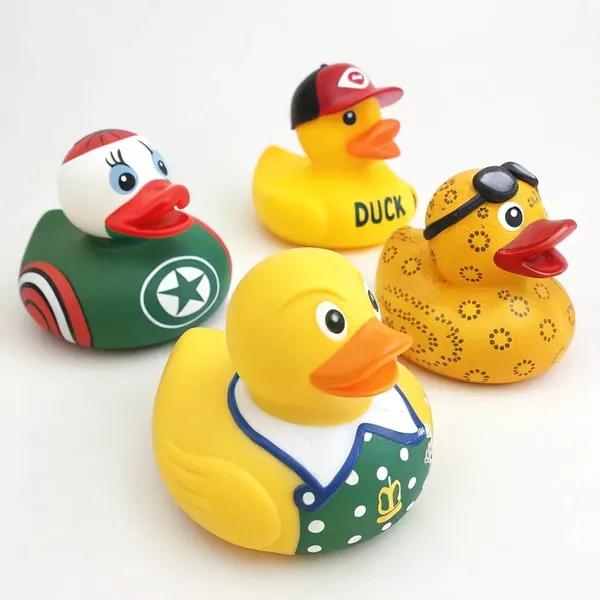
A moulded duck has a small vocabulary. It can carry a logo, a moulded symbol, a shape and a base mark, and every word it says has to survive the tool, the moulding heat and the print line. That is enough for a brand and a character. It is not enough for a date, a batch reference, a care line, a message, a set of rules or a code that points to a page which can change after the order ships.
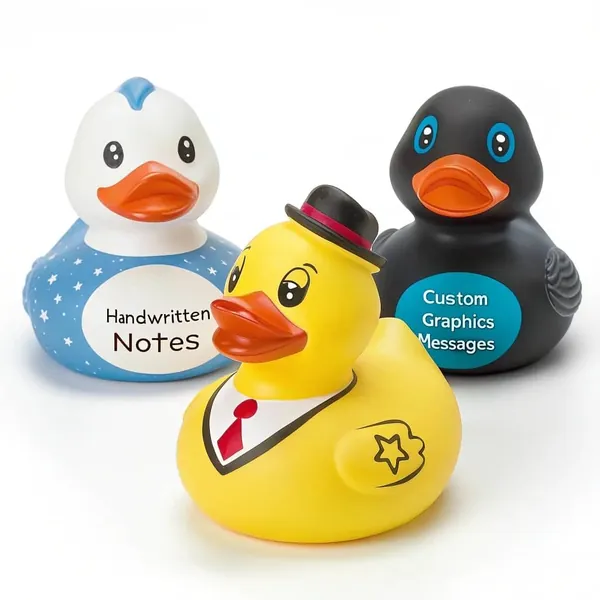
The card is where the information layer lives. It can hold a paragraph in a size a person can read at arm's length, it can be reprinted for the next event without touching the tool, and it can carry a value that changes on every card, such as a number, a name or a year. That is why clubs and event buyers keep asking for a card even when the duck is already printed: the duck identifies the object, and the card explains the moment.
| Surface | What it can hold | What it cannot do |
|---|---|---|
| Duck body | A logo, a moulded symbol, the base mark | A paragraph, a date, a number that changes per tag |
| Printed card | Wording, a date, a batch code, a QR code | Be the permanent mark, survive a wash |
| Bag header | A product name, a size, a barcode | Carry more than a few lines |
| Carton | Quantity, carton number, shipping marks | Reach the person who holds one duck |
The table also shows the limit. Nothing on a card can be the permanent mark, and nothing on a carton reaches the person who receives a single duck. Each surface has one job, and a tag that tries to do the carton's job as well is a tag that gets reprinted.

The Artwork File Is the Tag
A card is printed from a file, and the file decides most of what can go wrong in the bag. The trim size and the die decide the shape. The hole position decides how the card hangs. The cord or clip decides whether it survives the trip. The colour build decides whether the print matches the reference, and the fonts have to be outlined so the printer is not choosing a substitute at the press. A card approved as a picture and sent to print as a picture comes back with the hole in the wrong place or the type too close to the trim.
The same file has to say what varies. A fixed message is one print job. A run where every card carries a different number, name or date is a data job, and the sequence has to be agreed before the press starts, because the numbering order is part of the approval rather than a detail for the operator. A buyer who wants the second kind has to send a list instead of an instruction.
The ink matters as much as the layout. How a print is laid down and checked on a curved duck body is covered in the printing process note, and the same question of build and coverage applies to the flat card.
There is also a proof step that buyers skip. A digital proof shows the layout, not the ink on the stock, so the approval object should be a physical dummy: the real board, the real hole, the real cord and the duck beside it. A card that looks right on a screen can still be wrong in the hand.
Pressing the print is only half of it. A card that has passed the press still has to be cut, and the cut is where the trim, the hole and the type margin are proved together. A card that has passed the press and the cut has passed the two operations that can ruin it.
A retained dummy is the reference that makes the repeat simple: the storage note covers how a fixed reference is kept so the second run can be compared with it rather than with a memory.
Two Materials Never Match Exactly
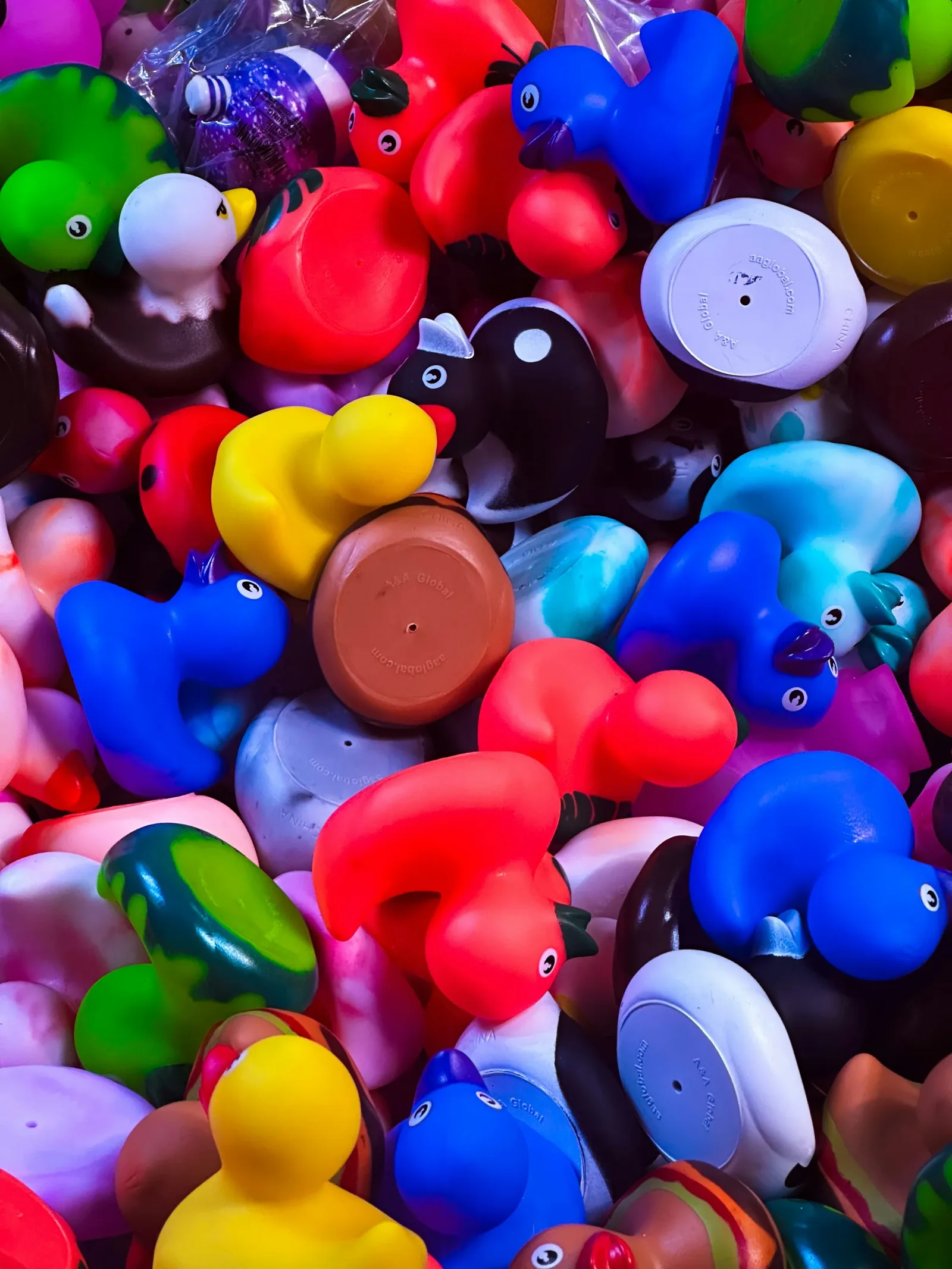
A card printed in the brand colour and a duck moulded in the same colour will not match in daylight. One is ink sitting on board, the other is pigment dispersed through vinyl, and the two surfaces reflect light differently. They can be close, and close is usually enough when the pair was approved together. What does not work is an expectation of equality, because equality across two materials is not available, and the argument that follows wastes the reprint.
Stock shifts the result as well. A kraft card reads natural and absorbs ink, a coated card holds a sharper print and reads more premium, and a matte or gloss lamination changes the tone in the way a varnish changes it on the body. The finish is a decision a buyer can make on purpose, but it has to be made before the print, not after the first proof arrives.
Approval light matters more here than anywhere else in the order. If the card is signed in an office and the duck is signed on the factory floor, the pair has never been seen together, and the first time anyone compares them is on a shelf. Approve the two in the light where the customer will see them, and write down which light that was. The colour matching note covers how the reference itself is agreed.
Attachment Is a Packing Step
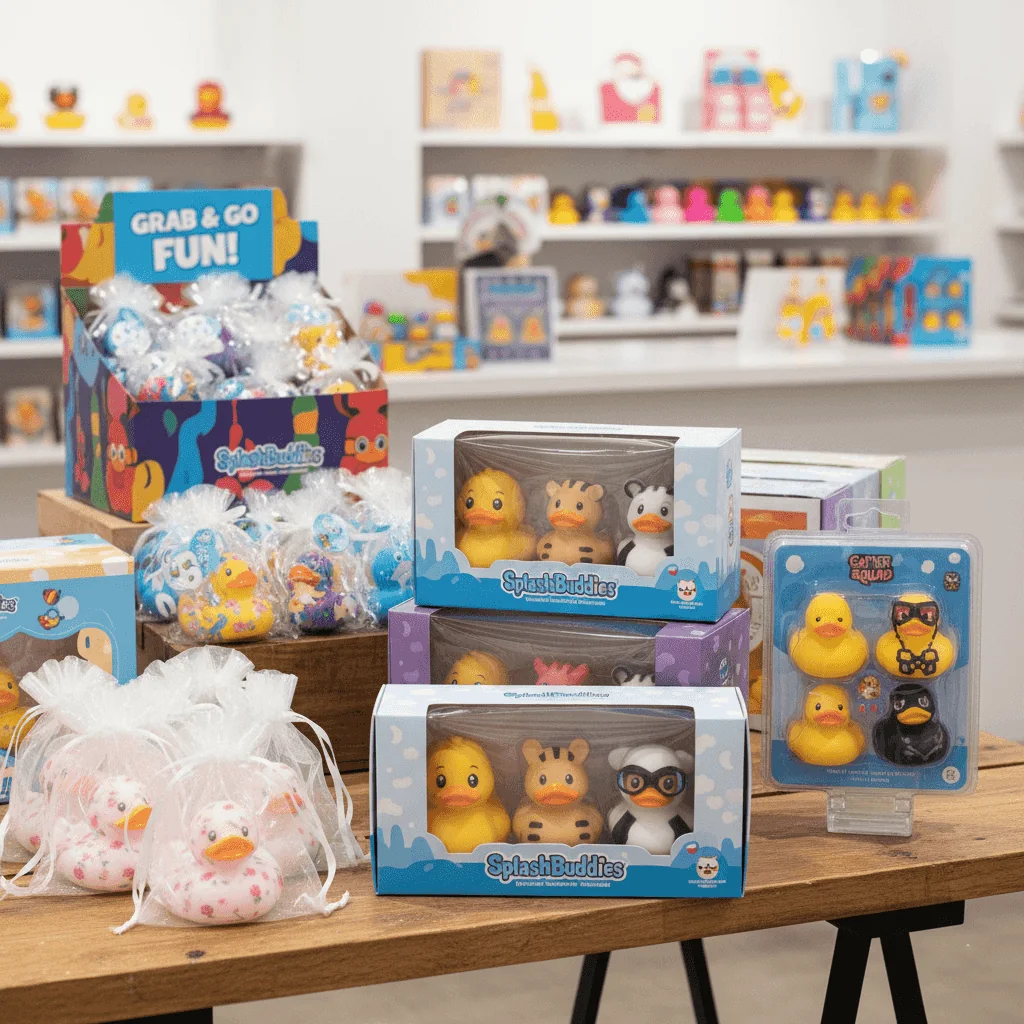
A tag is either attached at the factory or shipped loose, and that line in the brief decides who carries the risk. Attached at the factory, the card is guaranteed to travel with the duck and packing stays one operation. Loose, the buyer assembles and owns the result, which is the right choice only when the buyer is the one handing out the ducks and wants to tie each card personally.
Where the card sits belongs in the same decision. A punched card on a cord at the neck, a card slotted or stapled to the bag, and a clip on the wing each behave differently in a carton and on a shelf. A cord with no securing check is the reason tags end up at the bottom of the bag, and a hole punched too close to the trim tears on the first pull. The attachment has to be tested on a packed duck, not on a flat card.
Protection travels with it. A loose card rubbing against a vinyl body in a carton arrives scuffed, and a scuffed card reads poorly even when the board is good. The packaging layout note covers how the bag, the header and the carton are stacked so the card arrives flat and clean.
The Tag Is Not the Permanent Mark
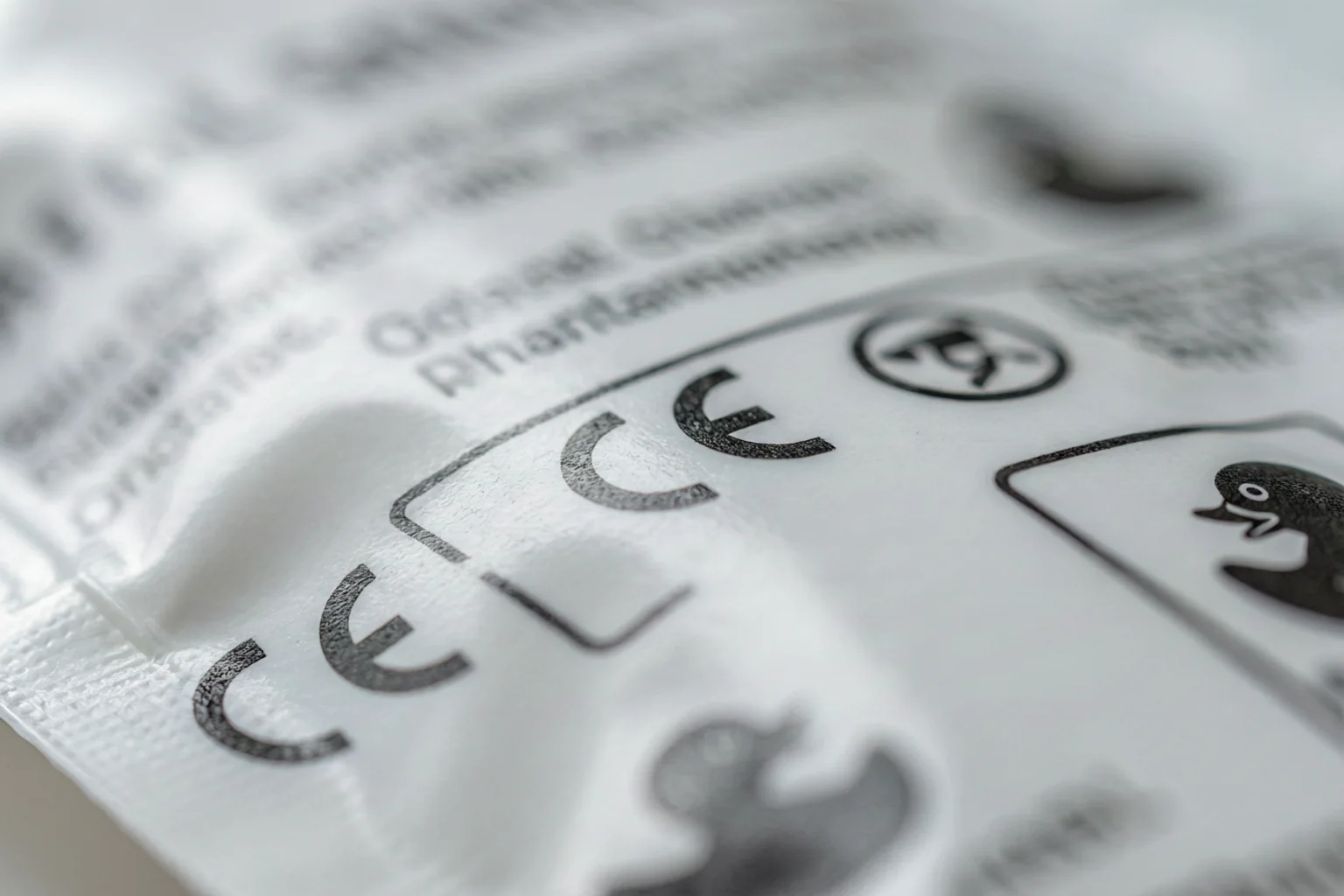
A card on a cord can be removed, which is exactly why it cannot serve as the permanent distinguishing mark a children's product needs. The CPSC tracking label guidance explains that the marks have to be permanently affixed to the product and its packaging, to the extent practicable, and it allows the required information to be in code form as long as the consumer knows who to contact to interpret the code. A tag can carry that code and that contact line. It cannot be the only place either one appears.
The attachment has a second rule behind it. A card and a cord that pull free become small parts, and for a toy intended for children under three the question is answered by a physical test rather than a judgement: no toy or other children's article subject to the rule shall be small enough to fit entirely within the cylinder shown in the regulation, when tested by its procedure (16 CFR 1501.4). A tag designed for a duck that will reach a toddler therefore needs the cord and the card secured so they do not become the small part.
The practical reading is that the tag repeats and never replaces. Put the batch and the contact on the product and the pack first, then repeat them on the card where a person actually reads them, which is the same order the safety label guide uses. A lost card then loses a message, never the traceability of the run.
Four questions keep a tag order honest, and each one belongs in writing before the print starts:
- What does the card carry that the duck cannot, and which of those values changes on every card?
- Which stock, finish and print build, and was the card approved as a dummy with the duck?
- Where does the tag sit, and is it attached at the factory or shipped loose?
- Does the permanent mark still exist on the product or the pack without the tag?
Frequently Asked Questions
What material is a rubber duck hang tag made of?
Most duck tags are printed on card stock, and the choice is between a coated board that holds a sharp print and reads more premium, and a kraft board that reads natural and absorbs ink. The stock decides the feel in the hand and how the same ink looks, so it belongs in the approval rather than in the printer's default.
How is a hang tag attached to a rubber duck?
Three methods cover most orders: a punched hole with a cord around the neck, a card slotted or stapled to the bag, and a plastic clip. Each one changes how the card behaves in a carton. The method should be chosen on a packed duck, because a card that hangs well on its own can still tear once weight and movement are added.
Should the tag colour match the duck exactly?
It cannot match exactly, because ink on board and pigment in vinyl are different materials. It can be close, and close is the normal target. The pair should be approved side by side in daylight, with the result recorded, so the second order is compared with a reference rather than with a memory.
Is a hang tag safe on a duck for a small child?
It can be, if the card and the cord are sized and secured so they cannot become a loose small part, and if the required information also appears on the product or the pack. A tag is a surface that repeats information. Treating it as the only surface is the mistake, not the tag itself.
Final Note: Five Lines Before the Tag Is Printed
- Name the wording and the data, including what changes per card and in what sequence.
- Name the stock, the finish, the print build and the colour reference.
- Fix the trim, the hole position and the attachment, then prove them on a dummy.
- Say where the tag sits on the duck and whether it is attached or loose.
- Keep one signed dummy and one spare card as the reference for the repeat run.
A tag is small enough to be decided in an afternoon, and that is exactly why it is usually decided by accident. Five lines in the brief turn the card into a component of the order, and the duck arrives with the message the buyer intended instead of the board that happened to be in the bin.
Key takeaways
- The card is a printed part of the order and belongs in the pack sheet, covered under the card as a component.
- A tag carries the paragraph, the date and the per-tag value the duck cannot hold, covered under what a tag carries.
- The artwork file decides the trim, the hole, the cord and the data sequence, covered under the artwork file.
- Ink on board and pigment in vinyl never match exactly, so approve the pair in daylight, covered under two materials.
- Attachment is a packing decision, not a finishing touch, covered under attachment as packing.