Skip to content
Most first duck orders are a single size in a single design. Most successful duck programmes end up with three or four sizes, because the same customer who wants a giveaway duck also wants something bigger for a display, a pool event or a retail shelf.
Assortment is also a logistics decision. Ducks scale in three dimensions, so a duck twice as tall takes roughly eight times the volume, and a container fills much faster than a linear calculation suggests. Planning sizes together is how a range stays affordable to ship.
What Each Size Does Commercially
Small ducks, broadly 5 to 8 centimetres, are volume products. They are cheap per unit, easy to pack in bulk, and they suit giveaways, event boxes and mailers where the duck is a token rather than the main item. Their low unit cost makes them the easiest size to test a new design with.
Standard ducks around 8 to 10 centimetres are the retail and merchandise backbone. They take branding well, they photograph legibly, and they sit comfortably in a hand. Most branded merchandise programmes live at this size.
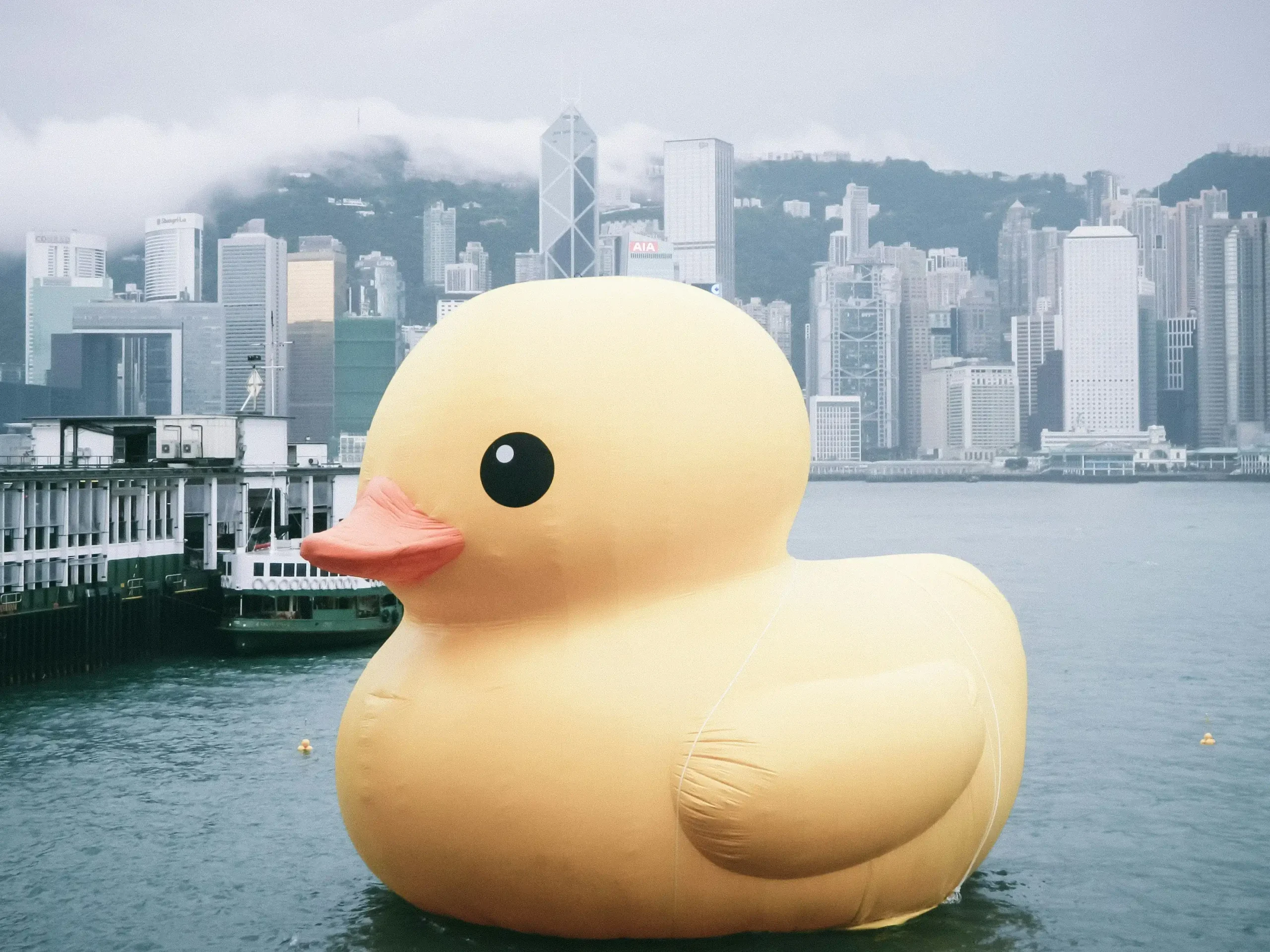
Large ducks, 20 centimetres and above, are display and novelty products. They command a higher price, they photograph dramatically, and they are the size that generates social content. They are also where shipping economics change sharply, which is why large duck size specifications belong in the same conversation as the assortment rather than in a separate one.
Why Volume Punishes Size Increases
A container has a fixed internal volume. A duck that grows by 50 percent in every dimension occupies roughly 3.4 times the volume, and one that doubles in every dimension occupies about eight times as much. The unit freight cost therefore rises much faster than the unit material cost when size increases.
That asymmetry drives assortment design. A range with a few large ducks and many small ones fills a container efficiently, because the large items provide visual anchor while the small ones use the remaining space. A range of all-large ducks fills a container with relatively few units and raises the landed cost per unit of everything inside.
Packing method interacts here too. Large ducks are often hollow and can nest or deform if compressed, so they need support that small ducks do not. The transit trade-offs including when air freight becomes justified for thin, high-value ranges are set out in our freight comparison for duck orders.
Building the Assortment
A workable assortment answers three questions. What job does each size do. How many units of each will sell. And how do the sizes pack together into a container that is full at a sensible freight cost.
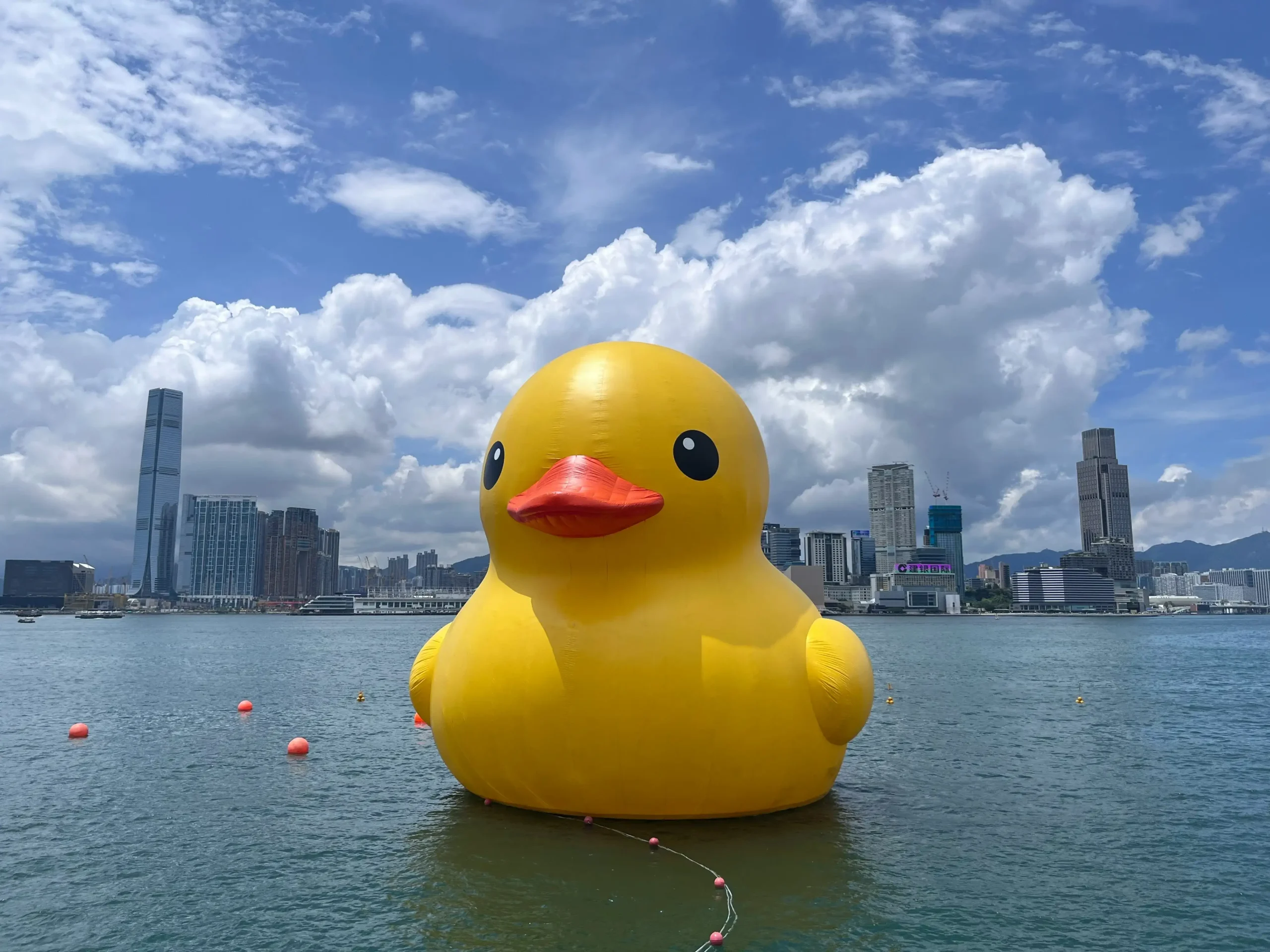
A common structure is one or two large ducks as the hero, several standard sizes covering the main branding and retail offer, and one or two small sizes for volume. That mix gives a photographer three compositions, a buyer three price points, and a container a reasonable fill profile.
Colour should be planned at the same time. Repeating a colour across sizes lets a customer buy the same design at two scales, which is a stronger retail story than a range where each size is a different colour. Demand forecasting and order sizing is where the quantities get settled, and it is much easier once the size structure itself is decided.
Shelf, Screen and Event Realities
Where a duck will be displayed changes the size that works. A retail peg favours small and standard sizes with a header card. A counter display unit favours standard and mid sizes. A pool, a fountain or an event race needs large ducks that read clearly from a distance and float predictably.
Photography is a practical constraint that is easy to forget. Designers need a consistent set of sizes to compose product shots, and a range with a large size gap between adjacent SKUs is harder to shoot convincingly than a range that steps up gradually.
Import documentation has to reflect the range too. Every size is a separate article for classification and packing list purposes, and the description should state the size rather than only the design name. The documentation conventions summarised by US CBP basic import and export guidance apply here as they would to any imported article, and a clear size structure at specification stage makes them straightforward.
A Practical Sizing Plan
Start from the campaign, not the catalogue. Write down what the duck has to do in each setting, then assign a size to each job. Only then choose quantities, and check the resulting mix against a container fill calculation before committing to a tool.
Keep the size steps close enough to share a design language. A 7 cm duck and a 25 cm duck can be the same character, but the moulded detail that works at 25 cm may need simplifying at 7 cm, and that difference should be settled before both tools are cut.
Finally, treat the assortment as a living structure rather than a fixed range. Most programmes add a size in year two and retire one in year three, which is normal. Buying tooling with that possibility in mind, and keeping the reference samples from each first run, makes the change inexpensive. Our large and mini duck range is quoted as a size structure so the packing and freight consequences are visible alongside the unit prices.
FAQ
What sizes do rubber ducks come in?
Small promotional ducks are commonly 5 to 8 cm, standard ducks 8 to 10 cm, and large display ducks from 20 cm upward. Each tier serves a different commercial job.
How does duck size affect shipping?
Volume grows much faster than length. A duck 50 percent larger in every dimension takes roughly 3.4 times the space, so freight cost per unit rises sharply with size.
What mix suits a container?
A few large ducks as the visual anchor with many standard and small ones filling the remaining volume. An all-large range fills a container with relatively few units.
Do I need a separate tool for each size?
Yes. Each size is a separate mould, so a range of three sizes means three tools, and each design may need detail simplified at the smallest size.
How many sizes should a first order have?
One or two. Test the design at a single size, then add sizes in the second order once sell-through is known.
Video: Rubber Duck Manufacturing Process
If you are planning a duck range rather than a single duck, send the settings it has to work in. Our duck range team will propose a size structure with the packing and freight consequences attached.