Giveaway swag earns its keep by one test: does it still exist a month after the event, somewhere a stranger can see it? By that test most of the bag fails, and it fails for a structural reason rather than a design reason. An item survives when it has a place to live and a reason to stay there. A duck has both. It sits on a desk, a shelf or a dashboard, and it stays because it is pleasant to look at rather than because it is useful.
Written as a working note on giveaway items, with public toy safety and packaging guidance cited where a rule applies.
The short answer: A duck gets kept because it is a display object with a fixed resting place, a face, and no competing copy of itself. A pen gets used up and lost, and a sticker gets applied once and forgotten. Retention is not a matter of taste. It comes from whether the item has somewhere to live after the event, and whether it reads as an object rather than as a leaflet.
Why the swag bag empties
A conference bag is a sorting problem that the visitor solves in about a minute. Anything that looks like paper goes in one pile. Anything that duplicates something they already own goes in another. Anything that needs a decision goes to the bottom, where it stays. The items that survive are the ones that need no decision: they are already an object, they already have a place, and they ask nothing of the visitor on the way home.
That last point is where the environmental argument arrives, and it is not a small one. The European Commission's packaging page records that packaging waste reached 186.5 kg per person in the EU in 2022 and that packaging is nearly half of marine litter. A giveaway that is thrown away in the venue adds to that pile in the most visible way possible. The swag that gets kept is, almost by definition, the swag that does not become waste in the first week.
A fair comparison, item by item
| Item | Where it lives after the event | Why it stops being seen | What the duck does differently |
|---|---|---|---|
| Pen | A drawer or a cup | It runs out, and the branding was never the point | It is an object, not a consumable |
| Sticker | A laptop lid or a bin | It is applied once and becomes background | It stands up and gets looked at |
| Tote bag | A cupboard | It is used for errands, not for display | It is displayed without being used |
| Notebook | A desk stack | It fills up and is put away | It has no fill state |
| Rubber duck | A desk, shelf, dashboard or bath | It has no failure state | It keeps doing the same job |
The pattern is not about quality. It is about a lifecycle. A pen has a duty cycle and an end date. A sticker has an application and then a long decline. A duck has neither, because its job is to be present. That is why a small duck can outlast a much larger item in the same bag.
The desk is the display
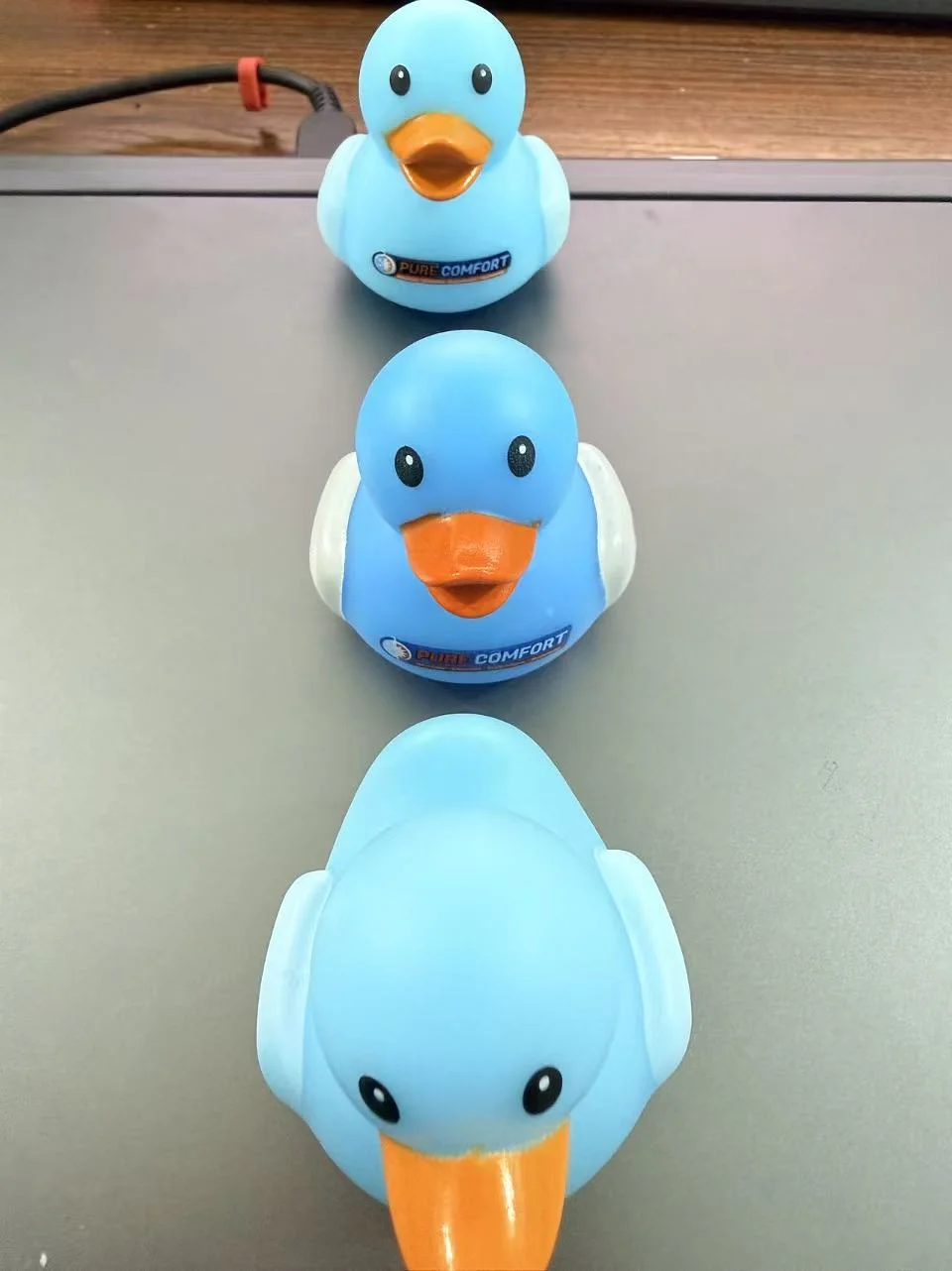
The single most useful thing about a duck is that it is a display object that does not need a plinth. People put them on a monitor stand, a bookshelf, the corner of a reception desk, or a car dashboard, and they leave them there. Each of those spots is a place where a stranger sees a brand without being sold to.
A pen in a cup is seen by one person. A duck on a reception desk is seen by everyone who walks past it. That difference in audience, not the object itself, is the reason promotional ducks keep working after the campaign ends. The industry note on seasonal programmes shows the same logic applied to a calendar rather than to a desk.
What a duck does that a pen cannot
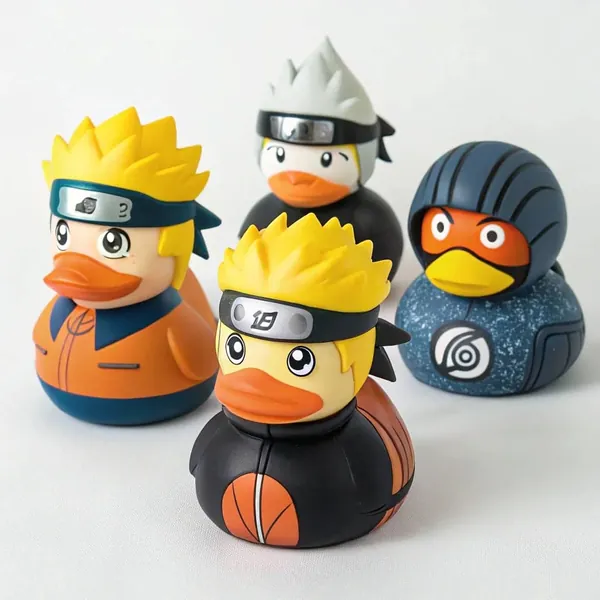
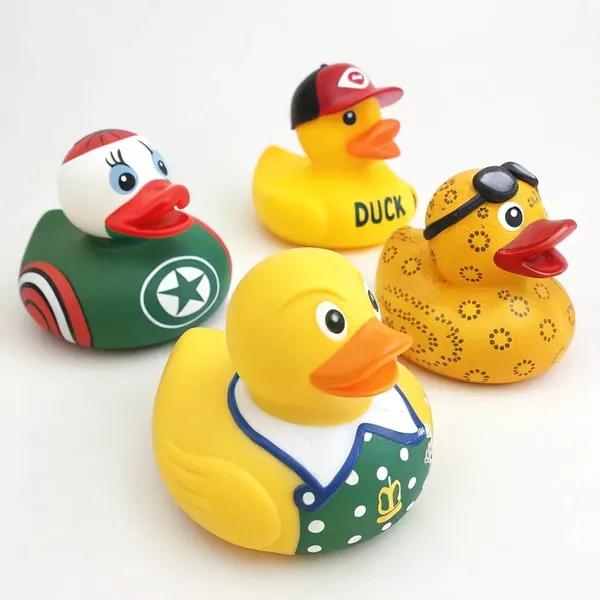
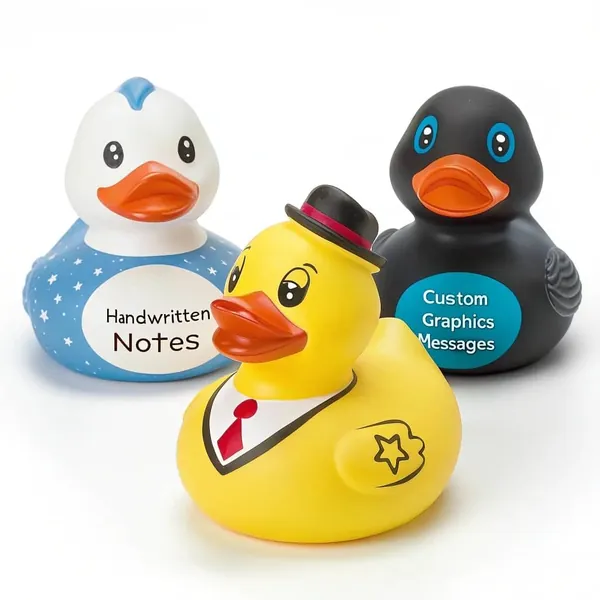
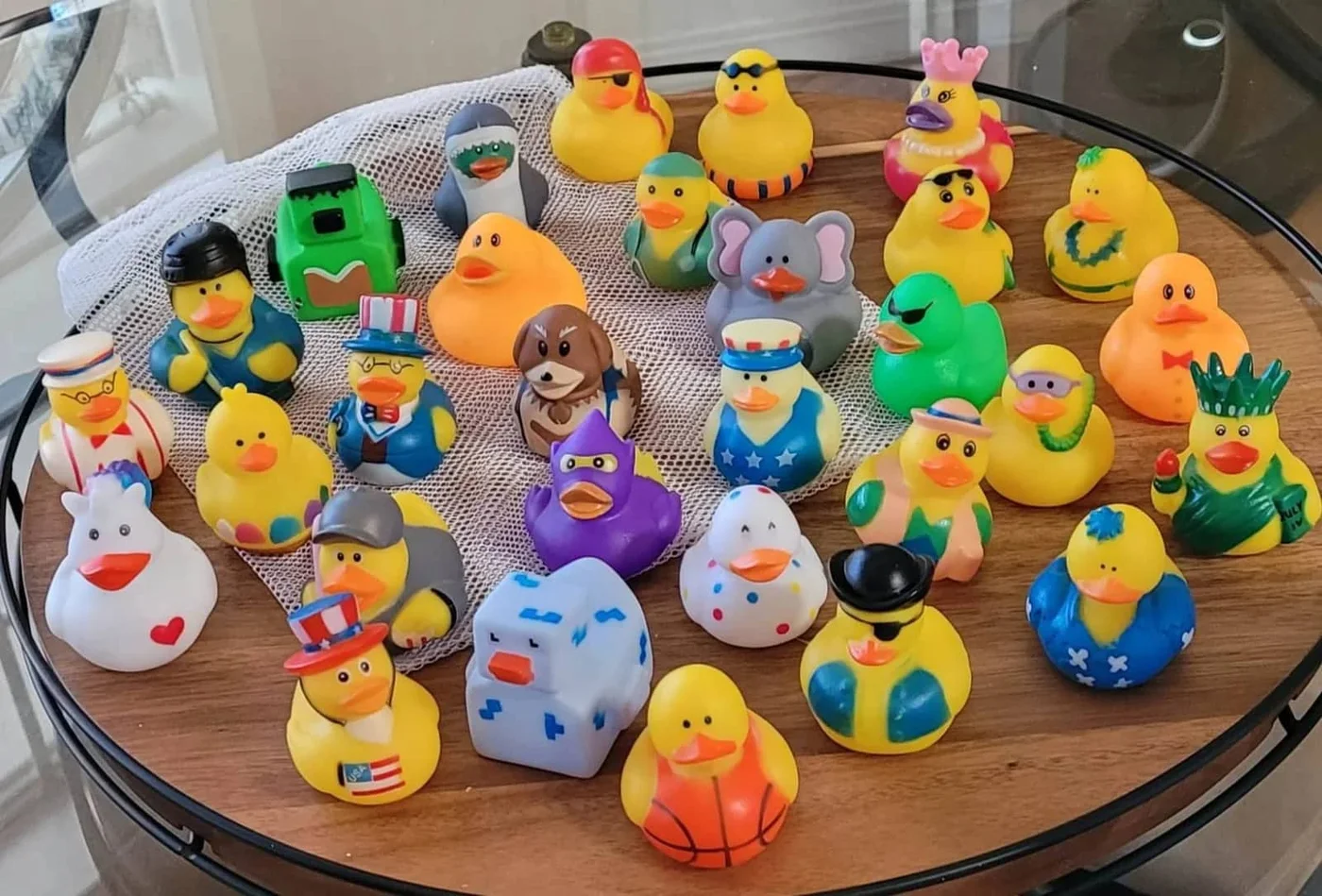
A duck can carry a outfit, a hat, a uniform or a prop, and the shape survives it. That means the branded version can be a small piece of character work rather than a flat logo on a cylinder. A duck in a hard hat, a duck in a lab coat, a duck in the colours of a team: each of those reads as a design decision, and design decisions are what people keep.
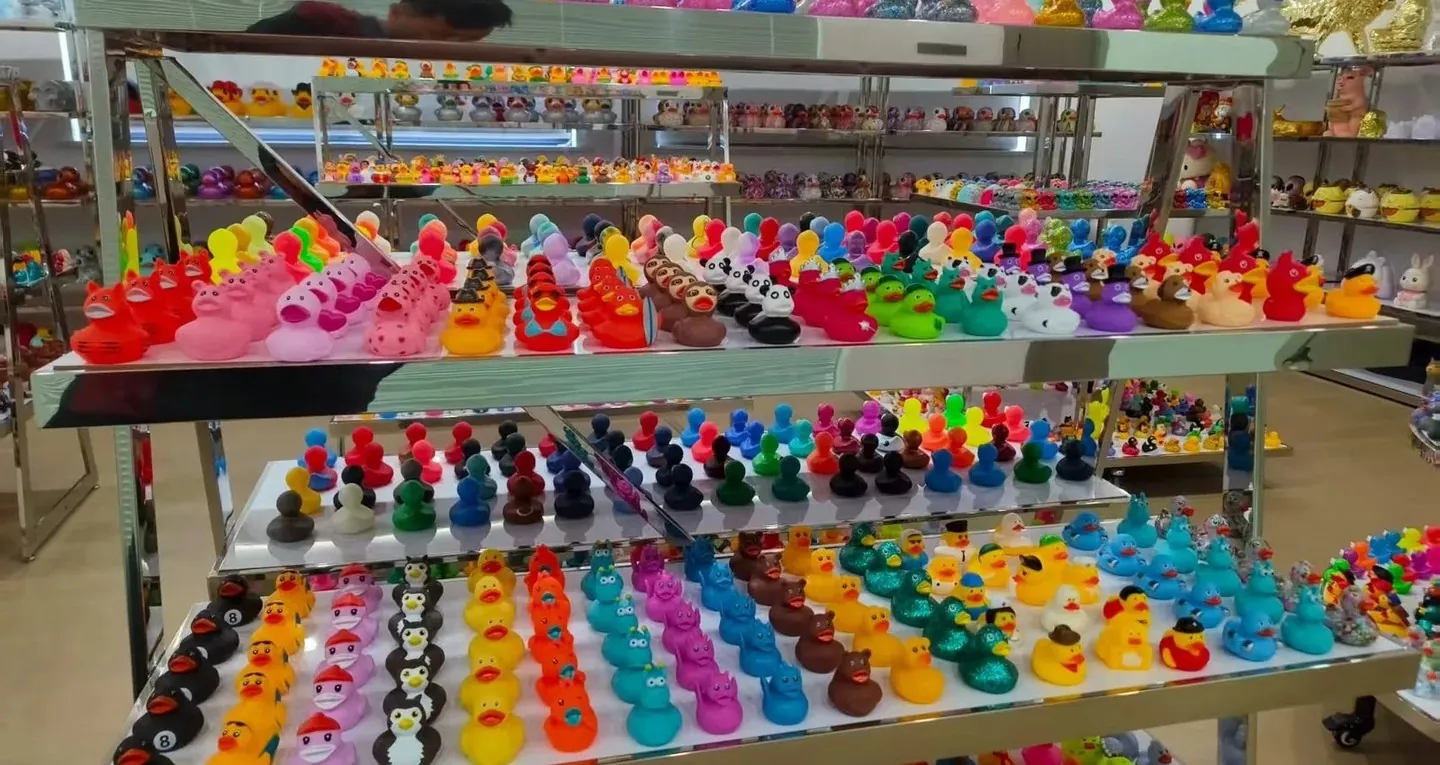
The limit is the same as the strength. A outfit is a moulded change, so it belongs to the tooling side and not to the print side. A buyer who wants a uniform duck should expect a design conversation rather than an artwork upload. The working range shows how far a base body can be pushed before a new mould is the honest answer.
Customisation depth is the baseline, not the premium
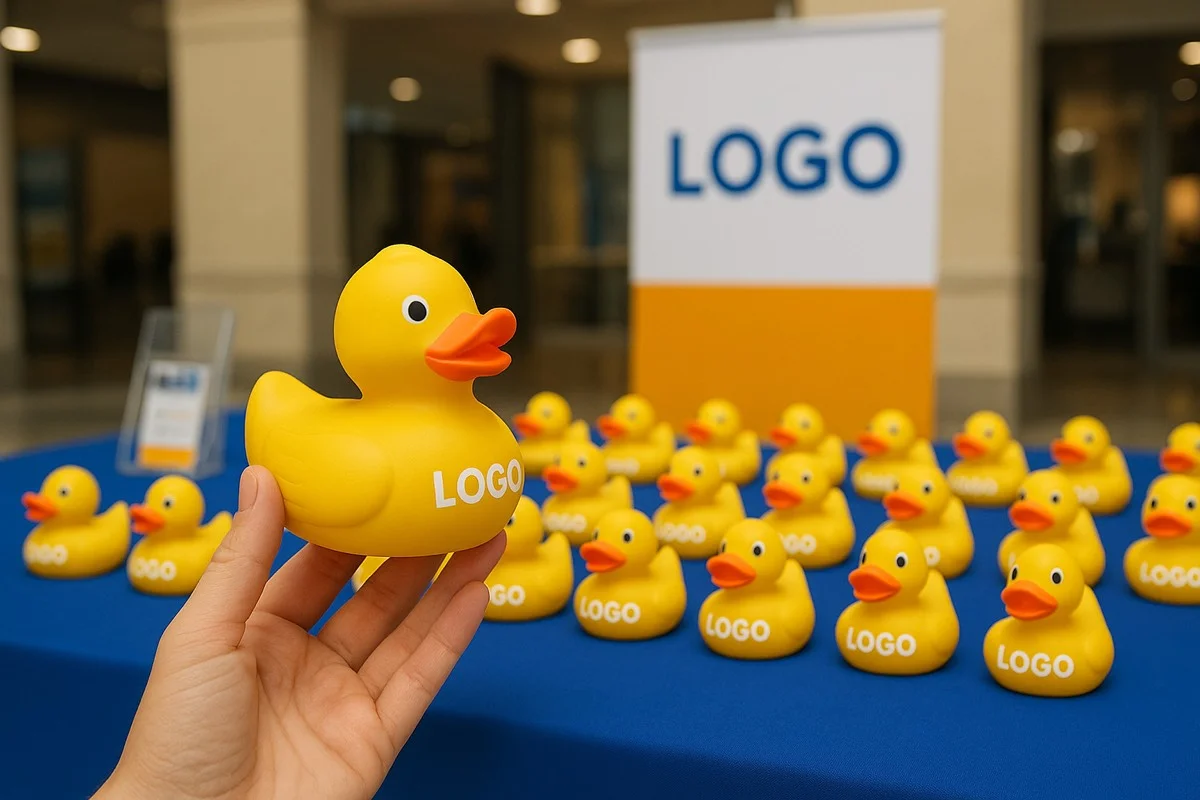
A printed logo is now the entry point, not the differentiator. The programmes that stand out combine a outfit or a colourway with a printed message that fits the campaign, and then carry that story onto the pack. The duck itself is the object; the pack is the sentence around it.
That is why the useful brief describes the character before it describes the logo. A duck for a product launch, a duck for a trade show and a duck for a staff award look different before any print is added. Once the character is right, the print has somewhere to sit. The brand launch note covers how far a branded programme can go in one run.
Where a duck giveaway fits and where it does not
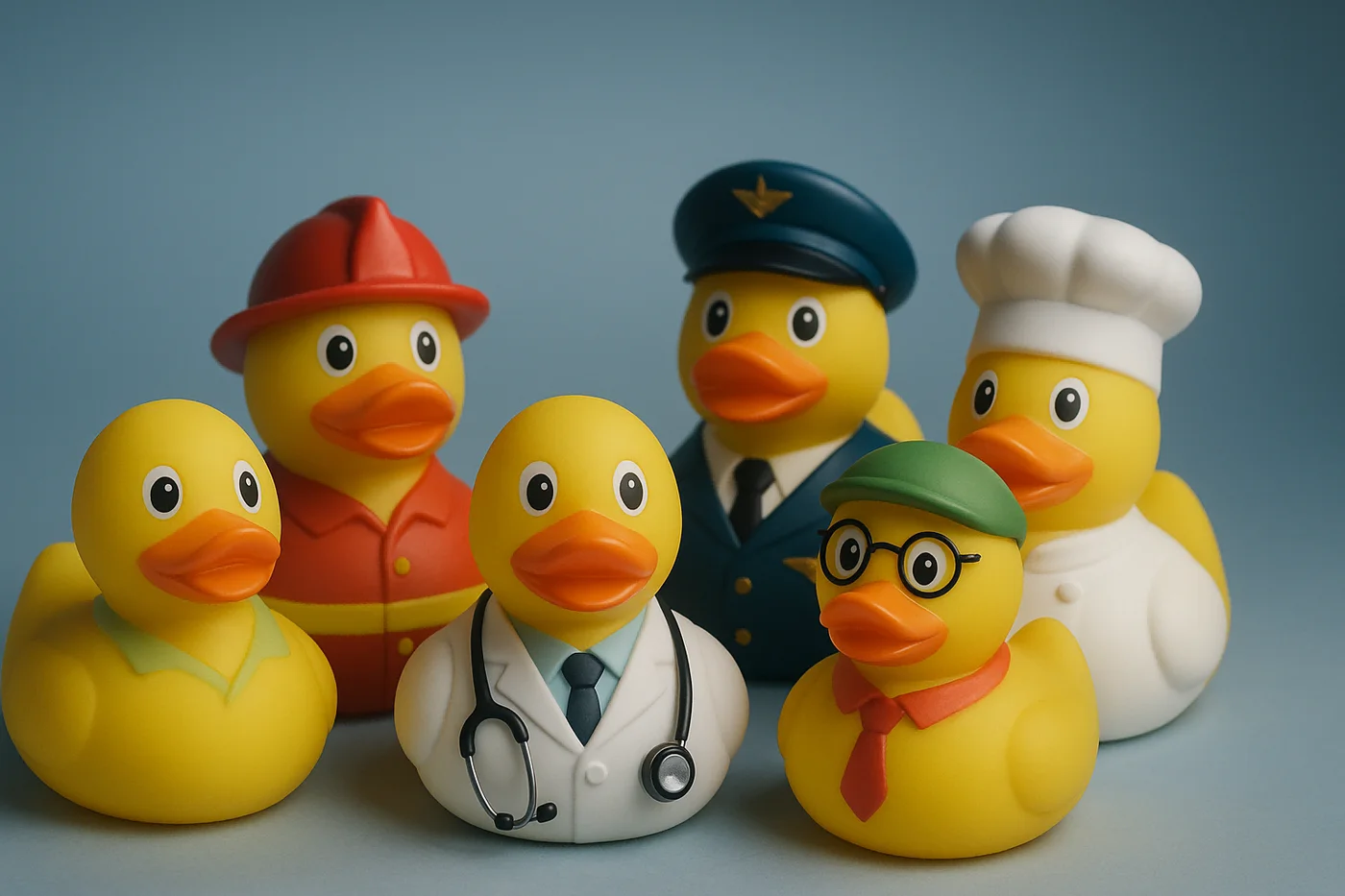
A duck fits where the audience has a surface and a sense of humour. Offices, clinics, dealerships, hotel front desks, school events and family days all have both. It fits less well where the audience is moving through a queue with no bag, or where the item has to be flat to travel, such as a conference folder insert.
The second question is who ends up holding it. If the item will pass to a child, the safety duties change, and that has to be decided before the design is printed rather than after. The professional gift note covers the setting where that question is the whole brief.
The safety question a branded duck still has to answer
A logo does not change what a duck is. If the item is designed for children, or can reasonably be expected to reach them, the CPSC's toy safety guidance sets out the testing and certification duties that apply, and a promotional run is not exempt because it was free. The same guidance distinguishes a visual material check from the third-party testing duties, which is the distinction that catches buyers who think a clean factory visit settles the file.
The practical way to handle it is to state the audience in the brief. A duck for an adults-only reception and a duck for a family day are two different products on paper. The label guide shows where the marks go, and the compliance note covers the material claims that should not be made loosely.
What to settle before a giveaway batch is printed
Five decisions settle most of the batch. The first is the audience, because it decides the safety file. The second is the object, meaning body, outfit and colour. The third is the message, meaning what the print says and how much of it there is. The fourth is the pack, because a bag and a header card read differently in a hand. The fifth is the date the batch has to be in hand, because that decides how much design exploration is realistic.
Get those five onto one page and the batch is briefed. Leave them to the artwork stage and the batch becomes a series of small negotiations, each one adding a change to something that was already approved.

Four questions to settle before the artwork
- Does the audience include children, or adults only?
- Is the character change worth a new mould, or is print enough?
- Where will the item live after the event?
- Does the pack support the message or just protect the duck?
Frequently Asked Questions
Why do promotional ducks get kept more than pens?
Because they have a resting place and no duty cycle. A pen is used until it fails and is then discarded, while a duck is displayed and keeps doing the same job for years. The difference is structural, not a matter of the logo.
Are ducks a good giveaway for a trade show?
They are good where visitors have a bag and a desk to return to. They are weaker where people are moving fast with no bag. A duck works best when the stand has a theme the duck can carry, because the object then acts as the memory of the conversation.
What print works best on a promotional duck?
Short text and a mark that survives a curved surface. A logo with fine hairlines loses detail on a duck's chest, and a long web address wraps out of sight. Two or three words plus a mark is the version that reads from a desk away.
Does a branded duck need safety testing?
It depends on who the item is for. A product designed or intended for children carries the testing and certification duties that apply to children's products, and a promotional run does not sidestep them. State the audience in the brief and let the file follow from that.
Final Note
A giveaway batch built around one object people keep beats a bag of five things they sort and forget. The duck is not magic. It works because it has a place to live and nothing to run out of, and because a small piece of character is easier to keep than a leaflet. A buyer who plans for the desk rather than for the bag usually gets the retention they were hoping for.
Key takeaways
- Why the swag bag empties: the visitor sorts the bag in a minute and keeps what needs no decision.
- The desk is the display: a display object reaches an audience a pen in a cup never reaches.
- Customisation depth is the baseline, not the premium: describe the character before the logo.
- The safety question a branded duck still has to answer: a free item is not an exempt item.
- What to settle before a giveaway batch is printed: audience, object, message, pack and date.