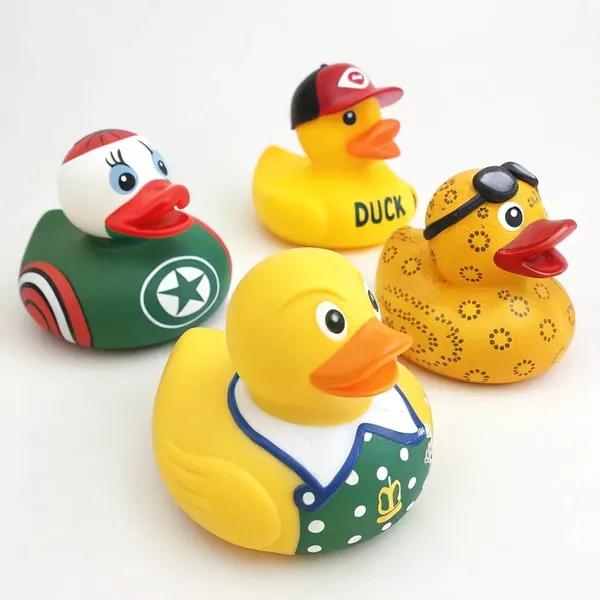
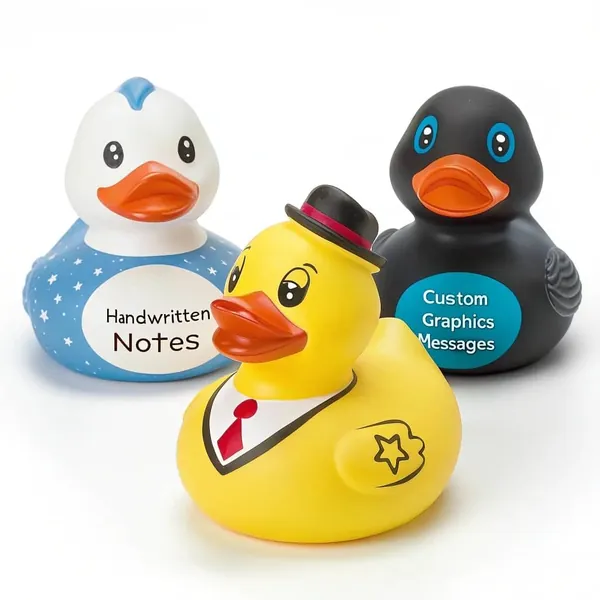
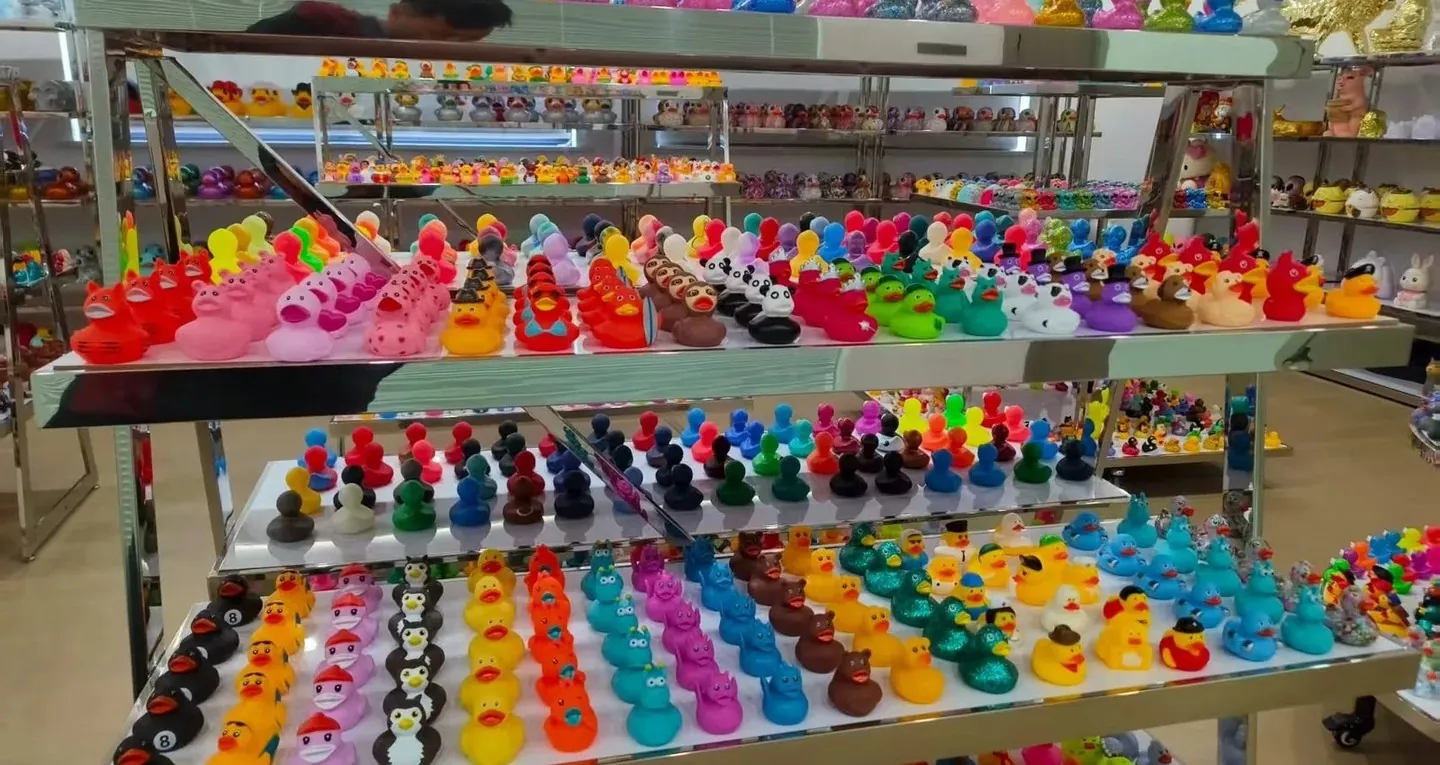
Choose the body colour before the artwork, because every printed mark sits on that surface and the surface cannot be changed after the tool is cut. A light print on a yellow body behaves nothing like the same print on a white one.
A thin ink layer lets the body show through, which is why a pale mark reads differently on yellow.
In short: A printed mark is translucent enough that the body colour shows through it, so a white or pastel mark on a yellow body reads warm and low in contrast. Three answers fix it: accept the shift, change the body to a white compound, or put a base coat under the mark. Each one changes the file, so the body and the base belong in the brief before the artwork is approved.
The Body Colour Sits Under Every Print
A print is a thin layer of ink, not an opaque sticker. On a white body the ink has a pale background and reads close to the colour that was specified. On a yellow, orange or red body the same ink sits over a saturated surface, and the surface lifts the warm tones in the ink and pulls the contrast down.
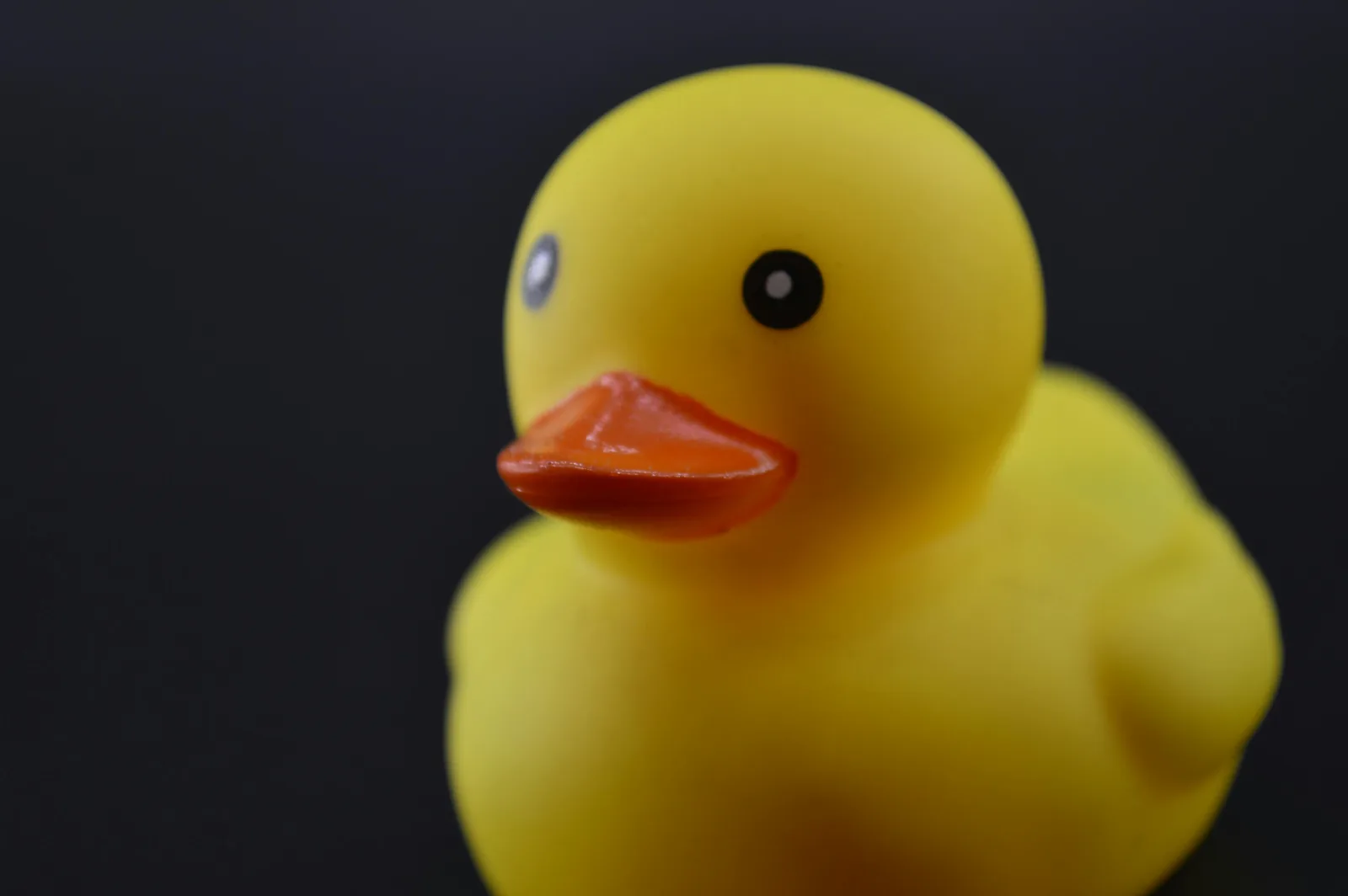
That is why the body is a print decision even when nobody calls it one. The duck's material, its compound and its masterbatch set the background that every mark, every eye and every small printed line has to sit on. A buyer who picks a body by shelf appeal and then specifies a pale mark has created a contrast problem at the drawing stage, and contrast problems are expensive to solve after the tool is cut.
The body also has to hold its colour across a run. A yellow that drifts between batches changes the print on every duck, because the same ink over two yellows is two results. Colour control on the body is therefore the first print control, and the Pantone matching page covers how the reference is signed.
What a Light Print Does on a Yellow Body
A white mark on a yellow duck does not turn white. The ink carries some of the body through, so the mark reads as cream, warm white or a pale version of the body rather than the clean white the artwork showed on a screen. That is optics, not a production fault, and it will happen on every duck in the run.
Three responses are honest. The first is to accept the shift and design for it, which works when the mark is decorative and the client understands what warm white looks like on yellow. The second is to change the body to a white compound, which gives the ink a pale background but changes the whole duck, including the parts that were supposed to stay yellow. The third is to put a base coat under the mark, which is a white or pale layer applied first so the print sits on that instead of on the body.
The brief has to say which of the three it is, in words, on the artwork page. A brief that says white logo on yellow duck without choosing a base has left the most important print decision to whoever runs the job, and the sample will settle it by accident.

Four Bases and What Each One Does to a Light Mark
A base is the surface the mark sits on, and there are four answers that cover most custom ducks. They differ in what the mark looks like, what the body looks like, and what the file has to record.
| Base | How the mark sits | What a light mark reads as | Where it fits |
|---|---|---|---|
| Body colour only | Ink printed straight onto the compound | Warm and low contrast, with the body lifting through | Dark marks, large shapes, designs that accept the shift |
| White compound | The body itself is white, printed directly | Close to the artwork, with a clean pale background | Campaigns where the duck is a canvas and the body colour is white |
| Base coat | A pale layer applied first, then printed | Bright and close to the artwork, with the body still yellow elsewhere | Light marks on a coloured body that has to stay coloured |
| Moulded mark | The mark is a second material or a second shot | Solid and shape led, with no ink line | Simple symbols, blocks and shapes, not fine text |
The four are not grades of quality. A moulded mark can look stronger than a print on a small body, and a base coat can carry detail that no second shot will hold. The choice follows the mark, the body and the volume, and it should be written as one line rather than left to the sample.

Putting the Base in the Brief and the Sample
A colour brief that works has four lines: the body colour reference, the base, the print colour reference, and the light the approval will happen in. The last line is the one buyers forget, and it is the one that causes most of the arguments, because a mark approved under warm office light reads differently at a window.
The sample has to be approved on the duck, in the agreed light, with the base actually applied. A digital proof shows the artwork, not the ink on the body, and it will always look cleaner than the part. When the sample arrives, the reviewer should look at the mark and the body together, because the question is not whether the mark is white, it is whether the mark and the body work as one object.
The approved sample then becomes the reference for the bulk run, and the sample versus production page covers how that pair is kept and compared. A sample that is photographed and discarded cannot settle a colour question three months later.
Where the Base Decision Meets the Toy Rules
A base coat is a coating, and a coating on a toy is judged separately from the compound underneath it. The ban on lead-containing paint covers paint and similar surface-coating materials for consumer use where lead content exceeds the limit, which is why adding a base is a change to the product record and not only to the look. The scope and the limit are in 16 CFR 1303.1.
The handling side is just as practical. A duck sold for a young child is dropped and pulled, and a printed mark or a base coat has to survive the same sequence as the body. The use and abuse method for children over 18 and not over 36 months in 16 CFR 1500.52 includes four drops from 3 ft, a torque test and a tension test, which is where a coating that was never designed for a curved edge shows up.
The label can change with the base as well, because a coated duck has one more process in the file. The label page covers what the pack carries, and the printing process page covers how the mark is laid down and checked after the print.
The Batch That Arrives on the Wrong Base
The most common colour complaint is not a wrong ink. It is a batch that arrived on a different base from the approved sample: the body drifted a shade, the base coat was left off, or a white body was substituted for a yellow one. In each case the artwork is identical and the duck is not, and the difference is visible the moment the two are put side by side.
The fix is administrative before it is technical. The base has to be a line on the order, the body colour reference has to travel with the order, and the approved sample has to be kept where the next run can be compared with it. The logo placement page covers where the mark sits, and that is the same conversation as what it sits on.
Four questions keep a colour order honest, and each one belongs in writing:
- Which body colour is the reference, and which base sits under the mark?
- Does the brief say what a light mark will read as on that body?
- Was the sample approved on a duck, in the stated light, with the base applied?
- What travels with the reorder so the same body and base come back?
A duck whose body, base and mark were decided together looks designed. A duck whose artwork arrived first looks printed, and the difference is one line in the brief.

Frequently Asked Questions
Does a white body change anything besides the colour?
It changes the print as well. A white compound gives a pale mark a clean background, so the ink reads close to the artwork, but the rest of the duck is now white, which changes the product the buyer is selling. It is a body decision first and a print decision second.
Can a white base coat go under a mark on a yellow duck?
Yes, and it is the usual answer when the body has to stay yellow and the mark has to read light. The base is applied first, the ink sits on it, and the body keeps its colour elsewhere. The trade is one more process in the file and a coating that has to be recorded and checked.
Will a light mark always shift on a yellow body?
On a yellow body without a base, a light mark will read warmer and lower in contrast than the proof shows. How much depends on the ink and on the yellow, but the direction is predictable, so it can be designed for. On a white body or over a base coat the shift is much smaller.
Which base should a pastel campaign choose?
A pastel campaign usually needs a white or pale base, because pastel ink on a saturated body loses the very quality the campaign is buying. The choice is between a white compound, which changes the duck, and a base coat, which keeps the body and adds a process.
Final Note: Five Lines Before the Artwork Is Approved
- Name the body colour reference and the compound it is moulded in.
- Name the base: none, white body, base coat or moulded mark.
- Say what a light mark will read as on that body, in words.
- Approve the sample on a duck, in the stated light, with the base applied.
- Keep the approved sample and the base line with the order for the reorder.
The body is not the background of the print. It is part of the print, and a colour brief that says so is the difference between a mark that looks designed and one that looks applied.
Key takeaways
- Every printed mark sits on the body, so the body colour is a print decision, covered under the body under the print.
- A light mark on a yellow body reads warm and low in contrast, and that is optics rather than a fault, covered under light print on yellow.
- Four bases cover most ducks, and each one changes both the mark and the product, covered under the four bases.
- The sample has to be approved on a duck in a stated light, or the bulk run inherits the argument, covered under the brief and the sample.
- A base coat is a coating, so it changes the record and the checks, covered under the toy rules.