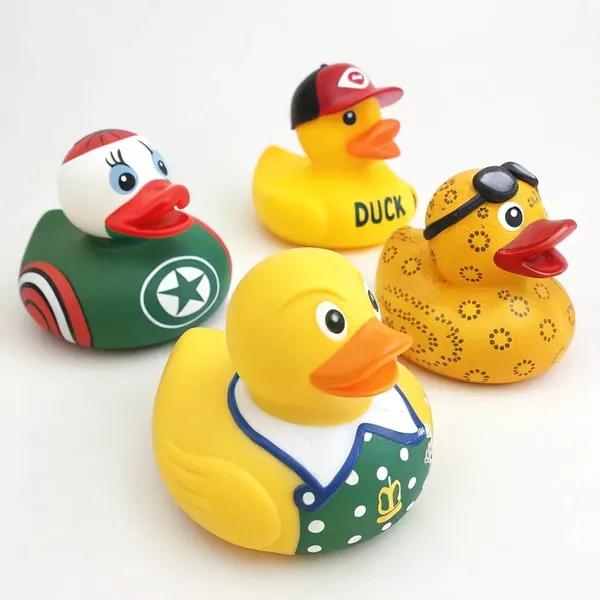
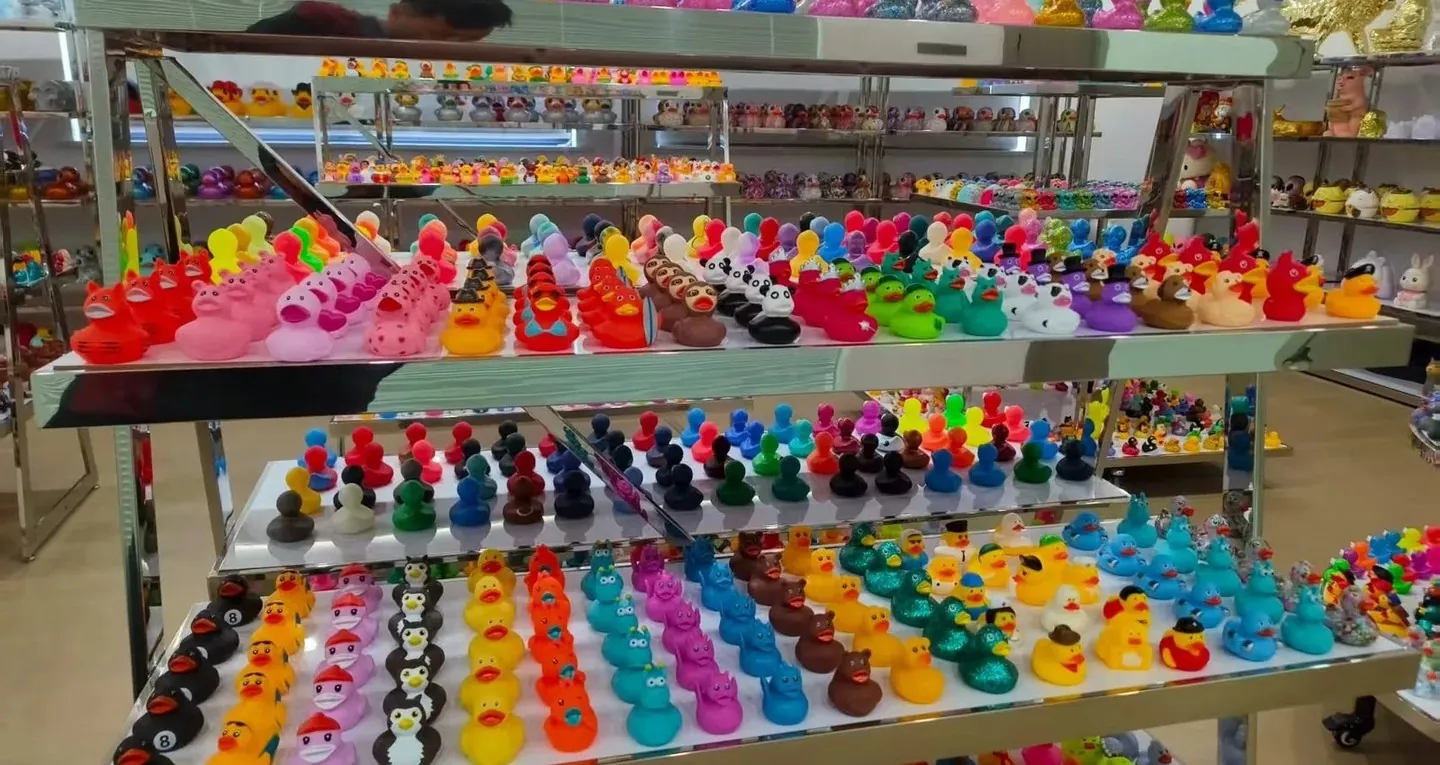
Six gates decide a custom duck run, and each gate narrows what can still change without a rebuild. The useful question at any point in the order is which gate has already closed.
Written from LZENGO's tooling and sample room practice, plus public toy safety guidance.
In short: The six gates are the tool, the compound, the plate, the paint, the inspection and the packaging. Each one fixes a different layer of the product, and a change made after a gate has to be carried through every gate that follows it.
The six gates and what each one locks
The order of the gates is not a preference. Shape has to come before colour, because the surface the colour sits on does not exist until the tool does. Colour has to come before print, because print is read against the background it lands on. Print has to come before paint only in the sense that both are surface layers, and both have to be settled before inspection, because inspection is a comparison against a settled standard. Packaging comes last because the pack has to hold the unit that the first five gates produced.
| Gate | What is fixed at this gate | What a change after it touches |
|---|---|---|
| One, the tool | The three dimensional shape and every surface the later layers sit on | The tool itself, then every gate after it |
| Two, the compound | The body colour and the finish of the material | Colour approval, then print and paint contrast |
| Three, the plate | Every printed mark, including names and variable data | The plate, the print position, the artwork file |
| Four, the paint | Hand applied detail and coverage on a curved surface | The paint station, the drying rack layout, the standard |
| Five, the inspection | The approved reference the run is compared against | The approved standard, and every unit already checked |
| Six, the packaging | The unit that ships, its label and its carton | The pack, the label and the shipped configuration |
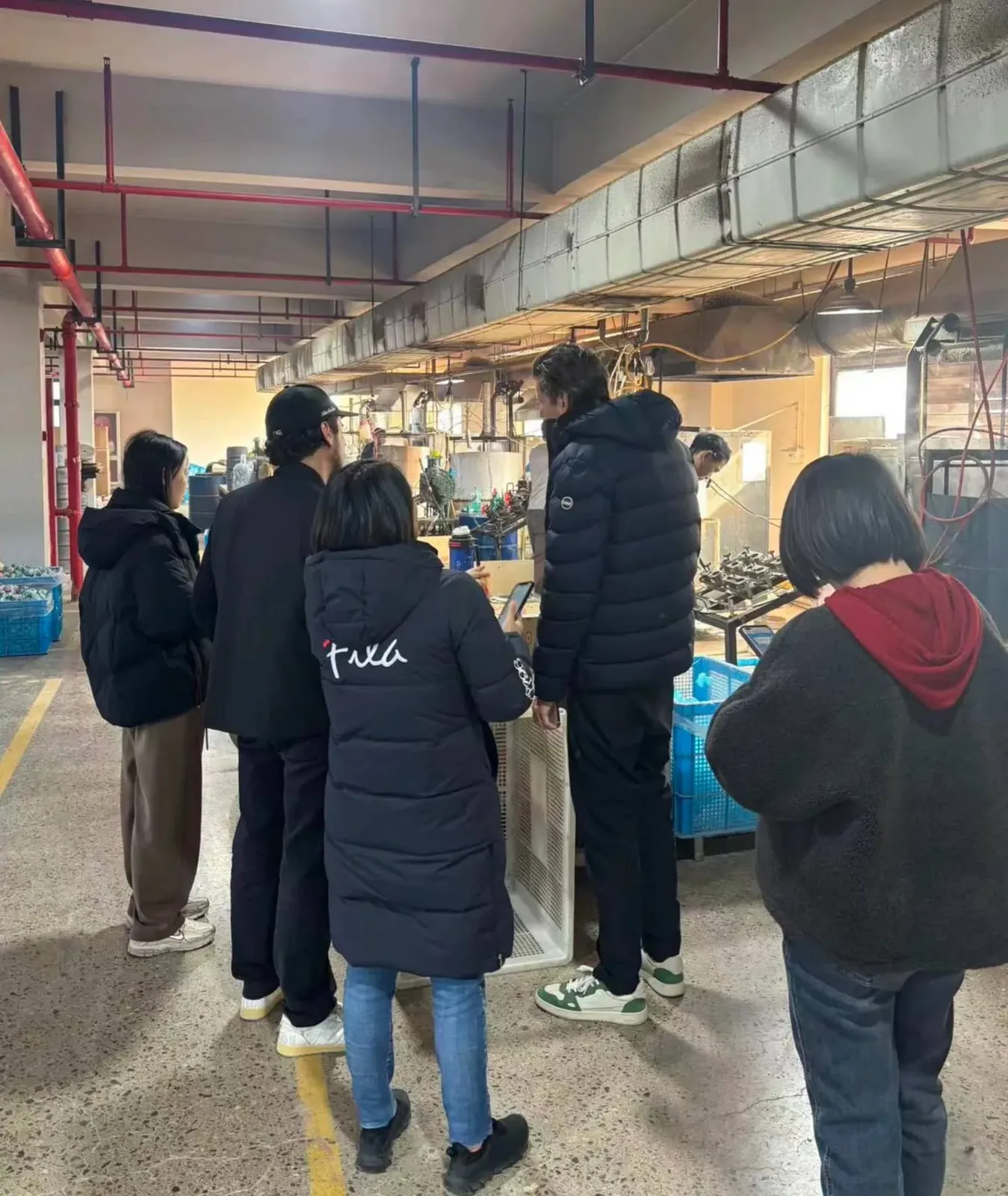
Gate one: the tool takes the shape out of play
Everything a buyer can still change without rework lives before the tool. Once a shape is cut, the body is what it is: the height of the head, the angle of the beak, the curve of the back and the way the duck sits when it floats are all tool decisions, and none of them can be adjusted at the paint station. This is why a render, a sketch and a physical model are not interchangeable documents. Only the last one answers the question the tool asks.
The tool is also where the run gets its consistency. Two ducks from the same tool are the same duck; two ducks from two tools are two products with a family resemblance. If a range will be extended later, the question worth asking at gate one is not what this duck looks like, but what the family has to share for the next size to belong to it. The broader process is described in how a rubber duck is made, and it is worth reading before a first tool is committed.

Gate two: the compound fixes the colour underneath
The colour of the body comes from the material, not from a coat applied later. That single fact decides the order of the work: a body that is moulded in the target colour hides wear and touch up far better than a body that has been painted to look like it, and the difference only shows after a season of handling. It also means the colour has to be approved before the print is designed, because every printed mark will be read against it.
Colour is where a buyer most often asks for a change after seeing a physical part rather than a screen. That change is legitimate, and it is also the one that has to be caught before the plate is cut, because a printed mark sized for a pale body can disappear on a dark one. The variables that move a moulded colour over time are covered in the masterbatch and UV notes, which is the longer version of this gate.
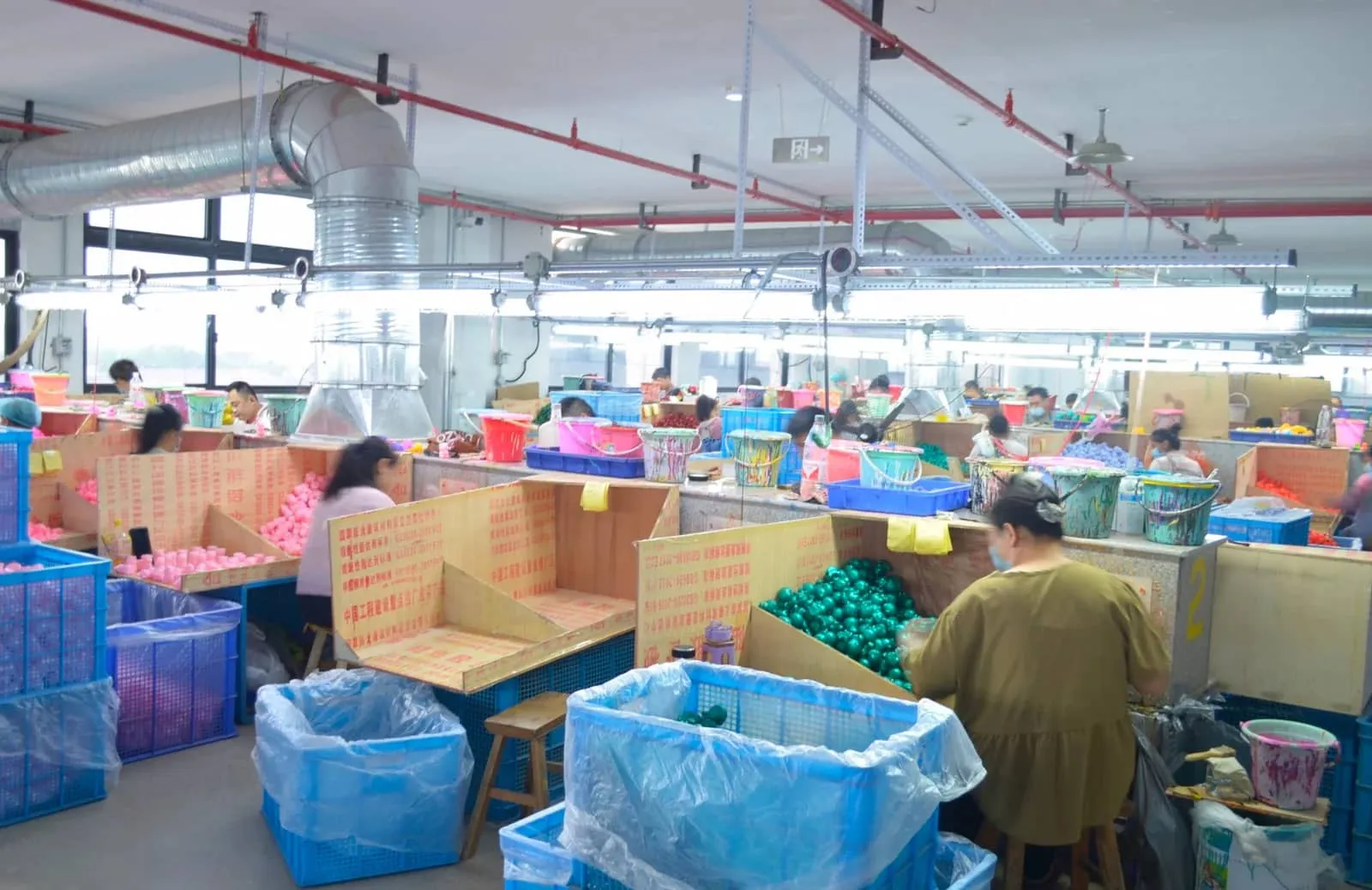
Gate three: the plate holds everything that can still move
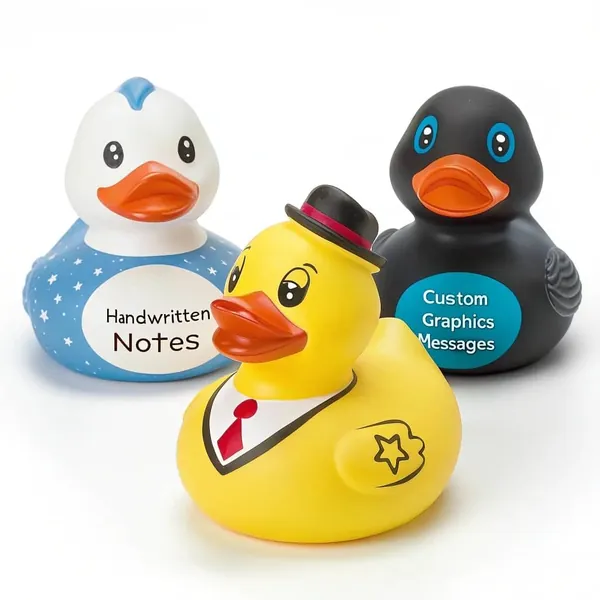
Print is where a custom order becomes a specific order. A logo, a name, a date, a jersey number or a short message all arrive on the duck through the same gate, and the gate is a physical plate. Once that plate exists, the position of the mark, its size on a curved surface and its behaviour at the seam are fixed. Moving a mark by a few millimetres after the plate is made is not a file edit, it is a new plate.
This is also the gate that decides whether a personalised run is practical. A single set of plates carrying one design is a different proposition from a run where every duck carries a different name, because variable data multiplies the checks at the print station without changing the plate. The question to settle at gate three is not can it be printed, but how the variation will be verified, one duck at a time, without slowing the line to a stop.
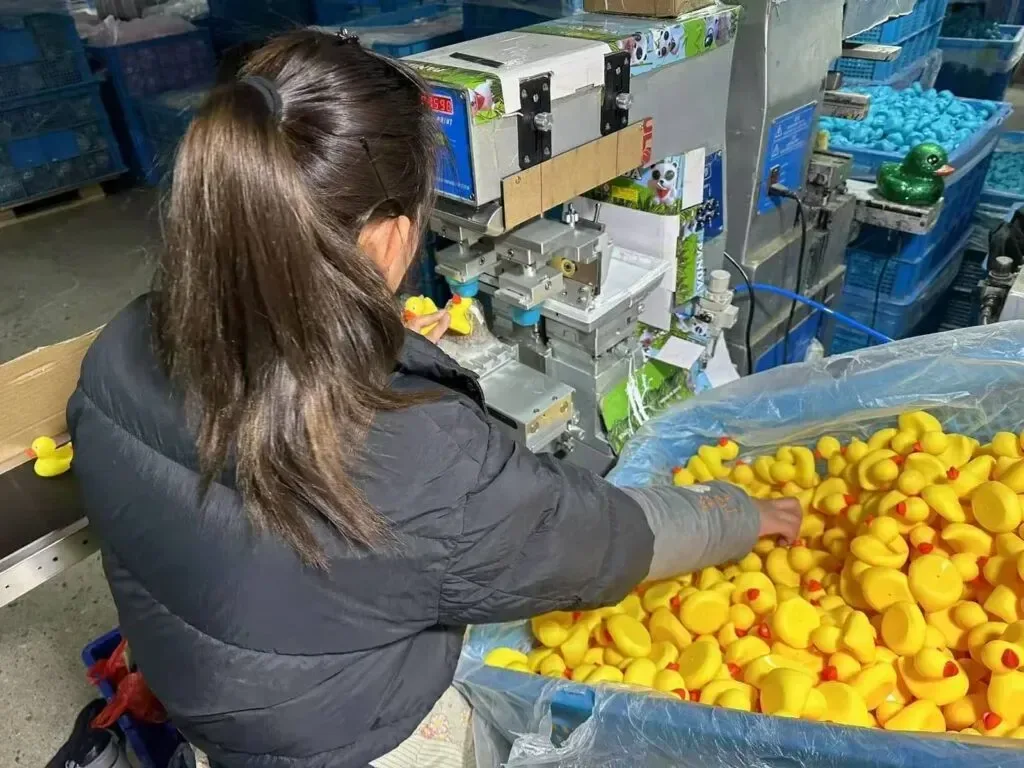
Gate four: the paint is a layer the drawing does not show
Hand applied paint is the layer that never appears properly in a design file. An eye, a beak highlight, a cheek or a small accessory detail is a person with a brush making a judgement on a curved surface, and that judgement needs a reference to be repeatable. The reference is not the artwork. It is an approved physical unit that the paint station can hold next to the duck in hand.
Paint is also where a buyer discovers that a design which reads clearly on a flat screen becomes crowded on a duck. Features that sit a few millimetres apart on a drawing end up sharing the same brush width, and the fix is usually to remove a detail rather than to add precision. Approving a painted reference before the run is the least wasteful safeguard in the whole sequence, because it is the last gate where a change is still a decision rather than a rework.
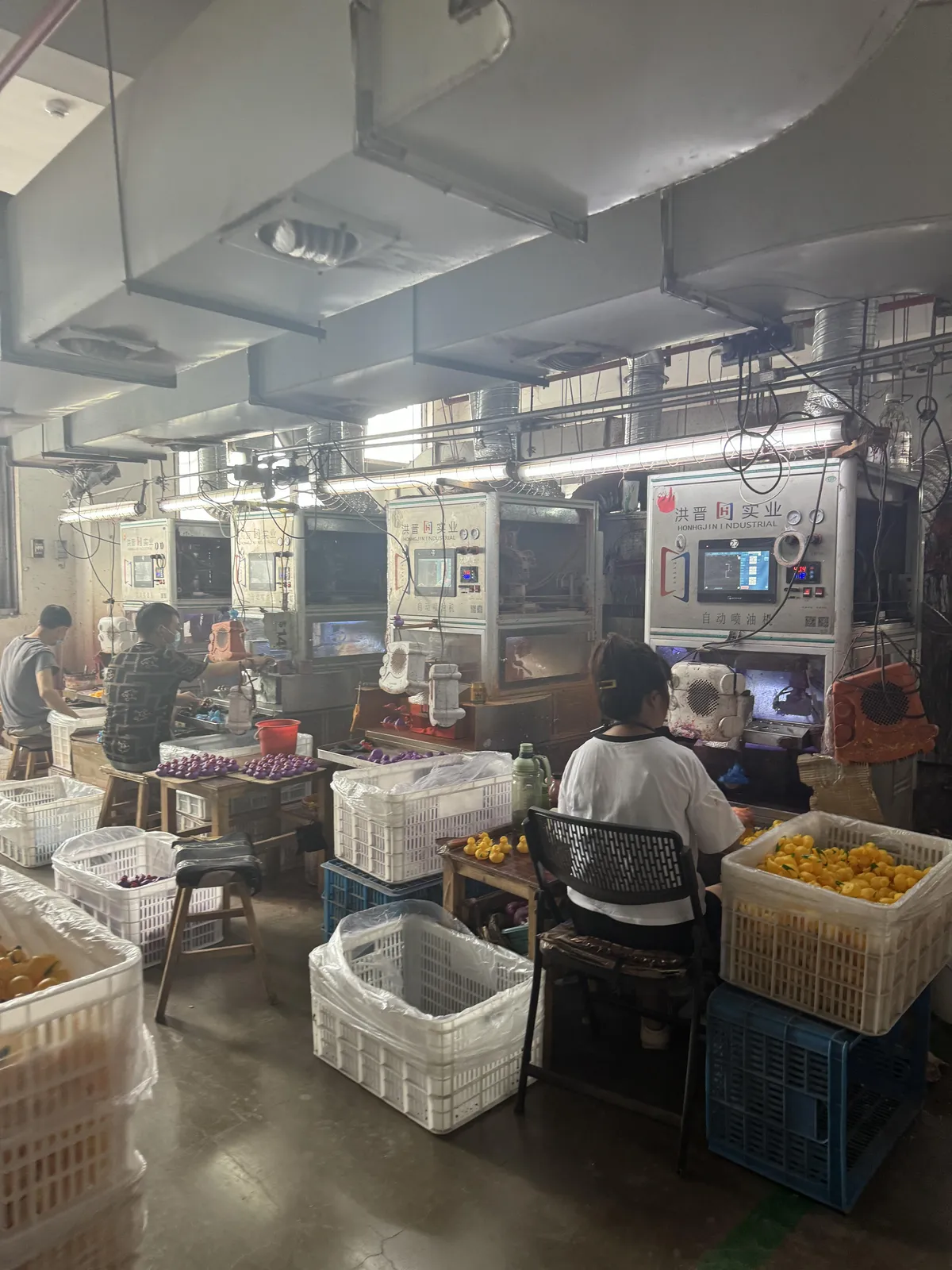
Gate five: the inspection compares against a record
Inspection is not an opinion about whether a duck looks good. It is a comparison between a unit and an approved reference, recorded in a way that a second person can repeat. That is what makes an inspection programme worth anything to a buyer: the same standard has to be applied to the first carton and to the last one, and the record has to be readable months later by someone who was not on the floor.
The legal layer sits on top of that. In the United States, a toy is measured against a mandatory consumer product safety standard rather than against a factory's own judgement, and the CPSC toy safety guidance sets out which sections of ASTM F963 are mandatory and which of them are not subject to third party testing. A run that has a standard, a reference unit and a record is a run that can answer a question about compliance later, which is the same logic the container inspection routine applies to a finished carton.
Gate six: the packaging fixes the unit that ships
The pack is part of the product because it decides what the buyer receives. A duck that leaves the line in a polybag inside an inner box inside a carton is three separate units for three separate people: the end user, the retailer and the freight forwarder. Gate six is where the label, the barcode, the carton count and the printed panel are fixed, and it is the gate most often treated as an afterthought until a shipment is refused at the destination.
Label content is not decoration either, and the carton panel itself follows the pack specification. The same CPSC guidance describes the producer's markings that have to appear on the product or its packaging, and separately the tracking label requirement that applies to children's products. Both are decisions about the pack, taken at gate six, and both are far easier to build into a printed panel than to add to a finished carton, and the label guide covers where each mark has to sit.
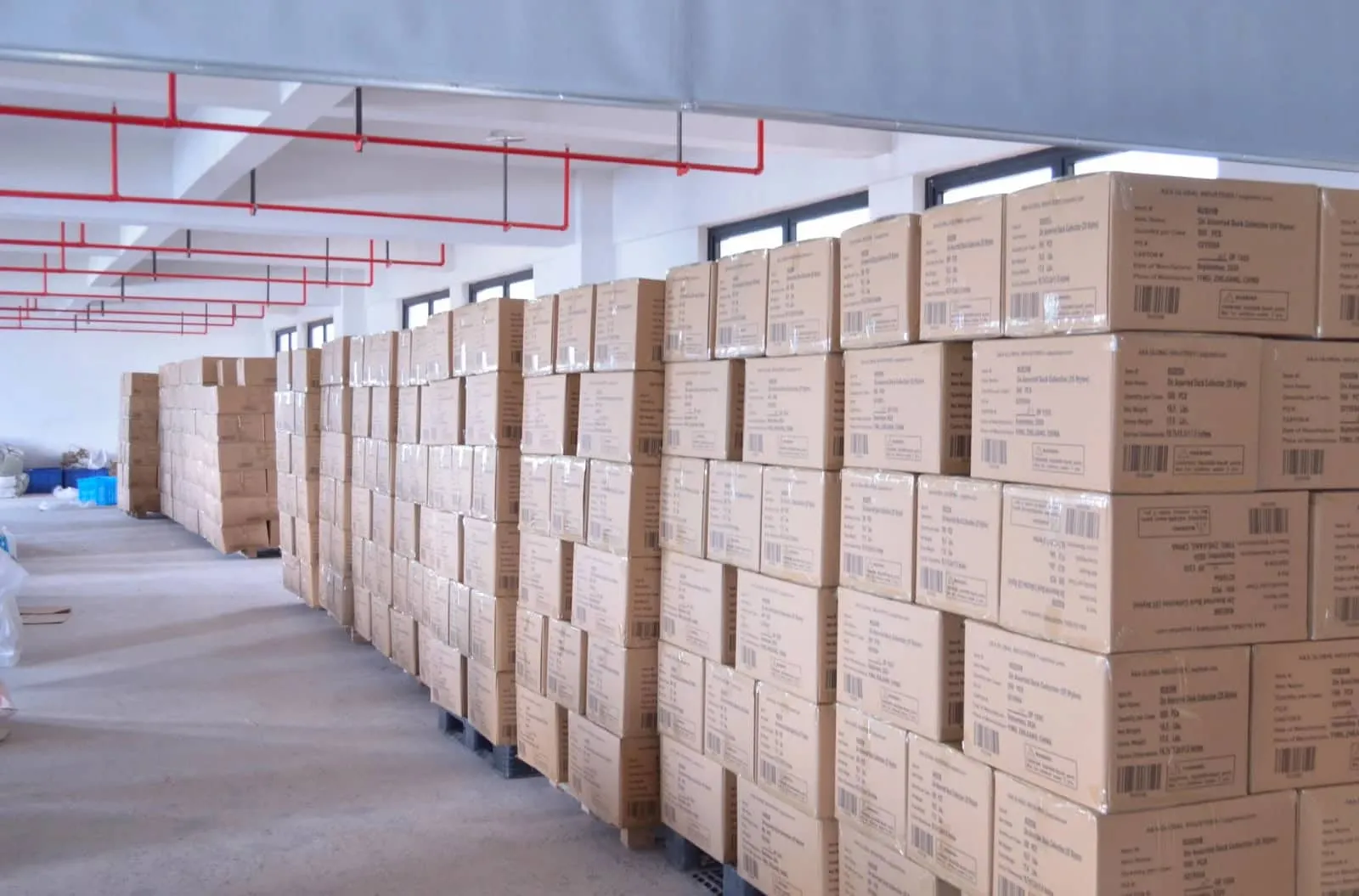
Where a name or a number changes the run
A personalised order looks like a small addition to a custom run and behaves like a second process laid over the first. Names, numbers and short messages do not change the tool, the compound or the plate, so the gates that fix the body stay closed. What they do change is verification: every unit now carries a piece of data that has to be read, matched and packed to the right variant, and that work has to be designed rather than absorbed.
The practical consequence is that a personalised run needs its data file treated as a production input, not as an attachment. A list of names in a chat message, in a spreadsheet with a missing column, or split across two files is the most common reason a variable order stalls. Settling the file format, the sort order and the packing sequence before gate three is what keeps a personalised run on the same six gates as a plain one.
Questions to ask at each gate
- At gate one, does the physical model float and sit the way the drawing claims?
- At gate two, has the body colour been approved on a moulded part rather than a screen?
- At gate three, is the mark position approved on the curved surface, at the seam?
- At gate four, does the painted reference survive a day on the floor without drifting?
- At gate six, does the printed panel carry everything the destination market asks for?
A buyer who can answer all five questions at the gate that owns them has already done most of the project work. The remaining question, which belongs to no single gate, is who signs each approval, because a run approved by four people in a chat thread has no reference to inspect against.
Frequently Asked Questions
Can a shape be changed after the tool is cut?
Only by cutting or modifying the tool, and that is a different kind of decision from changing a drawing. A shape change is possible, but it resets the sample approval and every surface layer that was approved on the old shape. It is almost always better to accept the shape and change a surface layer, if the change is a surface problem at all.
Why does the colour have to be approved before the print?
Because print contrast is read against the body colour. A mark that is approved on a pale body can lose its edge on a dark one, and a mark designed for a dark body can look heavy on a pale one. Approving the moulded colour first means the print is designed once, against the surface it will actually sit on.
Is a render enough to approve a shape?
No. A render answers composition questions and it answers them well, but it does not answer the questions the tool asks: how the duck sits on a surface, how the seam runs, and how the shape reads in the hand at full size. A physical model is the document that closes gate one.
How many changes can a run absorb?
That depends on when they arrive, not on how many there are. Changes inside gate one are normal design work. Changes after gate three are tooling and plate work, and changes after a run is inspected are rework. The useful planning rule is to batch every non urgent change into the gate that owns it instead of sending it in sequence, and to write the approval down at the gate it belongs to, so the reference an inspector compares against later is the same document the buyer signed.
Final Note
The six gates are a way of asking when, not whether. Almost every custom duck is changeable at some point, and the honest part of the job is telling a buyer which gate the change belongs to and what it drags with it. A buyer who knows that gate three is where the plate becomes real will design the mark once, approve it once, and spend the rest of the project on the parts that actually need attention: the shape in the hand and the pack on the shelf. The gates do not make a custom order simple. They make it legible, which is the next best thing, and they give both sides a shared language for the moment a change arrives after the work has moved on.
Key takeaways
- The six gates and what each one locks: tool, compound, plate, paint, inspection, packaging, in that order.
- Gate one: the tool takes the shape out of play: after the tool, shape is not a design decision.
- Gate three: the plate holds everything that can still move: print is physical, and variable data multiplies the checks.
- Gate six: the packaging fixes the unit that ships: labels and carton marks belong to the product, not to logistics.