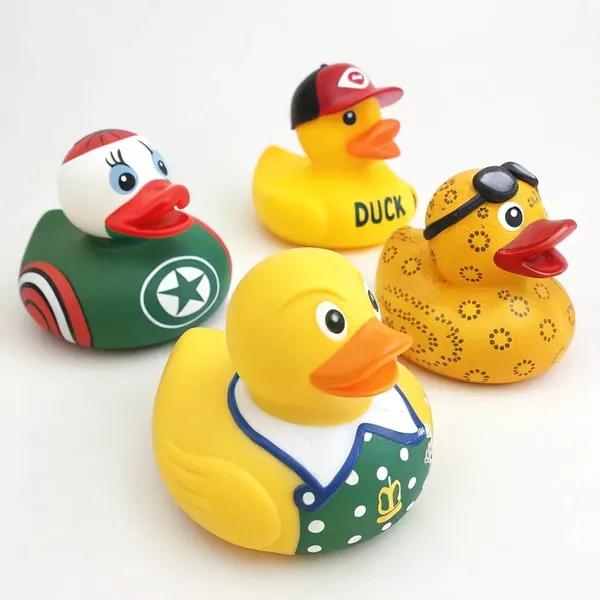
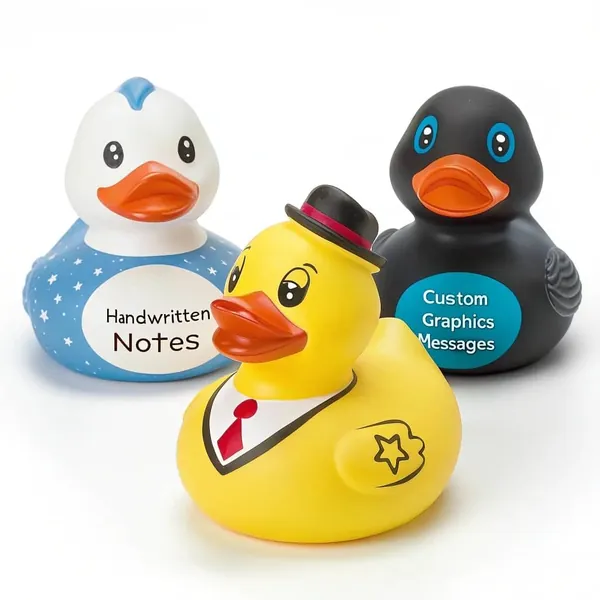
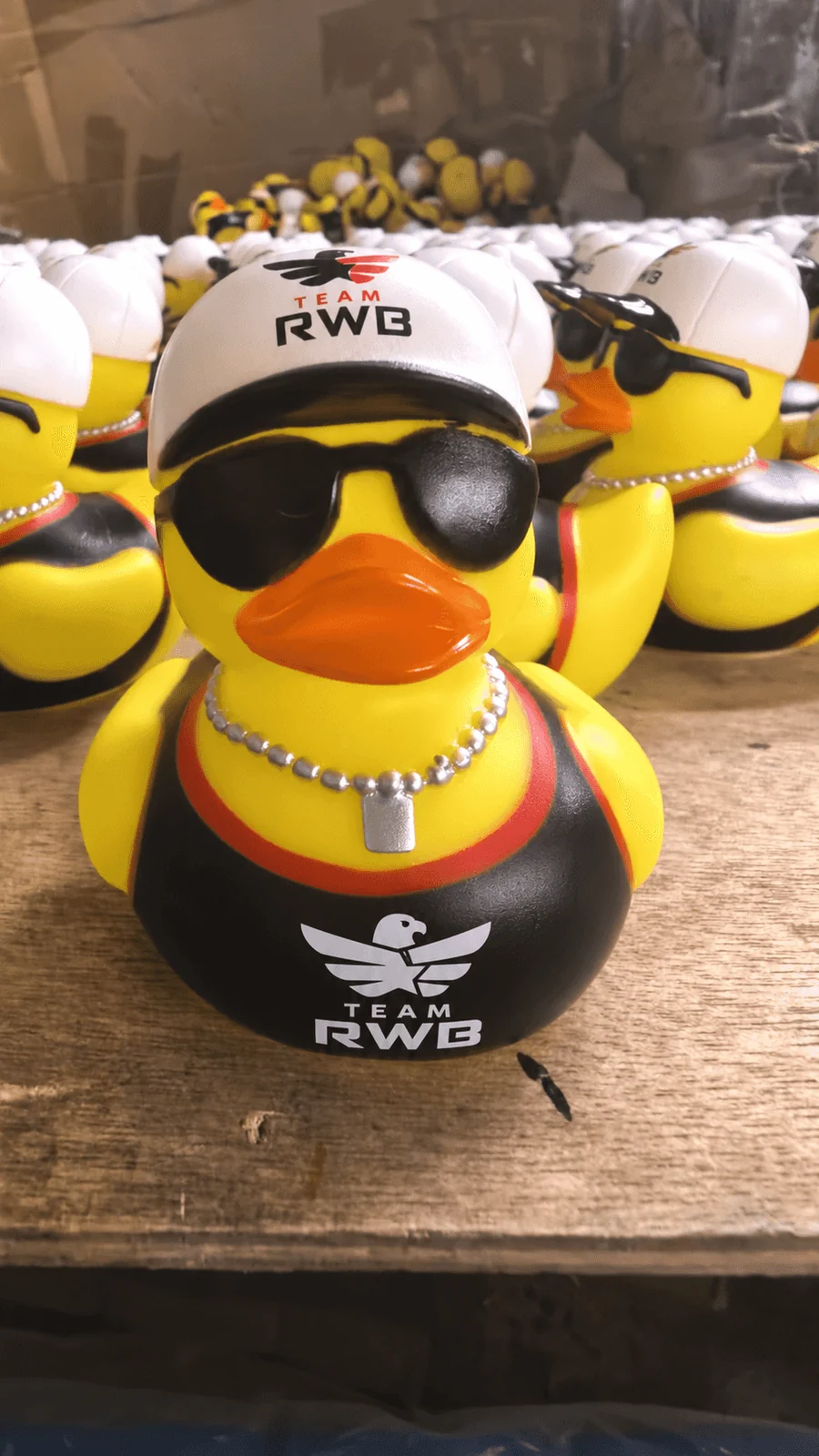
Turndown trays carry the one moment of a hotel stay that the property fully controls. The room is already judged by the time the guest comes back. The tray is the last thing they see before sleep, and it is the thing they photograph or pocket in the morning. A duck on that tray does a job a chocolate cannot do: it can leave with the guest and keep working as an advert after the stay.
Written as a working note on turndown amenities, with public toy safety and packaging guidance cited where a rule applies.
In short: A turndown duck works when three decisions are made before the first order: whether the duck leaves with the guest or stays in the room, how it is reset between guests, and whether the property will accept the safety duties that come with an item a child may pick up. A duck that fails any of those is a nice gesture that becomes an awkward one.
The turndown slot is the one touch the hotel controls
Most of a hotel stay is a negotiation between what the property promises and what the building allows. The turndown tray is different. It is placed at a fixed moment, by staff, in a room the property owns. That makes it the most reliable branding surface in the building, and the least expensive place to be memorable.
Custom duck buyers fall into seven broad groups: corporate promotions, events and charity or community projects, car and owner-club communities, schools and youth organisations, fire-safety and public-service teams, hotels and souvenir sellers, and retailers or distributors buying across several themes. Each arrives with a different job for the duck, so the first question is what the duck has to do, not how many you need.
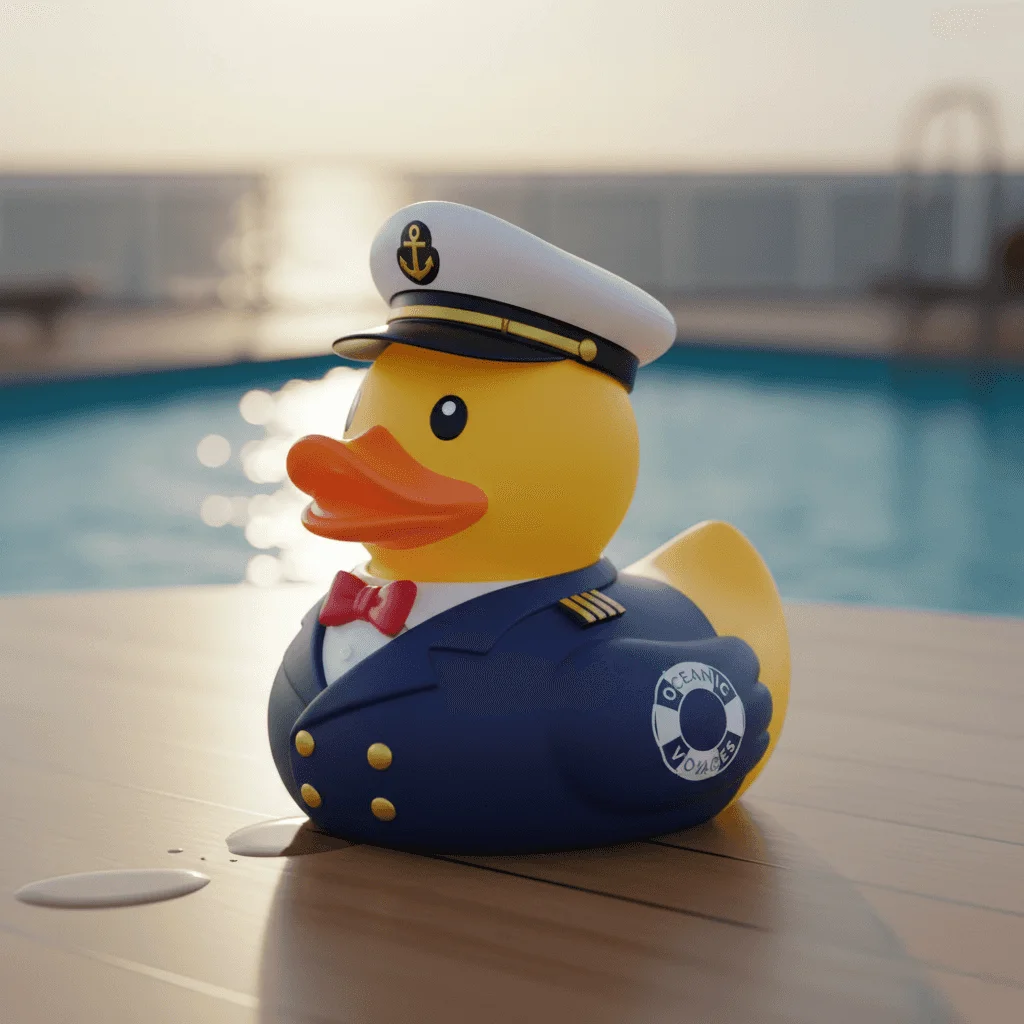
The trap is treating the tray as decoration. A chocolate is eaten and forgotten. A printed card is binned. A duck stays on a bathroom shelf, goes home in a suitcase and ends up on a desk, which means the property's mark is still in someone's life months later. The giveaway note explains why an object with a resting place outlives anything edible.
The first decision: does it leave or does it stay
| Choice | What it needs | Where it goes wrong |
|---|---|---|
| The duck leaves with the guest | A pack that survives a suitcase and a card that explains it | It arrives home scuffed because it travelled loose |
| The duck stays in the room | A format that survives cleaning and a reset routine | It is thrown away by housekeeping or walks off |
| The duck is sold | A printed tag, a stock count and a place in the shop | It is treated as an amenity and vanishes |
| The duck is a keepsake for a tier | A distinct design and a controlled distribution | Guests who do not receive one feel the difference |
The choice is not a detail. It decides the pack, the print and the housekeeping instruction, and changing it later means changing all three. A property that wants both a leaving gift and a room fixture is really running two programmes, and each one needs its own duck.
The bath edge, not the drawer
A duck belongs where the guest will see it in use. On a bath edge, a shelf beside the towels or a tray by the basin, it is part of the routine. In a drawer, it is a surprise that may not be found until packing, which is the worst possible moment for a gift that needs a decision.
Placement also decides the format. A duck on a wet bath edge gets splashed, so the print and the pack have to tolerate moisture. A duck on a dry shelf can carry a card and a ribbon. The clean note covers what a housekeeping team should and should not do to a duck that stays in the room.
Quiet branding beats a billboard
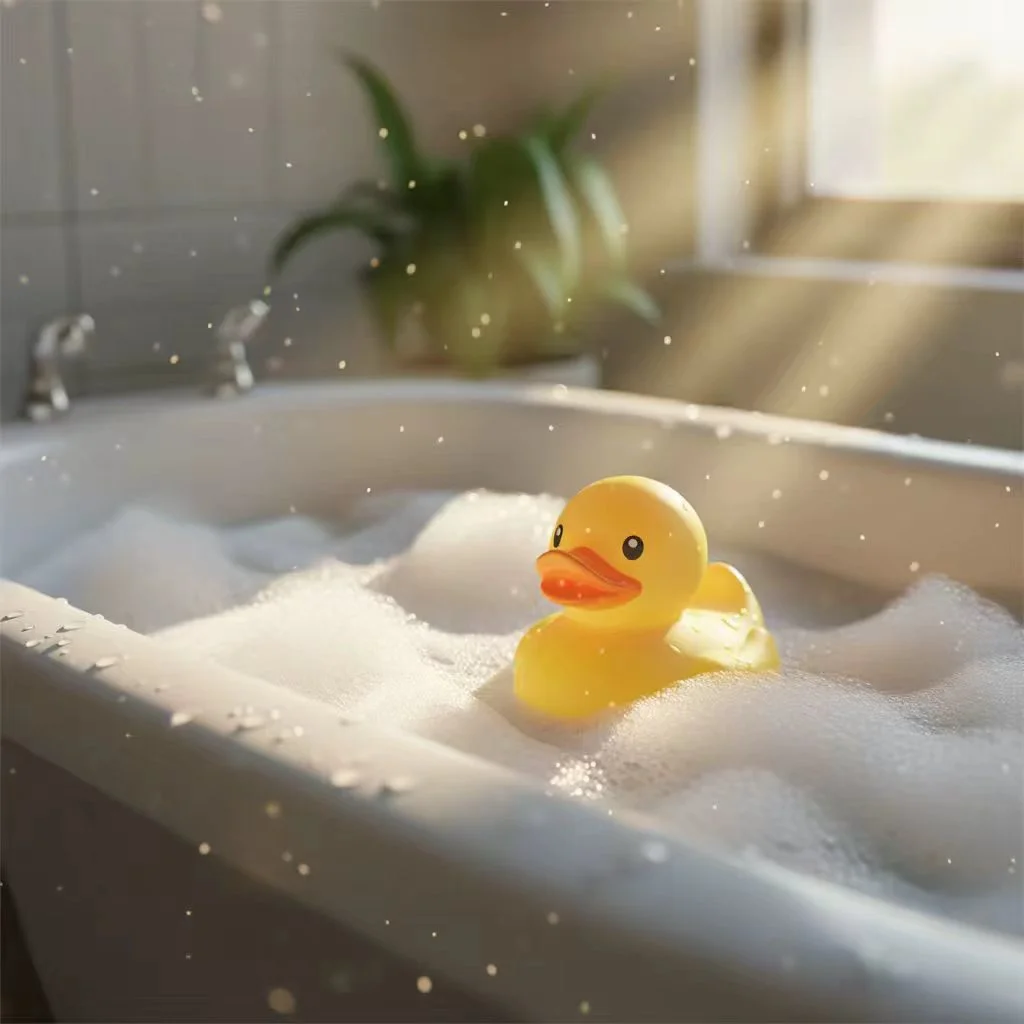
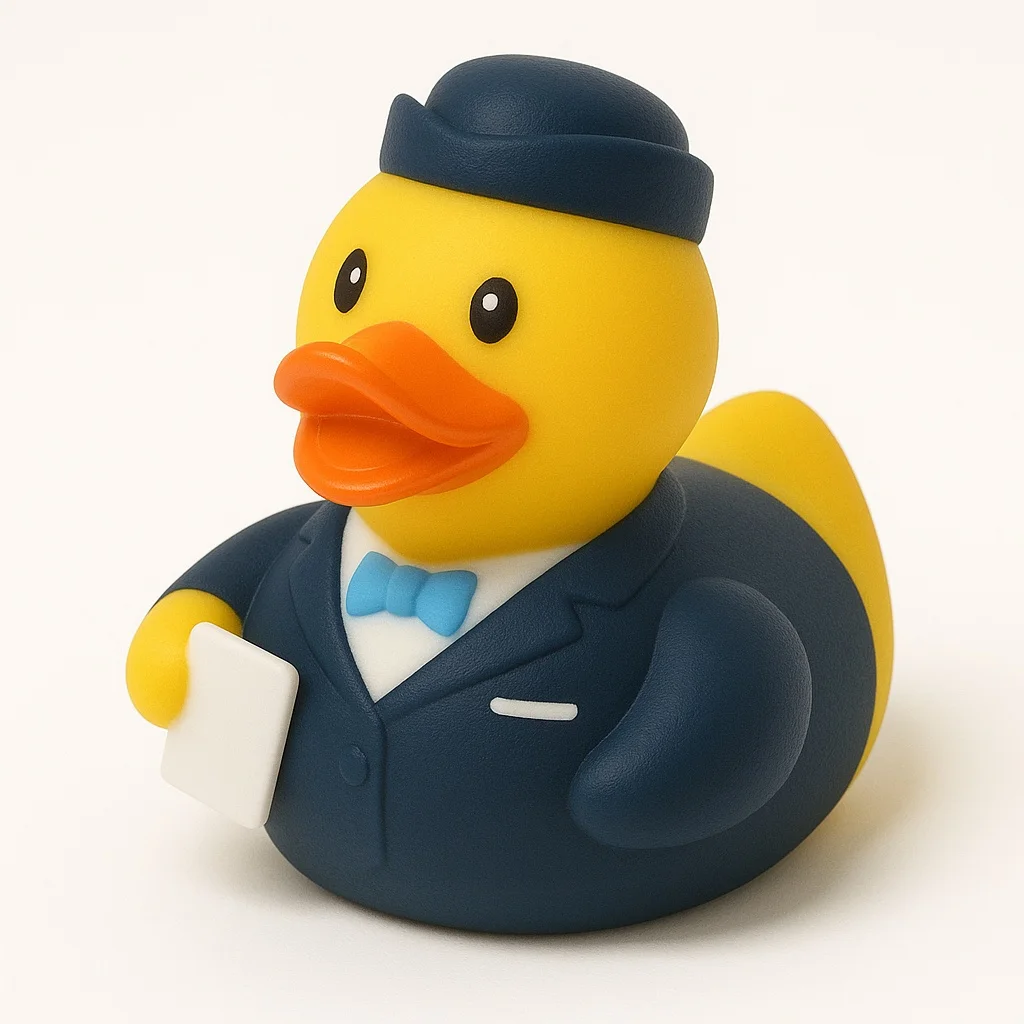
A turndown duck is seen at close range, in a quiet room, by a guest who is not shopping. A large printed logo at that distance reads as a corporate gift rather than as a courtesy. The properties that get this right use a small mark, a colour that belongs to the property, and a form that fits the place: a nautical duck for a coastal hotel, a concierge duck for a city property.
The design constraint is the same one that applies to any duck: detail on a curved body disappears, so a mark with fine hairlines will not survive. The logo placement note covers which surface reads best, and the colour note covers how a property colour is matched reliably.
The reset between guests
A duck that stays in the room is a fixture, and a fixture needs a reset rule. The rule has to answer three questions: is the duck washed, replaced or inspected, who checks it, and what happens when it is missing or damaged. Without a rule, the amenity quietly disappears within a month, because housekeeping has no instruction and no stock.
The practical version is a check at turndown rather than at deep clean. The duck is inspected, wiped if needed, and replaced from a housekeeping stock if it is marked or missing. That means the property needs a small buffer stock and a named owner for it, which is a management decision rather than a production one.
The guest in the bath is a child
A bath duck is used by children, and that decides the compliance file. The CPSC's toy safety guidance sets out the testing and certification duties for a children's product, and an amenity given free in a hotel room is still a product placed on the market. A property that orders ducks without asking about the file is buying an item whose status nobody has checked.
The pack is part of the same question. A bag that a child can reach is a bag that ends up in a cot, and packaging carries its own material and marking duties under the framework the European Commission's packaging page describes. The label guide shows where the marks belong if the duck is sold rather than given.
Three formats that hold up
Three formats cover most properties. A small duck on a card is the lightest and the most photographed, because it looks like a gift rather than a sample. A duck in a printed box reads as a souvenir and travels home best. A larger duck on the bath edge is a fixture, and it suits a suite or a spa rather than every room.
The choice follows the guest rather than the brand. A family resort needs a duck that a child can hold safely and a parent can pack. A business hotel needs a duck small enough to fit a laptop bag. A spa needs a duck that looks deliberate on a shelf. Matching the format to the guest is the whole decision, and the sizes note gives the physical starting point.

- Does the duck leave with the guest, stay in the room, or get sold?
- Who resets it between guests, and where is the buffer stock kept?
- Is the property prepared to hold the safety file for a child's product?
- Does the placement put the duck in the guest's hand or in a drawer?
Frequently Asked Questions
Why do turndown ducks work better than chocolates?
Because they survive the stay. A chocolate is consumed in a minute and leaves no trace, while a duck goes home and sits somewhere visible. The turndown tray is the last thing a guest sees before sleep, so an object that can be taken away has a longer life than anything edible.
Should the hotel print its logo or a city motif?
Both can work, but they answer different questions. A logo makes the duck a branded gift. A city or property motif makes it a souvenir, which is more likely to be kept by a guest who has no loyalty to the brand yet. Many properties use a motif on the duck and the logo on the card.
Should the duck be bagged or left loose?
Bagged if it leaves with the guest, because the bag keeps the print clean in a suitcase. Loose if it stays on the bath edge, because a bag in a wet room is a nuisance. The bag also has to be considered as packaging, which means it is not a free choice.
Is a turndown duck safe for a child in the bath?
It can be, if the product and its file are treated as a children's product. That means the applicable testing and certification duties are met, the marks are in place, and the pack does not create a hazard of its own. A hotel that cannot answer those questions should ask the supplier before the first order.
Final Note
One small duck on the turndown tray with a clear rule behind it beats a tray full of gifts nobody has thought through. The amenity is a signature only if it repeats, and it repeats only if someone owns the reset, the stock and the file. The duck is the easy part. The routine around it is what makes it a signature.
Key takeaways
- The turndown slot is the one touch the hotel controls: a fixed moment, a fixed room, a reliable surface.
- The first decision: does it leave or does it stay: the choice sets the pack, the print and the reset.
- The reset between guests: a fixture needs a rule, a stock and an owner.
- The guest in the bath is a child: the compliance file follows the product, not the invoice.
- Three formats that hold up: match the format to the guest, not to the brand.