Updated from our May 2026 large-order guide, with the tooling, carton and gate sections reworked around the work that happens once and the work that repeats.
A large duck order carries two kinds of work: the part that happens once for a design and the part that repeats with every duck. Cost arguments go wrong when a decision is moved from one pile to the other without noticing, because the saving appears in the quote and the work reappears at the sample, the carton or the inspection. Sorting the order by where the work sits is more useful than arguing the unit price first.
In short: a large duck order carries two kinds of work. The fixed work, meaning the tool, the colour match, the print set-up and the first-off checks, happens once per design and is shared across every duck in the batch. The variable work, meaning compound, ink, cartons and the space those cartons fill, grows with the count and never shrinks. The shape of the batch, more than the number on the document, decides how much work lands in the first pile and how little sits in the second.
The work that happens once and the work that repeats
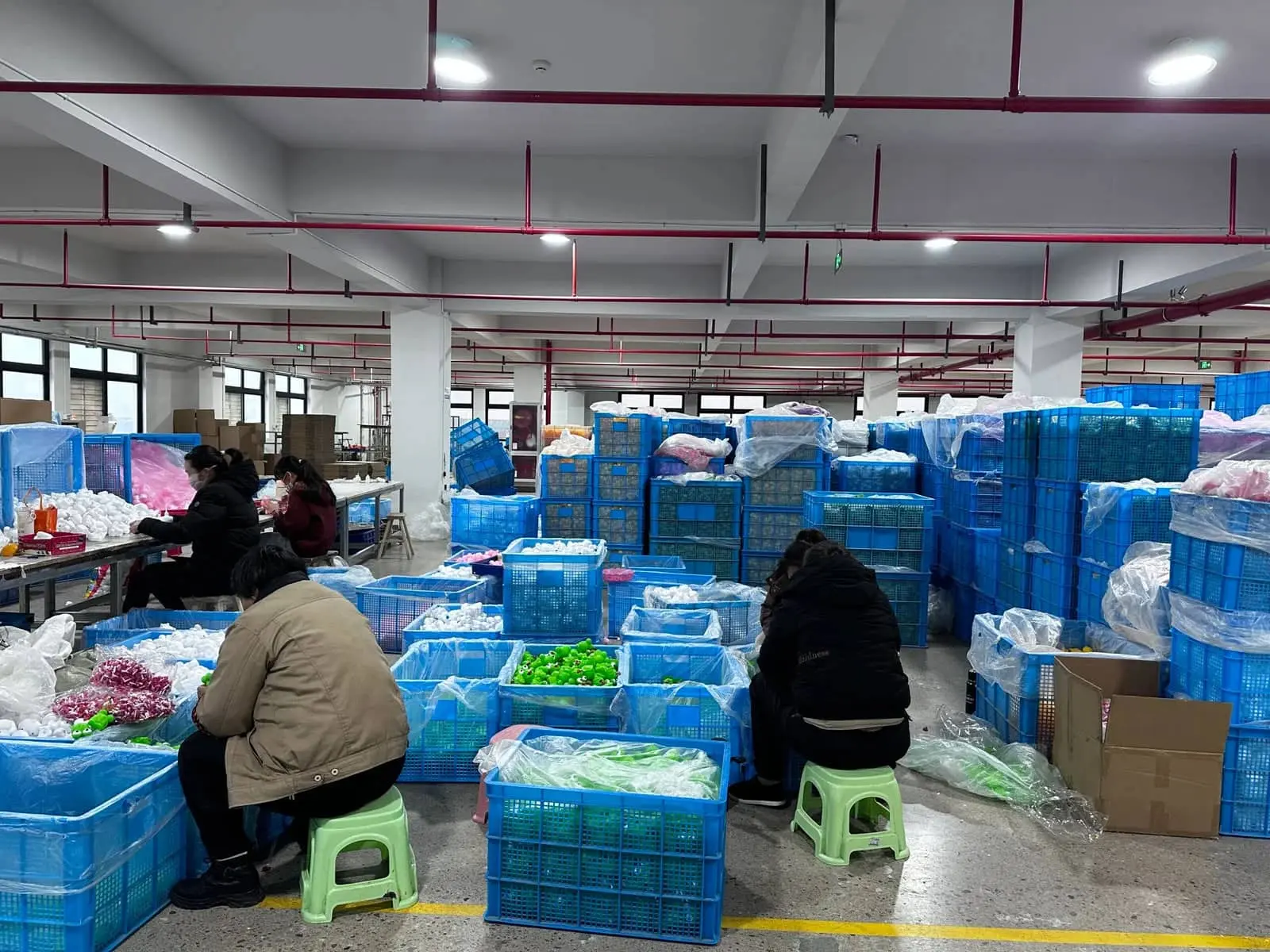
A moulding line does not see an order as a count of ducks. It sees a queue of jobs, and every job opens with a set-up that is indifferent to the run length. A tool is cut once for a shape. A colour is matched once for a batch. A print screen is prepared once for a mark. The first duck off a new tool is compared with the approved sample, and that comparison takes the same care whether the batch is small or enormous. That is the fixed pile.
The second pile multiplies. Compound is taken by weight, ink by coverage, cartons by the box, tape and labels by the carton, and container space by the volume the cartons occupy. A larger count does not make any of those jobs smaller. It only spreads the fixed pile across more ducks, which is why two orders with the same count can behave like two different jobs. One puts four themes on one body, one colour family and one carton size. The other cuts four shapes, matches four colours and packs four cartons that cannot be stacked together. The buyer signs the same count in both cases and receives a very different batch underneath it. The wholesale buyer's specification makes the same split in buying terms.
Tooling: the cut you make once

A mould is cut for a shape, and only for a shape. Colour is a compound decision taken before the compound reaches the tool, so a new shade starts a new batch rather than a new piece of steel. Outfits, print position and packaging artwork sit above the same body for the same reason. A buyer who wants six looks from one duck usually needs one tool and six colour or print plans, not six tools.
There are three routes into a shape. Print a mark onto a body the factory already runs. Keep the body and change the colour, the outfit or the print position. Or build a new shape from a drawing, which is the route that cuts steel. Naming the route early is the simplest way to keep a large order inside a tool that already exists.
Cavity count is the other half of the tool decision. A single-cavity mould produces one duck per cycle, a multi-cavity mould several, and more cavities help only when the batch is long enough to keep them busy. The count follows the size of the duck and the life of the programme rather than the first quantity, which is why I ask for the repeat plan before anyone draws a cavity layout. The size scaling note explains why a size family is several tools rather than one, and the size chart sets out what each size is bought for. Wear belongs in the same conversation, because every cycle works the parting line, the fill point and the surface polish, and wear shows up as flash, a rougher skin or a dimension that drifts.
Carton maths: the duck grows in three directions

If the tool is the fixed pile, the carton is the pile most often underestimated. A carton holds a fixed internal volume, and a duck grows in three directions at once. Increase every dimension by half and the duck occupies about 3.4 times the space. Double every dimension and it occupies eight times. A range of three sizes is therefore nothing like three times the carton volume of one size, and the biggest duck in a range can crowd out the small ones even when it is the shortest line on the order.
The height line on its own is not a pack. A duck that measures 8 in tall and 8 in long is a different carton from one that measures 8 in tall and 12 in long, even though both are eight-inch ducks in an email. The packing choice lands in the same arithmetic, since a gift box takes more volume per duck than a loose polybag, so the same count needs more cartons and more container space.
| Change to the duck or pack | Space it takes | What it does to the carton plan |
|---|---|---|
| Half again in every dimension | about 3.4 times | fewer ducks fit, so more cartons for the same count |
| Twice the size in every dimension | eight times | the carton count multiplies rather than adds |
| 8 in tall and 12 in long instead of 8 by 8 | a different carton | the height line alone is not a pack |
| A gift box instead of a loose polybag | more volume per duck | fewer ducks fit and the order moves more cartons |
Four lines belong on the pack sheet before artwork is approved: the carton dimensions, the units per carton, the gross weight and the dimensional weight. A light carton of ducks can be charged on the space it occupies rather than on the scale, so dimensional weight is the line that surprises a buyer who has only weighed a sample on a desk.
Transit performance can be tested rather than assumed. The International Safe Transit Association's test procedures include Project 3M, a general simulation test for packaged products prepared for international shipment from Asia-Pacific manufacturing sites to a US distribution centre, which is exactly the route a large duck order from China takes. A carton plan can be checked against a published procedure before the first container is loaded. The packaging note covers the retail and giveaway versions of the same box, and the carton specification note covers the box, weight and pallet lines in full.
Batch planning: one tool, one colour, one carton plan

Once the two piles are separated, the batch becomes a plan rather than a number. The line runs in one order: mould, form, print, inspect, pack. A plan that puts the same body back to back, settles every colour before moulding starts, prepares each print mark once and decides the carton split before the first duck is packed behaves like one job. A plan that interleaves themes and colours behaves like several small jobs sharing one document.
The schedule is narrow in the same way. When a large batch slips, the moulding is rarely what slipped. A colour change, a print set-up, a packaging delay or a failed inspection is the usual cause, and those are the steps that need a buffer rather than a promise. The production schedule note treats the same four as the movable part of a schedule, and the practical use of that list is to put the buffer where the risk sits instead of at the end.
The carton split is the other half of the plan. A mixed order is packed by store, region or event, and the cartons are labelled so the split survives the warehouse. That labelling is planned work rather than a warehouse favour, and it decides whether a large order arrives as one shipment or as a sorting problem at the other end. The large size specification sets out the dimensions side once the batch shape is settled.
The gates a large batch is signed off at

Checks on a large batch work as gates rather than as a final exam. The first gate is the tool: when the shape is new, the first samples are the last moment a beak or a base can still be adjusted before every change becomes rework. The second gate is the body colour, matched physically under daylight and then compared against the approved duck rather than against a screen. The third is the print and paint. The fourth is the check and pack, which is the gate that protects the batch.
The print gate is also a safety gate for any duck that reaches a child. In the United States, a children's product that contains more than 100 ppm lead in an accessible component is a banned hazardous substance under 15 U.S.C. § 1278a, and the Consumer Product Safety Commission's total lead content guidance sets out that limit and the certification that goes with it. Ink, paint and any coated accessory belong in the same file as the mould.
The same file records the age grade. A children's product is a product designed or intended primarily for children 12 years of age or younger, and one that is subject to a children's product safety rule needs third-party testing and a written Children's Product Certificate, as the commission's guidance explains. That is why the line between a large display duck and a large toy is a brief decision with documents attached rather than a label added on the last morning. On the floor the comparison is a duck from the head of the run, one from the middle and one from the last carton packed, and the inspection note covers where those checks sit in the flow.
Four questions that shape a large batch
- Does the order share one body and one tool, or does every theme need its own shape?
- How many colours does the batch really contain, and are they grouped or spread through the plan?
- What is the packed carton count for each size, and does the label split survive the warehouse?
- Which gate signs the batch off, and whose signature sits against the sample?
Four answers take less than an afternoon, and they change what a large order carries far more than a negotiation does. A buyer rarely regrets asking them before the tool was cut. The more common regret is a batch asked for them after the first container was packed.
Frequently Asked Questions
Does a larger order need a new mould?
Not for a colour, an outfit or a print, and not for a size a tool already exists for. A new shape or a new size is a new tool, and the drawing and the artwork carry over while the steel does not. A repeat of a shape that has already run starts from the same mould and the same colour reference.
Why does the carton count grow faster than the duck count?
Because a duck grows in three directions while a carton only holds volume. Half again in every dimension takes about 3.4 times the space and twice the size takes eight times, so cartons multiply rather than add. The pack changes the same sum, since a gift box takes more room per duck than a loose polybag.
Can one batch carry several colours or themes?
Yes, if the plan groups them. A colour is set in the compound before moulding, so each colour is a batch start, and a batch that spreads six colours through one line is really six small batches. Grouping the colours and keeping one body leaves only the colour changes to schedule.
Where do the checks sit on a large batch?
At four gates: the tool, the body colour, the print and paint, and the check and pack. Each gate compares against a document the buyer has signed, and the last one includes ducks from the head of the run, the middle and the final carton. A photograph of the carton count written on the first box closes the batch.
Final Note
What older advice on large duck orders got right is that the duck is rarely the lever. What it tended to leave out is that the lever is not a negotiation but a plan: the tool you do not cut twice, the colour you settle before moulding, the carton you measure before artwork, and the gates you agree before the first duck. Those four hold whether the batch is a thousand ducks or a hundred thousand, and they hold on the second order as well as the first.
My own order is tool, then colour, then carton, then gates. A buyer who works in that order usually finds that the variable pile was never as large as it looked, and the fixed pile was doing more of the work than anyone had credited it with.
Key takeaways
- The work that happens once and the work that repeats: A moulding line does not see an order as a count of ducks.
- Tooling: the cut you make once: A mould is cut for a shape, and only for a shape.
- Carton maths: the duck grows in three directions: If the tool is the fixed pile, the carton is the pile most often underestimated.
- Batch planning: one tool, one colour, one carton plan: Once the two piles are separated, the batch becomes a plan rather than a number.
- The gates a large batch is signed off at: Checks on a large batch work as gates rather than as a final exam.
- Four questions that shape a large batch: The section on "four questions that shape a large batch" sets out the checks that answer it.