Why a set of ducks is a packaging project before it is a duck order.
I look at a jeep ducking set as a retail object, not as a bag of ducks with a label on it. The ducks may be perfect and the set can still fail, because the part that sells it is the pack, and the pack is designed by nobody in particular unless someone owns it.
In short: A jeep ducking set works as a retail product when the pack is chosen for the channel, the insert holds every piece, the card carries the reason to buy and the carton volume is counted before the design is fixed. The duck approval covers the duck. The set needs its own four decisions.
A jeep ducking set is a retail product, not a bag of ducks
A bag of ducks is an assortment. A set is a product with a name, a count and a reason. The difference is not the number of ducks; it is whether the buyer can understand what they are getting without opening the pack.
That is why the set has to be designed from the shelf backwards. The buyer sees the front of the pack at arm's length, the back at reading distance, and the barcode at the till. The ducks inside are the proof, not the pitch.
The set also has a life after the sale. A jeep ducking set is often given as a gift, which means the pack has to survive a bag, a car and a glovebox. A pack that looks good on the shelf and crushes on the way home is a return waiting to happen.
Pick the pack by the channel, not by the sample
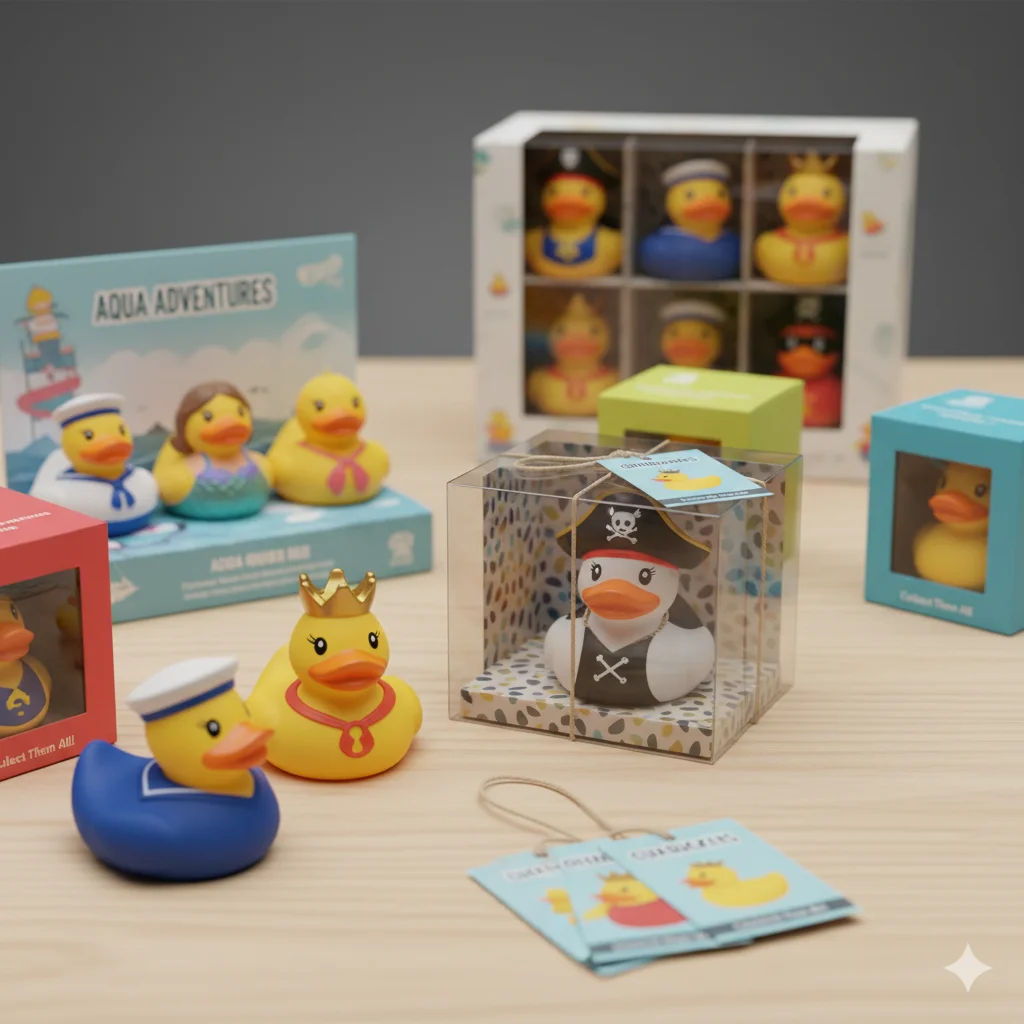
The same set can need three different packs depending on where it is sold. A gift shop peg needs a hang hole and a compact footprint; a dealer counter needs a box that can stand and be picked up; an online listing needs a pack that survives a parcel.
The sample is the worst guide to the pack, because the sample is handled by people who already know what the set is. The channel decides what the buyer sees first, how the pack is stored and what it has to survive before it reaches the buyer.
The gift set notes and the packaging formats cover the options. The channel decision should be written on the set spec before the artwork, because it changes the card size, the insert and the carton.
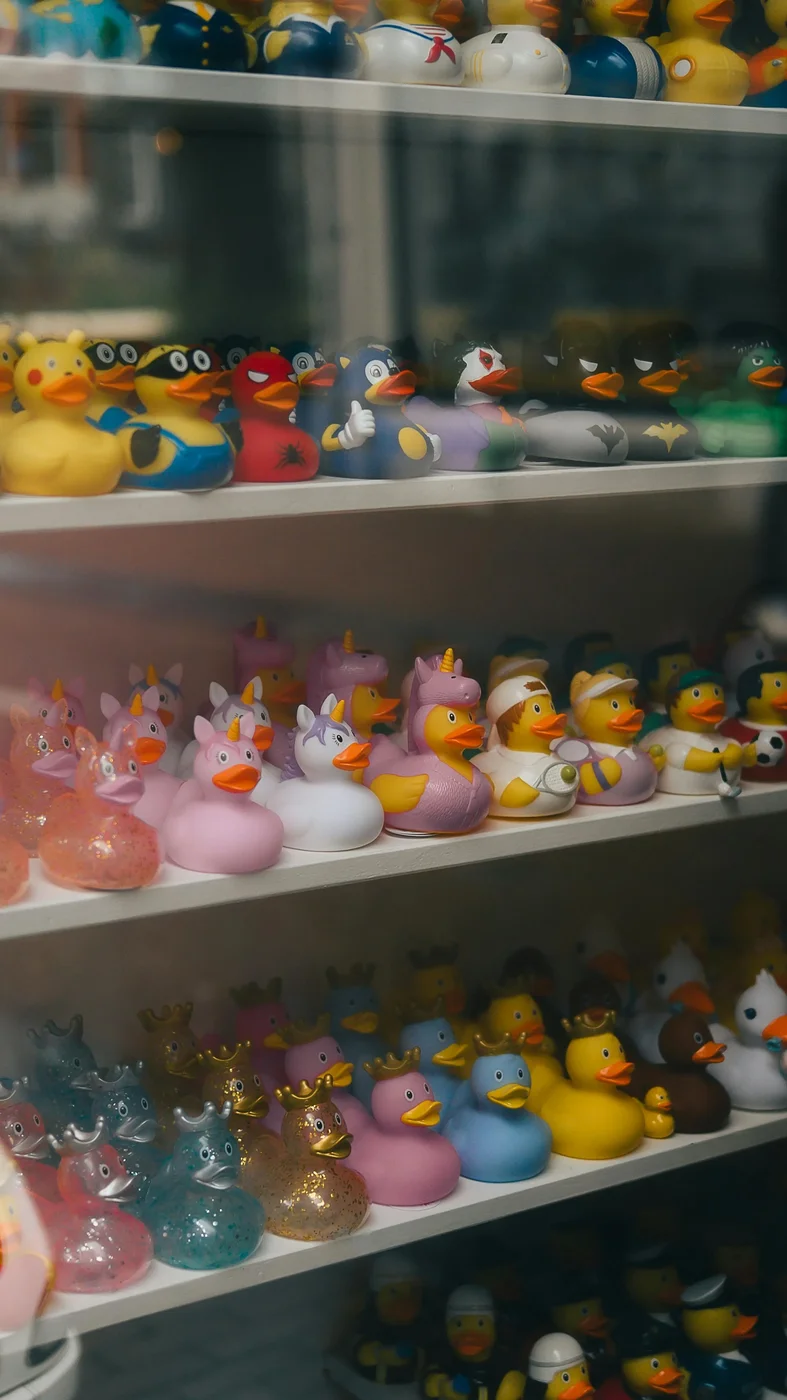
The window, the insert and the peg hole
Three details decide whether the set looks professional on the shelf. The window shows the ducks; the insert holds them in place; the peg hole lets the pack hang without tearing.
A window that is too small hides the product, and a window that is too large leaves the pack flimsy. The insert is the part that keeps the ducks from moving, and it is usually the first thing cut when a pack is simplified. A set that arrives with the ducks at the bottom of the box looks used before it is opened.
The peg hole is structural. A pack that hangs from a punched hole in card will tear at the top if the card is too thin or the hole is too close to the edge. The hang tag notes and the retail packaging notes cover the materials; the set spec only has to state the channel and the weight.
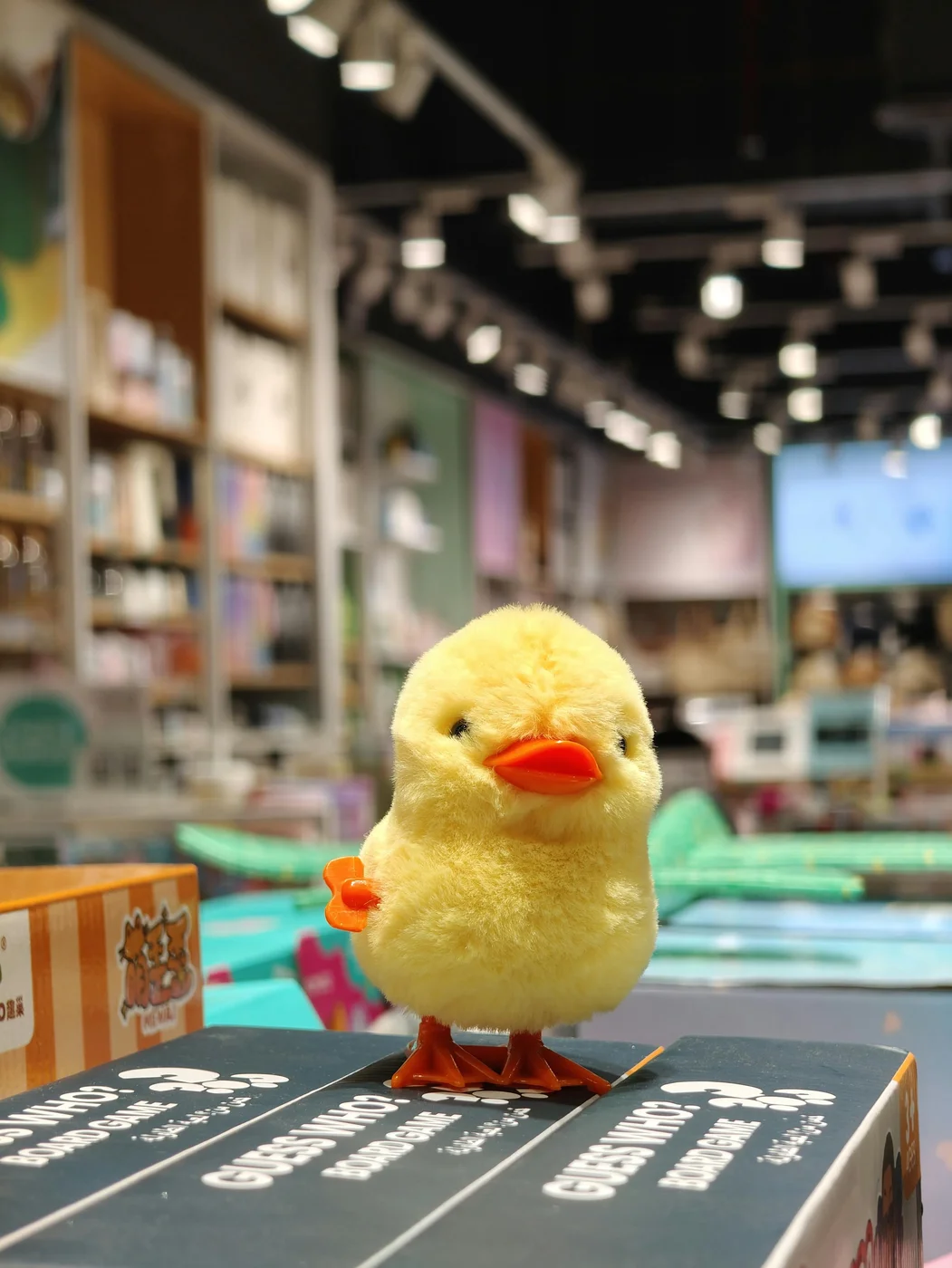
What the set adds that a duck approval never covers
A duck approval fixes the duck: body, colour, print, size. A set adds four more items, and each one needs its own decision before the pack is printed.
| Item | Role in the set | Why it is there |
|---|---|---|
| Duck or ducks | The product | The reason the set exists |
| Note card | The reason to give it | Turns an object into a gift |
| Sticker or tag | The theme and the channel | Small item that carries the story |
| Insert | Holds the pieces in place | Protects the set in transit |
| Pack | The shelf and the parcel | What the buyer sees first |
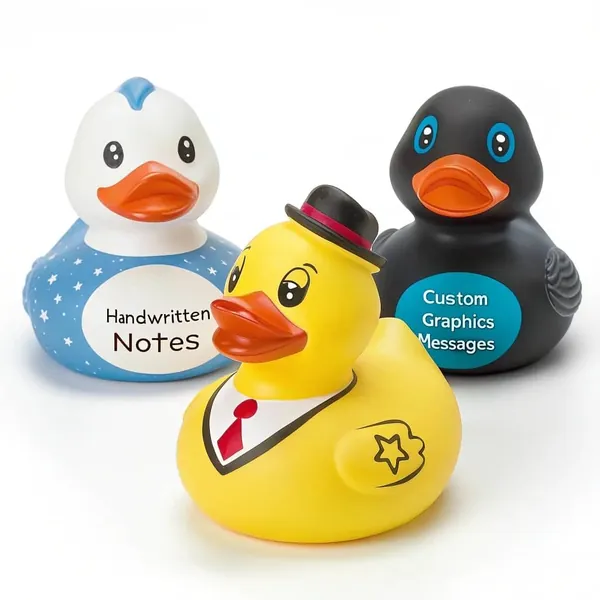
The card is the item that most often arrives late. It carries the sentence that explains the theme, the space for a handwritten name and the destination of any code. If the card is designed after the pack, it usually ends up smaller than the space available.

Carton volume is the hidden line in the pack decision
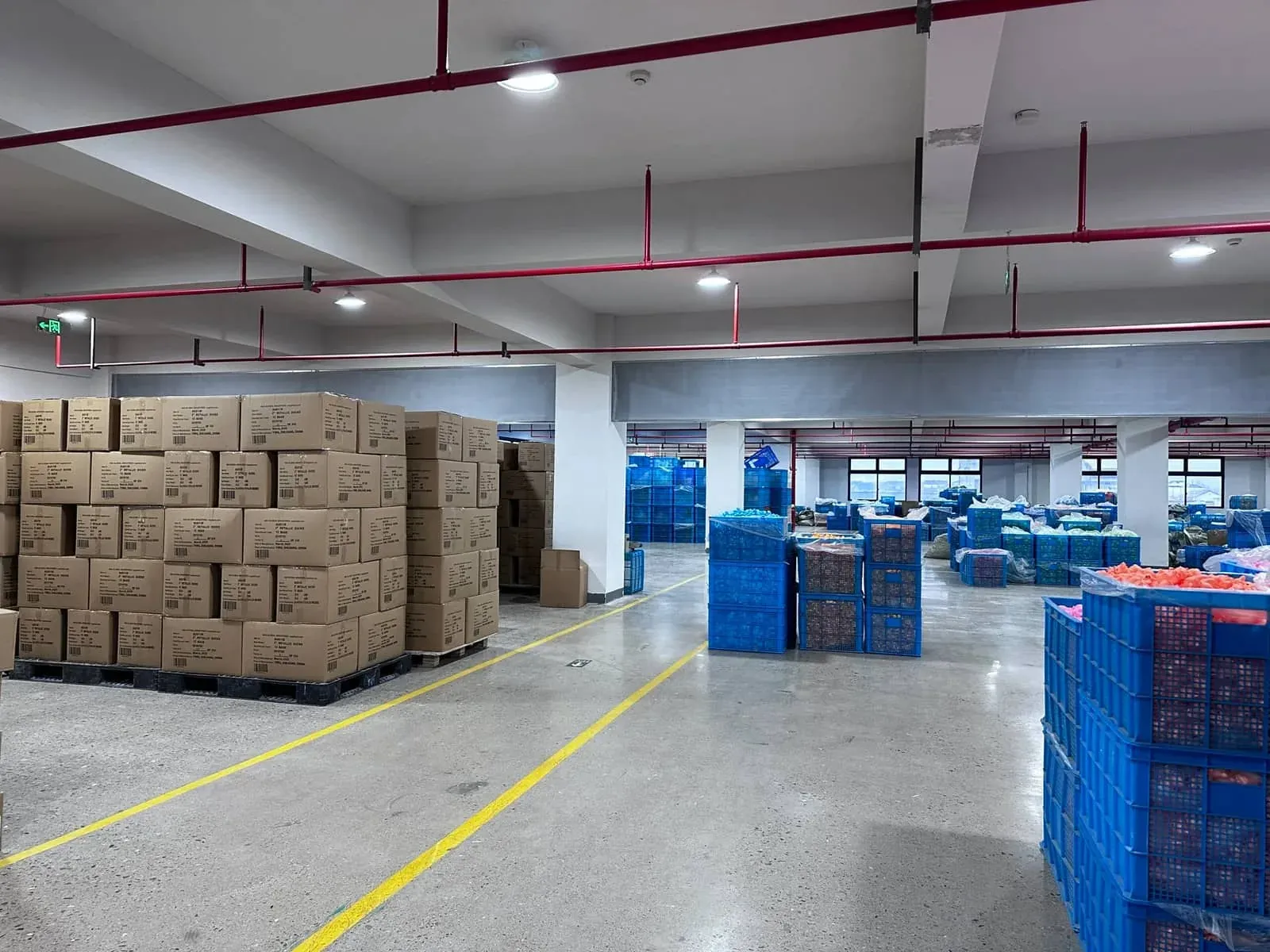
The set is packed into a carton, and the carton is packed into a pallet. A pack that gains half an inch in depth can lose a row of sets per carton, and the change is invisible until the freight is calculated.
That is why the carton is part of the design, not a later calculation. The set spec should state the packed dimensions, the count per carton and the pallet pattern, so the pack can be tested against the space it will occupy. The carton spec notes show how the marks and the count are set.
The line matters most for a retail set, because the pack has to look generous on the shelf and still fit the carton efficiently. Those two goals pull in opposite directions, and the carton count is where the compromise is visible.
The card is the smallest part and the one people keep
A set is remembered through the card. The duck sits on a dashboard, the box is recycled, and the card is what carries the message, the date and the name of the person who gave it.
The card should be designed as a piece of paper with a job, not as a label. It needs a front that reads at a glance, a back with the practical information and a space that a person can write in. A card that is too small to write on becomes a sticker; a card that is too large stops fitting the pack.
The tag and card comparison covers the formats. The set spec decides which one belongs in the pack and where it sits in the stack.
What the box has to say before anyone opens it
Retail packaging carries marks that the duck never needs, and they compete for the same surface as the design. A consumer pack needs a net quantity declaration, and 16 CFR Part 500 governs where it goes, how units are expressed and how the count is written.
If the set includes a plastic bag, the film has its own rule. The CPSC toy safety guidance states that certain plastic film, including packaging, must have an average thickness greater than 0.00150 inch or be perforated so that one percent of the surface is removed. A bag chosen for looks can fail that line, and the set spec should name the film before the pack is ordered.
The pack also needs the marks that identify the product and the batch, plus the age grade if the set can reach a child. The toy safety label guide lists what has to appear; the set spec decides where each mark sits.

Five questions before you approve the pack
A pack can be approved in one meeting if these five answers are on the spec sheet.
- Which channel is the set sold through, and what does that channel require of the pack?
- Which pieces are inside, and which one holds them in place?
- What does the card say, and is there room to write on it?
- What are the packed dimensions, the count per carton and the pallet pattern?
- Which marks does the pack need, and who checks them before print?
Frequently Asked Questions
What packaging should a jeep ducking set use for retail?
It depends on the channel. A peg display needs a hang hole and a compact card; a counter display needs a box that can stand; an online set needs a pack that survives a parcel. Choose the channel first, then the pack, then the card size.
Why does a set sample pass but the production carton fail?
Because the sample is handled by people who know the set and the carton is handled by a parcel network. The sample does not test the insert, the film gauge or the carton count. Test the packed set, not the loose set.
How do I pack a set with several duck styles?
Use an insert that gives each style a place, and print the style list on the card or the back of the pack. A set with several styles needs a count that matches the pack, or the buyer will find the mismatch at home.
Should the set include a hang tag or a story card?
Either can work; the choice follows the channel and the shelf position. A hang tag is part of the product, a story card is part of the gift. A small set can carry both, but each one needs a designed place in the pack.
Final Note
A jeep ducking set is a small retail product, and retail products are judged by the pack before the product is touched. The duck, the card, the insert and the carton are four decisions, and a set that skips one of them looks unfinished on the shelf.
The set that sells is the one where each piece has a designed place and the box still closes after a parcel. I would rather see a simple set where every piece has a place than an elaborate box that crushes in a bag. The pack is the product the buyer meets first, and it has to survive the meeting.
Key takeaways
- A jeep ducking set is a retail product, not a bag of ducks: A bag of ducks is an assortment.
- Pick the pack by the channel, not by the sample: The same set can need three different packs depending on where it is sold.
- The window, the insert and the peg hole: Three details decide whether the set looks professional on the shelf.
- What the set adds that a duck approval never covers: A duck approval fixes the duck: body, colour, print, size.
- Carton volume is the hidden line in the pack decision: The set is packed into a carton, and the carton is packed into a pallet.
- The card is the smallest part and the one people keep: A set is remembered through the card.
- What the box has to say before anyone opens it: Retail packaging carries marks that the duck never needs, and they compete for the same surface as the design.
- Five questions before you approve the pack: A pack can be approved in one meeting if these five answers are on the spec sheet.