A fourth-quarter duck run moves as a chain of signatures rather than as a countdown, because that is the only version of the calendar that survives contact with a factory. A countdown says what is left; a signature chain says what is held, who holds it, and what happens behind it when one name does not appear. Late Q4 orders are rarely late at the end; they are late at a gate nobody signed.
Written as a working note on Q4 timing, with public customs and distribution-testing guidance cited where a rule or a test applies.
In short: A Q4 duck run moves through four gates: the design freeze, the sample approval, the material and colour booking, and the packing and document release. Each gate releases work that cannot usefully start before it. The calendar is therefore a chain of signatures, and the useful question is not how many weeks are left but which signature is still missing.
A chain of signatures, not a countdown
A countdown treats the schedule as one block of time that can be compressed anywhere. A chain treats it as work that is unlocked in order. Freezing the design unlocks the tool and the colour work. Approving the sample unlocks the run. Booking the material unlocks the packing plan. Releasing the documents unlocks the shipment. Compressing a gate that is already open is possible. Compressing a gate nobody has signed does nothing at all.
That difference explains a familiar argument. A buyer counts the weeks and concludes there is room. The factory looks at the same weeks and sees that the design is still open, so nothing behind it has started. Both are reading a calendar. Only one of them is reading the chain.
The four gates and what each one releases
| Gate | What is signed | What it releases | What it blocks if unsigned |
|---|---|---|---|
| Design freeze | The drawing, the colours and the pack | Tool work, colour matching, pack artwork | Every later stage |
| Sample approval | The physical unit against the drawing | The run and the material booking | Material, print plates, packing |
| Material and colour booking | Compound and colour lots against the run | Moulding and paint scheduling | Packing, because there is nothing to pack |
| Packing and document release | The pack sheet and the shipment file | Packing, marking and movement | The shipment itself |
The table is worth reading from right to left, because the blocking column is the schedule. A gate that is unsigned does not slow the work behind it. It stops it.
Gate one: the design freeze
The design freeze is the only gate that is entirely in the buyer's hands, which is why it is the one that slips most quietly. A colour still under discussion is an open gate. A logo still being redrawn is an open gate. A pack face with no decision about the header is an open gate. Nothing is wrong with any of those states, except that the factory cannot start the work behind them.
Two things make this gate easier to sign. The first is a drawing that shows the front, the side and the base, because most print questions are answered by an angle nobody drew. The second is a written answer to the colour question, since matching a colour from a photograph is a different job from matching it from a reference. The colour matching note covers what makes that answer reliable, and the revision note covers how a change after the freeze lands on the schedule.
Gate two: the sample approval
Every day of the run sits behind one physical unit being approved. That is not bureaucracy. It is the point where the drawing stops being a drawing and becomes a thing with a wall thickness, a paint edge and a seam, and the buyer either accepts those or asks for a change.
The mistake at this gate is approving a photograph instead of a unit, or approving a unit that does not carry the final colour. Both create a second approval round at the worst moment. The other mistake is compressing the transit test, which is a test rather than a sign-off. The International Safe Transit Association frames pre-shipment distribution testing as the instrument that confirms packaged-product performance before the goods move, and a test that is skipped to save a week tends to reappear as damage at the destination, where there is no week left to save.

Gate three: the material and colour booking
A run consumes material and colour, and both come in lots. The booking gate is the moment those lots are assigned, and it is the gate buyers understand least because it produces no visible output. Nothing arrives. Nothing is approved. And yet everything downstream is waiting for it.
Two practical rules make this gate visible. First, ask for the booking confirmation in writing, with the colour reference on it. Second, keep the pack decision out of it: the pack is a separate gate, and moving packing earlier only creates stock that has to be stored while the design catches up. The storage note explains what a season in a warm stockroom does to a finished duck.

Gate four: the packing release and the documents
The last gate is the one that turns a run into a shipment, and it has two halves that are often treated as one. The packing release fixes the carton, the inner pack and the marks. The document release fixes the shipment file, and the two have to agree, because a carton described one way in the file and another way on the pallet is a problem at the border rather than at the packing table.
That is a shared duty rather than a formality. US Customs and Border Protection describes compliance as a shared responsibility between the agency and the importing and exporting community, and asks importers to know the rules that apply to their commodity. In practice the gate is signed when the packing sheet and the shipment file name the same goods, the same counts and the same destination. The carton note covers the first half and the customs note covers the second.

The queue rule: complete jobs move first
A factory floor runs on complete jobs. A run with an approved sample, booked material and a released pack sheet can be scheduled. A run missing one element waits, and the wait is not personal: scheduling an incomplete job would stall the line behind it. This is why a smaller order that is complete overtakes a larger order that is not, and why buyers who assume size buys priority are usually disappointed.
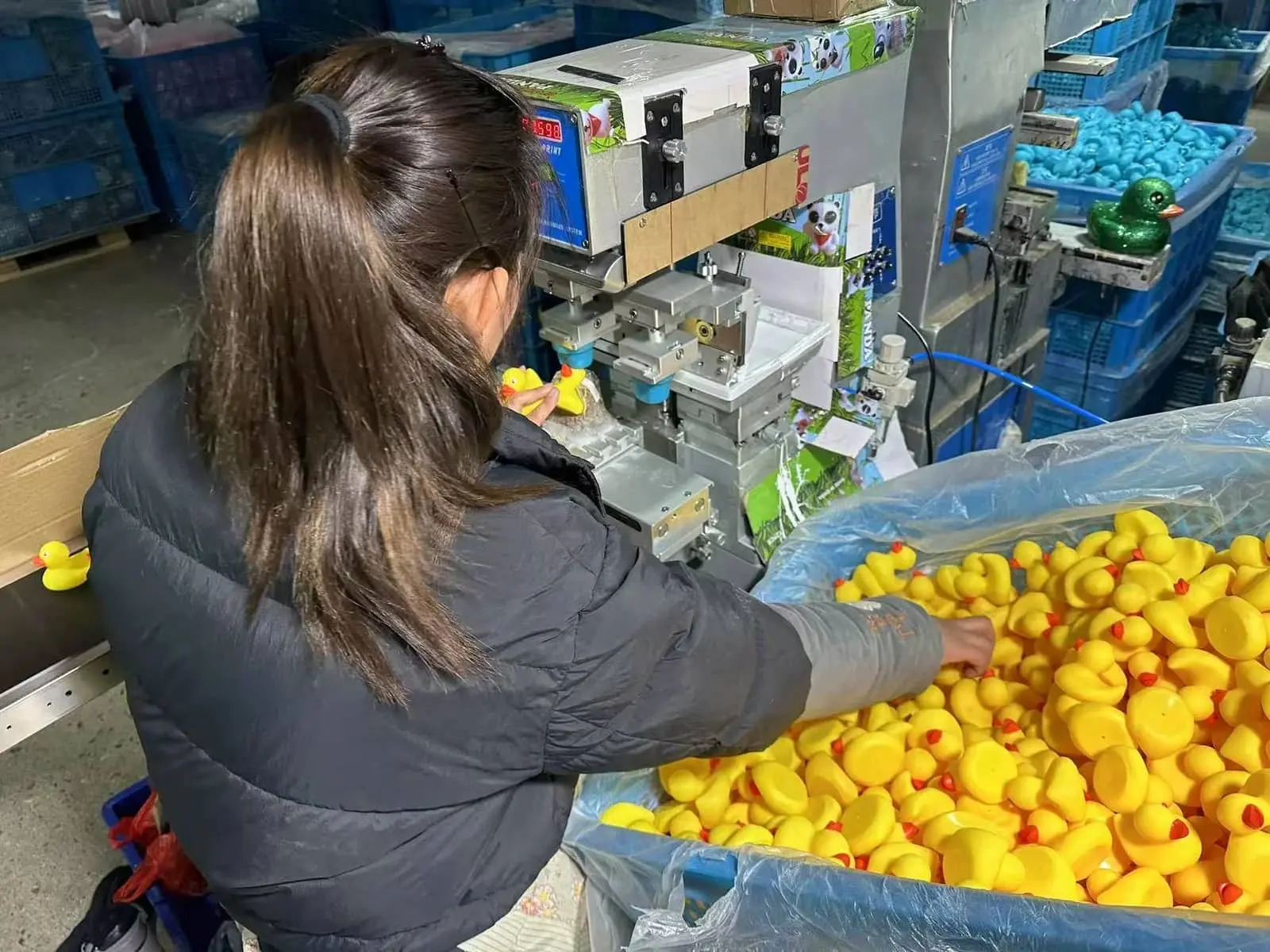
The useful response is not to push harder. It is to check which element is missing and clear it. A single unanswered colour question can hold a run behind jobs that are entirely ready.
What the buyer controls and what the factory controls
The buyer controls the design, the approval and the pack decision. The factory controls the tool, the material allocation and the line sequence. Most schedule arguments come from one side trying to control the other's part, or from neither side noticing that a shared item, such as the carton mark layout, needs both signatures.
Writing the split onto the plan is a small act with a large effect. It makes clear which signature is late and who can supply it, and it removes the vague sense that the order is being delayed by somebody else.
When a gate slips, read the plan backwards
When something slips, the temptation is to re-plan forwards from the new date. Read it backwards instead. Start from the date the goods have to be on a shelf and subtract the gates in reverse: the document release, the packing release, the material booking, the sample approval, the design freeze. The first item that lands before today is the item that is already impossible, and the rest of the conversation can be about that one thing rather than about the whole calendar.
The seasonal calendar note does this for the whole year rather than for one quarter, which is useful when a Q4 run is really the second half of a plan that started in spring.

Four questions to settle before the quarter turns
- Which of the four gates is unsigned today?
- Who signs it, and do they know that the run is waiting on them?
- If one gate slips, which gate absorbs the slip without touching the shelf date?
- Does the pack decision sit before or after the material booking?
Frequently Asked Questions
Can a Q4 run start before the design is final?
It can start in part. Tool work and colour matching can begin on a nearly final drawing, but the run cannot be scheduled on one, because every change after that point has to be carried through the sample and the print work. The honest way to begin early is to freeze the shape and leave only the print open.
What is the difference between a gate and a milestone?
A milestone is a date someone watches. A gate is a signature that releases work. A missed milestone is news. An unsigned gate is a stoppage, and that is why the calendar is better built from gates than from dates.
Does a bigger order move up the queue?
Not by itself. A complete job moves ahead of an incomplete one regardless of size, because the line can only run on complete work. Size matters to allocation and to how early the material is booked, not to whether an unscheduled job overtakes a scheduled one.
What happens if the sample is approved late?
Everything behind it shifts, unless the sample gate is the only slip and the material booking is still open. In practice a late approval compresses the packing window, which is the worst place to lose time, because packing is where a change becomes visible on every unit.
Final Note
I would rather see a Q4 plan with four names on it than a countdown with four weeks left. The names tell you where the run actually is. The countdown tells you what everyone hopes. A duck order is not late because of the last week. It is late because one gate stayed open while the calendar kept moving, and nobody noticed until the shelf date was in view.
Key takeaways
- A chain of signatures, not a countdown: work is unlocked in order, so an unsigned gate cannot be compressed.
- Gate one: the design freeze: the only gate entirely in the buyer's hands, and the one that slips quietly.
- Gate two: the sample approval: the run sits behind one physical unit being accepted.
- The queue rule: complete jobs move first: a complete small order overtakes an incomplete large one.
- When a gate slips, read the plan backwards: subtract the gates from the shelf date to find the impossible item.