What the annex has to name before either side signs.
Ten clauses carry a duck order, and the ones that describe the duck, the tool, the sample and the record do most of the work. An annex that cannot settle a shade or a second batch is not protecting the order.
In short: A purchase contract protects a duck order through ten clauses, and each one points to a document the factory can produce: a spec card, an artwork file, a tooling record, an approved sample, an inspection record, the retained standard, the marks, the carton spec, the claim procedure and the reorder clause. The clauses that describe the duck carry the weight; the rest decide what happens when the description fails.
The order is only as good as the duck it describes
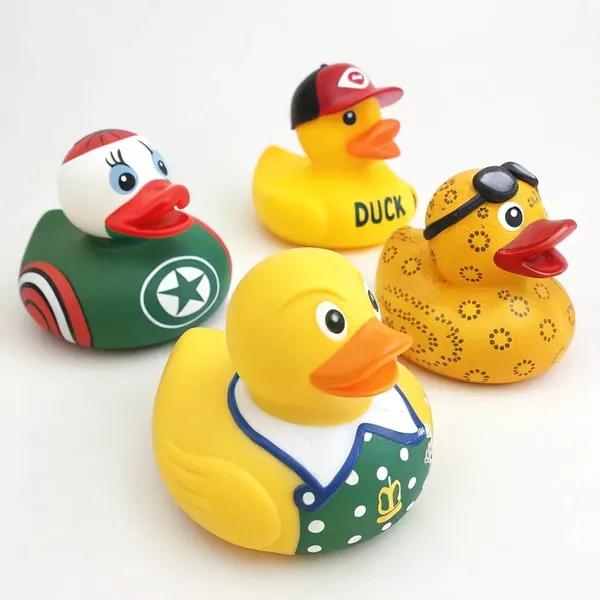
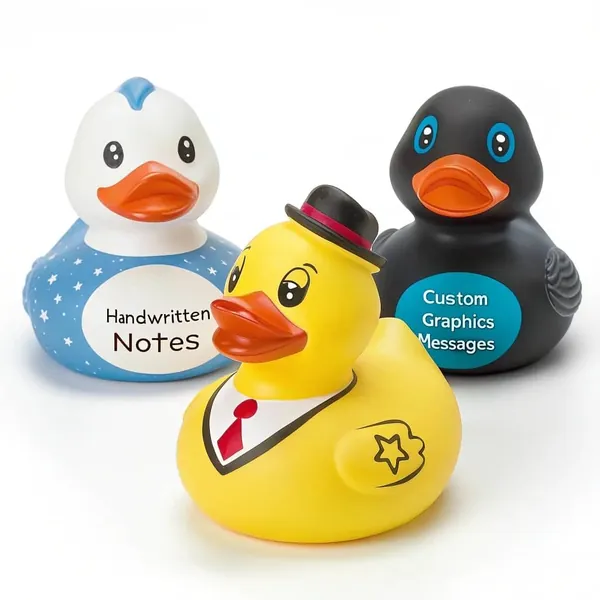
A contract can be signed, stamped and filed while the product it covers remains undefined. That happens more often than a dispute about legal wording. The annex says custom rubber duck, three inch, yellow, and both sides believe they have agreed, because each is holding a different duck in mind: one printed on the chest, one with a moulded hat, one bagged, one loose.
The fix is structural rather than legal. Every clause in the annex has to attach to an artefact that survives the meeting: a drawing, a file, a numbered sample, a signed record. When a question comes up six months later, the answer is in one of those artefacts or it does not exist. A clause that says the factory will meet the agreed quality adds nothing unless the annex names the document where that quality is written down.
That is the test I apply to a duck contract: for each clause, can I point to the sheet that settles it? Ten clauses pass that test; a long agreement that fails it is a shorter agreement with more paper.
Ten clauses, five documents
The ten clauses most duck orders need, and the document each one points to. Five documents do most of the work: the spec card, the artwork file, the tooling record, the approval sheet and the inspection record. The other five clauses attach to those documents rather than replacing them.
| Clause | Document it names | Who signs | What it fixes |
|---|---|---|---|
| One, the spec | Product spec card | Buyer and factory | Body, size, material, colours, parts, packing |
| Two, the artwork | Print file with a revision number | Brand owner | The mark, the print area and its placement |
| Three, the tooling | Tool record | The party that owns the tool | Who may run the mould and where it is kept |
| Four, the sample | Approval sheet and the retained duck | Buyer | The approved type and the deviations allowed |
| Five, inspection | Inspection plan and record | Factory, countersigned by the buyer | Sample size, defect classes, accept or reject |
| Six, the standard | Test report and certificate | Factory and importer | The standard the batch is held against |
| Seven, the marks | Mark drawing | Factory | The tracking mark and the country of origin |
| Eight, the carton | Carton spec | Factory | Count per carton, weight, label and pack |
| Nine, the claim | Claim procedure | Both parties | What a failed lot triggers, and by when |
| Ten, the repeat | Reorder clause | Both parties | Which documents carry to the next run |
Read the table from the right column: a clause that does not name a document is a promise, not a control. The five documents are the ones a factory can produce on request, and the annex should refer to them by revision or date.
Clause one: the spec card that describes the duck
The spec card is the noun list of the whole order. It should name the body and the finished length in inches, the material, the colour reference for each part, the parts themselves, the print areas, the packing and the article number the buyer uses internally. Eyes, beak, tail, squeaker and any fitted accessory each get a line.
Yellow duck, three inch, is a category, not a product. Two factories can read it and produce bodies that differ in length by a quarter of an inch, in neck height, in beak width and in the hardness of the vinyl. None of those differences is visible in a photograph of a duck standing alone, and all of them matter when the buyer compares a reorder with the first delivery.
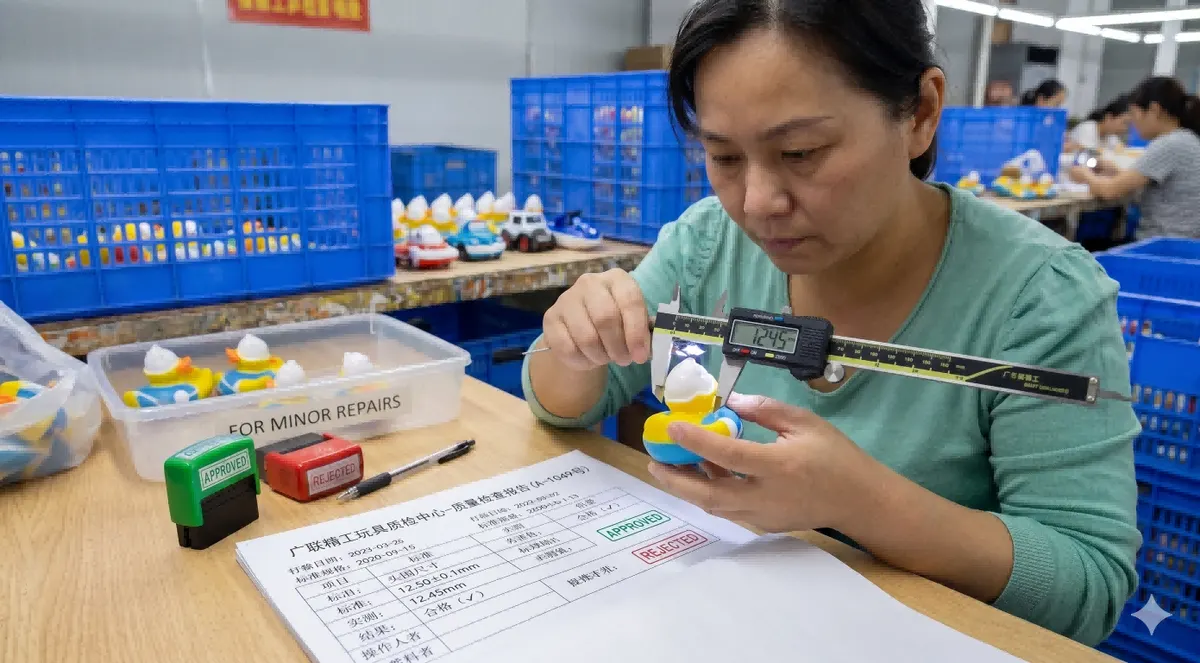
The card should also carry the tolerance. A size stated without a tolerance invites an argument at the calipers, and the argument is always about which number was meant. The clause that works says the duck is measured at a named point with a named instrument, and that the agreement covers a stated range around the nominal size.
Clause two: the artwork file and where the mark lands
The artwork clause should name a file and a revision, not a description. Logo on the chest, about an inch, is an invitation to interpret. A file with a revision number, a print area and a placement measured from a named point on the body is an instruction that can be checked.
Two permissions belong in the same clause. The first is the right to print the mark at all: who owns it and who has agreed to its use on this product, in this territory. The second is the right to change it. Approving a later version of the file is a new approval, and the clause should say so, otherwise the plate is cut from one version while the buyer believes another is approved.
The artwork file requirements set out what the file has to contain; the placement guide decides which surface carries the mark. Keep those two decisions in the annex by reference, and the clause stays short without becoming vague.
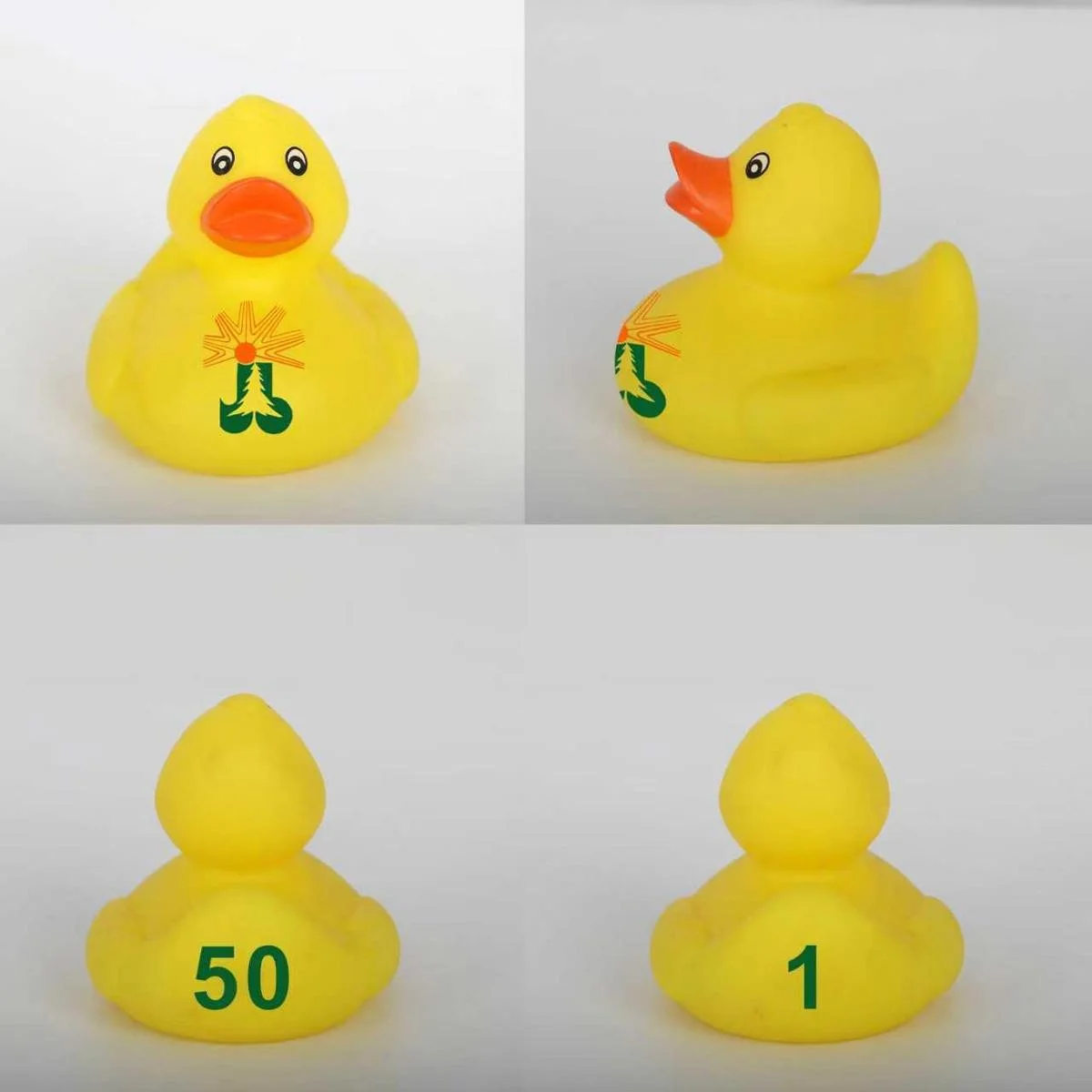
Clause three: the tooling paragraph, and who may run the steel
The tooling clause is the one buyers read last and regret first. It has to answer four questions in writing: who owns the mould, who may run it, where it is stored, and what condition it has to be in when the next order starts.
Ownership and access are different rights. A buyer can own a tool and still have no practical way to use it if the clause does not say that the tool travels with the order, or that a second factory may run it with written permission. A factory can hold a tool for years and still be unable to prove which tool it is without a record that ties the mould to the drawing.
The paragraph also has to cover wear. Every tool changes with use, and the change shows up in flash at the parting line or in a mark that grows soft. The clause should name the point at which the tool is inspected, who inspects it and what happens if it is out of condition. The mould ownership notes and the stock and custom comparison cover the two routes; the clause has to pick one route and write it down.

Clause four: the sample gate, and the approved duck behind it
A sample is not an approval until both sides agree on what it fixes. The clause should name the sample that was approved, the date it was approved, the deviations that were accepted with it, and where the retained duck is kept. Without those four items, the sample is a memory, and memories differ.
Photographs are useful and insufficient. A photograph records one angle in one light; it does not record the squeeze of the body, the sound of the squeaker or the position of a seam at the back of the head. A physical duck, kept by both sides, is the only reference that can settle a delivery question when the photograph and the delivered carton disagree.
The gate itself should be a stop, not a formality. Nothing moves to the tool or the print pass until the approval sheet is signed, and every later change to the spec or the artwork reopens the gate. The sample approval process and the sample to production notes carry the detail; the contract only has to make the gate binding.

Clause five: the inspection record and what a fail has to look like
An inspection clause that says quality to be confirmed on inspection leaves both parties free to disagree later. The usable clause names the sample size, the defect classes, the accept and reject numbers, who inspects, who signs the record and what happens to a lot that fails.
Acceptance sampling is a decision rule for a lot, not a measurement of every duck. The NIST/SEMATECH handbook makes the distinction plainly: the main purpose of acceptance sampling is to decide whether a lot is likely to be acceptable, not to estimate the quality of the lot. The clause should be written with that limit in mind, because a record asked to prove more than a sampling plan can prove will be argued with.
The record also needs a fail path. A rejected lot should trigger a named next step: a second sample, a sorting operation, a written cause and a decision on the carton. The inline and final inspection comparison shows where each check sits; the contract decides which record is the one that counts.

Clause six: the marks on the duck and on the carton
The marks clause covers three different things and they are often confused: the producer name and address, the tracking mark, and the country of origin. Each has its own rule, and each belongs on a named surface, not somewhere on the packaging.
For a children's product, the CPSC tracking-label guidance describes permanent distinguishing marks that make the location, date of production and batch or run number ascertainable. That is a record function: the mark is what lets a problem be traced back to a run rather than to a year. The clause should say which surface carries it and what it has to contain.
The carton has a separate duty. A consumer package needs a net quantity declaration, and 16 CFR Part 500 governs where that declaration goes, how units are expressed and how the count is written. A carton that carries the count only in a message thread is not marked. The carton spec notes cover the label layout; the clause fixes it by reference.

Clause seven: the claim process and the repeat clause
The claim clause is where a contract earns its keep, because a claim is the moment when both sides discover whether the description was precise. It should name what counts as a claim, the window in which it can be raised, the evidence required, and the remedy.
Evidence is the part that is usually underspecified. A photograph of a duck on a desk is not evidence of a batch defect; a carton label, a retained sample and a count of affected units is. The clause should list those items and say who holds the retained sample, so the comparison can actually happen. The defective duck claim notes walk through the sequence; the contract makes the sequence mandatory.
The repeat clause is the other half. A reorder is a new run, not a continuation of the old one, and the clause should say which documents carry forward unchanged and which have to be re-approved. When nothing is said, the answer defaults to the most optimistic reading, and the second batch is compared with a memory rather than a record. The reorder process sets out what should travel with the file.
What the annex cannot do
The annex cannot make a weak spec strong, and it cannot replace the approved duck. If the spec card is vague, ten clauses will describe the vagueness precisely. If no physical sample was retained, the claim clause will have nothing to compare against and the argument will be settled by whoever keeps better notes.
It also cannot fix a tool that nobody owns. A tooling paragraph without a named owner is a sentence about a mould that may or may not exist in five years. It is common to spend more time on the dispute clause than on the tool record, and the dispute that follows is about the tool.
What the annex can do is narrow every question to a document. That is a modest ambition, and it is the one that survives contact with a factory floor.
What buyers ask before they sign
The questions below are the ones that change a clause rather than decorate it. I would want an answer to each in writing, attached to the annex, before the first signature.
- Which document describes the duck, and who signed its last revision?
- Who owns the tool, and can a second factory run it without written permission?
- Which physical duck is the approved type, and where is it kept?
- What sample size, defect list and accept number sit in the inspection clause?
- Which documents carry to the next run without a new approval?
Frequently Asked Questions
Do I need a separate contract for a small duck order?
Use the same annex and shorten the clauses, not the documents. A small order still needs a spec card, an approved duck and a carton count, because the failure modes do not scale down with the quantity. What can be dropped is the formal dispute procedure, replaced by a named contact and a written claim window.
Is the approved sample part of the contract?
It is if the contract says so. The safe wording names the sample by date and description, states that it is incorporated into the agreement, and records where each side keeps its copy. Without that sentence the sample is evidence of intent, not a term of the agreement.
Who owns a mould paid for by the buyer?
The buyer, if the tooling clause says so and identifies the tool. Payment alone is weaker than a written record that ties the mould to the drawing, the cavity count and the date. The clause should also say where the mould is stored and what access the buyer has.
What should the contract say about the marks on a duck?
Name each mark, its surface and its content: the producer name and address, the tracking mark with its batch reference, the country of origin and the net quantity on the carton. Attach a drawing of the marked surface. A general instruction to mark as required leaves the factory to choose, and the choice may not satisfy the market the buyer sells into.
Final Note
A duck contract is a description with a signature under it. The ten clauses are the description broken into parts small enough to check, and the five documents are where the parts live. I would rather sign a short annex with a spec card, an approved duck and a named tool owner than a long agreement that refers to quality in the abstract.
The order that survives is the one where a new colleague can pick up the file and answer three questions without calling anyone: what duck is this, what was approved, and what happens if the carton is wrong. Write the annex so those three answers are on the page, and the legal language can stay where it belongs, in the background.
Key takeaways
- The order is only as good as the duck it describes: A contract can be signed, stamped and filed while the product it covers remains undefined.
- Ten clauses, five documents: The ten clauses most duck orders need, and the document each one points to.
- Clause one: the spec card that describes the duck: The spec card is the noun list of the whole order.
- Clause two: the artwork file and where the mark lands: The artwork clause should name a file and a revision, not a description.
- Clause three: the tooling paragraph, and who may run the steel: The tooling clause is the one buyers read last and regret first.
- Clause four: the sample gate, and the approved duck behind it: A sample is not an approval until both sides agree on what it fixes.
- Clause five: the inspection record and what a fail has to look like: An inspection clause that says quality to be confirmed on inspection leaves both parties free to disagree later.
- Clause six: the marks on the duck and on the carton: The marks clause covers three different things and they are often confused: the producer name and address, the tracking mark, and the country of origin.
- Clause seven: the claim process and the repeat clause: The claim clause is where a contract earns its keep, because a claim is the moment when both sides discover whether the description was precise.
- What the annex cannot do: The annex cannot make a weak spec strong, and it cannot replace the approved duck.
- What buyers ask before they sign: The questions below are the ones that change a clause rather than decorate it.