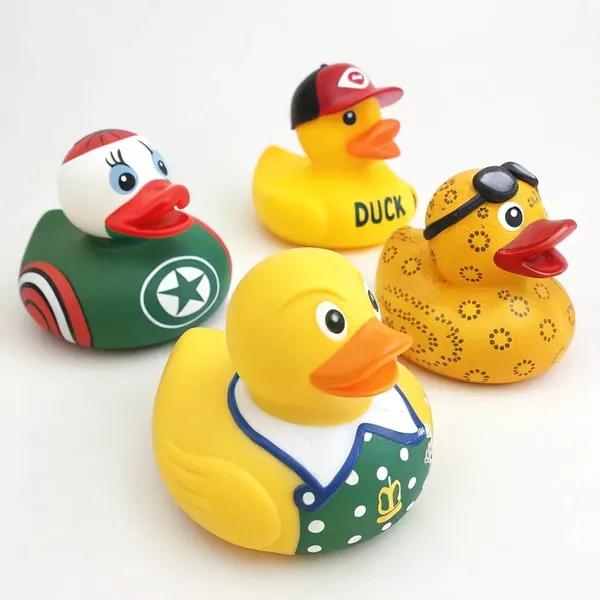
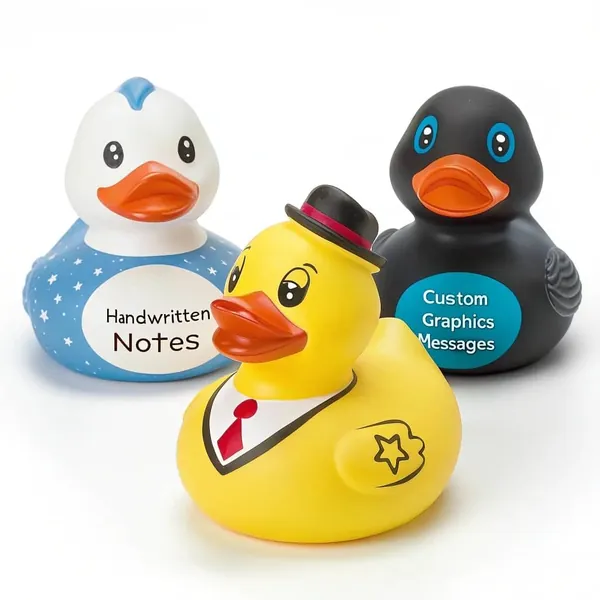
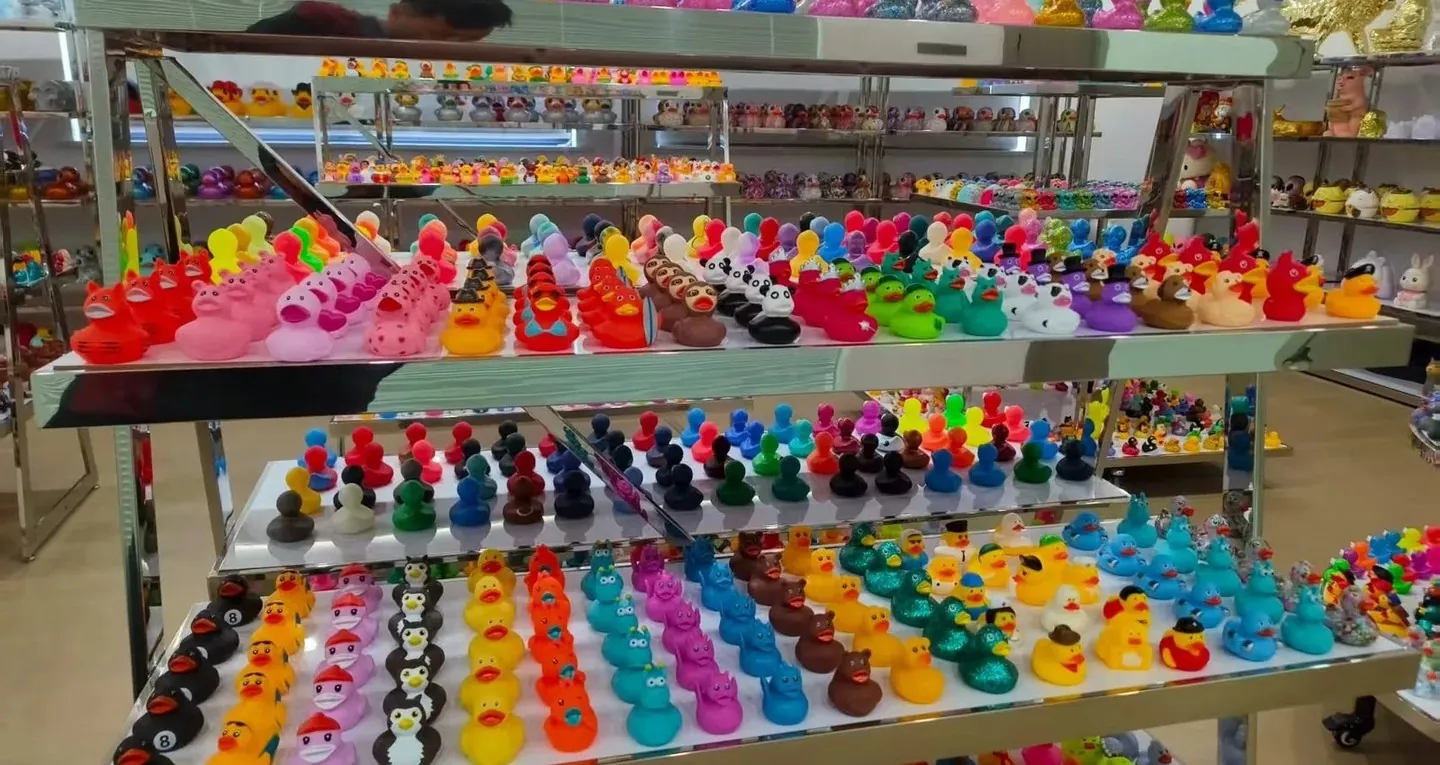
Why the inline pass and the final pass are two documents, not two opinions.
Inline inspection and final inspection answer different questions, and a buyer who merges them loses the ability to answer either. The inline pass asks whether the batch is still behaving like the approved sample while the line runs; the final pass asks whether this lot, as packed, may ship. One is a control, the other is a gate, and the record has to show which one produced the finding.
In short: An inline pass watches the process and catches drift while it can still be corrected. A final pass judges the packed lot and decides whether it ships. Sizing the sample comes before counting the units, and the record has to name the lot it describes.
Two passes answer two different questions
The inline pass is a process check. It happens while the line runs, it looks at ducks that are not yet packed, and its job is to notice a change early enough that the batch behind it can be corrected. Its natural output is a short entry with a time, a station, a point and a result, and its natural failure is a note that is too vague to act on.
The final pass is a lot check. It happens when the cartons are closed or about to be, and its job is to accept or reject the lot as presented. Its output is a report against a defined sample, and its failure is a document that describes the order rather than the lot. Read that way, the two passes are not duplicates and one cannot replace the other.
| Pass | When it runs | What it decides | What it cannot do |
|---|---|---|---|
| Inline | During the batch, at the station | Whether the process is still matching the sample | Accept or reject the packed lot |
| Final | When the cartons are closed | Whether this lot ships as presented | Correct the batch it judges |
| Golden sample | Before the batch, signed and dated | What both sides mean by correct | Describe a lot by itself |
The plan is written before the batch, not after
An inspection plan that is written after the goods are packed is a description, not a plan. The useful order is: define the lot, choose the sample, define the defect classes, decide who inspects and what happens on a fail, then write all of it down before the first carton is sealed. That document is what makes the pass repeatable and what makes a later claim readable, and it is the same discipline a supplier audit asks about, one level down.
Writing it early also settles the argument about who chooses. A buyer who defines the lot and the defect classes, and leaves the sampling mechanics to the inspector, gets a plan that both sides can live with. A buyer who leaves everything to the last week gets a sample size chosen for convenience and a report that agrees with whoever wrote it.
The sampling decision comes before the count
Sampling is a decision about risk, not a fraction of the order. The question is not "how many ducks should we look at" but "how much risk of accepting a bad lot is acceptable for this product and this buyer". The NIST/SEMATECH handbook on acceptance sampling makes the point plainly: acceptance sampling is "the middle of the road" approach between no inspection and 100 percent inspection, and its purpose is to decide whether the lot is likely to be acceptable rather than to estimate the quality of the lot.
That distinction changes what the record is for. A sample cannot tell a buyer what the average duck in the batch is like; it can only support a decision about the lot. If the buyer wants an estimate of quality, the answer is a different plan with a different budget and a longer bench session, and it should be chosen deliberately rather than assumed from a number in a spreadsheet.
A point to remember is that the main purpose of acceptance sampling is to decide whether or not the lot is likely to be acceptable, not to estimate the quality of the lot.
The lot has to be identifiable before it can be sampled
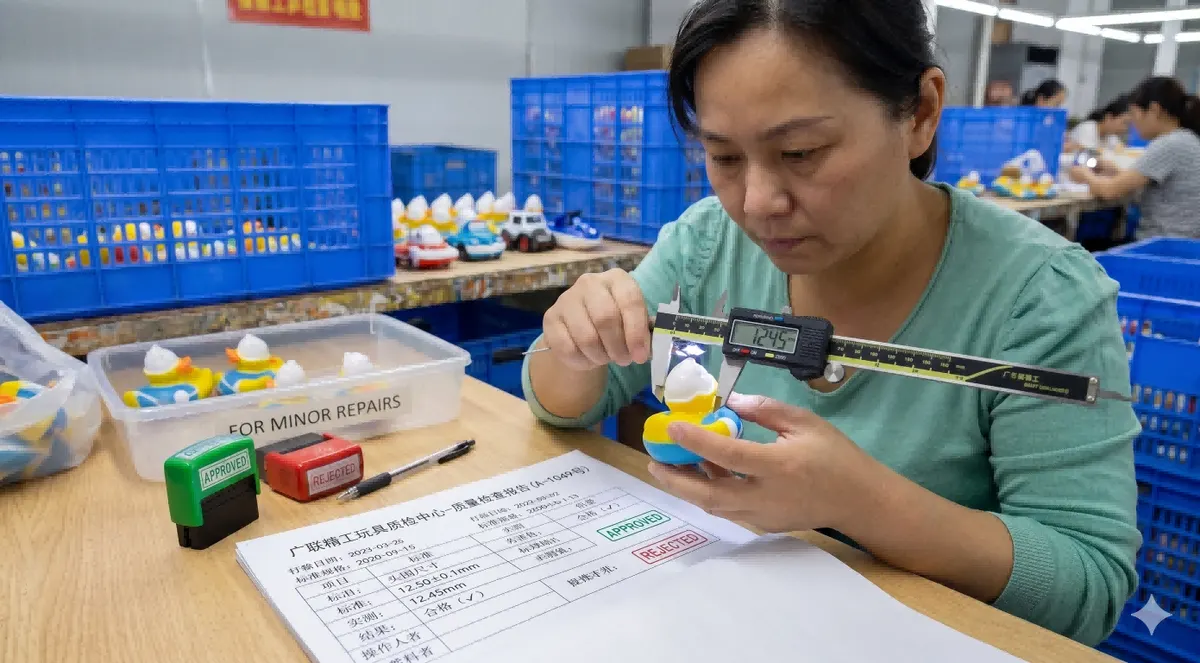
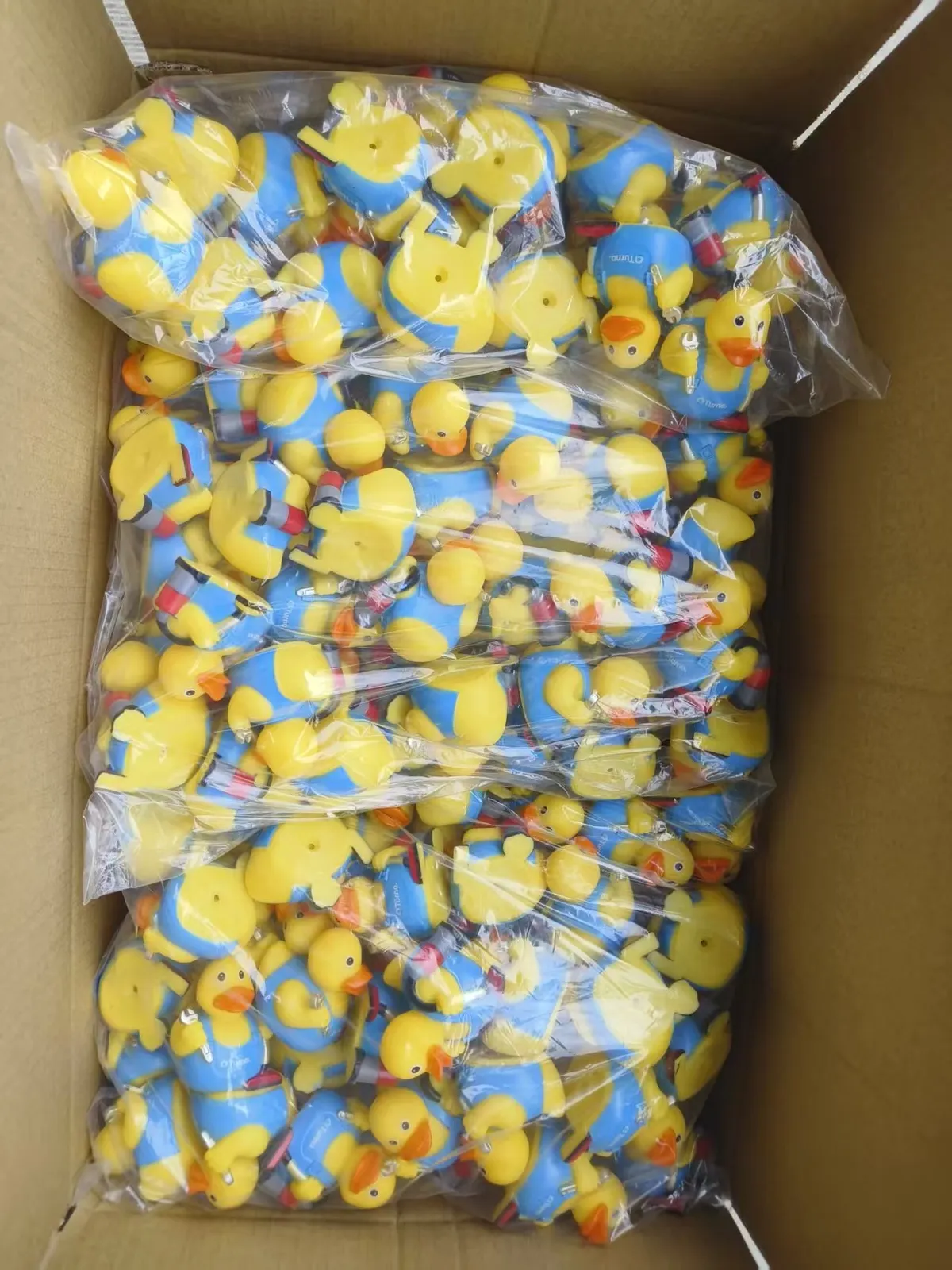
A lot is a defined quantity produced under the same conditions, and the definition has to be on paper before anybody samples it. Which cartons belong to this lot? Which body colour, which print face, which date range? If the answer is "the whole order", the sample is being drawn from a mixture, and the report will describe the mixture.
Identifiability is also what makes the record usable later. A claim six months after delivery needs to point at a lot, not at a shipment, because the shipment may contain several lots and the remedy may apply to one of them. Carton labels, a lot code on the inner bag and a line in the schedule are the plainest insurance against an argument nobody can win, and the carton specification is the place they are fixed.

What the inline record has to contain
The inline entry can be short and still be complete. It needs the time, the station, the point on the duck that was checked, the reference it was checked against and the result in words. If the entry says "looks fine", it has recorded an opinion; if it says the print edge on the left flank had a gap against the golden sample, it has recorded something a supervisor can act on within the hour.
Two habits make the inline record worth keeping. The first is checking the same point at the start, the middle and the end of a shift, so drift has somewhere to show up. The second is writing the entry at the time rather than at the end of the day, because a record reconstructed from memory is a story about the shift rather than a record of it.
Two ducks side by side is the whole test
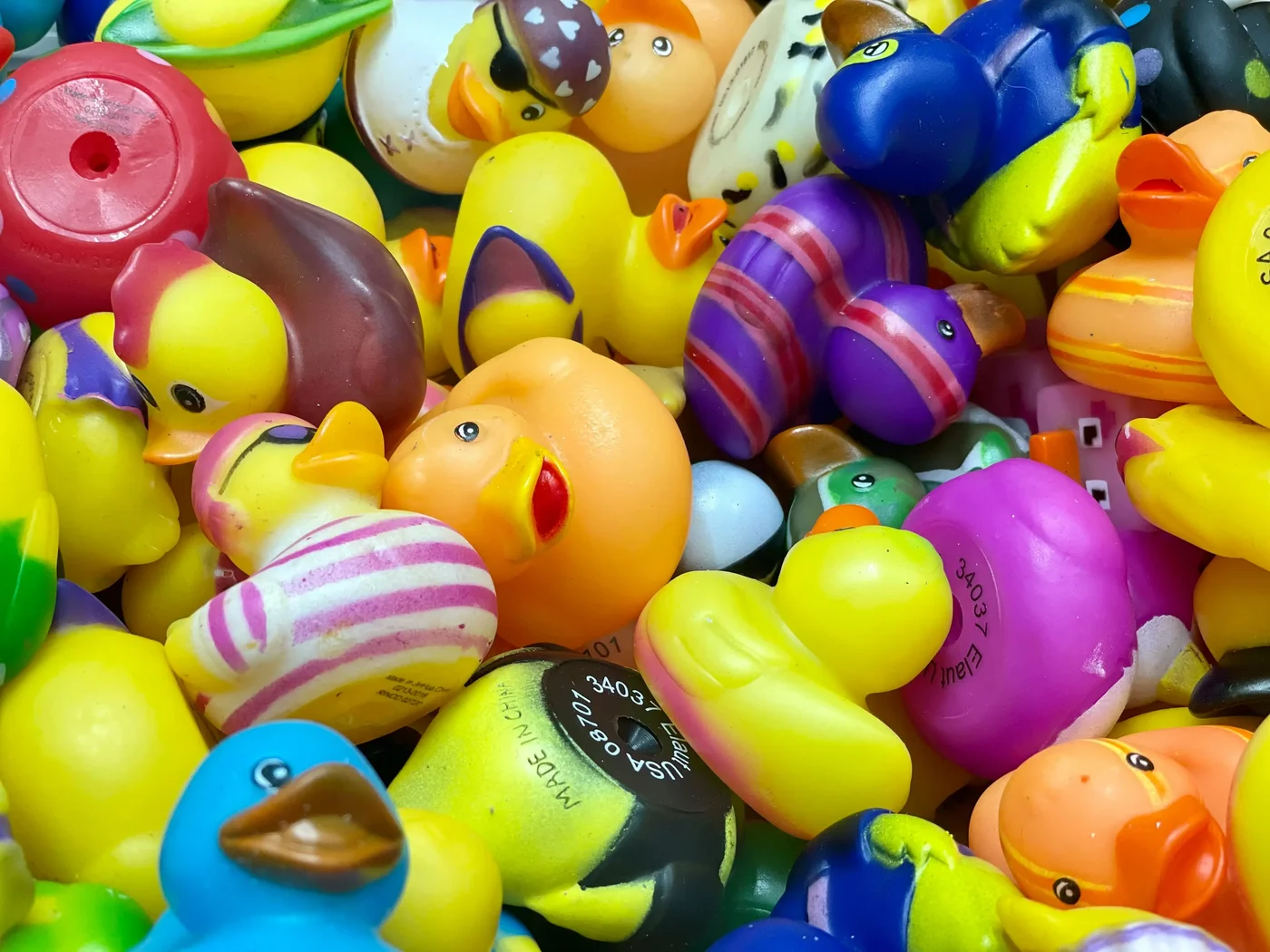
Most inline judgements come down to one comparison: the duck in the hand against the duck that was approved. That is why the approved sample has to be physically present, signed and dated, and stored where the line can reach it without a search. A photograph on a phone is a mood board; the signed sample is the reference, which is why the sample round ends with a signature rather than a gallery.
The comparison itself is simple: colour under the same light, print position against the same edge, the seam under the same thumb, and the body length against the same rule. What makes it a test rather than a habit is that all four points are written down before the batch starts, so a later disagreement is about the result and not about the method.
The final report has to answer a claim before it happens
A final report earns its place when it can be read by someone who was not there and still reach the same conclusion. That means it names the lot, the sample size, the defect classes and the counts in each class, and it states the accept or reject decision with the rule that produced it. A report with a photograph and a tick is a memo; a report with counts and a rule is a document.
The test is to imagine a claim arriving. A customer says thirty ducks in the shipment have a print that is off centre. The report either allows someone to locate those ducks in a class and a carton range, or it does not. If it does not, the claim will be answered by negotiation, and negotiation is what the record exists to avoid. The CPSC toy safety guidance is the reason the report also names the standard the lot was checked against: for a children's toy in the United States the standard is mandatory and the certificate is issued against it, so a report that cites nothing cannot support the certificate either.
A five-line inspection plan
Five lines are enough to start, and they are also enough to reveal whether the plan is real:
- Which lot is being inspected, and what marks identify it on the carton and the bag?
- Which sample size applies, and which rule chose it?
- Which defect classes exist, and which class stops the shipment?
- Who inspects, and whose signature makes the record valid?
- What happens on a fail, in order, and who is told first?
A plan that cannot answer all five is not a plan yet, it is an intention. The answers belong on the page before the batch starts, and the same page should be the first thing read when a claim arrives, which is why the claim path and the inspection plan should be written by the same person in the same week. The packing plan belongs on that page too, because a lot that cannot be identified after packing cannot be inspected after packing either.

Frequently Asked Questions
Can a small order skip inline inspection?
It can skip a formal inline record, and it cannot skip the comparison. On a small order the person who checks the first carton is often the same person who runs the line, so the check exists whether it is written down or not. Writing it takes a minute and is what makes the second order comparable.
Who chooses the sample size?
The buyer defines the risk and the lot; the inspector applies a sampling plan to it. When both sides understand that split, the sample size stops being a bargaining point and becomes a consequence of two earlier decisions.
What is a golden sample?
A golden sample is the signed, dated duck that both sides agree is the reference for colour, print, seam and size. It has to be physically stored where the line can reach it, and it has to be replaced deliberately when the design changes, not quietly when it fades.
Can the final report replace a third party inspection?
No. A final report from the factory describes the lot against the agreed plan. A third party inspection is an independent reading of the same lot, and its value is that it was made by someone who does not work for the seller.
Final Note
I would spend the time on the plan and the sample rather than on the report template, because a good plan produces a readable report and a bad plan produces a document that only looks thorough. The two passes are worth keeping apart: one watches the process while it can still be corrected, the other judges the lot when correction is no longer possible. A buyer who holds both, with a signed sample between them, has a quality file rather than a pile of photographs. That file is also the most useful training material a new buyer or a new clerk can be given, because it shows what a decision looked like on the day and which evidence supported it. The two passes take time at either end of the batch; the file they leave behind is what makes the second order faster, and the third one quieter.
Key takeaways
- Two passes answer two different questions: The inline pass is a process check.
- The plan is written before the batch, not after: An inspection plan that is written after the goods are packed is a description, not a plan.
- The sampling decision comes before the count: Sampling is a decision about risk, not a fraction of the order.
- The lot has to be identifiable before it can be sampled: A lot is a defined quantity produced under the same conditions, and the definition has to be on paper before anybody samples it.
- What the inline record has to contain: The inline entry can be short and still be complete.
- Two ducks side by side is the whole test: Most inline judgements come down to one comparison: the duck in the hand against the duck that was approved.
- The final report has to answer a claim before it happens: A final report earns its place when it can be read by someone who was not there and still reach the same conclusion.
- A five-line inspection plan: Five lines are enough to start, and they are also enough to reveal whether the plan is real. Each line names the lot and the marks that identify it on the carton and the bag.