Skip to content
A custom duck’s safety label is easy to treat as a print detail, but it is the first thing a retailer’s compliance team checks and the last thing a buyer wants to explain to customs. The label tells the market who made the duck, when it was made, and what age group it is for, and those three facts decide whether the product clears inspection, stays on shelves, and survives a recall audit. This guide covers where labels go on custom ducks, what each element means, and how to order them so the compliance work is finished before production starts.
1. What a toy safety label actually says
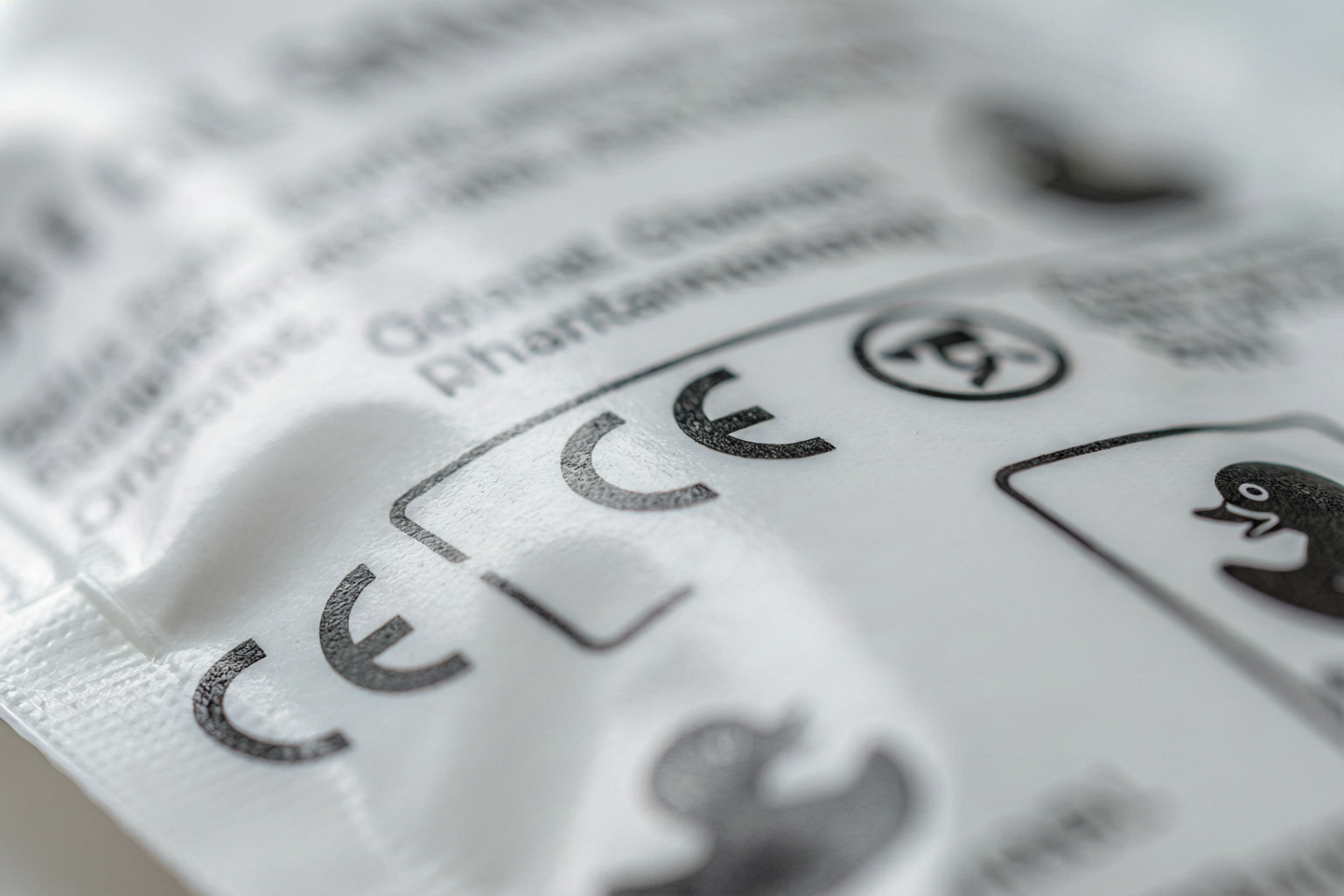
A compliant label on a children’s product carries three blocks of information: manufacturer identification, batch traceability, and age grading or warning statements where the product requires them. Manufacturer identification names the company responsible for the product; batch traceability ties the duck to a production date and lot, which is what makes a recall surgical instead of site-wide; age grading states the intended age range, and warnings cover hazards like small parts or choking risk where the toy standard flags them. U.S. and EU markets both anchor these requirements in toy-safety standards: the U.S. side is ASTM F963, maintained at ASTM F963 on the ASTM website, and the EU side is EN71. Our ducks are tested through Intertek against REACH and CPSIA requirements, and the same lab documentation covers the label elements the standards expect.
2. Where the label goes on a duck
Ducks are small, curved, and mostly printed, which limits where a compliance panel can live. The practical hierarchy is: base first, then belly, then chest. The base is flat enough for a molded or printed block and survives the most handling; the belly is the second option when the base is already carrying a logo or QR code; the chest is reserved for the marketing print and should not be shared with compliance text. For molded details, the identification can be embossed into the mold itself, which is permanent and cannot be rubbed off; for printed labels, the ink must be durable against water and handling, since a bath duck’s whole job is contact with water. The permanent-traceability requirement is why we recommend deciding label placement at the mockup stage—the 12-hour digital mockup shows exactly where the panel will sit before the mold is cut.
3. Permanent vs printed labels: what each market accepts
The difference between permanent and printed labeling matters because the two solve different problems. Permanent identification—molded-in marks on the duck itself—satisfies traceability even after packaging is discarded, which is what U.S. children’s-product rules expect for durable identification. Printed labels on a hang tag or insert card carry more room for warnings and age grading, and European retailers commonly expect the EN71 marking visible on the packaging. Most export programs use both: a molded or printed mark on the duck for traceability, plus a hang tag or box print for the warning statements. Our packaging options—polybag, retail box, and hang tags—are all set up to carry the compliance panel, and the choice is documented on our custom rubber ducks page.
4. The three label mistakes buyers make
Three errors come up repeatedly in first orders. The first is treating the label as artwork: the compliance text is revised by legal and compliance teams, then copied into the print file by a designer who shortens it to fit, which breaks the approved wording. The fix is to lock the label text as a separate print layer that nobody edits. The second mistake is skipping age grading on ducks that will sit in a baby-adjacent aisle; a duck with no age statement can be stopped at distribution review even when testing passed. The third is assuming the certificate and the label are the same thing: the test report proves the product, but the label is what inspectors read on the shelf, and the two must match—the manufacturer named on the label should be the one on the certificate. Our ASTM F963 and EN71 explainer walks through the standard-level requirements behind these checks.
5. Ordering ducks with the label built in
The clean way to buy labeled ducks is to put the compliance panel in the spec from day one. Send the label wording and placement with the RFQ, approve it in the mockup, and confirm it in the sample; that way the label is printed or molded with the marketing design and cannot be forgotten at production. The 7-day sample cycle exists exactly for this: hold the sample, check the panel legibility at arm’s length, and confirm the ink survives a wet wipe. Bulk buyers restocking the same design can keep the approved label file on file, and reorders skip the approval round entirely. The same compliance framing applies to the materials behind the label—phthalate- and BPA-free claims are part of what parents read into the label, and our label-claims explainer covers what those terms actually certify.
| Label element | Where it goes | Why it matters |
|---|---|---|
| Manufacturer identification | Base or belly, molded or printed | Names the responsible company for customs and recall |
| Batch traceability | Base or belly, permanent | Ties the duck to production date and lot |
| Age grading | Hang tag or box print | States the intended age range; expected by retailers |
| Warning statements | Hang tag or box print | Covers small-parts and choking risk flags |
| EN71 marking | Packaging | European retailers commonly expect it visible |
6. Labeling and the rest of the compliance file
The label is one page of a compliance file that also includes the test report, the certificate, and the factory audit records. A buyer should receive all of them with the quotation, not after shipment: our test reports through Intertek cover REACH and CPSIA, EN71 testing is available for European programs, and the factory’s BSCI and GRS certificates sit behind the manufacturing claim. Buyers importing to the U.S. should keep the same file structure for every reorder, because inspectors compare the label on the carton to the certificate in the file; our Prop 65 compliance notes cover the state-level layer that U.S. distribution adds on top of the federal standard.
Frequently asked questions
Where should a safety label go on a custom rubber duck?
The base is the primary spot because it is flat and survives handling; the belly is the second option, and the chest stays reserved for the marketing print.
What must a toy safety label include?
Manufacturer identification, batch traceability tied to production date and lot, age grading, and any warning statements the target market’s toy standard requires.
Is a molded label better than a printed one?
For traceability, yes: a molded-in mark cannot be rubbed off and survives packaging loss, while printed labels on tags and boxes carry the warning statements that need more room.
When should label wording be finalized in a custom duck order?
With the RFQ, then approved in the 12-hour mockup and confirmed on the 7-day sample, so the compliance panel is never edited by the print designer.
For the five size bands and their freight consequences, see our rubber duck size chart and dimensions guide.
Related reading: Lead-Free, Food-Grade and Non-Toxic Duck Claims: What Actually Backs Them