A Jeep duck order is planned from the shelf backwards, because the question is not which single duck photographs well. It is which set gives a shop a reason to order again after the first box sells through. That is a different exercise from choosing a design, and it is the one that decides the stock list.
A reseller stocks a series rather than a single duck, because one box that sells through has to justify the next order.
The category has changed under the reseller's feet. Plain yellow ducks still sell, but the shops that move volume now sell a small series with a point of view: a duck for the first-time buyer, a duck for the gift, and a duck that carries a date or a club. A box of one design is a box that has to be discovered. A series is a shelf that explains itself.
In short: A Jeep duck range for resale is a series with three roles: an entry duck, a gift set and a dated or themed collector pair. Choose the roles before the designs, check the base, the finish and the print on a sample, put the note card in the pack, and keep the name and the grille off the mould unless a licence says otherwise.
What Changed in the Jeep Duck Aisle
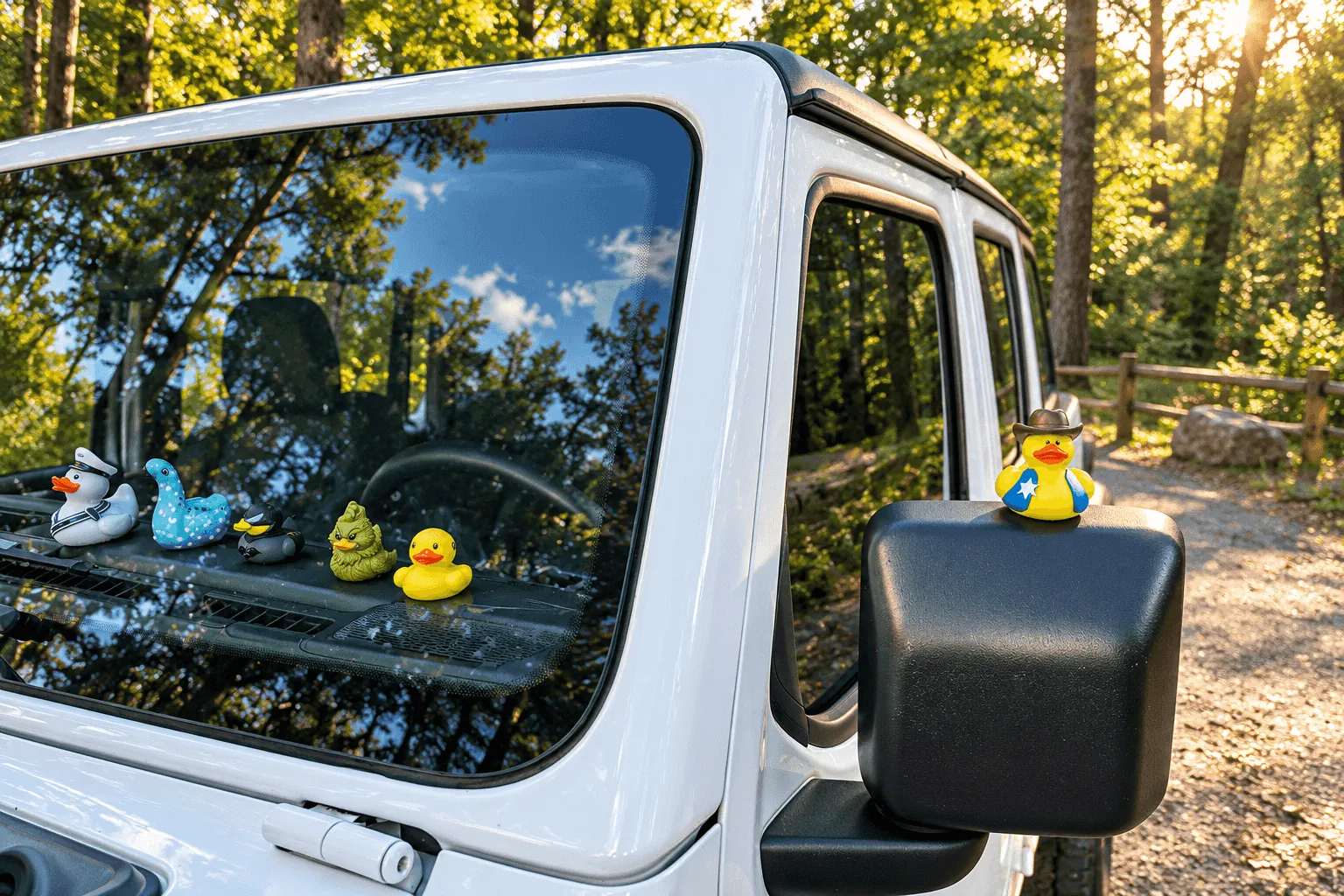
The ducking habit turned a bath toy into a car accessory, and resale followed. The change that matters for a buyer is that the customer now arrives with a reference: they have seen a duck on a hood, in a club photo or at an event, and they want that duck or something close to it. A generic yellow duck does not answer the reference on its own.

The second change is the pack. A duck that is sold as a small gift needs a card, a bag or a box, because the buyer is handing it to someone else. The third is the range: a shop that sells one design has one chance to be seen, while a shop that sells a series has a reason to build a display and a reason for the customer to come back for the next one.
None of that changes the product rules. A duck sold to a customer is still a moulded body with a print, a finish and a pack, and the specs that decide whether it survives a dashboard are the same specs a reseller should check before the first carton is accepted. The dashboard fade note covers the light question, and the sourcing note covers the category from the supply side.
The Stock List: Series Before Singles
A stock list is a set of roles, not a list of designs. Three roles cover most small resale shelves, and each role has its own pack and its own buyer. The roles can share one body, which is what makes the range affordable to open.
Jeep ducks reach several kinds of buyer: owner clubs, off-road event organisers, dealers, automotive brands and retailers or distributors selling automotive-themed goods. A club or an event sizes the order to the number of people on the ground; a retailer sizes it to a sales plan and a channel. The first question is what the duck has to do, not how many you need.
| Shelf role | What the duck does | Pack | Who buys it |
|---|---|---|---|
| Entry duck | The first duck a customer picks up | A simple bag or a counter box | The curious shopper and the club newbie |
| Gift set | A duck plus a card, ready to give | A box or a bag with a header | The gift buyer and the event seller |
| Collector pair | Two ducks, or a dated and an undated version | A box with a window or a sleeve | The repeat buyer and the club member |

The roles are not three tools. One body can carry all three if the design keeps the body constant and changes the print, the pack and the card. That is the same discipline a souvenir line uses, and it is why a reseller can open with a range instead of a single duck. The jeep ducking sets note covers how a set is assembled, and the club economy note covers the group buyer behind the collector role.
The alternative, a single design in five colours, is a stock list that looks like a range and behaves like one duck. Colour is not a role. A customer who already owns the yellow one has no reason to buy the green one unless the green one does something different.
Three Specs a Reseller Should Check
A sample can look right and fail on the shelf. Three specs decide most of the returns, and all three can be checked before the first carton is accepted.
Jeep buyers look at the hat, the outfit, the accessories and the colour first, because the duck has to read as the culture it belongs to. Then come the practical points: whether the logo still has room at the size they want, whether the quantity clears the printing minimum, and how the ducks will be packed if they are going on a shelf or into a goodie bag.

The first is the base. A duck that is meant to sit on a dashboard has to sit flat, and a duck that is meant to float has to float upright. Those are different base and weight decisions, and a sample tested on a table tells you nothing about either. The size chart covers how the base and the footprint are measured.
The second is the finish. A gloss body shows handling marks and a matte body shows scuffs, and the dashboard is a hard environment for both. The sample should be handled, wiped and left in daylight before the finish is approved. The print and finish note covers the print side, and the logo fade note covers what happens to a mark over time.
The third is the print. A logo on a curved body can look sharp on a flat proof and thin at the edge of the print zone, and a name printed too close to the seam can break when the duck is squeezed. The placement note covers where a mark can sit, and the sample should be checked at the edge, not only in the centre.
The Note Card Is Part of the Product
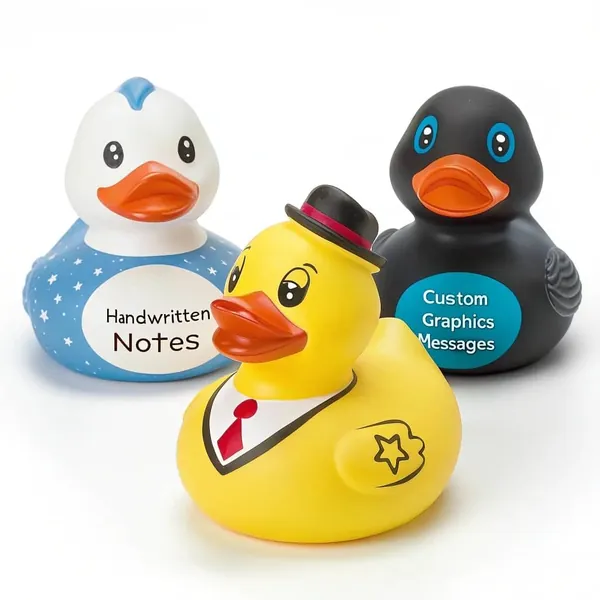
A Jeep duck is often a small gift, and the card is the part that carries the message. A duck without a card is a duck. A duck with a card is a ducking kit, and the card is what makes the buyer feel they are giving an object rather than handing over a toy.

The card also carries the part the duck cannot: a short line, a club name, a date or a code. A duck can hold a mark, but the message that changes per buyer belongs on the card. The tag and card comparison covers the formats, and the personalisation note covers how names and club marks are handled without a new tool.
The card is also the simplest part to change, which matters for a reseller who wants to test a message before committing to a design. Print a small batch of cards, sell the duck with two message options and keep the body constant. The duck stays, the message moves.
What the Shelf and the Carton Need
A reseller's shelf is usually smaller than the carton the ducks arrive in. The pack has to bridge the two: a bag or a box that can stand or hang, a label that identifies the design, and a carton that can be split without counting every duck by hand.
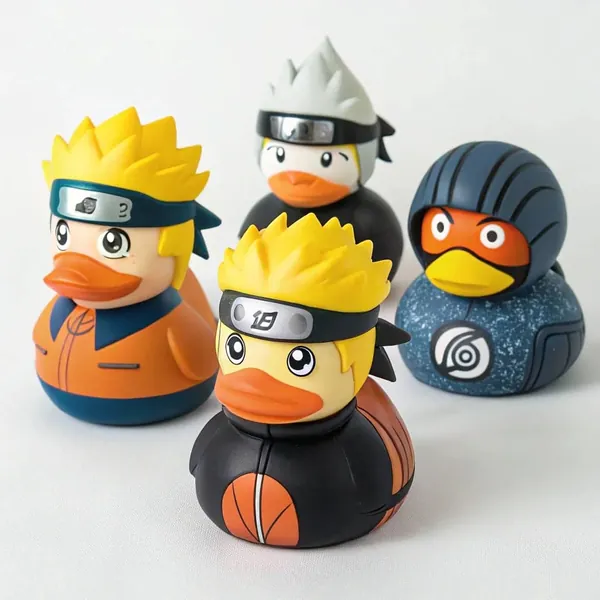
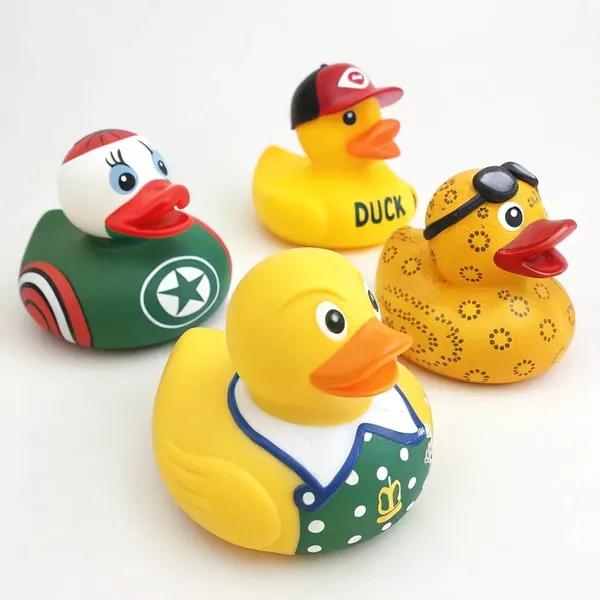
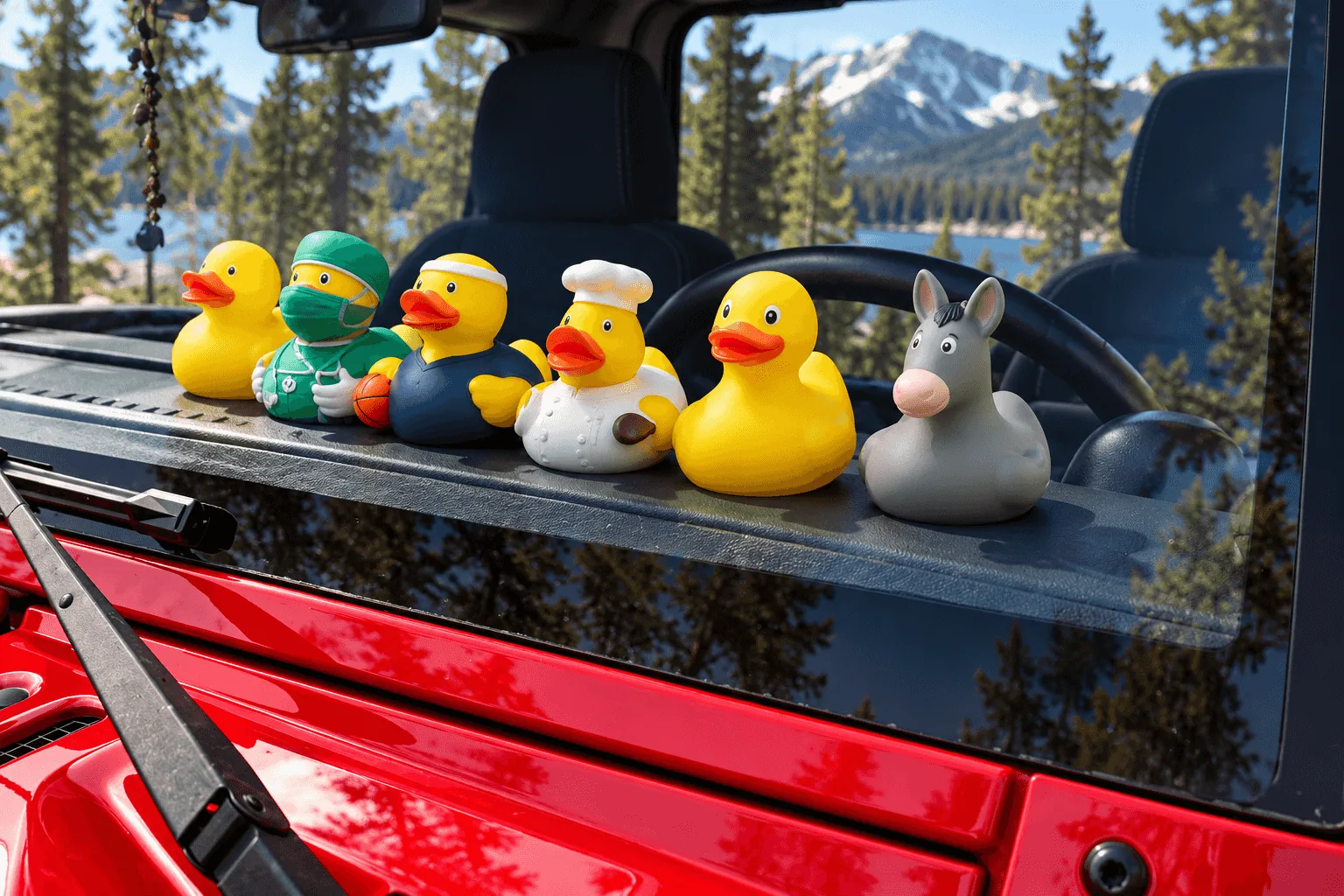
The shapes buyers keep asking for are the duck in a hat or sunglasses, the outdoor theme, and designs where colour or accessories carry the message. On a stock style, the duck becomes yours with your logo, text or club element; sets usually work either as several looks built around one theme, or one shape repeated in different colours and accessories.
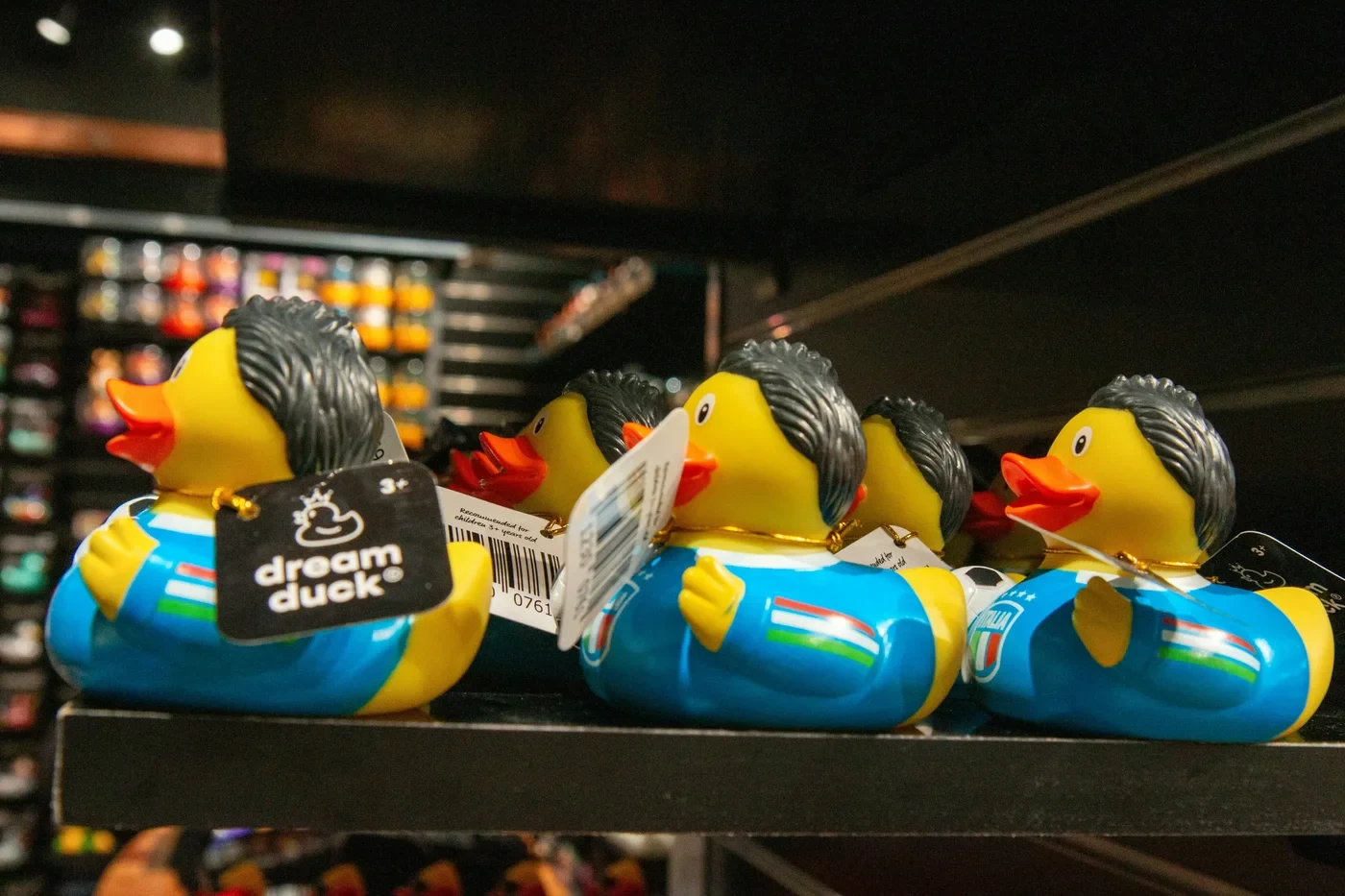
The carton should be packed by design, with a label that repeats the design name and the quantity, so the shelf can be restocked from the carton without opening every bag. A mixed carton is a carton that gets sorted on the shop floor, and the sorting is the part a small shop cannot spare. The carton specification note covers the label fields, and the packaging note covers the bag and the header.
The shelf test is the same one a campus or souvenir buyer would use: put the packed duck at shelf height and look at it from three paces. If the design is not identifiable and the card is not readable, the pack is not doing its job.
The Name on the Duck: What a Reseller Can Say
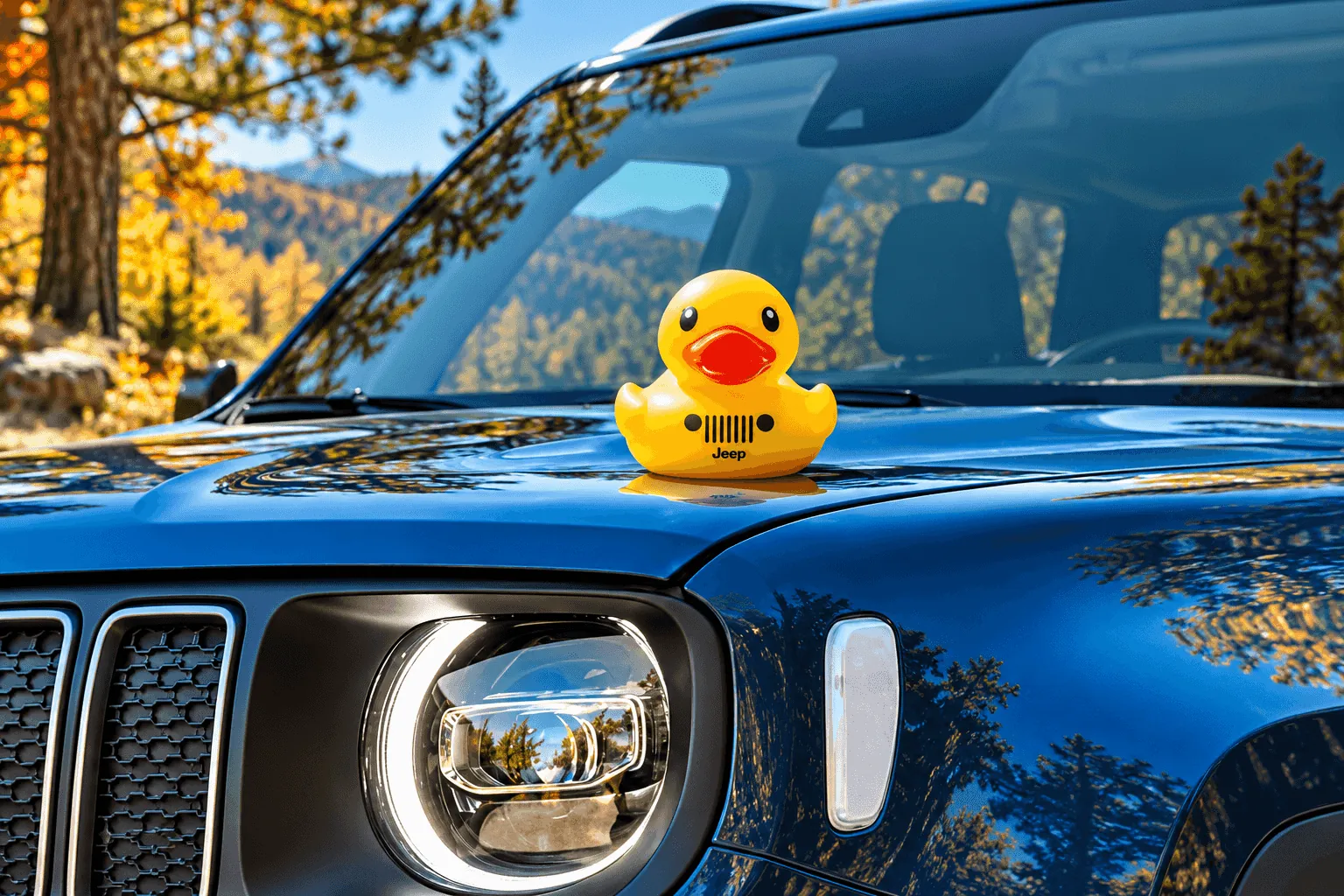
Jeep is a trademark, and a duck that carries the name or the grille is using someone else's mark. The owner of the mark decides whether a programme is licensed; a reseller who is not inside a licence should describe the product as an off-road themed duck rather than an official one. This is not a small distinction, because 15 U.S.C. § 1114 treats use of a registered mark in commerce in a way that is likely to cause confusion as infringement.
The practical rule for a stock list is to keep the shape and the theme, and to keep the name and the badge off the product unless the licence covers them. A duck in a vehicle colour with a trail theme can be described as an off-road duck. A duck with the word on the body, the grille on the chest and the logo on the tag is making a claim the reseller has to be able to support.
That line also protects the shelf. A shop that buys an unlicensed lookalike and sells it as official is exposed when the mark owner complains, and the stock is the first thing that disappears. Selling a theme is legal and repeatable; selling a badge is a decision that belongs to a licence holder.
When the Duck Is a Children's Product
A Jeep duck is often bought by an adult and given to a child, and a duck that is intended for children carries the marking and testing obligations of the market where it is sold. A reseller does not need to run the tests, but should be able to show the file that came with the run.
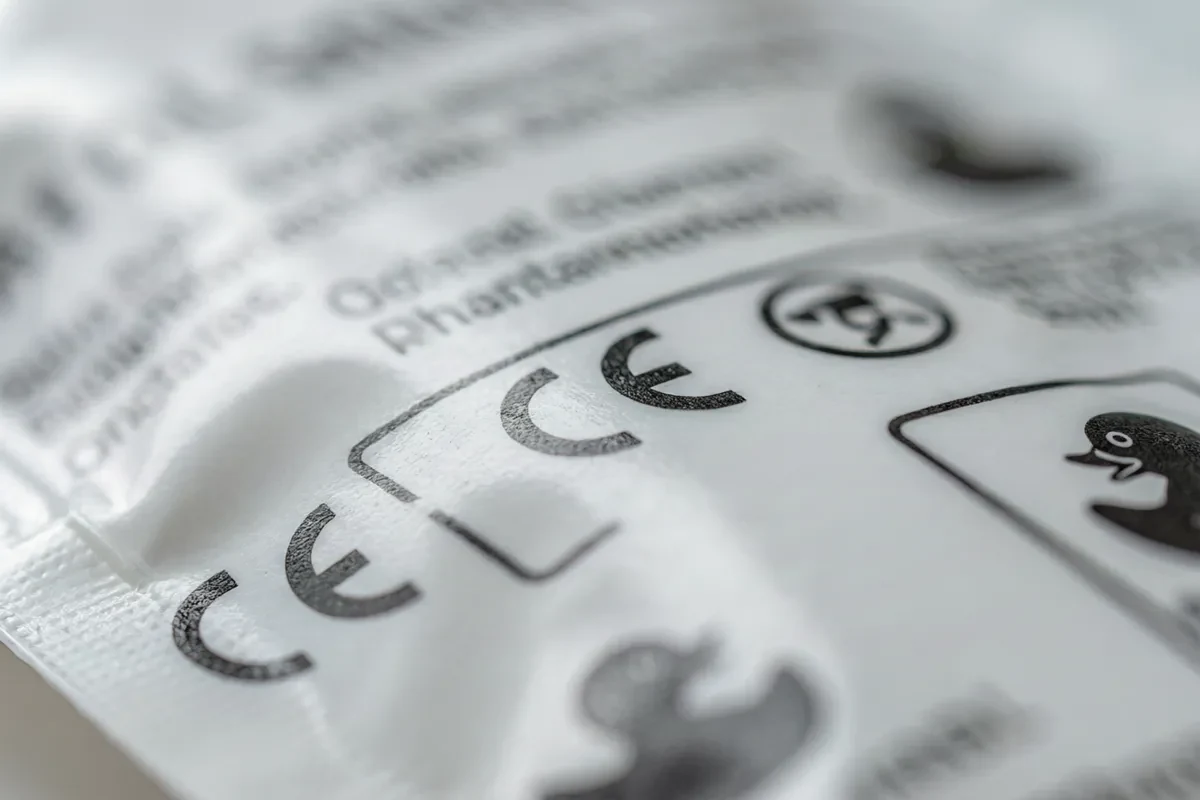
The permanent mark belongs on the product and its packaging, to the extent practicable, and a shop sticker is not a substitute, as the CPSC tracking label guidance sets out. The toy safety label guide covers what the label and the age statement have to say for the market.
A reseller's checklist is short: the age guidance on the pack, the permanent mark on the duck, the test documents for the market and a retained sample of the approved unit. If a supplier cannot provide those, the duck is a decoration rather than a children's product, and it should be sold that way.
Four questions settle a resale range before the first carton is ordered:
- Which three shelf roles does the shop actually have room for?
- Does one body carry all three, or does the range need a second tool?
- Which specs has the sample passed, and where is that recorded?
- Does the range carry a name or a badge that the reseller cannot support?
Frequently Asked Questions
How many Jeep duck designs should a shop carry to open?
Three roles is a workable opening range: an entry duck, a gift set and a dated or collector pair. That gives the shelf a choice without requiring a new tool for every design, and it gives the shop a reason to reorder the role that sells best.
What should a reseller check on a sample?
The base and how the duck sits, the finish after handling and daylight, and the print at the edge of the zone. A sample that is only looked at on a table has not been tested for the way the duck will be used, and the dashboard is the place where a weak spec shows first.
Are plain yellow ducks still worth stocking?
Yes, as the entry role. A plain duck is the lowest-risk unit on the shelf and the one a new customer picks up first. It is not a range on its own, because a customer who already owns one has no reason to buy another unless a design or a card gives them one.
What paperwork should come with the ducks?
The age guidance, the test documents that apply to the market, the label artwork and a retained sample of the approved unit. A reseller should keep the file with the first carton, because the questions arrive later when the shop is asked to prove what it sold.
Final Note: Five Decisions Before the Buying Plan
- Choose the three shelf roles before the designs.
- Keep one body across the roles unless a role genuinely needs a second tool.
- Test the base, the finish and the print on a sample, and record the result.
- Put the changing message on the card and keep the body constant.
- Keep the name and the badge off the product unless a licence covers them, and keep the safety file with the carton.
A Jeep duck range is a small retail business in a box. The reseller who plans the roles, the specs and the wording before the order is the one who reorders the same body next season, while the reseller who buys a lookalike is the one who has to explain it later.
Key takeaways
- Stock a series with three roles rather than one duck in several colours, covered under the stock list.
- The base, the finish and the print are the three specs a sample has to pass, covered under the three specs.
- The note card is part of the product and the simplest part to change, covered under the note card.
- The carton and the pack have to bridge the warehouse and the shop shelf, covered under shelf and carton.
- Keep the name and the badge off the product unless a licence covers them, and keep the safety file, covered under the name on the duck.
EOF