Duck forecasts are counting jobs rather than predictions, because every number in them should be traceable to a list someone already keeps. A market report cannot tell you how many ducks will leave your table next season. What can tell you is the attendance you counted, the share of people who took one, the date after which the duck has no job, and whether the same duck can be made again. Those four inputs decide the count, and the count decides the decision.
In short: count the people who will actually be in the room, apply the take rate you measured at the same kind of event, stop the count at the date the duck stops being useful, and check whether the duck can be produced again exactly. Write the four numbers on one page with an owner and a review date. Set the reorder trigger before the season opens so the second decision is a comparison rather than a scramble.
The number belongs to you, not to a market report
A market-size report describes a category. It cannot tell you how many ducks your club hands out at a trail day, how many a hotel puts on pillows in a quarter, or how many a sponsor needs for one conference. Those numbers live in your own records: gate counts, sign-in sheets, carton counts at the end of an event, the number of ducks the organiser itself placed. The forecast becomes usable when each number carries its source on the same line, because a number with no source cannot be checked and cannot be corrected.
The working test is simple. Write the count, then write one line that explains where it came from. Two thousand because the roster says four hundred fails the test, since the roster is not the audience and the jump from people to ducks is unstated. One hundred and twenty attending members, two ducks each from last season's count, plus event cover passes, because each term has a record behind it. The arithmetic matters less than the trail it leaves.
Input one: the crowd that will actually be in the room
The audience is not the mailing list and not the follower count. It is the people who are physically present when the duck changes hands: members who attend the meets, visitors who stop at the stand, guests who reach the table. A club with four hundred members may have a hundred and twenty who turn up, and a plan built on the roster quietly orders for the other two hundred and eighty. Counting the room rather than the list is the first correction most forecasts need.
The count does not require software. Ask the people who handed out ducks last season how many they placed, add what the organisation placed at its own events, and write the number down with the date it was counted. A rough count from twenty members is more useful than a precise feeling from a committee, because one can be checked and the other cannot. If the audience has never been counted, the honest first forecast says so and treats the season as a measurement.

Input two: the rate that actually takes a duck
The take rate is the share of that audience that walks away with a duck. It is the number most often imported from another programme, and it is the one that should stay local. A duck handed to a member at a car meet, a duck left on a hotel pillow and a duck sold at a parade have different rates because the moment differs, not because the duck differs. The only defensible rate is the one your own event produced.
Measure it in ducks per person per event, and measure it from a count rather than an impression. If last season's numbers are missing, use the smallest sample you can defend: ask the people who placed ducks to count what they used, add the organisation's own placements, and divide by the people who attended. Then apply that rate to the next event of the same kind, not to every date on the calendar. A rate measured at a spring trail day does not transfer to a December office party, and pretending that it does is how a forecast turns into leftover cartons.
Input three: the date demand ends
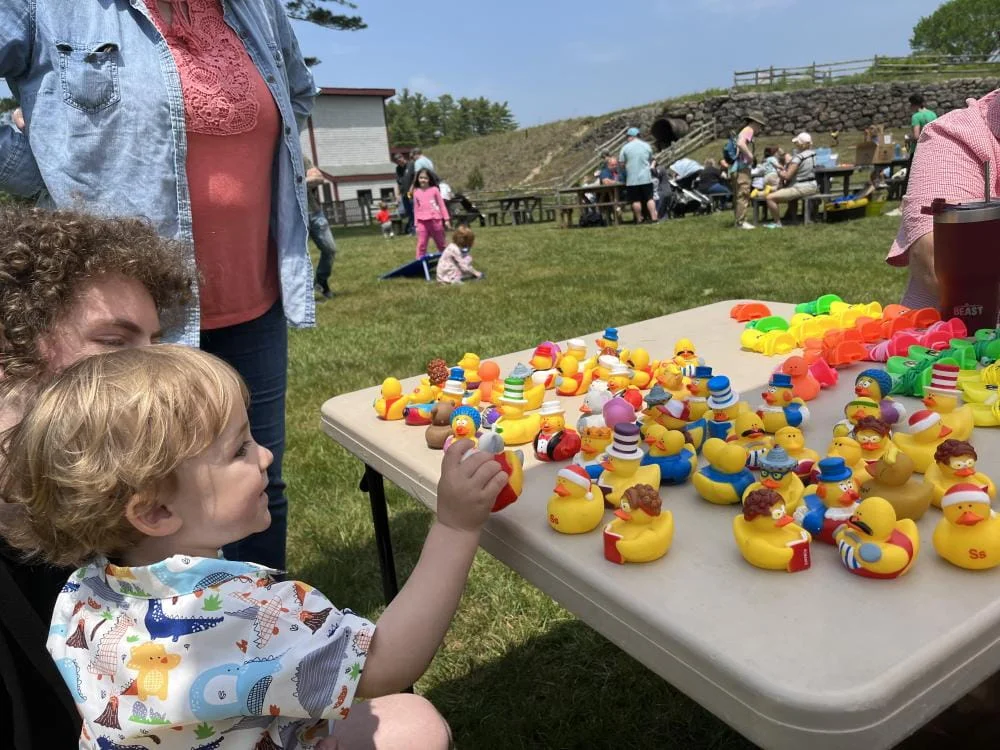
A duck tied to a date has a hard end. Once the event passes, demand is close to zero, because the duck carries a year, a place or a sponsor that stops being true. An evergreen mark does not have that cliff, and the difference is a design decision that belongs before the forecast, not after the leftovers arrive. A dated duck cannot carry into the next season, while an evergreen duck can, which is the choice that turns surplus cartons into stock rather than clutter.
The end date also changes how the leftover behaves. A vinyl duck does not expire on a calendar, but it does react to heat, light and pressure, and cartons that sit in the wrong corner can come out of the box tired before anyone sees them. The storage and shelf life notes cover the conditions that let a batch keep. The forecasting point is narrower: a duck with a date on it has a deadline, and a duck without one has a storage job instead. Write down which one you are buying, and check the season against the event calendar before the date is fixed.

Input four: whether the same duck can be made twice
The fourth input decides whether the second purchase is a repeat or a new project. If the body, material, colour and print stay the same, a reorder can reproduce the approved duck from the same tool and the same specification, and the record signed the first time still describes what is being made. That is the useful kind of repeat, and it is why a shared body with a seasonal print is such a good planning shape: the body stays, the decoration changes, and the second season does not need new tooling.
A changed product is a different question. For a children's toy sold in the United States, the certificate describes a product rather than a factory or a range, and the CPSC's children's product certificate guidance says the product must be described in enough detail to match the certificate to each product it covers and no others. The toy standard is not applied as one block either; the CPSC's toy safety guidance states that firms must identify which sections of ASTM F963 apply to their specific product. A changed body, a new accessory or a different age grade can move a duck out from under the first file, so a repeat is confirmed against what actually changed, not against the fact that it is the same programme.
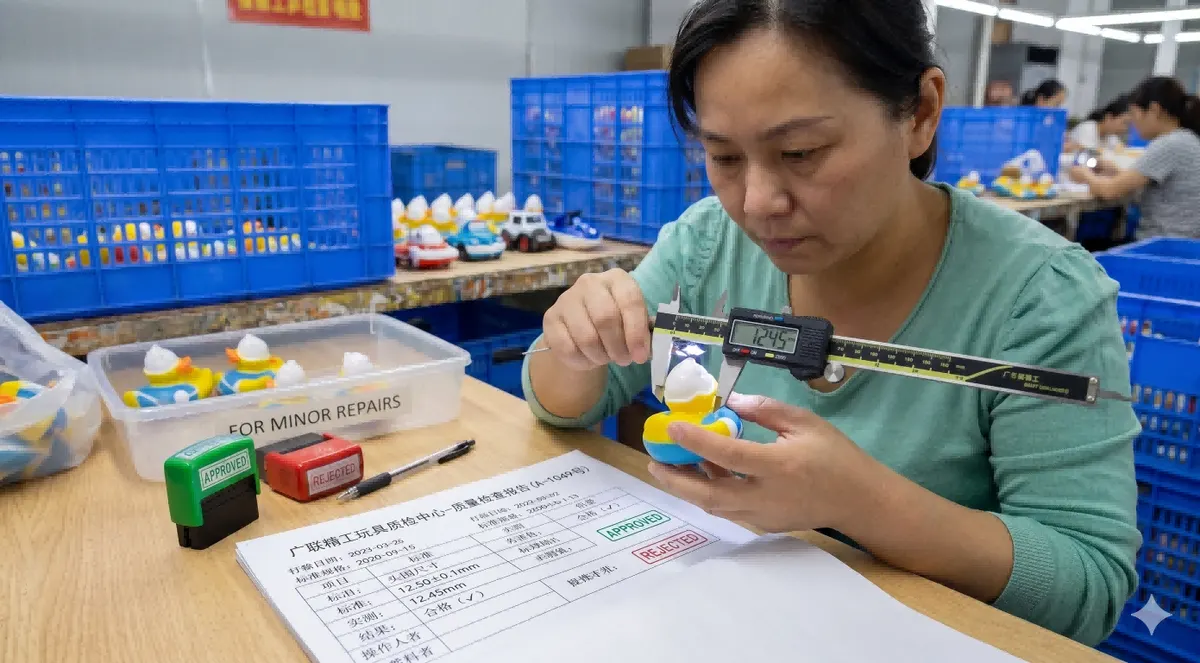
The four inputs on one page
A forecast that lives in four places is not a forecast, it is four opinions. Put the four inputs on a single page with three columns: the value, the source, and the owner who can answer for it without calling a meeting. The owner matters because a number with no owner is allowed to drift, and a review date matters because a number that can change at any time is not a plan. The page is deliberately short enough to read in one sitting.
| Input | What goes on the page | Owner |
|---|---|---|
| Audience | The count of people who will be present, with the date it was counted | Events lead |
| Take rate | Ducks per person at the same kind of event, from a counted event | Programme lead |
| Window | The date the duck stops being useful, and whether the mark is dated or evergreen | Marketing lead |
| Repeatability | Whether body, material, colour and print repeat exactly, and what the first certificate describes | Product lead |
| Reorder trigger | The share of the first release, the checkpoint and the person who calls it | Programme lead |
Three signals that say the plan is out of date
The forecast is written before the season, so the in-season job is to compare the plan with what is happening. Three signals carry most of that work. Velocity is the first: sell-through clearly ahead of the plan in the opening part of the window means the duck still has a job and a second release still has time. The second is where the stock runs out: if the flagship event runs dry while peripheral channels still hold cartons, demand is concentrated, and a targeted second release beats a uniform one. The third is unprompted enquiry, the messages asking whether there are more or whether the same duck can be had again.
Each signal is only useful if the trigger was written before the season: a named share of the first release, a checkpoint, and a person who owns the call. The reorder process notes explain how a second release is kept identical to the first, and the Q4 timing notes show why the checkpoint has to sit inside the window rather than after it.
Four questions to settle before you commit the number
- Which audience was counted, and who is on the list that will not be in the room?
- Where did the take rate come from, and when was it last measured?
- What ends the window, and what happens to the ducks that arrive after it?
- Does the duck repeat exactly, or does the first certificate no longer describe it?
A forecast that answers all four is a plan. One that answers two is a hope with a table attached. The answers also decide the shape of the purchase: a confirmed audience and a measured rate support a first release, a clear window decides how much event cover is needed, and a repeatable design keeps the second decision at the decoration stage. Commit the number only after the four answers are written down, because the number is the output of the answers, not a replacement for them. If the print will change between seasons, the supplier RFQ notes list what to pin down in writing the first time so the second round does not reopen it.
Frequently Asked Questions
How do I forecast a first duck order with no history?
Count the people who will actually be present, estimate the share that takes a duck from a comparable event, and write down the date after which the duck has no job. If no count exists, say so and treat the first season as a measurement. The count is the part worth doing first because every later forecast builds on it, and a first season that produces a real count is not a wasted season.
Is there a standard take rate for a duck giveaway?
No. The moment decides the rate: a duck handed to a member at a club meet is not the same exchange as a duck left on a hotel pillow or sold at a parade. The useful rate is your own, measured in ducks per person at the same kind of event. Importing a rate from another programme is the most common way a forecast drifts away from the audience it was built for.
When should a second release be triggered?
When the written trigger fires, not when the cartons look low. A named share of the first release moving by the checkpoint, a main channel running dry while the others still hold cartons, or a steady run of unprompted enquiries are the three signals worth acting on. The decision is easier when the share, the checkpoint and the owner were agreed before the season opened, because then the conversation is about evidence rather than confidence.
Does a repeat duck need new safety testing?
It depends on what changed. A repeat of the same body, material and print can rely on the file that already describes that product, while a changed body, a new accessory or a different age grade can move the product out from under it. The certificate has to match each product it covers and no others, so confirm the change with the lab or the importer before treating a repeat as a repeat.
Final Note
The forecast is not a harder guess and it is not a market report. It is a short list of numbers you can point to, each with a name beside it, and a trigger that says what happens next. Programmes that finish the season with stock they can carry usually wrote that page before the season, not after the first carton ran out. The four inputs are plain: the crowd, the rate, the date and the repeat. What makes them a decision is the owner and the review date attached to each one.
A buyer who writes all four numbers down will still be wrong sometimes, but the error will be findable. That is the practical difference between a forecast and a feeling, and it is the only part a buyer can control. When the season ends, the same page becomes the record that makes the next season a faster decision.
Key takeaways
- A duck forecast is a count of your own demand, not a market prediction.
- The audience is the room, not the roster or the follower count.
- The take rate must come from your own event of the same kind.
- The window is the date the duck stops being useful, and it decides how leftovers behave.
- Repeatability decides whether the second purchase is a repeat or a new project.
- Write a reorder trigger with a share, a checkpoint and an owner before the season opens.