Skip to content

Any rubber duck sold or distributed in California must comply with Proposition 65, the Safe Drinking Water and Toxic Enforcement Act of 1986. The law requires businesses to provide warnings to Californians about exposures to chemicals known to cause cancer, birth defects, or other reproductive harm. For rubber duck importers and distributors, Prop 65 compliance is not optional — it is enforced through private litigation, and the settlement costs far exceed the cost of proactive compliance.
The Office of Environmental Health Hazard Assessment maintains the list of over 900 chemicals covered by Prop 65. For rubber ducks, the chemicals of concern fall into three categories: phthalates in PVC, lead in surface coatings, and certain chemical blowing agents used in foam-filled ducks.

Which Prop 65 Chemicals Appear in Rubber Ducks
The three chemical groups that trigger Prop 65 exposure concerns in rubber ducks are well documented.
Phthalates (DEHP, DBP, BBP, DINP, DIBP, DPENP, DHEXP, DCHP). These plasticizers are added to PVC to make it flexible. Standard PVC ducks may contain DEHP or DINP at levels that exceed Prop 65 safe harbor thresholds. The solution is to specify phthalate-free PVC, which uses alternative plasticizers such as DOTP or DINCH.

Lead in surface coatings. Painted or printed ducks may contain lead in the pigment. Lead limits under Prop 65 are stricter than federal CPSIA limits. The required lead level for no-warning status in surface coatings is below 0.5 micrograms per day. Request XRF test data from the factory to confirm lead levels in all printed areas.

Chemical blowing agents. Foam-filled or squeezable ducks may use azodicarbonamide (ADC) as a blowing agent. ADC is on the Prop 65 list. If the duck is solid PVC rather than foam-filled, this concern does not apply.
What the Warning Label Looks Like
If the duck contains a Prop 65-listed chemical above the safe harbor level, the seller must provide a “clear and reasonable” warning. The standard warning reads: “WARNING: This product can expose you to chemicals including [chemical name], which is known to the State of California to cause [cancer/birth defects/other reproductive harm].”
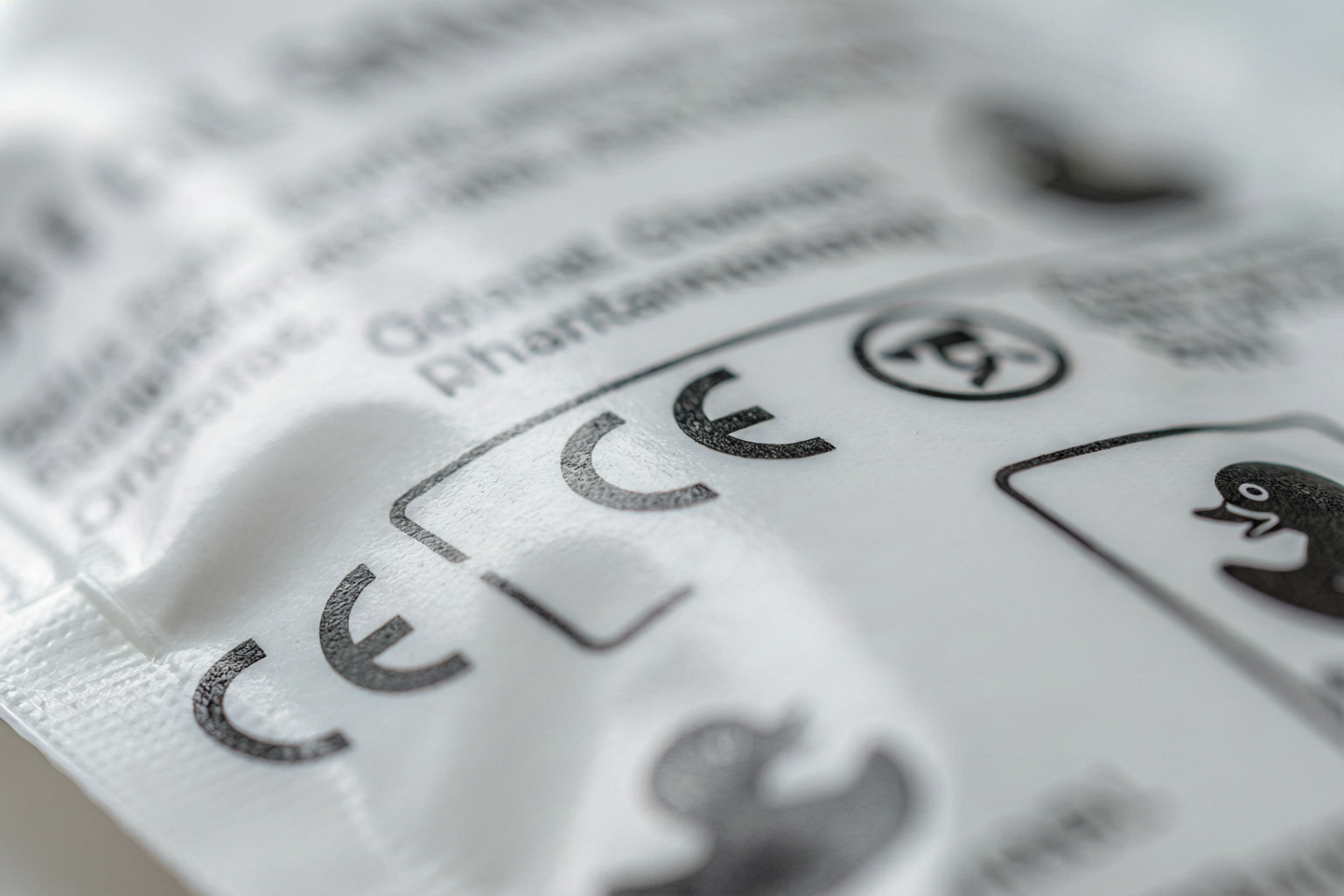
Most buyers prefer to avoid the warning entirely by ensuring the duck does not contain listed chemicals above safe harbor levels. A warning label on a promotional product undermines the brand message — nobody wants to hand out a duck that carries a cancer warning.
How to Source Prop 65-Compliant Ducks
Start by specifying phthalate-free PVC in your purchase order. Most Foshan factories that produce promotional rubber ducks offer phthalate-free PVC as a standard option. The cost premium is minimal — approximately $0.02 to $0.05 per unit at scale.
Request a Prop 65 compliance test from an accredited laboratory. The test should cover at minimum the eight phthalates on the Prop 65 list, total lead content in surface coatings, and the absence of ADC or other listed blowing agents. The promotional rubber duck collection at LZENGO offers Prop 65-compliant options with test reports available on request.

Enforcement Risk: Why This Matters
Prop 65 enforcement is driven by private attorneys general. Bounty-hunter plaintiffs scan retail shelves and online listings for products lacking Prop 65 warnings, then file lawsuits seeking penalties of up to $2,500 per violation per day. Settlements typically range from $10,000 to $50,000 plus reformulation costs. For a distributor selling rubber ducks in California, the financial risk of non-compliance dwarfs the cost of proactive testing.
Documentation Chain for Prop 65 Compliance
Maintain a compliance file for each duck SKU sold in California. The file should include: the material specification sheet from the factory, the Prop 65 test report from an accredited laboratory (ISO 17025-accredited), a declaration of conformity signed by the factory, and your own compliance assessment noting the safe harbor levels and test results. This documentation chain protects you if a Prop 65 claim is filed.
Buyers structuring the compliance file for a custom duck order can follow the label placement and wording rules in our guide to toy safety label placement guide for custom ducks.
{“@context”: “https://schema.org”, “@type”: “FAQPage”, “mainEntity”: [{“@type”: “Question”, “name”: “Are rubber ducks subject to California Prop 65?”, “acceptedAnswer”: {“@type”: “Answer”, “text”: “Yes. Rubber ducks sold or distributed in California must comply with Prop 65 if they contain listed chemicals above safe harbor levels. The main concerns are phthalates in PVC, lead in surface coatings, and chemical blowing agents in foam-filled ducks.”}}, {“@type”: “Question”, “name”: “How can buyers avoid Prop 65 warning labels on rubber ducks?”, “acceptedAnswer”: {“@type”: “Answer”, “text”: “Specify phthalate-free PVC (using DOTP or DINCH plasticizers), request XRF test data confirming lead levels below 0.5 micrograms per day in surface coatings, and avoid foam-filled ducks that use azodicarbonamide.”}}, {“@type”: “Question”, “name”: “What is the cost of Prop 65-compliant rubber ducks?”, “acceptedAnswer”: {“@type”: “Answer”, “text”: “The cost premium for phthalate-free PVC is approximately $0.02-$0.05 per unit at scale. Prop 65 laboratory testing costs $200-$500 per SKU.”}}, {“@type”: “Question”, “name”: “What are the penalties for Prop 65 non-compliance?”, “acceptedAnswer”: {“@type”: “Answer”, “text”: “Penalties of up to $2,500 per violation per day. Settlements typically range from $10,000 to $50,000 plus reformulation costs. Enforcement is driven by private litigation.”}}]}