Three materials hide behind the phrase large rubber duck, and each one makes a different product. Choosing the material before the height settles what size is possible, where the duck is made and which paperwork travels with it.
Three routes cover most large ducks: moulded PVC gives a hollow shell that squeezes, floats and takes moulded detail. Coated fabric gives an inflatable with a printed skin, a blower and a tether. A sculpture uses a frame with a skin over it for a one-off display. In short, choose by what the duck has to do, then let the material set the wall, the print, the pack and the paperwork.
Three products hide behind one search
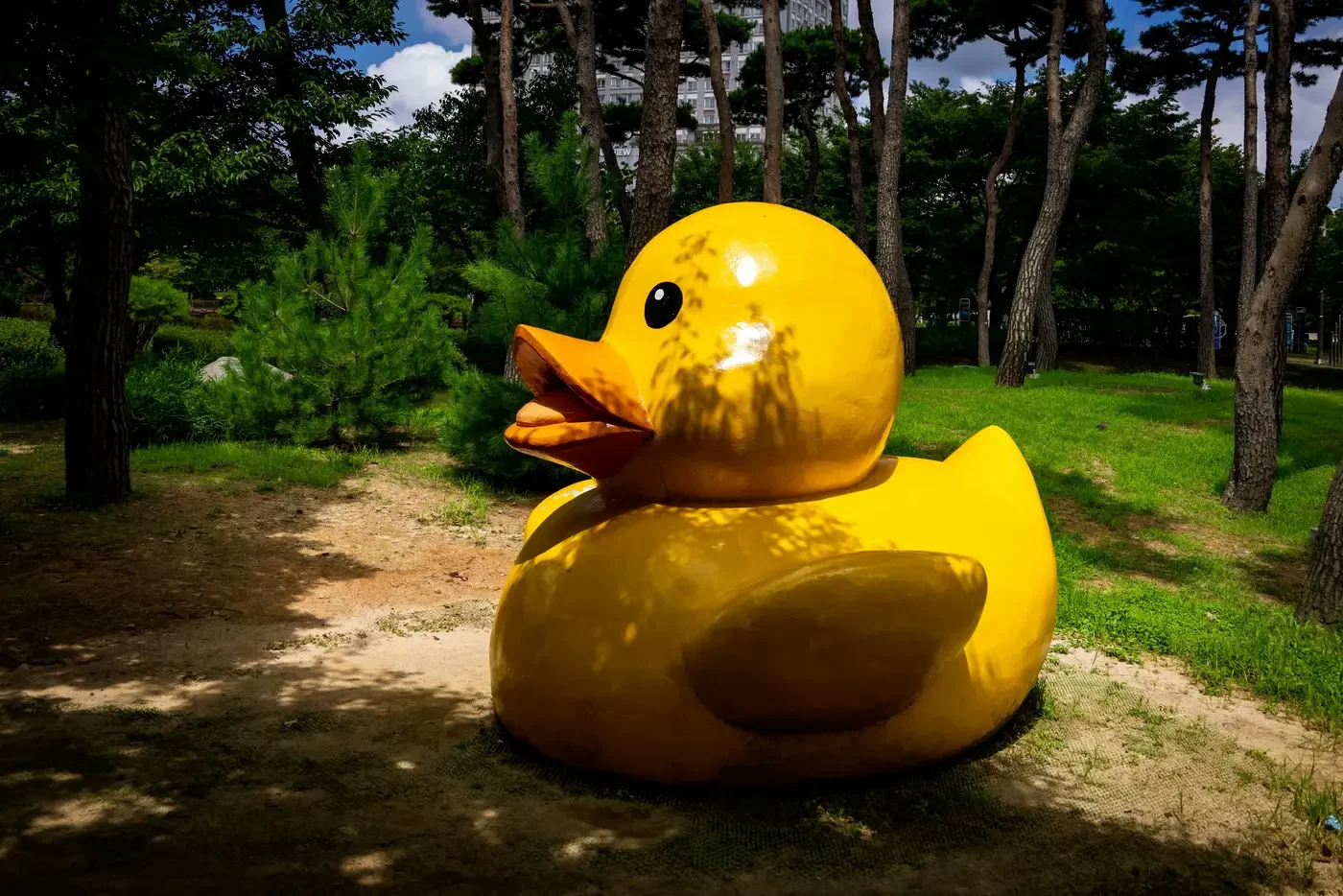
A buyer searching for a large rubber duck is usually looking for one of three things, and the word duck does not distinguish them. There is the big moulded duck that sits in a bath, a shop window or a pool. There is the inflatable that stands on a lake and is deflated after the event. There is the sculpture that is built once and installed.
Each has its own material logic. The moulded duck is a compound and a tool. The inflatable is a fabric and a pattern. The sculpture is a frame and a skin. The materials are not interchangeable, and a brief that does not choose between them will get three different answers from three suppliers.
The wholesale specification note puts the same point in buying terms, and the installation note covers the site side.
The materials, side by side
| Material route | What it is | How it is made | Best at | Weak at |
|---|---|---|---|---|
| Moulded PVC | A compound cast in a tool | Rotational casting or injection | Squeeze, float, moulded detail, repeat runs | Size limit set by the tool |
| TPR or silicone | A softer or firmer compound | Same tools, different process settings | Feel, matte finish, some recycled claims | Higher material sensitivity |
| Coated fabric inflatable | A woven base with a coated skin | Cut, seamed and welded or sewn | Very large size, portability, printed skin | Needs a blower, a tether and a crew |
| Framed sculpture | A frame with a skin over it | Built rather than moulded | One-off, unusual shapes, permanence | Not repeatable, not a toy |
The table is a routing tool rather than a ranking. Read across the "best at" column and the choice usually makes itself.
The compound under all of it
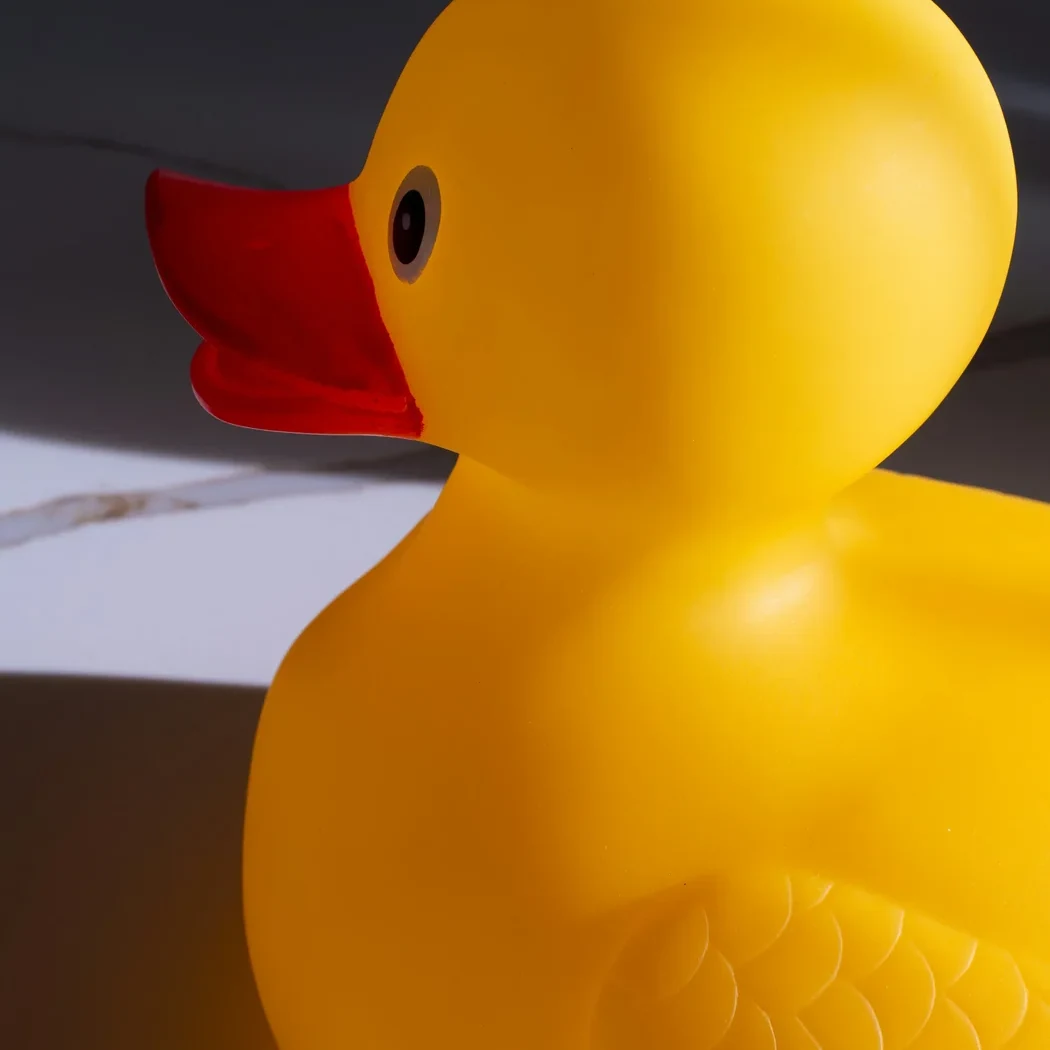
For a moulded duck the compound decides the hand, the wall and the ageing. PVC is the classic material because it takes pigment well, moulds at a manageable temperature and can be made soft enough to squeeze. TPR is a softer-feeling alternative that some buyers prefer for a matte surface, and silicone is the firmest of the three with the highest material sensitivity.
Every duck body we mold is 100% virgin PVC, never regrind, and the compound is tested in a laboratory. The same material and compound are used for European and US orders; what changes by destination is the set of test reports supplied. Most of our ducks sit around Shore A 50, with softer compounds toward 30 and firm ones from 60 up, and the squeeze you want decides the compound.
The choice is not only a feel question. Each compound has its own shrinkage, its own pigment behaviour and its own ageing, which means the tool is designed around one of them. Switching material after the tool exists is a new project, not a substitution. The compound comparison is the page to read before that decision, and the hardness note explains what the numbers describe.
A claim about recycled content belongs here too, and it is a claim about the compound rather than about the duck. The GRS note covers what has to be true before that word appears on a pack.
Hollow or solid decides the wall
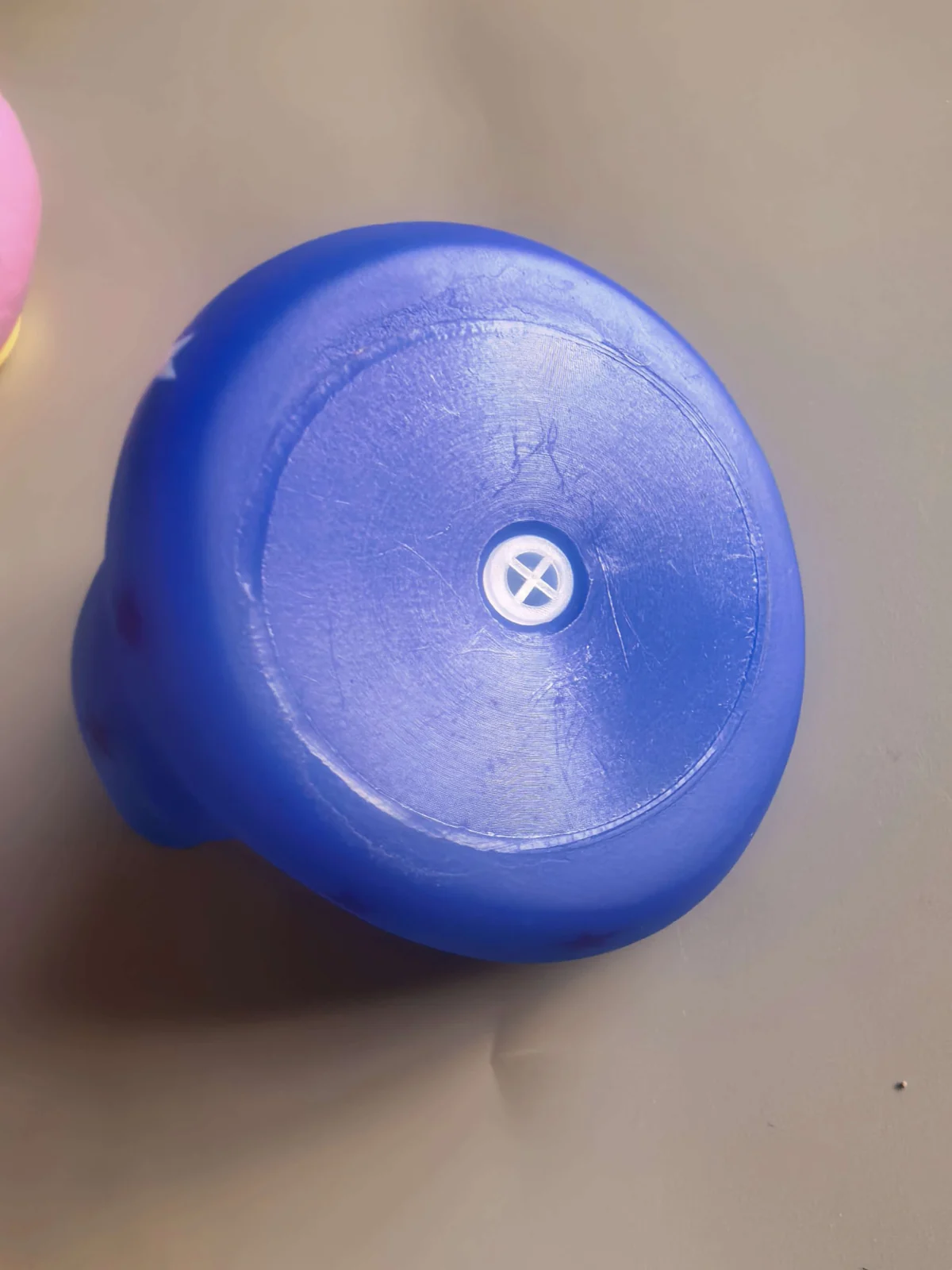
A large duck is usually hollow, because hollow is what makes it light enough to move and buoyant enough to float. The wall that encloses that air is the structural decision, and it is set by the process rather than by a preference.
A wall that is too thin goes soft, loses the base and stops floating straight. A wall that is too thick adds mass that the carton and the crew both notice. The wall thickness note covers the trade-off, and the size scaling note explains why a wall that works on a small duck cannot simply be scaled up.
A solid large duck exists, and it is a different product. It is heavier, it does not float the same way, and it is usually a display piece or a weight rather than a bath toy.
Above the mould: fabric, coating and seam
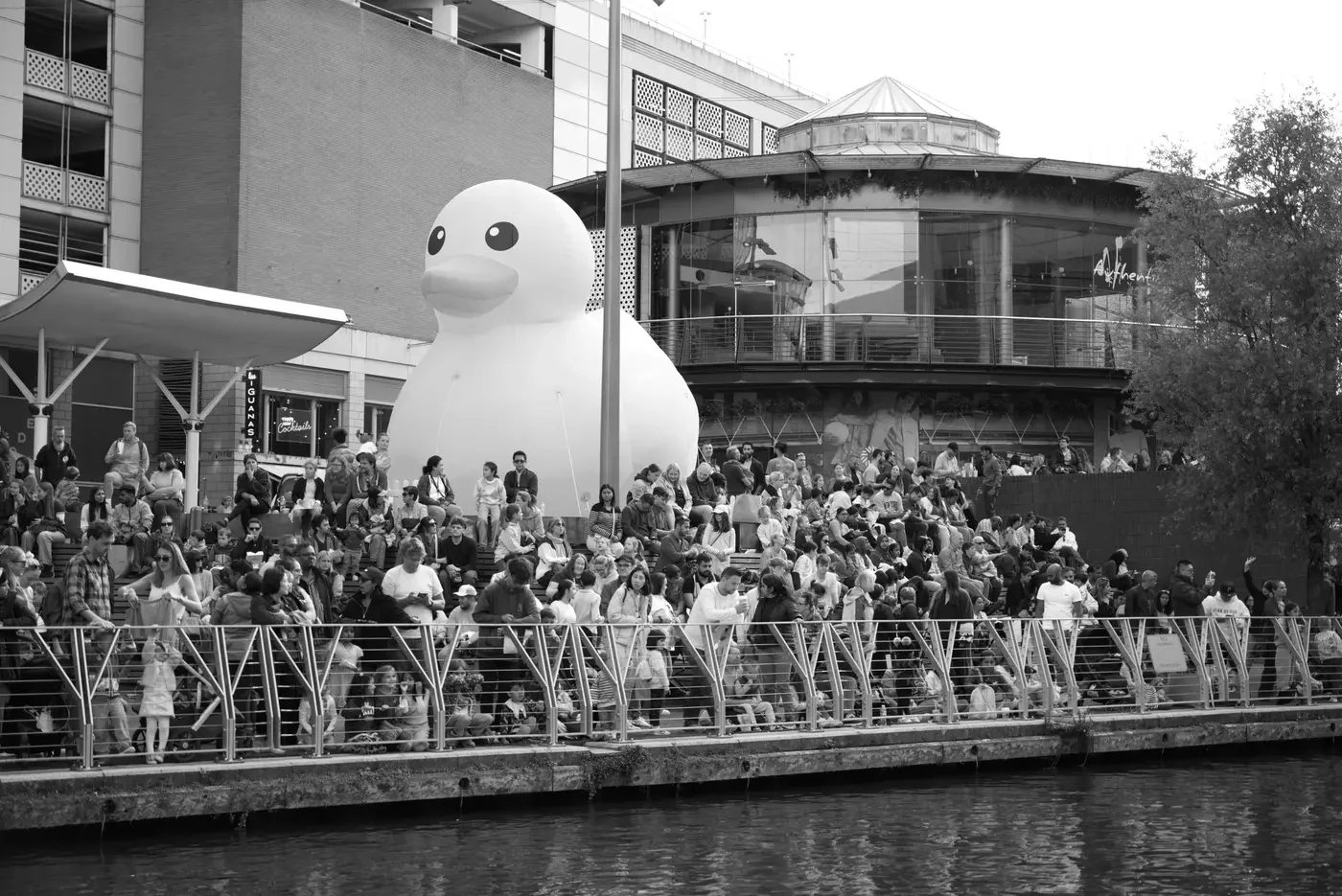
An inflatable duck is made of fabric that has been coated, cut to a pattern and joined. The coating is what holds the air, the pattern is what makes the shape, and the seam is where both are tested. The joins are welded or sewn, and the method decides how much pressure the duck will take and how long it will last outdoors.
That is a different set of skills from a mould. An inflatable supplier is a fabricator, and the questions to ask are about coating weight, seam method, pressure and repair, not about cavity count. A buyer who asks a mould shop for an inflatable, or a fabricator for a moulded duck, is asking the wrong supplier for the right object.
The cracking note covers where a large shell fails at a joint, and much of that reasoning transfers: seams are the weak line whatever the material.
What the material does to print and colour
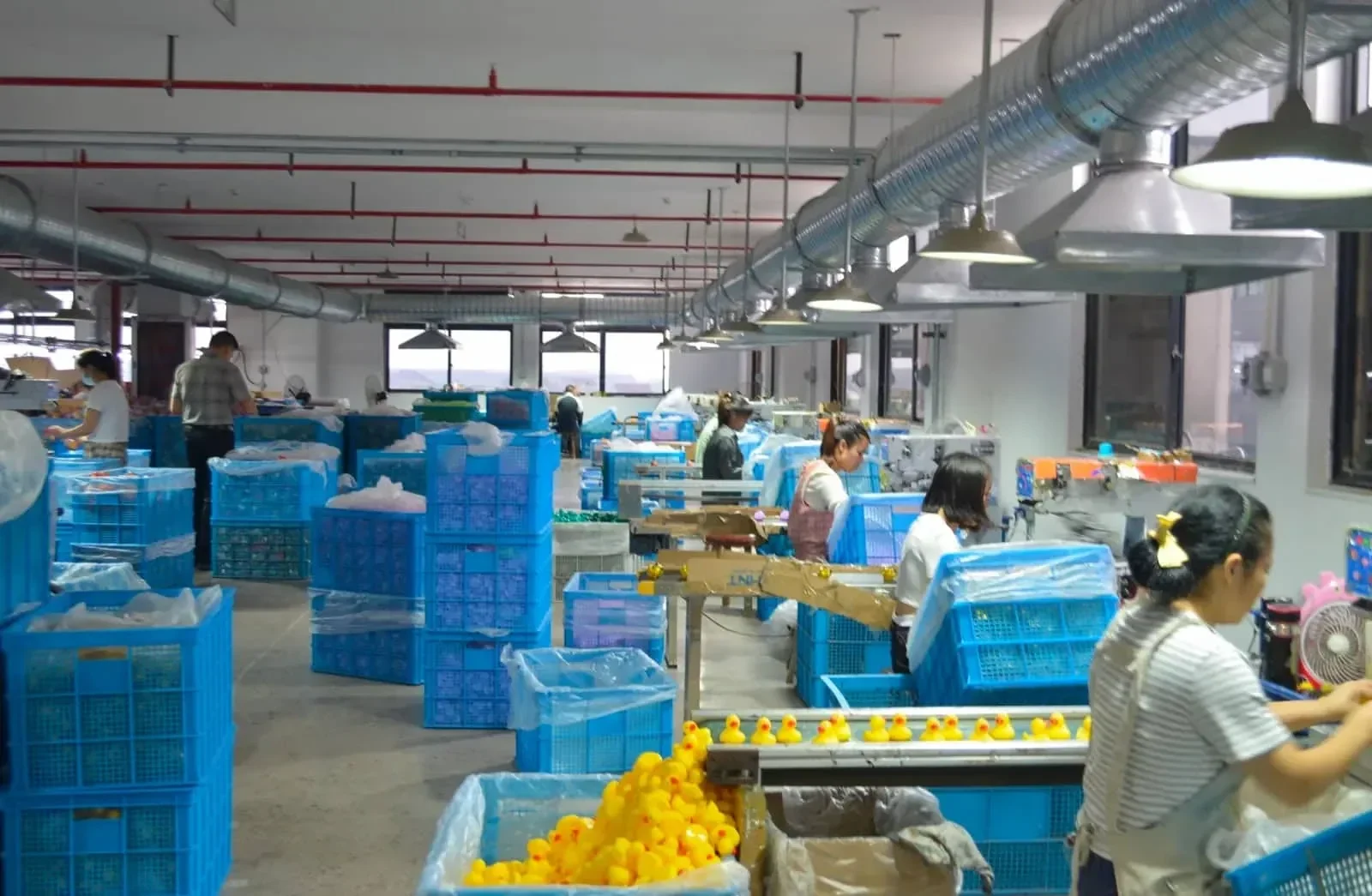
The material decides how a mark is applied. A moulded PVC body takes pad printing and UV printing well because the surface is smooth and slightly absorbent. A softer compound can distort under a pad and needs a different plate pressure. A coated fabric is printed before it is seamed, which is why an inflatable can carry a photographic image across a panel.
Colour behaves the same way. A pigment in a compound is a batch decision made at the mixing stage, while a print on a fabric is a decision made at the printer. Two products that look the same in a mockup therefore reach that look through different processes, and a buyer who has approved a colour on one route has not approved the other.
The print method comparison covers the print side in detail, and the UV note covers what the sun does to a moulded body over a season.
The paper that follows the material
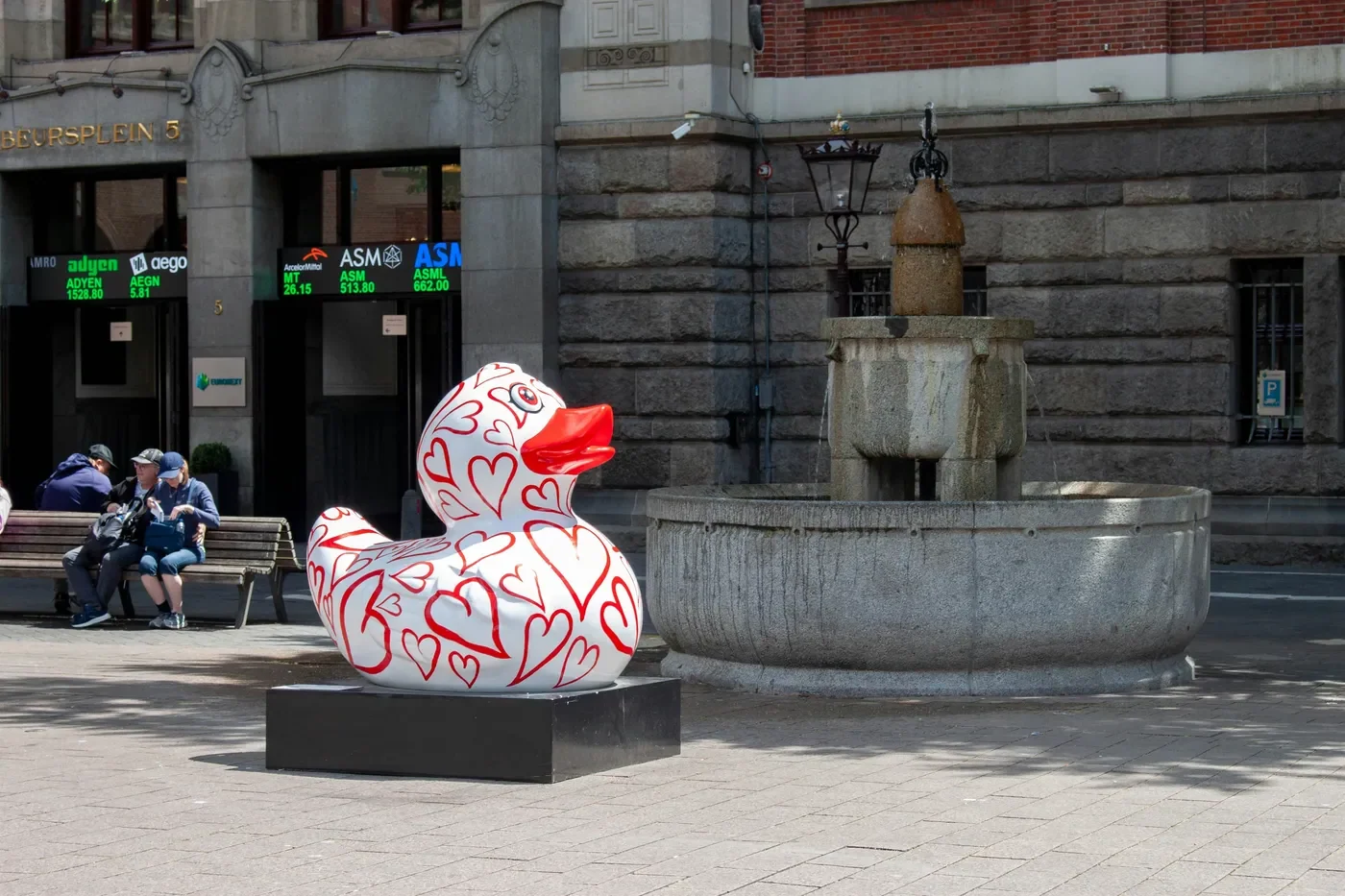
Every material route carries its own paperwork, and the paperwork follows the material rather than the drawing. A moulded duck sold as a toy needs the safety file that a toy needs. An inflatable installation needs the electrical and structural documents that a site will ask for. A sculpture needs whatever the venue's insurer asks for.
The toy side is the one most buyers meet, and a large duck sold as a toy carries the same safety file as a small one whatever its material. The toy safety testing note covers what that file has to name for the compound, the print and the pack.
The practical point is that a material claim is a document, not a sentence, and the verification note covers how a certificate is checked rather than assumed.
A material spec I would sign
A working material spec has five lines. The route, meaning moulded, inflatable or sculpture. The compound or the fabric, named rather than described. The wall or the coating weight, with a band rather than a single figure. The colour route, meaning pigment in the compound or ink on the surface. And the documents that come with the batch.
Five lines are enough to tell a supplier what is being bought and enough to tell a checker what is being checked. The safety label note covers what the pack then has to carry, and the lead-free claim note covers how a claim about a material has to be worded.
What I will not put in a material spec
I will not put a material claim in a spec without the document that supports it. Phrases like food grade, non toxic and eco friendly are marketing words until a report defines them, and a report that names a different part or a different colour does not cover the duck being bought.
I will also not put a material name without a route. PVC describes a family of compounds, and a spec that says PVC without saying moulded or coated has not said enough to be checked.
Five questions before the material is chosen
- Is this duck moulded, inflatable or a sculpture, and does the site allow it?
- Does the duck have to squeeze and float, or stand still?
- Does the compound or the fabric have to carry a claim, and is there a document for it?
- Which route will the colour and the mark take?
- What paperwork does the market and the venue ask for?
The size chart and the size and spec note cover the dimension side once the material is settled.
Frequently Asked Questions
What is a large rubber duck actually made of?
Most are moulded PVC shells, coated fabric inflatables or framed sculptures. The material follows the job: a shell for squeezable and floatable, a fabric for very large and portable, a frame and skin for a one-off display.
Can a large duck be moulded at six feet tall?
It can, and the limit is the tool rather than the material. A mould that size is a major piece of steel, so a very large duck is often an inflatable instead, which is why the three routes exist rather than one.
Is a large rubber duck a toy?
It depends on how it is marketed. A duck sold as a plaything is a toy whatever its size, and a duck sold as a display object is not. The label and the age grade follow the marketing, which is why that line belongs in the brief.
Hollow or solid for a large display duck?
Hollow for anything that has to float, be moved by two people or be packed into a normal carton. Solid is a weight and a permanence decision, and it changes the base, the lifting points and the freight.
Final Note
The order that works is route, then material, then wall, then documents. A buyer who starts with a picture gets a conversation about looks; a buyer who starts with the route gets a conversation about what can actually be made.
The material is the least visible decision in a large duck and the one that decides the rest.
Key takeaways
- A large rubber duck search covers three products, and the material route is what separates them.
- The material table is a routing tool rather than a ranking, so read the best-at column across the rows.
- For a moulded duck the compound decides the hand, the wall and the ageing, and the tool is built around one compound.
- A large duck is usually hollow because hollow is what makes it light enough to move and buoyant enough to float.
- An inflatable is a coated fabric joined at seams, so it is a fabricator's product rather than a moulding.
- The material decides how a mark is applied, so approving a colour on one route does not approve it on another.
- Every material route carries its own paperwork, and a material claim is a document rather than a sentence.