Recycled duck claims fail on paperwork before they fail on colour, so a recycled project starts from the certificate rather than from the shade. Three things have to line up before anyone opens a mould: what the recycled content actually is, where it entered the waste stream, and which document proves it for the exact batch in front of you. When those three are in order, a recycled duck behaves like any other duck; when they are not, the duck can still be good while the sentence on the box is wrong.
A buyer side reading of the GRS standard, the PVC recycling chain and the toy file that sits beside both.
In short: GRS is a voluntary standard for recycled content and chain of custody, held by Textile Exchange. A duck can carry a GRS claim when the material holds the recycled content, the site is certified for that product category, and a transaction certificate ties the shipment to the certified chain. Recycled content never replaces toy testing.
GRS is a feedstock claim with a paper trail
GRS is not a safety mark and it is not a compostability mark. It is a standard held and updated by Textile Exchange, and what it covers is the recycled content of a product plus the traceability of that material through the production chain. Certification starts at 20% recycled content, and the GRS logo itself is reserved for products at 50% or more, as the certification body Ecocert sets out in its overview of the GRS label.
Those two numbers do most of the work in a first conversation. A duck at 20% is a different claim from a duck at 50%, and a brand that prints a logo without checking which one it bought has already lost the argument with its own legal team. Ask for the percentage in writing before the artwork exists, and ask which of the two numbers the design is supposed to reach.
The standard is also older than most buyers assume. GRS version 4.0 has been in force since 2017, which means the paperwork a supplier shows you should look like a settled system rather than a new experiment. If it does not, that is information too.
Where recycled vinyl comes from
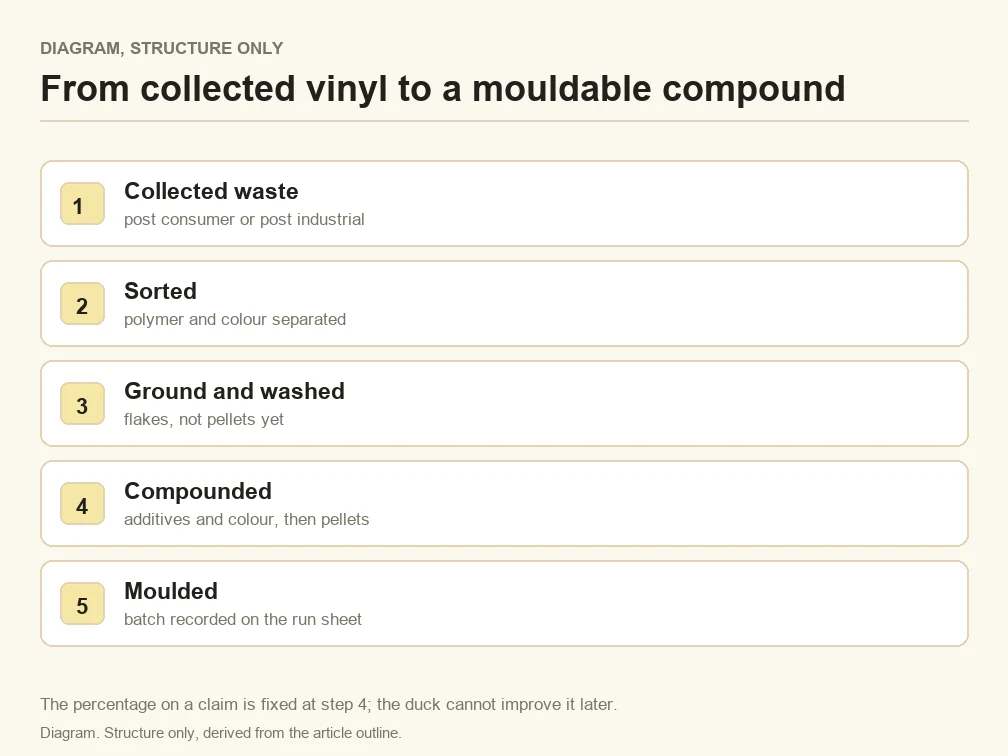
Recycled vinyl does not come out of a bin and into a mould. The industrial route is collection, sorting, grinding, washing and compounding, and mechanical recycling is the preferred and most widely used route for PVC, with the recyclate going back into new products (VinylPlus).
Each of those steps is a place where the material changes hands, which is why GRS cares about traceability as much as about content. The further the flakes travel, the more documents the chain needs, and a buyer who receives a single certificate with no shipment reference has received only the top sheet of a file.
For a duck the practical consequence is simple. The recyclate is a raw material with its own batch history, not a generic substitute for virgin compound, and the lot you approve is the lot whose history you can show. That is a different way of buying material, and it belongs in the brief rather than in the post mortem.
The claim has to come from the waste stream
This is the part buyers miss. Under the FTC Green Guides, recycled content means material recovered or otherwise diverted from the waste stream, either during manufacturing or after consumer use, and where the source is manufacturing material the advertiser should have substantiation that it would otherwise have entered the waste stream (16 CFR 260.13).
The guides then give the example that matters here. A manufacturer that collects spills and scraps from its own process, reprocesses them lightly and feeds them back into the same product is not making a recycled content claim that holds, because that material is normally reused inside the process and would not have entered the waste stream at all.
Read that against a duck. A body moulded from the moulder's own sprues and rejects is a sensible use of material, and it is not a recycled claim. The recycled claim starts outside the factory gate, with material that someone else discarded. If only part of the body is recycled, the claim also has to be qualified with the percentage by weight in the finished product, which is the number the label should carry.
A recycled duck is still a toy
Nothing about the feedstock changes the product's legal category. In the European Union only toys bearing CE marking may be placed on the market, and the manufacturer has to carry out a safety assessment covering chemical, physical, mechanical, flammability and hygiene hazards, hold technical documentation and draw up the EC Declaration of Conformity. The importer keeps a copy of that declaration and puts its own name and address on the product (European Commission).
A recycled body has to clear the same hazards as a virgin one, and it brings a few extra questions with it, because the input stream is less uniform and the compound carries more history. The toy file is therefore not a green appendix to the certificate. It is the file that decides whether the duck can be sold at all.
That distinction is worth holding on to when a supplier presents one document as if it covered everything. The safety testing route for rubber ducks and the ASTM and EN 71 standards behind it are the places to check what the report in front of you actually tested.
What the recycled compound changes at the machine
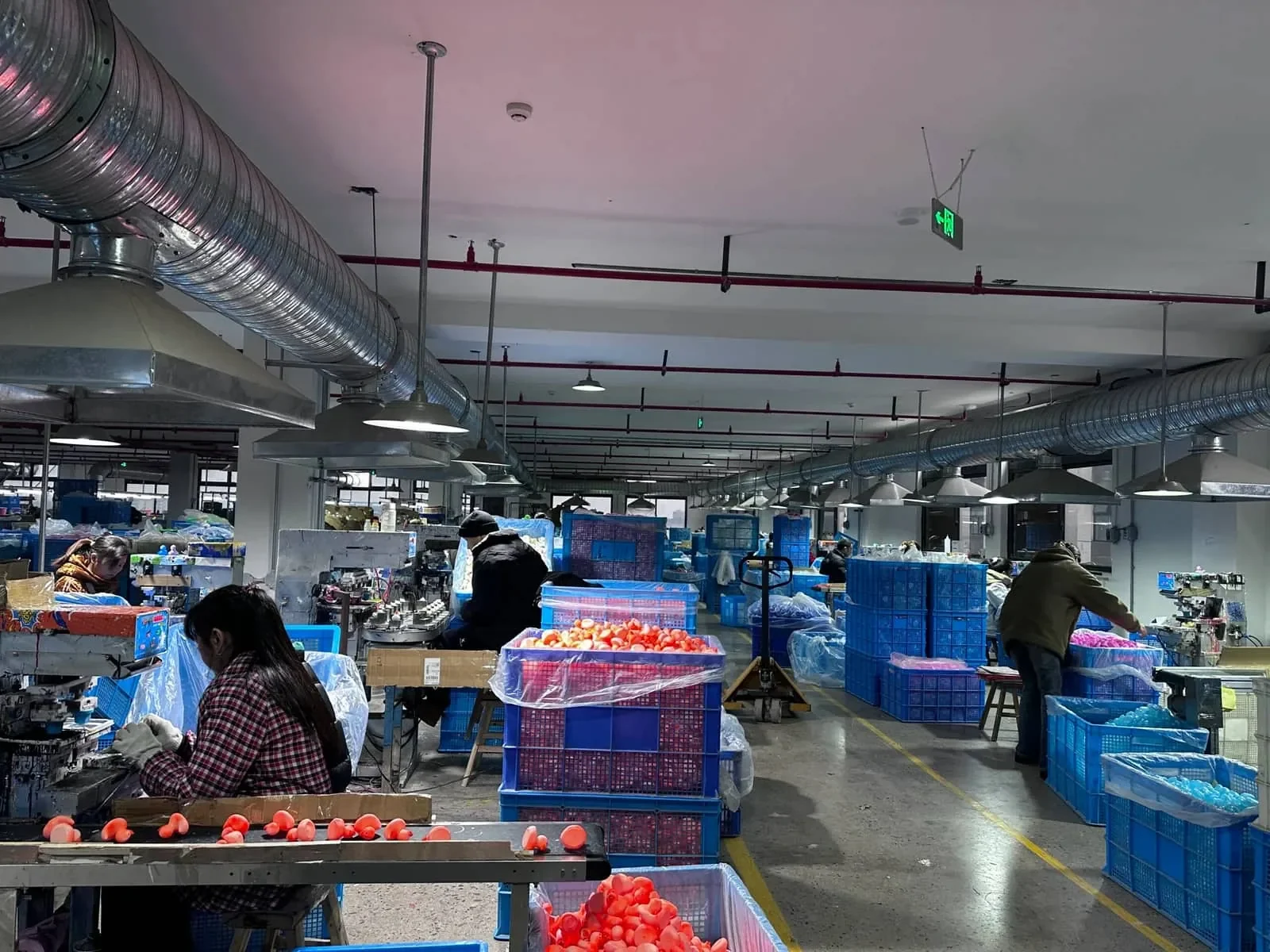
On the floor, the difference is variation. A virgin compound arrives with a specification and a narrow band around it. A recycled compound arrives with a history, and the band is wider in exactly the properties a duck depends on: how the melt flows, how the wall holds, how the surface takes colour, and how the seam closes.
The mould does not change. The settings around it do, and the batch record becomes the only way to explain why Tuesday's ducks came out slightly stiffer than Monday's. This is where the honest limit of the claim sits as well. Recycled content is a material decision with a processing consequence, and the hardness of the body is the first number to fix, which is why shore hardness on duck vinyl and the choice between PVC, TPR and silicone come before any colour discussion.
Colour arrives first
Colour is the first place a recycled batch shows itself, and it shows in two ways. The base compound carries its own tint, so a pale colour has less room to hide than a dark one, and the same reference can land differently on two lots of recyclate. Matching then becomes a job of correction rather than of mixing from scratch.
The approved colour also has to be approved on a duck made from the final compound, not on a duck made from virgin pellets. A brand that signs off a colour chip has signed off the wrong object. Pantone matching for PVC ducks covers the correction work, and the light stability of the shade is its own question, handled in masterbatch and UV stabilisers.
Print is the second place it shows
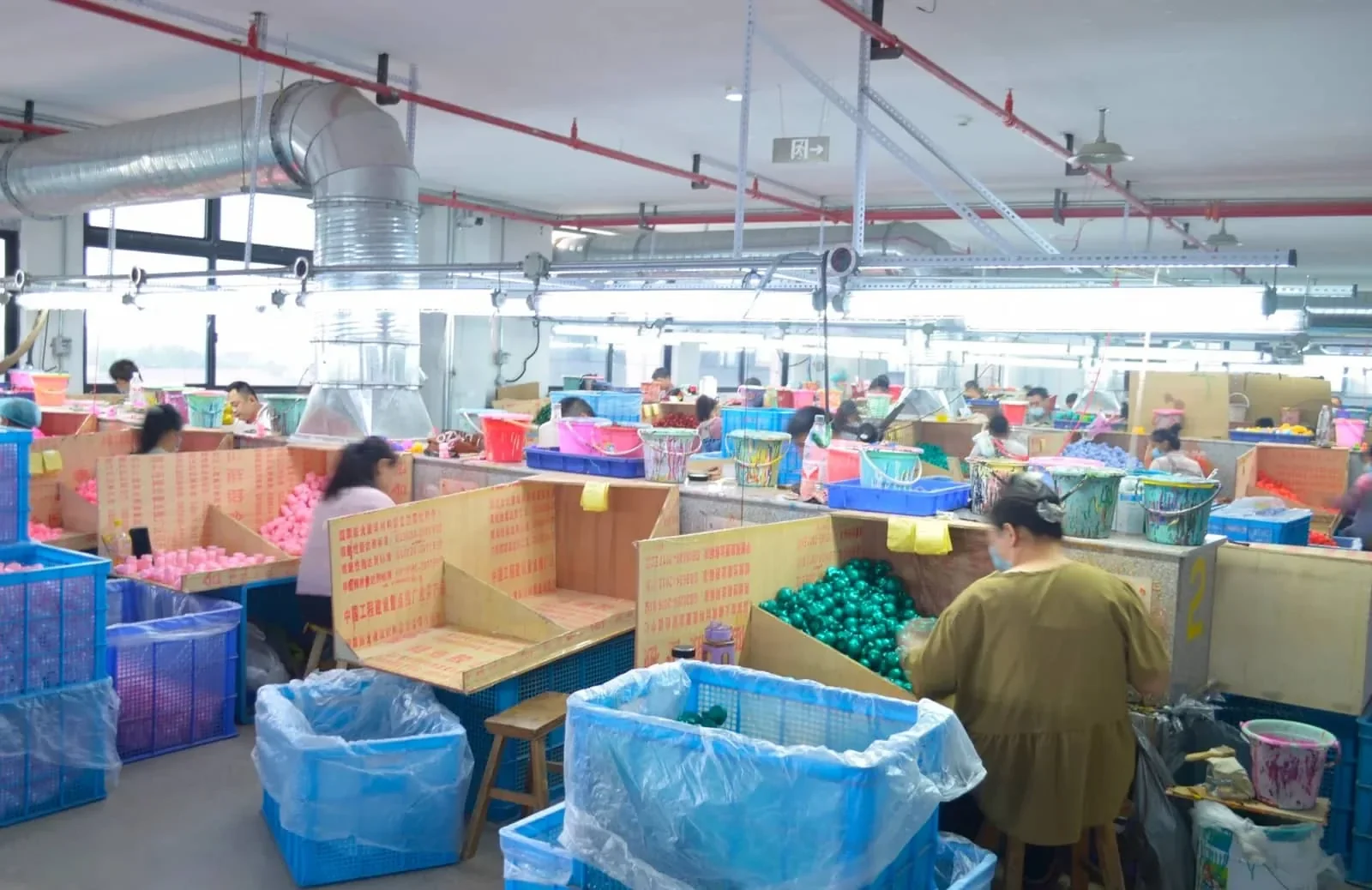
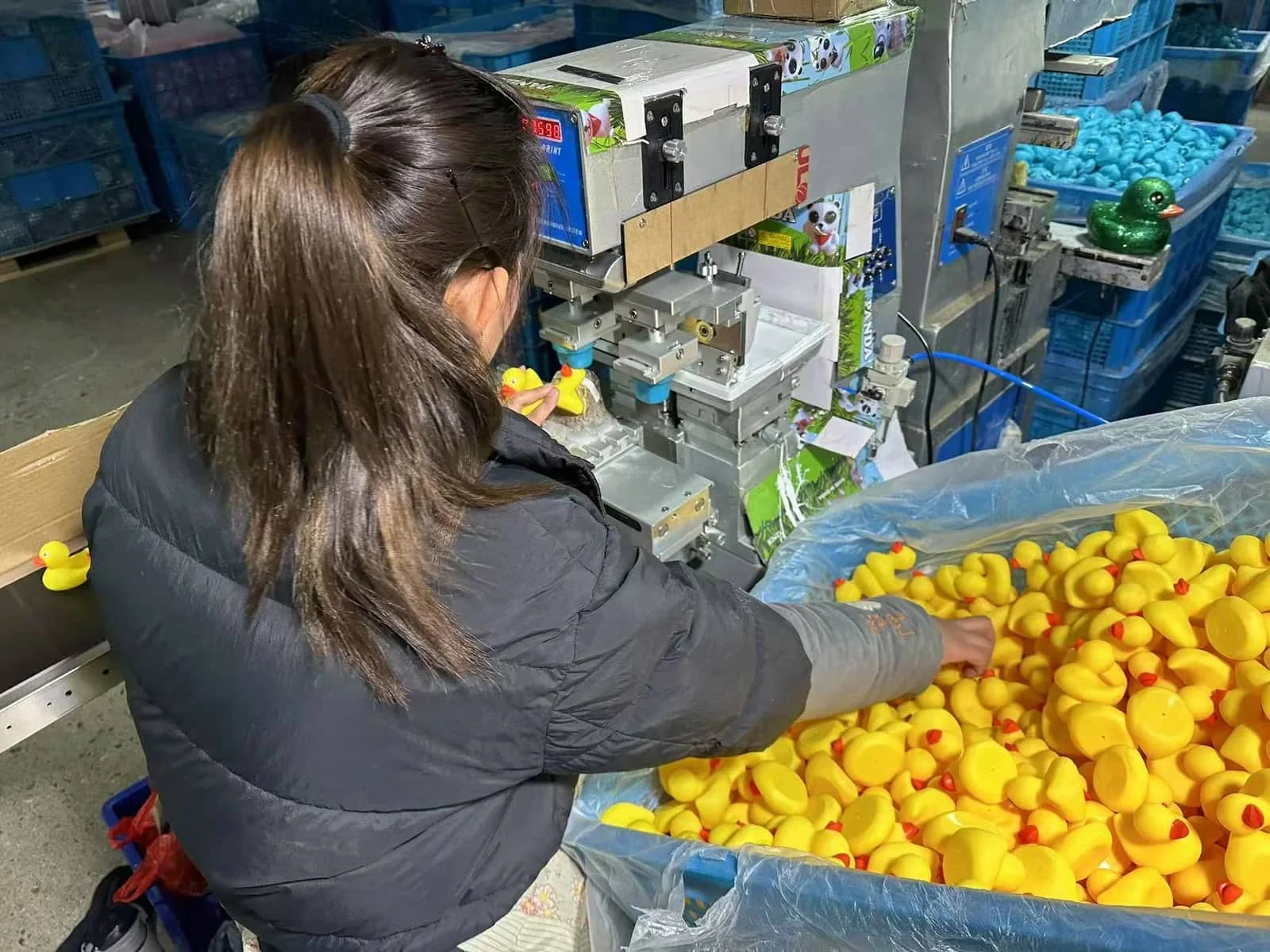
Print adhesion is the second test a recycled surface gives you. Pad printing sits on the skin of the duck, so it inherits whatever the compound did to that skin: a slightly different surface energy, a little more mould release, a little more texture, and the ink sits differently on the same artwork.
The print method is not the first variable to change. The usual fix is to check adhesion on the actual recycled surface before the artwork is locked, then keep the method fixed for the run. UV printing versus pad printing compares the two routes, and either one can look perfect on a virgin sample and fail on the recycled body that follows it.
The run, the sample and the carton
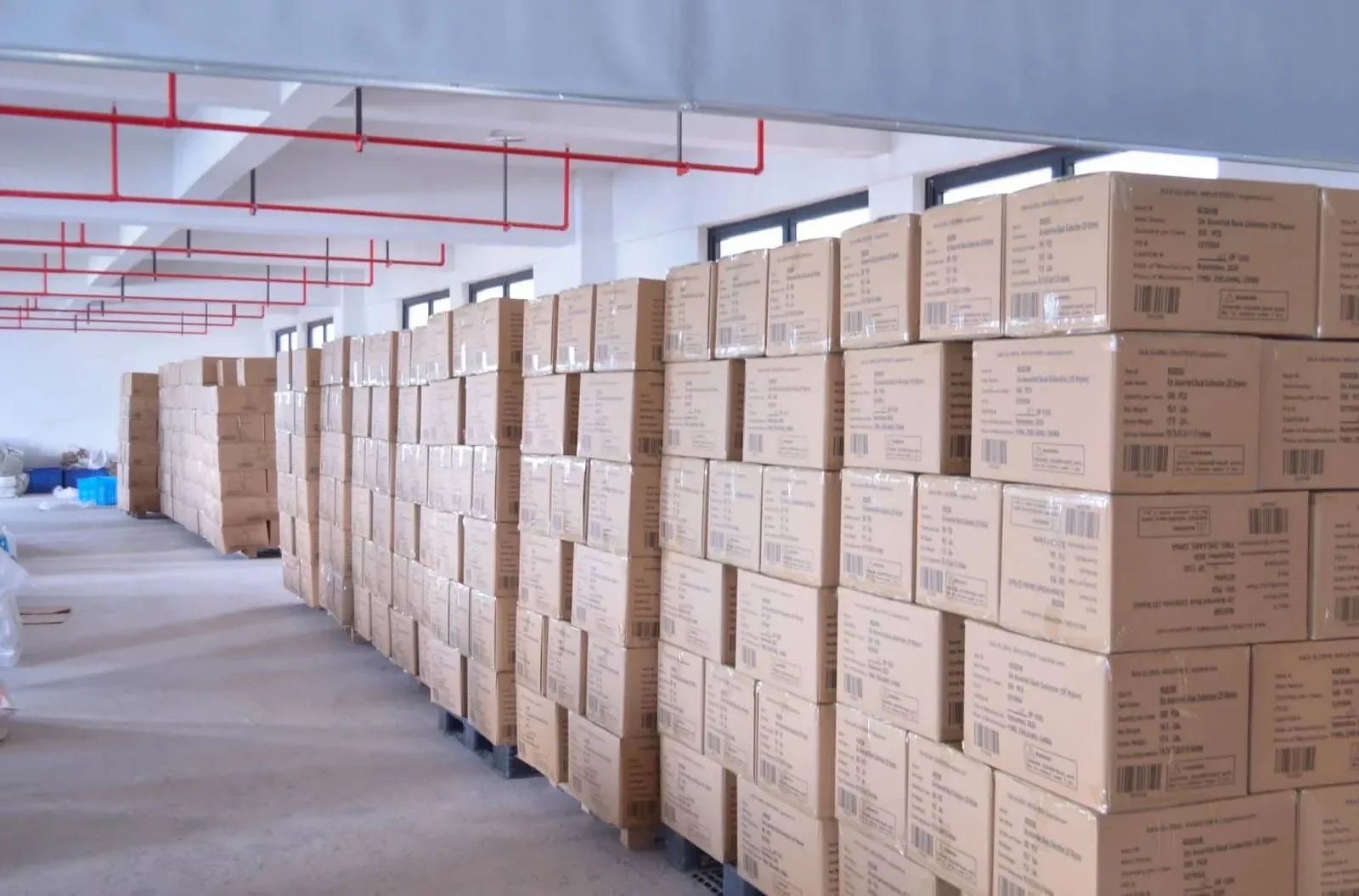
A recycled claim is only as good as the batch that carries it, and that means three checkpoints. The approved sample has to be pulled from a recycled lot, not from a virgin control. The batch record has to name the compound lot that went into the run. And the carton marking has to match the file the brand will show if a retailer asks.
On a recycled programme these three are usually where the chain breaks, because the sample is approved early, the compound lot changes, and nobody relinks the two. The fix is procedural and unglamorous: one lot number on the sample card, the same number on the run sheet, and the same number on the carton. A buyer who asks for that at the brief stage gets it. A buyer who asks after the container is loaded is asking for a reconstruction.
Recycled is not the same claim as biodegradable
The two words get used as if they were one idea, and they answer different questions. Recycled says where the plastic came from. Biodegradable says what happens to it after disposal, in a named environment, within a stated period, and the evidence for that is a test rather than a certificate of content.
A duck can be recycled, biodegradable, both on paper, or neither. Each claim needs its own file, and a brand that prints both doubles the paperwork and the exposure. For a promotional duck the safer position is usually the narrower one: make the recycled content claim, prove it, and leave the end of life sentence off the box until someone can sign for it.
The documents a brand review will ask for
A GRS file is a short set of papers, and each one answers a different question. Start with the scope certificate, which says which site may certify which product categories. The scope certificate on file in our own records carries a line worth reading twice:
This Scope Certificate provides no proof that any goods delivered by its holder are GRS certified.
That sentence is the whole argument for asking for the second document. A transaction certificate is what ties a named shipment to the certified chain, and a scope certificate without one is a permission slip, not a proof of goods. The rest of the file belongs to the toy side and the batch side.
| Document | What it proves | What it does not prove |
|---|---|---|
| Scope certificate | Which site may certify which product categories | That a shipment was made from certified material |
| Transaction certificate | That a named shipment sits inside the certified chain | That the toy passed the safety tests |
| Test report | That a sample was tested against a named standard | That every future batch matches the sample |
| Colour approval | That a shade was signed off on the final compound | That the next lot of recyclate will match it |
| Carton marking | That the packed goods match the file | That the claim printed on the box is correct |
Two rows carry most of the weight. Without the transaction certificate the recycled claim has no shipment behind it, and without the test report the duck has no product file. The other three rows are where a careful buyer quietly wins an argument later.
The document verification walkthrough shows how to check a certificate number with the issuer rather than with the supplier, and the toy safety label guide covers what has to appear on the product once the file is settled.
Five questions before you brief a recycled duck
These are the five I would want answered in writing before a design goes to a tool, because each one changes the file rather than the artwork:
- Is the recycled content post consumer or pre industrial, and at what percentage by weight?
- Does the scope certificate list this product category and this site?
- Which transaction certificate will cover this shipment, and who holds it?
- Has the colour and the print been approved on the final recycled compound?
- Does the toy file name this SKU, and does the label match it?
A buyer who can answer all five holds a claim that can survive a brand review, a retailer questionnaire and a customs question. A buyer who cannot answer the second and third is holding a good duck and a sentence nobody can defend.
Final Note
The uncomfortable part of recycled ducks is that the material is the smaller half of the problem. Recycled PVC is a normal industrial material in a normal industrial supply chain, and a duck moulded from it can be as good as any other duck. What fails is the gap between a brand that wants a green sentence and a factory that can only certify what it can trace.
I would rather write a narrower claim that holds than a broader one that collapses in a retailer audit. Recycled content is the claim you can prove, and proving it is a filing habit, not a slogan.
Frequently Asked Questions
What does GRS actually certify on a rubber duck?
Recycled content and the chain of custody behind it, not toy safety. A GRS duck still needs its own safety file, and the certificate that matters for the claim is the one that names the product category and the site that will run the order.
How much recycled content does a duck need for the GRS label?
Certification starts at 20%, and the logo is reserved for products at 50% or more. Between those two numbers the recycled claim can still be real, but the logo is not available, which is why the percentage belongs in the brief before the artwork.
Does recycled mean biodegradable?
No. Recycled content describes the feedstock, while biodegradable describes what happens after disposal in a specific environment. A recycled PVC duck is not biodegradable in a landfill, and a biodegradable claim needs its own evidence rather than a content certificate.
Can a duck carry both claims at once?
On paper yes, in practice it is rarely worth it. Two claims mean two files, two test programmes and two ways for the copy to be wrong, and a promotional buyer usually gets more protection from one claim that is fully documented than from two that are half supported.
Key takeaways
- GRS is a feedstock claim with a paper trail: the standard certifies content and traceability, and the logo has a higher threshold than the certification.
- Where recycled vinyl comes from: collection, sorting and mechanical recycling put a batch history into every lot.
- The claim has to come from the waste stream: a factory's own regrind is good practice and a weak recycled claim.
- A recycled duck is still a toy: the recycled body clears the same hazards and needs the same technical file.
- The documents a brand review will ask for: a scope certificate permits, the transaction certificate proves.