A duck's face carries a list of decisions rather than a finish. The eye is either part of the body compound or a separate object, and that single choice decides which test the duck needs, which document goes into the file and how the face survives a child's hands. Buyers spend a lot of attention on the beak and almost none on the eye, yet the eye is the part that most often turns a simple duck into a project with an extra approval round.
In short: a moulded-in eye and a printed eye keep the duck a one-part object and leave you with a paint question; an attached eye, whether bonded or inserted, makes the duck a two-part object and adds a pull test and a small parts review. The face can look identical from a metre away in all three cases, so the method has to be specified on the drawing, not left to whichever way the tool was cut.
Why the eyes carry the file
An eye is small, it sits on a curved surface, and it is the first thing a buyer's customer looks at. That combination makes it the least forgiving detail on the duck. A moulded eye needs the tool to carry the shape, so any change to the eye means a tool change. A painted eye needs a print file and an ink approval, so any change to it is a small edit to make and an unpleasant surprise to find late. An attached eye needs both a joint and a document. Choosing the eye method is therefore choosing which of those three kinds of work you want to own for the life of the duck, and that is a decision worth making before the drawing is signed.
Moulded in with the body
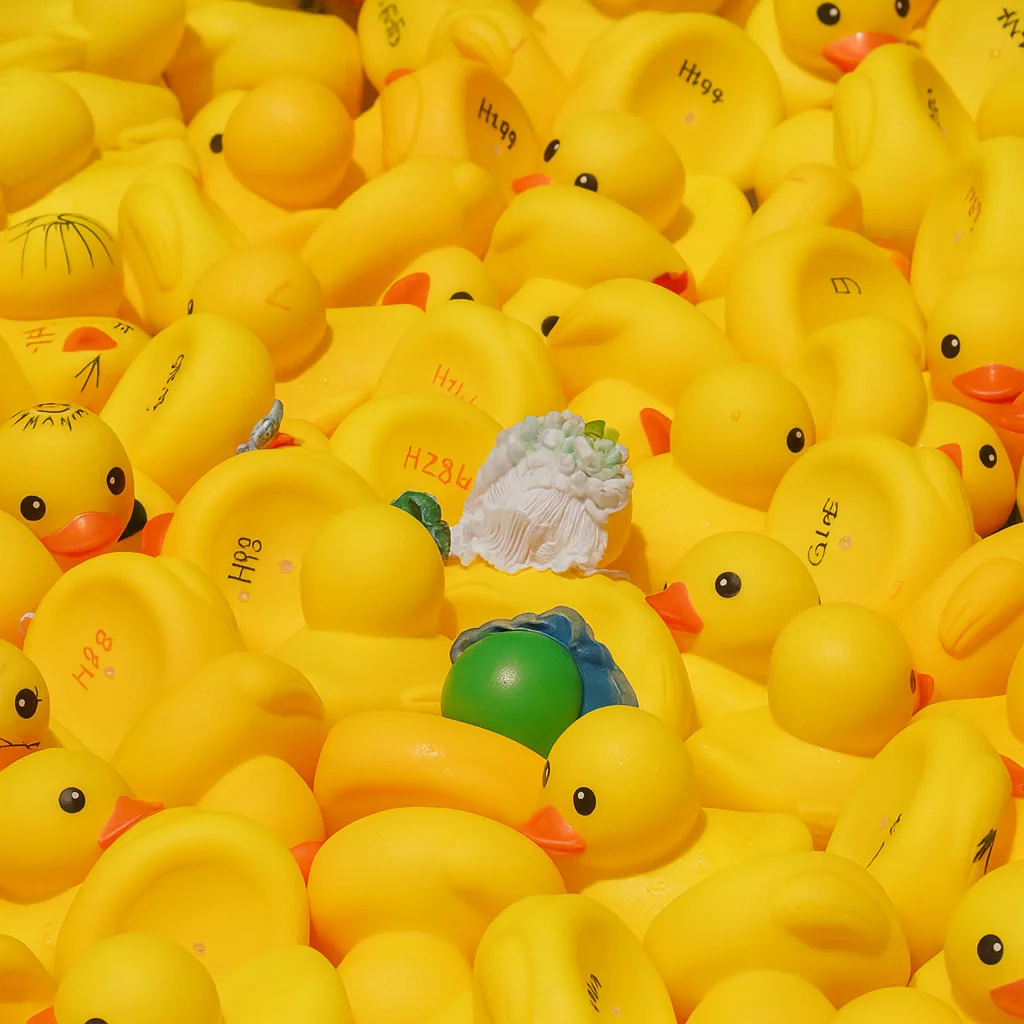
A moulded eye is cut into the tool, so it is a shape rather than a separate part. The duck stays a single object and there is no joint to pull apart, which is the simplest answer to the small parts question. The trade is that the tool now carries the expression: the eye shape, the lid line and the highlight are fixed in steel, and softening or sharpening them later means removing steel or cutting again. Moulded eyes also tend to read softer than a crisp painted dot, because the material has to flow into the detail. For a duck that will be handled by very young children, the single part body is usually the reason buyers choose this route.
Bonded or inserted eyes
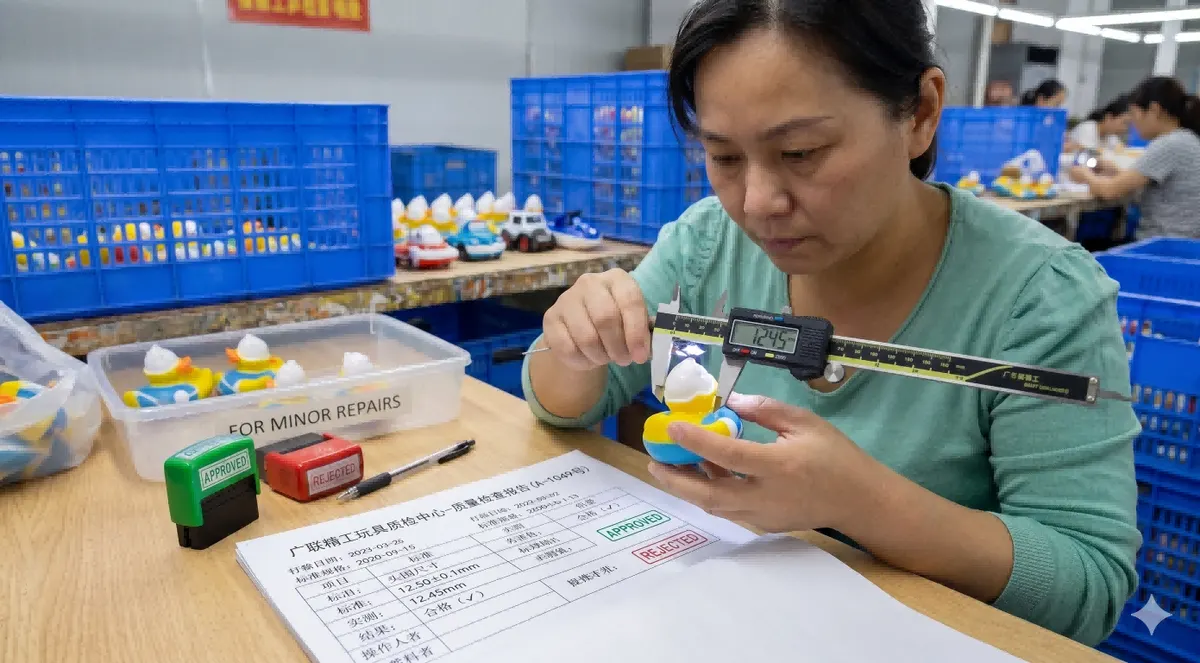
An attached eye is a second object, and a second object means a joint. Bonded eyes are glued into a socket; inserted eyes are pressed into a hole and held by a stem or a snap. Both look sharper than a moulded eye and both allow a duck to be built from a standard body plus a face, which can be useful when one body serves many characters. Both also change the safety question. A toy intended for a child under three may not include a part that fits entirely inside the small parts cylinder, and the federal rule sits at 16 CFR part 1501. If the eye can be worried loose, the duck has a small parts problem whatever the drawing says.
Printed eyes are decoration
A printed eye is ink on the body, so the duck remains one part and the joint question does not arise. What arrives instead is a paint question, and it is a well defined one: the decoration has to stay inside the lead limit for a toy surface coating, which is 0.009 percent under 16 CFR part 1303. Print also lets the eye change without touching the tool, which is why it suits short runs and character sets. The trade is durability: a printed eye sits on the surface and can wear at a high point, while a moulded eye cannot wear off because it is the body. The print method comparison covers which process holds a fine dot better.
| Method | How the eye is made | Safety question | Failure mode | Best for |
|---|---|---|---|---|
| Moulded in | Cut into the tool, formed with the body | None beyond the body itself | Soft detail, tool change to alter it | Young children, one part body |
| Bonded | Glued into a socket after moulding | Adhesive plus a pull test | Eye works loose, glue line visible | Sharp eyes on a shared body |
| Inserted | Pressed into a hole, held by a stem | Pull test and small parts review | Stem shears or hole splits | Character sets, two colour faces |
| Printed | Ink applied to the body surface | Lead limit on the coating | Wear at a high point | Short runs, artwork driven faces |
What a pull test actually measures
The test is not trying to break the duck. It applies a specified force to the part in the direction a child would pull, holds it, and records whether the part stays attached and whether anything comes away that fits the small parts cylinder. A bonded eye that survives a hard tug but leaves a sliver of glue behind is a different result from an eye that comes off whole, and the report should say which happened. The use and abuse tests that frame this work are set out in 16 CFR part 1500, and a lab will name the specific section on the report. Read the section number, not just the word pass.

Where a facial detail stops being cosmetic
Some face details are cosmetic and some are structural, and the difference is whether they can separate. A painted eyebrow, a printed blush and a moulded beak are all one with the body or on it. A glued eyelash, a push-in eye and a snap-on hat are separate objects. Once a duck carries one separate object on its face, the specification has to name the joint, the adhesive or the retention method, and the test that proves it. This is also where an outfit piece joins the conversation, because a hat that comes off is the same problem as an eye that comes off, and the answer is the same: either it cannot separate, or the file has to show that it passed.
Questions to settle before you approve
- Is the eye part of the body, glued on, pressed in, or printed?
- If it is attached, what holds it, and which test proves the joint?
- If it is printed, which ink, and does the report name that ink?
- Does the duck ship to a market where a separate eye needs its own documentation?

Frequently Asked Questions
Are moulded eyes safer than attached eyes?
They remove one failure mode rather than making the duck safe by itself. A moulded eye cannot be pulled off, so the small parts question does not arise for that part, but the body still has to meet its own rules. Attached eyes are not unsafe either; they simply add a joint that has to be tested and documented.
Do printed eyes need a lead test?
The ink does. A printed eye is a surface coating on a toy, so the lead limit in 16 CFR part 1303 applies to that coating, and a report should name the ink rather than the duck in general. The lead and food grade claims piece covers what a report of that kind can and cannot prove.
Can the eye change after the tool is cut?
A printed eye can change whenever the artwork changes, which is one reason buyers pick it for short runs. A moulded eye cannot change without work on the tool. An attached eye can change if the socket and the stem stay the same, which is why character sets often share one body and swap the eye piece.
Does a separate eye change the age grading?
It can. If the duck is intended for a child under three, a part that can separate and fit the small parts cylinder is a compliance problem regardless of how the duck is marketed. Age grading is discussed in the toy safety label walkthrough and belongs in the same conversation as the eye method.
Final Note
The eye takes the least work to decide and the most work to change. Put the method on the drawing, name the ink or the joint, and check that the report describes the version you are producing. Buyers who do that once tend to reuse the answer across a whole range, and the face stops being a surprise in the file. If the body material is still open, the materials overview explains why the compound and the eye method have to be chosen together, and the Prop 65 file notes show how the decoration ends up in a California document.
Key takeaways
- The eye method decides whether the duck is one part or two, and that decides which test it needs.
- Moulded eyes are cut into the tool and cannot wear off, but they cannot change without tool work.
- Attached eyes add a joint, a pull test and a small parts review under 16 CFR part 1501.
- Printed eyes are a coating, so the ink falls under the 0.009 percent lead limit in 16 CFR part 1303.
- Read the section number on a test report, not just the word pass.
- Any facial piece that can separate needs its own line in the specification and the file.